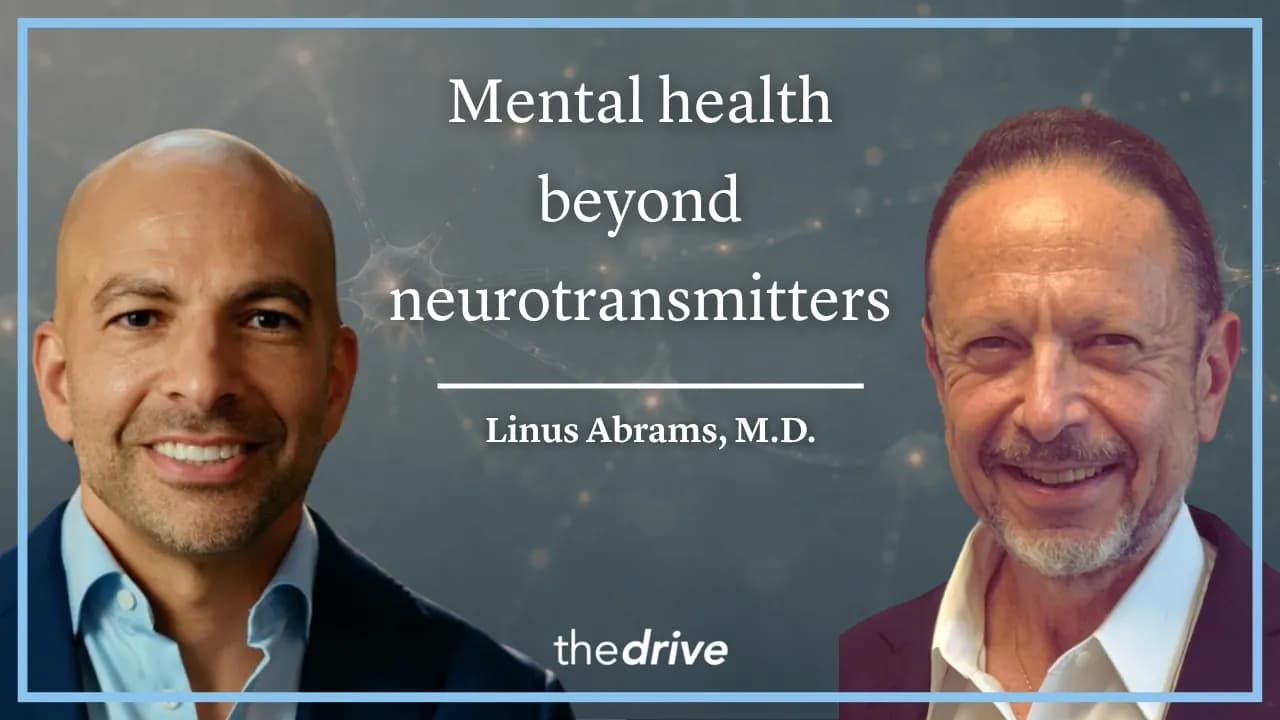
Thyroid health: interpreting symptoms, diagnosing & treating dysfunction, & navigating the gray zone
In a Nutshell
Thyroid hormone regulation requires precise balance, but symptoms are nonspecific and lab testing is imprecise, creating diagnostic challenges and two opposing medical camps—one that underdiagnoses and one that overdiagnoses hypothyroidism. Attia advocates a lab-first approach over symptom-based diagnosis, recognizing that both extremes cause harm: missing real disease in patients with borderline TSH but clear clinical context, and overtreating subclinical cases with thyroid hormone that risks atrial fibrillation and bone loss.
These notes were generated by AI and may contain inaccuracies.
Peter Attia explains that thyroid hormone regulation is particularly nuanced because the Goldilocks principle applies - too much is a problem and too little is a problem. This differs from testosterone, where there is no naturally occurring scenario of having too much and even when people receive excess replacement, they generally feel better. The thyroid system includes a feedback mechanism in the brain similar to other hormones, but an additional complication is that the thyroid gland secretes an inactive prohormone (T4) that gets converted to active hormone (T3) locally in tissues through different enzymes.
Lab testing interpretation presents challenges because unlike estrogen, progesterone, or testosterone, which can be accurately measured with LC-MS assays, thyroid testing is not always as precise. Symptoms also overlap significantly with other conditions, making diagnosis more difficult than for low estrogen, progesterone, or testosterone.
The combination of these factors creates an environment ripe for ideologic battles, pseudoscience, and potential harm when practitioners attempt to treat patients.
The thyroid is a small gland with two lobes on either side of the throat, sitting on top of the voice box just below the Adam's apple. The gland primarily secretes T4, named for its four iodine atoms. This hormone regulates the metabolic rate of virtually every cell in the body, functioning as the gain knob on the body's metabolic amplifier - determining how loudly cells operate rather than what they do.
Too little thyroid hormone causes everything to run cold and slow: heart rate drops, weight creeps up, energy decreases, and people feel they're operating at half capacity. Too much hormone produces the opposite - everything runs hot and fast with elevated heart rate, unexpected weight loss, anxiety, insomnia, and potentially atrial fibrillation.
Approximately 5% of adults in the United States have clinically meaningful thyroid dysfunction, making it a prevalent condition.
Two opposing camps exist in thyroid medicine. One camp believes hypothyroidism is underdiagnosed and undertreated, attributing virtually any symptom - depression, GI issues, sleep problems - to hypothyroidism. The other camp maintains that hypothyroidism is overdiagnosed and will only treat cases so overt that a medical student could diagnose them after one hour of endocrinology class.
Attia positions himself in the messy middle ground, believing both extremes are incorrect and that the truth lies between these positions.
Symptoms like fatigue and feeling off are non-specific to any organ system or cause. Formal blinded studies attempting to diagnose hypothyroidism purely from symptom clusters without biochemistry could not distinguish hypothyroid from euthyroid patients. The same symptoms appear with sleep deprivation, iron deficiency anemia, perimenopause, and menopause - the latter being a particularly common confounder since timing often overlaps.
Attia advocates for a lab-first approach rather than symptom-first approach, given how non-specific thyroid symptoms are.
Attia identifies two primary failure modes in clinical practice. The first is missing real disease by treating lab values in isolation from the patient - for example, dismissing someone with a patchy gland, positive antibodies, and family history because their TSH is 4.2, which falls within conventional normal range.
The second failure involves overreach, particularly in functional medicine, where subclinical hypothyroidism is treated as nearly ubiquitous. Practitioners may insist standard TSH ranges are too permissive and treat borderline free T3 or elevated reverse T3 as proof of tissue-level hypothyroidism regardless of TSH, free T4, or symptoms.
These practitioners may build elaborate root cause narratives around gut health, adrenal fatigue, or toxic burden based on lab pictures that often represent normal variation or will normalize spontaneously. Mildly elevated TSH frequently normalizes on repeat testing, and overt treatment with thyroid hormone is not benign - it can cause cognitive symptoms, atrial fibrillation, and bone loss.
Keep Peter Attia MD in your library
Save the videos and channels worth coming back to, and find them again in one place.