33 Brutal Truths To Stop Wasting Your Potential - Alex Hormozi
In a Nutshell
The core message is that realizing potential requires adopting an identity of courage, taking full responsibility, and making irreversible commitments by sacrificing easier paths, old relationships, and comfort. The most important takeaways are that feeling bad is useful feedback for change, outcomes matter more than intentions, volume and focus beat talent or luck, and success comes from treating every decision as a trade-off rather than keeping all options open.
These notes were generated by AI and may contain inaccuracies.
Doing hard things in one domain does not necessarily translate to other areas of life. Running a marathon or taking ice baths does not automatically mean someone can have a difficult conversation with a spouse. Domain specificity is narrow unless a person deliberately generalizes an identity label such as "I am the type of person who can do hard things." Once that label is adopted, the behavior can transfer without needing to repeat the original physical challenge.
A key hard skill is recognizing outside forces that influence behavior in ways that work against personal goals. When someone avoids starting a business because they fear what others will say, they are allowing those people to control their actions. Stating this plainly reveals how much power is being given away by letting external opinions dictate decisions.
Physical toughness does not always translate to emotional or decisive toughness. Security personnel who willingly put their lives at risk in combat may still struggle with vulnerable conversations at home. Public admiration tends to focus on obvious hard things that can be displayed, such as running a marathon, rather than less visible actions like telling a partner the truth when asked a difficult question.
Personality is defined as the aggregate of behavior across all conditions. Identity is the label attached to that pattern of behavior. Changing the identity label turns it into a global reinforcer. For example, adopting the label "I am honest" creates pressure to act consistently with that label across situations. When behavior deviates from the label, guilt arises because the person has broken their own rules. This identity-based approach allows hard things in one domain to transfer to others.
Past difficult experiences can be used as a reference point to make current challenges feel smaller. One speaker recalled his father telling him that nothing a fraternity could do during hazing would be worse than hardships already endured. This frame allowed him to remain composed while others around him struggled. Rogan’s observation that "the worst thing that’s ever happened to you is the worst thing that’s ever happened to you" highlights how recency bias can make people forget their own capacity when life has been comfortable for a while.
Viewing difficult periods as part of a larger narrative that will one day be told can increase tolerance for pain. The more adversity occurs, the more epic the eventual story becomes. Humans process experience through story, and telling oneself "I am the kind of person who gets through this" functions as a direct method for building resilience. Stories also serve as reminders of past reinforcers, increasing the short-term value of behaviors needed to reach a larger future reward.
Some people perform hard things primarily for public consumption while avoiding harder private challenges. Others do significant hard work that is never shown online. The presence of an audience or support team can make displayed challenges less difficult than they appear.
- Realize no one is coming to save you.
- Take responsibility for your current position.
- Be willing to sacrifice who you are for who you want to be.
Owning everything removes reliance on external rescue. Responsibility means identifying as the source of change even when circumstances are not entirely one’s fault. The biggest trap is wanting contradictory outcomes simultaneously, such as a mountain view, beach access, and proximity to a Whole Foods. People remain stuck because they refuse to make trades and instead pursue maximum optionality. Options only create value when exercised; keeping every door open prevents commitment and eliminates alternatives.
Maximizing potential early in life (grades, college acceptances, many paths) is praised, but realizing potential requires making commitments that close off other paths. Some decisions are permanent and have no refund. Inaction itself is a decision that causes doors to close. Commitment is a signal of maturation. Being unwilling to accept trade-offs often results in getting nothing at all.
More options tend to increase misery rather than happiness. People with fewer options but a clear single path can advance faster because they begin executing immediately instead of remaining in analysis. What someone truly wants is revealed by what they are willing to sacrifice.
Taking responsibility means viewing oneself as the only direct source of influence even when external factors (trauma, genetics, zip code, poverty) played a role. It may not be someone’s fault, but it remains their problem to solve. No one coming to save you also means no one is coming to stop you.
One of the hardest early steps in entrepreneurship is relinquishing the first set of friends whose values no longer align. The known cost is losing familiar relationships; the payoff is uncertain. This risk explains why many people struggle to make the initial break.
If only one trait could be passed to a child, courage would be chosen because without it no other action is possible. It is preferable to be a failure than a coward. Losing is the first signal on the path to winning; not playing is the signal of permanent loss.
Courage is being willing to take action that carries a large known short-term cost in exchange for an uncertain and delayed benefit. The short-term cost is often social (being made fun of, snide remarks). The payoff is unknown in both timing and magnitude. The only path with any chance of success is the one that requires tolerating uncertainty. Potential is therefore determined by how much uncertainty a person can tolerate and for how long.
The world rewards courage more than intellect. The most dangerous person is the one who continues showing up daily even when rewards are not guaranteed. Mastering the shame of rejection, the boredom of repetition, and the pain of feedback allows someone to beat 99% of people.
Rejection and failing hurt, especially when giving everything only to be told by the market, society, or the universe that it is still not enough. Over time, successful people learn to pair losing with a different association: feedback rather than failure. This pairing changes how they respond to setbacks.
Losing is valuable because the pain forces change. If losing did not feel bad, people would repeat the same losing strategy without adjustment. The discomfort serves as a signal that the current approach needs updating.
Society currently attempts to remove the pain of loss, particularly for children, by treating feeling bad as inherently wrong. Feeling bad is not bad; it is a signal that change is required. A functioning society depends on people sometimes feeling bad about their actions so they adjust behavior.
Reality eventually contacts decisions. Delaying that contact reduces the chance of developing better strategies before consequences arrive. Media that attempts to redefine reality so that losing and feeling bad do not feel true only changes short-term perception; the eventual payment to reality comes with greater interest.
Parents should allow children to experience the pain of loss so they can learn. Learning requires feedback. Operating purely by feeling, while also believing feeling bad is bad and feeling good is good, leads to poor outcomes because many beneficial actions feel bad and many harmful actions feel good.
The ability to feel bad without feeling bad about feeling bad is a valuable gift. The proper response to loss is to ask what will be learned and what will be done differently next time.
Resilience means continuing despite negative emotion rather than rushing in with panic, control, or distance at the first sign of discomfort. The latter approach produces fragility.
When experiencing negative feedback, the key question is whether to push through or pivot. The distinction rests on whether a fundamental assumption made at the start of the effort has been proven false.
Example: Someone starts a business making dog skateboards expecting a large market. After speaking with 100 dog owners and receiving zero interest, the core assumption about demand is false, so pivoting is appropriate. If potential customers show mild interest but express confusion about the product, the assumption remains unrefuted and the issue is execution, so pushing through makes sense.
Losing always teaches something. The task is ensuring the right lesson is extracted rather than an incorrect generalization such as "my first employee was terrible, therefore all employees are terrible."
Making early decisions as correct as possible is important because it is far easier to learn something new than to unlearn something already reinforced. A bad habit or compensatory behavior built from early negative experiences requires significant work to reverse once better conditions appear.
Changing a behavior with a long history of reinforcement is substantially harder than changing one with no history.
When outcomes do not match desires, either the model of the world is incorrect, the variables within the model are wrong, or insufficient variables are being considered. Focusing purely on inputs and outputs improves prediction accuracy.
Most people remain confused because they use descriptive labels rather than explanations. The statement "Johnny stole because he is dishonest" is circular. Dishonest is simply a label for someone who steals. The actual explanation is that stealing was previously reinforced or modeled from someone else who was reinforced for it.
Description states what happened. Explanation states why it happened through reinforcement history.
Abstract instructions like "get better at basketball" are ineffective. The skill must be broken into concrete behaviors: dribbling, passing, and shooting. Each of those must be further decomposed into specific actions such as stepping with the left foot, extending the elbows, and finishing with thumbs down for passing. Repeated practice of the exact chain produces competence.
The same principle applies to relationships. When one partner says "you don't love me" and the other responds with bill-paying and trash removal, conflict persists because each person defines love through different observable behaviors. Explicitly defining the required actions removes ambiguity.
Unspoken expectations function as premeditated resentments. When one person expects behavior they have never requested, the other person's failure to perform creates future resentment.
Frequent complaining indicates an inaccurate map of reality. A complaint is the statement that reality failed to deliver what was anticipated. Reality is indifferent and continues delivering its actual outputs regardless of expectations. Reality remains undefeated.
Negative content about someone can produce "malicious benefit": the creator intends harm but the resulting attention and impressions increase the target's earnings and relevance. The harm attempt is simply incompetent.
The opposite is well-intentioned harm: someone cares and means well yet lacks competence, so their presence reliably worsens outcomes. Judging people solely by outputs rather than intentions simplifies relationship decisions.
Example: An advisor evaluated a potential marriage by measuring concrete changes in health, habits, and business performance rather than feelings. When all measurable areas improved, the decision became clearer. Previous relationships had produced the opposite measurable effects.
When evaluating impact on one's own life, outcomes matter more than intentions. Being harmed by accident or by malice produces the same result. For personal navigation toward desired outcomes, track what actually occurs rather than stated intent.
Relationships can be maintained while they continue to produce net benefit across multiple dimensions. Benefit rarely drops from one hundred helpful behaviors to zero overnight; it typically declines gradually. Tracking the specific behaviors that help allows clear communication about what is valued.
Exchange is the basis of all voluntary relationships and of capitalism. Labeling relationship dynamics as transactional does not change the fact that reinforcement history determines tolerance for negative behavior. A long reinforcement history creates a longer extinction curve—the period during which someone continues hoping positive behavior will return.
Recency bias is appropriate: recent behavior should weigh more heavily than distant history. People can change, and it is acceptable to remain friends with the person someone once was while no longer being friends with who they currently are.
There's always a felt sense of lack between where someone is and where they want to be. Mark Manson's point becomes especially relevant in an era of AI because people can shortcut getting outcomes without putting in the required inputs. Everyone obsesses over leverage and maximizing outputs from minimal inputs, but this creates a problem when people detach the outcome from the journey and stop scrutinizing outputs with the same level of detail.
It's not just the outputs that matter. The leverage crowd doesn't fully connect with how humans construct the story of their life. If someone could create a super-quick code that generates hundred-million-dollar leads, the entire project would feel different. The process of getting there could be identical word-for-word, but the person would prove that AI knew a lot about leads, not about them.
There's a discrepancy between two views: one says the output of your life is who you become through the aggregate set of behaviors learned over time. The other says the output is the stuff that exists as a result of you being here. This is more of a philosophical question than a right-or-wrong issue. Arguments exist for both sides—what changed as a result of you being here versus all of the outside only existing to change the inside.
There's a strong affinity toward both definitions. When going through harder times, the tendency leans toward "this is happening for me." When going through easier times, it becomes "I'm happening to it" or "I'm happening to reality."
Seeing life as only one or the other creates fragility. If someone focuses only on outcomes, they never think about becoming the person who can generate those outcomes and instead find shortcuts that don't work. If someone focuses only on inputs, they never determine whether all the suffering amounted to anything.
George referenced a line about wanting something concrete: "Show me something I can drop on my foot." This criticizes wishy-washy, vague language.
The park bench scene in Goodwill Hunting features Robin Williams talking to Matt Damon about love. The actual line is: "You wouldn't know about sleeping sitting up in the hospital room for two months because the doctors could see in your eyes that the term visiting hours do not apply to you." The idea is that love is an active commitment—a choice to value someone else's well-being as much as your own. The order matters: idea, picture, words—not idea, words, pictures.
The picture is more emotive and can be more motivating and persuasive. The difficulty comes in taking an abstract idea, deciding you want that type of love, and then figuring out what to do when the person you love isn't in the hospital and there's no opportunity to sleep standing up. It comes back to what someone is willing to give up in order to maintain something.
When there's no external pressure and life feels easy, it's harder to see effort because there's no enemy to push against. The measure of love becomes what you're willing to give up to maintain something. If someone loves a person, idea, freedom, or country deeply, they're willing to give up everything for it. When that person asks for something or would appreciate something, the other person inconveniences themselves to a large degree to do it.
This framework allows someone to give what the other person wants while also differentiating who is using words to manipulate. When someone says they love you but has only taken actions out of convenience with the relationship being beneficial solely to them, that becomes relevant when needs eventually conflict. The question becomes how much good was the good so that someone is willing to deal with some bad.
This doesn't mean purposefully seeking difficulty to stress-test relationships. Some relationships should be seamless with no conflict needed. There's a friend from sixth grade with zero conflict, which is rare and valuable. Conflict is okay and seasons of friendship can end, but the quality of friendship can be measured by how much inconvenience someone is willing to deal with.
One friend is an FBI agent whose measures of success involve catching bad guys. There's no jealousy or envy—just stories about cases and ridiculous questions about money that he finds funny. This dynamic works because their success metrics don't overlap.
Most people have no idea where their testosterone levels sit. Function provides access to over 160 lab tests including a deep dive into full hormone panels. Every result is reviewed by clinicians. Anything out of range gets flagged with clear explanations and a personalized protocol with actionable next steps. This level of testing normally costs thousands but is available for $365 a year ($1 a day). A $25 discount brings it to $340. The link is in the description or at functionhealth.com/modernwisdom using code "modernwisdom" at checkout.
You're behind because you're in a rush. You're in a rush because you feel behind. You feel behind because you're in a different season than the people you're comparing yourself to. You're not behind—you're just early. This comes from measuring output differences without comparing input differences. Asking why a podcast isn't like Rogan's ignores that he has ten more years and however many more episodes.
Most people making this error in judgment are earlier in their careers. Comparison is how you measure things and identify the discrepancy between what you want and what you have so you can fix it. Comparison itself isn't the thief of joy—labeling the discrepancy as bad is what creates the problem. Comparing yourself to people like Rogan or Elon provides clarity on what needs to be done to close the gap.
The first action when lacking reinforcement for an action comes through modeling. People look for others who have taken the jump first to see if they got eaten or if they succeeded. Modeling is how children learn everything—seeing good things happen to others and deciding to do the same. The long-term play is that after taking the first step and getting reinforced, personal experience becomes the loop. The first jump comes from observing others.
Listen to the people closest to your goals, not necessarily the people closest to you. This requires listening to some while ignoring others, which remains difficult because behavior is still influenced by valuing other people's opinions.
Successful entrepreneurs often use a first-principles approach. At some point no one has gone to the moon, so the question becomes whether physics prevents achieving something. Reasoning from the ground up reveals discrepancies between what people believe and what's true—where opportunity exists. David Deutsch's idea: if physics doesn't prevent achieving something, then it's possible.
One reason certain episodes resonate is that people who want to do hard things aren't around others who know how to do them. The harder the goal, the rarer it is to find people who can give legitimate advice about achieving it.
The thing that gives credibility to gain media and attention is being exceptional in some domain, which makes someone unrelatable. Credibility and relatability are inverse. Poor people surrounded by other poor people assume that's everyone because it's everyone they know. This makes it difficult to get out of the first bubble because someone has to look outside at people who might appear unrelatable.
No one's interviewing the gym owner sleeping on the floor who's going to become something because they don't know yet. One regret is not tracking the early journey enough. The suggestion is to document—take pictures, voice notes, email yourself. The downside is only that you might not use it and delete it. The upside is having an artifact of the stepping stones toward who you wanted to become.
When losing everything after having six successful gyms and dropping to $1,000, screenshotting the bank account created a cathartic moment: "Never again." That screenshot still exists and gets shown. The documentation happens because of the belief that you'll be the hero who overcomes. Kanye had early videos because he believed he would make it and would use them. The story's biggest beneficiary is yourself.
There's a similar regret about not documenting enough during a period running events in Scotland at age 20. Money dwindled while putting in all the work with no revenue until the event. Pride prevented calling parents for help. A friend from a background of serious poverty offered to steal food when money ran out completely. The moment of realizing stealing food had become a realistic decision exists only in memory and requires retelling to communicate the lessons.
The worst-case scenario of documenting is deleting it. The upside of having it as an artifact of the stepping stones is invaluable.
You have to have skill to perceive and recognize skill. You don't need the same level as someone else, but greater skill leads to greater appreciation for exceptional performance. If you don't understand basketball rules, it's just guys passing a ball. Brazilian jiu-jitsu is another example—without knowledge, you can't tell who's winning.
When people around you begin seeing signs of success and attribute it to luck rather than effort, the reality is they likely lack the skill to recognize the skill involved. It's a question of competence, not malicious intent. If they had the ability to fully comprehend the skill required, they would be able to do it too.
Mark Manson and James Clear have a similar idea: you only envy the lives of people whose sacrifices you cannot see. It doesn't make sense to continue wanting something if you're not willing to do what it takes to get it. If you don't want to live the lifestyle, release yourself from the desire. To crave the results but not the process guarantees disappointment.
Jimmy Carr's version: people want what you have but not what you did to get it. Trades are just price tags. Something can be good and still not worth it for you. People struggle with saying something is both good and not worth the price—they often say it must be bad because they're unwilling to pay. The shoes might be great, but that doesn't mean they're worth it for everyone. What particularly hurts is when the price paid to acquire a skill gets dismissed by someone who doesn't understand it.
When someone says they can't believe you bought those shoes and would never do that, the response is that you know they would never do that—that's why they don't have them. Both people are different and live different lives.
Shopify powers 10% of all e-commerce companies in the US. They're behind Gym Shark, SKIMS, Aloe, and Newton. The checkout is 36% better on average compared to other leading platforms. Shop Pay can boost conversions up to 50%. Shopify handles coding, website building, and inventory so creators can focus on designing and selling. A $1 per month trial is available at shopify.com/modernwisdom.
Avoiding people who make it harder for you to achieve your goals is the highest form of self-care. The fastest way to change your life is to get around people whose minimum standards are your life.
Intention is desired result. If someone states their intention was a particular outcome, that is what they wanted to happen. Harm caused by someone claiming good intentions but lacking competence is still harm. Incompetence is incredibly rare. Being clear about what would help you decreases your risk of failure and gives people the tools to serve you as a friend, spouse, or in any relationship. If you give someone the tools to help you and they choose not to, you are justified in valuing your goals more than the relationship and sacrificing the relationship for the goal.
Everyone was always rooting for you. Your parents want you to be a great son. Your wife wants you to be a great husband. Your boss wants you to be a slam dunk hire. Every first date you've ever been on, they've been rooting for you to get laid. Every time you started to tell a joke, people hoped it would have a hilarious punchline. Your proximity to anyone is a reflection of themselves, meaning the deck is never stacked against you, and your failures are completely your own.
People's proximity to you is a reflection of themselves. We hang around with people who we want to be like and who we want to win so that we can be in the collective glory of it. We hang around people who have rewarded us for being around them, either by removing things we hate or giving us things we like.
When your motivating factors start to change but your environment hasn't, you feel tension between the life you want to live versus the life you have. People are unwilling to make trades because they want everything. When they get everything they wanted, they no longer want it because they have it. All the joy is in the getting, but once you get it, you just have it. Getting is so much better than having. The only thing worse than having is losing. You only either live in the desire or in the have. The have is unsatisfactory. The desire is always compelling and out of reach.
Being very good at business means always seeing where things could be better and where things could be improved. These are habits reinforced through repeated behavior. Living life with two modes is difficult: one mode is being dissatisfied and seeing imperfections in what is done, while the key to satisfaction in life is accepting everything as it is and not wishing to change it. This is a problem to be managed, not a paradox to be solved. There is no single answer like 42 that solves it. People do the best they can.
People are unwilling to make the trade. They want to date everyone and have the benefits of a committed relationship. When they begin to walk down one path and see the other start fading, they have an emotional reaction, change course, and flip-flop between the two. They never realize either outcome because loss is more painful than gain. Losing 5 is more painful than finding 5. This means people try to avoid loss as opposed to expedite gain, even if they would be happier doing the latter, because the pain of loss is always felt more.
People will endure years of misery to avoid a couple of minutes of pain. Short-term pain is immediate and always motivates you not to do it. Many motivating operations work on us at any given moment. The first time you work out, it only looks like pain. Modeling someone who has already done it for a long time allows borrowing credibility from their outcome, like a penguin jumping off a cliff because it wants the fish.
Setting an alarm at 5:00 the night before for 4:00 in the morning creates a situation where you get the benefit of the idea of productivity when setting the alarm, but the cost is discounted because it is in the future. When you have to pay the cost, it is immediate. The benefit of hitting the snooze button is immediate. The cost of getting up is also immediate. This is the microcosm of humanity: setting an alarm hours before you are supposed to wake up and being super jacked about it because you only get the benefit with no price attached. In the moment of the trade, priorities change because motivations have changed. The long-term benefit of becoming the sort of person who gets up early is also in the future.
Doing it a few times in a row allows you to tell yourself you are the type of person who does this, which becomes a second motivating operation that can help overcome the short term. I am statements are powerful in terms of changing behavior. In dating, people give 20 I am statements in the first meeting as shorthand for behaviors underneath. When you need to stop dribbling and start passing but you said you are great at basketball, you get into hard times. Defining everything into the granular and moving it back up allows you to change who you are more fluidly because the label is just shorthand, not reality.
What you are praised for in public you will pay for in private.
The things that make you a fantastic operator in business and career can be totally unadaptive or maladaptive at the kitchen table with competing priorities. There is one priority you want more. People who are monomaniacal often get further because of the thinking cost of managing and navigating trade-offs. It is almost impossible to make a big swing or big progress without going complete sicko mode for an extended period of time, about 10 years, with no compromises.
No half measures.
Half measures yield null outcomes. It is not that you get half results. Many people are doing half measures in four domains and have yielded none, yet feel like they are trying all the time, working every hour they are awake to pursue or serve four different masters. Compromise on one means getting neither. You have to be able to say you are willing to sacrifice this thing, not forever, but for now.
Obligation comes from anchoring bias, momentum of where you are now, and fear of regretting it. Inaction has a cost, usually higher. Money loves speed. Wealth loves time. Poverty loves indecision. Inaction is an action. Even watching television is taking an action, it is just not making progress. Things are always occurring. It is whether we are voting with our behavior about the outcome we truly want. Most outcomes we truly want happen at a delay, which makes them worth wanting but also equally hard to get.
Most people are fat, poor pansies, and don't listen to them when they try to deter you from whatever it takes to succeed. The average person will always try to keep you average.
If you want to be extraordinary, you will do things that an ordinary person would see as extra. A lot of people want to see you fail because it justifies the risks they chose not to take. Listen to people closest to your goals, not closest to you. We yearn for the approval of many people who don't have lives we want. If they have a specific life, that is what they think is valuable. If we don't want what they have, why would we value their weight on our decisions.
When younger, you cannot leave and must live according to parents', teachers', classmates', and principal's preferences. When older, you have to break the mold and decide what mold you want. In doing so, you will be against their preferences. The average American adult is obese, likely to be divorced, and has less than 1K in the bank. Doing what everybody else does is a reliable route to a life you are probably not looking for.
The path to exceptionalism is lonely. Loneliness is something society says is wrong with you. Success and pursuit of large endeavors is one domain where everyone disagreeing with you is a signal you are doing something different. Larry Ellison said if everyone thinks your idea is stupid, either they are right or you are right, and if you are right, you are likely to make a lot of money. We have to be willing to do exceptional things in isolation and deal with the pain of rejection. Rejection surfaces as snide remarks, jokes that are demeaning with too much edge, or being excluded through omission rather than commission.
You trade those moments for the moments when you are at home alone looking at your life and saying this is not what you want. The lonely chapter is the single most powerful idea, the amount of doubt endured when nobody around you understands what you are trying to do, when you are actively being discouraged, with no promise of glory or success on the other side. This happens on every mountain, the first and the second. For a lot of people, the first big lonely chapter comes after their first success, done within the frame they are already inside of. They get to the top and realize it was not what they wanted.
Some people do not need to go up the first mountain to realize they are somewhere they do not want to be. Many driven people have to get there. Getting one of the biggest events companies in the UK, running an organization that is cool and fun, being the boss, having wealth, status, freedom, and girls, with everyone saying this is something to be happy about, yet it did not feel right. The only way to find something new is to let go of something everybody else is telling you you should want. Local maximums are the furthest up they can see up the mountain. When you get to a new local maximum, you have a different perception and can see the next peak and they cannot.
When you have no evidence or proof you are going to be successful, everyone asks why you are working so hard, and once you win, everyone asks why you are working so hard. An entrepreneur wanting to dominate the market and put everyone else out of business was told that it does not come with parades or balloons. By the time you beat them into true submission, it is like a giant beating a child because it is almost never a true fair fight, there are no rules, no referee, no one determines the winner. You get bigger and they shrink into irrelevance, then see a Facebook post that they have changed their goals and determined this is not as important to them as it once was. It is okay. It is not satisfying at all. When you see the jobs and employees who were just living their lives with kids, the idea of conquest feels significantly less rewarding.
Losers lose and change their goals rather than say they lost. They might have had some awareness of what it would take to win but determined at that point that the trade was no longer worth it.
If someone no longer determines that the price is worth it, that is acceptable because they have made a conscious decision. The issue arises when the decision is made for you because you were not conscious of it being made in the first place, and then you simply accept it.
Vengeance can be deranging because the desire to get one over on another person compels you to act in a way that is being controlled by them. The person you are trying to beat has cajolled and tempted you into doing something that is not necessarily in your interests. When you reach the finish line, they are never going to say "well played, man, fair fight." No one else knows about this silent war between you and your projection of them.
Vengeance and revenge can be incredibly motivating. If that is the only fuel available, use it. However, the outcome of beating a specific person is not nearly as fulfilling as expected. If good can be created along the way, there is a reconciliation of pros and cons where good stuff and bad stuff happened, and the question becomes whether there was more good than bad when summing up at the end of life.
The oldest wise men and their books discuss the folly of youth and how much people value things that never really mattered to begin with. The speaker tries to think about what that wise person would say about what he is currently doing and whether they would approve. This perspective takes the edge off both sides: on the downside, losses feel more acceptable; on the upside, wins do not make one feel overly important.
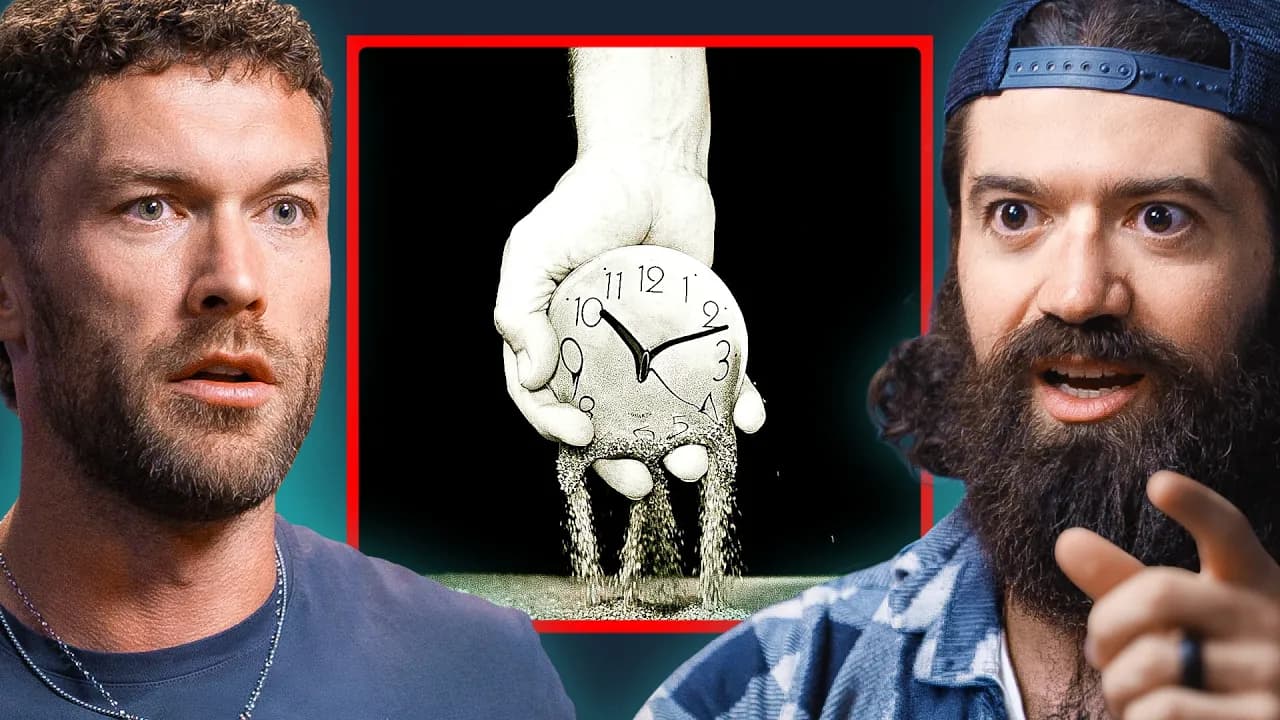
Much of this relates to the expansion of time and the ability to see things on a broader time horizon. Time and space are the two things that can shrink or expand anything. Zooming in on the atoms of a table versus zooming out to the cosmos makes two people having a podcast matter significantly less. Considering the billions of podcasts that will be recorded over the coming years also shrinks the importance of any single one. In the exact moment, however, it becomes the most important thing being focused on.
Playing with time and space serves as one of the most viable tools for coping with hardship. The instruction is to zoom into enjoyment and zoom out of difficulty and pain.
You can get competent at nearly anything in 20 hours. The problem is that most people spend a decade delaying the first 20 hours. More potential is wasted through inaction than through incompetence.
A TED talk about learning to play the guitar in 20 hours changed the speaker's perspective because complex or seemingly complex tasks suddenly felt much more attainable. The realization was that one might not become the best website developer, but in 20 hours a functional website could be created.
The 20-hour mantra translates to two full 10-hour days of focused effort to move from zero to competent. Stringing hundreds of those 20-hour days together makes a person incredibly dangerous.
Being multi-disciplinary is hard to calculate in value because the first 20 hours of almost every discipline capture the biggest and most meaningful concepts. The largest returns come from those first 20 hours. There is a strong argument for collapsing the time between wanting something and beginning those first 20 hours.
Eighty percent of the skills gained that have utility make usefulness across a huge number of domains multiplicative rather than additive. Jay-Z learned rhythm, then how to rap, then how to sell, then how to market. With each additional skill, his income did not increase additively but exponentially.
When unsure about the next step, build potential so that when opportunity arrives, you are ready. In the beginning of a career, it makes sense to maximize optionality, but you must be willing to trade it in later.
When you do not know what to do, there are still plenty of things to do: get a good night's sleep, start getting in shape, build an audience and make content. The goal is not to do those things forever but to use them as a launch pad to get what you really want.
The trap is opening up so much optionality without the concordant decisiveness, leaving you stuck with a plethora of directions and no ability to decide which path to take.
You only need to get rich once, so work as hard as you can to get it done as fast as you can. The fastest way to attract what you want in life is to deserve it by doing so much work that it becomes unreasonable not to achieve it. Do so much work that it would be unreasonable to fail.
The seat at the table is yours if you want it. Do the hard work. Build the skills no one can ignore. Adjust your mindset to match where you want to go, then pull up a chair and sit down. Work with such relentless obsession that when people see you, they are grateful they do not have to compete against you.
The fastest shortcut is to stop looking for shortcuts. Do the work.
Two quotes from the internal sales handbook at acquisition.com are "volume negates luck" and "violence is the answer." These are credos the team lives by. There is power in knowing you are doing every single thing you possibly can to win.
If you can look in the mirror and say you have controlled the controllable, uncontrollable events can still happen. If you leave it all in the field and have nothing left in the tank, there is no more satisfying feeling than knowing you gave everything to an endeavor you deemed meaningful.
A man must have a quest. You need to go toward something. The quest could be being the best father, the best musician, the best podcaster, the best businessman, or the best at any role. Being questless and aimless, and never using the violence you are capable of in pursuit of something meaningful, leaves people lost and without hope.
Hopelessness comes from a perceived lack of options. Anxiety comes from many options but no priorities. A quest remedies both because you have one clear path and the only thing left is to destroy everything in your path to get where you want to go.
The things to destroy are ideas, thoughts, doubts, and perceived risks that are not real risks. Having someone in your corner who believes in the better version of you is one of the rarest gifts in life.
A line from the movie 300 states that the queen says to Leonidas, "Come back with your shield or on it." This means wanting a partner who rewards you for the good fight and wants you to die trying. All anyone will do is die trying. Some will die trying, and that is about as good a life as anyone can ask for.
One of the least favorite groups of people are those without a quest who mock those who have one; they are wastes of space. This causes doubt. People in the lonely chapter have their certainty about wanting to get out diminished by people who cannot see they are in it.
If given the ability to give everybody a gift, it would be the ability to turn down the volume on people who do not understand the goals you are trying to achieve. It should not be your job to explain yourself to people who do not understand what you are trying to do.
The confusion of one person getting it and another not getting it means you should not listen to them at equal measure. All hate can be translated into "you live your life against my preferences." When people say you do not have to go to the gym, they are saying you are valuing things they do not value.
It is okay not to have the same values, at least in the short term. Accepting that you can still be friends in the short term is fine. What they are really trying to do is get you to comply with their way of living, because living according to your new values brings into sharp contrast how they are not living according to theirs.
Ten years ago, deciding to take six months off from drinking as a club promoter put the speaker on the frontier. People went from surprise to ribbing mockery to almost being offended. This happened because the choice highlighted their own need to drink to feel social.
Even though the speaker made money from people drinking and had no problem with anyone drinking, the choice still felt like an insult because it was elective. The opposition occurred even though there was no judgment and the speaker was incentivized for them to continue the behavior.
No one hates you; they hate the projection they have of you, which is 99 percent made up because no one can know 100 percent of you. The only person's hate that should really be paid attention to is your own, because no other person has full context on who you are.
An online stranger only has a few vague impressions and is attacking their own imagination when they attack you. There is no need to take it personally. Every single person is exactly what you would be if you were them, including political opponents. Instead of dismissing them as evil or stupid, seek to understand the circumstances that led them to their conclusions.
If you were going to be the exact same person as someone else, that removes the concept of free will.
If you are poor, try the buy nothing challenge: for 30 days, buy nothing except food, rent, gas, and insurance. Do not bring your wallet when you leave home. Pack lunch. See how much you save. Repeat until you have as much as you want. This pairs well with working 12 hours a day.
Being good with money literally just means spend less than you make and put the extra in things that go up, not down.
The hardest part about most things is not knowing what to do but doing it. You are often more rewarded for every action except the one you need to take. There are a hundred things you can spend money on and only one nothing. It is exhausting to not spend money when you do not have any because you have to say no a hundred times.
The buy nothing challenge helps you realize how little you can really live on, which shows how much more risk you can actually take. The apparent downside of losing everything becomes tangible when you see you lived on very little and it was not that bad.
When looking back, some of the happiest moments occurred when people were poor. The speaker notes that people often say they will be happy when they have certain things, yet they already have those things and are still here.
Nobody ever believes they are living through a golden era; golden eras only occur in history. Every generation believes they are living through a markedly different moment than previous generations.
A behaviorist explanation for the nostalgia paradox is the fading affect bias: across species, negative consequences fade while positive ones do not. This is why people want to go back to an ex and why they drink again after saying they will never drink again.
Being cognizant that punishment fades and reward sticks is helpful for making future decisions. When thinking about personal eras, sleeping on the gym floor fighting for something cared about can feel like the good old days in retrospect.
You can ascribe good old days to almost every season of life in retrospect because the negative has faded. This is a great way to feel bad about how you feel today because you know you will feel better about today in the future without the current negative consequences and stressors.
The operation for gratitude is to imagine something good, imagine losing it, and then realize you have not lost it. Nostalgia is a flavor of that as we go back in time. We cannot get it back, but we can see it through a new lens.
Times with more simplicity and fewer trade-offs tend to be looked back on with nostalgia because life was simpler then. There is an accumulation of complexity over time.
The complexity of life in any moment was just as maxed out then as it is now because humans always find the maximum amount of problems their brains can perceive. At any age, the number of problems perceived remains similar, though the ability to deal with them increases.
Simplifying lives is an attempt to mirror the incomplete memory of that earlier moment. The speaker wants to try to get rid of the trade-offs that existed then.
Life does not need to be easier. It needs to be simpler. The system is designed to handle stress and challenge, but not complication. People handle hard things pretty well but feel overwhelmed when they become messy. Do not attribute to difficulty that which can be explained by complexity. Most stress comes from complexity rather than intensity.
There is no such thing as being overworked, only under-rested. Overworked is an asterisk that applies when working on a small bucket of things. There is such a thing as being spread too thin and overworked across a larger bucket of things. If all someone has to do for the next six months or two years is write a book, it will be stressful but enjoyable. Adding just two or three additional responsibilities like raising a kid, managing finances, going to work, getting in shape, connecting with a partner, or dealing with an ill parent causes people to fall apart. The system is designed to handle intensity but not complexity.
Most people would be astonished at how much they can accomplish if they remove things. Focus is not additive but multiplicative. The best works created have been things that had many coats of paint. Looking at the same project over a long period of time through good days, bad days, rain, sunshine, and different seasons creates texture and depth. Many coats of paint require letting it dry. It is very rare that something is very good on the first shot. It takes many attempts, but surface area of thinking is limited if someone can only think about it a handful of times.
There is only so much thinking time available. Giving it to five projects rather than one means getting one-inch deep on five projects rarely produces novel concepts. Many people can give one-inch deep thought toward any idea. Someone who is one-fifth as good at doing something is giving 100% of themselves. Capacity is capped by spreading it across multiple things. Believing one can pursue multiple masters is arrogant because it assumes competitors cannot beat you when they are fully focused on one thing while you compete with three, four, or five people at the same time. The vast majority of people lose when they do this.
Stop whining. Every position has an advantage. Younger means cutting edge. Older means more experience. Smaller company means more personalized. Bigger company means longer track record. Rich means resources to use. Broke means nothing to lose. You are not limited by your resources, only your resourcefulness. There is always a way to win, just not always enough desire to win.
Looking across all positions, none would be improved by complexity. Everybody finds reasons why their situation is not great. Finding ways the thing you have or do not have limits or restricts you allows you to front-run why you might fail in the future.
Inversion is one of the most powerful ways to get what you want because humans are hardwired to survive and part of survival is threat identification. When trying to think about what is good with life, it requires effort. Framing around what are all the threats to accomplishing what you want, what will get in the way, or what would guarantee failure is much easier because the brain is programmed to find threats. Once the monster list of things that guarantee failure is identified, flip it and do the opposite.
A cool version is to design a day or lifestyle for your worst enemy who is trying to beat you. The inversion of the inversion is to imagine going up against yourself but with a mustache. This version of you is doing everything possible to beat you, knows all failures, shortcomings, and fears. Do what that person would do to beat you. This is equivalent to asking what you would do if you had 10 times the agency, because that person would have way more agency, would not doubt themselves as much, would be more decisive, would reduce complexity, and would be less distracted.
In investing, there is a frame where if someone else were to come and buy 100% of your company today, what would they immediately do in the first 30 days. This frame provides an emotionless view of the current situation. The worst enemy with a mustache has no emotion about making the hard call because he is not you. The person being fired is not your best friend. It is just an inadequate person who is no longer upskilled.
When talking through feelings and emotions, there is the experience of life and the feelings while going through it, and then there are the decisions that must occur in reality. Trying to serve both masters is where people get in trouble. Keeping someone on because of guilt means understanding that the person is hurting the business and preferring to hurt the business rather than have the conversation.
Show me your priorities. The priorities are known. The question is whether the priorities are the priorities wanted. What are you willing to sacrifice. Either care more about the person or more about not feeling guilty than about the business. Life is a consequence of priorities. Many people want to want. They do not actually want. They want to be willing to give up things in order to get stuff, but they do not actually give up things in order to get stuff.
Above intelligence and above work ethic, compensation occurs in proportion to risk. A pro tip for taking risk is to write down in excruciating detail what you are actually afraid of happening, step by step, what happens next when you fail. It is often not so bad when spelled out. Fear exists in the vague, not the specific.
Risk comes in flavors. One is giving up something known hoping to get something bigger back. Another is wanting something bigger but paying a cost. A different view on risk is proportionality of risk. Investing is about whether risk is priced appropriately.
Peter Thiel commented on Elon Musk that if he had just one of his three companies succeed, it would have been a crazy win, but somehow all three became multi-billion or trillion-dollar companies. He must know something about risk that others do not understand. Studying the person who has accumulated the most wealth provides insight into a more accurate view of true risk rather than perceived risk.
The downside of trying as hard as possible is basically nothing. In the developed world, the likelihood of starving to death is almost nothing. There is free shelter if no one would allow crashing on a couch. This assumes being incapable of working in any way that generates money during the day, and there are many ways to generate money that do not require tremendous skill. The downside is nothing. The risk of going after what is wanted is mispriced by the vast majority because of fear of big good things going away or big bad things happening. The big bad thing is nothing, but the big good thing missed out on is everything.
The risk is almost always mispriced because brains are wired to misprice it. Messing up once meant not passing on genes and dying. The nervous system was built to fight bears and now it is worried by group texts. This mismatch between ancient programming and the modern world is significant.
An entrepreneur grew her great-grandmother's business from 4 million to 44 million in 3 years. It became obvious that her brand and needing to create more content was the constraint to going from 45 million to 200 million and beyond. When asked about hiring an editor, she asked how much it would cost. The business was doing a million a month in profit. People do not recalibrate appetite for risk as exposure to opportunity expands. Operating from the $4 million business owner risk angle where one or two editors was 10 or 20% of net income, when making $12 million in profit, the thinking should shift to making a two, three, or $4 million bet that could result in an extra 200 million or 100 million.
Jeff Bezos stated that if there is a 10% chance of a 100x payoff, take that bet every time knowing you will be wrong nine times out of 10. The difficulty is that in a casino with a 10% chance of 100x payoff, the minimum bet is 10 years and there are only three hands to play. When the 90% of the time it fails, it is not actually a loss because experience, lessons, skills, network, relationships, and perspective have been accumulated. Movement forward happens only by taking shots on goal. If every risk is seen as zero downside, only upside, either win or learn, more people would take bets and win.
It is way better to be high conviction and wrong than low conviction and wrong. Going for it means moving sufficiently quickly to update the system based on results. Indecisiveness has a cost. Do not make the assumption that inaction has no price. Inaction is not even inaction. Action is always being taken. It is action against priorities versus action toward priorities. Which will help accomplish what is wanted.
Nobody wants to be less decisive. Being rash is not the same as being decisive. Making a decision once the satisfactory threshold of information is reached is not the same as making a decision before having sufficient information. It is an information question, not a time question. Do not practice what you do not want to become. Practicing being indecisive couched as keeping optionality open means practicing being indecisive over and over. Thinking of indecision as an investment in future decisions that makes them harder makes indecision a horrible pitfall.
One thing that allowed quitting a job was asking if not now, then when. A future version would either have a wife or wife and kids to support. If it was this hard now, there was no assumption it would be easier later. If wanting the thing, it should be done when chips are most stacked in favor.
There is a desire for perfect information to make a perfect decision from a world that gives neither. What separates a rash decision from a well-informed decision is that a perfectly informed decision has often been made because outcomes have already occurred. If there is perfect information, the opportunity has already gone away. Assumptions and bets must be made. Having a worldview or good model of prediction makes getting what is wanted easier because upside and downside can be calculated. If the downside of being wrong is zero, go for it.
All loss is just psychological until death. The most important life lessons learned are the hardest to communicate because they always sound like cliches. If something is known well, why remain in the same place. If bored of hearing how important cold, dark, quiet is to prepare the bedroom for sleep, why does sleep still suck. If bored of hearing it is important to integrate emotions but sometimes put them aside as information not master, why is there still not a good relationship with emotions. The most important life lessons are the hardest to communicate because they sound like cliches. People need to be reminded more than taught. The gap between what is had and what is wanted is typically not a lack of information but a lack of execution.
Execution gaps ladder up to motivating operations preventing action or insufficient to compel action. Going into minute detail about sleeping on a friend's couch and how bad it would be spells out the downside. Taking three steps forward into the reality of what living through the downside would look like reveals the downside is 10 times worse in the mind than in reality. If 10 times worse in the mind than reality, actions can be taken because the downside does not really exist. Excruciating detail brings imagination into reality.
Imagining being on a friend's couch, knowing it would be brown on the left hand side of the room, having a mobile desk on the floor to work at. Sometimes reaching out to a friend before a big jump by asking if all goes wrong, could crashing there for an extended period be possible, willing to do X, Y, and Z. If real friends, 10 out of 10 would say go for it, they got you.
Calling people every single night during the six months leading into quitting a job, rehashing the same decision a hundred times. People would be surprised that someone seemingly decisive would need that conversation. It legitimates bravery in the face of uncertainty and repetition. Feeling like a burden for asking about the same problem repeatedly. Giving license to be boring in learning and needing support. Having a friend prepared to sit in it feels good.
A desire exists to make successful people more relatable so people without successful people around them can feel it is attainable. Adding color to that chapter, during that time period, getting fired occurred. The hardworking maniac was not a good employee and read books all day instead of working. Reading most of the self-help books heard of. A phrase heard in a book was want. The phrase disgusted because it defined people who just want to be entrepreneurs flippantly. The nonchalance was even more insulting. Realizing being that disgusting thing.
Alex listened to Arnold Schwarzenegger's ladder of success speech every morning. He read Relentless by Tim Grover, which gave him permission to use the dark side to get things done. He and a friend named Victor planned their exit strategy every night, pacing on a cowhide carpet from IKEA until a visible path was worn into it.
Alex had the same conversation with his father multiple times about quitting his job. Each time his father would talk him off the ledge, telling him it was the boring chapter before business school and that he should follow the established path. Alex recognized he was following a trodden path but acknowledged his father's intentions were good.
After reading numerous self-help books with no life change occurring, Alex decided to start a business. He narrowed it down to three options and connected with a gym owner. The gym owner told him he needed to make a serious commitment first. When Alex texted weeks later saying he was ready without having secured a lease, the gym owner was disgusted and told him to lose his number.
Alex notes that sometimes you have to hear something a hundred times before it sinks in or enough negative and positive pressure accumulates to cross the threshold of action. He was simultaneously applying to business school and doing four hours of GMAT problems daily while still considering the entrepreneurial path.
While filling out business school applications, Alex spent three days on the question of how a Harvard or Booth MBA would help his short and long-term goals. He calculated that business school would cost $120,000 and two years of lost income, with average starting salaries at $120,000. He compared this to the alternative of using those two years and $120,000 to build a business that could generate $10,000 monthly with ownership rather than employment.
The final realization was that it was never going to get easier. The fear that he would never start the business he said he wanted to start someday became the compelling force. He recognized he had an exploding offer from life—it was only going to get harder. This fear of never making it compelled him to act.
Alex packed his car and drove halfway across the country, only calling everyone after he had left so they couldn't talk him out of it. He needed to create so much physical space that even if people talked him out of the decision, it would take a day and a half to drive back.
Changing your environment is powerful because your current environment creates loops of behavior through where you live, who your friends are, your routines, and the places you go. The best way to change what you're doing is to change the entire environment.
Research on Vietnam War veterans showed that 25% used heroin while overseas. Upon returning home, only 10% relapsed. This contrasts with typical rehab institutions that have a 78% failure rate—an 8x difference in relapse rate. The only intervention was changing every environmental cue.
If having trouble getting out of your current condition, get out of your current condition. Move to a different city if possible. If not, move across town or 30 minutes away. Train at a different gym. Go to a different coffee shop. Make different friends for a period or stop hanging out with current friends temporarily.
If after going through a chapter of change you still want to reconnect with old friends, real friends will welcome you back. If they were only friends with that previous version of you, that is not the version you want to return to.
It is a mistake to think you can change your thinking while keeping your external environment exactly the same. If nothing has changed, nothing will change. You have to change to change.
When you are unhappy with your life and something bad happens, be grateful in the moment because a chaos variable has entered and equilibrium has been disrupted. This creates a short window before equilibrium reestablishes where you can make changes without the same consequences because all behavioral loops have been muddled.
A line from The Beauty of Sass states that after every prolonged period of hardship and uncertainty, there will be a period of quantum leaps across multiple areas of life. The only requirement is that you do not give up on yourself. Failure and success are on the same road; failure is simply an earlier exit.
Whatever you do, do not be the guy who gives up at the exact moment when you should be fighting with everything you have. You will make it through either way, but there is only one way you will look back and be proud of yourself. This becomes the metaframe of the story you tell about what type of person you are.
Alex wants to be known to himself as a fighter who is willing to fight for what he wants and believes in. He would want courage to be the one thing transferred through his story.
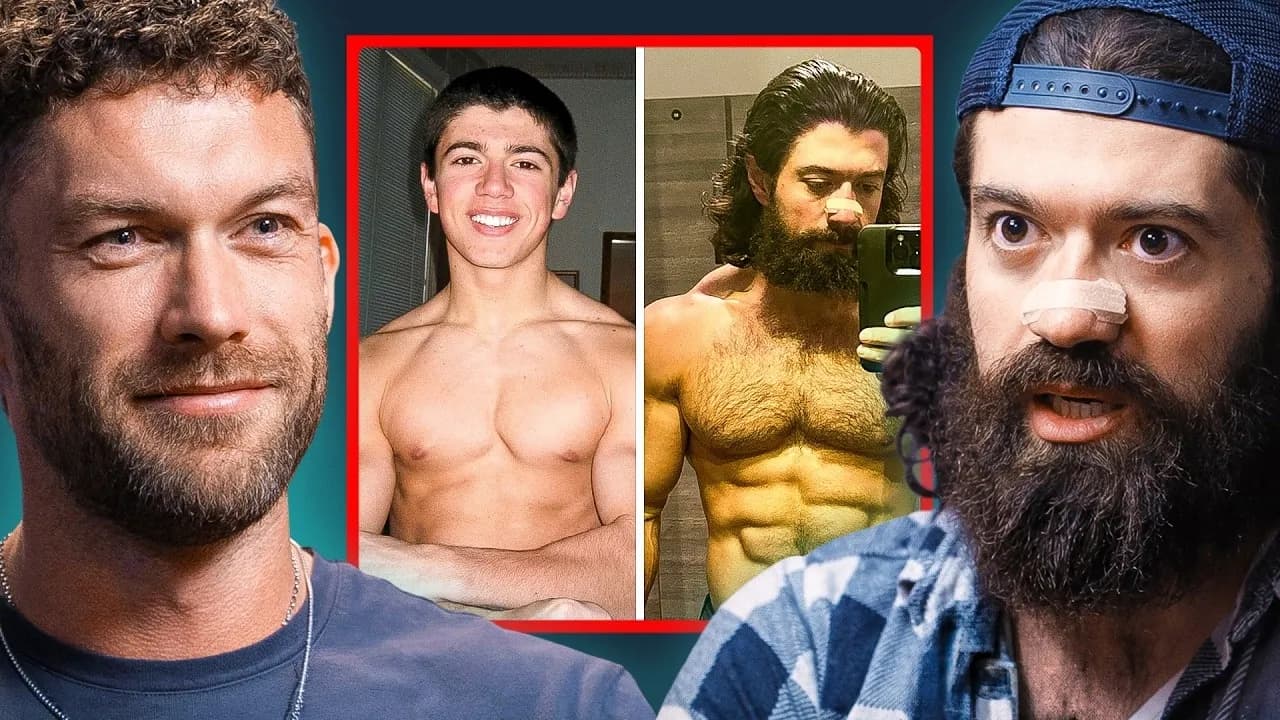
At Vanderbilt, Alex was vice president of the powerlifting team, president of his fraternity, had a 3.8 GPA, and graduated in three years. Despite these achievements, he was so afraid of not getting a job that he took the first job offered through his father's patient connection.
Alex blocks out most memories from that period because he was in so much pain. He continues making content because he knows there are others going through similar chapters who wonder if they are sane or if it is only them.
You cannot compare yourself to people in different chapters. You must believe you can change incrementally, one behavior at a time, over an extended period, and that those changes will aggregate and stack up. We do not know what the last chapter will look like; we only know what the next page is, and we get to write that today.
Alex feels a mix of pity and pride toward his younger self—proud that he made it through, but pity for the amount of pain he endured to make that jump.
Fear can be useful. Alex was driven by fear of other people's opinions, fear of failing, fear of his father's judgment, and fear of everything. The flip that worked was using that fear against something bigger: he was more afraid of looking back on his life and never having tried than of the practical consequences of taking a step and failing.
At the time, the downside felt enormous because it threatened all the status he had accumulated—being president of organizations, having good grades, and having a good job on paper. The existence filled with regret and self-recrimination was more terrifying than the practical consequences of failure.
Whatever fuel you have—anger, shame, fear—try to put it behind you so you are running away from it rather than having it in front of you preventing action. Run harder away from the future your current path is taking you toward than from the short-term discomfort of running away from it.
You can either fear the whip of the person behind you or the enemy in front of you. The direction you face is the one you fear the least. If you know there is an enemy in front of you and a whip behind you, increase the pain of the one you want least in the short term.
The decision comes down to whether the pain you would feel without something is less than the pain you feel by staying with it.
The hardest loss was the boy that existed in his father's eyes—the version living up to expectations. Sacrificing that version took years. Alex had achieved the dreams he had as a younger man, and in doing so it had become his nightmare.
Someone's dreams will die—yours or theirs. Make sure the person dreaming for you has bigger dreams for your life than you do. Sometimes well-intentioned people, because they want to be practical and realistic, have smaller dreams for you than you do. If they have smaller dreams, listen to yourself and not them.
Alex thinks often about what story of success he will tell his son. By the time his child has memory, he will be the son of a billionaire. Alex will focus on courage and leaving nothing on the field. He will care about effort and very little about outcomes as long as his son controls the controllables. He will hold a high standard because he respects his son and believes in his potential.
Alex has struggled to define what a successful parent and successful child look like. Defining success by the output of the child is problematic because many people with tough parents turn out well. He tends to reject defining a successful child as simply being happy. He prefers purpose because happiness can be fleeting while purpose tends to stick longer. Ultimately, he wants his son to have character defined as huge sets of behaviors—being brave and trying hard.
Alex has not changed his behavior in anticipation of having a child because his conditions have not changed. He believes he will change when the conditions change. He does not believe having children will prevent achieving his goals, noting that the wealthiest and most successful business people almost all have children.
Business success for Alex means leaving everything on the field. He knows exactly what he traded for his current life—the young boy and that previous existence—and he would happily make that trade 100 times over. His life is far from perfect, but it is the life he chose.
The most surprising outcome of having a child might be that Alex does not change at all. The second most surprising outcome might be that he works significantly less because he prefers spending time with the child. This represents a less instrumental view of life—being willing to enjoy a moment for the sake of the moment and nothing else.
For someone whose life has been about contorting themselves into an engine that sucks in challenges and spits out completed tasks, being able to enjoy non-instrumental time with a child may require significant growth. Co-sleeping at 3:00 in the afternoon or simply lying with a child may feel like work initially despite being biologically natural.
Alex expects the transition will be a new challenge that he will dedicate effort to succeeding at the same way he approaches other challenges. He will be uncomfortable as he has been with other challenges and will try to meet that discomfort with action while letting himself get used to a new reality.
People who build businesses, exit, and then start second families often reflect that they should have spent more time with their first set of kids. Seeing how these individuals approach parenting differently the second time provides a model to observe and potentially replicate. The advantage they have is having already built sufficient wealth and flexibility the first time around, which allows for different choices with the second family.
The goal is to learn from these patterns early rather than waiting until after building everything. Using the positive behaviors observed in others as a baseline, then adjusting as needed, provides a practical approach to integrating family and work.
If you're going to chase a dream, go all in. If you're going to love, love fiercely. If you're going to walk away, never look back.
Many people fail to give themselves a real chance at success because they never fully commit. Solutions and ventures that aren't pursued with enough intensity or duration often fail, leading people to incorrectly conclude the path itself was wrong rather than recognizing insufficient effort.
Dreams take longer, cost more, and require more sacrifice than initially expected. The unknown nature of the total cost makes big accomplishments particularly difficult because even when aware of giving things up, people still don't know everything they'll ultimately sacrifice.
Knowing how long something will take makes enduring difficulty significantly easier. Uber succeeds partly because users know exactly how far away the car is and how long the wait will be, eliminating uncertainty.
Heathrow Airport Terminal 5 faced complaints about security wait times. Rather than spending hundreds of millions on new equipment and reconfigured queuing systems, they simply posted accurate wait times at different points in line. This low-cost solution resolved the complaints because people could see they were moving faster than the posted time indicated.
Much of the pain around decisions comes from indecision and uncertainty. Treating even reversible decisions as irreversible tends to produce better outcomes and greater satisfaction. Research shows people report higher happiness with irreversible decisions than reversible ones, because irreversible choices force justification and rationalization rather than ongoing second-guessing.
Having children exemplifies this principle. Once a child exists, there's no return option, which reduces cognitive effort spent questioning the decision.
Embryo selection through IVF allows parents to choose among multiple embryos based on diagnostic criteria. This practice already occurs informally when doctors select embryos they judge to look healthiest. The key philosophical question concerns whether greater parental choice in selection would create buyer's remorse.
The argument against significant remorse is that even with selection, the outcome remains unknown and irreversible once the child exists. The gap between embryo selection and the fully formed person remains vast enough that the inability to return the final product prevents meaningful comparison or regret.
Don't stop trying because it didn't work. It never works the first time. It takes everyone a different amount of time to realize everyone is just thinking about themselves. No one was watching and you should have just done whatever the fuck you wanted to all along.
Older individuals often reach a state where they have little time left and therefore stop worrying about minor social concerns. They move through life less burdened by what others think because they recognize their remaining time is limited.
Youth provides unique value through long time horizons and peak physical and cognitive condition. Certain experiences can only happen at specific life stages, and missing them means they may never be available again. The ability to make materially different plans exists only when substantial time remains ahead.
Common wisdom includes statements like money won't make you happy, fame won't fix self-worth, and nothing is as important as it seems in the moment. These lessons prove difficult to internalize despite widespread evidence because short-term reinforcers remain stronger than long-term understanding for most people.
Proximity to death tends to reduce competitiveness and ego. Older people often shift toward presence and stop playing status games they've seen fail to provide lasting meaning. Watching someone continue pursuing validation after they've already achieved sufficient success can appear misaligned.
People must eventually transition from relying on fluid intelligence, high energy, and high work ethic to a different mode of operating. Those who fail to make this transition can become particularly miserable later in life. Attempting to compete with younger people at being young represents a losing strategy.
Anything you start, you will suck at. It will be embarrassing, but you will survive. Then you will realize that looking like a fool lasts a moment. Being one that never started lasts a lifetime.
Significant volume of practice desensitizes people to anxiety. When an activity has been performed enough times to become boring, the performer is typically ready. The alternative to managing anxiety through mindset work is simply doing so much preparation that nothing remains to control.
Alex Hormozi performed his book launch presentation over 100 times before the actual event. By the time of the launch, he knew the content so thoroughly that his words preceded the slides. This level of preparation eliminated performance anxiety.
Focusing only on what can be controlled removes second-order worries and third-order consequences from consideration. When stakes are high, sufficient volume makes failure unreasonable, and if failure still occurs, self-blame decreases because everything controllable was addressed.
The day before one book launch, an adversary filed a temporary restraining order attempting to prevent the launch. The hearing occurred at 4:00 p.m. Friday for a launch scheduled at 9:00 a.m. Saturday after $10 million and nearly two years of work. The order was dismissed, but the situation illustrated uncontrollable external threats.
Some problems resemble a toddler destroying something valuable and fragile. No amount of punishment or reaction changes the outcome in the moment, and attempting to punish only conditions negative associations. The only response available is to accept the situation after controlling what could be controlled.
Character appears more clearly in moments between intentional actions than in planned behavior. How someone treats service staff or holds doors reveals more than how they behave on a first date. Skilled performers reveal character when equipment fails mid-performance and they seamlessly adapt without breaking rhythm.
The space between actions reveals character more than the actions themselves. Easy for anyone to look composed when things go well or neutral, but when things go poorly, character becomes exposed. The breath in between the big thing matters.
Personality is how you behave under aggravating conditions. If you can only behave well under perfect conditions, you need to practice behaving under imperfect conditions so you behave consistently. Having substantial practice serves as preparation because you get exposed to so many different conditions that none of them surprise you.
Performance approach centers on getting all failures out of the way to maximize likelihood of succeeding when it counts. Examples include the clicker stopping working during practice runs, the book case falling over, or slides being put in backwards or upside down. Decreasing the likelihood of failure happens by trying to experience all failures before it actually counts.
Decisions come from the Latin root decadere, meaning to cut off. Commitment is the elimination of alternatives. If you were the most focused person in the world, you would have nothing but the one thing you focus on. Anything else makes you less focused.
Knowing what you want is often more difficult because it requires deciding what you are willing to give up. What you want is what you are willing to sacrifice for. If you want multiple things, you must determine which things you are willing to sacrifice for the one you want more. Getting clear on the thing you are willing to sacrifice other things for gives you a singular lens to make all decisions through.
Kobe Bryant asked whether each decision made him a better basketball player. Every decision filtered through that lens made decision-making incredibly easy and returned all mental bandwidth.
Switching costs in productivity are well known, but the cost of switching desires receives less attention. Time and effort get wasted in loops of making a decision and then yearning for the alternative you already decided was not worth it.
For big life decisions with conflicting priorities, write a document explaining all reasoning in totality. If doubt returns later, revisit the document to close the loop instantly rather than entering endless thought loops. This is especially useful on the relational side, such as after a breakup. Writing every reason prevents forgetting, since punishment fades and reward sticks. The document serves as a warning letter to your future self.
This practice is called borrowed authority, except you borrow it from a past version of yourself rather than someone else.
Adam M. says tragedy plus time equals comedy. Some horrendous past events become neutral or hilarious over time. Gallows humor used by soldiers illustrates this. In one account, a British SAS soldier described a teammate being accidentally shot in the rear during a firefight. Everyone laughed despite the dire situation.
Comedy functions as modern-day philosophy because comedians point out apparent truths people do not want to look at. Most comedians say statements that would be punished in any other context. Comedy provides a veil of protection. At its most basic level, people laugh when someone does something that should result in punishment but does not.
Humor serves as a tool to dispel seriousness. Turning fears into something that will eventually be funny allows you to view them as funny today. The boggart in Harry Potter demonstrates this approach: the way to defeat what you fear most is to make it look silly.
At age eleven, a friend ate an entire bowl of golden cherries before a road trip. An hour into the trip he needed the bathroom urgently. They stopped at a small town and knocked on doors. An old lady let them into her apartment up a spiral staircase. As they climbed, a horrendous smell appeared and the friend defecated down his leg onto the steps. He had to wear his father's boxers afterward and felt humiliated. His mother immediately laughed and told him he would laugh about it in a few years. That moment taught the principle that if something eventually becomes funny, you might as well find it funny now.
Young people do not want to work hard anymore for you. You have to create a company worth working hard for. Humans have not fundamentally changed across generations. Some young people remain highly motivated while others are lazy, just as in previous generations. Older people often say previous generations had it harder, but the point of making things better for the next generation should not lead to resenting them when it actually becomes better.
This requires both the micro environment within the company and the global reinforcer the company stands for. A noble cause big enough to be worth suffering for, such as saving humanity, inspires people. On the micro level, train leaders and managers to create environments that ward off people who suck and encourage people who do not.
If a company continues to get great talent yet employees remain demotivated, it is a leadership problem. The common denominator across problematic relationships reveals where the issue lies.
Culture consists of the rules that govern reinforcement in an organization: what gets rewarded, what gets punished, and what gets permitted but should not. Define things in observational terms rather than labels. Instead of saying someone is lazy, specify observable behaviors such as slow Slack responses or arriving late to meetings. Many people do not know what good looks like because no one ever defined success in observable terms.
The most important job of the leader is to hold the standard by defining what good looks like in observable terms so everyone knows what success means. Failure then also becomes obvious.
Ray Dalio received comments calling him a boomer and fake guru on TikTok. No amount of success legitimizes you to the ignorant. Some people are not worth being loved by. It is a good thing to be hated by a bad person.
There is always a chase for more legitimacy, such as becoming a billionaire or deca-billionaire. This really means wanting everyone to love you and no one to hate you. Meeting many people reveals that if certain people loved you, you probably would not like yourself. It becomes a fixed cost. Prefer to be liked by the correct people and disliked by the incorrect people. Some people not liking you simply means you are not for everyone.
The internet is a very big place and people have differing opinions. Combining those two facts means a huge portion of people will hate you. As you get exposed to more people, this effect increases.
Distinguish between feedback from people who are unencumbered and have an unbiased, novel, useful perspective versus people who have seen enough of you to give appropriate context. Some feedback comes from people who are simply not your audience. Determining the difference becomes difficult with disembodied profiles.
Anyone can go viral now because platforms prioritize content over followers. This is egalitarian and allows new creators to break through. However, it also means non-creators can go viral. Feedback becomes very difficult to discern when it comes from people who only saw fifteen seconds and may not be your actual audience.
A powerful question to ask when receiving criticism is "what if they're right." This removes the emotional charge from negative feedback. Alex shared that he used to get offended by steroid-related comments online, but after acknowledging he had taken steroids, the offense disappeared. The same principle applied when people commented on his wife's lower voice—she had also taken steroids.
Joe Hudson's Twitter handle is FU Joe Hudson because people frequently tell him "fuck you Joe Hudson." A friend once called him an asshole, and after reflection, he realized the comment was accurate. Fighting against true statements creates unnecessary pain. Once he accepted the comment, it either stopped happening or stopped affecting him.
The stress of trying to be perfect will kill you more quickly than your imperfections. There is a growing anti-optimization sentiment driven by information overload, uncertainty about AI, geopolitics, and personal overwhelm. People seek simplification, sometimes through rigid routines that can create fragility rather than resilience.
America was built on the backs of men who ate bacon for breakfast and smoked cigarettes. Missing a morning routine will not derail progress. The distinction matters between using routines to improve mental health and structure versus becoming superstitious about them. Jocko Willink once appeared grumpy on a podcast because he had skipped training that morning. If removing training prevents performance, the system contains built-in fragility. The goal is to perform regardless of whether training occurred.
If a routine is additive, baseline performance exists without it. If a routine creates dependence for baseline performance, it becomes a crutch and produces fragility. Alex identifies as being on the "fuck maxing" side—doing the work with whatever is available rather than requiring perfect conditions. His primary fear is becoming soft and allowing success to erode his edge. He continues doing Q&As with smaller business owners to stay connected and grounded.
A clear flag: if you cannot function without your routine, the routine owns you. If you have an excuse for losing because conditions were not perfect, remember that no one ever operates at 100%. In the movie Invictus, Nelson Mandela tells the rugby captain that no one ever plays at 100%. After the game, no one remembers bad calls, weather, or missing players. If no one will remember the excuse in 20 years, it should not justify losing today.
Floyd Mayweather stated he does not need his A game—he can win with his B game, C game, or Z game. The prospect of beating someone with a C game is powerful.
Most people believe the hard part is getting started. The actual difficulty is continuing when excitement fades and the grind feels hopeless. Marathon runners receive cheers at the beginning with balloons and music, and again at the finish. The race is won in the 26.1 miles of boring, relentless, mundane middle. The game is mastering the middle.
Motivation is ephemeral. Creating conditions that make successful actions the most likely actions produces success as the most likely outcome. Many people stack conditions against themselves by requiring perfect willpower. Anti-fragile systems allow everything to go wrong while still winning.
For the Money Models launch, the team created inevitability by establishing three or four independent ways to break the record. Each path had an 80-90% likelihood of success, making overall success highly probable.
People rarely attack problems with sufficient volume or intensity. If family survival depended on solving a problem, both the approach and number of attempts would differ dramatically. When someone claims they cannot find work after submitting three applications in 45 minutes, the question becomes how many hours exist in a month and what else they are doing to increase their odds. Nothing prevents applying to 100 or 1,000 jobs. With the requisite qualifications, the probability of receiving zero offers after 1,000 applications is very low.
More dreams are destroyed by distraction than by incompetence. In a white room containing only one black dot, the dot becomes the most interesting object. People struggle to stay motivated because more interesting alternatives exist. Willpower cannot make work more interesting, but positioning work as the most interesting available option enables massive output.
Respect is defined as letting someone else's word change your behavior even when they cannot force compliance. There are two sides: earning respect and giving respect. The acronym POWERS captures behaviors that earn respect:
- Pay the cost: Sacrifice visibly for the group. During fraternity pledging, volunteering to accompany someone being hazed earned respect from the entire group because the sacrifice benefited everyone else.
- Outcomes: Things improve when you are involved, traceable repeatedly to your competence rather than luck.
- Word: What you say will happen does happen. You do what you say you will do.
- Enforce: You do not allow people to cross established boundaries consistently.
- Restraint: Hold back when you could punish more and give more credit than necessary.
- Steady: Function the same in high-stakes situations as in normal ones.
Enforcement alone without the other elements produces tyranny. Competence without enforcement produces the admired doormat. The combination creates genuine respect rather than fear-based compliance.
Three conditions must exist before enforcing a standard: the person must know the standard, they must have the ability to meet it, and they must choose not to. Unspoken standards constitute premeditated disrespect. Consequences must be consistent, immediate, and escalating. The first instance might receive a warning with continued inclusion. The second produces removal for the night. The third produces permanent removal. Escalation eventually addresses patterns of behavior rather than isolated incidents.
The acronym HEARTED outlines how to give respect:
- Honor: Respect their preferences and lines without testing limits.
- Esteem: Praise them when they are not present.
- Attend: Listen without interrupting.
- Reliable: Your word holds equal value to theirs.
- Truth: Tell them directly, including information they will not like.
- Expectations: Hold them to the same standard without lowering the bar.
- Defer: Defer to their decisions within their area of expertise.
Defining respect through specific behaviors enables leaders to identify exactly which elements they are missing when they feel disrespected. Some leaders over-enforce and create fear-based compliance without genuine respect. Others under-enforce despite competence and receive no respect because they never establish boundaries.
Status is accumulated through two primary ways: dominance and prestige. In times of war, tribes tend to prefer dominant leaders. However, once war ends, people become stuck with a tyrannical dominant leader surrounded by loyal followers. This creates a need for prestigious leaders instead. The challenge is that prestigious individuals may not be as decisive or cutthroat as required during crisis situations.
Churchill exemplified this dynamic as an exceptional wartime leader who was not built to be a peacetime leader. The book The Splendid and the Vile covers 18 months of Churchill's life through journals and diary entries from various people. One notable detail is that Churchill was allergic to whistling and once engaged in a confrontation with an 11-year-old boy who was whistling on the street.
You can't get rich if you never risk losing money. You can't get loved if you never risk getting rejected. You can't get strong if you never risk getting injured. You have to risk looking broke to get rich. You have to risk looking weak to get strong. You have to risk looking desperate to get loved.
Egos hold back more dreams than failure and rejection ever will. Risk involves trading a known and inferior thing for an unknown and superior thing. The unknown nature of the outcome is what deters most people.
Most gains in life, and the lack of gains, come from being unwilling to sacrifice mediocrity. People fear being less than extraordinary and in doing so sacrifice being extraordinary. Either way, something gets sacrificed: either extraordinary is sacrificed to remain ordinary, or ordinary is sacrificed for the chance at being extraordinary or less than ordinary. Many people who remain ordinary have already failed, yet they are still ordinary, making the case for sacrificing ordinary for the potential of extraordinary.
The conversation concludes with appreciation for the discussion and an invitation to watch another episode.
Keep Chris Williamson in your library
Save the videos and channels worth coming back to, and find them again in one place.