A Day in 2041 - Post-Labor Living
In a Nutshell
In 2041, Maya Okafor lives on a guaranteed monthly dividend plus cooperative profits without needing traditional employment, while contributing to her community as a bakery "Head of Flavors" and Citizens' Council member. The story shows how former industrial spaces like distribution centers have been repurposed into vertical farms and markets, and how citizens directly vote on allocating public funds for infrastructure like clinics and workshops. The core message is that post-automation society can provide economic security while preserving meaningful human work, democratic participation, and community connection.
These notes were generated by AI and may contain inaccuracies.
At 6:40 a.m., Maya Okafor wakes up before her alarm rings, as she usually does on Tuesdays. The window is already bathed in pale morning light, and somewhere inside the walls, the heat pump is buzzing. The building's solar roof and the battery in the basement occupied the space throughout the night using yesterday's sunlight. Maya is 34 years old. She lives in a medium-sized city, and like many similar cities, she went through a difficult decade in the late 1920s and early 1930s. That was when automation swept through call centers, warehouses, and back offices faster than anyone had predicted. She remembers that contract clearly, but she prefers not to.
At 7:15 a.m., she makes coffee and checks the family's account log on her phone. There are two numbers that matter to her. The first is the monthly return from the Regional Wealth Fund, which is received by every resident over the age of eighteen. This month, the return was $1410. The second is her share of the profits from the cooperative bakery that she helps to run, and this month her share amounted to $640. Neither of the two figures depends on anyone employing her. She no longer thinks about it much, and in a way, that is the main goal.
At 8:00 a.m., she walks towards the bakery. The street is quieter than it used to be. The delivery robots, the size of a picnic box, wait patiently at the footpath with their small flags fluttering in the breeze. A self-driving bus drives past her half-full, and a boy on a scooter races past her to the corner and wins. The air smells of freshly cut grass and a faint aroma of bread.
In the bakery, robotic arms do the hard work of kneading, shaping standard loaves of bread, and baking overnight. Humans do the parts that customers really care about, such as creating new recipes, conducting experiments, and talking to people at the counter. Maya's official job title is "Head of Flavors." It started as a joke and no one bothered to change it.
At 10:30 a.m., that is her study time. Maya is learning soil science because she has a theory about why wheat from one farm makes better bread than wheat from another farm. Her artificially intelligent teacher guides her through nitrogen cycles and microbial communities, but she feels lost halfway through. She says, "Explain it to me again, but use a garden instead of a laboratory." The teacher does that, and this time she understands. She says aloud, with no one around her: "Ah, that's why rye bread tastes different."
At 12:30 p.m., she is having lunch with her father, Samuel, who is 67 years old. He drove long-haul trucks for 22 years until his route was automated in 2033. For about two years, he was angry at corporations, politicians, and the trucks themselves. Then a neighbor convinced him to coach a youth football team, and things began to change for him. He likes to say, "I used to drive 400 miles a day, and now I drive 11-year-olds crazy." He's mostly joking, and his team reached the regional finals last spring.
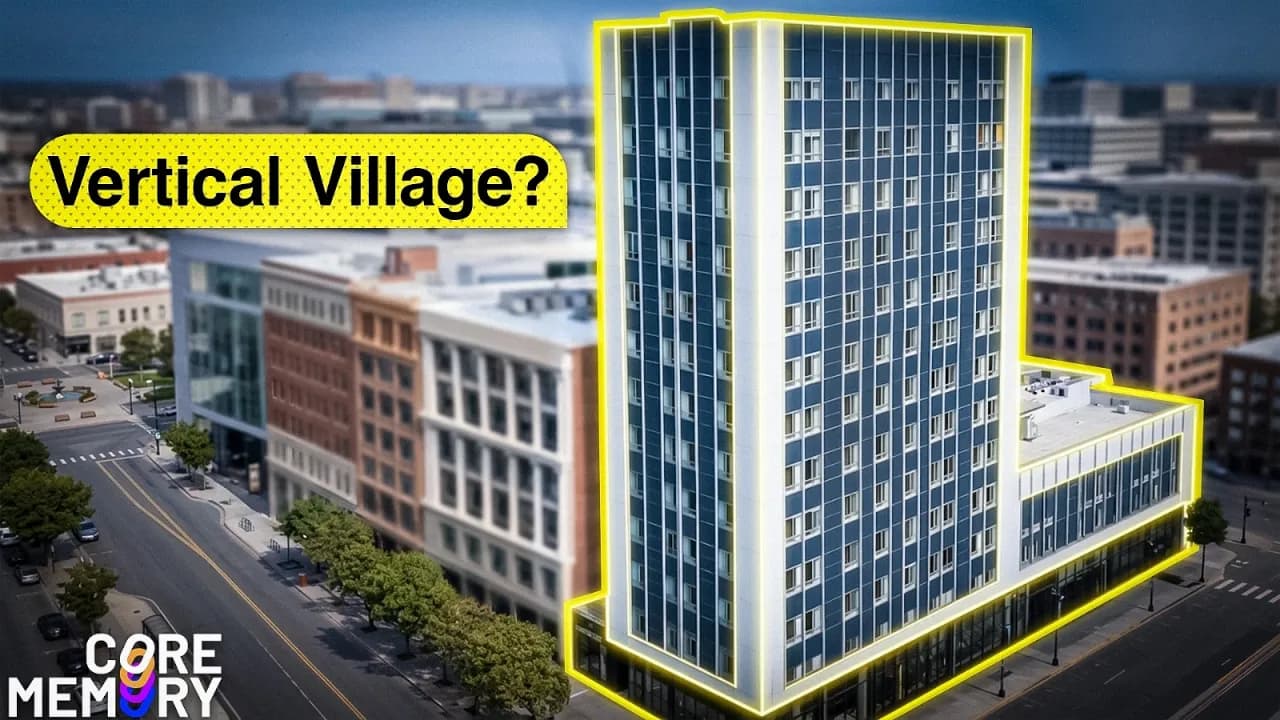
1:40 p.m. On her way to the town hall, Maya takes a shortcut through what was known as the "Eastgate" distribution center. When she was a teenager, the center employed around 2,000 people, most of whom worked night shifts. Then the robots came, and the building remained dark and empty for a few years. Everyone who passed by it would ask the same question: "Where did all those jobs go?" Now the ground floor is a 12-tier vertical farm of lettuce and herbs under purple lights, and the loading docks host a Saturday market. The old sign is still affixed to the wall, but someone has drawn a sunflower over the words "Eastgate."
2:00 p.m. This was the part of the day that Maya both feared and secretly looked forward to. Six weeks ago, her name was drawn by lot to work on the Citizens' Council along with 47 other residents. Their task this season is to determine how to spend the city's $12 million share of the fund proceeds. There are three main options on the table. They could extend the light rail line to the east side, build a new health clinic, or create a public workshop with tools, machinery and studio space that anyone can use. An artificial intelligence system summarized hundreds of pages of testimonials and modeled the costs and benefits of each option. But the arguments are human and sharp.
A retired nurse raises the issue of the clinic calmly and very convincingly. A nineteen-year-old argues that a workshop is the only option that helps people build something. Then there is the bus driver, one of the few drivers who still work on roads that robots cannot yet handle. The driver points out that half of the residents on the east side cannot reach the clinic or workshop without the railway line. They vote at 4:45. The clinic wins with a score of 29 to 19, and the workshop receives a commitment within next year's budget. No one is completely happy, and Maya has decided that this is how she knows it was fair.
5:30 p.m. It's in the community park. The temperature is 81 degrees Fahrenheit or about 27 degrees Celsius, and the tomatoes are mostly ready for harvest. Maya waters her plot of land and argues with her neighbor, Mr. Castellanos, about whether marigolds really repel pests. He says yes, and she tells him that the evidence is conflicting. But he doesn't care about the evidence. He loves marigolds and keeps a coffee tin full of their seeds in his garage.
8 p.m. Having dinner on the rooftop with four of the neighbors. One of them brings wine, and another brings a loaf from Maya's latest experiment, which is rye bread with roasted fennel. Everyone admires it, which is something that never happens. The conversation shifts from the assembly vote to the new railway line, and then to whether the robot will one day be able to make truly great sourdough bread. Maya says no, but deep down she's not sure.
10:45 p.m. Before going to sleep, she writes a few lines in a notebook, an old habit she acquired from her grandmother. Life here is not paradise. Rents are still very high, the east side still seems forgotten, and her father is still having bad days. People still argue about almost everything, and sometimes they do so harshly. But no one she knew was afraid of the end of the month the way her parents were. People have time to learn things, raise their children, look after each other, and argue about clinics and marigolds. Tomorrow is Wednesday. You will bake, you will study, and maybe you will argue with someone. It turns out that this is exactly what people have wanted all along.
Keep David Shapiro in your library
Save the videos and channels worth coming back to, and find them again in one place.