A Natural Protocol to Dissolve Gallstones (Avoid Surgery!)
In a Nutshell
Gallstones and gallbladder dysfunction are driven by bacterial imbalance (especially SIBO) that converts thin primary bile acids into thick secondary acids, causing bile stasis and stone formation. A two-month protocol using triple probiotics, a short-term low-FODMAP diet, herbal antimicrobials, and bile solvents (glycine, TUDCA, phosphatidylcholine) resolved symptoms and avoided surgery in two patients. This approach addresses the microbiome root cause rather than removing the gallbladder.
These notes were generated by AI and may contain inaccuracies.
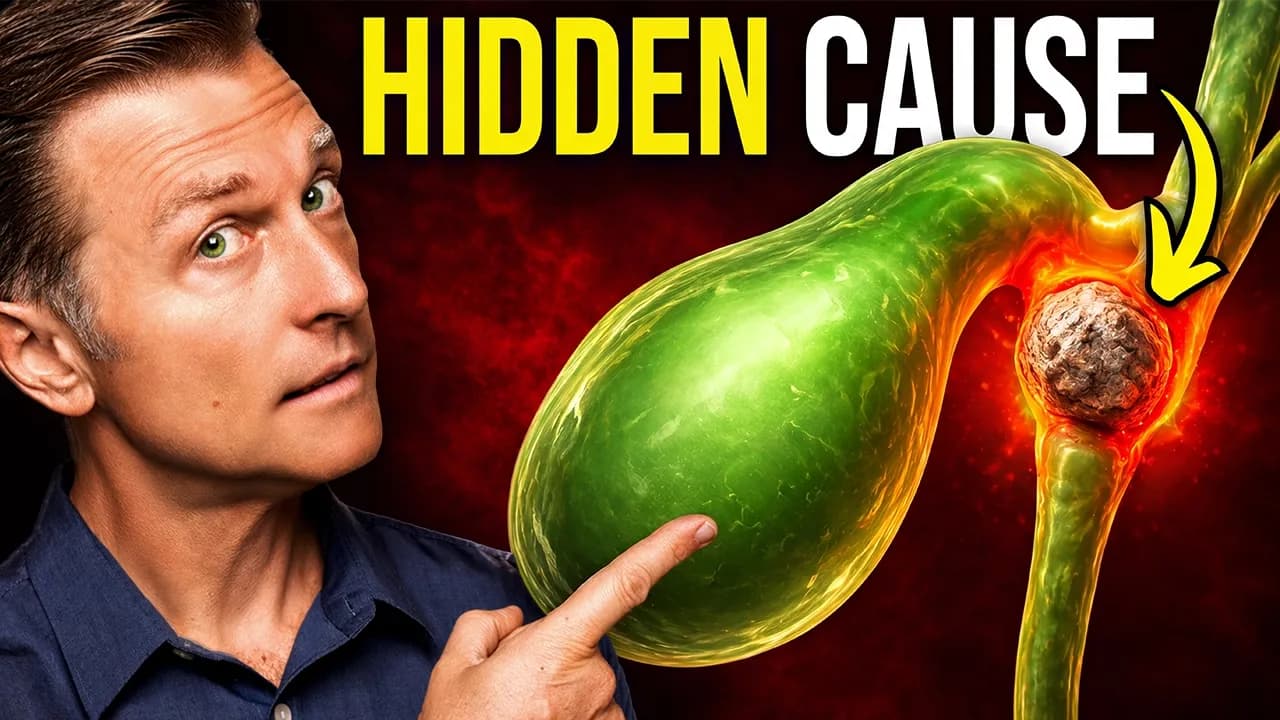
15% of adults have gallstones, and an even larger number suffer from gallbladder deposits. Approximately 700,000 gallbladder removal surgeries are performed annually in the United States. Removing the gallbladder is not a simple or risk-free procedure. Patients often experience worsened digestive symptoms after gallbladder removal rather than improvement.
Improving gut health can help restore healthy gallbladder function. A 2023 research paper stated that the gut microbiome has emerged as one of the critical regulators of gallstone formation.
Two patients at risk of gallbladder removal were successfully treated with a natural protocol. The protocol addressed both symptoms of gallbladder dysfunction and the underlying microbiome issues that contributed to their condition.
The most common telltale sign is pain in the upper right quadrant of the abdomen, where the gallbladder is located. Pain can extend to the shoulder or shoulder blade after eating. Additional symptoms include fat intolerance, light-colored floating stools indicating fat malabsorption, gas and bloating, nausea, heartburn, and indigestion. The more symptoms a person experiences, the greater their risk of undergoing gallbladder removal surgery.
Bile is produced by the liver and stored in the gallbladder. After eating, the gallbladder contracts and pumps bile into the small intestine to break down fats and support healthy bowel movements. Bile contains primary and secondary bile acids. Primary bile acids help thin the bile, while secondary bile acids increase bile density. Both need to be in proper balance for healthy gallbladder function.
A healthy microbiome enables the correct balance between primary and secondary bile acids. When microbial balance is disrupted, bile becomes thicker, leading to stone and deposit formation. Symptoms of gallbladder dysfunction appear when bile becomes too thick to easily pass into the small intestine.
An observational study conducted in 2018 found that 40% of individuals with gallstones had SIBO, compared to only 20% in healthy individuals without gallstones. SIBO leads to loss of primary bile acids because bacteria produce an enzyme that prevents reabsorption of these bile-thinning acids. This results in more concentrated, thicker bile.
A 2020 study found that people with gallstones had higher levels of bacterial imbalance and higher levels of secondary bile acids. Bacterial malfunction leads to production of 7-alpha dehydroxylase enzyme, which converts thin primary bile acids into density-increasing secondary bile acids.
The patient presented with upper right quadrant pain extending to his shoulder and significant throat pressure after eating, suspected to be silent reflux associated with gallbladder dysfunction. The triggering event was antibiotic use for a dental infection. Ultrasound imaging revealed gallstones, and he was advised to have his gallbladder removed.
The patient experienced fat intolerance, light-colored stools, upper right quadrant pain, heartburn, and bloating. Her triggering event was proton pump inhibitor use (such as omeprazole or Prilosec) for gastritis treatment. Ultrasound showed no stones or deposits, but a HIDA scan revealed reduced ejection fraction with weak gallbladder contraction. Bile was reaching the small intestine with very low efficiency.
The treatment plan addressed two main components: modifying the microbiome to improve bacterial imbalance and SIBO, and supporting the reduction of bile density. Both patients had medication-induced microbiome disruption leading to gallbladder dysfunction.
A randomized controlled trial conducted in 2022 found that probiotics given to gallstone patients for two weeks led to decreased secondary bile acids. The study authors stated: "We believe that probiotics may be an effective treatment for inhibiting the formation of gallstones." The approach used triple probiotic therapy combining Lactobacillus and Bifidobacterium species, Saccharomyces yeast (either Cerevisiae or Boulardii), and soil-based probiotics.
The low FODMAP diet reduces fermentable carbohydrates, which serve as food sources for intestinal bacteria. While not directly studied for gallbladder dysfunction, it mechanistically addresses the bacterial imbalance and SIBO that lead to slowed bile flow and gallstone formation. The diet is used as a short-term intervention to create a healthier microbiome, after which a more varied diet with larger amounts of fiber can be consumed.
Herbal antimicrobials used included Biota Clear 1A and 1B for one month, followed by Biota Clear 2A and 2B. Throughout the entire two-month protocol, an anti-biofilm agent called Buta Dissolve was used. This protocol was published in a 2025 research paper on herbal antimicrobials and anti-biofilm agents for SIBO treatment.
Three treatments were used to liquefy bile: glycine, TUDCA, and phosphatidylcholine. Glycine is an amino acid that helps make bile acids more soluble in water. TUDCA is a bile acid that liquefies bile when ingested. A 2025 study on gallstone patients using UDCA (a sister compound to TUDCA) found that gallstones dissolved in 60% of patients. Phosphatidylcholine helps keep cholesterol dissolved in bile, preventing precipitation that leads to gallstone formation.
For the 61-year-old man, all symptoms disappeared within two months. The low FODMAP diet led to almost immediate relief from throat tightness symptoms, while probiotics, herbal antimicrobials, and bile-dissolving agents resolved his gallbladder pain over the two-month period. For the 30-year-old woman, all symptoms disappeared within about three months. The bile-dissolving supplements led to noticeable improvement in gallbladder pain within two weeks, with other interventions contributing to complete symptom resolution over three months.
Treatments to reverse gallbladder dysfunction target bacterial imbalance and SIBO through probiotics, low FODMAP diet, and herbal antimicrobials, combined with bile solvents including glycine, TUDCA, and phosphatidylcholine. Both patients avoided gallbladder removal surgery and improved their overall quality of life.
Keep Dr. Michael Ruscio, DC, DNM in your library
Save the videos and channels worth coming back to, and find them again in one place.