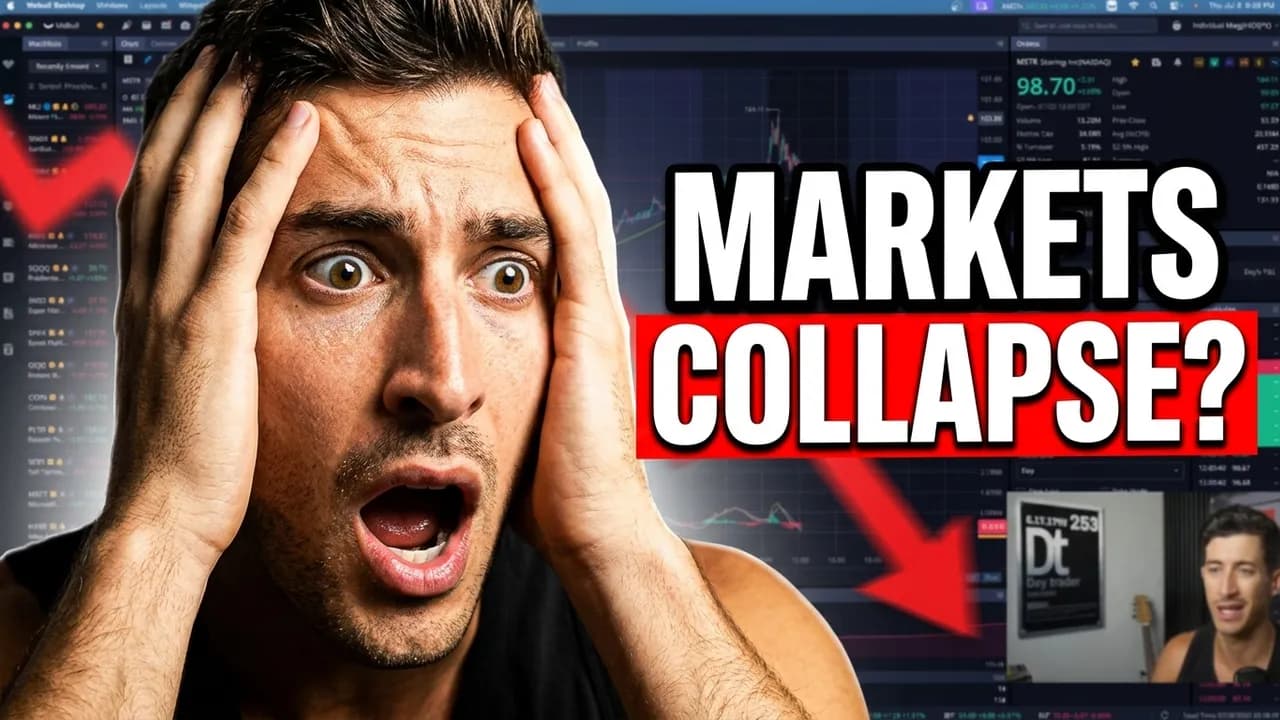
Alert: Just Sends Market Lower With New Update!!!
In a Nutshell
The trader lost over $9,500 after buying Micron too early, trimming too soon on personal bias, and failing to follow the V-shaped recovery trend despite Friday's $28k gain. Key mistakes were oversized positions after a win and prioritizing personal views over market direction and momentum. SMCI dropped 9% on Taiwan raid news and Nvidia saw $47M insider selling, while Trump’s gas price tweet ignored how his Iran actions drove oil higher.
These notes were generated by AI and may contain inaccuracies.
President Trump told gas retailers to get prices down immediately or there's going to be a big problem ahead. The speaker noted agreement with Trump's earlier announcement about digital service taxes that Americans get charged but other countries do not get charged in return, viewing it as leveling the playing field. However, the speaker expressed disagreement with the gas price tweet, pointing out that oil prices rose because Trump attacked Iran, and Iran controls the Strait of Hormuz, which negatively affected oil prices. The speaker questioned whether people realize the connection or if they simply believe retailers are charging more because they can.
Gasoline retailers make a net profit of only around 3 cents to 7 cents per gallon of gasoline sold, with razor-thin margins. The speaker called out the hypocrisy of the person responsible for initiating the attack complaining about higher oil prices being charged by gasoline retailers.
Something triggered the market to pull back, possibly the tweet or escalating news, or perhaps Trump's insiders beginning to sell. The speaker observed a V-shaped recovery and regretted not staying long. The speaker bought the dip on Micron Technologies (MU), sold too early, then went short as markets continued pushing higher. MU ended up 1% in the green, nearly breaking even on the day.
Momentum and direction are the most important factors in short-term trading, regardless of personal beliefs about company fundamentals. The speaker came in with too much confidence after Friday's best day of the month, earning $28,000, and traded with too large a position size. The speaker shared the mistakes with the LP team in real time.
The first mistake was starting to buy the dip on Micron too early. When the stock began recovering, the speaker was over the trade and wanted to minimize loss rather than take profits. The speaker trimmed the position multiple times, viewing it as overbought based on personal beliefs rather than what the charts showed. There was no confirmation of rejection on the five-minute timeframe, only a slight rejection around the moving average.
The speaker noted that closing one side of a trade makes going the opposite direction illogical, as one bad trade can erase prior gains. The speaker lost over $9,500 on the day. The speaker acknowledged earning the loss due to the dollar amount traded after the $28,000 gain on Friday. The speaker broke the rules by not focusing on criteria and not accepting market direction.
The speaker should have stayed lighter on position size to avoid pressure for recovery and would not have felt stressed to sell. The speaker should have stayed long as there was no breakup pattern until a later pullback. Direction was favorable with the V-shaped recovery.
The speaker got upset because Trump tweeted that Iran wanted to meet in Qatar for talks, but Iran stated they were not going to meet, and there was no data to back up the claim. The speaker believed Trump was not telling the truth and expected markets to sell off. However, markets care about sentiment and hope rather than truth—they are a leading indicator.
The speaker should have gone with the trend rather than personal beliefs about right or wrong. For shorter trades and day trades, what matters is what the market is currently doing, not whether the trader is factually correct. The biggest mistakes were position size management and not accepting market direction. Focusing too much on buying too early led to overaggression, then desperation to exit, making it harder to stay comfortable in the trade.
When in a bad trade, instead of adding more, stop and acknowledge the situation, then ask whether it makes more sense to not add more and/or cut losses. Trimming the position may be better than adding. The speaker used personal experience as an example.
Super Micro Computer (SMCI) fell over 9% on the day after the company's office was raided as Taiwan expands its chip smuggling probe. The speaker noted SMCI has a history of sketchy incidents, including prior investigations for accounting fraud and allegations that the CEO and executives were smuggling Nvidia GPUs into Taiwan. The company is valued at $18 billion. The speaker has never been a fan but acknowledges it is technically oversold and often recovers well once it finds a bottom. Negative news and sentiment currently dominate, and future performance will largely depend on market sentiment.
Nvidia's second largest individual shareholder, Mark Stevens, dumped $47 million of his Nvidia shares this month. The speaker noted Stevens holds millions of shares, so while $47 million is a large amount to most people, it is not technically an extreme percentage of his holdings. The speaker suggested it may simply be profit-taking at elevated levels rather than a signal of uncertainty. The speaker referenced Michael Saylor as an example of someone who sold a billion dollars worth of Bitcoin after it had already sold off 50%, rather than at all-time highs. The speaker emphasized that buying high and selling low does not work in any market.
Tomorrow's economic releases include the JOLTS report and Consumer Confidence Report, both scheduled 30 minutes after markets open. The speaker mentioned these appear at the bottom of the LPP landing page, which provides a free economic calendar. Members of the LPP team can watch the live trading session tomorrow to see market reactions. The live session runs 30 minutes to an hour daily at market open. Lifetime access requires a one-time payment.
Keep Ricky Gutierrez in your library
Save the videos and channels worth coming back to, and find them again in one place.