Ari Emanuel on the Future of Entertainment in the Age of AI
In a Nutshell
Ari Emanuel built MARI as a $2.9 billion bet against AI, investing in live events, sports, and experiences that cannot be replicated digitally. The core thesis is that AI will drive productivity gains and create more leisure time, increasing demand for scarce, emotionally-connected live entertainment. Sports and live events become more valuable in an AI world because they offer irreplaceable human connection, while traditional media faces disruption but gains efficiency through AI tools.
These notes were generated by AI and may contain inaccuracies.
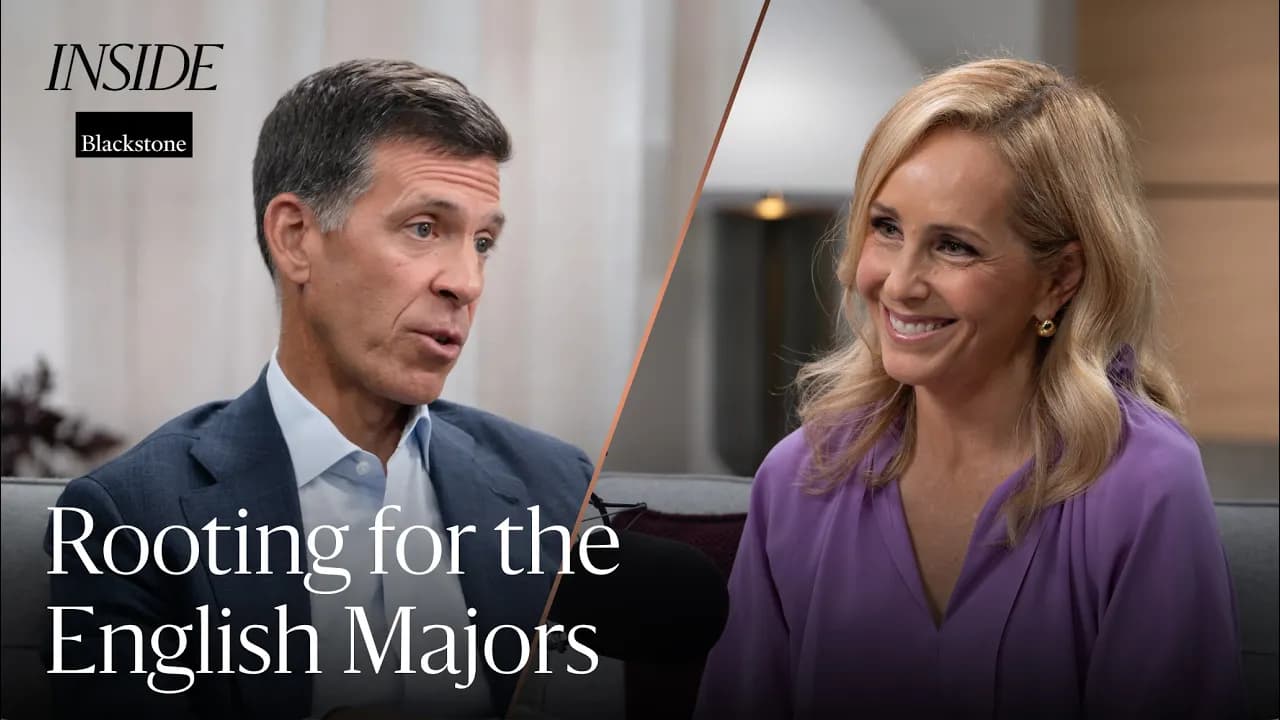
Christine Anderson, Global Head of Corporate Affairs, introduces the episode lineup featuring Michael Chae, Vice Chairman and CFO, followed by a conversation with Ari Emanuel about AI reshaping media and entertainment and the increasing value of live experiences and sports.
Michael Chae discusses market volatility from the previous week, noting a relief rally on Wednesday followed by de-risking on Thursday, with stabilization and AI stock rebounds occurring on Friday. Chae highlights that the S&P is posting its highest earnings growth in five years, with Blackstone's portfolio showing double-digit revenue and profit growth driven by investment booms and consumer spending. The economy is experiencing a positive one-two punch of investment growth and consumer spending at over 3% real growth, though somewhat K-shaped. Productivity and margins are showing strength ahead of the anticipated AI productivity boom.
Chae notes welcome easing of rates with approximately 50 basis points reduction in about five weeks, primarily driven by inflation factors centered on energy and oil prices tied to geopolitical conflict. Outside energy inflation, other factors remain under control with wages in balance and shelter cost inflation muted. A cooling in the economy that has been running hot would be constructive for rate outlook. Chae suggests the Fed has room to ease if geopolitical resolution occurs.
Chae reports on his trip to India, Japan, and Korea, noting India's dynamic economy and robust talent pool where Blackstone has built significant investment businesses in private equity and real estate. For Japan and Korea, he observes that large corporates need private capital solutions more than ever, with Japan focusing on shareholder value and Korea having large-scale investment needs for major companies.
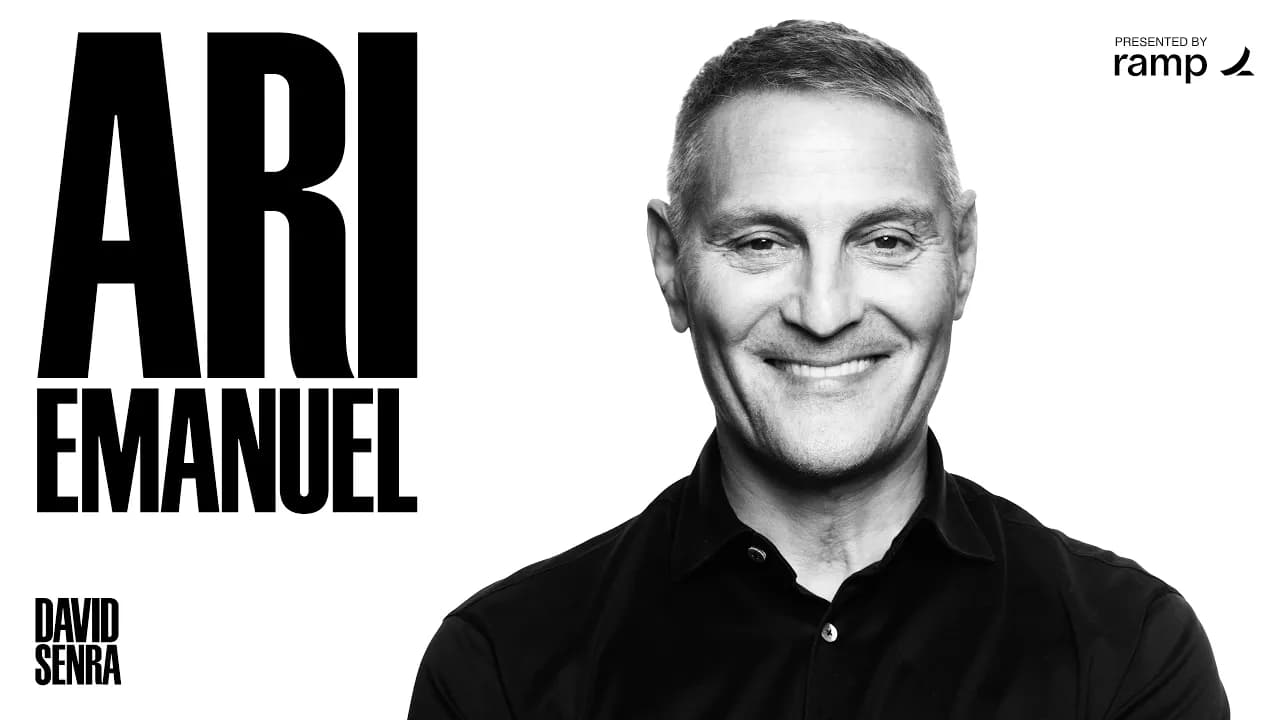
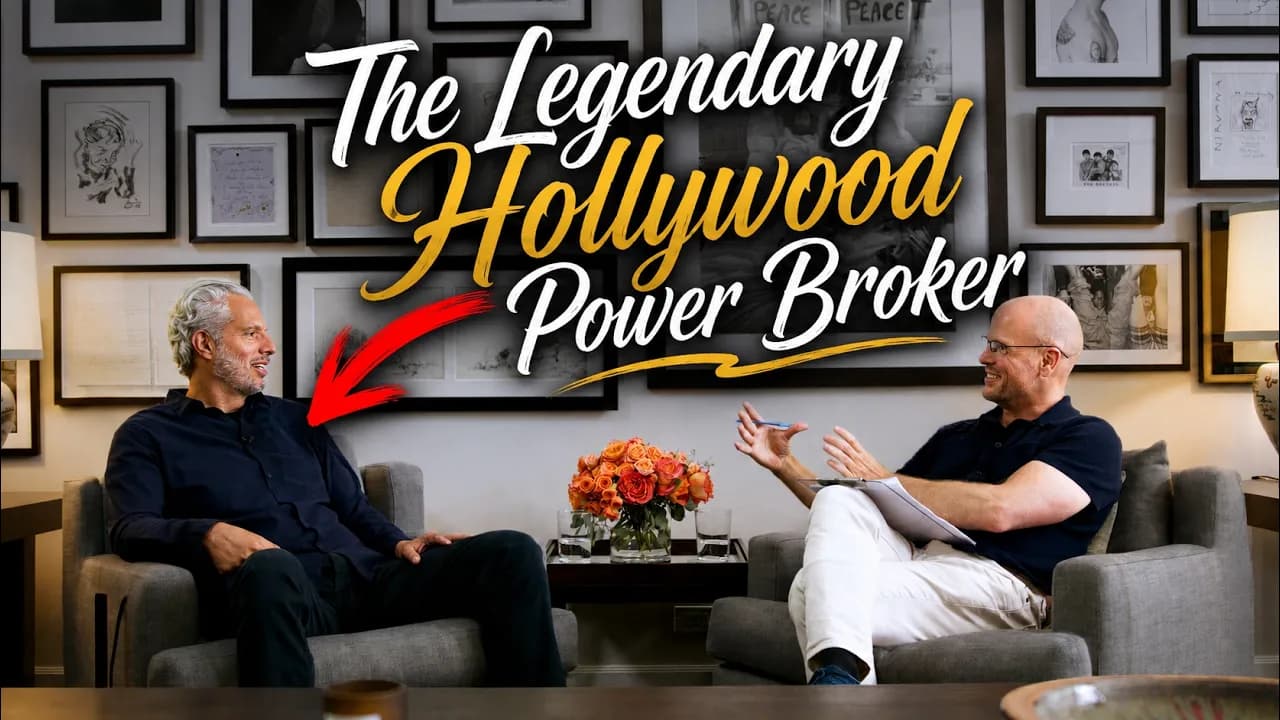
Ari Emanuel is introduced as a legendary Hollywood agent and influential figure in entertainment and sports, having transitioned from William Morris Endeavor to TKO (behind UFC and WWE), and now building MARI, a live events and experiences company. He is also the author of the bestselling memoir "Roll the Calls."
Emanuel explains that writing his memoir started ten years ago when his head of communications and head of the lit department suggested that if he didn't write it, someone else would write it incorrectly. He chose to be honest about the brutal realities of his journey rather than glossing over experiences, believing that telling the honest truth was the only way people would learn from and care about the book.
Emanuel chose the quote "work is the true story of Hollywood" because people often assume those in Hollywood don't work hard, when in reality it's constant 24/7 work with hundreds of millions of dollars constantly at stake. He discusses his father's influence, watching him leave the house every day at six, and his own experience with four children, initially feeling guilty about missing family time but ultimately succeeding with his ex-wife in raising four "touchdowns."
Emanuel describes his intense client focus as "do or die for clients," viewing himself as their partner on the business side of their lives. When clients give him their dreams - scripts, acting careers, directing careers - he becomes their trusted partner. This commitment is 24/7, with clients on his mind from waking until bedtime. He mentions working with clients like Mark Wahlberg, Jonah Hill, Marty Scorsese, Pete Berg, and Aaron Sorkin.
Emanuel makes approximately 300 calls per day across his concentric circles of business: clients, MARI's 16 businesses, and TKO. He explains this approach stems from the collision course of his various interests, where conversations about Netflix movies might simultaneously involve WWE discussions.
Emanuel learned to make short phone calls early in his career when money was tight, avoiding unnecessary pleasantries. He recounts an executive at Warner Brothers who would always ask about family, which Emanuel found disingenuous. He states: "You know if I'm your friend. You'll know if I'm your enemy. I'm good with it." Despite this transactional approach, everyone he talks to likes him.
Emanuel initially thought being parodied in Entourage would be the worst thing for his career, but Steve Levinson and Mark Wahlberg convinced him it would be the greatest thing that ever happened to him, and over time it became an asset.
Emanuel shares the story of meeting his partner Mark Shapiro on a United flight from New York to Los Angeles in first class (2-1-2 seating configuration). Shapiro was typing relentlessly with two fingers for three and a half hours. Emanuel asked the sleeping passenger at the window to move, confronted Shapiro asking "What the F are you doing?" They discovered they were both from Chicago suburbs and became fast friends, comparing notes on people and businesses for the remaining hour and a half of the flight.
Emanuel raised approximately $2 billion in equity and $900 million in debt to build MARI as an opposite bet to AI, focusing on live events that cannot be disintermediated. The business includes holiday entertainment (Winter Wonderland, food festivals, flower shows), collectibles (Frieze, Barrett-Jackson, Collect-A-Con in the Pokémon space), and sports (Miami Open, Madrid Open, Escape from Alcatraz, Melbourne Marathon). The ticketing platform TodayTix serves as the foundation, with Bucket Listers as a discovery social channel helping users find entertainment options in cities like London.
Emanuel aims to be for live events what Live Nation is for music. He believes live experiences - sports, music, events - cannot be disintermediated. His son Leo's observation about "Thursday being called baby Friday" reflects the trend toward three-day workweeks, creating a third more revenue opportunity as people gain more leisure time.
Emanuel predicts traditional movies and television will become incredible with more content at lower costs. AI will unlock creativity and bring down production costs, enabling more content creation. New forms including social, podcasts, and microdramas will continue emerging. He notes microdramas in China have already surpassed new movies, with many being AI-generated. While people don't want fully AI movies, there's an economic model for certain price points. Production below the line will face challenges requiring readjustment, but judgment and taste remain paramount.
Emanuel believes sports become even more valuable in an AI world because live entertainment cannot be disintermediated. With AI creating more leisure time and consumer spending, live events will benefit from increased demand. Drive times in the United States average 11 to 4, with Thursday night becoming prime time for entertainment as people finish work earlier.
Emanuel recounts his first negotiation as an agent at CAA for an 18-month option worth $5,000 with an 18-month extension. Fighting to increase it to $7,500, he told the head of Warner Brothers Television Business Affairs that the deal wasn't fair. The executive called him to the Valley office and stated: "Fair is where we end up. Now, get out of my office." This taught Emanuel that fair is where both parties end up - the number you want unless you think it's incredible, and what you accept because you can't get any more.
Emanuel predicts agents will see brands become content creators in podcast, microdrama, and social spaces. The agency business is constantly evolving. He believes Hollywood is not afraid of AI, stating we're not even in the bottom half of the first inning, with changes moving faster than expected and ultimately being net positive despite bobs and weaves.
Emanuel states that investors don't yet completely understand the speed, magnitude, and global dislocation that AI will create, followed by the upside. Elon Musk told him AI couldn't disrupt live entertainment, which Emanuel cites as validation for his MARI investment strategy.
Emanuel confirms WME still has a mailroom and training program. For young people wanting to work in California entertainment, he recommends getting into the trade through the training program.
The value of studying the arts cannot be underestimated. Taste, culture, literature, and creative thinking are values that AI cannot replicate. Over time, one must learn to stand up for oneself and believe in what one believes in, while being willing to go through the hell that it takes to start a business or operate a business within a company. Taste, culture, style, and ideas are unique talents that require time to refine through recursive self-improvement and continuous cultivation.
At 65 years old, the daily routine includes sleeping six and a half to seven hours, working out every day, taking a sauna every day, and fasting every Monday with three-day fasts quarterly. When asked which single element of the routine is most essential, the answer is sleep. Stress management includes 20 to 30 minutes in the sauna every day and an intense breathing meditation practice every morning.
The conversation concluded with mutual appreciation between the host and guest, with the host noting the guest's intensity, strong points of view on people, and energy around client work and broader vision in live entertainment.
Chris James (CJ), Head of Blackstone's Global Tactical Opportunities business (Tac Opps), joined to discuss live experiences and sports. He was the first person heard discussing live experiences as a major investable asset class. At a Blackstone investor conference, he walked onto stage with music from Lil Yachty to kick off his presentation, capturing the key thesis around live entertainment: scarce moments and emotional connection.
Live entertainment offers levers to create value and enhance acquired assets. It is an attractive space for private equity investment apart from AI considerations. The scarcity factor is significant in a world of digital abundance, where online entertainment can be consumed anywhere. Live entertainment's scarcity and the emotional quotient of shared human connection make it distinct and valuable. The demand behind this scarcity creates an interesting investment opportunity.
Sports represents the ultimate unscripted content where outcomes are unknown. Investment approaches extend beyond simply investing in teams to include arenas, infrastructure around arenas, online components, and premiumization of the experience. The focus on modern venue infrastructure involves investing in real assets such as arenas or buildings that anchor broader entertainment districts.
Keep Blackstone in your library
Save the videos and channels worth coming back to, and find them again in one place.