Best Wearables I Use Every Day
These notes were generated by AI and may contain inaccuracies.
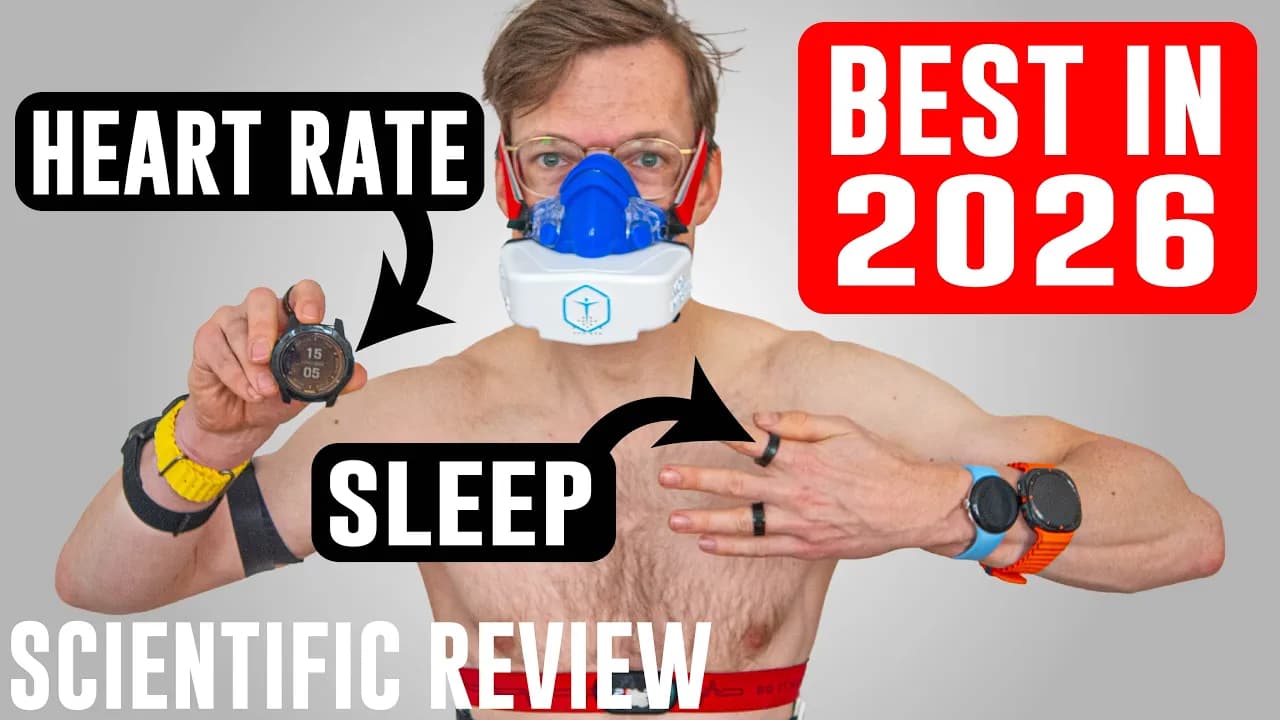
Tested hundreds of smart watches, smart bands, smart rings, and smart beds. Devised personal ultimate health and sports tracking setup based on scientific and systematically collected data. Discusses choices based on nerdy data and provides alternatives for different goals. Rob is a post-doctoral scientist specializing in biological data analysis. Data is objectively collected but imperfect and requires interpretation. No single universal best device, but likely a best device or combination for each person.
Video discusses how to use self-tracking data and why track things, not just best devices. Added segments to clarify usage.
Sports: running, cycling, weightlifting. For running and cycling, track distance traveled after workout, live pace and speed during exercise for interval training, fitness progress, and speed. Track heart rate to pace runs and sustain during cycling. Health: focus on sleep with objective measures of quality, timing, and duration. Sleep tracking setup is slightly redundant; choose suitable items.
Favorite overall health and sports tracker, screenless smart watch wearable on different body parts. Wears two: one on wrist, prefers one on biceps under shirt for comfort, better heart rate tracking, no contact dermatitis (red rashes) like on wrist.
Strongest points: app and sleep tracking. Sleep stage tracking from scientific study with University of Salzburg on 18 people over ~5 nights. New algorithm (right): deep sleep agreement 82%, REM sleep 76%, light sleep 70%, awake time lower (devices struggle, detect too little awake time). Old algorithm: REM/deep ~71-72%.
Compared to Apple Watch, Oura Ring, Fitbit, Garmin, Circular Plus Ring. Sleep2 algorithm (Salzburg-developed app) best but not a device. Top performers: Apple Watch, Whoop Strap, Oura Ring (close together). Fitbit improved since study. Garmin and Circular Ring lag. Apple Watch weaker on deep sleep. Different visualizations show performance. Personal testing: Eight Sleep Pod excellent.
Affiliate links for Whoop Strap, Oura Ring, Eight Sleep Pod. Opinions own, data unfiltered. Uses deep/REM sleep vs. normal night for sleep quality hint, combined with subjective feelings. Also checks heart rate, heart rate variability (HRV), sleep/recovery score. HR/HRV reliable across devices; compare to personal baseline. High resting HR/low HRV indicates issues (e.g., late meals, stress, illness). Devices gave hints like late meal correlation. Sleep/recovery scores provide readiness data; combine with subjective feelings.
Uses Oura Ring and Eight Sleep Pod alongside Whoop.
Uses for audiobooks then quiet sleep. AirPods too bulky cause sore ears. Sleep A30 comfortable all night, even side sleeping, flush fit, swappable tips/foam. Triple noise cancellation: active for sleep, passive isolation, adaptive snore masking (detects snoring, plays masking sounds). App: sound library (white noise, nature, Calm stories), gentle in-ear alarm, 10 hours ANC.
Ceramic version, good sleep stage tracking. Best: Eight Sleep Pod, Apple Watch, Pixel Watch, Fitbit, Whoop, Oura Ring, Galaxy Watch improving. Personal testing plot: average sensitivity (x), worst sensitivity (y). Uses three for redundancy; agreement confirms real signal. Oura app/accuracy great for sleep, poor for sports (finger HR inaccurate during exercise; wrist/biceps better). Whoop better for both. Oura comfortable, reliable HR/HRV during sleep (plots show near-perfect agreement with reference). Consistent sleep stages, strong except awake.
Excellent sleep stage tracker, more comfortable (mattress cover, optional blanket, tracks each side independently). Actively improves sleep: cools/heats independently. Helps hot sleepers, pre-warms in winter. Expensive with subscription (needed for tracking). Recommend only if affordable, no credit.
Amazfit Helio Strap ($99), decent sleep stages but struggles with REM. Fitbit (e.g., Charge 6) similar to Pixel Watches, under $100, no subscription. Helio like Whoop, better exercise HR in some tests.
Short-term: check outlier days (worse than normal: low deep/REM, high awake, low HRV, high temp/HR). Correlate with training (e.g., hard session → recover more), illness, adjust load. Long-term: maintain metrics in normal range, correlate daytime behavior (e.g., >3 coffees → less deep sleep → change behavior).
Dedicated sports watch with top GPS. Prefers external chest strap over internal HR. Brands: Garmin (Forerunner 965), Suunto (Race 2), Coros (Pace 4 testing), Polar (Grit X2, cheaper options). Dual-frequency GPS for better tracking. Uses Garmin Forerunner 965 for runs with Wahoo chest strap + Polar H10 backup (to phone). Mainly for GPS location.
Cycling: consistent signals on repeated rides, instant acquisition, minimal deviation (zoomed plots show tiny bits). Good even on different routes. Dual-frequency excels; others similar for most. Running tests for Garmin devices.
The slightly cheaper Garmin Forerunner 570, similar to the 970, has the same internals for GPS tracking. It showed consistent signals running multiple laps around Park Belvadier, even in areas where many devices struggle, like the top section and near a big wall on the right. There was slightly more deviation on the right and left sides, but the Forerunner 570 performed really well.
Main Sports Activities and Cycling Computer
Main sports activities are road biking, running, and weightlifting. Uses a cycling computer, currently the Garmin Edge 150 for road biking, which has great GPS and is used for indoor bike rides due to convenience and great battery life. The Garmin Forerunner 970 would perform equally well in GPS tracking, but a cycling computer is needed due to poor sense of direction. Chose Garmin Edge 150 for seamless integration into the Garmin ecosystem, where all data goes to the same platform. Sometimes uses a Wahoo bike computer, which is great, but prefers Garmin due to ecosystem investment. If not invested in an ecosystem, Wahoo or Coros (still updating their Dura cycling computer) are excellent options. Upcoming video on cycling computer performance—subscribe for it.
Suunto watches are a strong alternative to Garmin, with preferable design that looks much better. Currently testing the lightweight Suunto Run. Heart rate performance might be slightly less good than the newer Suunto Race 2, which has a newer generation sensor, more outdoor options, and really good GPS. The Suunto Vertical 2 also has great GPS, similar sensor layout to the Race 2, and showed super consistent signals running the same circles, especially on the right side where many devices struggle.
External Heart Rate Monitors
All sport brands (Coros, Suunto, Polar, Garmin) seamlessly connect to external heart rate monitors like Garmin, Wahoo, or Polar chest straps, the most reliable way to measure heart rate. Always pairs an external monitor regardless of watch brand. The Polar H10 ECG chest strap is the most tested, used extensively in scientific literature, making it highly reliable. Other brands likely perform well, but Polar H10 is the workhorse. For non-wearable heart rate tracking, pair it with the Polar Beat app for under $80, using phone GPS—requires carrying phone with sufficient battery. Replace belt part yearly as electrodes degrade.
Polar and Coros with dual-frequency GPS perform really well, up there with Garmin and Suunto. Loves the Polar Pacer Pro 3 (testing Pacer Pro 4, bought it himself after Coros stopped sending review units—video coming). Polar includes all possible functionalities if hardware allows, unlike Garmin which software-locks features in lower/mid-tier models. Example: friends needed Garmin Forerunner 970 (~$700) for mapping features available on Polar Vantage M3 ($300). Polar's approach is consumer-friendly but may leave money on the table business-wise. Prefers European companies' (Polar) philosophy over American (Garmin), though American ones optimize profit/shareholder value. Appreciates Polar sending devices openly, even after poor tests, and including feasible features across models. Friend bought Polar Grit X2 for features at reasonable price.
Why External HR Monitors for Sports Devices
Wrist-based HR on sports devices isn't amazing. ECG (chest strap) measures electrical heart signals; PPG (green lights on watches) measures blood flow changes—weaker signal with more noise. Recommend pairing chest strap if okay with wearing it.
Indoor cycling HR plots (2025 devices): better agreement top-right. Top performers: Apple Watches, Apple AirPods, cheaper Apple Watch SE, Huawei devices, Amazfit Helio Ring (excellent on biceps), Suunto Vertical 2, Pixel Watches. Sports devices like Polar, Garmin Forerunner 570/970 are lower-end but not bad—recommend external monitor.
Biking harder: Suunto Race 2, Garmin Instinct 3, Forerunner 570/970 medium well; variation from temperature/handlebar grip. Better: Apple Watches, Suunto Race 2 (road bike test), Huawei, Pixel.
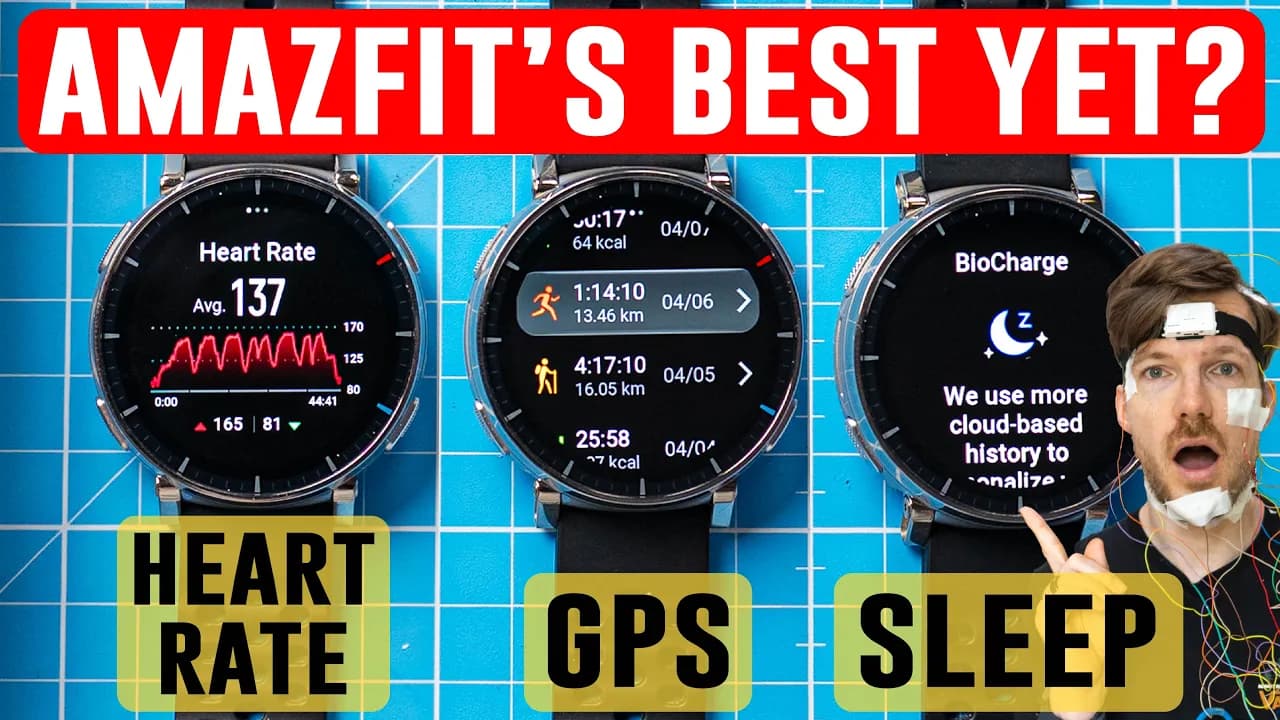
Running: Top—Amazfit Helio Ring (biceps), Apple Watches, Pixel Watches, Huawei. Garmin Forerunners did quite well (tuned for running) but not as good as top ones. Kudos to Amazfit for good HR sensor; needs sleep tracking improvement.
Combined HR and Sleep Overview
Plot: best HR right, best sleep top. Top: Pixel Watches, Apple Watches, Whoop strap (good sleep, HR could improve), Galaxy Watches close, Huawei (good HR, poor sleep), Oura Ring (good sleep, poor HR).
Heart Rate Tracking Purpose
HR best indicator of workout intensity. For cardio, keep below certain value for endurance: road biking below 160 BPM (preferably 150) for hours; avoid starting too fast. Same for running—stay in zones.
Specialized: VO2 Master Analyzer with mask measures VO2 max most reliably at home ($5,000–$6,000+). Nice for YouTube/channel but overkill—use monthly max. Better: sports lab every 6 months. Only for wealthy or serious athletes without lab access.
Training Apps
Runna app for running programs (no idea how to create them). Builds mileage safely, introduces long runs, interval runs, progressive runs. Ran two unofficial half marathons in training.
Strava main app for sharing/following exercises, friends, athletes—best out there despite faults. Follow on Strava (link below); affiliate links for Strava/Runna.
Considering Zwift for indoor cycling (used pre-2019; now uses Garmin Tacx app for power zones). Curious about experiences/comments.
Teasing future sensors: Train.Red, Core body temperature sensor, Flow Bio sensor—separate video coming.
Everything specific to personal use, but alternatives helpful. Doesn't daily-use Apple/Pixel Watches (needs free wrist for testing) but good if battery life okay. Suggest missed devices in comments.
Sponsor: Sleep A30 earbuds from Anker—genuinely using/enjoying. Use affiliate links for Whoop, Eight Sleep Pod, Oura Ring, Suunto/Garmin watches, Amazon anything (toilet paper, coffee) for discounts/channel support. Check Amazfit Helio Ring or HL pod videos.
Keep The Quantified Scientist in your library
Save the videos and channels worth coming back to, and find them again in one place.