Best Wearables To Get Fit in 2026 According to Science!
These notes were generated by AI and may contain inaccuracies.
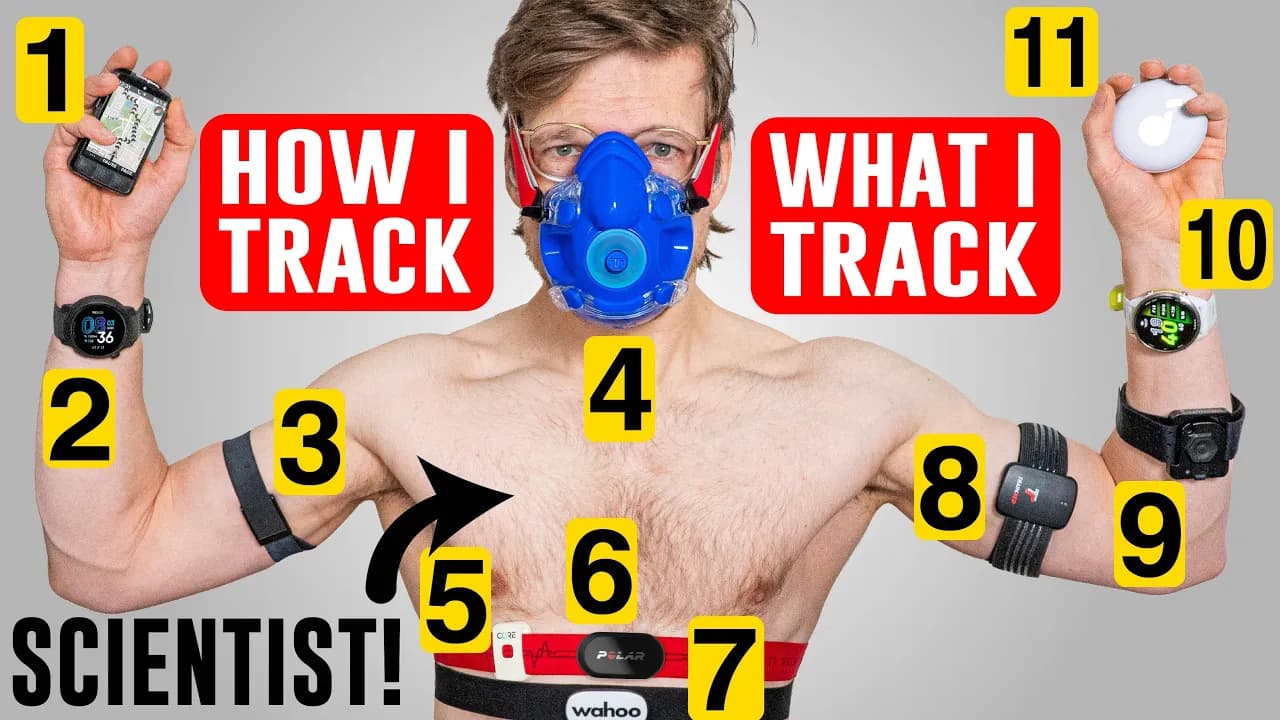
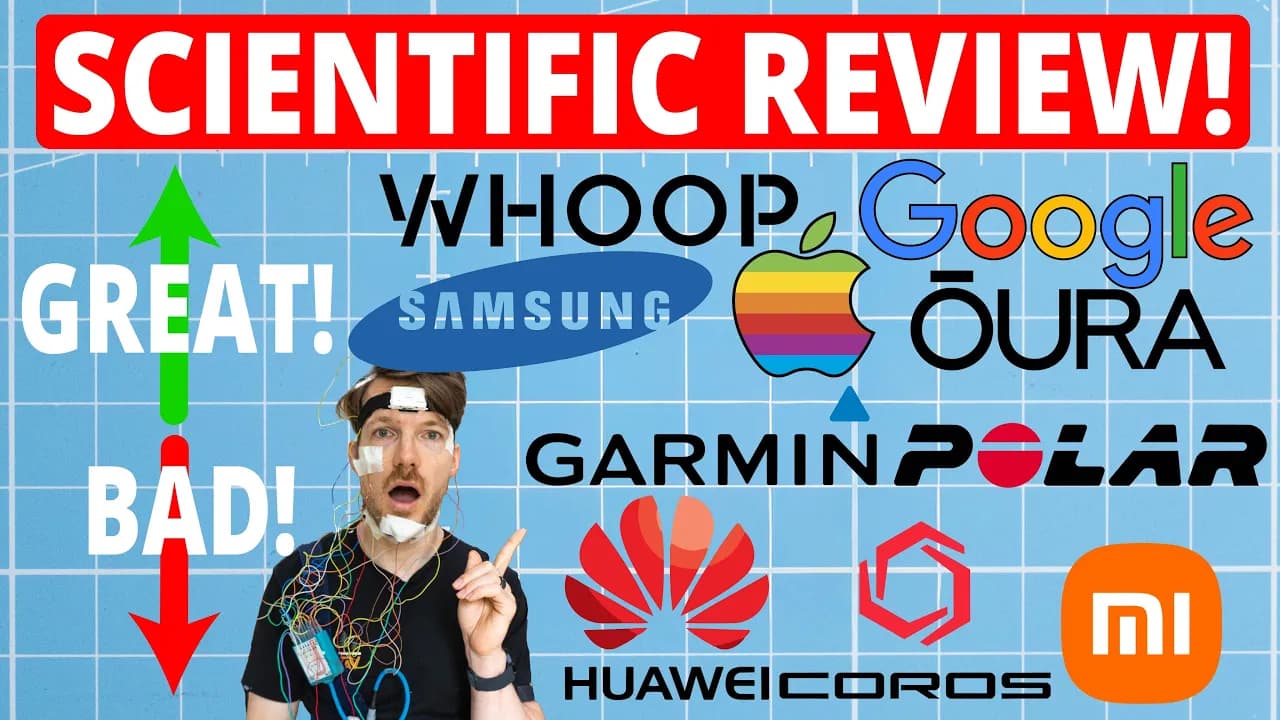
Scientifically tested dozens of wearables to determine the best one for 2026. Rewrote almost all analysis code for better, more comprehensive results. Overview shows testing over the last two years with best devices on the top right. Focuses on two aspects: heart rate tracking performance during exercise and sleep stage tracking during the night, touching on performance and recovery. Excludes devices that do only one (just sleep or just sports); more on those soon.
Rob is a post-doctoral scientist specializing in biological data analysis.
Horizontal axis: average heart rate correlation with reference during indoor cycling, outdoor cycling, and running (better towards right). Left/vertical axis: average sleep sensitivity (agreement with reference EEG device; better towards top). Top right devices best in both on his body. Note: He's a healthy, normal sleeper; results may differ for sleep issues or heart defects, but represent overall performance.
Focus on heart rate tracking: aim for average correlation of at least 0.9, preferably 0.95+ (above dotted lines). Includes Apple Watch (Series 11, Ultra 3 similar performance), several Pixel devices, cheaper Mi Band 10, Amazfit Helio strap (biceps), several Huawei devices. On edge: Whoop strap MG, Galaxy Watch, some Amazfit devices, some Garmin (e.g., Forerunner 970, Garmin 470).
Why care? Optimizes workout intensity via heart rate zones. Measuring HR during exercise is hard; 0.9+ good, 0.95 preferred.
Best devices: agreement/sensitivity above 75% (above green line). Includes Oura Ring (did quite well), Galaxy Watch 8 (along line; overall Galaxy performance middling, around middle area—not good enough yet), Apple Watch (recent update improved deep sleep issue), Google Pixel watches, Whoop strap (really well).
Best brands (consistent across devices): Oura Ring, Apple Watch, Pixel Watch and other Google Fitbit products, Whoop strap (MG tested; expect Whoop 5.0 same).
Use to optimize sleep by understanding negative factors. Better sleep for longevity, feeling better, sports performance.
Overlap in top-right area (lenient cutoffs include Galaxy Watch 8, Apple Watch Series 11). For Android: Pixel Watch 3, Pixel Watch 4, Whoop strap (platform-agnostic). For iOS: Apple Watch; Galaxy Watch potentially but lower quality than Pixel/Apple; Samsung improving.
Overview high-level; nuance in future videos (new analysis code/plots over next 2-3 months).
Spent ~3 full days over Christmas/New Year's rewriting code (initially thought 1 afternoon). Added release date segments to analyze 2025 devices separately for HR and sleep.
Excluded from plot: GPS tracking (key for runners/cyclists following pace programs) and app experience/coaching.
GPS: Sports watches best (Garmin, Coros, Suunto, Polar). Of smartwatches, only Apple Watch Ultra 3 really well (needs dual-frequency GPS). Favorites: Garmin Forerunner 970, Garmin Forerunner 570, Coros Pace 3 (testing Coros Pace 4), Suunto Race 2, Polar Vantage M3.
Sports watches' integrated HR could be better; Garmin 970/570 potentially good enough (lighter weight). Older Suunto poor HR; newer like Vertical 2 improved, close to Garmin/Polar Vantage M3. Not as good as Huawei, Apple, Pixel. Recommend pairing with chest strap (all connect to external HR monitor). Sleep stages on sports watches could be better (not brand focus).
App experience: Whoop strap and Oura Ring stand out (comprehensive health/sports data overview).
Oura Ring: Not good at HR tracking; best apps, prefer for health/sleep only.
Whoop strap: Good at both (wear on biceps for best HR; smaller wrist strap worse HR, sleep same). Complete package for sports/sleep > Oura. Whoop: free device, ~$20/month subscription. Oura: upfront cost, cheaper ~$7-8/month subscription (long-term cheaper). Whoop performance more gamified (Whoop age: biological vs. actual age; his 37 actual, 25.9 Whoop age, 11.5 years younger). Factors: sleep consistency, hours, HR zones, strength training, steps, VO2 max, resting HR, lean body mass. Gamification effective for optimization.
Sleep-only devices (no HR/sports) in future video. 2025 releases plot: vertical worst sensitivity, horizontal average sensitivity. Good: Apple Watches, Pixel Watches, Whoop, Oura Ring, Galaxy Watch 8 (others lower, overall middling). Eight Sleep Pod (mattress cover, cools/heats; great sleep stages, no sports). Favorite sleep improvement device; detailed review linked.
Support via YouTube membership, Amazon affiliate (bookmark), Whoop/Oura discount links. Recommended videos: Amazfit Helio strap, Eight Sleep Pod.
Keep The Quantified Scientist in your library
Save the videos and channels worth coming back to, and find them again in one place.