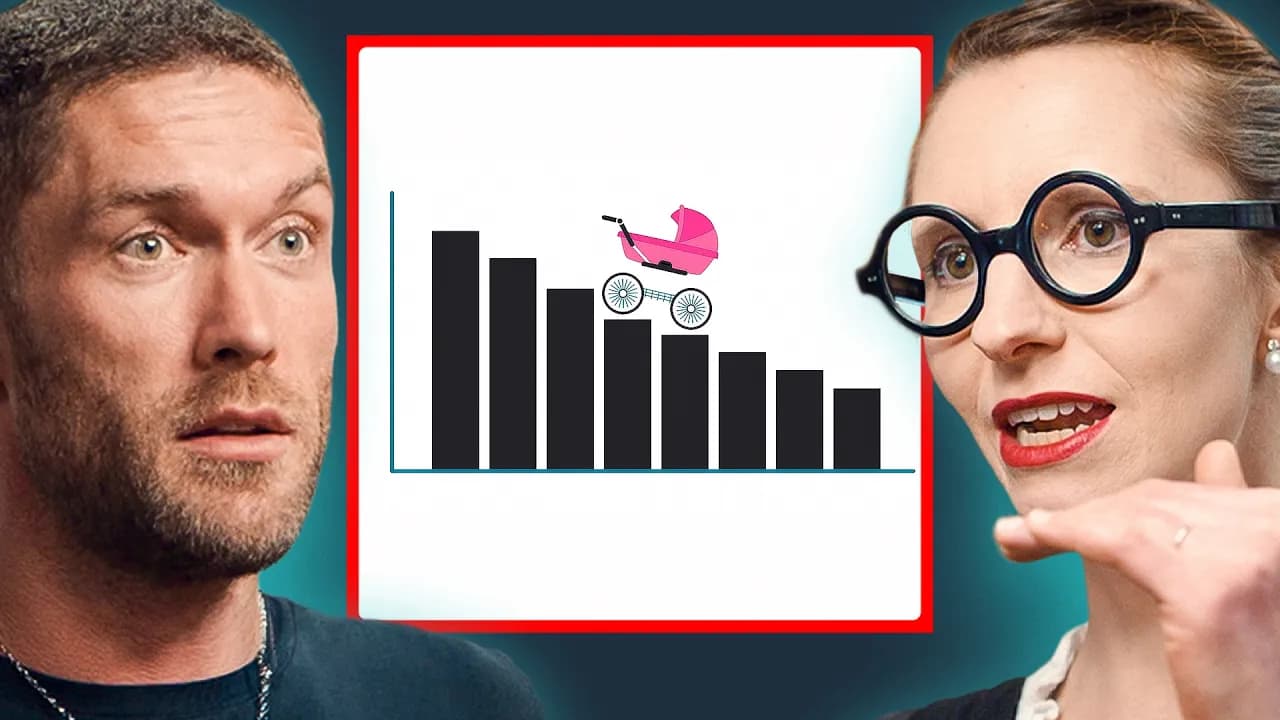
Birth Rate Debate: Why Is No One Having Kids?
In a Nutshell
Fertility rates in developed nations have collapsed to 1.5-1.6 children per woman and are projected to reach 1.6 globally by 2100, with only six countries above replacement level. This creates compounding problems: shrinking workforces cannot sustain pension systems, innovation slows with fewer people, and nations face military vulnerability as populations age and contract. The core driver is not money or housing costs but cultural shifts—delayed marriage, later family formation, and norms that treat motherhood as a loss of identity rather than a gain—which push the average age of motherhood past the point where most people can reach their desired family size.
These notes were generated by AI and may contain inaccuracies.
The discussion opens with an introduction of the panelists and their backgrounds. One speaker identifies as a demographer who frequently draws graphs in the air during discussions. The Collinses are described as the public faces of pronatalism. The group addresses why people should listen to their arguments about falling fertility.
Simone and the Collinses describe themselves as effective altruists concerned with humanity's long-term future. They note that prominent pronatalists like Elon Musk show interests that align with existential threats to humanity, including environmental concerns and space exploration. The speaker explains that those focused on long-term human flourishing naturally care about demographic collapse as a civilizational threat. Even those unconcerned with the distant future will be affected, as boomers will soon receive under 80% of expected social security payments funded by Gen Z who expect nothing in return.
One panelist has spent just over one decade researching fertility after working in the commercial world running a data science company for 20 years. In January 2016, they realized the birth rate issue was not limited to Japan and Italy but was spreading globally for 50 years. They became concerned after raising teenagers under the assumption that birth rate decline would not affect their futures. This led to research into common factors across countries experiencing simultaneous fertility declines, including Italy, Japan, Germany, Spain, and Austria.
The speaker developed an approach called reproductive dynamics or structural demography. Rather than examining levers like salaries or housing prices, they focus on underlying structures that remain consistent across societies and over time. None of the panelists grew up intending to study low fertility, and none come from traditional academic demography backgrounds. Academic demography has largely been missing in action on low fertility questions. Panelists entered the field through different paths, such as living in Korea and observing the phenomenon, or working on regional economic development and repeatedly encountering fertility as a powerful background force.
Global fertility is projected to continue falling to around 1.8 by 2050 and 1.6 by 2100. By 2100, only six countries are expected to remain at or above replacement level. The US recorded its lowest ever fertility rate of 1.6 births per woman in 2024, with 710,000 fewer children born compared to the 2007 peak. Since 2007, the general fertility rate has declined by 23%. In the UK, being childless at age 30 is now the norm, rising from 48% to 58%.
The speaker explains population decline through successive halvings of births. At a fertility rate of 1.0, total births in one generation equal the total future births of all subsequent generations combined due to repeated halving. At a fertility rate of 2.0, births halve every 800 years. At 1.92, births halve every 400 years. At current rates of 1.5 to 1.6 in the US and Europe, births in the industrialized world are halving every 50 to 60 years.
A panelist shares experience from Detroit during its 2013 bankruptcy, where a city built for 2 million had only 700,000 residents. They describe driving past decaying fancy houses in a dangerous area, with one family having a picnic as an image of the future amid hollowed-out communities. Small differences in fertility below replacement create compounding differences in military-age populations. The 20th century focused on managing internal instability from excess young men, while the 21st century faces interstate conflict as countries recognize their last opportunity to act before losing fieldable armies.
North Korea's fertility rate is approximately twice that of South Korea. China maintains a large age bump that Taiwan lacks. Ukraine's experience demonstrates how difficult it is to sustain conflict even with technological support from industrialized nations. Stable or declining population societies throughout history were not peaceful. Countries will recognize their moment to strike rather than avoiding conflict due to decline.
Government systems function like Ponzi schemes where current workers fund previous generations' benefits. Hospitals may close when government reimbursements stop. Cities increasingly allocate budgets to pension funds rather than police and fire services. Eastern Kentucky shows massive population decline leading to municipalities disbanding when taxpayer bases become insufficient. Towns abandon schools and roads, with properties now available for purchase but overgrown.
In Chicago, teacher pensions drive rising educational spending while actual instruction funding stagnates. Pension funding is classified as education funding despite functioning as welfare. Older property owners increasingly argue they should not pay property taxes after paying off mortgages since their children are no longer in school. Counterarguments include that previous generations attended schools without fully paying costs, and communities discovered during COVID that youth unrest occurs when schools close.
Population decline does not result in uniformly smaller towns. Less desirable small towns disappear entirely while New York and Tokyo function as magnet cities. Young people move to areas with jobs and amenities, leaving older residents in rural communities. This pattern appears globally, including Sofia in Bulgaria and London in England. Low-fertility societies often feature thriving primate cities as long-term planners and investors relocate to more viable locations.
Growing populations create growing demand and more contributors to support systems. Social security was designed as a pay-as-you-go system rather than a funded account. The fundamental driver of economic growth is ideas, productivity, division of labor, and innovation rather than population structure. Fewer people means fewer potential innovators like Albert Einstein or Elon Musk who generate non-rivalrous benefits for everyone. A genius born without access to education and capital markets cannot reach their potential.
Demand for new products and innovation skews young, as older populations are satisfied with existing options. Lower fertility reduces both the supply of innovators and demand for their innovations. National debts must be paid by fewer future people. Young entrepreneurs face greater difficulty securing investment for businesses dependent on population growth. Bond markets, which drive economies through government debt issuance for projects and debt servicing, will see costs negatively impacted as fewer people support repayment, making it harder for governments to raise funds.
Even those who believe there are too many people on the planet or who do not want children will be affected by these demographic changes across societies in ways not yet widely discussed.
Function provides access to more than 160 advanced lab tests spanning hormones, heart health, metabolic markers, inflammation, thyroid, nutrients, liver and kidney function. It detects early signals linked to more than 50 types of cancer. Typical annual physicals test about 20 markers while Function runs over 160. Every result is reviewed by clinicians, abnormal markers get flagged, and users receive clear explanations and personalized protocols with actionable next steps. Testing occurs twice a year with results tracked in a simple dashboard to monitor trends over time. The service costs $365 a year normally, currently available for $340 with a $25 discount using code modernwisdom at functionhealth.com/modernwisdom.
Concerns about sustainable fertility rates and supporting disadvantaged populations, the elderly, poor, and injured are viewed as left-leaning ideas. Nationalized health services require funding beyond individual wages and insurance redistribution. The conversation about declining birth rates is unpopular online and quickly labeled right-wing, conservative, misogynistic, or fascist.
There is genuine tension between sustainable fertility rates and gender egalitarianism. Most people support basic rights including women voting, owning property, and receiving police protection. Many fear that publicly acknowledging low fertility concerns will be interpreted as wanting to force women to remain barefoot and pregnant. The most sexist countries and individuals with traditional gender attitudes have higher birth rates. Progressive values risk disappearing if those holding them do not have children. Feminism broadly construed shows strong negative correlation with fertility across metrics, though a pronatal version of feminism may be possible.
Giving up current desires for future benefits is difficult, especially when individuals are not having children and therefore not directly attached to those who will bear future costs. People worry their children would live in a world governed by far-right zealots if conservatives have higher birth rates. Conservatives currently have 1.67 children on average, up since the 1980s, while liberals have declined from 1.29 to 0.87 children.
A pan-natalist supports people having the children they want while respecting those who choose not to have children. Pronatalism means being in favor of births and supporting policies that help people have more children rather than forcing unwanted pregnancies. Some argue market forces will naturally shift progressive women toward traditional roles as AI displaces email and bureaucratic jobs disproportionately held by women. Women are already showing declining support for girl boss culture and increasing interest in tradwife lifestyles.
AI is expected to replace hard skills while human soft skills such as appearing on camera and speaking to journalists remain valuable. Programmers and women in administrative roles are particularly affected. Economic pressures may drive women to treat homemaking as a career and return to family-oriented businesses where husbands handle production and wives manage sales, continuing a historical pattern of families working together.
Around 25 to 30% of people in the UK cite money as a reason for not having children. Lower-income individuals are twice as likely to intend to remain childless. Economic pressures include high costs of housing, childcare, inflation, stagnant wages, and dual-income requirements. However, Tokyo has very low birth rates despite mortgage rates under 1% for over 30 years, and young Japanese people cite gender and work-life imbalance rather than housing or income as barriers. Many people who cite financial barriers to children do not currently have partners.
Costs are not the root underlying cause of low fertility. Fertility decline occurs across societies for cultural and technological reasons. Higher household income correlates positively with fertility. The blueberry problem illustrates how social norms changed expectations: parents once gave children canned fruit at 15 cents per cup but now provide fresh blueberries costing $10 per serving due to new cultural standards of what constitutes proper parenting. Any price contains both material supply and demand factors and culturally normative judgments.
People want not just children but a complete family package including a loving partner, shared life projects, and a house of a certain type. The prevailing cultural norm of what a middle-class family should have is expensive. Fertility has always been status correlated for men, with each generation consisting of children from the top 80% of men, causing expectations to ratchet upward as the bottom 10 to 20% of men filter out.
Falling fertility began during the Industrial Revolution when society shifted from family units and cottage industries to cities and factories. Previously, food, clothing, and necessities were produced within families or communities. Everything became itemized and purchased piecemeal. Children are now being raised like aristocrats.
The Industrial Revolution fundamentally changed how people lived, moving from family units with cottage industry businesses to working in cities and factories. Previously, food, clothing, and other necessities were produced within the family or community, but this shifted to everything being bought piecemeal. This lifestyle makes having children very difficult and is fundamentally unsustainable.
Children today are raised like aristocratic millionaires. Even noble families in the past raised children differently, with kids running in gardens or kitchens, and parents often saying "Go away. Leave me alone," presenting them at day's end. Modern parenting requires constant chauffeuring and buying fresh blueberries.
It is no longer legally possible to raise children sustainably in mainstream society. There is no affordable way to have children, especially many children, while participating in mainstream society. People must opt out entirely, such as becoming Mennonite or Amish, living in a cult, going off-grid, or joining high-fertility Catholic communities where families support each other and keep quiet with CPS.
Most people are not having any kids at all. The outliers for low fertility come from people not becoming mothers rather than from family size reduction overall. Once someone has one child, they typically have a relatively similar number. A few people having none requires many others having children to sustain the population. The current culture leads people to believe they need a very high income to have children.
Dual income households make supporting a family on a single parent's income difficult, which was not previously the case. Beyond lifestyle inflation and Instagram influence driving desires for the newest stroller and best car seat, material changes have occurred. Housing regulations shape marriage and coupling patterns.
Back in the day, people put five kids in one bedroom, but this is now illegal in most states due to occupancy rules limiting the number of people per room. Some jurisdictions legally prohibit boys and girls from sharing sleeping space. These laws are often enforced selectively, applying mainly when CPS is called or when someone makes trouble. In some jurisdictions, CPS can remove children solely for sharing bedrooms with the wrong sex or having too many children in one room.
People focus on insane daycare costs and basic practical concerns. Young people operate under misinformation that starting a family at age 35 or 40 is easy with no problems. This belief leads people to delay, thinking they can advance further in their career or meet a more attractive or successful partner next week, month, or year.
A non-profit called XY World Wide was established to send volunteers worldwide to discuss realistic family timing with younger people. Data shows that in the US, women have a 50% chance of ever becoming a mother around age 27. This is calculated by examining women who have already become mothers at age 27 and estimating how many currently childless women at that age would be expected to become mothers at current fertility rates.
Conservatives and Republicans in the US tend to have children at younger ages, which explains higher rates of becoming parents. Liberals and the left, despite wanting children, often delay to a point where they still believe time remains. Fertility knowledge among people is not much better than storks, with many postponing due to belief in unlimited time or that IVF eliminates any biological clock.
People are marrying and coupling later, with rising rates of having no partner or sex. Men historically reached peak income at ages 20-25 in the 1950s and earlier, with predictable social status and assets like inherited farms. Today, peak income for most men occurs around age 47, making early-life income a less reliable predictor of future status and creating higher volatility in marriage bets.
New data shows women who wait longer to couple obtain men of higher mate value but risk never having children. This creates a game of chicken where people continue delaying. Men similarly wait to maximize demonstrated mate value. Young people are richer than in the past with higher incomes, but not as rich as they will become, incentivizing delay.
The age at which people marry is one of the best predictors of having fewer children than desired. Longitudinal surveys asking people at ages 18, 22, and 25 how many children they want show that marrying before age 27 results in essentially no gap between desired and final family size. Marrying later causes odds of achieving desired family size to fall progressively. Marrying at 35 may achieve desired numbers but reduces quality years spent with children and grandchildren.
Many people will die miserable without the families they want. The focus is on meaningfulness rather than hedonistic happiness. Having children one wants increases happiness in robust models, though unintended fertility differs. People with children tend to be happier in surveys, partly because happier people have more children. In countries with less social support like the United States, women may experience short-term happiness hits that recover over the long run.
Parents are creating indexes of other families with similarly-aged children for potential future intermarriage. Arranged marriages are gaining interest among zoomers. Religious colleges and Catholic colleges are becoming popular places to find spouses. The discussion emphasizes moving from performative pronatalism to actual pronatalism with manageable actions at micro and macro levels.
In industrialized countries, social support systems may help most elderly through challenges, but places like Thailand, India, and increasingly African countries face apocalyptic risks with fertility below one and inadequate support systems. India faces a humanitarian crisis from its aging population in two to three decades.
Approximately 10% of people never want children and can be completely happy without them. For those lacking any desire for children, life can remain hedonistic and fulfilling. AI platforms are being developed to address loneliness and replace human relationships for those choosing not to have children, allowing them to live in pleasure pods with fake families and realities.
Euthanasia is viewed by some as a potential solution for healthcare and suffering, with examples from Canada and interest in Japan. Others argue that meaningfulness and building things of benefit for others matter more than avoiding suffering or maximizing happiness. Suffering avoidance is considered a bankrupt view compared to focusing on what makes human lives worthwhile.
One major problem is that many people who end up childless did not reach this outcome through any fault of their own. Approximately 90% of women want to have kids. Around four in five childless women who reach the end of their reproductive years say they wanted children but did not have them. This breaks down to roughly 10% who cannot have children, 10% who do not want them, and 80% who did want them.
Society has a duty to help people live the lives they desire, similar to how public health messaging warns against smoking, encourages moderation with alcohol, and recommends 7 to 8 hours of sleep per night. For the 80% of women who reach menopause without having children they wanted, this represents an information or opportunity desert that should be addressed.
Even if overall fertility rates improve through larger families among those who do have children, a large contingent of people who dreamed of families but ended up childless for life still constitutes a major crisis that needs attention.
The age of motherhood follows a bell curve shape across societies. Most societies today have a peak age of motherhood around 30, with South Korea at 33 and the US slightly younger. This curve matches a perfect bell curve with approximately 98% R-squared accuracy.
Historically, the peak was higher and narrower when people had children earlier in their 20s. As the timeline has stretched out, the curve has become flatter and fallen at a faster rate than the stretch. Fertility rates in any cohesive society can be predicted with high accuracy simply by knowing the average age and width of this curve, without needing to know the country, year, house prices, unemployment levels, or even whether IVF is offered.
Approximately 90% of the dynamics of birth rates are age-related, while only about 10% relate to money and other policy factors. Unless financial incentives or childcare policies are channeled into having children younger, they are unlikely to meaningfully increase fertility.
The vitality curve can be understood through a dance party metaphor. In the past, people wanted to leave the party at roughly the same time, making it easier to pair up. The current flatter and right-shifted curve means the likelihood of two people being ready for family formation at the same time has decreased, increasing mating difficulty.
This curve serves as a measure of family formation difficulty and reflects changing dynamics between men and women, including shifts in men's mate value and socioeconomic status. While individuals could theoretically work harder to overcome these barriers, the increased difficulty creates real casualties and leaves people behind.
Longitudinal data shows that people who hit their desired family size—the number they stated as teenagers or young adults—are the least depressed according to the CES-D depression scale. Those who either overshoot or undershoot their desired number show higher rates of clinical depression.
IVF data from Nordic countries, where researchers have access to complete medical records, reveals that when IVF fails or takes longer than expected, individuals are almost twice as likely to be prescribed antipsychotics or antidepressants. Since nearly everyone undergoing IVF wants children, this demonstrates that failure to achieve fertility goals produces measurable suffering.
Undershooting desired family size is far more common than overshooting. While having an unwanted child carries negative effects, the data indicates that missing fertility goals is a significant source of depressive symptoms in midlife, particularly for women.
Some argue that only the most ambitious, high-agency individuals should inherit the future, and that those unable to overcome cultural or structural barriers simply will not pass on their genes. This represents a novel selection pressure favoring hyper-agency and executive function.
However, this creates concern about resulting monocultures. If only certain subgroups—such as white conservative Christians, Jews, and space-oriented autists—end up having children, rapid environmental changes could eliminate those groups entirely, leaving insufficient diversity.
The goal should be a Noah's Ark approach: preserving enough demographic variety so that multiple groups survive future shocks. This requires only around 14 South Korean families to maintain genetic diversity, for example.
South Korea's fertility rate has risen from under 0.7 to just over 1.0 in recent data, coinciding with the introduction of marriage incentives. The marriage rate began rising for the first time in decades after these policies were implemented.
A meta-analysis of over 150 studies on cash incentives suggests that spending 12% of GDP on child benefits or providing a baby bonus equivalent to seven years of annual wages could substantially increase birth rates. South Korea's government is roughly half the size of the US government; even with an additional 12% of GDP spent on family incentives, total spending as a percentage of GDP would remain lower than current US levels.
Critics argue that this represents a cultural problem that money alone cannot solve, though proponents maintain there exists a price point at which incentives become effective.
In South Korea, the average age at which women start families is 33. This places them significantly behind the vitality curve and correlates with a sharp increase in one-child families. Starting a family typically means having a child, which for most people involves first entering a relationship and marrying.
The modern timeline often involves dating for three years, marrying at 31, and then having children. This extended timeline contributes to lower fertility because age is the dominant predictor of birth rates.
Primary school education has a causal effect on reducing fertility when moving from six to eight years of schooling. However, tertiary education—college level—does not appear to have a credible causal effect on lowering fertility rates.
Iran's experience of curtailing female access to higher education while birth rates continued to plummet supports the view that college education is not the primary driver of fertility decline.
The dominant issue is declining marriage and coupling. First births represent the main locus of fertility decline in industrialized countries. While the children-per-mother rate in the US remains around 2.6 and has slightly increased, the total number of women not becoming mothers has risen dramatically, reaching 57.5% in recent data.
Addressing fertility decline requires going off the grid memetically to some degree, rejecting mainstream society's timeline. AI disruption may force a reckoning that encourages more people to prioritize family formation as other structures lose meaning.
High-quality AI image generation has dramatically increased the supply of trad wife propaganda imagery, though actual trad wives tend to be offline and not visible on social media. This creates a gap that AI content fills.
In the United States, current fertility patterns suggest that roughly six out of ten women will become mothers while four out of ten will not. This means approximately 40% of 15-year-olds today are projected to remain childless by the end of their fertility window. This figure is derived from a synthetic cohort model that applies present-day fertility patterns across a full reproductive lifespan.
Non-marital pregnancy rates have declined, but the dominant factor behind lower fertility is that fewer people are getting married or even cohabiting. Many individuals postpone marriage until their mid-30s or 40s, often waiting until they feel economically and personally ready for children.
Marriage rates can be influenced by the perceived attainability of children. When people do not feel ready for kids, the incentive to marry weakens. Conversely, making family formation more feasible could increase marriage rates. One perspective emphasizes marriage as a central institution, noting that children can retroactively shape and stabilize marriages that form around them.
While declining marriage and difficult dating markets contribute to low fertility, reforming these markets is viewed as extremely difficult. Anti-marriage messaging plays a significant role: women are often told marriage will damage their lifestyle and that they will be happier after divorce. Men are frequently informed that marriage marks the end of excitement and personal achievement.
Young men tend to rank marriage and children higher in their priorities, while many young women express lower interest. One explanation centers on small-f feminism and cultural messaging. The Me Too movement has contributed to perceptions that men are fundamentally unsafe, despite data showing men account for roughly 57-60% of intimate partner violence rather than the commonly cited 95% figure.
Women also receive messages that marriage and motherhood will erase their individuality. In a culture that prioritizes individualism and hedonism, the prospect of losing one's identity becomes particularly threatening. Men are often portrayed as gaining completeness through family, while women are told they will cease to exist as independent persons.
Modern culture offers limited positive models for middle-aged mothers. Older female celebrities frequently strive to maintain a youthful appearance, and there are few celebrated images of matronly women with large families. Instagram and social media reward youth, fertility, freedom, status, and independence rather than family-centered life.
Activities associated with motherhood, such as nighttime diaper changes, are rarely showcased positively online. Instead, parenting challenges are often highlighted to underscore difficulty. Over the past thirty years, societal values have shifted toward rewarding youth, independence, and personal freedom. When social belonging and recognition are mediated through the internet and social media, individuals naturally align their behavior with these incentives.
The Pronatalist Initiative previously concentrated on housing but has shifted emphasis toward non-material cultural drivers of fertility. One norm receiving increased attention is the role of international travel in shaping young women's identities.
Globalization, cheaper air travel, Instagram, and airline deregulation have tripled the share of Americans holding passports within roughly a generation and a half. Surveys consistently show that when people explain why they want children but are not having them, "I want to keep traveling" ranks among the most common responses. Travel is increasingly viewed as a core method for discovering personal identity, particularly among women who construct cosmopolitan, multicultural selves through cultural sampling.
Men who travel tend to seek different experiences, such as adventure activities, and young men control less income and travel less overall. As women age, frequent travel becomes more strongly associated with childlessness, and travel culture increasingly caters to child-free lifestyles.
Some families report that anti-natalist comments from relatives explicitly frame additional children as barriers to future vacations. Parents who travel with children note that the experience changes but remains rewarding, allowing children to view new places with fresh eyes. However, many perceive a direct trade-off between having children and maintaining annual international trips.
Low-cost interventions could make family travel more feasible without major government expenditure. Examples include allowing families with children to skip airport lines, requiring airlines to seat ticketed families together regardless of fare class, and installing more playgrounds inside airport terminals. These measures aim to reduce logistical friction rather than eliminate the underlying cultural preference for child-free travel.
Recent interviews reveal young women describing motherhood as requiring them to abandon careers and lose their established identities. Many express a desire to remain "me" rather than becoming "just a mother." This tension is not new in principle but has intensified because women now invest heavily in education and professional development before considering family formation.
One speaker recounted rejecting marriage and children on a second date, citing concerns about losing career and identity. Her future husband proposed that he would be the one to step back professionally if needed, leading her to agree she would have many children under those conditions. This arrangement is not commonly presented as an option to most women.
In earlier eras, motherhood was culturally framed as completing a woman's identity, reinforced through religious art and social norms. Women historically accepted significant risks, including death in childbirth, because motherhood was presented as central to their purpose. Contemporary culture predominantly presents motherhood as a loss of self rather than a gain.
One participant described watching her own mother lose her sense of identity after stepping back from work to care for family, ultimately giving up cancer treatment once caregiving responsibilities ended. This personal history shaped her own reluctance to follow the same path.
Current education and career systems are structured in ways that delay family formation. After years of schooling and professional establishment, women naturally prioritize career development. This sequencing creates an anti-natal timeline that conflicts with biological fertility windows.
A divorced father described traveling internationally alone with three children under age seven. During one flight, a flight attendant asked him to stop his two-year-old daughter from playing peekaboo with a passenger who had complained. His response highlighted that children represent future contributors to society, including future taxpayers who will support pensions.
A husband whose wife transitioned to full-time motherhood described her role as managing a complex family business involving finances, homeschooling coordination across multiple co-ops, curriculum planning, and community leadership at church. He argues this constitutes high-skill work that builds future adults and shapes cultural transmission, yet receives little external recognition or status.
He contrasts this with the common perception of motherhood as a demotion from professional work, asserting instead that raising capable children represents an upgrade in societal contribution. Genetic factors influence children's traits, but daily cultural transmission, manners, morals, and values are primarily shaped by maternal effort in the home.
One mother shared a painful experience after leaving her high-paying job to raise children. Other working mothers at a gathering remarked that they wished they had known her "when you were still working, when you had a lot going on." She described feeling seen as "less than" by women who had previously been her peers.
The mother expressed envy toward women who had children during COVID, noting they "didn't feel like they were missing out on anything." Having kids during the pandemic was viewed positively in this context because it reduced the sense of career sacrifice. This perspective highlights how societal structures make the timing of parenthood feel like a zero-sum choice against professional identity.
An upside-down pyramid population structure was described as problematic for societies that value social redistribution and care for vulnerable populations. Having sufficient working-age people to support those in need was presented as essential for maintaining welfare systems. This connects directly to fertility rates and the sustainability of social programs.
The discussion argues that pedestalizing mothers who raise the next generation should be considered a pro-feminist policy. However, only independent, career-focused women are currently granted respect and status. This creates a contradiction where the biological capacity to bear children is devalued compared to work historically associated with men. The viewpoint was characterized as potentially the most misogynistic framing possible.
The inability to measure unpaid care work in GDP terms leads to its devaluation. Traditional home economics education in the 1940s through 1960s taught household management, nutrition, and family care as serious skills. These competencies are no longer systematically taught or valued in modern education systems.
Beyond parenting, women often provide unmeasured contributions including philanthropy, community support, and elder care. One example involved helping an elderly church member arrange transportation and house cleaning. Another involved regular visits to a grandfather in memory care. These activities represent substantial labor that is not captured in economic statistics.
Status is increasingly determined by whether activities can be photographed, posted online, or counted in GDP. Intangible contributions that cannot be tracked receive lower recognition. This measurement problem explains why care work remains low-status despite its societal importance.
The argument was made that encouraging all women into full-time workforce participation may reduce available capacity for elder care. Government-funded elder care services were described as inefficient, with estimates that 90% of funding may be lost to fraud. Informal family-based care was presented as potentially more effective.
A hypothetical arrangement was discussed where parents incorporate a childcare business, pay each other for services, and claim tax credits. This structure would be legal if involving multiple families taking turns, but watching one's own children does not qualify. The discussion highlighted how current tax policy creates perverse incentives around childcare arrangements.
Most individuals prefer smaller families rather than having five children. Many women want careers and dual identities. Society needs to be engineered to support simultaneous career and family pathways rather than forcing a binary choice.
Women have always worked while raising children. The nuclear family model with women as a leisure class was a brief historical aberration during the early television era. This period became culturally anchored as "tradition" despite not representing the historical norm. Dynamic arrangements combining work and parenting have been standard throughout history.
Current education and career structures make it difficult to combine parenthood with professional development. Financial vulnerability and high divorce rates increase the stakes for young women considering early parenthood. The age at which people have children was identified as the key determinant of childlessness rates in a country.
Mass societal changes are needed to make careers, education, and parenthood simultaneous rather than sequential. On an individual level, families can create durable cultures around early family formation through matchmaking, early career starts, and intergenerational support.
At age 35 or older, the likelihood of becoming a mother in the US is approximately 15%. Greater awareness of these fertility risks could encourage younger family formation. Conversations need to address concrete pathways for making education and career development compatible with earlier parenthood.
Remote work has been shown to increase fertility rates. Career breaks of approximately four years represent another potential solution. The current problem is that exiting the workforce creates permanent damage to career trajectories, making re-entry nearly impossible at comparable levels.
Survey data shows that most women do not want demanding careers when their children are one year old. Many would prefer part-time work to maintain skills while prioritizing child-rearing. If guaranteed re-entry at comparable positions after four years, approximately 80% of women would take such an arrangement. Current maternity leave policies do not solve the re-entry problem.
Mothers of young children develop advanced skills in organization, dispute management, and time management. Employers were encouraged to report the number of staff who become parents in annual reports and hiring materials, similar to diversity and environmental metrics.
Chinese companies were described as tracking employee fertility rates. Women receive substantial bonuses upon having children, exceeding standard maternity leave provisions. Some companies ask about family plans during hiring interviews and preferentially hire candidates who want more children, viewing this as a signal of desirable traits.
Providing free tuition for mothers was proposed as a mechanism to encourage both education and fertility. School and graduate programs offer flexible schedules and peer support networks that make early parenthood more feasible. Universities often provide on-site discounted childcare. A "GI bill for moms" concept was discussed as a way to support women returning to education after having children.
A German medical student who had her first child at age 21 was interviewed. She observed that many doctors remained childless because life kept accelerating without a clear window for family formation. She chose to start a family young and formed a cohousing arrangement with other young parents.
Nations may not survive current fertility trends unless the average age of parenting becomes significantly younger. Making education, training, career development, and parenting fully compatible is essential rather than marginal.
Women bear the physical risks of pregnancy and experience greater changes in mate value after having children. Career identity has become the primary source of self-worth for many women, reinforced by cultural messaging. Concerns about financial dependence after divorce create additional barriers to early parenthood.
Men underreport or do not know their total number of children. Swedish data shows approximately 6-8% fewer children are attributed to fathers than mothers through administrative matching. US data indicates about 10-11% of children lack medically acknowledged paternity. Regular fertility statistics focus on mothers because hospital birth records make this data collection straightforward.
Fatherhood timing follows a similar delayed curve to motherhood, though slightly flatter. Men tend to believe they can wait longer than women to have children. In vitro gametogenesis and artificial wombs are in development as potential future technologies.
Cultural messaging frames pregnancy as inherently destructive to women's bodies. This expectation can become self-fulfilling, leading to worse perceived outcomes. Comparisons were made to "spoonies" who develop real symptoms from online communities focused on illness. A protein combination causing severe morning sickness has been identified and is in clinical trials.
Some pregnancies involve serious complications, including vision loss from unique medical issues. However, maternal mortality rates show no detectable causal effect from pregnancy when properly measured. Women who experience pregnancy do not have higher mortality rates than age- and race-matched women who do not become pregnant. The current era is described as tocophobic despite historically low maternal mortality risks.
Maternal mortality refers to deaths linked to a maternal cause, though not always causally connected to pregnancy itself. Society now lives in a massively tocophobic age, characterized by fear of all potential complications during childbirth. This heightened anxiety exists because everything else in life has become safer, creating a contrast where childbirth risks feel disproportionately threatening.
One speaker acknowledges the risks his wife has chosen to take, noting he is the one asking whether they should have a fifth child while she responds that if they became pregnant unintentionally, she would question why they hesitated over a manageable medical risk. The risk of maternal death remains quite low. People willingly donate organs or risk death to save existing family members like brothers, uncles, or parents, yet the abstract nature of a future child creates anchoring bias in decision-making.
The most expensive estimates suggest prenatal cash incentives cost $25,000 to $30,000 in total policy cost per life year added. Each marginal child adds approximately 70 life years. In comparison, efficient government programs like Medicaid and Medicare cost $35,000 to $75,000 per life year saved. This raises questions about why adding life years through family incentives is considered too expensive while other less efficient programs are deemed essential.
A participant shared a personal account of nearly losing his ex-wife during childbirth, describing it as the worst night of his life. They also lost one of their children. The risks were connected to the number of cesareans performed. He notes that cesarean sections have become normalized as an elective choice, and people would benefit from research before pursuing this route.
Chris Williamson appeared on Steven Bartlett's podcast, which ranks number eight globally with a large female audience. The two-and-a-half-hour conversation covered New Year's resolutions, with only 10 minutes on mating dynamics and three minutes on birth rates. This segment triggered significant online backlash. Scott Galloway called to offer support, advising against checking TikTok.
Searches for "childlessness" spiked on Google Trends following the podcast appearance. The term "child free" is preferred by some because "childless" carries negative connotations. Williamson acknowledges that activating immune responses during discussions prevents changing minds and causes people to dig in their heels.
Williamson believes conversations about delaying family formation, coupling challenges, and planning limits have moved the needle and raised awareness. He wants to communicate effectively without taking unnecessary flak, recognizing that some people cannot be persuaded regardless of approach. He acknowledges not fully pricing in women's callousness response when men appear flippant about their fears.
Modern society creates mismatches for both boys and men, who previously operated differently in school and work systems that favor certain behaviors. Men have lost traditional roles and struggle to understand how to add value. Similar mismatches affect women. Many criticisms received after the podcast focused on housework, childcare, and assumptions that women who say they do not want children actually do.
Critics accused Williamson of wanting to strip women's rights and disregarding women's challenges. Many criticisms came from women who could still have children but had not yet reached that point. Some well-known women promoted no-strings-attached casual sex and career focus before later announcing engagements and family plans. Single women discussing cost of living as a barrier to children were questioned about their perspective.
Coupling appears to be the central barrier to having children. Age-related fertility concerns and financial calculations remain hypothetical until people are in relationships. Mental arithmetic about costs can become self-defeating cope that discourages pursuing serious relationships altogether.
Young people often see no reason to date seriously at ages 18 to 21 because they cannot imagine marrying that person. One misfortune of modern life is meeting a suitable marriage partner at 17 or 18. A 28-year-old woman's engagement shocked her highly educated workmates, who responded with "How old are you?" instead of congratulations.
Approximately 10% of people not only do not want children but cannot understand why anyone would. Many involved in the child-free debate experience cognitive dissonance. One participant described her own child-free era before meeting her husband, noting she was celebrated for the choice and never questioned. People who are ambivalent feel punished for showing interest in having children.
Women perform disproportionately more housework not because husbands force them, but because their personal standards are higher. Men and women have different standards regarding cleanliness and organization. Single women living alone perform 200% more housework than single men of the same age and race, demonstrating that preference differences exist independently of partners.
Men are contributing more domestic work than ever before. The share of domestic work including chores and childcare performed by men has risen every decade for the past 90 years. American dads now spend as much time on childcare as 1950s stay-at-home mothers. Men perform four times the domestic work share compared to the most involved pre-agricultural society dads.
Despite massive increases in male housework participation, fertility continues to collapse. Shifting more costs onto men may reduce the likelihood that the partner more open to having children initiates the conversation. Broader societal support through government benefits, community organizations, or allo-parenting may help more than redistributing existing workload within couples.
Men often perform emotional containment, managing emotional perturbations in their wives' lives or around the home. When factored in, this contribution nearly zeros out differences in housework. Mismatched standards between a man's mother and his wife can create tension in couples.
Three years prior, fertility and low birth rates were almost unspeakable topics in mainstream media except for annual announcements. Congressional and parliamentary records showed zero mentions of fertility or low birth rates. The topic has since entered political discourse, with some politicians referencing earlier podcast discussions.
Making childlessness discussable represents progress. Even those who claim they do not want children are now thinking about the issue and able to discuss it with friends. Being offended by arguments often indicates the points contain a kernel of truth that threatens existing worldviews.
Women who choose childlessness sometimes attack other women who want children, questioning why they would sacrifice travel freedom and flexibility. This intra-gender criticism represents one of the saddest aspects of the current discourse.
Demographers use "nulliparous" as a technical term, though some view calling women "null" as worse than "childless." Climate change arguments against having children overlook that climate shifts represent normal geological processes that humans can plan around rather than unprecedented catastrophes.
The speaker identifies as a climate change cautious optimist, noting that new solar panel technology is approaching commercial availability with 40% greater efficiency than current versions. Nuclear power is returning with small modular reactors, and Kentucky has reopened a nuclear site at Paducah. The speaker believes climate challenges can be solved through technology rather than population reduction.
Many climate population declinists misunderstand the IPAT equation, which states that impact equals population times affluence times technology. They treat this as a causal relationship when it is actually an accounting framework. Countries that implemented population control programs in the 1960s, 1970s, and 1980s saw their carbon emissions rise faster the harder they cracked down on population growth, often because population control was paired with aggressive industrialization strategies.
The IPAT equation ultimately reduces to technology. If technology is adequate, environmental problems can be solved regardless of population size. This applies not only to climate change but also to habitat protection and species preservation. Governance quality, including wildlife protection policies, matters more than population size for predicting habitat destruction.
Larger populations innovate more, which is a settled economic finding. Therefore, a green future requires high population growth to maximize technological progress. The speaker argues that the only equilibrium that solves both environmental challenges and innovation needs is one with higher population growth.
Some optimistic individuals believe AI will solve environmental and other problems. However, this creates cognitive dissonance for those unconcerned about birth rate decline, because widespread AI deployment would concentrate wealth in the hands of a small number of AI company owners. The speaker notes that many people who dismiss birth rate concerns would also oppose a scenario where eight individuals control 50% of global wealth.
Societies have been educated to expect continuously rising population totals, yet total births peaked around 2013 at 145 million globally, including sub-Saharan Africa. The speaker compares this to a meteor threat that has been successfully diverted; once the risk passes, continued discussion of the original crisis becomes unnecessary. The current challenge is navigating the consequences of declining births rather than managing runaway population growth.
The speaker estimates that the United States could return to a fertility rate of 2.1 by spending an additional 5 to 6% of GDP annually on family support, which would still leave total spending and taxation below levels in most European countries. A one-time unrestricted baby bonus of approximately $150,000 per child would be required under simplified modeling. Other approaches include France's family quotient tax system, where each additional child multiplies tax brackets, and an investment account model proposed by the Heritage Foundation in which government contributions grow over 30 years and are paid out when children marry or have their own children.
Eliminating marriage penalties in the tax code ranks as the highest-impact first step. In the United States, middle-class and working-class couples with similar incomes face tax penalties upon marriage, while single parents risk losing welfare benefits, housing assistance, and food stamps if they marry. South Korea recently introduced an explicit marriage bonus that increased marriage rates for the first time in 25 years and raised fertility by 0.2 to 0.3 children over three years.
Housing supply restrictions stem from zoning laws that prevent construction. Removing these barriers would eliminate the housing crisis. Current apartment regulations often cap occupants, making it difficult for families to find suitable housing in cities. The speaker disagrees that cost of living is the primary barrier, noting that Hungary officially claims to spend 6% of GDP on family policies but actually spends closer to 2 or 3% when accounting properly for loan face values and compliance rates. South Korea spends around 1% of GDP, below the OECD average.
Financial incentives primarily accelerate births among couples already planning children, creating temporary tempo effects rather than permanent increases in completed fertility. Sweden's experience shows that incentives raised birth rates temporarily before they fell below previous levels. The speaker argues that simply increasing government spending without corresponding birth increases accelerates demographic pressure because more births are needed to support expanded entitlements.
Government policy changes that remove barriers can be implemented at roughly no cost and would make a substantial difference. Examples include care credits in pension calculations for time spent raising children and reducing reliance on fraudulent third-party care businesses. Ultimately, the solution will come from culture and individual families rather than government programs alone. Societies will experience fertility decline, and the focus should shift to preserving cultural continuity through families that maintain higher fertility rates.
Family size preferences show remarkable stability across generations. In the United States, completed fertility has remained around 2.4 to 2.6 children per mother for decades. In Japan, the proportion of mothers having four or more children has stayed constant since 1970. Cultures with sustained high fertility, such as certain subcultures, will persist while others decline. Technophilic high-fertility groups that also provide excellent upbringing for children are positioned for long-term success. The speaker highlights groups like the Laestadians in Finland, who maintain five to six children per woman while achieving high educational attainment and political integration.
Successful pronatalist cultures combine high fertility with technophilic values and strong family environments. Children raised with genuine love and flourishing are more likely to want to replicate that experience for their own children. This approach replaces historical conquest with cultural transmission through demonstrated quality of life. The benchmark for any policy should be whether it encourages people who would not otherwise have children to start families at younger ages.
Economists have long argued that financial considerations should matter more at higher parities because the marginal child becomes cheaper, yet empirical estimates show the opposite: money exerts the greatest influence on the decision to have a first child. Once someone has become a mother, money has far less sway over subsequent births. People who are hesitant about a first child or marriage can be swayed by financial support, while those considering a fourth child are driven more by values than by money.
Katherine Ruth Pacala studied highly educated, college-educated women who had five or more children. When she interviewed these women, she found that none had originally planned on having large families. Their experience with their first child repeatedly served as the tipping point. After a positive first experience, many concluded they could handle more children. The hardest number of children to have was often the first; it represents the biggest life change.
Throwing money at the problem of raising children does not solve the core difficulties. Community support ultimately proved more effective than financial resources alone. Community-based interventions are estimated to be a thousand times more efficient than simply providing cash. Modern society makes it difficult for pronatal, alloparentally supportive communities to form. Giving communities a tangible signal, such as a government payment of $10,000, could help overcome initial hesitation.
Changing cultural perceptions of status may be more effective than direct financial incentives. Making motherhood and family formation high-status activities could shift behavior. One proposal involves a motherhood medal, though existing studies show null effects. In countries with monarchies, a lottery system could be implemented: every two-year-old born to citizens enters a lottery, with winners receiving a birthday party with the royal family. Selecting 50 children per royal per year could create hundreds or thousands of high-profile celebrations annually.
A pastor in Georgia, the leader of the Georgian Orthodox Church, began personally baptizing third and higher-order children. Fertility rose directly in response among the women he targeted. The intervention succeeded because he was a beloved national figure offering to become a godparent, which in that tradition means becoming literal family. In South Korea, the requirement that K-pop stars remain childless and celibate during their careers was cited as self-imposed demographic damage. Reversing this incentive—making having a child a prerequisite for becoming a K-pop star—was proposed as a cultural intervention.
Japan maintains a birth rate of 1.25, which is viewed as relatively positive in the current climate. A large amount of anime content is now explicitly pronatal. In the UK, proposals for a "no kids tax" or "child-free tax" under a Reform UK government have been discussed, including a negative child benefit tax that would remove personal income tax for women with more than two children while increasing taxes on those without children. Research from developing countries shows that simply renaming a child benefit changes how recipients use the funds. Renaming the child tax credit to a "parenting wage" could therefore alter behavior.
Motherhood is already viewed by many as high status and aspirational, yet it is seen as financially and logistically out of reach. Status functions as a catch-all term; the real goal is making family formation both attainable and aspirational. Many people, especially only children, have never held a baby and cannot easily imagine what parenthood entails. A housemate's first experience holding his sister's newborn led him to say he understood why men go to war, describing a powerful chemical reaction.
Fertility is a contagious behavior. When someone in a social circle adopts a long-delay strategy—abortion, long-acting reversible contraception, sterilization, or simply postponing—it negatively affects others' odds of having children. The same contagion effect applies to divorce and career choices. Choosing a partner whose friends are moving toward marriage and family increases the likelihood of earlier childbearing. Babysitting nieces and nephews on a third date was suggested as an effective filtering mechanism.
The fundamental barrier to higher fertility is the lack of pair bonding. Without stable couples, children do not follow. The vast majority of people still express a desire to become parents eventually. However, many do not realize that waiting until age 30 reduces the likelihood of ever having a child to less than 50 percent. Randomized controlled trials show that providing young people, especially women, with accurate fertility information produces measurable shifts in intentions.
Education systems compress three to four years of young adulthood into studying material many will never use. Quebec offers a useful case study: high school lasts three years, followed by a two-year CEGEP program, then a three-year university track. This structure allows many students to finish earlier while maintaining high tertiary attainment. Quebec has some of the highest fertility rates in Canada, partly because young people reach key life milestones six to eighteen months sooner than in other provinces. Compressing the educational timeline without reducing credential quality is viewed as a promising lever.
The best learning occurs on the job. A proposed model would allow students to complete two-thirds of their education, receive partial recognition, then return over several years for the remaining third through employer- and government-supported summer programs. This approach enables people to refine their career direction after gaining real-world experience. Information shocks about fertility decline can also counteract the perception that delaying childbearing improves sexual market value and partner options.
Suggested public messaging includes graphs showing women's monthly conception probability by age alongside the rise in pathogenic de novo genetic mutations in men's sperm. Another simple message: the probability of becoming a mother at age 30 is X percent, or the probability falls to 50 percent by a specific age. One proposed statement: "If you don't have a kid by age 30, your odds of ever having a kid are only 48 percent. Don't waste your life." Randomized controlled trials demonstrate that fertility education seminars increase the likelihood of behavioral change, including among married couples who showed twice the odds of having children after receiving information.
During screenings of the documentary The Birth Gap in Japan, audiences across political and ideological spectrums became deeply engaged in discussions about meeting their fertility goals. The effect was strongest among those already attending events; harder-to-reach groups such as hikikomori and participants in movements like the Four B's were not present. However, even partial population effects from information campaigns were considered worthwhile. The creator of the documentary has received numerous photographs of babies from couples influenced by the work.
A couple experienced multiple miscarriages and underwent extensive genetic and blood testing without conclusive findings, though antiphospholipid syndrome was suspected. Their obstetrician began prophylactic daily enoxaparin injections during subsequent pregnancies. The couple has had zero miscarriages and three healthy children since beginning this treatment. The drug has been available for 30 years but is still not standard of care in any country despite evidence from recurrent miscarriage cases.
Recurrent miscarriage treatment using clinically demonstrated drugs could result in 2,000 to 15,000 additional births annually in the US if offered after the first or second miscarriage. Despite the clear benefits of miscarriage prevention, medical practice remains hesitant about experimenting on or taking risks with pregnant women. For individuals experiencing recurrent miscarriage or infertility, many prefer to pursue all available options through informed consent, though doctors often resist this approach.
Birth control has some effect on fertility rates but is not the primary driver of declining birth rates. Replacement-level fertility in the US was first directly observed in the 1920s, before modern contraception became widely available. Even if every married woman in America conceived at the rate of Amish women of the same age and marital status, fertility would still be less than three children per woman due to the smaller number of reproductive-age women who are married. Birth control was developed when demand for it existed, as the underlying chemical technology had been available for decades prior.
Many couples remain unaware of how common miscarriage can be and the available treatment options. Research funding disproportionately targets IVF rather than addressing other conditions that make conception or healthy pregnancies difficult. One common misconception is that women cannot have more than three C-sections, though records show individuals with eight or eleven C-sections and surgeons with eight successful cases. Risks exist with subsequent births after C-section, but many are manageable with modern surgical techniques and support. Vaginal birth after C-section (VBAC) risk is somewhat predictable rather than entirely random.
Doctors tend to be risk-averse and often withhold specific risk assessments from patients with prior C-sections. GLP-1 medications such as Ozempic are associated with increased fertility rates, partly because they interfere with hormonal contraception absorption and partly because weight loss improves reproductive health. Both being significantly underweight and significantly overweight reduce the likelihood of conception.
Marginal interventions will not meaningfully raise long-term fertility rates without addressing the core issue of enabling people to form stable pair bonds at younger ages. Pro-natalist subcultures and micro-societies will inherit the future as they continue existing patterns. The goal is not to compel people who do not want children to have them, nor to encourage those who are uncommitted.
The objective is to help people have the number of children they actually desire once cultural pressures, fears, and misinformation are removed. Many individuals report wanting more children as they age, contrary to the typical narrative. An information shock approach aims to reduce the number of people who later regret not forming families. Personal stories of individuals in their thirties who expected to become parents but face narrowing timelines after breakups illustrate this challenge. In contemporary society, the likelihood of becoming a mother after age 30 is less than 50 percent.
Approximately 90 percent of people who experience regret about family size wish they had more children, while only 10 percent regret having too many. On marriage, a "bird in the hand" approach is often preferable to waiting for an idealized partner. Delaying until perceived peak mate value can result in never achieving the desired marriage quality. Arbitrage in relationships involves finding someone who values you highly when others do not, and vice versa.
Recommended early discussions include desired number of children, views on divorce, religion in which children would be raised, and attitudes toward discipline such as spanking. These conversations help avoid wasting time on incompatible matches. The number one predictor of having fewer children than desired is late marriage. Marriage itself increases happiness, with the effect appearing after engagement rather than solely after the wedding ceremony, functioning as a form of commitment lock-in similar to securing a favorable interest rate.
Women in their mid-thirties who followed expected timelines but experienced relationship breakdowns often express that they no longer prioritize flowers, honeymoons, or elaborate dates, focusing instead solely on forming a family. The transition from optimistic twenty-year-olds who believe they have unlimited time to thirty-four-year-olds confronting biological and social realities highlights the emotional weight of these decisions. Children are not simply "normal goods" like consumer products whose demand rises with affluence; they represent a deeply emotional and passionate desire for most people.
Individuals should question whether activities that provided happiness in younger years, such as video games or extensive travel, continue to deliver the same satisfaction or if they are experiencing severe diminishing marginal returns. Some who strongly advocate child-free lifestyles while criticizing capitalism simultaneously embrace DINK (dual-income, no kids) consumer patterns that may not produce genuine contentment. People experiencing anxiety, depression, or persistent hopelessness should evaluate whether their current lifestyle choices are contributing to these states rather than addressing root causes.
Kids can provide purpose that moves individuals beyond self-focused rumination and selfishness. A useful self-assessment question is: "And how's that working out for you?"
Keep Chris Williamson in your library
Save the videos and channels worth coming back to, and find them again in one place.