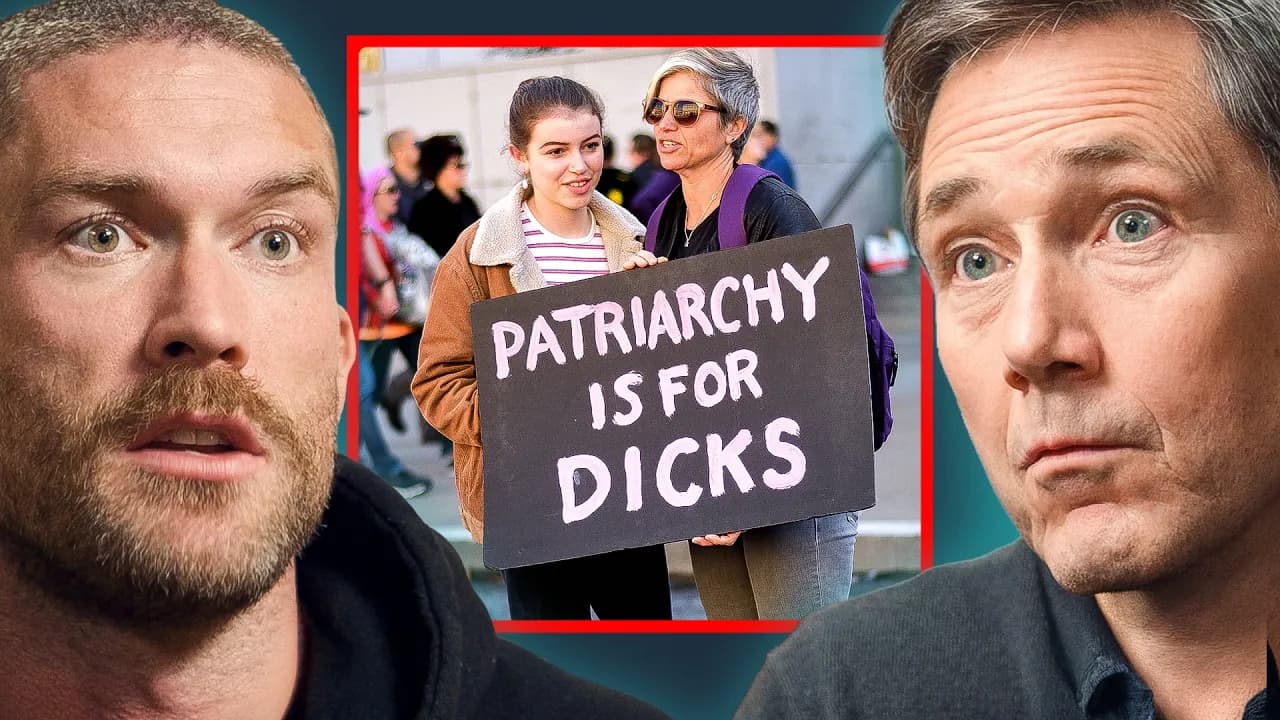
The Masculinity Debate Is A Huge Mess - Richard Reeves
In a Nutshell
Richard Reeves highlights surging political momentum for boys and men—governors' initiatives, congressional bills for men's health, and a post-2024 election Democratic pivot—marking a shift from taboo to mainstream policymaking, with goals to institutionalize efforts like Virginia's proposed commission. Men's rights activists resist wins due to grievance identities, while cultural vacuums fuel manosphere extremes like looksmaxing; young men crave good-faith messaging of "We need you" emphasizing service, fatherhood, and constructed purpose over victimhood or toxicity. Data counters pessimism: dads' parenting has doubled, young men desire marriage/kids (68% want marriage, 62% fatherhood), reject Tate, and prioritize sacrifice, amid fertility delays from economic shifts but hopeful relational trends.
These notes were generated by AI and may contain inaccuracies.
When we last spoke, there was no political space for discussing boys and men. Awareness has increased that things aren't great with boys and men, but previously it was difficult to act, especially on the center left. Previously, getting people, especially on the political left, to acknowledge (A) it's a problem, (B) we can talk about it, and (C) we can do something was challenging. That has changed.
Governors launching serious initiatives: Governor Newsom (California), Governor Whitmer (Michigan), Governor Wes Moore (Maryland), Governor Spencer Cox (Utah) promoting boys and men. Two bills just introduced to Congress: one for a men's health strategy and office, another the Men Matter bill for men's mental health after fatherhood. Many state-level initiatives. No longer shouting into the wilderness or banging head against a brick wall, especially with Democrats.
Politics played a role: until November 2024 election, frustration with Democrats; post-election, inbox filled with Democrats realizing they lost men, especially young men, badly. Many mentioned Democrats (Newsom, Whitmer, Moore) are potential presidential candidates who realize they can't win without young men.
Doesn't blame politicians for doing politics. Men's rights critics dismiss Governor Newsom's initiative as political pandering to win back young men votes. Newsom's actions: signed executive order for comprehensive plans on boys and men in K-12 education, employment, mental health; launched male service challenge for 10,000 more men into service, mentoring, coaching; push for more men into teaching as male role models.
Why is political motivation bad? Democracies work that way. Real progress happening, serious, much not in culture war, not on podcasts or cable TV, but occurring.
Significant as first time serious political figures and policymakers address the problem—like firing the first shot of a war, suggesting more to come. Not sufficient substance yet. Role of speaker and institute: hold accountable—e.g., "Did you get 10,000 men into service? Increase access to mental health care and paternity leave?"
Much more than 3-4 years ago when even talking about it was impossible, especially with Democrats. Book came out in 2022. Obama endorsed in 2024. Tracking journey over time. Pivot: policymakers now ask for advice sooner than expected (was on 2029 plan). Worry: just a political moment or trendy issue; where will we be in 5 years?
Virginia example: new governor may create first commission on boys and men alongside commission on women and girls—issues at the table in policymaking, institutionalized with line item, enduring.
Goal: make issue boring and mainstream. "Guys are falling behind. We've heard it. We're working on it." Like having office of men's health, big pushes already in place.
Men's rights types don't want to win. When progress happens (e.g., nearly a commission in Washington state, governors' moves), they dismiss: "They'll put their people on it, don't mean it." These are advocates, activists, commentators, small underfunded groups often grievance-fueled (not illegitimate).
Rabbi David Wolpe on podcast: "Activists are always psychologically reluctant to succeed" because identity tied to failure. If society stacked against men, feminist conspiracy, no one cares—then when people start caring, must change identity or deny it.
True for LGBTQ activists, climate activists—can't take a win, always glass half empty. Fear gratitude slows momentum, like Type A overachievers denying pleasure in success to fuel drive. Climate: not enough done, must keep pushing. Graph: New York Times uses of "racism" up massively last 20 years, inversely related to actual racism.
Concept creep: slaying smaller dragons makes cause less legitimate, easier for opponents to dismiss.
Balanced: HRC email "never worse time to be trans in America" two months after Gorsuch's Supreme Court ruling including trans under sex discrimination law—a massive civil rights victory. Couldn't take the win. Not left-right; activists can't win. Speaker updates own views to avoid rut.
Want to win, become mainstream—even if less to say, put self out of job. Best dating app: designed to be deleted. Requires not wrapping identity in grievance.
Ben Francis (Gymshark founder/CEO): "When your aspirations for the business are bigger than for yourself, you can be a proper leader." Stepped down as CEO for Reebok exec to scale, returned when needed.
BLM example: money issues, leaders in nice houses, dissolved, damaged cause for black rights/minorities—become easy target, do enemies' work, play into caricature.
More mainstream recognition. Headlines require breath work: lip service or real? Politico four-part series on boys/men crisis, all by women (except speaker's piece; Christine Emba). Reversed, "men talking about women's bodies" would be issue.
More headlines, but not tapped into policy. Promote good news via newsletter to avoid feeling like permanent losing battle.
Ross Kemp released 3-5 part series on young men. Louis Theroux's Adolescence documentary on Netflix.
Adolescence did damage via framing/language, left open to interpretation (raw shock test/ideological Rorschach). Showrunners had agenda. Mainstream interpreted same way. Keir Starmer criticized for not watching—like first time UK leader criticized for not watching TV, fictional portrayal not documentary.
UK: set up think tank, working closely. One step back, one forward. Most attention not most important. UK released first men's health strategy (good document, Wes Streeting). Serious parliament debate on International Men's Day—all MPs told dad jokes (via Dad Shift org, Wes Streeting too). Summit on mental health. But Adolescence coverage not great.
Lag: idea to screen takes years, out of touch by release (e.g., Louie filmed start-middle-end 2025, conceived in 2024).
Ross Kemp: sits with William Costello, "Incels kill a lot of people?" William: total worldwide incel killings upper bound five. Ross shocked (not five per day, total five).
Territory not gained equally. Gender/sex wars (home roles, men's roles) downstream from structural changes: boys' literacy rates falling; education/higher ed/apprenticeships; employment; societal place, fatherhood, meaning, job, income.
These after-effects of education, employment, mental health support—systemic work like speaker's.
Speaker feels like last leg of relay race; impact closer to end (influencing thought, life structure approaches), groundwork by school/employment.
Actually, podcaster at back/front of relay: creates space for good faith conversation taking young men seriously (they have problems, not are the problem). Young men need to hear it. Enables policymakers to address material issues (won't change overnight).
Do no harm. Avoid deficit framing: start with what's wrong (e.g., toxic masculinity, boys don't try in school, daughters lawyers/doctors, sons in basement vaping/playing video games). Suggests young men are the problem, not systems around them. Given young men listener to podcast.
Young men listening to podcasts hunger for honest disagreement and good faith engagement around these problems. Cultural work comes before and after setting the table for this work.
The challenge in speaking to men about balancing ambition and compassion: "You can be more, but you are enough already." Men need help but don't want to feel like victims. Nobody wants to feel they're not doing it on their own, especially men—where's the heroism in victimhood? Scott points to pulling yourself up by your bootstraps, which is true for many men.
Advice hyperresponders: Advice doesn't distribute evenly like medicine; it distributes like alcohol. People already drunk on it take too much; those who need to loosen up don't.
Example in MeToo: Guys told not to be pushy with women—the nervous ones take it to heart, while boundary-violators disregard it.
Person already loading too much responsibility and working too hard hears "work harder" and pushes more. Guy on the couch ignores it. 14 million men not in education, employment, or training (NEETs). Reference to Nicholas Ipsos (corrected from Istat/Ibistat).
Period of informing men how to be men by telling them everything they shouldn't do—a long list of don'ts. Doesn't inform what to move toward. Vacancy is hugely detrimental. Can't complain about what men do if only telling them what not to do without replacement.
If you complain about men but only say what they shouldn't do without replacement, people fill the gap: Rogan, Peterson, Tate, Nick Fuentes, Myron, etc. Even if you don't like Aragorn from Lord of the Rings, vacuum gets filled because there's a market.
If you don't service the market, someone reverse-engineers the message. Like eating tree bark if no food—approximates what's missing. Naivety in thinking we don't have to answer "What does it mean to be a man?" Every culture answers it. Question is not if, but who's giving the answer. If you don't like answers some men get, provide alternative.
Can't vacate the ground then complain someone else takes it. Mainstream culture gave up ground, only talks masculinity with toxic prefix. Word "masculinity" codes left to young men—only heard with toxic modifier. Even "healthy masculinity" implies normal is unhealthy.
Huge cultural vacuum. Struggle in own work and policymakers: Don't say to young men "Poor you, we're here to help." Say "We need you." Society, tribe, family, kids need you—especially in service roles.
Wrote with Robert Putnam in NYT on boy crisis early 20th century: Urbanization led to Boy Scouts, Boys & Girls Clubs, Big Brothers Big Sisters—created overnight, staffed by men (4:1 boys ratio). Huge civic response needed men. Now youth organizations have way more women volunteers.
Not blaming women stepping up, but to serve boys/young men, need men too. Message: "We need you as a man"—not despite being a man, but because. Manhood as feature, not bug.
Idea of duty/service turns into obligation. Better: Noble pursuit to pass good things/advice to next generation.
Do we need new language? Femininity rarely discussed except by right (sundress, baking, trad). Left doesn't pedestalize it. Masculinity used by left as cudgel with toxic modifier. Feminism shifted from gender equality.
Manosphere: Describes group of people agreeing, not movement/ideology. Three waves: First pick-up, second gentleman, third looksmaxing/luxmaxing.
Looksmaxing (luxmaxing): Around 6 months old, memeable. If sticks, sexier black pill/MGTOW—men going their own way. Not for women; care about women only for claim in other men's eyes. Signaling formidability: height, hyper-masculinized faces (protruding cheekbones, mandible).
Evidence: Women prefer average masculinization or slightly feminized face with masculine body. Men chase gigachad looks. Mewing: Pushing tongue to roof of mouth for tighter jawline.
Extreme looksmaxing like male-to-male transsexual operation—caricature. Focus on mogging (male-to-male intrasexual competition). Similar to Ziz (2010)—disregard women, acquire status (dance moves), but less female-coded, more autistic/insular.
Steven Cobert did segment on looksmaxing from feminist perspective.
How many men? Will it last or decades-long shift? Could stick, less interest in women. Work on male body dysmorphia on track to overtake female within decade (Scott Griffiths, Australia). Lines projected forward worrisome, but real issue.
John DeVaney (pollster): Masculinity vertigo—young men like pinball: Monday, not masculine enough (work out, protein, looksmax, dominate). Tuesday, too masculine (cry, salad, therapy, feminine side). Wednesday back to man up. Contested now, unlike before.
Behind trends: Young men figuring it out, wanting to be good people/dads/friends, matter, belong. Not being needed is fatal to human condition.
Quote (Jeffrey Dench?): Modern family myth makes men tolerably useful.
Masculinity/manhood more socially constructed/cultural. Fatherhood invented (Margaret Mead). Roles, structures, norms, messages—we make men.
Most in 30s still train hard, protein dialed, sleep better, disciplined—but recovery differs, strength gains slower. Timeline MitoPure: Urolithin A promotes mitophagy, renews mitochondria. Supports function/strength in older adults. 30-day guarantee, timeline.com/modernwisdom code modernwisdom.
Women born with value (make next generation). Men? Must construct usefulness. Look at animal kingdom—males construct to matter. Is that bad? Drives mastery/conquer/progress. Choice: driven men or useless. Driven can overshoot (tyrants, scammers, lotharios), but prefer driven.
Driven means belonging, connected, needed, purposeful—must be constructed. Margaret Mead: Invented fatherhood for species survival (big heads, women needed husbands).
Naive to assume androgynous future without cultural messages to men: We need you to do/not do this for tribe.
Cave paintings (northern Italy, Romeia)—oldest: Violent ones famous, but haunting: Tribe ostracizing figure moving away. Ostracism = social/physical death. Not new: Ensure tribe needs you.
Unmass ostracize entire sex—all feel pushed out. Message to young men: "We got it from here boys, thanks for x thousand years." Or "Get on futurist female train." Fatally flawed.
Most people (away from culture war) think moms/dads different (cool), men/women complementary skills—like DEI argument.
Most believe groups different, but value stack makes some surplus/negative/tyrannical—must change. Threaten identity, people lean in harder.
Not answer: Reactionary conservative roles or gender inequality for men's purpose. Not what most want.
Biggest increase in hands-on fathering in half-century. Millennial fathers spend as much time with kids as Silent Generation/Baby Boomer mothers. Dads' primary childcare now matches moms in 1985 (moms do more now).
Upset by deadbeat dad or doofus dad framing. Full-time mothers vs. full-time fathers (35+ hours): Moms do 25-30% more housework/childcare (Eve Rodsky Fair Play, second shift).
Stat feels true but collapses: Dads work more paid hours (45 vs. 35). Total: ~60 hours/week each. Suzanne Bianchi (20yo paper): Contributions amazingly similar. Dads 8 hours more paid, moms 8 more unpaid—same work week.
Dads pulling share—untrue narrative. Infuriates as dad/on behalf dads/terrible social science (easily destroyed). Not even in women's groups' interest.
Simplest headline wins (iron law). But audiences seek truth, sick of priors-confirming stats (e.g., "women do 30% more housework full-time"). Counter with full picture—enough people listen.
Enough people listen to good faith discussions on these issues. Chris is successful because he is curious, engages in good faith, and changes his mind. Young people hunger for this, giving podcasters more credibility than expected. Experts often underestimate Chris initially, assuming he's just a platform with a vibe, but 10 minutes in, he quotes papers and guests, surprising them. Examples include Melissa Kearney and others who admit, "God, you really know about this. I should have prepared better."
This distinguishes Chris from many in the manosphere, where there's attention to getting things right even in disagreement.
Household Leadership and Gender Roles
On household dynamics, concern about implied return to gender inequality where dad is head of household. Examples: COO analogy for mom (CEO is dad, COO reports to CEO); calls for men to lead families. Rarely explicit, but implies men as ultimate decision-makers, women subordinate.
"We need to get back to stable families where men feel purpose, so he is head of household, ultimate decision maker, leader. Women recognize subordination."
Chris questions inequality between CEO/COO. Richard notes hearing this more on conservative side.
Has society been feminized? Helen Andrews argues yes. Richard disagrees empirically: fields like law approaching 50/50, not driving changes. Upset she ignores strongly feminizing fields: mental healthcare, psychology, social work, K-12 education. Real problem: these skew female, impacting professions, patients/kids, and men.
Latest jobs report: 3x more women entered labor force than men due to healthcare jobs. Richard pushes men into these (with AI), differing from right who want "men's jobs" like factories/mines. Legal profession declining due to AI, gender irrelevant.
Feminism viewed through boys/men lens. Feminist movement slowly realizing demonizing men is bad strategy. Leaders say do better for boys/men, often because "good for women." Richard disagrees: care about boys/men period, not conditional.
"We should care about boys and men. I end the sentence earlier."
Zero-sum empathy: complaining no good men to date while ignoring boys/men falling behind is self-defeating, creating fewer eligible partners. Care about human flourishing, any group struggling.
Melinda French Gates supports Richard/Gary Barker as part of gender equality (good for women/girls if boys/men thrive). Reactionaries criticize conditioning; Richard says take the win from a global feminist.
American Institute for Boys and Men position: care about boys/men flourishing period. Also good for economy, families, women. Like women's initiatives: "When women healthy, communities thrive." Also true for men. Men see conditionality (care only if men do bad), need "We just care about you."
Political polarization: left tells young women life tough due to men/patriarchy; right tells young men tough due to woke feminists/women. Blame each other, wasting energy, untrue. Affects dating/mating.
Decline in high school/young adult dating (Dan Cox writes on this): problem for developing relational skills, handling rejection.
Mate value and evo-psych: ancestral patterns in small groups where people known socially (workplace, friend of friend), not app strangers in cities of 10M. Paul Eastwick's Bonded by Evolution: mate value complicated, flattens over time as traits revealed (kindness, humor, hard work, caring for mom). Not short-term only; marriage evolves over decades.
"Much less about wife you choose than husband you become."
Marketplace model flawed: suggests match then done, ignores ongoing story/relationship evolution.
Chris: Eastwick denies mate value/sex differences; over time, bonds flatten disparities (10s with 3s). Richard: gets flatter, not flat; elements emerge.
Kurt Vonnegut's Harrison Bergeron: satire on enforced equality (weights on dancers, handicaps for beauty/IQ).
Mating advice mostly short-term. Argued against settling for marriage.
David Buss, William Costello: well-meaning scientists, change minds.
Claim women entering workforce caused fertility drop: intuitive but wrong. 1975-2005: women's labor force participation up 20 points, fertility from 1.8 to 2.1. Then participation flat/spike post-2005/2007 (unlike other countries), fertility dropped. Something else going on.
Fertility rate conversation shows people using priors to explain declines. Jennifer Shuber (TED talk, co-authored Toxic Demography) concludes lack of gender equality causes declines in Korea, Japan. Conservatives blame feminism and women entering workforce. Evidence exists for both sides, but truth unknown. Approach with humility; avoid straight-line projections of population trends, as with the population bomb.
Population bust seems predictable (fewer people having fewer children), but mechanically, rapidly declining population below replacement rate is concerning. Reasons vary: pro-life ethics (more life good, less bad), institutional/fiscal issues, or symptom of societal unwellness.
Births downstream from coupling. Fewer long-term couples/marriages contribute. Decline in teen pregnancy (often accidental, uncoupled) also factor.
Stephen's vitality curve: graph of ages when people seek family-starting partners. Steep early curve (16-25) easy like everyone dancing together; flatter, shifted curve harder, half seeking partners 5-10 years out. Later starts impose raw physics limits; permissive casual sex culture reduces investment.
Women's labor force entry dips fertility in 1970s, 2007-2008 GFC. Dual-income necessity heightens economic sensitivity; crises ratchet first births later. Delaying median age of first birth raises childlessness, lowers total rates. Fewer teen pregnancies as curve shifts right.
Ratchet effect: never snaps back without sacrificing independence, feeling behind. Example: friend wished for kid during COVID to avoid missing out. Economic uncertainty delays parenthood cross-culturally.
US historically balanced work/family better pre-2008, now breaking down. Men doing better economically (especially low-income areas) boosts marriage rates.
Bar for parenthood wildly higher: house, career, etc. Perception-driven: compare to parents' stage, peers' lifestyles, risk exposure. Not objective; data/charts can't argue away feelings of economic precariousness.
Fatherhood changes men: behavior, brain (Darby Saxby's Dad Brain), testosterone. Historically, marriage/fatherhood matured men (avoid 'domesticate' framing, burdens women as 'house training'). Women no longer want that role. Delay risks missing transformative 'click' moment.
Analogy: explaining parenthood to childless like vampire to human—existential shift prioritizing kids' lives above own, pro-social.
Fatherhood last male institution, transforms men internally. Rise in childlessness (involuntary non-dads) troubling without pro-social structure.
Free societies learn from mistakes (vs. China's one-child, Singapore's third-child penalties post-Eric's book). Regret stories propagate change.
Kelsea Ballerini song I Sit in Parks: at 30, prioritized music tour/egg freezing over partner's readiness for kids (he was 37, moved on). Now watches park family, wonders if too late despite Rolling Stone validation, takes Lexapro. Comments from agreeing women.
Grass-is-greener: parents might envy her freedom/sleep. Anecdote: watching childless gay couple's leisurely mornings envying from tired dad duties.
Her regret song (millions of plays) drives cultural adaptation.
Country music now top; young people rethink gender relations, taking best of past without worst. Dads doing more; chivalry (door-opening) lands even with liberal women (e.g., son's Tennessee friends adopting from Northeast liberal colleges).
Mainstream not NYT/CNN (peripheral); need to support youth.
AG1: one scoop daily, 75 vitamins/minerals/probiotics/whole foods. NextGen: 4 clinical trials (fills nutrient gaps, 10x gut bacteria, improves levels in 3 months). 52 iterations since 2010, more bioavailable. 90-day money-back guarantee. Free welcome kit (D3K2, sampler) at drinkag1.com/modernwisdom.
Derek Thompson post-paternity leave on Scott Galloway's podcast: Scott opposes paternity leave/men at births ('disgusting', men outside smoking, back to work). Derek: men need time off for gender equity/pay gap.
Both wrong. Dads useful early (different from moms): often main alloparent, handle logistics (like owl monkeys, dads do everything but breastfeeding). Dads wired differently initially but essential; kids thrive with dads around.
Richard Reeves pushes for recognizing dads as amazing and different from moms on average, rather than framing fathering through gender equality. Rejects old stereotypes like "dads should go back to work, smoke a cigar, have a whiskey" and modern egalitarian pressure like Derek Singer's view that good gender egalitarians must take time off even if they hate it and suck at it. Advocates simply saying "dads are cool."
Evidence on dads in birthing rooms is mixed, as noted by Darby Saxby in "Dad Brain." Surveys show moms have mixed feelings if birth doesn't go well; can be traumatizing for dads. No shaming for attending or not. Moms should feel okay preferring mom or friend. This practice is unprecedented, only 30-40 years old (1970s-1980s cultural shift flipped rapidly). Scott shared with wife; 25 years later she said she wished he hadn't been there, as he did more harm than good despite words of encouragement.
Scott's Birthing Room Anecdotes
- Hot day, ordered fan but needed Phillips screwdriver to assemble; wife in labor at home, shouting from other room. She yelled, "I don't need a Phillips screwdriver to have a baby," but he needed it for the fan. She said, "Forget the [__] fan."
- Second birth in birthing pool after progressive midwife class advising natural birth (Reeves persuaded by overmedicalization critique). Midwife warned guys to wear swimming trunks as water gets murky; once mistook dad's testicle for baby's head and grabbed it. Scott couldn't find trunks, midwife urged him in anyway; he insisted per class advice.
- Cutting umbilical cord: tiny gristly scissors, not massive shears; took ages, hacked through it. Eldest son has weird belly button, blames Scott.
Key advice for fathers: Pre-make fan or have Phillips screwdriver, good pair of scissors (hospital ones are crap), swimming trunks.
Paternity leave easier discussion now. Most states act: Democrat states pass paid leave policies; Republican states offer tax credits for employers. Dads are parents too, bring something different—not controversial. Massive increase in dads' parenting; some states new policies taken equally by dads and moms.
Culture wars exaggerate: not overrun by woke feminists demonizing men or reactionaries to Handmaid's Tale. Data shows dads doing more parenting (significant increase), women's labor force participation at all-time high post-pandemic, violent crime halved last decades, boys fighting at school halved. Ordinary moms, dads, young people figuring it out—bumpy, messy, but progress line there.
"Everybody who knows anything of the world is supposed to think ill of it." —John Stuart Mill
Sick of pessimism, deficit frame, cultural race to bottom for clicks/book deals (books starting with "end of"). Instead: figure it out, supportive policies, no demonizing/pathologizing. Pessimism self-fulfilling prophecy. America obsessed with progress/innovation—spend more time on future than past.
Latest data unknown, but Pew: top reasons no kids—"don't feel ready yet" (unfinished, unsure), then "couldn't find right person." Paper on five adulthood milestones (finish education, job, leave home, marry, kids): 20 years ago men more likely to hit; now women more likely, coefficient flipped.
Well-being relatively stable on good subjective measures. Men more affected by relationship breakup/unemployment. Recent shocks may hit men harder. Many bad point-in-time surveys overinterpreted, no time series; swings with events (Iran war, elections) show subjectivity.
Title IX: Anti-sex discrimination in higher ed (can't discriminate on sex basis). Not affirmative action (no evidence colleges favor women over men). No thumb on scale against men; colleges worry at 60/40 or 65/35 female (male apps drop, female apps drop too due to bad dating market—twice as many women).
Exception: private undergraduate admissions carve-out preserves single-sex colleges (e.g., Wellesley women-only). These now easier for men to get into for 50/50 balance.
Dating Market Sex Ratios
NYC singles mixer: women $100, men free—still 3:1 women:men. College campuses skew similar. Empirical: twice as many majority-male counties now vs. 20-30 years ago (women out-migration). Urban singles skew female but not 3:1. Women more likely to travel; anecdotal—groups out at restaurants/bars now more female. Public spaces maybe more female.
Inventive optimist: glasses full. Optimism a virtue—counters relentlessly negative messaging to youth. Messy/goopy now (young men/women figuring new realities), but past zero-sum; good-faith figuring it out. Hunger to escape ideological traps, conflicting messages (masculine Monday, soft Tuesday, tyrant Wednesday, therapy Thursday, yoga Friday)—leads to apathy/immunity, like disinformation warfare.
Men's disengagement (screens, games, porn) as sedation hypothesis: push (conflicting messages) + pull (alternatives) = retreat inward, consistent with crime down despite disengagement (unprecedented—screens not streets). Silent retreat harder to alarm on. But most want to flourish/find partners with agency, momentum, optimism—that wins.
To slow population decline, reverse current trends in fertility. The choice between more useless men or dangerous men is undesirable; better useless men than dangerous ones in peacetime, but prefer competent, peaceful men.
New Institute for Family Studies survey of 2,000 young men aged 18-29 challenges narratives on the male crisis:
- 68% of unmarried men want to get married; 21% unsure. Crisis is in circumstances, not desire.
- 59% not in romantic relationship, but 74% open to dating.
- Previously, two-thirds (50%) of men said not looking for casual or long-term relationships; now changed.
- 62% of childless young men want to be a father.
- Less than half of men aged 24-29 feel like adults; benchmarks are traditional: marriage, parenthood, full-time work, completing education.
- Number one role model: mother (79%), father (69%).
- Andrew Tate ranked last among prominent figures.
- 89% say manhood requires willingness to sacrifice for others, challenging manosphere narrative.
- Young men completing trade school programs employed full-time at 77%, nearly identical to college graduates (80%).
- Even college-educated young men skeptical: half say not worth time or money.
Mixed bag: positive on marriage desire, dating openness, role models, sacrifice; concerning on fatherhood interest (62% low for under 29 childless men), adult feelings, college value.
NBC poll: For Trump-voting men, top issue family and kids. Men more likely than women to want marriage and kids now—a reversal.
College ROI same for men and women; could increase as male graduates become rarer.
College graduates maintain marriage rates (flat line ~90% for last 40-50 years, even with gender gap); no collapse among them. Collapse in marriage among non-college educated—huge class gap.
College-educated women marry non-college men (20% blue collar); examples: nurse (college) married to plumber, teacher to carpenter. Marriage rate slightly up; divorce rates down among college-educated.
89% young men affirm manhood as sacrificing for others, not manosphere view of non-sacrifice.
Andrew Tate widely condemned: Josh Holly, Megyn Kelly, DeSantis AG, Ben Shapiro, Shapiro. New York Times headline "Tate returns, MAGA celebrates" misleading—only young Republicans of one Florida county celebrated; everyone else hates Tate. Radical feminists and conservatives aligned against him—a win.
Anticipate more moral panic around men's movement (MRA, manosphere, incel, black pill, looksmaxxing, mogging) post-Ross Coulthart and Louis Theroux Netflix documentary (his first; "final video game boss" of career). Covers casual sex/OnlyFans, conspiracy theorists, cult-like behavior, financial grifts, TikTokified for Gen Z/adolescence.
Will portray young men led astray by bad actors, limited social hope, learning to dominate not sacrifice—self-serving.
Adolescence documentary was global phenomenon, huge hit, great drama, but lags current shift against pathologizing/demonizing young men as lazy/useless/radicalized. Such narratives lack compassion, counterproductive.
Online/streaming/YouTube lacks reasonable voices; reasonable ones (gentleman sphere) minority vs. militant feminism or reactionary anti-feminism/masculinism.
Reasonable voices: Chris Williamson, Richard Reeves, Arthur Brooks, Scott Galloway, Mark & Murphy, William Costello, Rob Henderson, Andrew Thomas, Alexander Date (stepped away), Stephen Shaw.
Win long-term by persisting; change slow. Young men discerning: seek good-faith conversations, then deeper like AIBM policy briefs.
Behavior more hopeful than narratives suggest.
President Obama podcast with wife: "We've quite rightly invested in girls to create level playing field for equality. Not as intentional about investing in boys—that's been a mistake." (Only marital bit covered, not hour on boys/men challenges with wife's brother.)
Bit by bit: governors like Ruben Gallego, podcasts—people want truth, can discern it.
Keep up at aei.org; policy briefs including on sports betting.
Richard Reeves interviewed by Chris Williamson.
Keep Chris Williamson in your library
Save the videos and channels worth coming back to, and find them again in one place.