Eggs Reduce Alzheimer’s Risk By 47% (Here’s What They Don’t Tell You)
In a Nutshell
Eggs supply critical brain nutrients—choline, lutein, high-quality protein, and cholesterol—that support acetylcholine production and myelin protection, which are often deficient in Alzheimer's. The 47% risk reduction claim stems from comparing healthy egg eaters to an unhealthy group, not a guaranteed personal benefit. Pasture-raised eggs deliver far more lutein and a better omega-3 balance than conventional eggs, while ketones from low-carb eating provide an insulin-independent fuel source when glucose uptake fails in the brain.
These notes were generated by AI and may contain inaccuracies.
There's a study making headlines that eggs reduce Alzheimer's risk by 47%. This does not mean that consuming eggs will lower your personal risk for Alzheimer's by 47%. The 47% decrease comes from comparing a group that consumes eggs in a relatively healthy manner to a very unhealthy group. The percentage does not guarantee the same result when an individual begins consuming eggs.
The Egg Nutrition Center is funded through the American Egg Board, a governmental program created in 1976. The single largest egg producer in the US sits on that board.
An egg is very different from meat. An egg has evolved to build an entire organism. Researchers have cataloged over 854 different proteins in a single egg.
One protein is lysozyme, a natural antibacterial that has been found in trials to lower blood pressure by nearly eight points. The IGY antibody has been shown in randomized controlled trials to reduce H. pylori by 39%. Cystatin is a protein studied in Alzheimer's animal models that improves memory. Another protein was studied in perimenopausal women and shown to help maintain bone density.
Choline is a major benefit of eggs for brain health. The brain communicates using acetylcholine. In Alzheimer's disease, the neurons that produce acetylcholine are the first ones to die. Consuming two eggs provides 300 mg of choline, more than almost any other food except liver. People who do not eat eggs or liver are likely deficient in choline. The most widely prescribed Alzheimer's drugs work by preventing the breakdown of acetylcholine rather than increasing it.
Lutein is a nutrient in eggs that is very important for the brain. The brain preferentially accumulates lutein to protect against damage to the myelin sheath. Pasture-raised eggs contain four to five times the lutein compared to caged or cage-free eggs.
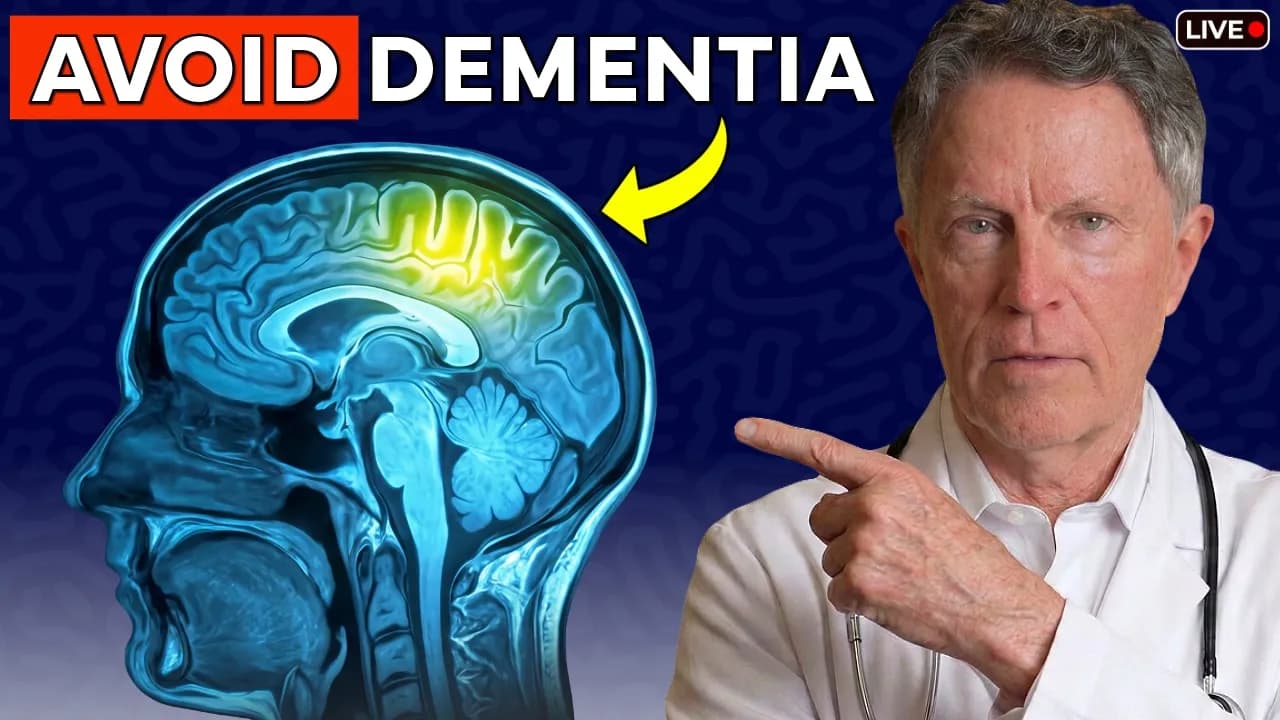
Alzheimer's is a condition where neurons are not getting fuel and are dying. In an Alzheimer's brain, neurons have a closed door for glucose. Many people have insulin resistance, which prevents efficient fuel absorption into mitochondria. This condition can develop for decades before the first symptom appears.
Ketones provide a back door fuel source because they are not dependent on insulin. Research from Stephen Cunnane's group at the University of Sherbrooke found that in people with early Alzheimer's, glucose uptake was significantly impaired but ketone uptake remained completely normal. Many people go low-carb because it improves cognitive function.
One frequently cited study claimed ketones cause damage, but it used massive ketone levels that mimic diabetic ketoacidosis, a rare condition in type 1 diabetics who forget medication. The dominant ketones produced on a ketogenic diet showed zero adverse effects in the study.
The egg is described as the most perfect brain package. It contains very high-quality protein and is very low-carb, which keeps insulin down. Eggs are loaded with choline and lutein. Additional nutrients include B1, B2, B6, B12, trace minerals iodine and selenium, omega-3 fatty acids, zeaxanthin, vitamin E, vitamin D, and folate.
An egg has twice as much cholesterol as the equivalent amount of beef. The brain runs on cholesterol and makes its own cholesterol. Low cholesterol, not high, is associated with worse cognitive performance. People with cholesterol under 200 performed worse on cognitive tests than those with cholesterol above 240. Statins carry an FDA warning label for memory loss. One study of nearly 500,000 people found the risk of acute memory loss was 4.4 times higher within 30 days of starting a statin.
A man consumed 25 eggs every day for decades. His cholesterol remained normal. His absorption rate was roughly 18%, compared to the average population rate of 50-56%. The liver removes excess cholesterol when it is not needed.
The omega-6 to omega-3 ratio in caged eggs is 51 to 1, while in pasture-raised eggs it is roughly 6 to 1. Pasture-raised eggs contain four to five times higher amounts of lutein and zeaxanthin. Eggs from a local farmer at a farmer's market are recommended when possible. Conventional eggs are still better than many other food options for people on a budget.
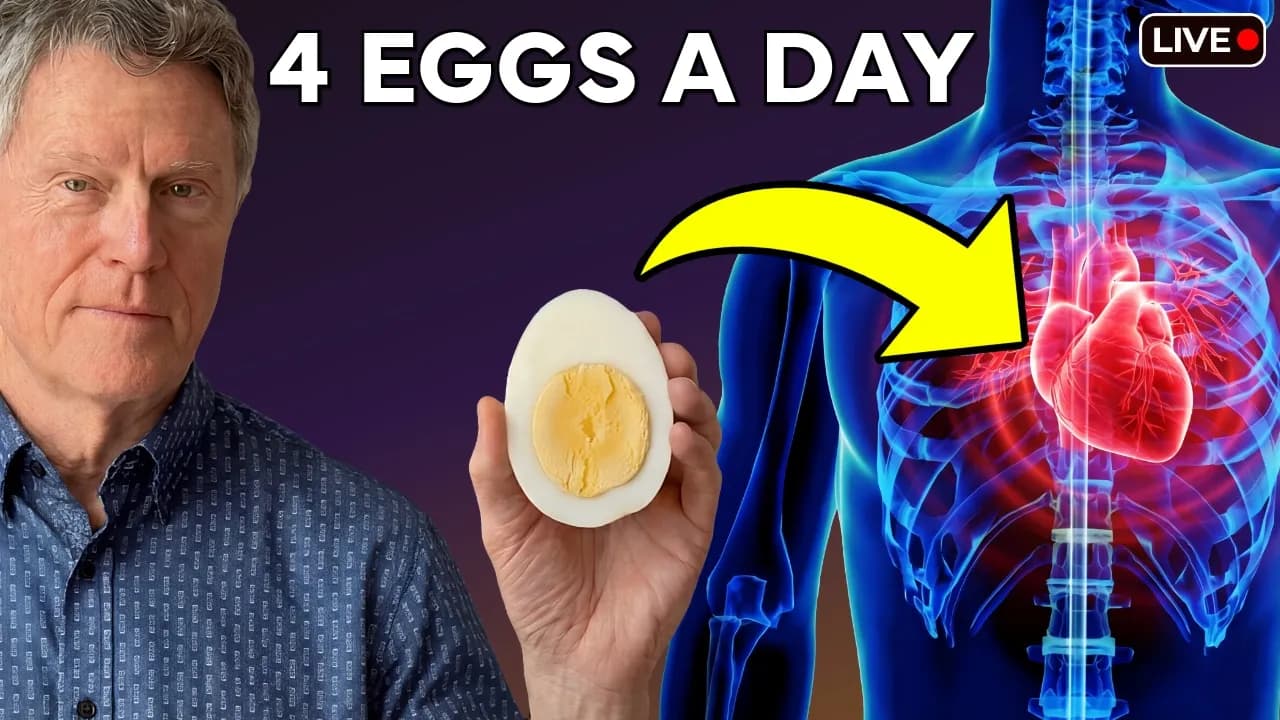
The speaker recommends watching another video about consuming four eggs every single day.
Keep Dr. Eric Berg DC in your library
Save the videos and channels worth coming back to, and find them again in one place.