Elizabeth Holmes' Husband Billy Evans: The Trial, Prison & Nathan Fielder’s Documentary
In a Nutshell
Billy Evans, Elizabeth Holmes's husband, challenges the dominant fraud narrative around Theranos by arguing Holmes was convicted on investor fraud rather than patient harm, received an inflated 11-year sentence due to procedural factors, and was silenced by legal constraints that prevented her from telling her side. He describes their family life, the brutal prison experience, and a forthcoming documentary designed to let viewers judge Holmes as a person rather than through media portrayals. Evans also details his new photonics company Hemanthes while dismissing "Theranos 2.0" claims as media sensationalism.
These notes were generated by AI and may contain inaccuracies.
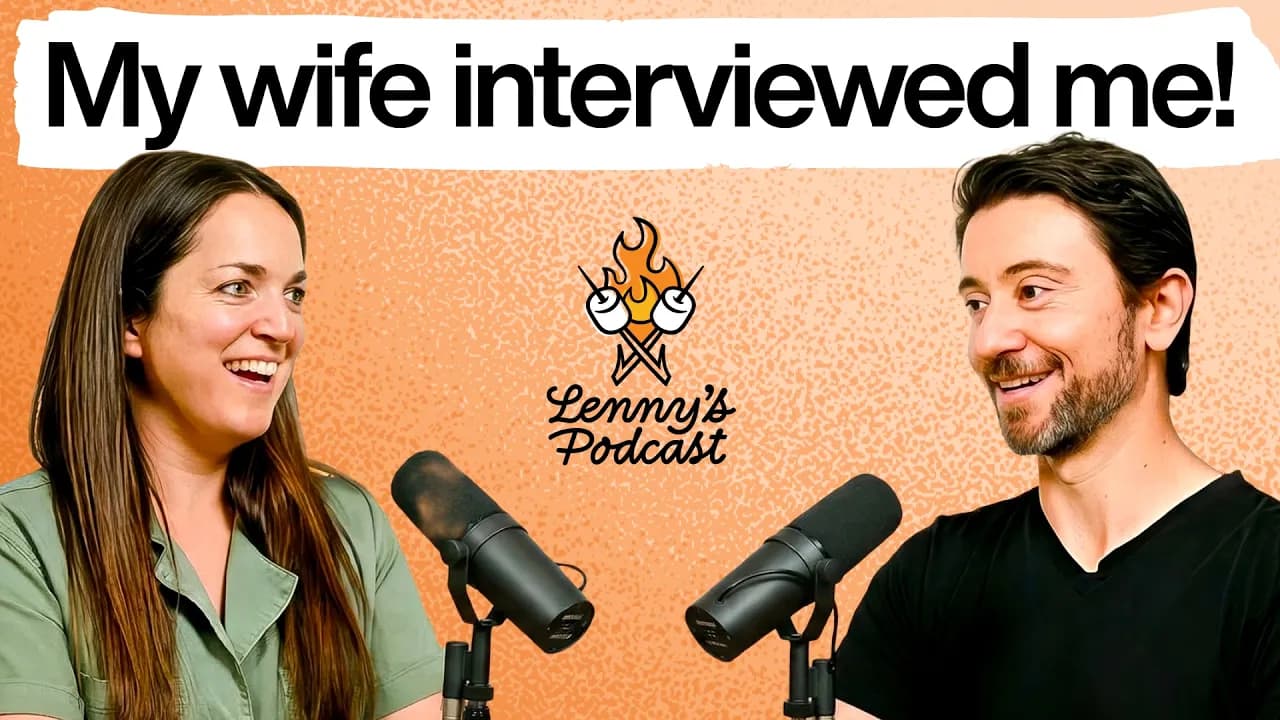
Billy Evans is Elizabeth Holmes's husband and partner. The couple connected during the federal investigation into Holmes for fraud and conspiracy related to Theranos. Evans had never done an interview prior to this appearance. He prefers not to be introduced solely as Elizabeth Holmes's husband, describing her as his wife, best friend, and partner.
Evans met the interviewer at a party approximately a year and a half prior, around F1 racing events. He approached the interviewer stating that the podcast had much of the Elizabeth Holmes story fundamentally wrong and offered to provide more details.
Evans and Holmes first met at a Fleet Week party in San Francisco on the roof of a venture capitalist's property on October 7, 2017. The venture capitalist was attempting to hire Evans and date Holmes. Evans had initially planned to stay only five minutes as he was hosting his own Fleet Week party, but the introduction led to a three-hour conversation.
At the time of meeting, Holmes wore a big floppy hat and dark sunglasses with a band-aid on her face from her husky puppy scratching her. Evans did not initially know she was Elizabeth Holmes. The conversation turned to their workplaces, revealing they worked two doors apart on Page Mill Road, with Holmes at 1790 and Evans at 1891.
When they met in October 2017, it was before Holmes was indicted but after the Carreyrou articles had been published. Holmes had a severely damaged reputation as a fraudster. Evans engaged with Holmes as a person first, without knowledge of her public story, and only later connected her identity to the media narrative.
Evans found it challenging to reconcile the person he met with the public portrayal, describing the two versions as radically different. He noted the difficulty of knowing someone separate from preconceived notions about them.
After meeting, Evans considered renting space in Holmes's building as their businesses were adjacent. Holmes provided her business card with her personal cell phone number written on it, suggesting their interaction might extend beyond business. They began as friends, going on walks with Holmes's husky and Evans's roommate's dog over a six-month period.
Their romantic relationship developed quickly after this friendship phase. At the time, Evans worked for a LiDAR company selling to automotive manufacturers globally, making approximately 12 trips to Germany that year. His role involved solving critical problems the CEO preferred not to handle, including sales, executive hiring, and capital raising.
Approximately three weeks after beginning their romantic relationship, Holmes was indicted. Evans described being unfamiliar with legal terminology and processes at age 26-27. He noted Holmes remained remarkably composed throughout the mounting pressure, describing her as "cool as a cucumber."
Evans explained that Holmes fundamentally believed in her innocence and had been advised she would not be indicted. He characterized their experience as being perpetually surprised by negative developments, noting "it wasn't supposed to go this way."
Holmes maintained a strict policy of not consuming media coverage about her case. Evans reported having seen only about one and a half episodes of "The Dropout" and skimmed "Bad Blood" on legal advice, but otherwise avoided media on the subject.
Holmes adhered to a gag order from the DOJ investigation through the trial and appeals process, which ended in April. Evans described her as following rules "maniacally, like to a T," noting she never spoke to media throughout the entire process despite extensive coverage.
During the pre-trial period, Evans and Holmes spent eight months traveling the country in an off-road RV with their husky Balto. They stayed at trailer parks and national forests, hiking during the day and working at night around campfires. Evans had left his previous employment and was working independently, enabling this period of relative freedom from media attention in San Francisco.
Evans described intense media scrutiny in San Francisco, where entering restaurants would prompt six people to pull out phones within 30 seconds. Some attempted to photograph surreptitiously while others openly documented their presence. This attention extended to social events, with articles written about Holmes "gallivanting around San Francisco" during friends' celebrations.
Evans addressed claims that Holmes was manipulative, citing her turtleneck, deep voice, and perceived character as evidence of calculated deception. He argued these interpretations were sexist, noting that male entrepreneurs demonstrating similar conviction in 45-minute meetings with major investors would be praised for storytelling ability rather than accused of fraud.
Regarding allegations about missing revenue numbers, Evans explained these stemmed from contractual obligations with Walgreens to pay approximately $1 million per store across roughly 800 locations. When negative press emerged following the Carreyrou article, Walgreens defaulted on these obligations, causing the business to miss revenue targets. He emphasized this was not fabricated numbers but contracted revenue that went unfulfilled due to external circumstances.
The couple has two children: a son born July 10th who is now five, and a three-year-old daughter. Holmes was three months postpartum when the trial began. Their son was unplanned, which Evans described as an unexpected gift.
The trial logistics were demanding: waking at 4:30 AM to feed and change the baby, then preparing for court. Holmes used mobile breast pumps during court proceedings and during breaks, with Evans collecting pumped milk at lunch to send home via Uber for the baby. Holmes was "militant" about not displaying vulnerability in court, with the jury unaware of the infant's existence.
Holmes was tried on 13 counts. Theranos had conducted 12.5 million blood tests over an 18-month period. The government presented four patients allegedly defrauded with inaccurate results, but Holmes was acquitted on all patient fraud counts.
She was convicted of defrauding three investors and conspiracy with her former partner. The conspiracy conviction enabled the judge to impose a longer sentence. Holmes received 135 months (11.25 years) in prison. Evans noted the sentencing incorporated aggravating factors including financial loss calculations and the addition of Rupert Murdoch as a victim after the case concluded.
Evans indicated that a detailed response to the prevailing narrative will be released within two weeks of the interview. He suggested this material will present information that challenges the commonly accepted story based on "Bad Blood" and related media coverage. He emphasized spending years attempting to understand the full scope of events and described the forthcoming material as potentially shocking.
The judge instructed the trial team during pre-trial hearings that this case would play out in the courtroom and not in the press. This was not technically a gag order. Following this directive was the single biggest mistake Elizabeth Holmes made. Her power was in her voice and her ability to tell her story, but she was silenced throughout the legal proceedings that concluded a handful of months ago.
Elizabeth felt she didn't want to risk going through the court process and winning there, only to get in trouble for speaking out of court. She is a really idealistic person who grew up in a house where both parents worked for the government. Her mom worked with Charlie Wilson, and her dad worked with the EPA and USAID doing water projects around the world.
The conversations around the dinner table at Elizabeth's childhood home were always centered around service and asking what pain and suffering was alleviated in the world that day. Her parents are helping Billy with the kids and are in the house all the time. Billy has spent more time with Elizabeth's parents over the last few years since they lived with the family throughout the entirety of the trial.
The idealistic values from Elizabeth's upbringing are evident in how she was raised, and Billy notes that looking at someone's parents and their lived experience at a young age tells you a lot about who they are.
Billy was asked about Elizabeth's choice to wear the black turtleneck and speak in a deep voice. He explained that this was her calling and that he would touch on it briefly, noting it's her story to tell. The questioner referenced meeting Elizabeth and noted she doesn't naturally speak in that manner, seeking context about her experience as a young CEO and whether she felt she had to play a role in storytelling.
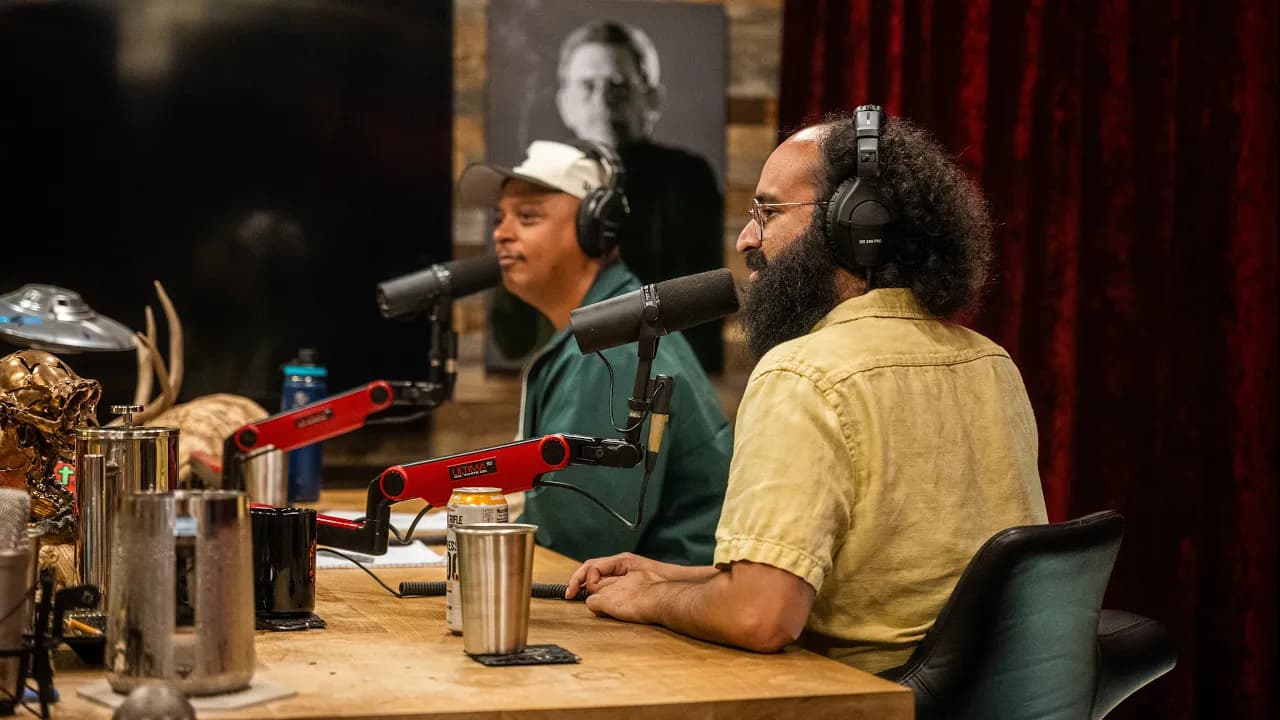
During the interview, Elizabeth called from federal prison. Billy explained that he couldn't put her on speaker phone because she would get sent to the shoe (solitary housing unit), which is not a nice place to be. The call system plays a recorded message every time she calls. Billy took the call briefly while on stage in front of 500 people, with thousands in attendance at the event.
Elizabeth has been at the Bryan Federal Prison Camp in College Station, Texas, for 1,205 days. The facility houses 800 women, and while it's called a camp and people say it's super easy, Billy emphasized that it is not. Every single day has been incredibly painful.
Billy recognizes he's not unique in this experience, noting that 130 million Americans have a family member who will be incarcerated. He has gained a newfound deep respect for single moms who are working and raising a family alone. Billy knew he wanted to marry Elizabeth and have her as his soulmate when he genuinely wanted his kids to be more like her than like him. It's hard knowing the children are spending significantly more time with him than with her.
Billy has two children ages five and three who have different comprehension of the situation. The rule is simple: when they ask questions, they tell them the truth regardless of how complicated or uncomfortable the conversation is. The five-year-old son knows where Elizabeth is, but when she went to prison, he was only 22 months old. The children ask why she is there and why they go to prison every Saturday.
The children weren't present when Elizabeth went to prison because it was thought to be too emotional for them. Billy flew out with a friend who kindly paid for a plane to Austin. They stayed the night and did some filming with Nathan and Lance. They had been told incorrect information about prison, including that Elizabeth was allowed to bring New Balances, which turned out not to be allowed. Prison consultants proved to be woefully unprepared.
Billy described driving Elizabeth to the prison as one of the hardest things he's ever done. He got out of the car at the three parking spots right in front of the facility where she got out wearing the new New Balances and a little sweater that was a gift from a friend. Billy hugged her and said he loved her more than everything, and she looked at him and said, "Now we are free."
Elizabeth is facing an 11-year sentence and has been prevented from speaking publicly in any way, shape, or form. The documentary will come out after that period when she's now allowed to talk. A lot of media has been produced about her, and the narrative has become ossified. The whole idea was to let people see her and make up their own minds as a person. The documentary is not meant to relitigate the case.
Elizabeth wasn't allowed to talk about the case in the documentary, so she followed the rules and didn't discuss it. The film shows her personal life and the reality context of their lives during one of the most stressful times imaginable. Elizabeth had given birth in February to their daughter Ivy shortly after going through IVF, and she was going to report to prison two months later.
Billy has gone through a consistent experience with the people who love him most, from his grandmother who is his idol to his best friends. When they heard he knew Elizabeth, was falling for her, or that they were going to have a kid, they would initially say he was crazy. Billy would tell them he understood why they felt that way but asked them to just meet her. Those people would meet her, spend time with her in natural environments like going on hikes or helping friends, and their opinions of her would radically shift.
The intention of the film was to help scale that experience up and allow other people to sit with her and make up their own minds. Billy hasn't seen the documentary yet and acknowledges he might think it's the dumbest thing he's ever done. The project was supposed to wrap and come out within a year of when they first started shooting, but it's been three years.
Billy expressed concern about how the documentary portrays Elizabeth. The trailer shows her looking intense, and the music reinforces the narrative of her being a manipulative narcissist. He noted that the music makes it pretty intense. Billy has been through so many intense and surreal experiences that it takes quite a bit to raise his blood pressure, and while there is certainly concern about the documentary, ultimately it's their decision.
Understanding the prison calculator is a confusing process. There's the sentence length, the time actually spent in the facility, time that can be spent at a halfway house, and time that can be spent at home confinement. President Trump in his first administration passed the First Step Act, which helps bring Elizabeth home sooner. She can earn 16 days off her sentence for every 30 days she's there if she's doing programming that reduces recidivism.
The current expectation is that Elizabeth could be at a halfway house in the second quarter of next year.
When Billy sends money for commissary to Elizabeth, 70% gets taken away because of the $435 million she owes to victims of the financial fraud. Of that amount, less than 100 million comes from 10 investors. The people who did the sentencing added on the 10 biggest investors even though Elizabeth was never convicted or proven guilty of having done anything to them, which raised her sentence from something like 4.5 or 5 years to 11 years.
Recently, Elizabeth got a one-year sentence reduction because the sentencing guidelines changed. Even the government argued that there was no evidence that any of the investors who lost money faced any financial hardship. The investors include people like the DeVos family, the Waltons, and the Niarchos family.
Billy spent an afternoon with Elizabeth buying trail mix at the vending machine. He noted that 800 women are in the facility, and on a given weekend, maybe 30 of them will get a visitor. It's crushing to see little kids crying and saying goodbye to their moms, screaming at the door.
People in the press have been reporting that Billy is running Theranos 2.0, but his background is in the photonics space. He helped build a company called Luminar that built lidar for autonomous vehicles using lasers. Billy found Elizabeth's mission compelling - the idea that diagnostics are broken today, they're way too expensive, and the goal is to make them more accessible and cheaper.
Billy's company is called Hemanthes, and they're building a new layer of sensors to better understand biology using Raman spectroscopy. This technique shines light through biological samples, creating a scattering effect where the light changes color, which is then interpreted to determine what chemical structures are within that sample.
This is a well-known technique done in research labs, but the devices cost millions of dollars, are many feet long, and are super complicated to use. Billy is taking learnings from his photonics work to make these cheaper and widely distributed so artificial intelligence can have really rich and deep data sets for biology. Today, most things are built for human doctors to understand, but they're trying to create data sets that AI can use to create correlations between disparate signals.
Billy acknowledges that what sells more in the press is the story of Billy building technology versus "Raman spectroscopy devices," as the latter doesn't drive clicks. It's easier to make it seem like Elizabeth Holmes is El Chapo running a diagnostics cartel from prison than to say Billy's building a nerdy company.
Billy thanked the audience for listening and appreciated the opportunity to share his story.
Keep All-In Podcast in your library
Save the videos and channels worth coming back to, and find them again in one place.