Enhance Your Physical & Mental Resilience (HRV, Respiratory Rate, RHR)
In a Nutshell
Dr. Andy Galpin explains controlling the autonomic nervous system for physical/mental resilience using the "Three I's": Investigate via HRV (higher variability = more parasympathetic, measure with Polar H10 + Optimal HRV app), respiratory rate (<16 bpm ideal), RHR, and CO2 tolerance tests; Interpret trends/context (stable HRV signals resilience, high respiratory rate indicates overbreathing/CO2 intolerance); Intervene acutely (physiological sighs, Valsalva, cold exposure) or chronically (resonant breathing at 4-6.5 bpm 20 min/day for 4-6 weeks, nasal breathing, HIIT, reduce arousal like irregular sleep/alcohol). Aim to widen sympathetic-parasympathetic range like expanding a highway for stress handling, avoiding acute fixes for chronic issues—prioritize consistent data collection, multi-metric trends over absolutes, and hormetic stressors for desensitization.
These notes were generated by AI and may contain inaccuracies.
Dr. Andy Galpin, professor, scientist, and executive director of the human performance center at Parker University, discusses enhancing physical and mental resilience through controlling the nervous system for sport, play, and life.
Favorite example from The Office (American version): Dwight Schrute brags about superior genes allowing him to raise his blood cholesterol levels at will, so he can then lower it. Highlights control over physiology most think is uncontrollable.
1970 experiment: Swami Rama sat with scientists using ECG (electrical conductivity of heart) and EEG (brain measurement). Without moving, he:
- Raised resting heart rate from 70 bpm to 300 bpm, held for several seconds, then lowered it.
- Brought heart rate below 20 bpm with A-fib, making ECG think heart stopped for 20 seconds; signaled he was fine, then resumed.
- Changed hand temperature by 6°C in same hand, inches apart, showing whole body and precise local control.
Published and still famous for autonomic physiology control.
1982 Nature paper: Tibetan monks in Himalayas using tummo practice raised body temperature by 8°C consciously without moving. In cold/sub-zero conditions with wet sheets, stayed neutral temperature/heart rate and dried sheets in 30-60 minutes.
Thousands of anecdotes exist; clear ability to control physiology with time and attention via tumo, visualization, or other methods.
Nervous system: Two branches:
- Central nervous system: Brain, brainstem, spinal cord.
- Peripheral nervous system: Everything else; includes somatic (voluntary control) and autonomic nervous system (ANS).
ANS focus: Parasympathetic (rest and digest) vs. sympathetic (fight or flight). Also freeze, enteric (gut) systems, but focus on parasympathetic-sympathetic interplay.
People have conscious control to recalibrate despite being autonomic. Ideal: Runs in background like software; toggle when out of whack.
Not covering stress management, emotions, mental health (recommend Huberman Lab podcast Essentials episode). Not just downregulation or breathwork; fine-tune up/down control.
- Investigate: Measure nervous system.
- Interpret: Evaluate data.
- Intervene: Protocols/tools for positive impacts any direction.
AG1: Vitamin/mineral drink with probiotics, prebiotics, adaptogens. Supports gut microbiome for body composition, bone health, mental health, digestion, reduced cravings, short-chain fatty acids for metabolism/immunity. Take daily to fill nutrition gaps. Try at drinkag1.com/perform: 5 free travel packs + year of vitamin D3 + K2.
David protein bars: 28g protein, 150 calories, 0g sugar (75% calories from protein, 50% higher than next bar). Aids 1g protein/lb body weight for muscle, recovery, lean mass, satiety. Best tasting. davidprotein.com/perform.
Goal: Autonomous operation; active control when needed, without constant management.
Two buckets:
- Read: Current state via technology or interoception (feeling it yourself).
- Regulate:
- Acute: Instant state change (e.g., flustered/tired now).
- Chronic: Permanent baseline shift.
Avoid using acute stimuli for chronic change. Widen sympathetic/parasympathetic range (resilience), not sensitize.
Highway analogy: Expand from 1-lane (hits guardrails) to 7-lane road for resilience.
Resilience: Handle high/low ANS changes without dramatic impact on psychology (happiness, anxiety, depression, stress) or physiology (hormones, energy, metabolism, sleep, recovery, performance).
Prefer resilient over sensitive system. If constant sympathetic (high-intensity workouts, stress), downregulation works (hundreds of RCTs), but integrate both for balance like hormetic stressor: Supercharge up to swing down naturally.
Three categories:
Performance-based tests (sport performance):
- Daily vertical jump (3-4 max efforts); lower = fatigued ANS.
- Grip strength.
- Reaction time apps.
- Finger tap tests, firing rates.
- Range of motion: Sit-and-reach (hamstrings/low back), rotational, forearm flexion/extension.
Tested 4+ years against validated measures; correlate well, performance-focused.
Psychological assessments:
- Mood, fatigue, RPE (rate of perceived exertion), training interest. Large databases (millions of points) show mood strongly predicts ANS state.
Physiological markers (most research):
- Blood/salivary tests (see overtraining, blood tests episodes).
- Respiratory physiology: Resting heart rate (RHR), heart rate variability (HRV), respiratory rate, CO2 tolerance.
HRV dominates research. RHR insensitive: Only shifts after weeks of overtraining/chronic stress/disease; small changes, poor signal-to-noise. Rarely used alone.
Respiratory rate, CO2 tolerance growing/used personally, less research. Focus on HRV.
Heart rate variability is exactly what it sounds like. It is the variation in your heart rate. Let me use
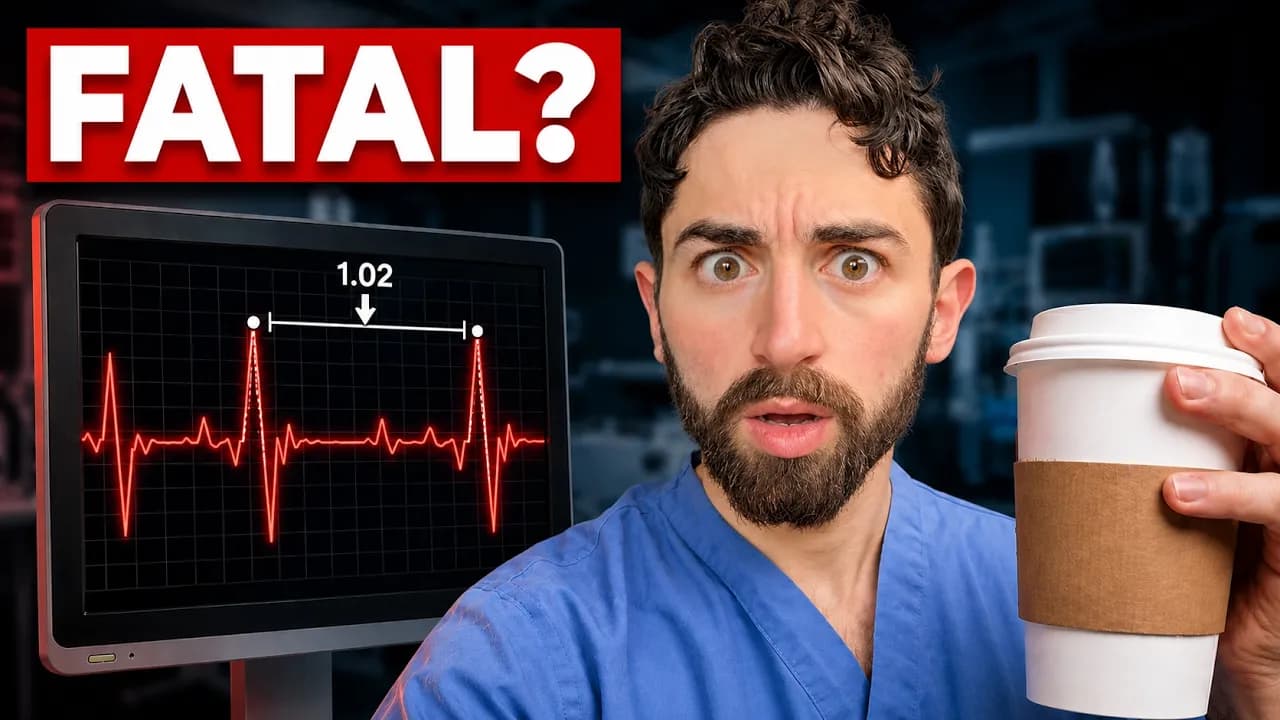
Resting heart rate of 60 beats per minute does not mean the heart beats every second on the second. Speeding up to 70, 80, 90, or 100 beats per minute does not just shorten intervals uniformly. In reality, if heart rate is 60 beats per minute, beats occur at varying intervals like 1.1 seconds, then 1.2 seconds, 0.9 seconds, 0.8 seconds, 1.3 seconds. At the end of 60 seconds, there are still 60 beats, but not metronome-like. HRV is the variability in time between heartbeats.
More variation means more parasympathetic activity (downregulated). Metronome-like regularity indicates sympathetic drive. Parasympathetic and sympathetic toggle; HRV shows position on that spectrum. Ideally, spend more time parasympathetic (higher HRV), less sympathetic. Most people spend too much time sympathetic, low HRV. Rare opposite: extraordinarily high HRV with lethargy, no energy, no motivation (95/100 cases are low HRV).
Practical example: high stress job, traffic, podcasts, TV, sensory input requiring attention/reaction, managing children—constant arousal, not enough quiet time compared to ancestral life. Modern life has more frequent arousal than human species history. HRV is a snapshot of autonomic nervous system, parasympathetic vs sympathetic drive. Only one metric, not perfect, but research-backed. Roughly 50% genetic, 50% lifestyle (research on split not impressive, will change). Some uncontrollable, some controllable—consider for interpretation.
Not like VO2 max; cannot judge good/bad solely from HRV. Numbers less specific. Age-related decline occurs, but recent paper (last year) argues it's not inevitable if maintaining function/fitness—HRV drops less or not at all. First paper examining this.
HRV associated with better health, tied to cardiovascular/cardiopulmonary fitness (moderate correlation, not 1:1 with VO2 max). Factor independently; seen high VO2 max with low HRV and vice versa. Women tend lower VO2 max (more sympathetic drive), not worse.
HRV influences attention, focus, decision-making, emotional control, mental endurance (resilience under stress). Higher HRV maintains decision-making, focus, attention, memory when fatigued/stressed, not just baseline.
Associated with every psychological/mental health metric (anxiety, depression, PTSD), cardiovascular disease, all-cause mortality, inflammation, hypoglycemia (high blood sugar, e.g., type 2 diabetes), hyperlipidemia, hypertension.
Example: fight/flight raises adrenaline, releases glucose for skeletal muscle energy. Chronic: stress-induced diabetes—smashing insulin/pancreas with glucose spikes without food intake. Leads to obesity, inflammation, high blood pressure. Direct psychology-to-molecular biology consequences.
Vagus nerve drives HRV variability; stimulation can downregulate or upregulate (toggle ability). Molecular evidence: vagus nerve activates/changes immune system. Overstress compromises immunity; low HRV signals reduced resilience (e.g., get sicker).
Study on reactivity marker: low HRV (sympathetic) gives higher sleep reactivity to stress—exaggerated bad sleep response. High HRV: same stressor, no sleep effect. Low sleep raises depression risk. Encapsulates resilience: less reactive to life's stressors. Autonomic nervous system measures this.
Polar H10 chest strap ($100, gold standard, direct EKG/ECG). Wrist/arm devices use different tech, okay but not for precision/coaching. Pair with Optimal HRV app ($5/month, recommended by Dr. Jay Wilds). See HRV real-time, test interventions instantly. Total ~$115. Measure from chest, not finger/wrist unless necessary.
Morpheus great for baseline changes over time, conditioning/exercise guidance.
Less research than HRV but growing; provides different info—track both. Non-specific but highly sensitive nervous system measure. Changes in minutes/seconds or days signal overall stress load (not specific cause: nutrition, stress, hydration, sleep). Personally more sensitive than HRV (changes first, not always).
Article: "The Importance of Respiratory Rate Monitoring: From Healthcare to Sport and Exercise" in Sensors journal by Andre Nolo. Critical vital sign, associated with cardiac events, pneumonia, heat/cold exposure, exercise, emotional stress, cognitive load.
Similar metric to respiratory rate, resting heart rate, HRV for nervous system state. Breath-hold test: exhale continuously at small amount until max effort (link to Brian McKenzie's video in show notes). Tells something similar but different; use as much as possible, but active test (~1 min), not daily like others.
Physiology: Inhale O2 for metabolism/energy (aerobic). Exhale CO2 (metabolic byproduct: carbs/fat breakdown for exercise/digestion/immune/cognition → water, ATP, CO2). Muscles generate CO2 → blood → lungs → exhale. Plants reverse: inhale CO2, exhale O2.
O2 regulates metabolism; CO2 regulates pH. Body prioritizes pH (enzymes need specific pH). Tight pH window over testosterone/adrenaline. Regulates via CO2 in blood: high CO2 → breathe more (subconscious, autonomic) to dump acid; low → slow respiration, hold breath to build CO2.
Exercise generates CO2 → breathe more to dump. Air hunger from CO2 buildup, not O2 lack.
In normal circumstances, the primary reason you get air hunger or feel like you have to breathe is because CO2 levels are rising, not because you're running low on oxygen. CO2 concentrations in your blood are the primary mechanism that drive you to feel like you need to ventilate. This can be conscious, but most of the time, it happens without awareness.
If you are chronically under breathing, CO2 levels get really high, making you acidic. What's more common is over breathing or chronic hyperventilation, a medically diagnosable condition, where you exhale too much CO2, leading to hypocapnea (too low CO2). This makes you alkaline, out of pH range. Kidneys can respond within hours to weeks by inducing metabolic acidosis to reestablish acidity, causing renal, kidney, hydration, sodium, potassium, and electrolyte issues.
CO2 is a vasodilator; low CO2 causes vasoconstriction, decreasing cerebral blood flow and blood flow elsewhere. It alters the Bohr effect, reducing oxygenation. This impacts health, cognitive performance, and physical exercise performance.
Even if HRV and resting heart rate are fine, chronic over breathing indicates stress not picked up by those markers. It can become sustaining factors: initial stress causes hyperventilation (normal, healthy response like anticipatory over breathing before physical activity), but chronic sympathetic drive turns it into a habit, misattribution, or increased sympathetic adrenergic tone, creating a cyclical problem that's hard to break.
Respiratory rate is highly correlated with other markers but provides unique information. Pay attention to it.
Most wearables measure respiratory rate, but there's no industry standard for calculation. Don't focus on absolute numbers; track trends and be consistent with the device. Every wearable either reports it or uses it for other calculations.
Tools provided for calculating HRV, respiratory rate, resting heart rate, and CO2 tolerance. Now, interpret the data starting with HRV.
Anyone in this area says it's hard to define good or bad HRV numbers—a badge of honor if they say that. On most wearables, men are in the 40s to 60 range; women slightly lower. Over 60 years old, think a bit lower. But every device uses different calculations, so numbers aren't comparable.
Use HRV for progress or regression, not absolute scores or comparisons (e.g., ring vs. watch). Different scientifically validated methods yield different numbers. An HRV of 25 might be normal for you if other markers (respiratory rate, RHR, CO2 tolerance, subjective feeling, recovery, performance, cognition) are great—never interpret in isolation.
Collect good data: be consistent (same device, position, routine—no seated one day, lying next; no bathroom/coffee/breakfast variations).
Focus on trends over time. Establish your own standard deviation: test HRV for 30 days without changes, record scores, calculate average and standard deviation. This reveals normal range and physiological stability—arguably more important than the number itself.
Example: HRV average 30, SD 20 (swings 10-50)—large deviation; a drop to 27 is meaningless. If SD 3-5, a 7-point change signals something.
Stable HRV (low SD) indicates resilience: hyperreactive (doubling every other day) means instability; tight consistency means the system handles stress without hitting the wall (highway analogy—swerving but staying on road).
Never make changes based on one day or use consumer wearables to dictate daily exercise/sleep. Companies would agree that's not the best use.
Interpret in context to become more resilient.
Stable vs. unstable HRV caused by genetics and basics: irregular sleep schedule (first check—consistent sleep timing boosts HRV dramatically). Alcohol, negative health habits lower it—remove them to improve.
Wild weekly exercise changes (e.g., standard weekdays, bonkers weekends like 10-mile run, multiple classes, 5 hours pickleball) cause instability in HRV and RHR.
Nutrition: one meal a day (OMAD) often compromises HRV long-term, despite feeling good for 30-90 days. Nervous system pays price; switching to 2-3 meals improves HRV, sleep quality, cognition, performance. Not saying OMAD is bad if you feel great—consider if recent change and HRV dropping.
Combination of well-documented (alcohol, emotional regularity) and observed factors (exercise variability, feeding frequency).
- Good data? If not, disregard.
- One day or >3 (ideally 5-7) days?
- Acute (1-3 days): Check training phase. If inducing adaptations (stress for change, e.g., offseason build, caloric deficit), ignore—it's expected. Don't follow generic tech advice to rest based on low HRV; it ignores long/medium-term goals.
- If peaking/performing (sports, family/work), use acute state shifters (strategies to raise HRV today/tomorrow).
- Chronic (>5-7-10 days): Inducing adaptation? Watch carefully; if >2 SD below normal and feeling bad (low motivation/energy), take action. If peaking, use chronic solutions.
Use right tool for task.
Literature cutoff: >16 breaths/min tied to cardiovascular risk (myocardial infarction, stroke), clinical deterioration, pain, emotional stress, cognitive load.
- 10-14: Good if no other issues.
- 15: Ask follow-ups.
- 16: On the line.
-
16: Priority—chronic over breathing/hyperventilation; address due to short/long-term issues.
- Check breathing mechanics: ineffective strategy (shoulder/neck/clavicular breathing, weak diaphragm/intercostals, poor posture) requires more breaths. Fix posture/mechanics first (e.g., hunched over restricts breathing).
- Breathing problems: allergies, nasal blockage, sleep disorders. Mouth breathing highly associated with hyperventilation—fix nose breathing first.
- Dehydration: acute spikes resolve with hydration.
- CO2 intolerance: brain miscalibrated, hypersensitive, perceives too much CO2.
You're either hyper stressed or hyper sensitive, so it starts asking you to dump and offload that CO2 way sooner than it needs to. You're intolerant or hyper sensitive, one of those two. Confirm that with a CO2 tolerance test. If respiratory rate is elevated and CO2 tolerance is poor, fix CO2 tolerance and respiratory rate will take care of itself.
If rest rate is high, it could be a long-term pattern. Initiating factors become sustaining factors. Common in middle to later aged adults from high stress environments, careers like surgeons, military individuals, entrepreneurs, or prolonged high stress. Overbreathing was appropriate in stress, but persists after selling company, retiring, reducing hours. Years of data confirm this pattern exists; you're overbreathing without knowing it. Break that pattern.
Pregnancy is a big cause post-childbirth for women; patterns establish and stay unless actively reframed and rebuilt.
Last cause: general elevated allostatic load, physical or mental. Allostatic load is global stress on the body. Respiratory rate elevation isn't automatically stress; could be inability to breathe through nose, dehydration, CO2 intolerance, or other reasons. Strategy: solve simple problems first—mechanics, breathing problems, hydration, CO2 tolerance. Most situations resolve after these. Applies to heart rate, respiratory rate, or any metric.
Don't fixate on one metric. No best number; issues with data, interpretation, normative values. Stress and recovery are multifaceted; use multiple objective and subjective measures.
Start with acute changes to shift state immediately: 4x4 matrix—physiology affects autonomic nervous system (ANS) up or down, and vice versa.
- Physiology up ANS: scream, yell, flex muscles hard—instant heart rate up, respiratory rate changes, adrenaline.
- Physiology down ANS: physiological sigh, progressive muscle relaxation.
- ANS up physiology: get scared (adrenaline increases strength, force, power); supplements/drugs.
- ANS down physiology: zen state, medications lower heart rate, physical response.
Categories: food, supplements, thermal stressors, breathwork, brain distractions/alterations, rest/sleep, light, movement, motivation.
Acute examples (motivation): social media quote (e.g., Cameron Haynes, Jocko Willink) inspires, shifts to sympathetic drive, changes HRV. Read story/book, watch movie, physical warm-up, hops, flex hard, bright light in face. These change state momentarily but not chronic HRV.
Chronic: HRV biofeedback training, fix sleep issues, exercise if underexercised, increase calories if hypocaloric long-term, thermal exposure.
Cold water immersion example (30-50°F, 2-5 minutes): HRV drops immediately (sympathetic), but 30 minutes post: 10-20% higher; peaks 25-50% higher at 3 hours (measured every 15 minutes up to 180 minutes). Lasts several hours/days; not necessarily weeks/months.
Visual resets (Dr. Andrew Huberman): eye circles (loop eyes), smooth H pattern. Literature supports cortical/visual resets.
Modified Valsalva maneuver (acute): hold breath (inhale or exhale), create 360° intraabdominal pressure—like exploding a soda can/barrel (pelvic floor bottom, diaphragm top, all sides). Hold 10 seconds. Heart rate jumps (60-70 to 120 bpm), exhale (any way), drops to 40-50 bpm (new lower baseline). Alters baroreceptors on vagus nerve; high magnitude effect, free, anywhere.
Caveats: avoid if orthostatic issues, low blood pressure, near water, multiple times, during workout (blocks blood flow, risk fainting/drowning).
Vagus nerve stimulators: FDA-approved need prescription (e.g., GammaCore—effective, data changes instantly; from neurologists for migraines). Commercial ones weak data, company-funded studies; not impressed personally.
Goal: desensitize nervous system to run in background with control. Same as immune system desensitization.
Personal story: daughter's severe cashew allergy treated over 18 months; now eats cashews daily (from EpiPen level). Small doses, increase gradually.
Athlete low back pain: Dr. Quinn Henke advised train right below pain threshold; resolved chronic pain permanently.
Ubiquitous principle: small doses build tolerance. Changes noticeable in 3-4 weeks, biggest at 6-8 weeks; then maintenance (2-3x/week). Stopping may regress.
Muscle analogy: don't expect biceps bigger after one workout; same for breathwork—takes weeks for chronic change. Acute feels good now; chronic resets baseline passively later. Dedicate 10-15 min/day first 4-8 weeks.
Exercise: hormetic stressor. Strength training, low-intensity cardio, HIIT all work; HIIT best for this marker. Dose right—too much tanks HRV; add if underexercised. Depends on lifestyle/sleep/nutrition.
Breathwork: manipulates like lower-level exercise, consistent benefits. Framework:
- Step 1: reduce arousal (walk in nature, no podcast/music; cut sensory input—no heavy metal all day then breathwork).
- Step 2: more nasal-only breathing (tape mouth, nose breathing walks).
Incorporate nasal-only breathing during some or all of your exercise. It activates the diaphragm more, slows respiratory rate because you can't move air as quickly through the nose, and makes hyperventilation noticeable—you'll feel and hear it, unlike mouth breathing. Nasal breathing is more parasympathetic, reducing arousal. Forcing nasal-only breathing addresses multiple issues. If more is needed, use specific breath work protocols.
Intuitive Breath Matching
Make your breath match the desired state. For high energy when feeling lethargic, low motivation, low heart rate, and low energy, mimic high-energy breathing—hyperventilate. Hyperventilation breath work causes tingling in arms, sweating, and acute temperature rise within seconds. Physiology matches the breath pattern.
To downregulate, breathe less: extended exhales or slow breath rate. Basic strategy: speed up for energy, slow down to calm. Effective practitioners combine techniques for hormetic stress—alternate faster and slower breathing. Finishing on slow breathing yields stronger parasympathetic response than slow-only, supported by research and experience, similar to exercise variety.
Conflicts of interest: Board member (no pay) of nonprofit Health and Human Performance Foundation, founding member. Group led by Tanya Bentley published review on breath work for stress and anxiety (link in show notes). Reviewed 72 papers; 75-80% found breath work helpful.
Breakdown of effective papers (5 common factors):
- Avoid fast-only breathing (hyperventilation popular but ineffective alone for chronic stress/anxiety reduction; can be part of practice but not exclusive).
- Sessions longer than 5 minutes.
- Human-guided (coached, in-person or remote; not solo initially).
- Multiple sessions per week (acute effects possible sporadically, but chronic benefits require consistency).
- Longer-term (4-6-8 weeks).
Recap: Non-exclusive hyperventilation, >5 min, guided, multiple times/week, 4-6 weeks → 70-80% chance of meaningful clinical improvement in anxiety/stress. Improves HRV, CO2 tolerance, resting heart rate, respiratory rate.
Categorize into internal (interoception, e.g., focus on heart rate while slowing breathing) and external (watching physiology on screen to improve it). Both effective.
Internal Biofeedback (Free/Low-Cost)
- Hypoxic exposure: Breath holds, Valsalva maneuver—acute reset, changes subjective feeling. Combine with exercise (e.g., burpees, jumping jacks, push-ups) for immediate perception shift.
- Meditation app: Waking Up by Sam Harris—progressive system, simple lessons. Focuses on breath connection (biofeedback). Free 30-day trial at wakingup.com/huberman. Effective even for breath work skeptics; hooks users on breath awareness.
- Gear one walking (Brian McKenzie): 30-45 min (one client does 2 hours/day), nasal breathing at intentional 2s inhale/2s exhale (4s cycle = 15 breaths/min). Matches appropriate breath rate to caloric expenditure. Retrains baseline: 15 bpm appropriate for walking, aim lower for sleep (10-12). Feels weird, no podcasts/emails—full focus.
- Cold exposure: In shower/bath, first 1-3 breaths to calm, then control 10 breaths. Use cold stress (hormones, adrenaline, heart rate spike) to regulate breath, build resilience/stress inoculation. Practice regaining control when losing it (like meditation: noticing and returning focus). Not about time endured, but controlled breaths despite stress.
External Biofeedback
Example: Sports psychologist used ear electrode/pulse oximeter; athletes saw black/white screen (landscape/kids) turn colorful when lowering heart rate. They discovered independently (no instructions), learning to control via visuals.
- Weight belt ($20 Amazon): Loose fit increases core strength via tactile feedback (feel contraction). Tight belt reduces strength (muscles offload). Reminder to engage core.
- Stomach belts (e.g., fat-burning types): Wear 20 min-several hours for breathing feedback—feel shoulder/neck vs. core breathing, slows rate (hear belt movement).
Research (meta-analysis): Positive for stress/anxiety, cognitive function, depression. ~20 min/day, 4-5 weeks, ideally morning/night. Resonance frequency consistent lifelong (per Paul Lehrer, Rutgers).
Optimal HRV app ($5/month): Test/training. Also Pace Breathing app.
Resonance test (12 min): Start ~6.5 breaths/min (studies 6.5-3 bpm), 2 min per cadence (e.g., 6.5s in/6.5s out), drop 0.5 bpm every 2 min (measures HRV). Identifies peak HRV cadence (personal resonance frequency, e.g., 6 vs. 4 bpm). Train at that rate for max HRV.
Optimize for:
- Low frequency power (vagal nerve measure, primary target—not raw HRV score).
- HRV amplitude (max-min HR per breath cycle; e.g., 80-40=40). Fit people: larger (e.g., 40-90=50); unfit: smaller (60-70=10). Indicates resilient nervous system.
HRV score secondary; focus resilience via amplitude/frequency power.
Shift Wave chair ($10,000): Haptic feedback, sensory control (light/sound), measures HR/HRV, guided biofeedback via movement/light/sound. Used by pro groups; impressive results.
Supplements: Acute (e.g., caffeine boosts sympathetic). Chronic for low HRV/high respiratory rate: Limited evidence. Several review articles/meta-analyses on...
Several review articles and meta-analyses on omega-3s show benefits that are not huge, but there is some indication of help for HRV.
A study on watermelon juice highlights its high citrulline and arginine content, which boosts nitric oxide capacity. In combination with an oral glucose tolerance test, it did not improve HRV but blunted the HRV response to a compromising stimulus—acting as stress inoculation. Similar to ashwagandha, these do not raise resting HRV but reduce responsiveness to stressful stimuli like high-intensity exercise or psychological stress. They blunt the impact rather than recover from it, functioning as stress inoculators.
A review article on human studies found an association between low vitamin D and B12 and low HRV. This was observational, not an intervention study. Future work may show if supplementing those who are deficient leads to chronic HRV improvements. Supplementing those already normal in these vitamins likely does little.
Keep everything in context of hormesis: stimulate without annihilating—touch boundaries to desensitize, but avoid pushing into greater stress. A small bump in uncomfortableness provides a nice rebound; huge trauma is unhelpful or sets you backwards.
Two types of people:
- Big feelers with high interoception who hyperfocus and self-stress—avoid technology, use feeling-based methods or do nothing.
- Dull knives with no body awareness—use technological solutions for calibration.
- First step: reduce overall arousal—free, with broad benefits across life areas, before specific protocols or supplements. Reduce the stress cup.
- Find what works best for you to fill your recovery cup. Not enough to just reduce stimuli; actively recover. Not being stressed ≠ fully recovered. Tinker to discover what fills your bucket (differs for individuals like speaker, wife, family, athletes) and use it often.
- Don't expect acute solutions (supplements, thermal immersions, motivational quotes, music) to fix chronic problems. Chronic solutions require >5 minutes/day, ideally every day or multiple times/day for first 4-6 weeks, then taper to a couple times/week.
Thanks to:
- Dr. Jay Wows for phenomenal help and conversations.
- Jill Miller and her book Body by Breath.
- Emily and Brian at Shift Adapt.
- Martin McFilly for great work.
Appreciate listeners; hopes they gained new skills, tools to try. Welcomes feedback on YouTube comments: what worked, what didn't, experiences.
Thank you for joining for today's episode. My goal, as always, is to share exciting scientific insights that help you perform at your best.
Support the show:
- Subscribe on YouTube, Spotify, Apple; leave 5-star reviews on Apple/Spotify.
- Check sponsors.
- Share with friends.
Content questions/suggestions: YouTube comments. Follow @DrAndyGalpin on Instagram/X for science. Newsletter at performpodcast.com (free, no email sharing) with actionable takeaways on fitness, V2 max, muscle/strength, etc.
In the famous words of Bill Bowerman, if you have a body, you are an athlete.
Keep Andy Galpin in your library
Save the videos and channels worth coming back to, and find them again in one place.