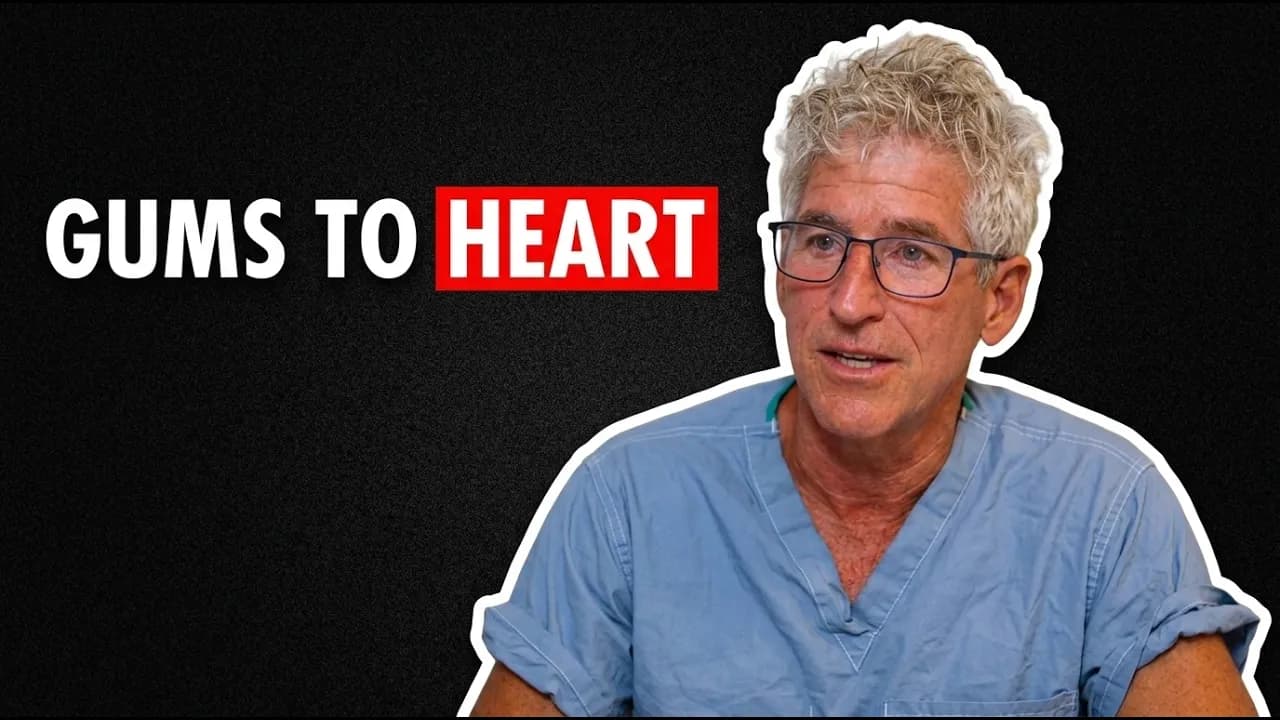
EP241: Root Causes: Exploring the Hidden Links Between Your Mouth and Your Health - Corbin Popp, DMD
In a Nutshell
Dr. Corbin Popp argues that biological dentistry must prioritize removing four main interference fields—metal, EMFs, root canal-treated teeth, and cavitations/ischemic bone lesions—because these act as hidden sources of systemic inflammation driving chronic illness. He emphasizes that extraction protocols must completely remove the periodontal ligament and use bone grafting to prevent cavitations from forming, and that ceramic implants are preferred over titanium due to better tissue response. Patient outcomes depend on systemic preparation, collaboration with medical providers, and the patient's own healing capacity, with the dentist providing only 20% of the result while the patient's cellular health determines 80%.
These notes were generated by AI and may contain inaccuracies.
The Better Health Guide podcast explores complex chronic conditions and ways to build resilience, improve vitality, and achieve better health. Content is for informational purposes only and not intended to diagnose, treat, or cure any illness. Nothing discussed should be considered medical advice.
Episode 241 features Dr. Corbin Popp, DMD, discussing root causes and hidden links between the mouth and overall health. Dr. Popp grew up in small-town Nebraska around his father's dental office. He earned a biochemistry degree with honors from the University of Nebraska, received a Fulbright scholarship to Germany, and pursued a decade-long career as a professional dancer on Broadway and international stages before returning to dentistry.
Dr. Popp graduated top of his class from the Arizona School of Dentistry and Oral Health and was named resident of the year in his graduate practice residency at the University of Colorado. His practice focuses on ceramic implant surgery, regenerative bone augmentation, and complex bioesthetic full-mouth rehabilitation and jaw stabilization. His surgical work includes managing root canal treated teeth and poorly healed extraction sites, historically called cavitations or FDOJ lesions, now studied as covered socket residuum (CSR).
Dr. Popp completed level three training through the OBI Foundation for Bioesthetic Dentistry and level one dental technician training in dental morphology. He was the first American dentist certified in the Swiss Bio Health concept, trained under Dr. Olri Folz, and studied biological bone augmentation with Dr. Frank Zastro. He is currently in advanced post-graduate training with Professor Charam Gennady, whose work in wound healing, regenerative biology, and jawbone healing informs his surgical approach.
Dr. Popp emphasizes that biological dentistry should mean more biology and better science, separating clinical observation from established science. He views the body as one interconnected system, with teeth functioning within a bite, jaw, skeleton, and ultimately a whole person.
Dance taught Dr. Popp to see the body as interconnected, a perspective that shapes his dentistry today. After his father's passing, he returned to dentistry for its mix of art and science, working with his hands in a way that continued his performing arts experience.
The performing arts background influences dentistry through flow, movement, and body mechanics. Dentistry is compared to a cottage industry where practitioners wear all hats, requiring stage presence, backstage preparation, and movement coordination with patients. Timing is critical in dentistry due to high overhead costs.
Dr. Popp frequently treats patients with systemic chronic complex health challenges including Lyme disease, mold illness, mast cell activation, systemic toxicity, and EDS (Ehlers-Danlos syndrome). These cases require collaboration between dental and systemic medical providers. He positions himself as a quarterback within his lane while seeking a systemic medical quarterback for comprehensive care.
Swiss dentistry leads in whole-body health approaches compared to traditional US dentistry, which focuses more on material and architecture outcomes versus body response. Mentors include Dr. Dietrich Klinghardt, who collaborated with Dr. Volz at Swiss Bio Health Clinic and contributed to the Swiss concept book. Additional influences include Paracelsus and leaders examining overall toxicities and their relationship to immune system and gut health.
Dr. Popp describes himself as the devil's advocate, being evidence-based and open-minded while preferring data over purely holistic approaches. He initially worked with a biodentist under Dr. John Augsberger who traveled to Paracelsus. His approach evolved through observing patient outcomes after removing inflammatory sources from the mouth.
Traditional dental schools teach drill-and-fill approaches, root canals without consideration of hidden bone infections, and materials without attention to potential allergies. The Swiss and German approaches adopt more open perspectives, which Dr. Popp notes is gradually being accepted in the US.
Dr. Popp is familiar with muscle testing systems including autonomic response testing used at Swiss Bio Health. He mentions Dr. Simon U. Oh and Dr. Elliot Smith, who uses an avatar device based on volts and meridian systems. He acknowledges that every dentist performs some form of muscle testing and uses techniques like Dr. Roger Bilica's thumb rubbing methods.
Tooth vitality assessment includes cold testing where patients raise their hand when they feel cold, noting response time and how long pain lingers. Electric pulp testing measures response thresholds. Tapping tests reveal if teeth hurt when pressure is applied. Some patients may not respond to cold due to neurological factors.
Interference fields are defined as inflammatory sources that may play a role in chronic diseases. The Swiss Bio Health concept identifies four main interference fields: metal (including biocorrosion concerns), EMF waves, root canal treated teeth, and FDOJ/CSR lesions (cavitations or unhealed bone). Removing these sources may allow parasympathetic reset and healing in patients.
Electrical connections through meridian systems link teeth to organs and systems. Clinical observations include back pain resolving after metal implant removal. Connections also occur through vascular systems, with periodontal disease bacteria entering bloodstreams and affecting prosthetic heart valves. The focal theory of infection remains debated for root canal treated teeth and dead bone infections.
Dr. Popp avoids being a product policeman and cycling through products without instilling unnecessary fear. His office uses cocoa flosses to address microlastics concerns. The transcript cuts off mid-discussion of plastics in dentistry.
Plastics are becoming a significant concern in dentistry, potentially the future equivalent of mercury fillings. Plastics are increasingly being found in the brain and may have a relationship with neurological disease. While not the primary focus, the approach involves selecting products that align with newer trends like reducing plastics. Copper tongue scrapers are recommended, such as Dominic Nishwitz's design, which has self-antibacterial properties and avoids plastic materials.
Several dental products are cycled through based on patient needs and current trends. Jerry Curlah's Revitin is sometimes recommended, as is Biociden Dental Siden. The core philosophy emphasizes that real healing comes from within rather than external products. During larger surgeries, the focus is on setting the environment while recognizing that patients build their own bone - the practitioner only provides scaffolding.
Oil pulling receives support as a patient practice, with emphasis on using quality, non-rancid oil. Many patients report less discomfort or pain in certain situations. However, oil pulling should be avoided after surgery to prevent interference with grafting or regenerative materials. When patients are preparing for surgery, the recommendation is to reduce all supplements and focus on gut health collaboration.
Mouthwashes are acceptable if patients like them. Stella Life rinse is specifically used as a homeopathic option that helps with postoperative pain and healing. Electric toothbrushes are not personally used due to battery concerns, but are supported if they help patients maintain cleanliness.
The first appointment prioritizes understanding patient motivation and how to contribute to their care. A standard intake includes comprehensive imaging: panoramic x-rays for an overall view, three-dimensional CBCT for subsurface analysis, and bite wings with periapical x-rays for surface evaluation. The ALARA principle guides radiation exposure, keeping it as minimal as possible while ensuring adequate diagnosis.
Every patient receives saliva testing for bacterial analysis. Adjunct therapies being explored include probiotics, mouth rinses, ozone, and lasers. After approximately 18 months of regular implementation, specific treatment algorithms are still being developed. When bacterial levels are significantly elevated, antibiotic use during cleaning raises concerns about gut health impact, requiring collaboration with integrative doctors.
Microscopy is valued as an educational tool for patients, allowing them to see spirochetes and other organisms directly. While not currently implemented due to hygiene department focus, investment in this technology is planned. The setup is relatively inexpensive, and every general dentist should consider incorporating this approach.
Cavities are identified through combined radiographic and clinical examination. AI concerns include overdiagnosis of cavities, potentially leading to unnecessary treatment. A conservative approach is preferred for smaller lesions, supported by historical x-rays showing some lesions remain stable over five years. Different dentists have varying treatment thresholds.
Remineralization is attempted for early lesions using various modalities, though human evidence remains limited compared to test tube studies. Hydroxyapatite is noted as a newer option showing promise. Lasers are used conservatively on every patient for early lesions, providing very conservative treatment options.
Sudden development of multiple cavities in children without high sugar intake may relate to hormonal changes affecting the biome, similar to patterns seen in pregnant women. Duration of acid exposure matters more than quantity - sipping acidic beverages over extended periods causes more damage than consuming them quickly. Both terrain and bacterial factors contribute to caries development.
Enamel erosion is multifactorial, involving acid erosion from various sources including bulimia, excessive sugar, and prolonged acidic exposure above critical pH levels. Occlusion issues are often undertreated and underdiagnosed, with jaw positioning and tooth morphology affecting wear patterns. Neck, back, and cranial strain can contribute to ongoing enamel wear.
Enamel regrowth technology is considered distant despite ongoing research and AI developments. Fluoride is viewed as unnecessary for decay prevention when diet is properly addressed. Silver diamine fluoride has applications for arresting rampant decay but is not commonly used. The systemic approach emphasizes vitamin D, K2, omega-3s, magnesium, and vitamin C for bone and enamel health.
Gum recession relates to biotype classification - thicker versus thinner tissue types around teeth. Attached gingiva provides essential sealing around teeth and implants. Physiologic tissue and bone loss occurs over time, with some individuals more prone to periodontal disease. Genetics and systemic factors influence recession patterns.
Grafting procedures include pinhole techniques and free gingival grafts using palatal tissue. Building bone vertically is considered the most challenging aspect of dentistry. Bite analysis is essential before grafting, as untreated occlusal issues can cause graft failure. The goal is establishing proper tissue seal around each tooth and implant.
Biofilms are central to bacterial retention and oral microbiome composition. Ozone gas effectively disinfects and breaks up biofilms during surgery. Xylitol prevents biofilm formation and attachment, making it useful in mouth rinses. However, excessive xylitol in children caused gastrointestinal issues, leading to study discontinuation. Some patients cannot tolerate xylitol.
Mercury amalgam fillings contain approximately 50/50 mercury and silver, releasing toxic vapor that contributes to mercury toxicity. Safe removal follows SMART protocol through IAOMT or IABDM accreditation, involving multiple suction systems, barriers, supplemental air, and specific removal techniques. Before-and-after heavy metal testing is conducted in collaboration with integrative doctors.
Improper mercury removal can cause significant toxicity spikes. Proper protocols include binding agents and IV vitamin C support. Patients have reported improvements in fatigue and hormone control following safe removal. Replacement options include composite fillings or indirect restorations like crowns and onlays using porcelain or zirconia.
Composite fillings raise questions about plastic exposure, with research ongoing regarding minimization strategies. The resin-to-ceramic filler ratio affects durability and longevity. Biocompatibility testing is available for material selection. Ceramic materials offer superior biocompatibility but cost at least twice as much as direct composite fillings.
The more filler that can be put into resin, the better the material performs. It wears better, lasts longer, and may reduce plastic exposure. Modern materials can be printed and are fully cured outside the mouth, further reducing plastic exposure. However, doing everything as an indirect restoration comes at a very high cost for the patient.
When working with biological dentistry, materials are hopefully better and less toxic, but that doesn't necessarily mean they're always non-toxic. There are still procedures where completely biologic materials aren't available. The most biologic approach is to try to keep what you already have. Even with natural teeth, there's the interesting factor of autoimmunity to consider. Biocompatibility and biomaterials are definitely something biological dentists think about.
Zirconia is a particularly interesting material because tissue just loves it. Compared to titanium implants, zirconia shows better tissue response. However, there are different types of zirconia—some do well while others don't perform as well. There's more to figure out regarding certain susceptible patients.
Root canals are needed when teeth die or become infected. Once a tooth has had a root canal, it's essentially a dead body part still sitting in the mouth. Root canals can act as a source of toxins and infections over time. They can also act as an interference field potentially impacting systemic health through the meridian system. Anyone with complex chronic health issues should consider removing root canals, though this isn't an absolute rule.
There are ways to do root canals more biologically using ozone, lasers, and other techniques so that over time it's not a source of toxicity and infections. When a patient comes in with a root canal tooth, extraction followed by implant replacement is sometimes recommended. When extracting teeth in biological dentistry, the dental ligament is always removed to minimize the chance of future cavitations.
Prevention is the first priority. Many patients are told they need root canals when their teeth are still alive. Cold testing shows teeth responding normally even when decay is close to the pulp. Dentists often recommend root canals preemptively because they know decay is so deep that they'll likely expose the pulp during removal. Insurance pays most for root canal, buildup, and crown procedures, creating high revenue for practices. This may lead to teeth being killed prematurely more often than necessary.
Using lasers and ozone, decay can often be cleaned out without killing the tooth. This has been successful hundreds of times, though it doesn't work every time—a tooth might be saved temporarily and then die later. When teeth do die, symptoms include pain, swelling, abscess, and drainage, indicating infection.
Root canal treatment involves cleaning out the inside of the tooth and reducing infected areas so the body can wall it off. However, teeth are porous like coral. Research indicates that pretty much all root canals, whether done perfectly or not, have some component of bacteria. This doesn't necessarily mean disease will occur, but the potential exists. Chronic patients are increasingly proactive about removing potential sources of bacteria rather than having root canals done.
A patient shared with Dr. Carneahan had been dealing with autoimmunity for 10 years, requiring IVIG with low protein levels. After removing a dead tooth with an abscess, specific trends changed. The question remains whether this applies only to dead teeth with abscesses or also to root canal treated teeth that can fill with bacteria. An open mind is necessary when dealing with chronic disease—evidence is growing that anything dead deserves critical evaluation.
Root canals are pulled very often in practice. Ceramic implants are the primary recommendation for replacement with biocompatible material. The periodontal ligament must be removed during extraction. Cleaning the bone is one of the biggest principles for preventing CSR or cavitation and preventing ischemic bone from extraction.
Dr. Charm Gennady, a PhD plastic surgeon and oral surgeon from the University of Frankfurt, leads research on preventing CSR and ischemic bone. His publications are beginning to roll out with more coming. The approach starts internally and requires collaborative work. Cleaning the bone is vital, as shown through his histological evidence.
Root canals aren't categorically opposed, but unresolved or persistent infection deserves more attention. In teenagers, if a tooth dies, the decision is tough—removing the tooth and placing a ceramic implant during growth phases may not be wise. Root canals might serve as a short-term solution with future removal considered, especially with chronic illness. Root canals do hold bone, creating a balance between risk and outcome.
The sinobiome and oral biome are connected anatomically. Collaboration between ENT and oral surgery departments could be improved. When lifting sinuses for implant placement after extraction-related bone loss, the Schneiderian membrane is preserved as best as possible. Perforations occur in 30 plus percent of sinus lift cases, requiring repair techniques.
Communications between mouth and sinus can occur from extractions that don't heal well, requiring surgical separation and treatment. Bone graft material used in sinus procedures contains oral biome bacteria. PRF (platelet rich fibrin) is used because it's antibacterial while supporting tissue proliferation and growth. Fungal balls in sinuses may be connected to failed root canals, though more observation is needed. Mucus retention cysts are seen frequently, and inflamed, reactive sinuses are common in dentistry.
Reactive sinuses often relate to root canal treated teeth, titanium implants, recently grafted sites, and cavitations. However, the trend is difficult to lock in definitively. ENT specialists are often reluctant to drain and clean sinuses. There's likely systemic impact from dental inflammatory or interference fields, but determining how much and in which cases remains challenging.
Cavitations are also called NICO (neuralgia inducing cavitational osteonecrosis) or FDOJ (fatty degenerative osteonecrosis of the jawbone). The terminology has existed for a long time, with references in Western Price's literature about ischemic bone or dead bone areas in long bones and hips. Dr. Charm Gennady has broken cavitations into five categories, with the main four being osteomyelitis, inflammatory, fibrous, and fatty types.
NICO terminology comes from Johan Lechner's research in Munich, focusing on sites with pain. FDOJ is newer Swiss terminology from Dr. Vos and Klingart. Fatty material is often seen in these sites, raising concern that toxicities attract into fatty areas and could be a source of pathology.
Low density appears on almost every X-ray. In previous wisdom teeth sites, bone is soft and fatty 95 plus percent of the time. The real questions are what's in the cavitation and what it's doing to the patient. Cavitations are probably present, but prevention is the next critical question since they're believed to be pathologic in many cases based on patient improvement after cleaning.
Material from cavitation surgery is sent to DNA Connections for analysis, looking for Borrelia, Lyme, co-infections like Bartonella or Babesia, environmental toxicants, and mycotoxins. Histologically, analysis remains most important for diagnosis. Dr. Jerry Bouquot, an oral pathologist, examines osteomyelitis, inflammatory conditions, fibrosis, or fatty tissue types. DNA Connections and Microbiology DX can identify bacteria, including Marons, and fungal components.
DNA Connections testing isn't cheap, which is why cavitation surgery is expensive. Results typically show a laundry list of anaerobic bacteria every time. Trends from this testing remain unclear, requiring more research. Lyme and co-infections appear in cavitations at high percentage, though levels vary and some may be closer to non-detectable.
DNA Connections recently released RANTES testing (CCL5), which can be produced in cavitations. Colleagues report this test gives presence/absence rather than levels. The Dr. Gennady Arena protocol doesn't currently include RANTES testing, possibly due to cost considerations. Histological analysis is considered huge. Immune testing like Cyrex Lab lymphocyte mapping for TH1/TH2 ratios is of greater interest than DNA Connections testing for all patients.
Diagnosing cavitations on X-ray alone isn't possible—you see density, and certain algorithms can indicate if sites didn't heal well. Dr. Gennady's visualization helps with this assessment. Thermography can show if sites are inflamed sources. The definitive diagnosis comes from biopsy. CSR often closes over the top while residuum remains inside, making large bore needle biopsy difficult. During cavitation or CSR surgery, the top window is cut out and sent for histological analysis.
Current histological improvements are seen only through physical removal using rotating instruments, hand scalers, or ultrasonics, followed by achieving good bleeding. Grafting is a big component. Dr. Gennady's goal is preventing CSR from happening initially rather than just treating it. Grafting sites tricks the body into thinking the wound has healed, allowing tissue to grow over and turn over into bone—this is being seen histologically.
Swiss Bio Health and Dr. Klinghardt have addressed preparation through Swiss Bio Health Week. Parasites and retroviruses merit attention before procedures. Dr. Kingheart talks about addressing retroviruses first, while Dr. U prefers addressing parasites first. A sequence needs to be prioritized, and patients must be systemically stable enough—those with Lyme, mold, and mast cell issues may not handle surgical stress well.
Four requirements must be met: the patient needs to believe in the treatment plan, the treating physician must believe, staff must coordinate, and patients must coordinate themselves. If any of these four aren't present, the answer is no. Patients on the fence are declined because belief is so important. Blood work is requested for everyone, with minimum requirements including adequate vitamin D levels—there's 300% greater risk of implant failure with low vitamin D, and this is published.
Patients with mast cell issues, Lyme, mold, SIBO, and EDS have inflammatory issues and may not heal well. Collaboration between the patient's doctor, the biological dentist, and the patient is essential. Even with challenging journeys, regenerative capacity varies. Miracle cases exist but are fewer than in the past—removing metal or root canals doesn't always produce overnight resolution of symptoms like tinnitus.
Collaboration with the patient's systemic doctor is essential because surgical procedures can create stress on the system. If there's no consideration for additional support for Lyme and co-infections, the whole process can reactivate. The team approach is critical for proper patient outcomes.
The cavitation procedure involves using PRF to aid healing and IV vitamin C for post-surgical recovery. Patients respond differently - some show dramatic improvement the next day after large surgeries, appearing completely normal and smiling. Other patients experience better sleep and energy within days, while some see improvements that develop over weeks to months.
The PMPA program patients undergoing cellular healing protocols show particularly good results. One patient's CSR was described as gigantic, yet within weeks of the procedure, significant improvement was noted after nine months to a year of prior protocol work.
Every patient has shown some improvement when measured through multiple-question symptom questionnaires, though some improve more than others. Very few patients experience poor outcomes where their condition is worse than baseline. Cases with poor outcomes typically involve patients with EDS, untreated Lyme, mold exposure, or no doctor monitoring their regenerative capacity. PMPA patients who have built up cellular detoxification ability tend to do particularly well.
Research by Dr. Bennady shows that modalities like laser, ozone, PRF, and grafting help prevent recurrence. The grafting technique tricks the body into thinking bone belongs where a tooth once existed. The key question isn't whether cavitations reoccur, but what's in them and whether they're pathological.
The procedure involves gently uncovering tissue to access the bony area. For lower jaw sites, an ultrasonic device cuts a 1x1 cm window that pops off and goes into a biopsy kit. The site often doesn't bleed because the tissue is necrotic. The surgeon scoops out mushy material until reaching fresh bleeding bone, then disinfects with ozone gas and laser if available.
PRF is mixed - previously plugs were used, now liquid PRF combines with bone graft material placed gently into the site, topped with PRF. Healing is typically beautiful with minimal pain by day two, especially with sedation.
Inadequate bone healing after extraction can lead to cavitations and complicates future implant placement. Multiple graft options exist: allografts (human - live or cadaver), xenografts (cow, pig, horse), synthetics (tricalcium phosphate or hyaluronic acid), PRF alone, or autograft (patient's own bone) as the gold standard.
For CSR treatment, synthetic grafts are often preferred. Around implants, allografts or autografts show better long-term track records. Synthetics work but take longer to convert to real bone. Japan commonly uses xenografts successfully since allografts aren't available there.
The practitioner sets the stage and provides scaffolding, but 80% of bone building depends on the patient. The dentist's work represents only 20% of the outcome. This is why patient optimization through collaboration with other practitioners is essential.
Trigeminal neuralgia causes debilitating pain that can drive some patients to consider suicide. The trigeminal nerve has three branches with its nucleus near coordination centers, creating crossover with balance and bite stability. Every tooth functions as a nerve ending sensitive to 20 microns.
Bite imbalances, premature contacts, or discrepancies between jaw position and tooth contact - particularly after orthodontics - can trigger neuralgia. Herpes viruses including Epstein-Barr may contribute. Neurotherapy approaches resetting ganglia, and bite deprogramming or cranial strain work can significantly help.
Septocaine is commonly used and buffered for sensitive patients. Infiltration rather than blocking reduces epinephrine rush, and half the standard epinephrine dose is used. Some cases use no epinephrine. Patients with specific reactions can be accommodated individually.
Preservatives rather than the anesthetic itself may cause issues for some patients. The approach avoids instilling fear about unknowns while recognizing that anesthetics are safe and necessary for surgery to prevent patient trauma. Small fillings with lasers often require no anesthetic.
Ozone desensitizes sensitive teeth - patients feel immediate improvement after 1-2 minutes of high-gamma ozone gas application followed by ice water testing. It's used for pain control and modulation, bubbled into all extraction sites, and can be injected if medical grade.
Ozone may hold down localized infections and buy time. For biological root canals, ozone and lasers are being explored, including revitalization techniques. Ozonated glycerin offers easier administration than traditional triple-shot ozone IVs and is used for sinus issues, biofilm, and as post-protocol treatment for joint injections.
Titanium remains most prevalent, but biocorrosion concerns drive preference for metal-free zirconia implants from Swiss Dental Solutions. These are primarily tissue-level, one-piece designs. Two-piece versions use plastic screws rather than titanium.
Zirconia requires more precise anatomical positioning since it doesn't allow angulation corrections like titanium. Proper placement where forces align naturally, combined with bone building, produces optimal results. Zirconia can be splinted together for strength and reduced bone loss.
Implant longevity depends on bite harmony and chewing system balance. The question isn't simply about the implant but the entire occlusion. Grafting at extraction time with immediate implant placement when possible preserves maximum tissue and bone.
Bisphosphonate medications create risks for implant placement due to osteonecrosis concerns. Some clinics won't treat these patients. Testing can assess susceptibility to osteonecrotic events, and such cases are best referred to oral surgeons for additional follow-up.
The MELISA test is considered more gold standard for metal sensitivity, though availability is questionable. Orthopedic Analysis tests for zirconia reactivity as well. BioComp testing through DNA Connections examines reactivity to dental materials.
One patient's mother showed immune system improvement after removing metal implants, mercury, and crowns following positive MELISA testing. The test helps patients on the fence about metal implant removal when they have significant investment and uncertainty.
Good dentistry must be cleanable to prevent recurring decay. Everything should be conservative onlays rather than crowns when possible. Assessment involves examining remaining functional cusp tips after decay removal and old filling excavation, considering depth and width of preparation relative to what's left of the biting surface.
When there's not much tooth structure remaining, the cusp is typically removed because it won't be strong enough to withstand chewing. Horizontal cracks visible after filling removal also warrant cusp removal. The approach involves evaluating every tooth through a conservative lens, preferring onlays over full crowns when possible. The goal is to keep teeth vital and avoid traumatizing them to the point of pulp death. General dentistry outside biological approaches may be more aggressive with crowns, accepting the risk of future root canals, but this practice prioritizes avoiding additional dead teeth.
Printed restorations are favored as materials improve and become more aesthetically pleasing. When crowns or veneers have decay underneath, removal and re-treatment may be necessary. Decay is unlikely directly underneath a properly etched and prepared veneer surface, typically occurring at the margin instead. Cleansability becomes critical because biofilm collection depends on oral bacteria and dietary factors like prolonged lemonade consumption. Recurring decay starts at the margin and can leak into the restoration, requiring removal for adequate treatment. Chasing marginal stains with lasers has limitations since the extent cannot be fully visualized, making removal the best option despite the expense of crown replacement.
Insufficient palatal width raises airway concerns best addressed during childhood development. For adults considering palatal expansion through devices like ALF, MARPE, SARPE, or Vivos appliances, the process involves significant trade-offs. While expansion may improve airway function, it often disrupts bite alignment, requiring full-mouth restoration to address resulting spaces between teeth. Patients need to understand this becomes a major project comparable to kitchen renovation in cost and duration.
There's less interest in traditional expansion devices and more focus on cranial orthodontics, including Dentsophy and cranial approaches like those used by Dana Hajj King in San Antonio. These methods use splint and rubber band technology to address cranial strain first, allowing other structures to follow naturally. This resembles physical therapy for the body to self-correct rather than forcing expansion. Orthodontists and airway specialists sometimes skip cranial strain assessment, potentially worsening conditions.
Dentsophy originated in Italy where orthodontists provided children with balancers during long summer breaks. Children returned with improvements in crossbites and deep bites, leading to recognition of these appliances' effectiveness. The book "The Wisdom of Teeth" documents this approach. Dentsophy focuses on exercises improving nasal breathing, tongue position, proper breathing, swallowing, and chewing patterns. The appliances massage cranial plates to allow freedom for equilibration, functioning as myofunctional therapy starting from cranial plates before addressing jaw stability and teeth.
In clinical practice, Dentsophy balancers are incorporated into large procedures and jaw stability work, particularly within bioesthetic approaches. The sequence prioritizes stabilizing cranial strain first, then the jaw, then teeth. Results include resolved neck issues, with the approach being very conservative while improving circulation and nitric oxide production through nasal breathing.
Tongue position plays a significant role in airway function, sleep, speech, and feeding. The tongue is tethered by fascia extending potentially to the Achilles tendon. Release techniques are evolving toward less traumatic approaches and away from laser releases to prevent scar tissue formation. Proper release can dramatically improve nursing difficulties in infants and resolve neck issues in adults. However, improper release leading to scar tissue can cause later problems. The recommended sequence involves myofunctional therapy first to make the release procedure more effective.
Dentsophy approaches are tried first to train the body to improve sleep apnea naturally before moving to other appliances. Mandibular advancement devices may put pressure on joints and disturb bite alignment but can improve sleep, making them the lesser of two evils when natural approaches aren't sufficient. Sleep devices are employed, but conservative approaches focusing on nasal breathing and myofunctional therapy are preferred. NightLase treatment, which shrinks soft tissue to open airways, shows improvement in upwards of 80% of patients.
Dentsophy balancer devices eliminate the need for mouth taping since breathing through the device becomes difficult. Mouth taping can be beneficial when patients train gradually during daytime hours first, though adhesive reactions may occur. Contraindications include undiagnosed or severe obstructive sleep apnea where obstruction is too significant for mouth taping to be safe.
TMJ causes are multifactorial, including airway issues where grinding occurs to obtain air, bite misalignment, medications causing parafunctional habits, stress, and toxins. Treatment involves Dentsophy balancers combined with harder splints for deprogramming and diagnosis. Conservative approaches with positive effects are prioritized, though the condition can be debilitating for affected patients.
For patients with hypermobility, Ehlers-Danlos syndrome, or cranial-cervical instability, the principle is "less is more" with careful consideration before proceeding. Patients with connective tissue disorders may not heal well, requiring explicit discussion of healing challenges before any intervention.
The maxilla connects to the sphenoid bone, and cranial strain rotation can create tooth imbalances leading to dominant-side chewing and uneven wear. When teeth wear down, shape restoration becomes necessary. The approach involves stabilizing the joint first using balancers and appliances for deprogramming and stability, then evaluating consistent tooth contact harmony. Tooth morphology is critical—teeth function as nerve endings, and proper cuspal form prevents interferences during movement.
The ultimate goal is efficient chewing requiring sharp cusp tips, as flat denture teeth don't adequately process food. This connects to broader treatment including Dentsophy, ovate pontics, bone augmentation, and implant restorations with biological materials. The focus on proper tooth morphology and genetic tooth shape enables efficient food chewing.
Daily practices include spending time with dogs for stress relief, grounding, red light therapy, and getting morning sunlight exposure for five minutes before other activities begin. Yoga at 5:30 AM on Mondays sets the weekly tone. Family time and human interaction provide essential connection and support for overall wellbeing.
Keep BetterHealthGuy in your library
Save the videos and channels worth coming back to, and find them again in one place.