Everyone Builds, Ships, and Sells. Winners Do It Differently. | Kimberly Tan, a16z Investing Partner
In a Nutshell
Enterprise AI success demands deep customer immersion and industry-specific knowledge, as base models alone cannot capture the tacit business context, regulations, and workflows needed for production value. The most effective founders embed directly with customers—through forward-deployed teams and vertical focus—to translate unspoken requirements into AI systems that deliver measurable ROI, such as higher resolution rates in support or faster emergency response. Non-deterministic AI requires sophisticated model routing, human oversight, and a clear pilot-to-production path; winners combine technical excellence with relentless execution and patient, founder-aligned investors.
These notes were generated by AI and may contain inaccuracies.
GPT wrapper was a very pejorative term used to describe a lot of the early AI application companies. The capabilities out of the box are not the same as the capabilities needed to actually show value to an end enterprise buyer. There's so much work between the base model and the end client that needs to get done. A lot of people underestimated just how much work there needed to be done.
There's so much knowledge that exists in people's heads that are not on paper, they're not ingestible by the models, that you just need someone to sit down and talk to the customer and understand what it is they're trying to do and then map that out. The only people who will understand it are the founders or the employees of startups who go to the customer site and take the time to actually learn these things.
Early-stage founders building enterprise AI should fly to their customers, sit next to them, and really understand to the depth that you can. Being the industry-focused solution gives you a ton of leverage in knowing exactly what you need to build for them. Being able to build your product in a very specific way that works exactly for their needs has a lot of value.
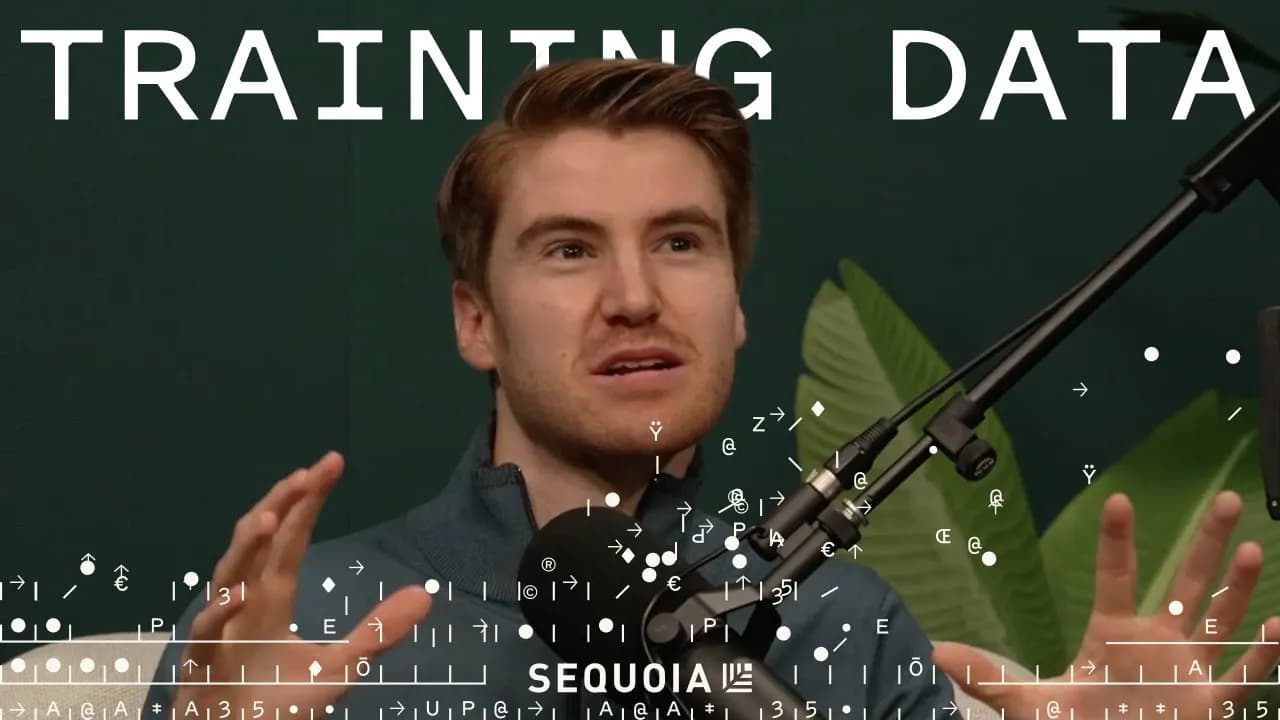
Kimberly Tan is an investing partner at Andreessen Horowitz. She's been at the firm now for over 6 years, all early-stage B2B software investing, today focused a lot on applied AI. She's had the privilege of working with a lot of companies including Decagon, Prepared, Menlo, and Solo.
She joined Andreessen when she was 23 years old and not being very familiar with the world of tech. It was actually very hard in the first couple months. She just tried to learn everything she could about venture. Having had very little exposure to the industry, she read all the classic books people tell you to read about venture. In every single meeting, she would write down every single thing that they said that she didn't understand and then look it up that night.
She draws a lot of inspiration about what trends might be on the horizon from what founders on the ground are telling her because they know best. They're seeing things that nobody else is seeing.
In 2020, 2021, a lot of founders and builders were just telling her, "You don't understand like AI is going to be in everything. Like you guys have to understand AI." She saw very organically how AI was going to change a lot of the fields that they were already spending time in and really decided to spend more time as a result.
One of her very strong beliefs about investing in AI is that there's a huge gap between a fancy demo and real production application. That's true for a number of reasons, primary of which is that it's really hard to build a really good AI product.
It's easier to show an interesting demo when you know exactly the underlying data sources, you know exactly what the outcome you want to produce. But it's actually very hard to build AI products because AI is non-deterministic by nature. Knowing something that 95% of the time might do this thing but 5% of the time might do something totally different is just a totally different paradigm of building than enterprise software which is 100% deterministic.
You click this button, this thing will happen. AI requires a very different muscle and a very different way of building products.
Seeing a product actually work in production is very, very important because this product will actually do and solve the problem that you're intending it to solve in a way that a demo just can't really show anymore because it's non-deterministic.
There's a lot more education and onboarding and implementation that is needed to actually be able to make sure that this product will do what they want.
What's being seen today is a really big trend that wasn't necessarily true prior to this wave of AI is the forward deploy motion that a lot of people have started talking about. You'll have somebody who will go to the client site and actually help set up these AI products. That makes sure that it integrates into the right solutions, it has the right business context, it understands the guardrails of what you do and do not want to do, and just takes that last mile very, very seriously to actually make sure that their product delivers value.
A vertical AI or industry AI that serves a very specific industry, whether it's logistics, healthcare, et cetera, are one of the most fruitful areas to build in today. It requires a lot of work to translate an industry's rules, regulations, compliance, just general business logic, culture into code in a way that an AI agent can actually do something against.
It's very difficult to work with these models. The capabilities out of the box are not the same as the capabilities needed to actually show value to an end enterprise buyer. There's so much work between the base model and the end client that needs to get done.
A lot of people underestimated just how much work there needed to be done. You don't just call the most advanced model to solve everything because this obviously probably has more latency, it's probably much more expensive, it's probably overkill for what you actually need.
A more sophisticated agent queries, understands the intent of a query that comes in and knows which model to route it to. It knows which models are best at which things, which has the best latency, cost, effectiveness tradeoff. It's such a very sophisticated chaining of many models together in order to get to your actual output.
Enterprises have a lot of business context that is not immediately apparent through one prompt to a model. Not only because people are pretty bad at prompting models, and it's actually very difficult to write a good prompt, but also because there's so much knowledge that exists in people's heads that are not on paper, they're not ingestible by the models, that you just need someone to sit down and talk to the customer and understand what it is they're trying to do and then map that out.
That sort of work is not something that a model can do out of the box. The only people who will understand it are the founders or the employees of startups who go to the customer site and take the time to actually learn these things.
Prepared has an incredible story. They're an AI assistant platform for emergency response, so literally for 911 centers. It's a perfect example of a vertical applied AI company. They knew the 911 market better than anybody. The CEO knows everybody in this industry and everybody knows him. He goes to all the conferences. People love him. He has a ton of customer empathy.
He knew the needs of these customers in a way that a lot of other people didn't and could build purpose-built AI solutions that worked just for that market. 911 centers were not particularly known for being incredible software buyers historically, but AI just provides such differentiated value.
If you can help triage these calls to know what is emergency and what is not emergency, all those things add up to being able to deliver your outcome, which is getting a person help who needs help faster. They understand that value prop. There was a lot of market pull for Prepared.
Being the industry-focused solution gives you a ton of leverage in knowing exactly what you need to build for them. To them, that's an enduring moat in a way that a lot of other sectors potentially don't have as much. A lot of their investments who have been doing incredibly well have taken a very specific industry and just been the premier AI solution for that industry.
The founding story of Decagon is one of the most fortunate things as an investor to have gotten to witness. They were there from the early days before they had the name of Decagon, before they even had an idea, and watched them build the company from the ground up.
They were very clear from the beginning they wanted to build in enterprise AI because they thought there was clear demand in the enterprise, but a lot of those enterprises don't know how to actually get that value. They thought that their skill sets were particularly suited to building very good AI products, but also their commercial instincts told them that they would be very good at actually doing this enterprise sale.
They would go company to company, talk to at the time a lot of tech-native companies and just ask them what their biggest pain points were. In some sense, very straightforward, like exactly what you would expect people to do, where they would just ask them for their biggest problems. They would ask them, "What is the ROI?" Customers consistently told them that support was their biggest problem, and that if you could solve that, they would pay a lot of money for it.
They were like, "We have so many people who do this." Consumers are always mad at support channels. People are always angry. They just knew that AI would be a very good solution to this problem, and that they could build a solution that solved it.
It's been a really incredible journey to watch them from just iterating around, having no idea exactly what they wanted to do, to very quickly landing on this, very quickly defining a world-class product, and then nailing product-market fit after they did that almost instantaneously.
You can really build an excellent solution, but you still need to find someone who will buy it. A lot of people who are technologists understand the value of the technology and they understand why it's amazing and why there's going to be ROI, but that doesn't matter from a business standpoint if you can't explain it to a customer and they can't see the value and you can't implement it in a way where they are happy about the product.
People need to be very smart about how they design their pilot such that it can get into production relatively quickly and show some clear ROI metric.
One of the big things that everyone's talking about in enterprise AI today is what's the actual ROI on delivering an AI solution. In certain categories like in coding and support, people understand the ROI either intuitively because you see your coders producing more or quantitatively because you can see for support that your resolution rate has gone up and your NPS score has gone up.
One of the most amazing things about support is it's one of the only use cases today where there's actually very clear quantifiable ROI. The market clearly understands that AI will respond 24/7, no more hold times, no more wait times. Your CSAT score will go up, you'll answer more tickets, it'll be cheaper. It's just like a clear, clear high ROI use case.
In a lot of other categories where people are building AI solutions that automate one part of a flow but not the whole flow or they're more of an augmentation solution, it's hard to really show what the clear value you're delivering is. That's been a challenge for a lot of AI companies today.
Strongly urge everyone to not only make sure you have all the sponsorship you actually need in an organization so that you are actually set up for success, then to also have a very clear identifiable ROI metric that you're planning to point to at the end of the pilot to actually be able to explain to people why they should adopt your solution.
There's a lot of mundane manual work that happens in back offices of many large enterprises today. Think data entry, claims processing, things like that. There's a huge opportunity to actually be able to automate a lot of this back office mundane work.
Solo allows the business users who have the context on the process, which is in their heads very hard to get out on paper. It allows them to record their own process, and then Solo's adjunctive automation framework contextually will understand the process. It'll understand that this is a login step. It'll understand that this is a data extraction step, and will be able to build a bot that can dynamically handle those solutions.
Things that seem mundane and tedious that people had to do before, hopefully soon AI will be able to take that over, and then those people can work on much more strategic work that is much more long-term value creative to the businesses they work at.
There's a big difference between automating a support ticket, which can be done relatively end-to-end today depending on the complexity of the career, versus fully automating, let's say, a lawyer, fully automating a doctor, fully automating an engineer.
One dimension to think about it is just what is the actual domain that you're spending time in, and how fully can you actually automate a solution from the technical standpoint.
The second dimension then to look at is there's a lot of cultural, social, regulatory dynamics that allow you to fully automate something or not. For example, maybe a lawyer, you can do a bulk of the work they do today for relatively straightforward legal work. You still need a lawyer to sign off on it at the end of the day because there's liability associated with it.
A lot of work today, you still want a human there. For many people this is an important step in actually gaining trust that the AI is doing what it intends to do. In most cases, some level of human oversight is important.
Even in the support case, which is one of the more straightforward fully replacing solutions, there are still paths to be able to escalate to a human agent when you need, and there are still human managers who are overseeing the AI agents to make sure that it's doing what it is intended, and that dynamic will probably be true for quite a long time.
In venture, you have to understand that the job has risks. You're investing in very early-stage companies in oftentimes markets that are still nascent with founders who have a long road to build. There is risk involved, and there's a lot of responsibility in managing that amount of capital for LPs, and making sure that you can make the best decisions you can, and then steer the companies you partner with to the best outcomes they can reach.
On a day-to-day, you try not to think about it too much, because on a day-to-day, it's just you work with the founders that you work with, you meet the folks that you want to meet, and then you know that when you make an investment, many times the distribution of outcomes, it may not be the best outcome possible, but you just have to know that, and you have to make peace with that.
There's a lot of value in not only working with the companies and the founders that are doing incredibly well, like beyond what you could have even hoped, but also working with the founders who maybe are going through a rough patch, which everyone goes through at one point, and making sure that you're there for them, too.
On a day-to-day, she doesn't think about the number as much. She just thinks about each individual decision that you make when you partner with a company, and then helping them the best you can to steer them to whatever outcome they're hoping for.
Companies take a really long time. Some of them work immediately, and then they run into challenges. Some of them take a really long time to hit their spark and then work incredibly. And then some of them just have many, many years of struggle.
In those moments, a lot of founders probably do want tactical help from their investors. They do offer that, too. She's constantly closing candidates for people. They make lots of customer intros. They help them think about their runway and their cash balance, etc.
Oftentimes a lot of what they need, too, is just a patient investor and one who understands that this is a long journey that you're on. They often have companies who are going through rough periods at any point in time. Just knowing that they can call them, that they can be honest, that they can tell them what's really happening in their company, and know that they're on the same side, and they're going to try to help them. They're not going to yell at them. They're not going to blame them. Obviously, these founders are doing the best they can.
That actually goes a long way. She spends a lot of time hoping and trying to nurture friendships with a lot of her portfolio founders. Obviously, they're still investors at the end of the day, but to the extent that you have like a real personal relationship with them, that they know they can call you.
Many of her portfolio companies have called her during many stressful moments in their company building. Oftentimes, there's some big junction point in the business. There's some offer on the table. Maybe there's some really important executive who's going through something. Maybe a fund raise didn't go as expected.
In those moments, there's a time to take a lot of action and to strategize what is correct. But oftentimes like founders in those moments, you don't want to make any decisions that are too rash in the heat of the moment, when something is happening. You don't want to make any decisions that are so irreversible.
Oftentimes, they'll ask founders to think it through that day. Many times she's gone up and met with the founder in person. She had a portfolio company who at one point went through a relatively difficult fund raise. They were actually in the office at 6:00 a.m. on a Friday doing last-minute pitch prep.
In those moments, just knowing that you'll actually be there for them and look out for the best interest of the company goes a really long way.
This is a very competitive ecosystem we're in now. Everybody knows that AI provides a lot of value, and everybody knows there's a lot of opportunities to go after. You could have an early advantage. Maybe you're first. Maybe you're generally earlier. But, if you don't press the gas and continue to have momentum and continue to build on that, the world might just move too fast.
Now is the time to really lock in and to just stay super focused because a lot of great companies will be built in this time, but the ones that do will have really empathetic founders to their customers, will be super technical and AI native, and will also just move faster, work harder than anybody else does.
Keep EO in your library
Save the videos and channels worth coming back to, and find them again in one place.