EXCLUSIVE - Dustin Poirier: I Lost Control! And I’ll Never Let It Happen Again
In a Nutshell
Dustin Poirier got arrested for public intoxication at the Atlanta airport after drinking on Father's Day while spiraling over his homeless, alcoholic father and post-retirement depression. He admits alcohol has always been his vice—he can't stop once he starts—and is now quitting it entirely after realizing he was repeating his father's pattern. The core issue is his struggle to replace the singular purpose fighting gave him for 20 years, with no support system or new identity in place.
These notes were generated by AI and may contain inaccuracies.
Dustin Poirier described experiencing depression throughout his career, noting that when it hits, it hits hard. On Father's Day, he spent the morning with his kids feeling good, but as he traveled to work, a depressive feeling returned like a cloud in his head. He began drinking, his emotions got the best of him, and he was arrested at the Atlanta airport. He questioned whether he had ruined everything he was working for, acknowledging it could have been much worse. Poirier stated he was angry at the world and could not stop thinking about his father, who is currently homeless. He tried to help his father, who ended up back on the street. Poirier emphasized this was not an excuse for his actions.
He revealed he is back in therapy and, through opening up, realized some issues may be linked to his childhood. Poirier mentioned his father was an alcoholic, there was violence in the home, and his mother described him as an alcoholic kid. He started drinking at age 12 or 13, was expelled from school, got arrested, and had no goals at that time. He characterized his early life as a roller coaster.
Poirier discussed retiring on July 30th and reflected on a photo of his gloves on the mat, stating it felt like leaving a piece of himself. He referenced a wise man's saying: "If a man's lucky, he gets to die twice." He explained that the part of him that woke up every day to push himself to be the best fighter is now dead. He is now "retired Dustin" and "businessman Dustin," trying to figure things out after 20 years of dreaming about being the best. He wants to dream again. Nothing has compared to fighting, which served as therapy for him. Some days he wakes up believing he could still beat top guys currently winning.
When asked how he is doing as a whole, Poirier said he is doing great but recently experienced turbulence. He described letting his emotions get the best of him the previous week, being in a bad mental spot, starting to drink, and getting arrested at the Atlanta airport. He stated he is not proud of it.
Poirier described himself as a man from Lafayette, Louisiana, trying his best to provide for his family, work hard, and chase dreams. His father boxed growing up, and his grandfather was in the Navy and worked in the oil field; both were fighters but not successful or well-known. He did not come from money but described it as a working-class family where he never missed a meal. His parents divorced when he was in kindergarten or first grade. His early memories of them together involve fighting and violence.
His father struggled with alcohol his entire life, which ruined his marriages, relationships, friendships, and relationships with his family. Poirier noted his father has two kids who do not speak to him at all, has been in jail multiple times for alcohol-related issues, and is currently homeless. Poirier has a sister he met when he was 25 or 26 from his father's side. He lived with his mother primarily and spent every other weekend with his father after the divorce.
As an adult and father, Poirier looks back and believes his father made mistakes by not being there for his kids. He cannot imagine waking up without his own kids in the house and values making breakfast for them daily.
Poirier's mother and grandmother raised him. He described his mother as everything and noted she still checks on him daily. He has two brothers he grew up with. In school, he struggled, got into many fights, and was expelled for fighting. At age 14, he got into a fight while living with his father, physically hurt someone, was on probation, failed a drug test, was picked up for truancy, and was sent to juvenile detention.
He began drinking around age 12 or 13. He described himself as a happy kid with no goals, living day-to-day without focus or direction. He did not like being around large crowds or attending parties when younger, which his wife later suggested may have been early signs of anxiety.
On Father's Day, after a good morning with his kids receiving a letter and presents from his daughter, Poirier began feeling depressed while traveling to the airport. He could not stop thinking about his father being homeless in Louisiana. He started drinking in the airport, which led to the incident. After getting out of jail and returning home, he attempted to get his father help by contacting the sheriff's office and coroner to sign an order of protective custody. However, when authorities picked up his father, he appeared normal and was released.
Poirier described feeling upset seeing his father continue to worsen despite knowing better. He characterized his father as a hard worker in the oil field living paycheck to paycheck, a good athlete whose dreams of playing football ended when he got someone pregnant young and had to get a job and marry.
Poirier described depression as feeling like everything has its own gravity pulling toward the negative, like a cloud in his head he cannot escape. It does not happen often but hits hard when it does. His wife noted he never wanted to be around big crowds or parties when younger. He began noticing depressive feelings more in the last three to four years, with a catalyst being his second loss to Justin Gaethje, after which he became very emotional.
He started therapy after that loss to unpack things he was carrying unconsciously. He learned that some childhood experiences may still affect him. Initially, he felt weak admitting to therapy publicly in a sport where fighters are tough, but later viewed it as strength. He noted that fighting and the gym served as therapy and outlets, allowing him to drown out mental noise and focus on improvement daily.
After the airport incident, he returned to therapy and realized it is not something to fix once but to work on continuously. Since then, he has been waking up early, reading, writing, and doing something hard in the morning to recreate what helped him feel better three years ago. He acknowledged carrying unconscious childhood burdens and that therapy helps unpack things that are not his to carry.
Poirier explains that although he became a father while still fighting, retirement has introduced new responsibilities and "hats to wear." He is actively trying to figure out his post-fighting identity and purpose.
No formal roadmap or post-fighting program exists to help athletes manage the mental transition out of competition. Poirier notes this absence is common across professional sports.
Poirier had long observed athletes who, after intense careers, turned to arrests, drugs, or reckless spending once their primary outlet disappeared. He vowed never to become "that guy" and emphasizes he is still making mostly good decisions despite recent trouble.
Alcohol has been a recurring presence since childhood. As a younger fighter Poirier drank most weekends, but during his professional career he went years without drinking while focused on training. After retirement the habit gradually increased. He describes having a "bad relationship with alcohol," noting that when he drinks he typically aims to be "the best at drinking" and finishes the bottle.
During a conversation with dopamine expert Dr. Anna LMK, Poirier learned alcohol triggers large dopamine releases. Dr. LMK explained that individuals have different vices—some become addicted to erotic novels while others cannot stop after one drink. Poirier recognizes his pattern: if he starts drinking, he continues until the alcohol is gone, unlike his wife and certain friends who can stop after two drinks.
Following the airport incident and discussions with his wife, Poirier decided to remove alcohol completely from his life. He refuses to repeat his father's mistakes or the airport error, stating alcohol provides only a temporary dopamine hit without long-term benefit.
Poirier was beginning a three-leg trip: Lafayette to Atlanta to South Florida for one day, then Los Angeles for a three-day commercial shoot, followed by Las Vegas work for CBS over the weekend. On the Lafayette-to-Atlanta flight he consumed two champagnes. During the Atlanta layover he visited a bar, continued drinking champagne, took shots with others, then argued with a desk agent at his gate.
Security and police were called. Poirier does not recall what he said to the desk agent. He never boarded the plane. He later requested contact information for the responding officer through an Atlanta lawyer so he could write a letter or call to thank the officer for professionalism.
Poirier has not viewed the security footage. His wife and training partner described it to him. He avoids watching because seeing himself disrespect officers, airport staff, himself, and his family would be detrimental and cause rumination.
The officer initially prepared to use a taser but ultimately handled the situation calmly. As Poirier was being arrested he "dapped up" the officer and congratulated him on doing a good job. Poirier now believes the officer prevented a worse outcome.
Poirier was charged with public intoxication, spent one night in jail until sober, and was released on bond. Court proceedings have not yet occurred.
All remaining trip legs were canceled. Upon returning home, Poirier faced his wife Jolie, whom he has been with since middle school. She had dropped out of nursing school and moved with him to South Florida to support his fighting career. He repeatedly apologized and promised the incident would never recur.
Poirier states the arrest affected his wife and two children. He emphasizes his son and daughter will never witness him intoxicated or saying things he does not mean. He views the event as a necessary turning point that will ultimately benefit his family.
Despite expectations of harsh judgment, public response was largely sympathetic. Poirier attributes this to his long-standing openness about personal struggles, consistent conduct throughout his career, and viral clips from appearances on Theon and Joe Rogan shows that provided context about his post-retirement challenges.
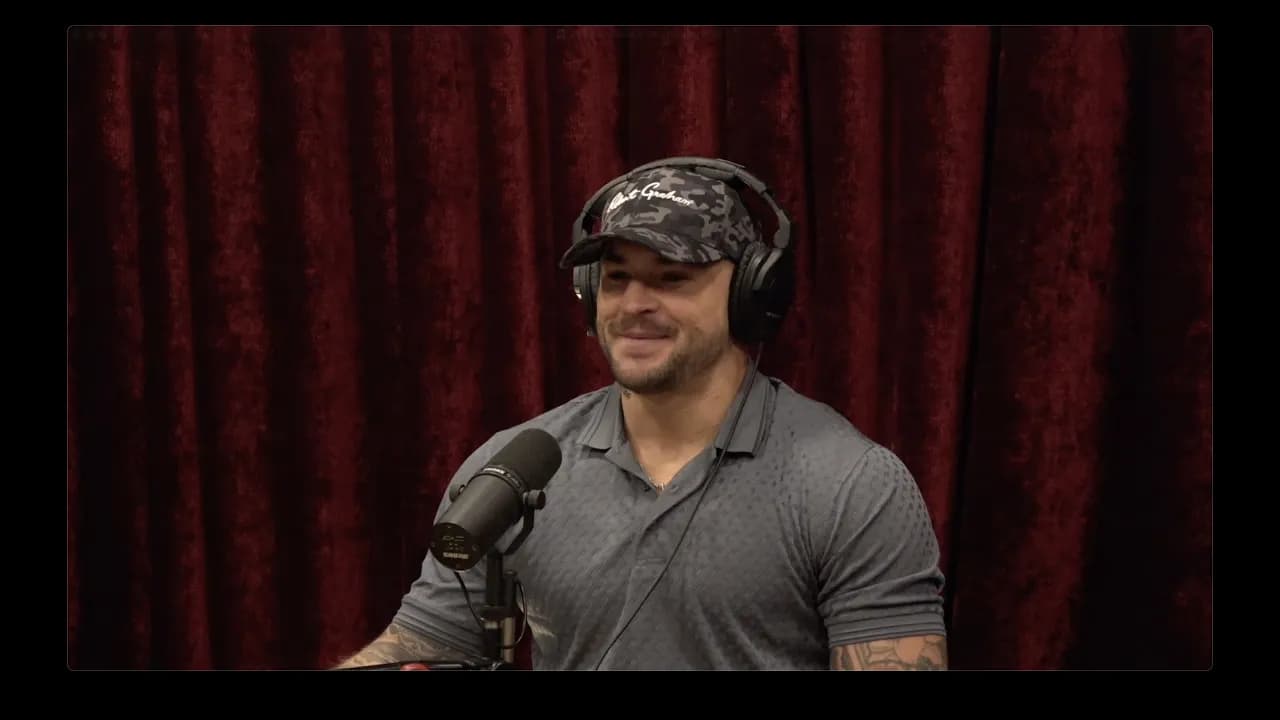
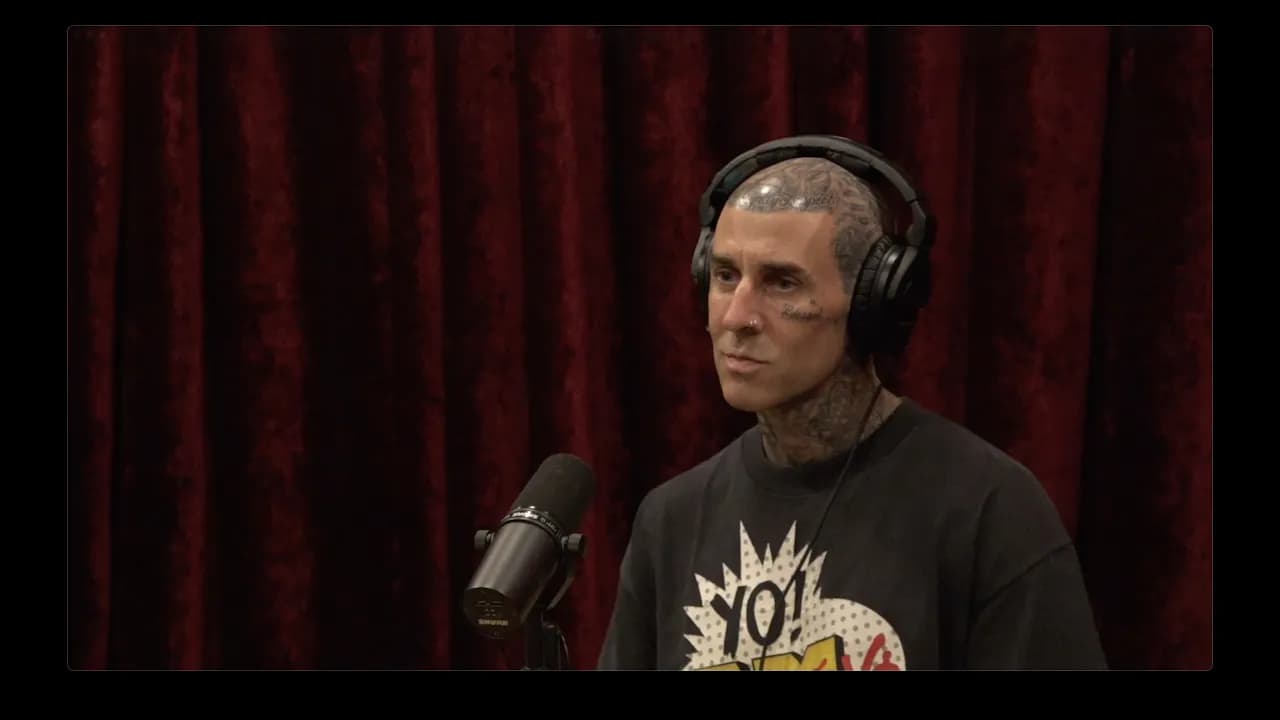
In the Rogan clip, Poirier describes himself as "a danger to myself when I'm have nothing" and needing a goal or battle to focus on. After retiring he briefly entered a "funk," realizing he had spent twenty years waking up with the singular purpose of becoming champion, then suddenly became "a civilian." He notes fighting previously "pulled everything together."
Jon Jones and Matt Brown publicly offered positive messages. Poirier appreciates the support but stresses he is not seeking sympathy and recognizes the incident was unacceptable.
The conversation addresses how societal understanding of mental health has evolved. Where people were once labeled as crazy for acting out of character, there's now greater consideration of context. Poirier notes that reactions to his situation avoided villainization, with people recognizing it as a mental health struggle rather than a character flaw. He emphasizes he doesn't want to use mental health as a crutch or excuse for his actions. He acknowledges deciding to drink that day when not feeling well, stating the responsibility rests entirely with him.
Poirier describes significant emotional fluctuations after retirement. Some days he feels confident he made the right decision to be home with his children and handle daily responsibilities. Other days he questions his choice, believing he could still defeat current top fighters. He wonders if this competitive mindset will persist even at age 60. The next day he feels relieved not to face those opponents, then the following day believes he could become world champion again.
Despite these fluctuating thoughts about fighting, Poirier reports his mental health remained relatively stable until recently. He hadn't needed to use his journal or morning routine practices until the past week. He emphasizes that feeling good doesn't mean stopping these practices, as they must be maintained daily. He describes realizing that recovery isn't a single eureka moment but requires ongoing daily work for life.
The recent difficulties peaked on Father's Day, though issues had been building over the previous couple of months. Poirier admits there were days he didn't express his feelings to his wife when feeling down. He sometimes keeps his struggles private to avoid his wife worrying about whether she's waking up to a depressed version of him or her normal husband. When feeling only slightly off, he pushes through without mentioning it, wanting to maintain stability for his daughter who is nearly 10 years old.
There have been days when Poirier stayed in bed all day, though not frequently. He tries to shield his daughter from these moments because she wouldn't understand what's happening. When asked whether bottling up emotions causes them to manifest elsewhere, he acknowledges that holding things in eventually finds an outlet. This connects to the airport incident, though he clarifies that even on off days leading up to it, he didn't perceive the situation as that severe or dangerous to himself or others.
Poirier relates to the tension between wanting to appear strong and steady as a man while recognizing that unexpressed struggles eventually surface and affect relationships. With age, he's moved toward addressing problems honestly and quickly. He describes being generally open with his wife about feeling off, but if it's just a slight feeling that today isn't his day, he doesn't bring it up. However, if he's feeling truly down to the point of not wanting to leave the house, he communicates this to her.
At 36 when he retired, Poirier faces the challenge of replacing the purpose fighting provided for 20 years. He stays busy working with CBS and hosting a podcast in South Florida every Monday, saying yes to opportunities to avoid having time to sit and think. He wonders if being too busy contributed to not focusing enough on his mental health. He doesn't have a locked-in plan for his next chapter but recognizes the need to find something to commit to with potentially 50 years ahead.
Nothing has compared to fighting or filled the void it left. Being a father is fulfilling and rewarding, but it doesn't replicate what fighting meant. Poirier woke up and went to sleep thinking about fighting. It consumed his entire life and he was in love with it. He had planned to remain in the sport through broadcasting or podcasting, wanting to stay connected to the industry that gave him everything and taught him so many lessons.
Desk work and being around the sport provides only about 20% of what fighting gave him, far from 50%. Other fighters have reached out offering to talk, mentioning they went through similar experiences, but Poirier hasn't taken them up on those offers. He acknowledges this isn't a new problem for fighters or athletes who've reached pinnacles and then face significant life remaining after their careers end.
The interviewer draws a parallel to military personnel who leave service at similar ages, losing the Everest-like experience and camaraderie. Poirier agrees it's difficult but states that's life. He emphasizes needing to solve new puzzles as life continues.
Regarding work prospects after the airport incident, Poirier worries about losing everything he's been building post-retirement. He questions whether he ruined his desk work and other opportunities. He has multiple sponsors, some of whom have been understanding, though at least one major sponsor is no longer with him. He expects to lose several sponsors and gigs, and the three commitments scheduled for that week are gone. The incident cost him embarrassment for himself and his family, plus significant financial losses.
Before the incident, Poirier had proactively reached out to Paramount to express interest in sharpening his skills as a desk analyst. He told them if they thought he'd be a good fit anywhere on broadcasts, he'd love to discuss the sport using his two decades of experience. He emphasized being coachable and open to feedback, noting that fighters might handle criticism better than those from media backgrounds since they've been coached their whole lives.
Poirier had a one-year contract with Paramount CBS for desk work. He's uncertain whether it will continue. He's scheduled to return to the Monday podcast in two weeks. The interviewer notes Poirier's youth at 37, comparing it to how most careers allow continued progression rather than requiring a complete pivot to new mountains.
Poirier genuinely enjoys the desk work and fears losing this connection to the sport that provided everything for him and his family. The conversation includes a sponsored segment about ketones for cognitive performance during long workdays.
At 37, Poirier confirms he doesn't need to work another day in his life. He has businesses in Louisiana and elsewhere, began investing at age 23 even before making significant money, and always planted seeds for the future knowing fighting wouldn't last forever. He told his wife at 18 or 19 that he wouldn't fight past 35, planning to pivot and potentially go to college or pursue anything he wanted with another life ahead.
Looking at a photo from his retirement fight, Poirier becomes emotional seeing his brothers, mother, and family members. The event meant a great deal because it happened in Louisiana. He describes being a kid chasing dreams that flew by quickly. He expresses fear about the future, having dreamed of being the best for 20 years and now wanting to dream again without knowing what that dream will be.
Poirier fights back tears looking at the photo, explaining he still loves fighting but knows he needs to continue walking away from it. He believes putting on the gloves left a piece of himself on the mat. Fighting taught him how to be a man, how to do business, and served as his education since he didn't attend school. It allowed him to travel the world, meet people, and sit at tables he never imagined. He states he would do it all again even knowing the potential damage, because nobody rides for free whether working a regular job or fighting professionally.
Poirier is proud that UFC returned to Louisiana for his retirement fight, having last come in 2015 when he also fought there. UFC sent him a retirement picture with his wife and daughter's names printed on the octagon canvas, which was cut out and framed in a shadow box with fight photos. This hangs in his game room at home. He mentions needing to return calls from Mike Brown and others he's been silencing since Father's Day.
The conversation references a photo showing Poirier with friends, his mom in the background, and a moment where he felt he had done everything the right way. He mentions walking out of the octagon that night and how the UFC had placed in IRA. The image evokes a sense of being on top of the world contrasted with the recent arrest, described as a fall from grace.
The interviewer frames Poirier's journey as part of the hero's journey, including the ups, downs, and redemptions. Poirier's early life involved a father who was an alcoholic, violence in the home, and growing up in a working-class area. Despite these challenges, Poirier rose and accomplished what very few men could, especially given his background. He expresses pride in this rise. The interviewer suggests the current situation could serve as a platform for the next era.
Poirier states he feels like anything he sets his mind to he can accomplish. The interviewer notes that Poirier does not need to convince anyone of this given his proven track record. He expresses excitement about what Poirier could achieve in the next two decades if he channels his energy toward an equally ambitious goal.
Poirier affirms he is not scared to work for what he wants. The interviewer highlights that few possess the core components Poirier has demonstrated for wild success in whatever he applies himself to.
At the time of the referenced photo, Poirier's wife was encouraging him to hang up the gloves because she was pregnant and a few months away from giving birth to their son. They both knew it was about time after he had been fighting for a long time. No one else in his family was pushing for retirement.
Poirier mentions being scared of the void of purpose after retirement as well as potential brain injuries from contact sports. The interviewer shares that he interviewed the world's leader on CTE, a progressive brain disease caused by repeated head trauma leading to abnormal protein buildup and brain decline. Key statistics mentioned include:
- Older adults with a history of traumatic brain injuries have a 230% greater risk of developing Alzheimer's.
- 61% of UFC fighters worry about potential long-term brain damage.
- 21% notice differences in brain function after their fighting career.
- A 2023 study found more than 40% of brains from contact sport players who died before age 30 had CTE.
Poirier went to a neurologist for a scan with contrast after his wife noticed behavioral changes a few years prior. The scan showed some changes in his brain, but without a before-and-after comparison, it is only a snapshot. The neurologist explained that certain tests release proteins when chemicals are applied to the brain, and definitive answers about CTE would only come after death when the brain is studied.
Poirier reports scarring, thinning in the back of his brain, and a separated septum. The neurologist suspects the left and right sides of his brain are not communicating as smoothly due to the separation, potentially linked to head trauma. Poirier also played football in his youth, which likely contributed to head impacts.
When asked if he feels different, Poirier notes ups and downs with mood. He mentions noticing more spontaneous decisions, such as placing a $5,000 bet impulsively or deciding to get drunk at the airport, behaviors he feels he would not normally engage in, though he acknowledges it is difficult to definitively link these to brain trauma.
Poirier estimates a 5% chance of returning to the UFC. Since retirement, he believes this percentage has gone down. Returning would require getting his wife on board, completing another training camp, and reinstating in the drug testing protocol with approximately six months of clean testing before eligibility.
Poirier's father is described as extremely difficult, involving layers of emotion. Two days prior to the conversation, he was sleeping in his truck behind a business. During Father's Day week, a photo was taken of him at a park with no shirt or shoes. Poirier's sister had given him the truck he is living in. Poirier and his sister are trying to get him to help himself and admit himself somewhere, while his other children want nothing to do with him. Poirier's wife is supportive of these efforts.
Poirier emphasizes that it is not his weight to carry and that he must prioritize himself and his own family rather than babysit his father. He nearly lost his mind on Father's Day. He and his wife discuss the possibility of receiving a call with bad news, given his father's age of 74 or 75 and uncertain living conditions. Poirier's mother recently learned her ex-husband is homeless and expressed sorrow that Poirier has to deal with it. She has remarried.
Poirier's immediate plans include vacationing with his family in Florida, sitting in the sun with his kids, staying off the internet, continuing to work on himself, and having good mornings. The interviewer notes that the internet has been kind regarding the recent incident. The purpose of the interview includes highlighting the complicated nature of mental health, purpose, addiction, and alcohol. The interviewer observes that after interviewing around 700 people, the consistent lesson is that everyone struggles with the same fundamental things.
The question left for Poirier by the previous guest was: "Dear next guest, what are you doing to improve the world?" Poirier responds that he is trying to leave the world better than he found it by making the right decisions, showing people care, and being a good person who cares about others. He expresses regret over the airport incident, stating he was not himself and that his intentions are good 99.9% of the time. He acknowledges it is easy to hide behind drunkenness or a mental breakdown but views those as excuses. He plans to continue working on leaving the world better and teaching his kids to do the same.
In 2018, Poirier and his wife started the Good Fight Foundation after clearing out old fight gear and auctioning it to support Lafayette families. He has been actively involved, including driving delivery trucks and packing school supplies. The foundation has provided multiple new water wells in Uganda. At age 30, Poirier received the first-ever Forrest Griffin Community Award from the UFC for exceptional volunteering and charity work.
The foundation began when Poirier and his wife were packing to move from South Florida back to Louisiana and saw a news article about a police officer, Officer Middlebrook, who was killed a couple streets from where they went to school, leaving behind a wife and kids. They decided to sell fight-worn gloves and shorts to donate to the family. For the first year or two, they operated under Poirier's name, eBaying items and donating proceeds to the food pantry and the fallen officer's family before formalizing it as a nonprofit called the Good Fight Foundation to encourage broader participation.
The foundation runs an annual backpack drive providing around 1,300 backpacks filled with every item on the school supply list for Louisiana. They buy in bulk, break down pallets themselves, and pack every backpack in a warehouse to stretch funds, keeping operations lean with no paid staff. Poirier states he uses the platform built through fighting to benefit as many people as he can, applying the same mindset of stacking as much as possible on his back for a cause.
The interviewer thanks Poirier for being a class act, conducting himself with integrity, values, family orientation, and openness about being human. Poirier responds that this is his first time living life, embracing the good, the bad, and the human. The interviewer suggests the airport incident may indirectly help many people through the honesty and conversations it prompts. Poirier states he is an open book and hopes it helps somebody.
Keep The Diary Of A CEO in your library
Save the videos and channels worth coming back to, and find them again in one place.