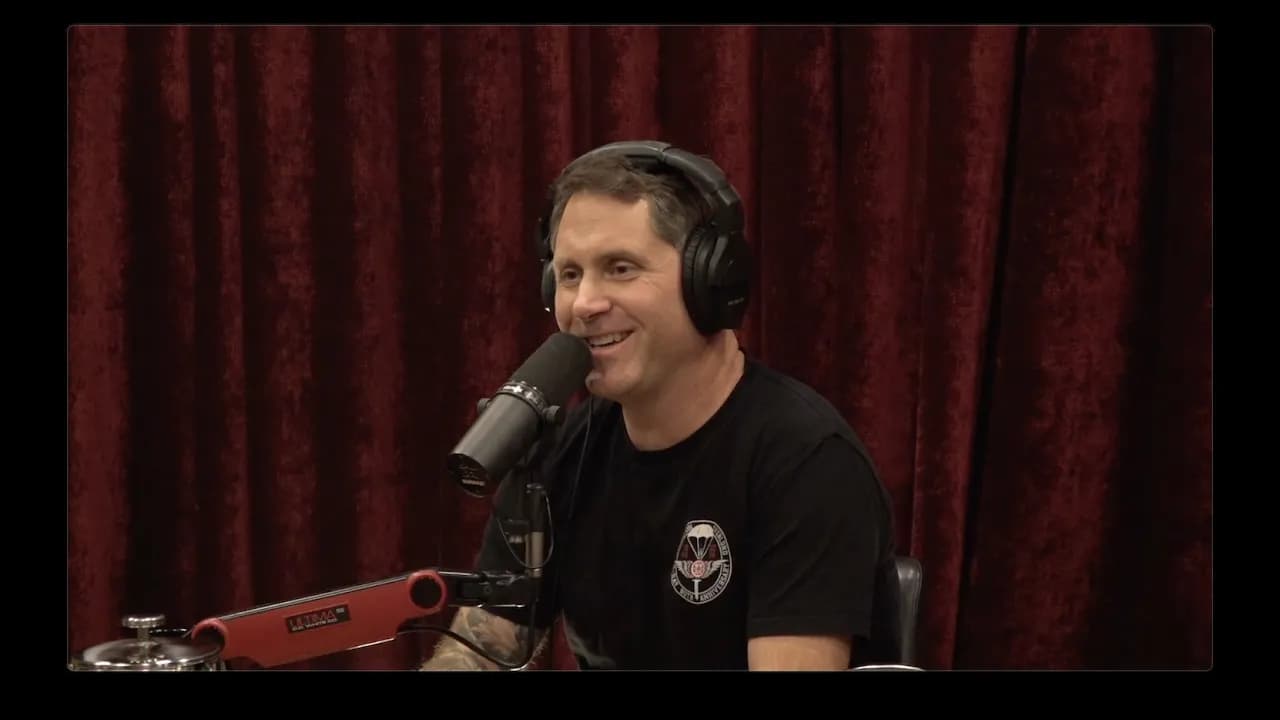
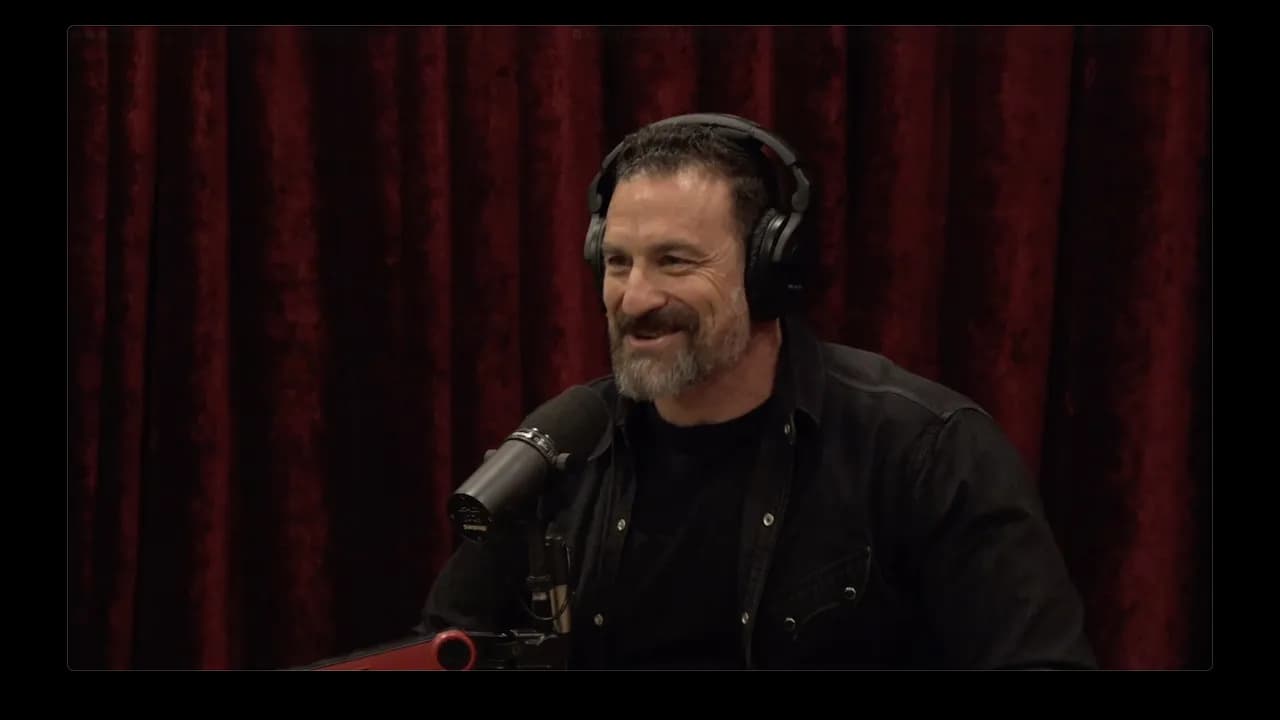
The Mental Frame & Specific Daily Actions to Succeed | Andy Stumpf
In a Nutshell
Andy Stumpf's core message is that choosing the slightly harder option in small, daily decisions compounds into major life advantages, while most people waste their limited influence on uncontrollable concerns. He emphasizes using the influence-versus-concern exercise weekly to redirect energy toward what you can actually control—your responses, time management, and self-talk—rather than social media, news, or other distractions. The most critical practice is building discipline through micro-actions like immediately handling tasks instead of deferring them, since these invisible choices determine long-term outcomes more than dramatic efforts.
These notes were generated by AI and may contain inaccuracies.
Pick the choice as often as possible that is slightly more difficult. The small stuff that nobody sees makes the biggest difference. Everybody knows the harder choice versus the easier choice. People look externally and say what they need to do. They need to do the thing even if it's microscopic that they want to do less more often than they do the thing that they want to do more. That over time is the juice.
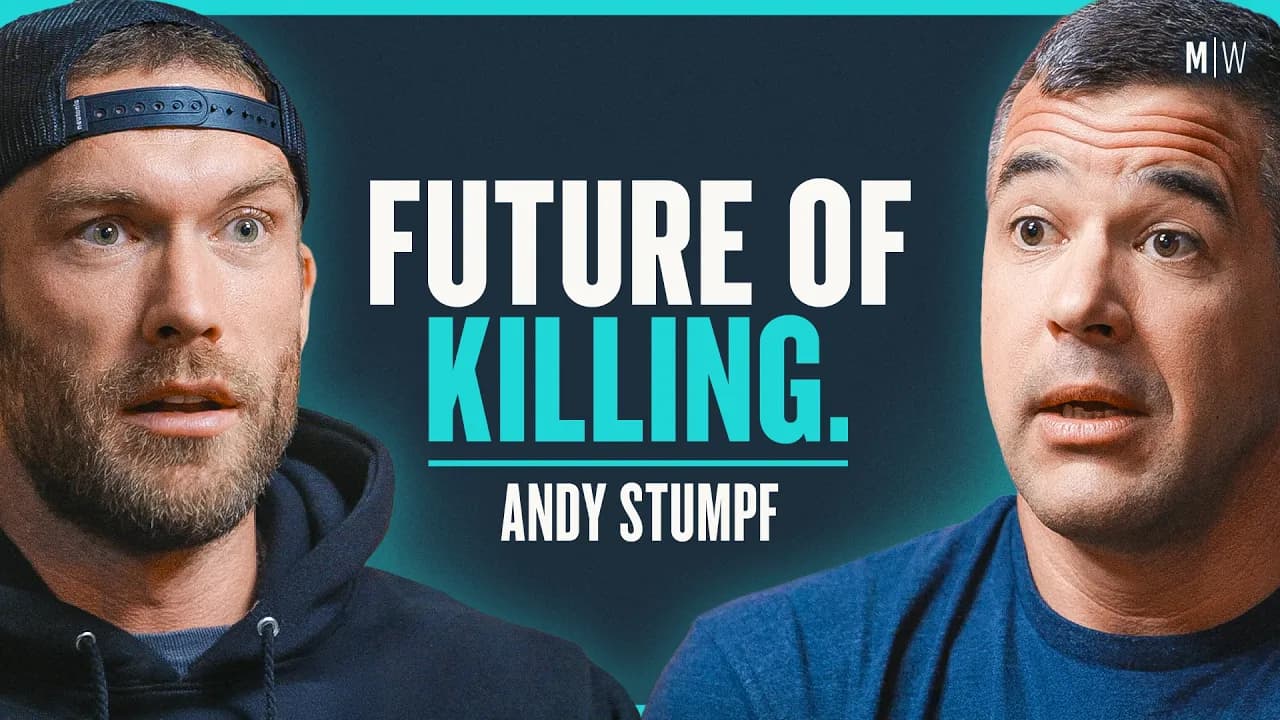
Andrew Huberman introduces Andy Stumpf, a retired Navy SEAL and former member of the Red Bull High Performance Team where he was a wingsuiter. Stumpf set two world records in wingsuiting. The discussion was prompted by Huberman reading Stumpf's book Drown Proof. Huberman describes the book as special because the tools shared are unique and important. One tool from the book that Huberman now uses every single week allows separating issues of concern versus issues of impact. This helps distinguish things one can impact from issues that distract, pull into drama, numb out, and waste life.
Stumpf describes the influence versus concern exercise, which is not his original creation. The sphere of influence is very small, and the sphere of concern is very large for most people. The exercise involves taking a standard piece of paper, drawing a line down the middle with concern on one side and influence on the other. Write down the things occupying waking hours. On the concern side are things like social media and things one cannot control. On the influence side, Stumpf has yet to find more than one thing to write, which is oneself. One can expand this to include thought process, the way one speaks to oneself, the way one plans the day, and the way one manages time, but all of these go back to things one can directly control.
I have no control over what happens to me in my life but I have absolute and complete and total control over how I respond to it.
This leads to the realization that being scared or concerned about something does not impact outcome. Everything on the influence side of the paper does. The exercise identifies healthy or unhealthy attachment to things and helps take a step back from sticky thoughts.
Huberman describes using the exercise once a week and finding it immensely powerful. He lists on the influence side the things he can control and the things he can do with his time. Stumpf confirms this is valid because it still relates to controlling the management of one's time. Stumpf notes there is no wrong answer if the exercise has the intended impact. The exercise is startling because of how much ends up on the concern side and how little on the influence side. Huberman notes the exercise pops into mind when he sees something in the news and starts going down rabbit holes, prompting him to question what he is doing.
Stumpf states the algorithm is real. People have the choice as to whether or not they interface with the algorithm, and that is where the power lies. The algorithm is trying to take power away and put it back into its hands, but it is optional. Stumpf learned the influence versus concern exercise in the teams years ago and still does it now about once a month. He finds airplane time productive for doing the exercise rather than tuning out with YouTube videos.
Huberman discusses how social media creates constant awareness of people from one's past, unlike traditional high school reunions. Past lives are anchored to people now unless they draw the line and sever from that content. Huberman asks whether social media makes the influence versus concern exercise harder. Stumpf agrees it could be. He mentions Chad Wright, an endurance athlete and former SEAL teammate known for doing similar training as David Goggins. Wright has a long red beard and Stumpf calls him the Forrest Gump of the SEAL teams.
Stumpf and Wright had a conversation about screen time. They decided in January to try to drive screen time per day to under an hour for total phone usage. Phone calls were stripped out of that metric. The closest Wright got was about 90 minutes. In the last week of January, Stumpf got his screen time down to 30 minutes. He forced activities over to his laptop, which was less sticky. Instagram on a laptop is not intuitive, so he would post and then leave. Stumpf reports his mental health was better in January than it had been in a long time.
Stumpf states social media is designed to suck up as much of the left-hand portion of the concern list as possible, but it is optional. He asks himself whether the platform is working for him or he is working for it. This is the healthy relationship. Stumpf questions whether he is targeting what he does with his time efficiently and moving on, or getting stuck in the thumb scroll of death right before bed. Huberman notes this is the best time to have electronic device light. Stumpf confirms he went right back to using his thumb after the January experiment. Wright is probably back to doubled screen time by March.
Huberman notes that despite SEAL selection, discipline, resilience, mental toughness, and high-risk high-consequence work, both Stumpf and Wright reverted to previous social media behavior. This reveals everything needed to know about the platforms. Stumpf confirms that recognizing the issue and texting about limited phone usage, then reverting 60 days later, shows the power of the platforms.
Huberman asks whether people are aware of time drifting away while scrolling on social media. Stumpf confirms he is aware. He sometimes talks to himself out loud, asking why he is doing it and noting it does not feel good. He can scroll for 15 minutes before it becomes enticing. He does not feel joyful after scrolling. He tries not to compare himself to others or get caught in negativity. He recognizes the negativity bias where one negative comment outweighs 99 positive ones. Stumpf refuses to make negative comments on social media.
Huberman shares his theory that unlike being drunk or using drugs where people exit intoxication and realize they wasted time, social media is different. There is awareness that one is on there and probably should be doing something else. Huberman describes it as the perfect addiction because it is low resolution enough that it does not occupy all of the mind. People remain aware that they should not be doing it that long. It is unusual for addictions because most involve trying to erase the sense of time and lose oneself. Gamblers describe being in the zone. Social media allows running two tracks at the same time without fully absorbing attention. It is low resolution enough that one can still tend to kids, be in a conversation, or be on Zoom without things falling apart completely. Huberman notes brains can split into different activities but are not designed to do so for terribly long.
Low-resolution activities on devices can be done while multitasking, creating a persistent pull that may prevent deeper focus. For established professionals, the consequences are primarily social and relational, but for younger generations still building careers, the risk is more severe. The concern is that otherwise high-achieving individuals may never reach their potential because meaningful accomplishments in careers, families, art, and music will not be created. This risk is viewed as greater than concerns around AI displacing jobs.
The current situation is considered worse than the opioid crisis in terms of long-term societal damage.
Three data points from nearly 18-, 21-, and 23-year-old children show varied relationships with social media:
- The middle son limits usage to one hour per week for memes and then deletes the app
- The oldest uses it sporadically and his peer group has begun mocking heavy users
- The daughter remains highly connected and constantly consumes content
When pulled away from digital environments into areas with poor cell coverage or intentionally disabled Wi-Fi, the daughter experiences what reduced consumption feels like. The older two have independently recognized the issue and adjusted their behavior.
Historical precedent from anti-smoking campaigns shows that warnings about health consequences were ineffective. What worked was messaging that framed the industry as older executives profiting from young people's addiction. When teens realize they are being manipulated, they often push back strongly.
This generation is also reducing alcohol consumption significantly. At an annual jiu-jitsu retreat in Costa Rica where the drinking age is 18, the sons drink very little compared to previous generations. One son now asks about sleep optimization and peptides, reflecting a broader shift in priorities.
Alcohol can function as a social lubricant that helps some individuals get out of their own way in social settings. It contributed to both bad decisions with lasting negative consequences and positive formative experiences that shaped identity. There is acknowledgment that the current generation may miss certain life experiences by avoiding alcohol entirely.
Modern concerns include camera phones creating social shame around uninhibited behavior and the pressure to appear impressive online. Cannabis carries specific risks for young males predisposed to psychosis or bipolar disorder, where high-potency use can trigger permanent psychotic episodes. Alcohol's immediate risks (impaired driving, poor decisions) are contrasted with cannabis effects, though both carry potential for significant consequences.
Understanding both optimal states (well-rested performance) and suboptimal states (functioning after poor sleep, stress, or breakup) provides important self-knowledge. Experiencing how minimally functional one can still be while completing tasks builds awareness of personal capacity margins. This is framed as similar to an "ice bath of mental experiences."
Cold plunges and cold showers provide a reliable, safe method to generate an adrenaline spike that can be consciously worked with. This allows exploration of consciousness in high-arousal states, including choices between distraction and leaning into the sensation. A long wave of dopamine lasting many hours follows. Cold exposure should be avoided immediately after resistance training due to vasoconstriction reducing blood flow needed for hypertrophy and strength gains; it is recommended before training, on off days, or at least six hours after training.
Preferred temperatures are in the low 40s°F. A protocol of three rounds of heat (210-220°F sauna for 20 minutes) followed by cold is used. The "factory reset protocol" involves unknown durations and temperatures for both heat and cold exposure.
Wingsuits (sometimes called squirrel suits after the manufacturer Squirrel) function as nylon wings with ram-air inflation between upper and lower fabric layers, similar to a parachute canopy. Modern suits feature advanced leading-edge fabrics designed to reduce drag. Wings exist between the legs and under each arm.
Skydiving experience is essential before wingsuit use; 3,000 jumps were completed before the first wingsuit flight. Base jumping from fixed objects (building, antenna, span, earth) presents higher risk because the first four seconds have zero airspeed, so ram-air inlets do not inflate immediately. Incorrect body position during this phase near terrain has caused fatalities.
Learning progression involves starting with smaller wings for maneuverability and gradually moving to larger suits with better glide ratios. Flat spins and back flying are possible but require quick correction to avoid severe centrifugal effects.
Basic skydiving involves belly-to-earth orientation and timely parachute deployment. Two parachutes are standard: a main parachute (often packed by the jumper) and a reserve packed by an FAA rigger. Automatic activation devices (AADs) such as Cypres or Vigil use sensors for fall rate and barometric pressure to deploy the reserve if the jumper is unconscious or fails to act. These devices have hundreds of documented saves.
Maximum jumps in a single day reached 30 at a "boogie" event. Average days involved 6-8 jumps. Formation skydiving has achieved world records with hundreds of linked participants exiting multiple aircraft.
Typical skydiving altitude is 13,000 feet AGL, though Rocky Mountain states may limit to 12,000 feet AGL due to terrain elevation. Wind tunnels (such as those in Oceanside, Los Angeles, San Diego, and Virginia Beach) allow simulation of freefall without aircraft or parachutes, enabling precise feedback on body position that is difficult to perceive in actual skydiving.
Non-tandem first jumps follow structured instructor programs. Tandem jumps are recommended for those uncertain about the experience.
BASE jumping encompasses four primary disciplines: buildings, antennas, spans (bridges), and earth (cliffs). The Pine Bridge in Twin Falls serves as the only location in the US where BASE jumping is legal 24/7, 365 days a year. Some cities have classified BASE jumping as a felony, making it a significant legal risk in locations like Vegas and New York. Buildings sometimes require special permission, and large sponsorships can temporarily legalize activities that would otherwise be prohibited. Dubai once offered a full year of legal BASE jumping from a skyscraper floor.
The first BASE jump was from the bridge, followed by antennas and limited building jumps. The first earth jump occurred at Monte Brento in Italy, where the landing site sits directly across from an Italian espresso shop. Subsequent jumps included Lauder Brunin in Switzerland. Prior experience included skydiving and wingsuit flying before transitioning to BASE jumping.
Combining wingsuit flying with BASE jumping requires bridging a critical gap where the first four seconds present unique challenges. The suit feels sloppy initially and lacks rigidity until it powers up, after which the flyer can pull away from the exit point.
The motivation for participating in BASE jumping had nothing to do with the activity itself but rather the mental reset it provided. Approximately one minute out on a helicopter, the entire circle of concern disappears completely. This represents one of the most powerful headspaces achievable, with the ability to maintain that mental clarity lasting for months afterward. The focus narrows to the next three seconds of life, creating a state where performance occurs without forcing it.
Books have been written about the flow state, which proves incredibly impactful. After leaving the military, the static of everyday life became overwhelming. Skydiving initially provided similar mental focus, but after thousands of jumps, the narrowed focus began opening back up as gear malfunctions became predictable and manageable.
BASE jumping restored the intense focus that skydiving had lost. The first BASE jump involved climbing over a rail at 486 feet, testing wind by spitting, and having the instructor hold the pilot chute. Deep conversations occurred during four-hour hikes leading to 90-second jumps. Two weeks of such jumps resulted in improved business performance and greater patience as a father and husband for six months afterward.
After friends' deaths and finding alternative activities providing similar mental benefits, the risk-reward calculation shifted. Skydiving experience since 1999 allows resuming after long breaks, but BASE jumping requires continuous currency and competency. Moving to Montana reduced access to drop zones and wingsuit practice, making the activity no longer worth the risk.
Wingsuit BASE jumping produces maximal heart rates loud enough to hear through the suit. The sequence involves grabbing the tail wing, forming a teepee, positioning toes at the edge, checking equipment, and then rocking forward past the point of no return. Maximal human performance is required for approximately four seconds. If someone feels no fear in this environment, they should immediately stop because they are not paying attention.
Wingsuit flying can occur six feet off the ground while carving through trees in Switzerland. The same jump allows different approaches: aggressive flying for 60 seconds or flattened gliding for two and a half minutes. Flying low requires test jumps and gradual altitude reduction rather than immediate aggressive approaches.
Maximum speeds reach approximately 120 miles per hour face-first when the suit is bent over. The Ram Air inlets create different sensations: flatter flying feels like being on an air mattress, while aggressive diving produces intense power sensations. Safety involves flattening the suit to disconnect from terrain when in trouble.
BASE jumping represents neither a complete departure nor evolution from childhood tendencies. Unlike peers who held lit firecrackers until the last moment or avoided them entirely, the speaker occupied a middle position. The mental reset from BASE jumping differs fundamentally from seeking danger for its own sake, providing a sense of ease and peace after landing that holding an M80 would not deliver.
The wingsuit BASE jumping community experiences high fatality rates. The Dunning-Kruger effect represents the most dangerous aspect, where people overestimate their abilities. Some attempt to progress into wingsuit BASE jumping as quickly as possible, bypassing the recommended 200 skydives before even putting on a wingsuit. The most experienced practitioners receive less concern than those in the middle of the learning curve.
Advanced considerations include ascending versus descending thermals, wind direction, slope orientation, and thermal patterns. Western-facing slopes may produce updraft on exit, but shade coverage can alter thermal patterns mid-flight. The critical distinction lies between nailing a jump versus getting away with it.
The quote "Did you nail it or did you get away with it?" applies across life domains. The speaker acknowledges getting away with more situations than nailing them perfectly. Alex's death was associated with the Dunning-Kruger curve, where extended experience created overconfidence. The speaker wishes he could have confronted Alex about close calls that represented bad decisions requiring correction.
If children wanted to pursue wingsuit BASE jumping, the approach would involve thorough preparation through exposure to the actual risks, timeline requirements, and sacrifices involved. However, the speaker would not prevent adult children from making that choice despite knowing the risks.
The nearly two-year contentious divorce process proved harder than any military experience. The military never required judging one's character or worthiness as a person, whereas the divorce process demanded exactly that self-assessment. Details remain undisclosed to avoid platform imbalances with the ex-wife.
The divorce required every tool discussed in the book: distinguishing circle of influence from circle of concern, focusing on daily actions, breaking time into shortest possible chunks, and controlling internal dialogue. The experience was described as soul-crushing.
The decision to include divorce experiences in the book stemmed from the beginning, recognizing that people often mistakenly view special operations personnel as having everything figured out or being impervious to damage. Military personnel return from operations to the same domestic issues as anyone else, including arguments with spouses and house fires. The misconception that certain people have everything figured out is dangerous.
Friday Q&A sessions revealed recurring themes including difficulty starting on goals and the most dangerous feeling of being alone in one's struggles.
Andy Stumpf describes feeling alone in his challenges and being asked for advice by someone who views his life as successful and free of hardship. He responds by explaining that he relates directly to those struggles. Stumpf emphasizes that helping people requires honesty about personal experiences, mistakes, and ongoing difficulties rather than presenting a perfect life. He notes that people following rigid self-help programs are often among the unhappiest and least genuinely successful individuals he knows.
Stumpf prefers to acknowledge that everyone deals with difficulties, stating that the goal is helping others recognize they are not alone or unique in their struggles. He decided early in writing his book to include his most difficult experiences openly while maintaining privacy for others involved.
Stumpf describes initiating the end of his marriage and subsequently losing contact with his oldest son for 18 months. Despite repeated attempts to reach him through calls, texts, letters, and in-person approaches, his son would leave without acknowledgment. Stumpf compares this emotional pain to SEAL training, noting that nothing in his military service made him question his worth as a man the way this experience did.
He stayed consistent in his efforts, and their relationship eventually became closer than before. His son now calls to ask for advice or share thoughts. Stumpf advises that when children seek parental input, parents should prioritize that connection.
Function provides over 160 advanced lab tests covering heart health, hormone health, autoimmune function, nutrient levels, and more, with recent additions of MRI and CT scan access. The service analyzes results and provides doctor recommendations. Huberman shares that Function testing revealed slightly elevated blood lipids, leading him to supplement with nattokinase, which reduced LDL cholesterol as confirmed in follow-up testing. A Function membership costs $365 annually, and he views it as both informative and cost-effective compared to previous testing approaches.
Huberman shares that the book's description of Stumpf's mother's final moments prompted him to call his own mother. He relates to the divorce challenges described, having grown up in a high-conflict divorce. Huberman discusses being caught between protecting his mother while still loving his father.
Stumpf explains that his wife helped him recognize during the divorce that his children's mother would always remain their mother, regardless of conflict. He notes distinct dynamics between sons and fathers, mothers and sons, and mothers and daughters. Both speakers discuss reaching a place of gratitude toward their parents for giving them life and opportunities, while acknowledging the difficulties their parents faced.
Stumpf describes realizing his parents were simply people doing their best with limited information. Huberman notes that children initially view parents as having all answers, then eventually recognize they are making things up as they go. Stumpf shares that he came to an early, overly harsh conclusion that his parents did not know what they were talking about, which led him to seek answers elsewhere—finding both correct and incorrect information through mentors.
Huberman describes a similar evolution with his PhD adviser and postdoc adviser, ultimately recognizing how difficult their roles were when he became a lab head managing graduate students. Stumpf notes that his early realization that parents lack complete answers forced him to seek solutions independently.
Stumpf states he would not wish divorce on anyone, but acknowledges his life would not be what it is without those experiences. Huberman expresses surprise and respect that Stumpf included the divorce content in his book, noting it prompted reflection on his own family relationships and provided hope and humility about the difficulty of being a parent.
Stumpf responds that including the material felt natural and required no second thought, despite engaging in high-risk activities like wingsuit flying.
Huberman asks about the six-month period following a wingsuit jump, noting it was not continued adrenaline elevation. Stumpf clarifies he does not identify as an adrenaline junkie and dislikes the hyper-adrenalized sensation. During the wingsuit jump, he felt scared rather than excited. The post-jump state was the opposite of adrenalized—it felt settled and anchored, with the ability to think clearly.
Stumpf describes this as turning down mental static and BS from daily life. After gunfights, he notes there is typically not extended adrenaline elevation because decisions happen quickly with limited time to ramp up. Any adrenaline response usually occurs afterward, and he describes seeing performance degradation on the far side of adrenaline dumps.
Stumpf describes the post-operation routine of removing gear, showering, eating, and communally reconnecting with teammates over meals as a way to return to a settled state. After successful wingsuit jumps, he reports sleeping particularly well. The post-jump clarity lasted approximately three months before gradually diminishing, during which thinking improved and focus sharpened.
Stumpf speculates the mechanism may involve the brain becoming better at parsing what actually matters and holding onto less irrelevant information. Huberman proposes this may raise stress threshold, similar to ice baths or morning workouts, but Stumpf notes he did not pursue increasingly risky behaviors, suggesting instead that the effect may lower stress threshold for trivial matters while preserving response to meaningful challenges.
Huberman references Rick Rubin's descriptions of extended post-flow states after album production. Stumpf agrees that the effect is distinct from simply raising stress threshold, as he did not escalate risk-taking. He notes that many veterans leaving the military struggle to replicate the intensity and meaning they experienced, though he explicitly does not recommend wingsuit jumping or base jumping as solutions.
Stumpf identifies flow states in various activities including art, yoga, meditation, ice baths, saunas, and jiu-jitsu. He emphasizes that the specific activity does not matter—what matters is finding a space that changes one's life through presence and clarity.
Huberman references the book The Secret Pulse of Time regarding time perception. He theorizes that flow-state activities may calibrate time perception, bringing people fully into each moment with high-fidelity capture of experiences. This calibration allows appropriate frame rates for different activities—whether handling routine matters like toilet paper placement or focused work.
Stumpf agrees that the post-flow state provided clarity of thought, changing how he approached arguments and conversations by enabling different perspectives. Huberman cites recent research showing that elevated stress impairs the ability to make insightful connections between memories and concepts. He suggests the post-flow state may reduce stress threshold enough to enable novel insights in everyday interactions.
Huberman identifies two primary interests in this topic: navigating everyday life challenges and navigating significant difficulties. He transitions to discussing toilet paper as a concrete example that resonated with listeners, noting numerous emails from people sharing photos of their children's bathrooms with similar observations about roll orientation.
Andy shares a story about receiving emails with photos of children's bathrooms after discussing the topic, with people realizing they are not alone in these experiences. The discussion focuses on the small, itty-bitty shortcuts people take each day and how they compound over time.
Andy describes how his children, when finishing a toilet paper roll, do not remove the empty roll from the holder. Instead, they place a new roll against the wall, creating a growing collection of empty rolls. This eventually leads to unstable pyramids of toilet paper rolls that fall behind the toilet, prompting the children to call for help. Andy's response is that they created the situation and must figure it out themselves.
The core principle is that it always takes longer to do it wrong. The correct approach—removing the empty roll, disposing of it on the way, and bringing in a new one—takes less time overall than dealing with the accumulating mess.
The same principle applies to laundry. Doing laundry, folding it, and putting it away takes less time than leaving it in a pile and later searching for specific items, dealing with inside-out clothing, mismatched socks, and general disorganization. Andy notes he owns mostly black, blue, and occasional red clothing, making the disorganized approach even more time-consuming.
Andy has attempted to convey this message to his children extensively. He recently found three toilet paper rolls in his daughter's bathroom—two empty and wedged on the side, one vertical—and simply closed the door rather than address it again.
The common justification for shortcuts is "I'll do it later" or "I don't have time right now." Andy emphasizes that everyone has the same amount of time; the difference lies in allocation. Doing tasks correctly upfront saves time compared to correcting accumulated errors later.
Andy references Admiral McRaven's speech about making the bed, noting that the viral appeal came from parents hoping someone else would instill discipline in their children. The message is not literally about bed-making but about the discipline to handle small tasks consistently.
At the end of a tiring day, returning to a made bed feels better than having to make it before sleeping. The pattern worsens over time, and correcting accumulated disorder takes longer than performing each action correctly initially.
Advice for this approach: every decision presents a slightly easier and slightly harder choice. The recommendation is to make the slightly harder choice more often. McRaven's bed-making message demonstrates how starting the day with a small act of discipline can compound when paired with additional small disciplined actions.
Andy observes that people who appear squared away professionally also tend to maintain tidy personal lives. This tidiness is never by reflex but always by conscious will. Periods of greater success in his own life occurred during times of more controlled environments rather than chaos.
No one achieves ultra-success through disorganized models. The most successful people Andy has encountered fall into the tidy or disciplined category. Success stems from micro-discipline—the little things nobody sees—rather than macro-discipline that appears impressive from the outside.
Social pressure often discourages choosing the slightly harder path, with potential criticism labeling such behavior as neurotic. Andy shares a story about his father, a first-generation immigrant from South America, who took him to a movie in the mid-1990s. His father pointed out people wearing baggy sweats and flip-flops, stating, "See that? That's the beginning of the end." Coming from a third-world country, his father viewed people entering public spaces in pajamas as signaling declining standards.
Andy acknowledges his father may have been extreme but recognizes the underlying point: when social pressure no longer requires people to present themselves appropriately in public, standards erode across other areas including speech and behavior.
Andy contrasts this with the common social media critique that everyone presents their best selves. While presenting perfection is problematic since no one is perfect, there is also a drift toward accepting lower standards. The toilet paper issue seems minor because individual consequences appear small, yet the cumulative upside of consistent discipline is substantial.
The lack of discipline or laziness in small moments can change life's trajectory when applied consistently across all areas, from how one starts and ends each day. Andy acknowledges he is not perfect—his own room lacks hospital corners and may have items in corners—but emphasizes the principle is about doing work nobody sees rather than being neurotic.
Andy references a mantra from the military community: "How you do anything is how you do everything." He describes training scenarios where candidates must inspect equipment with extreme attention to detail, such as examining the knurling on a CO2 cartridge with a jeweler's loop for any grain of sand or fleck of rust. The equipment would function regardless, but the requirement exists to ensure candidates follow procedures even when exhausted, because the procedure saves lives.
The most successful people Andy has encountered do not achieve success in chaos. While exceptions exist, they do not scale as replicable models. Attempting to replicate chaotic success paths is inadvisable.
The most challenging times to maintain these small disciplines are precisely when they matter most: when exhausted and when time is limited. These moments represent mental victories that outweigh physical benefits. Consistently choosing to act despite not wanting to compounds over a lifetime.
Andy notes the science supports this generalizability. The anterior midcingulate cortex activates when people feel a metaphorical storm coming and choose to lean into it. This brain region grows in volume when people successfully diet or add cardio sessions they dislike. The growth occurs specifically when the activity is something one does not want to do in the moment.
If someone loves working out, including the final difficult reps, the activity does not produce the same anterior midcingulate cortex growth. The structure predicts successful dieting and completion of difficult tasks. Growth of this region is a defining feature of "superagers"—people who maintain cognitive and physical abilities relative to peers into their 80s and 90s. The structure may relate to the will to live and tenacity in facing life's confrontations.
Practical examples include placing dishes in the dishwasher immediately rather than leaving them in the sink. These opportunities exist throughout daily life.
Andy loves jiu-jitsu because it cannot be mastered. He has trained with black belts who have held the rank nearly as long as Andy has been alive. These experienced practitioners describe seasons where they believe they have things figured out, only to encounter something new that reveals they have not even begun to understand. With more experience, they recognize they have less figured out. Andy identifies doing things that seem impossible to master as potentially key to aging well mentally through continuous learning.
Andy shares a personal medical experience referenced in his book involving severe intestinal distress that he describes as the worst pain he has ever experienced—worse than being shot. The question arises whether vocalizing about difficulty makes challenges more real, or whether holding it in is worse.
Andy believes being open about pain allows people to discover they are surrounded by others willing to help relieve it. He recounts his own experience as evidence of not having everything figured out. While recording a podcast, he felt an initial stomach shift he dismissed as a gas bubble. He proceeded to roll jiu-jitsu for 90 minutes despite increasing discomfort and inability to stand straight.
His wife noticed and suggested gas medication. They stopped at Walgreens on their drive from Salt Lake City toward Kalispell, Montana. Andy was found upside down in the passenger seat attempting to dislodge what he believed was a gas bubble. His wife drove him directly to the hospital despite his suggestion to continue home.
Andy walked into the emergency room but eventually lay on the floor due to pain and sweating. Imaging revealed an intestinal blockage requiring emergency surgery the next day. The most painful portion involved drinking fluid to constrict intestines, typically given to elderly patients with severe constipation.
Andy had a loop of scar tissue
Andy described a severe medical emergency involving a loop of scar tissue on the wall of his stomach that a piece of intestines had gone through and cinched. This caused what he called the single most consistent pain he had ever experienced. He described athletic-level sweating through all his clothing during this episode. Due to a genetic blood abnormality shared with his sister, he does not process opiates the same way as most people. Morphine had no effect on him, a fact he discovered after being shot and arriving at the emergency room in Baghdad. He kept requesting more morphine until staff showed him a chart indicating he was at the dosage threshold where additional morphine would stop his heart.
They switched him to Dilaudid at maximum dosage, which barely touched the pain. His sister, a nurse with extensive healthcare experience, had recently gone on vacation. His wife wanted to contact her to help communicate with medical staff about the ineffective dosages, but Andy initially refused because he did not want to ruin his sister's family vacation abroad. Despite his instructions, his wife called her anyway. He was transferred to the ICU where ketamine was administered, which effectively managed the pain though it nearly pushed him into a K-hole. He heard the hairs inside his ears moving in the otherwise silent room and told his wife the room was extremely loud. He requested no more ketamine regardless of the consequences. Surgery followed to remove the obstruction.
Andy reflected that being more open and honest about his pain led to better outcomes. When he tried to withhold information about his suffering, there was no benefit to staying quiet. He noted that verbalizing pain, grief, or struggle around people willing to help has no downside, and remaining silent only prolonged unnecessary suffering.
The conversation shifted to how animals, specifically dogs, handle pain. Andy mentioned owning a bulldog mastiff that ran out two ACLs without showing pain and would never quit. The bulldog phenotype was compared to certain human traits. The other speaker owns a dachshund, noting they are very smart, mischievous, and loyal, viewing people as either friends or enemies. Andy stated he is inherently distrustful of human beings based on personal experience, particularly from deployments where he witnessed beliefs and ideologies completely at odds with his own. He clarified he does not snap-judge everyone and tries to enjoy life, but acknowledges that humans are capable of extreme actions.
Dachshunds were bred to hunt in tunnels and packs, which explains their loud barking so handlers could track them. They require mental stimulation like puzzles to prevent behavioral issues. Andy contrasted bulldogs as stubborn, food-driven, and not particularly intelligent, describing them as doing basic addition rather than advanced calculations. They will die for their owner but otherwise may not exert effort unless life is on the line.
The discussion returned to using time perception to navigate both everyday life and difficult circumstances. Andy's community experiences a high fatality rate relative to other professions. The broader context includes rising suicide rates across domains, affecting both men and women but appearing higher among men. Examples mentioned include a luminary in the skateboarding world whose cause of death remained unclear, and a colleague who recently took his own life. The conversation explored how people may enter a mental tunnel believing their current emotional state will persist indefinitely.
Andy shared that the Green Beret community has lost more people to suicide than combat operations since 2001. He noted the SEAL community numbers are likely approaching similar figures. Every situation differs, though shared experiences include deployments, time away from family, and the psychological and physiological stresses of the job. Not everyone is impacted equally, and the same experience can break one person while leaving others intact or even strengthened.
Andy discussed his friend Dave as an example, noting a significant gap between how Dave viewed himself and how others perceived him. In many suicide funerals, the primary question is why the person did not reach out for help. Dave left journals behind, which provided some understanding but also created deeper grief for those left behind who felt they could have done more. Andy experienced both greater understanding and regret after reading the journals.
Dave was isolated at the time, and alcohol was involved. Andy described alcohol as a central nervous system depressant that generally spirals people in a negative direction. Dave was considered the standard for a team guy, holding himself to a higher standard than he expected from others. He was known for giving specific feedback when standards were not met and had a sharp tongue. Andy speculated that Dave reached a point where he could not live with the reality that he could not maintain his own expected standard, which destroyed him.
Dave had a documented alcohol addiction issue and underwent multiple treatments, including ibogaine and ayahuasca experiences, which did not produce lasting change for him. He facilitated treatment for others but continued struggling. The combination of isolation, loneliness, and the gap between his standard and his ability to meet it led to his decision to end his life alone at his family home in Florida.
At every funeral, attendees question whether they did everything possible. Andy has begun having deeper conversations with friends from his community about what can be done. He believes an absolutist approach to zero suicides is impossible because it is an affliction affecting all humanity. A reductionist approach may be helpful. Millions of dollars have been allocated to programs, including organizations like Ambio south of the border and work by Marcus and Amber Capone with veterans. These efforts provide interfaces, portals, and connections for those in need. Andy mentioned a recent case where a former team leader who had gotten out took his own life.
The discussion turned to mental health and neuroscience perspectives, noting that suicidality may not be a single condition, similar to how fever can result from many causes. High performers who were highly regarded and revered appear frequently in these cases. The concept of loneliness at the top was explored, including how fewer true peers exist in leadership positions over ultra-high performers, and how the need to maintain an image increases. Data on what interventions successfully keep people from the edge is lacking.
Andy worries less about those who can verbalize their struggles and more about those who remain quiet. Dave had originally wanted to join development group but did not make it through screening, partly due to a personality conflict with an instructor. He served at another JSOC command for approximately ten years as a top performer, often working independently in adversarial countries. He was later contracted to teach in a selection course. Incidents involving alcohol and arrests occurred both during active duty and after separation, which appeared on security clearance reviews.
Andy expressed support for veteran solutions and work at Stanford involving medically supervised ibogaine for addiction and PTSD. While many have benefited, some individuals appear refractory to the treatment. He has spoken publicly about the impact on those left behind, hoping it might cause someone to reconsider their decision even by one percent. He described the choice to end one's life as an irrational decision that contradicts evolutionary biology and religious doctrine. People often leave messages indicating they believe others will be better off without them.
Statistically, suicide rates are higher in the occupation Andy came from. He has started discussing with fellow service members the trauma many brought with them before entering the military, noting that individuals carried full seabags of trauma from their pre-military lives.
Many individuals enter military service carrying significant trauma from childhood experiences such as abuse, bullying, or dysfunctional family environments. The tendency to seek roles that allow one to confront bullies or protect others can stem from these earlier experiences. However, this pre-existing trauma does not simply disappear after service ends and must be addressed alongside military-related challenges.
Transitioning out of military service often involves moving away from established social circles, removing the uniform that provided identity and purpose, and confronting social isolation. Some individuals bring unhealthy coping mechanisms such as alcohol use into this period of isolation and identity struggle, compounding existing difficulties.
During active service, conversations typically focus on operational topics rather than personal backgrounds. Deeper understanding of teammates' pre-military lives often emerges only after service concludes. Anecdotal evidence suggests that over 50% of individuals in special operations communities brought substantial personal challenges with them into service.
Small daily practices such as morning check-ins within a group can provide meaningful support. One individual established a routine where group members check in each morning, with concern raised if someone has not responded by 8:00 a.m. These consistent small connections create accountability and community that extend beyond simple concern for others to include mutual benefit for all participants.
Human minds demonstrate susceptibility to both positive and negative messaging. Negative influences often operate through areas of shame and unacknowledged experiences. The healing process involves recognizing these patterns, acknowledging difficult experiences, and taking ownership of them, which reduces their power to influence behavior and decision-making.
Scientific understanding alone may not fully explain phenomena such as suicidality. Remaining open to additional frameworks and possibilities, rather than maintaining rigid adherence to any single approach, supports continued progress. Conversations that explore multiple perspectives can contribute to broader understanding within both professional communities and the general public.
While humans implement solutions, the root understanding of certain problems may not emerge from strictly scientific or psychological frameworks alone. Gene therapies and artificial intelligence offer benefits for specific challenges, but questions about fundamental human struggles may require broader perspectives beyond human-centered analysis.
One effective intervention involves telling someone experiencing severe distress that their perception is temporarily unreliable. The individual is instructed to trust only three designated people for a six-month period rather than their own distorted thinking. This approach acknowledges that during certain states, one's internal assessment cannot be trusted and external guidance becomes necessary.
When perception is distorted, individuals grasp for objects that are not where they appear to be. Accepting that one's thinking is temporarily compromised allows resistance to harmful internal narratives. Framing negative thoughts as external forces rather than authentic self-expression can activate resilience mechanisms and support resistance to destructive patterns.
Many individuals in high-risk professions never expected to reach age 50. Reaching this milestone brings appreciation for continued life alongside awareness of mortality patterns among peers. Kelly Starrett observed that individuals in their 40s who maintain fitness may compare favorably to peers, but reaching 50 requires continued discipline rather than relaxation, as the comparison group includes those who have disengaged from physical maintenance.
Establishing early discipline through small actions such as making the bed or drinking 16 ounces of water before coffee creates momentum. These choices are often less appealing than immediate alternatives but produce measurable improvements in energy and well-being. Hydration after overnight mouth taping during sleep contributes to improved sleep metrics and physical state.
Meal preparation the evening before busy days reduces friction for healthy choices the following morning. Small decisions that require slightly more effort, such as cutting vegetables in advance, compound over time to create meaningful differences in nutrition, energy, and cognitive function.
Engaging in physical activity that produces sweat at least once daily supports overall function. For some individuals this may involve walking rather than intense training. Scheduling physical activity earlier in the day reduces the likelihood of deferring it indefinitely. Jiu-jitsu training scheduled around midday provides structure, while alternatives such as sauna sessions offer options when time or circumstances limit other activities.
The fundamental practice involves selecting the slightly more difficult choice whenever possible. This principle applies across contexts and does not require specific equipment or circumstances. Examples include placing a coffee cup directly in the dishwasher rather than the sink, or completing small tasks immediately rather than deferring them. Accumulating these small decisions throughout a day, week, month, or year produces compounding effects that transform outcomes.
Social media and phone usage create competing pressures against disciplined choices. Each moment of resistance to easier options provides opportunity for growth. The anterior mid-cingulate cortex responds to these friction points, and consistent engagement with slightly harder choices builds capacity over time.
Current pursuits include ownership of a Black Rifle Coffee shop in Kalispell, Montana, podcast hosting, world travel with spouse, and participation in jiu-jitsu. None of these activities appeared on any pre-transition planning documents created during military service. Previous work included employment with a strength and conditioning company, private jet piloting under Part 135 operations, professional skydiving, and base jumping.
The absence of a predetermined plan for next steps represents a point of excitement rather than anxiety. Money functions primarily as a tool for maintaining optionality through the ability to decline opportunities. Subtraction of commitments becomes increasingly valuable with age compared to addition of new activities.
Business decisions are evaluated based on whether the activity aligns with natural interests and would be enjoyable independent of compensation. Personal and family requests present greater difficulty due to mixed personal and professional considerations. The developed capacity to handle whatever emerges reduces the need for rigid future planning.
Early post-military years often involve economic uncertainty and reactive decision-making. Over more than a decade, a shift occurred from crisis-driven choices to evaluating opportunities based on genuine interest rather than necessity. This transition produces measurable improvements in sleep quality and overall well-being.
Rapid success stories represent outliers that do not scale reliably across individuals. Attempts to replicate specific paths of those who achieved quick advancement rarely produce equivalent sustained results. Acknowledging the extended timeline required for substantial development supports realistic expectations.
Andy Stumpf addresses the cost of pursuing ambitious goals. He notes that success carries a tangible price, including missed experiences, failed attempts, and key moments people overlook. He explains that gauging one's personal line or limit is difficult without at least some real-world experience, because people often do not know what they do not know. He acknowledges that modern access to information via the internet allows younger generations to avoid certain mistakes that previous generations had to discover through trial and error.
Stumpf shares the example of his middle son, who started two businesses in high school: Peeping Tom's window cleaning company and Epstein's Lights, a Christmas light installation service. His son used YouTube and online resources to handle LLC formation, business licenses, and insurance requirements without needing direct personal connections in those industries. In contrast, when Stumpf was in high school aspiring to become a Navy SEAL, he had no access to actual team guys and only knew the fictional portrayal from the movie starring Charlie Sheen. He cautions against taking that film seriously beyond the opening scene.
Stumpf recounts that during his time as a BUD/S instructor, websites existed that listed daily training activities with relative accuracy. While some instructors were initially upset about this transparency, Stumpf came to see it as beneficial because it allowed candidates to mentally prepare and instructors to use time-based psychological tactics during training.
Stumpf states that as he has gotten older, he prefers people arrive slightly short of massive lifetime goals while remaining happy, fulfilled, and enriched rather than sacrificing all family experiences, holidays, and social connections only to achieve the goal and end up with nothing. He notes that both he and the host know publicly successful individuals who appear to have everything from the outside yet lack genuine happiness. He finds this outcome worse than falling somewhat short of a goal while maintaining a rich life.
Stumpf acknowledges the difficulty of being prescriptive about this balance, describing any attempt to advise someone to aim for a goal but stop just short as sounding like a poor fortune cookie message.
The host suggests that if top performers were willing to show what their actual Christmas Day, New Year's Day, or typical Friday evenings look like, many people would likely reconsider their goals. Stumpf agrees that such visibility would shock many observers. He notes that some publicly celebrated individuals appear to have everything, yet the unseen personal costs make their lives unappealing.
Stumpf references a Naval Ravikant idea that one reason to win the game is so you can stop playing it. He emphasizes the importance of personally defining what winning means. He observes that many people chase "more" money without a defined target, which prevents them from enjoying what they already have through experiences rather than possessions.
He recommends Morgan Housel's book The Art of Spending Money, noting it is more psychological than financial and helps readers assess what things are truly worth in terms of both acquisition effort and usage. He references data suggesting happiness plateaus after a certain income level (previously cited around $70,000, now adjusted for inflation), but he disagrees, arguing money cannot buy happiness yet can buffer certain forms of stress.
Stumpf shares an example of wealthy individuals who funded research on optic nerve repair because their children suffered from blinding diseases. He notes that even billions of dollars cannot solve every problem or eliminate feelings of helplessness when family health is involved. Money can address certain practical issues and reduce some stressors, but it cannot create genuine human connection. At high levels of wealth, money can actually undermine relationships because individuals become suspicious of others' motives after repeated experiences of being taken advantage of.
Stumpf concludes that if people can clearly define what "enough" means for themselves, including a reasonable buffer for those with financial fear from their upbringing, additional wealth beyond that point yields diminishing returns for well-being and life experiences. He agrees that money can help by outsourcing menial tasks, freeing time for enriching activities, but stresses that no amount of money resolves deep personal pain in certain situations.
The host expresses strong appreciation for Stumpf's book Drownproof, stating it has changed his life and that he has recommended it extensively. He highlights its practical value and the power of the real-life examples that apply broadly to men, women, boys, girls, young and old. The host notes that many of the principles extend beyond military contexts to everyday life. Stumpf thanks the host for the invitation and the conversation.
The host mentions that links to the book, Stumpf's work, and his podcast are available in the show notes. He encourages viewers to subscribe to the YouTube channel, follow the podcast on Spotify and Apple, leave five-star reviews, and check the episode sponsors. He invites questions and comments via YouTube and reminds listeners of his presence across social media platforms under Huberman Lab. He also promotes the free Neural Network newsletter at hubermanlab.com, which includes podcast summaries and one- to three-page protocol PDFs on topics such as sleep optimization, dopamine, deliberate cold exposure, and foundational fitness covering cardiovascular and resistance training.
Keep Andrew Huberman in your library
Save the videos and channels worth coming back to, and find them again in one place.