Exercise Scientist Ranks the Cheapest Ways to Work Out
In a Nutshell
The cheapest and most effective workout method is a Planet Fitness membership, which provides full gym access for under a dollar per day. A dumbbell-and-bench home setup ranks second for its massive exercise variety and long-term value, but only if you can stay motivated without gym energy. Bodyweight training ranks lowest because it limits pulling movements and muscle growth, while resistance bands and calisthenics parks fall in between due to equipment constraints and weather limitations.
These notes were generated by AI and may contain inaccuracies.
Not everyone can afford a fancy private gym. Some people train in their garage with a broom handle and milk jugs. The question is whether this is a stupid way to train or secretly the best way to get a cheap workout. The video compares the five cheapest ways to work out and determines which provides the best value.
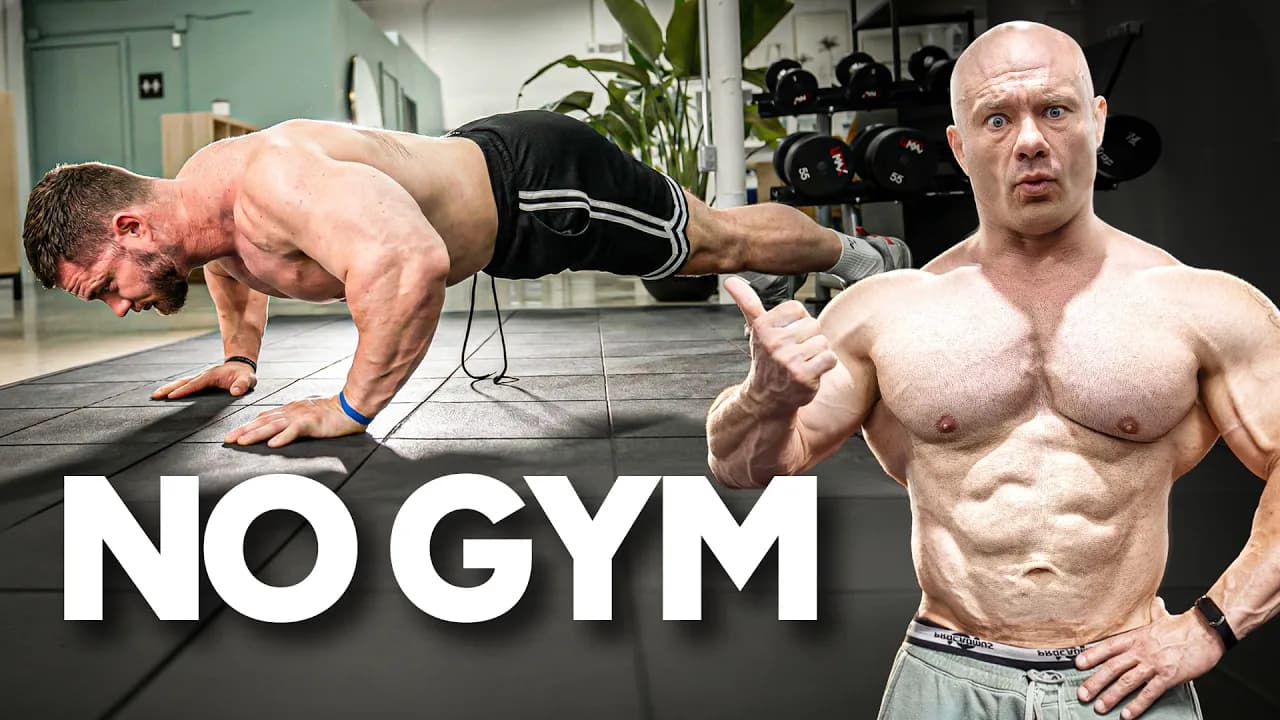
Training at home with no equipment has at least four major upsides. The startup cost is absolutely zero - you can start training immediately. For introverted people, you don't have to deal with other humans unless you live with them. Training at home saves an unbelievable amount of time commuting to and from the gym, which is especially significant for people in metro areas with heavy traffic or those working 9-5 jobs who can only go during peak hours. If you master bodyweight training at home, you can train anywhere - hotels, airport terminals, or even on the side of the freeway doing push-ups, squats, and lunges.
Training at home with no equipment has major downsides. Training the pulling muscles is really tough because gravity only points one way - without something to grab onto and pull against gravity, you're in a bad spot. Isolation is basically impossible - training just your side delts, biceps, triceps, or chest is very limited when restricted to compound movements. You can get clever and creative, but none of these approaches beat actually training with equipment.
You can get into way better shape than you're in now with bodyweight training at home, but at a certain point there's a degree of muscle mass you won't be able to reach. At-home no-equipment training is considered a great illusion and myth in the exercise world. People who promise amazing results from at-home training often want to sell DVDs, apps, or YouTube content. The recommendation is to buy something - dumbbells, a bench, a set of bands, or a pull-up attachment that goes in your door - to upgrade way beyond having nothing to work with.
Training with bands has multiple upsides. Bands are really cheap - they cost the least amount of money among all options that require purchase. You can travel with them - you can't bring 225-lb dumbbells through the airport, but you can stuff bands in your carry-on and replicate workouts anywhere in the world. The diversity of movements with bands is quite high, definitely beating just bodyweight at home. You can do all kinds of pulling and pushing, attach bands to various objects to increase variation, and continue getting productive workouts for months. Bands come in multiple strengths - with just three bands, you can have enough resistance to do legs, upper body, arms, and shoulders. Double wrapping skinnier bands doubles the tension.
The resistance curve with bands is the opposite of what's wanted for growth - you want tension toughest at the stretch and easiest at the peak contraction, but bands do it backwards. For much of the variation, you need to tie or wrap bands around something, and sometimes there's nothing available. Leg training can still be really tough - even with heavy bands, getting them wrapped around your body for squats, deadlifts, and similar exercises is impractical and difficult to pull off. Most people don't really like training with bands - they can be a novelty for a few sessions, but few people stick to a band program with progressive loading for months on end.
If training with bands, find somewhere to wrap them around high up, mid-body, and on a lower position point to target the whole body and especially get lats engaged with the high tie-in. Combine band and bodyweight activity into the same exercise - for example, tying the band around your back for band push-ups maximizes resistance by adding bodyweight to the bands.
Bands rank fourth place for cheap fitness modalities. They're not super effective due to the backwards resistance curve and can feel crappy to do. Many people won't do them for a super long time, but they offer more variation than bodyweight training and are good for travel.
Doing calisthenics in the park has at least four major advantages. It is monetarily completely free. It can be an amazing social activity with other people in the park. Training outdoors is psychologically invigorating - objective science shows most people get a big psychological boost from being outdoors, and combining this with exercise creates an amazing experience that beats training at home alone or under fluorescent lights in a corporate gym. Unlike most cheap at-home training, vertical pulling is a core feature of calisthenics park training, including the ability to do inverted rowing.
Insects are a bonus disadvantage. Isolation is tough - getting bigger arms, biceps, triceps, delts, or hamstrings is difficult when limited to compound movements. Leg training is constrained to body weight only, limiting how big legs can get. You're always victim to the weather - snow, ice, extreme cold, or ultra hot conditions are legitimate concerns. Training in hot environments can be dangerous, while ultra cold environments increase muscle pull and strain probability because peripheral structures are more brittle. The diversity of equipment is limited to what's available - usually a dip bar, pull-up bar, maybe a couple other stations.
Alter grips and foot positions every 4 to 8 weeks - doing regular grip pull-ups, close grip pull-ups, underhand pull-ups, and push-ups with various grips increases variation. Alter rep cadence for additional variation. For leg work when weights aren't available, do jumps, sprints, and higher rep leg work single leg with no lockouts to challenge legs as much as possible.
Calisthenics park training ranks third. It's a totally great option with great social elements, but the big downside is the weather. In places like the Sun Belt where weather is generally good, this could rank as high as number two. In places like Michigan, it ranks much lower due to weather concerns.
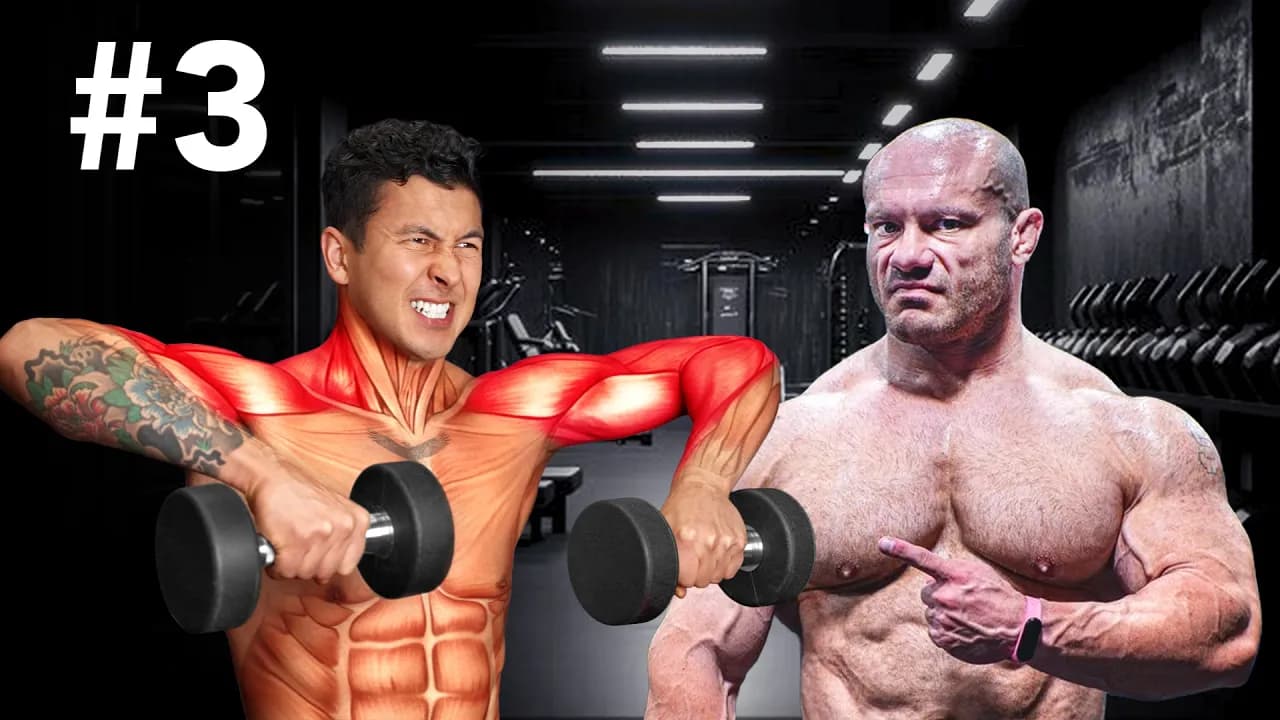
Dumbbell bench training has at least four very big upsides. The diversity of exercises is massive - you can train with tons of diversity, freshness, and good effect for years with just one adjustable bench and one pair of dumbbells. The footprint is tiny - you can fold the bench away, tuck dumbbells away, pull them out for workouts, then make them disappear. The targeting is massive - you can focus on arms, shoulders, back, chest, and legs, enabling high-level prioritization programs. The raw stimulus magnitude and stimulus to fatigue ratio can be very high, meaning you can actually build an incredible muscular physique with just this setup alone.
Leg training is possible but involves low variation and can be annoying to set up. Adjustable dumbbells ranging from 5 to 55 or 60 lb cost hundreds of dollars - like a year or more of Planet Fitness membership. Focusing on lats is difficult - vertical pulling is the best approach but is still very tough with just dumbbells and a bench. Training at home alone can be problematic due to distractions from house tasks, TV, or family members, and lacks the gym motivation and energy of being around others doing the same thing.
Find dumbbells challenging within the 5 to 10 rep range for bicep, tricep, and shoulder work first - these should be your initial dumbbells because they can still challenge you in the 10 to 20 and 20 to 30 rep ranges for chest, back, and legs respectively. The second pair of dumbbells should be in the 5 to 10 rep range for pushing and pulling exercises, allowing higher reps on arms and shoulders while using lower reps for chest and back. A third pair should be for 5 to 10 rep sets for legs - stiff-legged deadlifts, lunges, squats with dumbbells on shoulders. With just three pairs of dumbbells tailored for different purposes, you're really sorted. Consider purchasing the RP Gym Free templates - they're cheap, amazing, and have unbelievable amounts of variations with video demonstrations for workouts using only dumbbells, and with a bench you're overqualified.
This ranks second place as a top-tier piece of equipment for super-cheap workouts. It's second because working out at home doesn't work for a huge fraction of people due to motivation and distraction issues. If you can surmount that and lock in at home, this is an amazing choice that costs very little money but allows training with huge effect and massive variation for years.
Training at Planet Fitness has four major upsides. The price is less than a dollar per day in almost every area of the United States - sometimes $10 a month for a full gym. You have a plethora of machines, cables, free weights, stacks, leg presses, and the whole assortment - this is a real gym with maximum stimulus potential and no tradeoffs with bodyweight or bands. The variation is off the charts with all kinds of different machines and attachments. There are social benefits - being around other people, vibing, meeting people, and the indirect benefits of not being at home alone, which can be demoralizing.
You have to drive there - most Planet Fitnesses are in American suburbs, requiring 45-minute walks each way in rain or snow. After a few months, the membership prices add up to be the most expensive option on the list - buying a bench and dumbbells on Facebook Marketplace costs money upfront but becomes free after 6-12 months, while Planet Fitness continues costing money. Social behavioral rules exist - grunting too loud gets you out, and if doing hack squats with sets of 12, grunting, puffing snot, and possibly yelling might not fit the membership. During busy times, you'll wait for equipment.
Avoid busy times if possible - don't go 7:00 to 9:00 in the morning or 4:00 to 7:00 at night to have pick of the equipment. Do plenty of training in the 5 to 10 rep range for incredible bone building and strength training benefits, hitting muscles differently than high reps. When you have gym access, go heavy since you can't do that at home. Track your workouts because of the complexity of using different machines - the PRI hypertrophy app keeps you on track and remembers all the machines.
Planet Fitness ranks number one on the list. For most people it's such a great deal - so cheap with a great atmosphere and all the benefits of a real commercial gym. If you want to save money and have great workouts with a Planet Fitness within driving distance, go there every single day.
Keep Renaissance Periodization in your library
Save the videos and channels worth coming back to, and find them again in one place.