The #1 Lie You’ve Been Told About Exercise (Do THIS Instead) | Dr. Shannon Ritchey
In a Nutshell
The core message is that cardio is inefficient for fat loss and "no pain, no gain" training is counterproductive—nutrition drives fat loss while strength training preserves muscle, requiring only moderate volume (6-8 sets per muscle group weekly) taken close to true muscular failure (1-3 reps shy). Train each muscle group twice weekly on non-consecutive days with 0.75-1g protein per pound of body weight, choosing exercises that allow reaching failure without excessive fatigue. This approach produces better body composition, sustainable adherence, and eliminates the need for daily exhaustion or tracking calorie burn.
These notes were generated by AI and may contain inaccuracies.
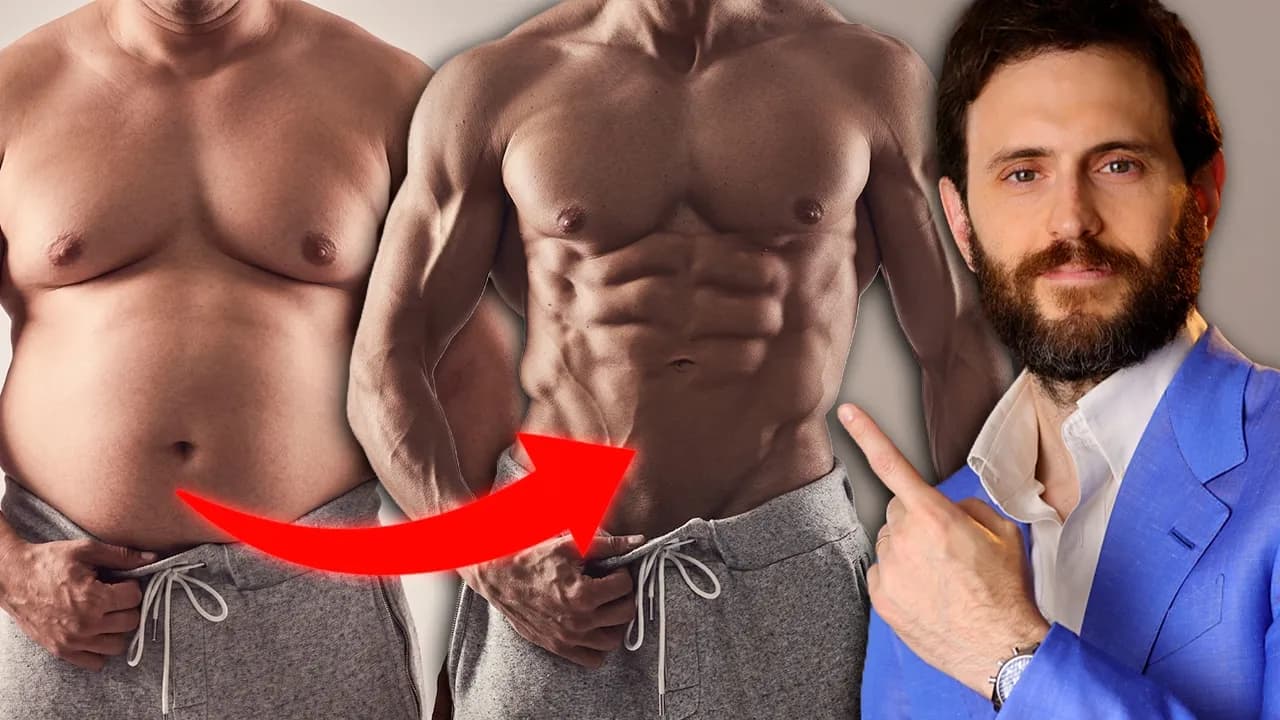
A pervasive myth is that weight loss only occurs through tons of cardio. This belief is damaging because it does not work efficiently and leads people to believe workouts must be exhausting to be effective. When people add endless cardio without seeing results, they either give up and become less active overall or double down, burning out further. This often results in joint pain, disrupted hormones, and a poor mindset around exercise.
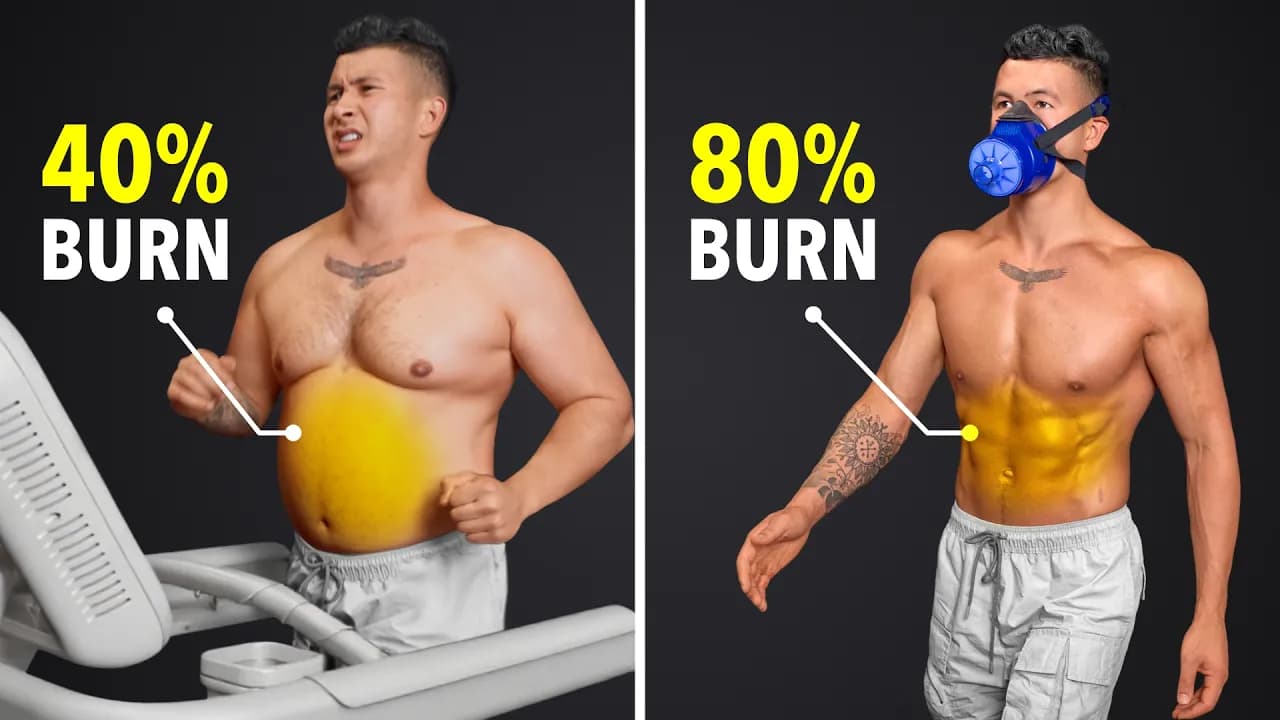
Studies consistently show that adding cardio without nutritional changes produces underwhelming weight loss, typically just a few pounds over a year. The body compensates for added exercise by burning fewer calories elsewhere to maintain a narrow window of total calorie expenditure. People often eat to replace or overeat the calories they believe they burned, sometimes leading to weight gain despite intense effort.
The recommended approach is to separate exercise from fat loss goals. Focus on nutrition for fat loss while incorporating strength training to maintain or build muscle, ensuring weight loss comes from fat rather than muscle.
The "no pain, no gain" mindset stems from decades of marketing that equates brutal workouts with body change. This approach does not produce meaningful weight loss or body composition changes. The effective stimulus for body composition change does not require smashing yourself, and people can achieve better results with less physical and mental drain.
Gentle consistency allows for better adherence because workouts feel more sustainable. The right stimulus eliminates the need to follow "no pain, no gain" principles.
Intense exercise should not occur every day. Exercise follows a stimulus-recovery-adaptation loop where all three components are necessary. The workout provides stimulus, but the repair process is where adaptation occurs. Overstressed bodies do not adapt; they require appropriate stress followed by recovery time.
Recovery days should be active rather than completely sedentary, but structured intense exercise should be avoided. Working out without adequate recovery leads to chronic low-grade inflammation.
Lifting heavy weights does not inherently create a bulky appearance. Substantial muscle mass takes at least 3 months to build, and the physiques most women consider bulky require years of training at high volumes, often with fat mass on top of muscle.
Following evidence-based training produces better physical results including more muscle and improved health markers. People develop a better relationship with their body and exercise, eliminating guilt around rest days or taking time off. The body feels less worn down and depleted when not pushed to exhaustion daily.
The cycle of pushing to limits and giving up within weeks or months occurs because people attempt to accelerate results by exceeding sustainable effort levels. This approach is not sustainable over a lifetime.
After 15 years in the fitness industry, following conventional advice of light weights, high reps, no recovery days, and maximum calorie burn led to minimal fitness results, chronic pain throughout the body, and feeling physically broken at age 24. Shifting to evidence-based training resulted in building 8 pounds of muscle and losing 5 pounds of fat over one year while working out for 35 minutes instead of 60 minutes, rarely breaking a sweat, and experiencing no pain.
A common mistake is confusing muscle fatigue with muscle failure when training for muscle growth. Studies show muscle building requires training close to failure on every set, stopping 1-3 reps shy or going all the way to failure. Fatigue from prolonged holds or burn does not reliably build muscle; proximity to true muscular failure does.
The rest test differentiates between fatigue and failure: after completing what feels like the final rep, set the weight down for 5 seconds, shake out, then attempt more reps. If 3 or more additional reps are possible, the set was limited by fatigue rather than approaching true muscular failure. This indicates the weight should be increased or reps should be increased to reach closer to failure.
The most stimulating reps occur when struggling near failure. These final reps activate type II muscle fibers through mechanical tension. When a set becomes challenging, continuing rather than pausing allows reaching proximity to failure, which is the critical stimulus regardless of exact rep count.
Rather than targeting a specific rep number like 15, selecting a weight that feels challenging without knowing the exact rep capacity allows reaching true proximity to failure. Rep ranges anywhere from 8-30 can work for muscle growth when sets are taken close to failure.
Stopping before reaching proximity to failure still provides benefits including strength gains, improved neuromuscular connection, and stability. However, muscle growth specifically requires those final challenging reps that cannot be cheated.
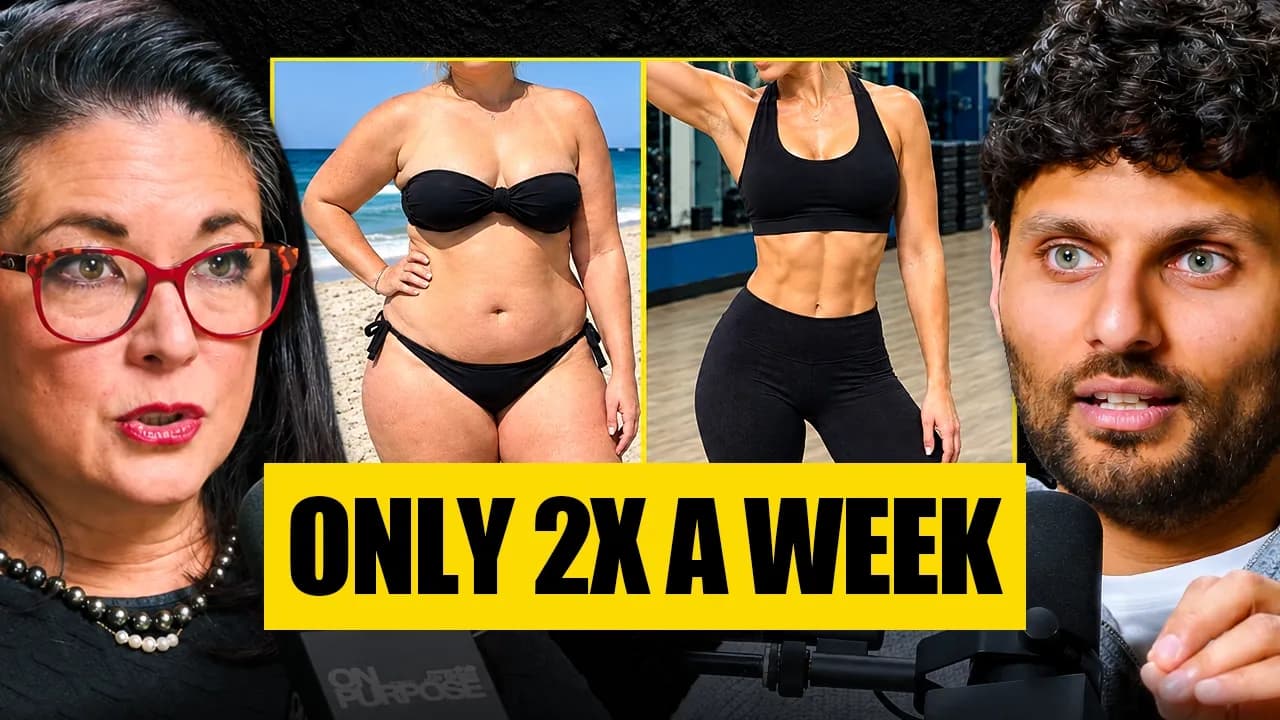
Each muscle group should be trained approximately twice per week on non-consecutive days, allowing 48 hours of recovery between sessions. Training the same muscle group daily prevents adequate recovery and adaptation. A split of 3-5 strength training workouts per week with 2 recovery days supports this frequency.
Recent meta-analysis confirms twice-weekly frequency as optimal for muscle growth. This frequency requirement makes overtraining counterproductive since recovery enables the next productive session.
Light to no muscle soreness is ideal for consistent training. Soreness is a poor indicator of muscle growth and typically results from new movement patterns or significant load increases causing tissue damage and inflammation. Since muscle groups need training every few days, excessive soreness prevents high-quality stimulus in subsequent sessions.
Larger muscle groups like quads and glutes tend to experience more soreness, possibly due to greater fascial tissue damage. Constant soreness suggests excessive training volume or insufficient recovery days. Soreness should not be chased as a workout validation metric.
Effective training requires biasing one muscle group at a time. Compound movements involving both upper and lower body simultaneously make it difficult to determine which muscle group limits performance and prevents reaching true failure for each targeted area. Separating arm, leg, and core work produces more effective stimulus.
The minimum effective dose for muscle growth is approximately 4 sets per muscle group per week. Some studies show even 1 hard set per muscle group weekly produces results, but 4 sets is recommended as minimum. Moderate volume of 6-8 sets per muscle group per week balances effectiveness with recovery and workout duration.
Diminishing returns occur beyond approximately 10 sets per muscle group per week, though higher volumes can produce faster muscle growth if recovery is maintained.
Protein intake of 0.75-1 gram per pound of body weight daily supports muscle building. Higher end of this range tends to produce better results. Many people unknowingly consume only half the protein needed for muscle growth, which explains lack of progress despite training effort.
When following the recommended protein goal two years ago, the individual experienced overall body growth rather than just muscle building. They gained muscle but also increased in overall size, with pants and suits becoming tighter. The protein intake was not accompanied by sugars or fats, yet the body still grew larger overall. This led to reducing protein intake, which subsequently slowed muscle building progress.
Body recomposition involves gaining more muscle while simultaneously losing fat or maintaining current fat levels. This process requires proper nutrition with adequate protein, combined with a slight calorie deficit or eating at maintenance level, plus proper strength training. Cardio plays a supporting role by keeping overall energy expenditure high, but overdoing cardio for fat loss creates an opportunity cost by reducing time for strength training.
When tracking calories and protein, many people unintentionally eat in a calorie surplus while trying to hit protein goals, resulting in gaining both fat and muscle simultaneously. This often occurs when women gain lean mass but also add fat mass due to being in a surplus. Body recomposition creates the "toned" look many seek while focusing on muscle mass, which is crucial for all people as society is generally under-muscled.
There's a wide variety of effective exercises for building muscle beyond traditional movements like squats, overhead presses, and deadlifts. The key is choosing exercises that feel good in your body, that you enjoy, and that allow you to train close to true muscular failure. Exercises that are hated tend to be abandoned before reaching failure due to discomfort or boredom rather than muscular limits.
For example, Bulgarian split squats are commonly disliked due to their difficulty. If an exercise doesn't feel good, alternatives targeting the same muscle group should be selected. Hip thrusts might be preferred for glutes, allowing reliable training close to failure without distraction. Exercise selection should consider individual body proportions, as physics plays a role in exercise comfort. Someone with longer femurs may need to lean further forward in squats, potentially causing lower back discomfort, making barbell squats unsuitable despite being effective for others.
Strength and muscle growth can be achieved across a wide rep range from 4 reps up to 30 reps, provided the final rep reaches failure or near muscular failure. Different rep ranges can be used based on training status, the day, or specific exercises. Some movements work well with heavy loads for 4-6 reps, while others suit lighter loads for 8-12 reps. The option to work up to 30 reps exists, though this rep range can be brutal and people often stop due to fatigue rather than true muscular failure.
This flexibility allows choosing weights that feel comfortable. Women especially may prefer lifting relatively light for 20 reps rather than heavy barbells for 4 reps, achieving the same muscle growth when training close to failure.
Training close to failure matters more than the equipment used. Push-ups serve as an effective muscle-building stimulus for those who can't perform more than 30 repetitions. Pull-ups similarly work well when few repetitions bring someone close to failure. However, some bodyweight exercises like lunges allow 100+ repetitions due to stronger muscle groups, requiring external load through machines, cables, barbells, or kettlebells to provide adequate stimulus.
The guideline is: if more than 30 reps can be performed, the exercise isn't challenging enough and external load may need to be added through dumbbells, kettlebells, or similar equipment.
Beginners see results with far less stimulus than trained individuals. Those new to training can achieve significant progress without intense workouts, experiencing what are called "newbie gains." This rapid progress serves as strong motivation to continue. There's no specific number of squats or any exercise that matters universally; overall muscle growth and strength matter more, achievable through various exercises.
The biggest mistake in weight loss is over-glorifying exercise as a fat loss tool. Cardio produces underwhelming fat loss results while creating opportunity costs by reducing time for strength training. When losing weight through calorie deficit, 25% of weight loss can come from muscle without proper strength training. Strength training should be the cornerstone of any routine to ensure weight loss comes from fat, not muscle.
A study of over 5,000 women aged 60-99 followed for 8 years found that those who lived longest were the strongest, even compared to other active women. Being active isn't enough; muscle and strength provide additional protection. Building muscle should begin now rather than waiting until older, as it compounds over time and takes years to develop.
There's no cutoff point for building muscle at any age. As people age, recovery demands increase and it becomes harder to add exercise volume, though muscle can still be built. Using 20s and 30s to build a "bank of muscle" provides benefits in 40s, 50s, and beyond, but starting later is never too late.
Body recomposition means losing fat while building muscle as simultaneous but individual processes. This works for both beginners and trained individuals with proper ingredients. Nutrition serves as the primary tool for fat loss, with the most success found in very slight calorie deficits rather than aggressive ones. Aggressive deficits are unsustainable and lead to yo-yoing, while slight deficits allow the body to avoid sensing energy scarcity, sustaining the process and producing better results over time.
Training recommendations remain consistent across ages, including perimenopausal and postmenopausal women. The approach involves training close to failure with rep ranges from 4-30, targeting muscles 1-2 times per week on non-consecutive days, and providing adequate recovery. This works effectively whether 20, 30, 40, or beyond.
Four principles guarantee muscle growth results:
- Repetitions: Training to failure or 1-3 reps shy of failure in every set, with rep ranges from 4-30
- Exercise selection: Choose one muscle group at a time and select exercises that feel good and allow training close to failure
- Protein: Consume 0.75-1 gram of protein per pound of body weight daily
- Structure: Work each muscle group approximately twice per week on non-consecutive days, splitting into 3-5 workouts weekly
Muscle growth takes 8-12 weeks, requiring consistency for at least 12 weeks before changing approaches. Many social media transformations show fat loss in short timeframes, but sustainability matters more than quick results. Aggressive deficits or excessive cardio without strength training can lead to muscle loss and returning to starting points or worse.
Spot treating fat remains a persistent myth despite available information. Exercises claiming to tone specific areas like "bat wings" or flatten lower belly pooches don't work because fat loss occurs systemically across the body. The body chooses where to mobilize fat first, and this cannot be controlled through targeted exercises. This myth causes overworking certain muscle groups with frustration when promised results don't materialize.
The hardest point in the health journey involved chronic pain from overuse, training at least an hour daily without recovery days, and feeling guilty for rest. Obsession with fitness watches and calorie burning led to doing jumping jacks at day's end to hit goals. Stopping this tracking led to better results and a mental and physical transformation.
The final five responses:
- Best advice received: Take personal responsibility for any change wanted in life
- Worst advice received: "No pain, no gain"
- Fitness habit wished started earlier: Building muscle at age 19-20, as it compounds and becomes easier to maintain, with lost muscle returning faster the second time
- Something no longer valued: Fitness watches and calorie burning obsession, as they're not effective or reliable for measuring workouts
Food intake and strength training are the primary things to track. Staying active with around 7,500 steps daily associates with positive health outcomes. Data tracking can be useful for observing patterns across different life seasons.
I've had it for like 3 years and I just like to look back and see like, oh, when I was in this super stressful time in my life, I wasn't very active. How can I maybe change something about my day-to-day to stay more active or what lifestyle habits can I adjust during a stressful period of my life? I like to use trackers to just kind of give you an overall activity, a picture of your activity rather than obsessing about hitting a certain number because what we see is, you know, if you're active overall, like doing a ton more isn't necessarily going to give you a ton more gain, if that makes sense.
And that's just how we think about everything. I know. I know. It's you do see diminishing returns with exercise. And this is not me saying don't be as active as possible. I'm not saying that. I'm just saying a lot of people think that it has to be all or nothing and so they end up doing nothing.
Amazing. Fifth and final question we asked this to every guest who's ever been on the show. If you could create one law that everyone in the world had to follow, what would it be? Maybe this is me just being an optimist, but giving people the benefit of the doubt. Not fitness related at all. I just find that we're all trying to do our best and you don't know what somebody's going through. And so if you have a negative interaction, trying to give people the benefit of the doubt, even if they had bad intentions, it feels better for you to give them the benefit of the doubt. Oh, maybe they're going through maybe they had a death in the family or maybe they're going through something that I don't I can't see or know. So that's what I really do try to do. And it's hard. It's not that I'm perfect at it, but I wish that I wish that more people did that, too. Yeah, I couldn't agree more.
Keep Jay Shetty Podcast in your library
Save the videos and channels worth coming back to, and find them again in one place.