Father of the iPod and iPhone on building taste, judgment, and creativity in the AI era
In a Nutshell
Tony Fadell argues that great products require humans who refuse to surrender decision-making to AI or data, because 1.0 innovation demands opinion-based choices driven by taste, judgment, and a singular vision. He stresses starting from real customer pain, then building the full ecosystem—not just the device—while iterating through multiple generations before the business model succeeds. Storytelling, marketing, and micromanaging the right details are essential; shortcuts with AI create brittle foundations that destroy long-term value.
These notes were generated by AI and may contain inaccuracies.
You still need humans in the loop. Don't surrender to the machine. We can use the machines, but don't cognitively surrender because it's so easy to build. The things that stand out are the things that are really well thought through. Today in the AI world, I can just make a prompt and all of a sudden it gets spit out. You're building on a really crusty foundation. You're getting short-term game for very very long-term loss. If you're going to build a real company, can't be throwaway.
One of your colleagues, Herman Hower, that ask him how he decides what is worth building. I always start from pain. Are there new technologies to solve that pain? Bring innovation in, revolution in redefine the space.
Threshold for Pursuing an Idea
What's the threshold? What's a sign of, okay, this isn't big enough? Oh, the iPod wasn't big enough. It took three generations of the iPod before it became successful. You got to fail a few times till you find your way.
Technology in Service of the Customer
You are so into marketing that piece of building that I think a lot of builders don't think about at all. The technology is in service of the customer, not we're going to jam the technology down the customer's throat. A customer only sees what they see through the lens of marketing.
The Value of Storytelling
You often come back to the value of storytelling for product builders. Too many times when we're technology led, we talk about the what. We don't talk about the why. The why is storytelling. When I watched Steve, he was honing the story of the iPhone every day. And so when you saw him come on stage, it was just cuz he had done it a 100,000 times.
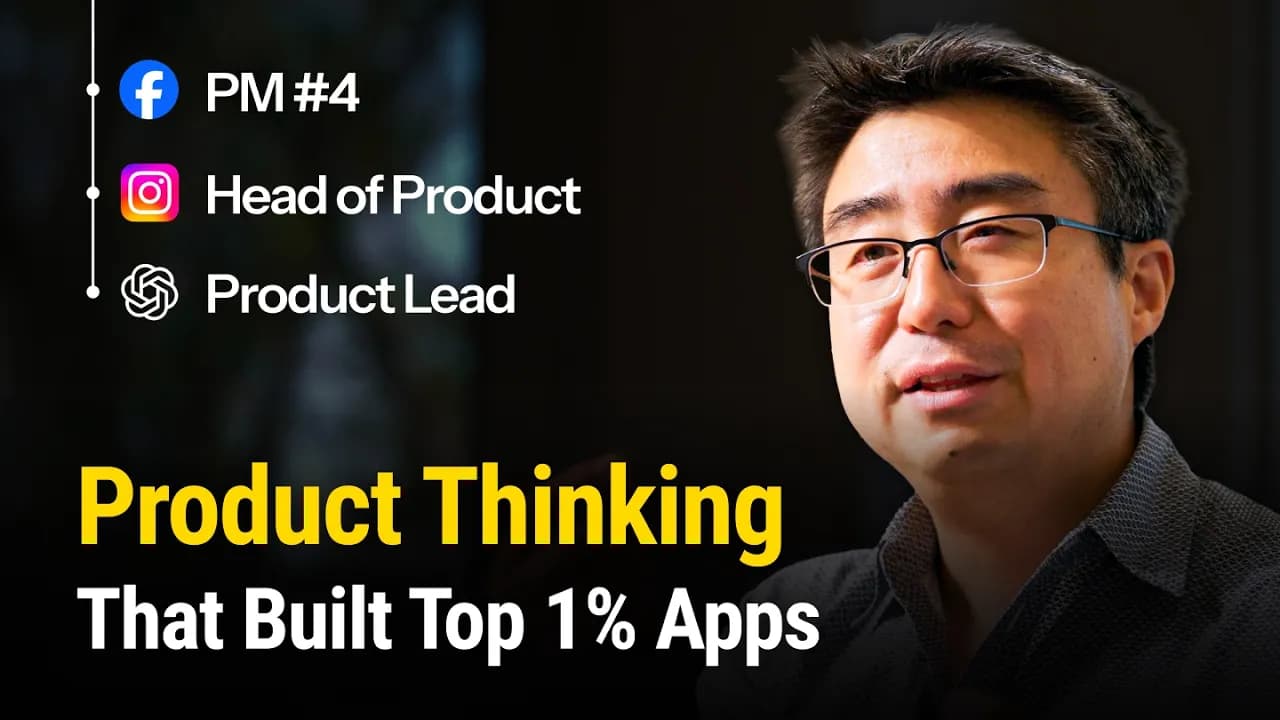
Today my guest is Tony Fadell. Tony doesn't know this, but ever since I started this podcast, he's been near the top of my wish list of people that I've dreamed to have on this podcast. And that's because Tony is the epitome of what most people listening to this podcast want to become. He co-created some of the most innovative and beautiful and popular products in history, the iPod, the iPhone, the Nest thermostat. He's also famous for being part of the legendary team at General Magic. He's co-authored over 300 patents. He also wrote one of the most important and valuable and inspiring books for builders called Build. Tony is currently an active investor and adviser to deep tech startups with his team at the Build Collective. He was recently named the inaugural designer and residence at the MIT Morning Academy of Design.
I want to start with the Blackberry. I was just watching the BlackBerry movie recently and it's kind of this journey of the BlackBerry founders and their story and then at the end they were like, "Oh," and this iPhone thing launched and they're like, "No, this is dumb. It's like no keyboard. It's not serious. Can't do anything with it." I've always wondered just being on the other side of this, being within Apple building the iPhone. How much did you guys actually doubt that, okay, maybe they have something, maybe we need to add a keyboard? It was the most heated conversation and it dragged out the longest.
There was one way of looking at the Blackberry which was that is the market we want to go after and we want to win. And then there's the other side the flip side of that argument which is only 1% or 2% of mobile phone users at the time had a Blackberry, knew what a Blackberry was. So what about the other 98% of the people? What would they want? What would they need? Why are we going to go after winning this very loyal and incredibly passionate user base and try to pull them away from something? And so there was this basically head-to-head competition between a display keyboard or a virtual keyboard and a physical keyboard.
I had been doing virtual keyboards for a while since General Magic in the 90s and I knew what handwriting was and keyboards were like on these touchscreens and but I was only doing it on a I was writing software and calibrating them making trying to make them work with a single touch display resistive or what have you. And so I knew what the limitations were of those kinds of things. So I was like, "This is really going to be difficult." And we hadn't, you know, multi-touch was just, you know, was on a big pingpong table. It like it hadn't been scaled down. So it wasn't like something in a consumptive form where you could really do user tests with it.
And so we set out a set of tests like, okay, how fast can I type this text? How can I how fast can I do this on a hardware keyboard? And then how can we do this on the virtual one with multi-touch? And it was a hardware software integration challenge of how we could get this to work. So we were going back and forth and back and forth. Oh that doesn't quite work in the software. Oh we need to change this in the hardware. And so this was a over a set of months would okay the hardware keywords here you know and depends on how pro you know how much you've been using it but it there's this margin error and we could really understand it. This over time was started way down here and it started to get it, you know, and it got a little faster and a little faster and a little faster and how many errors, not just how fast, but how many errors and how do you correct the errors and all of those things and at the end of the day I was able to convince myself it wasn't going to be a hardware issue. And I was convinced at some point that we were good enough. Were we as good as a hardware keyboard? No. But were we good enough? Yes. And then other people came to that conclusion.
But at the same time there were other people who were adamant that the hardware keyboard has to be there and they were unrelenting. And so it came down to so this was a you know classic like I I say in build the data versus opinion-based decision. And if you think about it you had data that said there was pros and cons on both sides and what happened was the data was not clear that we should choose one over the other. And Steve said, "We are going this way." Enough other people kind of said, "Yeah, that seems like that's the right thing to do. We're going to get close enough to get there." And then other people were like, "No, my opinion is this." And guess who wins at the end of the day? Steve Jobs opinion does. And he was like, "If you're not going to get on board, get out of this room and you can go work on another project, but you're not going to work on this."
One direction I want to get into here is this idea that you'll talk a lot about micromanaging being actually really important and powerful. So, there's this image that's floating around Twitter that I don't know if you've seen. I'll show it on the screen as I'm describing it and hopefully you can visualize it. It's a functional system versus a dysfunctional system. basically a company that's doing great versus not great and there's this chart that goes up to more functional that is basically unkind truth and then another unkind truth another unkind truth creates more functional systems kind lie followed by kind lie followed by kind lie leads to dysfunctional systems something Steve Jobs is very famous for you in your book you talk about missiondriven are actually really you want you want a mission driven there are certain types of that are great talk about just the importance of somebody being very direct in what it takes to build great products.
When you're doing a 1.0 of anything, when you're doing if you're doing anything that matters and it's a 1.0 and it's a new category or it's a new device the world hasn't seen before, you have very few analoges that you can use to make datadriven decisions. And so if most of your decisions are going to be opinion-based decisions for a 1.0, No, you have to have one or two or a very very small set of people who are charged with making the opinion-based decisions and can actually get you from point A to from a white paper, you know, white blank blank sheet of white paper, whiteboard to an actual 1.0 spec. Because if you try to do datadriven decisions all the way along, you're you're either not doing a differentiated product because you're taking data from another thing or you're just getting just data, right? So you're going to have to figure out how to get opinion-based decisions to happen. And that means you have to have, you know, for lack of a better word, taste makers. This is what we are doing. We are the the person or the team who is going to make those opinion-based decisions. Of course, some people aren't going to like it. And it's be like, I'm sorry. This is a benevolent dictatorship. This is what's going to happen and this is the vision and we don't know what we don't know until we ship it and we get opinions from the, you know, the the users.
Now, it's very different when you do this on a in a B2B context versus a B TOC context. And so the hardest environment to work within when when you have these opinion based decision is in a BTOC context because you have to see these decisions in the full light and you don't consumer does they have to see it in from the marketing from how they discover it in the marketing the key the key feature sets the the ability to use the product all of these different things for them to actually come up with an opinion of what they like and what they don't like and being able to critique it and if you don't and if you're doing a 1.0 and the world hasn't seen you're not going to get that from consumers ever. You have to ship it and you have to build the entire kind of ecosystem so those consumers see it in the fullness so that when they do the evaluation and they spend their own money then you're getting real feedback when it comes to consumer hard atomsbased products with services or not whatever it is you have to build the entire thing and visualize the entire thing to be able to make those opinion-based decisions and so you need a small team who's looking at the marketing angles the engineering angles, the the sales angles, all those different things to go, okay, that's the way we're going. And there's only so many ways you can do it because the rest of the team doesn't see this either. And so you have to be very articulate about how what that opinion-based decision is made for, why, how it might affect market, how you do it, and make sure the team understands it.
Now, if the team is just fully against it, well then maybe it has to be unkind. But hopefully if you've done a good job and you really you know have an informed gut and you can articulate that you can get everybody moving in the same direction even if it is and it's going to be risky right you got to know they got to take risk because most people in those other functions they don't want to take any risks and so there's someone who's got to be the target right and today you know in many contexts people go and hire consultants right they go and hire okay we're going to do a user study or we're going to do all this and they don't have the user study doesn't have the full context like I was just describing. They don't go buy the product and they don't what have you and then they get data and that's because the leader or whoever's in there board maybe it's like we need data to make sure this 1.0 is going to be a success. And I saw this so many times at all these major corporations. So they're just kind of covering their ass with data and not really doing the hard work of saying I'm going to make this decision and we are going to select this and yes I might be wrong or we as the opinion-based decision makers are wrong and we will correct it later and we'll take the heat for that. So that's the you know a great product manager a great person who's leading this thing has to understand that's that's what they have to do if they're really doing something innovative.
So what I'm hearing here is just the power especially in a consumer product of a singular vision of a singular leader that drives it that is basically relies on their instinct and their taste and their experience and and and a lot of and but a again a lot of informed judgment from all the experts around asking questions refining prototyping these kinds of things to then make a decision. So it's not just like I woke up one morning and you know this is you know now it's we're going this direction. No, it's it there's a lot of work to get to get there.
The Power of Micromanaging
I want to come back to the idea of micromanaging which a lot of people like to a lot of people that word is is bad and don't be a micromanager. You advocate for for creating great products. You need to actually be really micromanaging. Just speak to that. What people you think miss about the importance and power of micromanaging as a as a leader.
You know, we've heard the term sweat the details. It's micromanagement of certain details and then there's the kind of hands off of other details. You have to really understand the blend of which things really matter, which things don't. When I was early on my career, I thought everything mattered and I drove everybody nuts, drove myself nuts, the people hated like and you know the and it became my it became like everybody's got to do it the way I would do it. It's like no no no no there's only a few key things mostly for the customer or maybe some certain things from manufacturing or cost or something where it needs to really be very clear or a long-term vision but then you can delegate other things but certain pieces of it you really need to and when I mean micromanage it means micromanage the decision not necessarily the operations of doing it making sure you're getting the data like we did with the keyboard on the iPhone to make sure we're getting the right data to help us get the informed gut to make that opinion-based decision. And so, so it's it's the the the the micro specification and delivery of those certain data pieces that you need. And and maybe it's also to get out of a crisis. Or maybe it's a it's a system level thing where you have to worry about this thing at the low level changing up here and here and like like we could do that but only if they do this and this is like okay guys we're going to fix all of those things at once and you have to micromanage it because everybody wants to find excuses why they can't do that or they can't do that. So you have to ask why a lot. So it just and but it's all in service of some really key detail that needs to get delivered or some innovation that needs to be delivered. Just like like I said the keyboard, we had to do the hardware, we had to do the software, we had to do the fil filtering, you know, we had to do how it was how the graphics were done on the screen. So you had all of these layers that had to keep constantly changing and adjusting and and and sometimes you have to micromanage that because there's just too many variables and someone has to be the orchestrator of this of this huge orchestra of many different components to kind of make it all come together and be harmonious.
I want to go in a slightly different direction. I want to talk about the Nest the thermostat I'm assuming. Thermostat. Yeah. What versus what the bird a right I Yeah. Uh, man, the uh smoke alarm is is that discontinued by the way the smoke alarm. Yeah, I just you just what do you why you want to stab me in the heart like a go? That was one of the toughest products I and our team and Nest and other people who were on the have ever made their life cuz it's so hard to make something like that. That's there's so many constraints like that's an ultimate constraint kind of product to actually innovate in. So yes, it unfortunately is discontinued, but it was the best product in the space for a decade and no one changed it. No one invested in it. It's it is so crazy. It's It like pains me and it pains everyone. People like they're expiring around me. What do I do? And I'm like, I wish I could tell you there's something better. No one replaced it with something better. I It's It's mindboggling that the number one product with revenue and everything, you're just going to toss it away.
Why the Smoke Alarm Was Discontinued
Why do you think that's happening? Because it was an orphan. It's an It's just not a big enough business within Google. No, no, it was Yeah, it was. Yeah, it was a stepchild. They You really had to pour a lot of love, a lot of a lot of attention, a lot of love to make something that was that crystallin and and it had to be wellformed and nobody really wanted to put in the effort. So, they probably like, "Who want to do this? Who who's excited by it?" Nobody was probably excited and they just said, "Yeah, okay, we'll just it's not that big a deal in the end of the day where if it was invested in, I think it would have been a critical piece of the next generation AI assistant in your home."
Favorite Feature of the Smoke Alarm
I want to hear more about that. And just on the smoke alarm point, I my favorite feature. I was at an Airbnb once and it just started instead of just like straight to beeping. It was just like I'm about to make a loud noise like it's just warning you that it's going to get we call it. I love that feature so much. It's like it's about to get very loud. Thank you for telling me. Oh, it's so good. You know, it's so you don't get PTSD every time because you know when a smoke alarm go well, you're like, "Okay, everyone calm. We're going to do this now." Especially when we're doing tests and stuff. We're like, you know, when we're because people are supposed to test it or are supposed to test itself like, you know, like everyone stay calm. It's going to be good, children. Just we got to do this one thing and we'll get through it. Don't worry. That's so good. I was like, thank you so much for telling me. There was a lot of love and care poured in that thing.
The Nest Thermostat's Future
So, I was going to ask specifically about the Nest. Like the Nest thermostat is still the best thermostat out there. I use it everywhere I go. It's just the best. The app hasn't evolved. Nothing's changed for a long time. Is it the same reason you just described? It's just not a priority. Step in the heart. Yeah. You know, the the whole organization was a stepchild for whatever reason. You know, there was cultural mismatch. There was, you know, probably a business mis mismatch. Um, I think if Nest was uh around and alive today like it was, it would have a whole different thing when like Google and Gemini and Google IO was what yesterday or the day before. Um, you know, it would have been one of I think some of the centerpieces of what you could do because AI needs context. AI needs a lot of context and in a home you want to make everything very seamless. Um, and the way you get best context is by having sensors properly placed around the home that don't necessarily invade privacy, but allow you to pick up a lot of comingings and goings and who's who in the room and your voice and these kinds of things. Uh, audio I should say, not voice. Um, to be able to give AI's context so that you can have a anywhere assistant that really knows what's going on.
Space for a New Nest
Is there space for someone to launch the new Nest, do you think? Oh, for sure. For sure. People keep asking me what are you gonna get? It's like, no, absolutely. It's now's the I now's the time if it isn't already happening. I'm actually getting business plans of people who are like, hey, you know, is this interesting to you? Want to invest in it? You want to come and help us, you know, build it? This is like Nest 2.0. So, you know, they're trying to do stuff like that at ring. I don't think very, you know, it not very privacy focused, but that's what they're trying to do. That was our vision in the beginning to tell you the truth. That's how we we were like, you're going to need lots of context because we remember we the Nest learning thermostat wasn't the Nest AI thermostat. It could have been called that, but we couldn't call it that in 2011 because people would have freaked out. Now you would have called it the Nest AI thermostat, right? And people would have bought it. Um, and so we knew what AI was, right? So since 2010, that was one of the predication piece foundational pieces of the company was AI. And so that's how we were able to do a lot of the things we were able to do. But it was much you know obviously not LLMs but smaller stuff and we said okay we can see this world growing and this AI assistant then voice assistance came then then there was Alexa and all that stuff that happened later on in 2013 145 it's like okay and that was gen one but we could see this kind of blossoming and you know unfortunately in the fullness of time it takes 15 years more uh you know from the time Nest launched um for that vision to come to fruition. But it is there now and it and if Nest was if we pitched it that way, we were just too we were just too early.
Let me follow this thread around how to know what what to build and what how you come up with ideas. So I emailed a bunch of people that know you asked them what to ask you. Uh one of your colleagues, Herman Herman Hower. Hermon. Oh, Herman Hower. Yeah. Herman Hower. So his question he wanted me to ask you. He said, "Ask him how he decides what is worth building."
Okay. Well, Herman's I've known Herman since 1987, probably before any most of your listeners were even born, but Herman, just for context, Herman was the creator of Acort computer, which was the Apple 2 of the UK back in the 70s. And then he created uh with his team the ARM processor. So, Acorn Risk, so ARM means Acorn Risk Machine from the Acorn computer. And so he was the founder of one of the founders of ARM. And so I was talking about process anyway. So that's so how do so so Herman and I go way way back. So the the thing is how do you solve or figure out what is worthy to be built and what's not. So um the first thing is I start from pain. I you know some people start from other different directions. I always start from pain. That's what I learned is what are people's pain right now or you can see it on the horizon. they're going to have pain and and not too far away. Um, but how do you solve for that pain? And typically those pains were because when those products were created, either it was unintentional consequence or it was a limitation of the technology at the time it was created and it kind of just it evolved but it never revolutionized itself. And so it just evolved and that same pain kind of was it, but it gave you enough of a a painkiller for the other problem that having this new pain was worth it. And so I always kind of start with okay, where's our current pain? And are there new technologies to solve that pain? And like in the thermostat case, the Nest was we could use AI to learn. So it can learn when you're there, when you're away, what you temperatures you like. So you don't have to program it. So you can save energy. So the big pain was being either comfortable or saving money because 50% of your energy bill was in
The Nest thermostat began with a specific pain point: 50% of a household's energy bill came from heating and cooling, yet users hated the interface and simply paid their bills without understanding the system. Programmable thermostats existed and were often subsidized by energy companies through rebates, but they remained unused because the programming interface was too complex and arcane. The innovation was applying AI to learn user patterns rather than requiring manual programming. This was combined with an attractive physical design that cost five to six times more than existing options. The value proposition was that a $249 device could save $800 to $1,200 per year, paying for itself within one or two years.
The broader lesson was that innovation starts with identifying long-standing, habituated pain points, then bonding new technology to solve them in a novel way. However, redefining a category required more than the product itself. Nest had to reinvent installation processes, moving from third-party installers to user-friendly self-installation, and change purchasing channels from installer-only sales to retail availability.
Tony Fadell emphasizes that successful products are systems, not isolated devices. The iPod was not just the device but iPod plus iTunes plus the iTunes Music Store. The iPhone was not just the phone but included the App Store. When building, the full ecosystem must be considered, even if only the hardware is remembered.
The iPhone succeeded because multiple technologies converged at the right time: multi-touch screens, sufficiently fast processors, ubiquitous Wi-Fi, the imminent arrival of 3G, digital cameras, and digital video platforms like YouTube. The iPod similarly required the simultaneous emergence of portable mass storage, battery-operated devices, MP3 digital music, lithium-ion and lithium prismatic polymer battery cells, and low-power ARM processors. These elements were all on the verge of viability, distinguishing the iPhone from predecessors like the Blackberry, which was essentially a texting machine.
The iPod was not initially a large-scale success. The first two generations sold primarily to Mac enthusiasts, who represented less than 1% of the market. Sales would spike in the first quarter after launch and then drop off. Success only came with the third generation when Windows connectivity was added and the iTunes Music Store launched. This illustrates that sometimes the core idea is right but additional changes are required to reach a broader market.
Fadell ran skunk works projects against Steve Jobs' stated preferences on multiple occasions. Jobs initially refused Windows connectivity for the iPod, insisting it would drive Mac sales. After the second generation failed to expand beyond Mac loyalists, Windows support was eventually added. Similarly, Jobs rejected a stylus for the iPhone and iPad, believing the finger was sufficient and fearing it would replicate the failed Windows Pen Computing experience. A skunk works stylus project proceeded anyway. When released, the stylus became a significant feature for professionals, artists, and hobbyists who needed precise input while maintaining finger-dominant interaction for most tasks.
Fadell states that everything requires three generations: make the product, fix the product based on customer feedback, then fix the business model including margins and scale. No product has ever launched perfectly on the first attempt. The first iPods and iPhones were not profitable. The second generation improved margins and features. The third generation achieved Windows support, better margins, higher volume, and reliability. The same pattern applied to Nest, which required multiple generations of both the thermostat and smoke detector before the business model worked. The advice is to persist with an idea unless there is something fundamentally flawed, iterating rather than abandoning it.
Failure only occurs if iteration stops. Continuing to iterate and improve transforms setbacks into learning. This aligns with Jeff Bezos's philosophy of accepting multiple failures before finding the right path.
The initial strategy of keeping the iPod Mac-only was intended to sell more Macs. However, without Windows connectivity, the $349 iPod effectively cost users $3,000 because they would need to purchase a Mac and migrate their digital life. This barrier would have prevented widespread adoption. By enabling Windows compatibility, users could try the product at a reasonable price point. A positive experience with the iPod brand then encouraged trying other Apple products. Without the iPod's success, the iPhone likely would not have been created, and Apple itself might not have survived given its near-bankruptcy status in 2001.
Many product builders focus exclusively on building the best product, assuming quality alone wins. However, the customer journey extends far beyond the product itself. Builders live inside the product context and develop personas, but target customers do not live in that context and are unaware of the product. Marketing, websites, Instagram ads, and earned and owned media must place the product into the customer's existing world using visuals and language that resonate immediately.
When messaging connects, customers feel understood before ever touching the product. Conversion requires speaking to emotional and rational points that make prospects feel the team has already considered their specific issues. The most powerful driver is word of mouth from trusted early adopters rather than from extreme early adopters who try everything.
Fadell updated the Crossing the Chasm framework to address how messaging must evolve with each product version. The first version speaks to early adopters. The second version targets later adopters with different language. The third version addresses laggards. Each stage may require entirely different messaging. When expanding the iPod to Europe on the fourth generation, reusing U.S. marketing failed because European adoption patterns differed. U.S. adoption began on the coasts and moved inward, while Europe required different messaging to meet customers where they were. New markets without an installed base for word of mouth require deliberate efforts to seed that awareness.
Even with faster global distribution enabled by software, awareness and comprehension cannot be accelerated simply by using language developed for users who have known about the product for years.
During the early Steve Jobs era, Apple had only 4,000 to 5,000 employees and each function operated with lean independence, with Jobs serving as the central connector. The famous iPod tagline emerged from this environment during a compressed five-to-six-month development cycle from April to late October. In contrast, the iPhone involved extensive discussions over two and a half years, including debates about naming given trademark conflicts with Cisco and concerns about cannibalizing iPod sales.
Even with a strong product, marketing gaps can prevent success. OpenAI's trajectory illustrates this: initial viral technology demos gave way to questions about daily utility and willingness to pay ongoing fees. Competitors like Anthropic advanced by focusing on specific product applications and marketing. Netscape similarly provided browser access but failed to define daily use cases, leading to its decline. The lesson is that marketing must be considered from the beginning, not retrofitted later.
Fadell advocates writing the press release before starting the project. This forces clarity on the three or four key features that will actually drive sales. Additional features beyond this threshold become noise. Technology serves the customer rather than being forced upon them. The documentary General Magic demonstrates the opposite: building impressive technology without identifying genuine customer needs resulted in a product released 15 years too early.
Tony Fadell shares that his time at General Magic taught him not to overwork, noting the young version of himself looked very different and people probably wouldn't recognize him today.
Fadell discusses his book Build and the shift toward calling product managers "builders." He explains that product management sits between functional roles including marketing, sales, distribution, manufacturing, engineering, and customer support. The role requires interpreting what's happening across all functions and stitching them together to make the product work.
Fadell warns against the assumption that AI can abstract away all functional considerations. He notes that AI outputs require awareness of each function's point of view for the customer. Without this understanding, the result may work initially but creates problems for subsequent versions.
Fadell recounts when Anthropic's Claude source code leaked. Dario Amodei claimed 90-100% of their code was written by Claude with humans only monitoring it. When software architects and engineers examined the main loop, they found it brittle, unreadable, and lacking proper layering into 12-15 different subfunctions. Engineers questioned how the code could be maintained, secured, or rolled back when issues arise.
Fadell explains that software requires multiple expert roles: architects, optimizers, coders, and security reviewers. Without proper architecture, AI-generated code creates technical debt. Short-term gains from rapid AI coding lead to long-term loss when systems become unmaintainable. The same principle applies to product management.
Fadell states that typing a prompt into AI without input from marketing, sales, architecture, and manufacturing experts creates a "crusty foundation." Version 5 or 6 becomes impossible to build upon. AI works better when humans architect the structure first, then have AI work on limited, scoped subsegments.
Fadell draws an analogy between fast fashion (H&M) and luxury brands. Fast software may look good initially but doesn't last, creating technical debt that forces complete restarts. Real companies cannot build throwaway software. AI coding agents excel at creating prototypes, which should be used to inform direction before architecting the foundation.
The interviewer notes that as building becomes easier, the product mindset grows more critical to prevent feature bloat and create products people actually use. Fadell agrees that selling to humans requires boiling down to key features that are understandable.
Fadell identifies Flighty as luxury software because of the care and craft in pixel-level details. He notes AI might help build version 2, but the original version 1 requires human vision for highly innovative, differentiated products. The architecture and overall system cannot be fully AI-generated.
Fadell explains storytelling is how humans pass information and commit to action. People go to movies and read books for stories because they want to be taken on a journey. When buying products, customers want a journey that meets or exceeds expectations.
Fadell praises Dave Chappelle's ability to weave a 20-minute story before reaching the punchline, contrasting this with short punchline comedians. He notes humans love being taken on journeys, as evidenced by watching the same movies repeatedly as children.
Fadell states the best professors and teachers take students on a journey of why something matters rather than just teaching the basics. This makes information accessible, relatable, and meaningful. Great marketing, sales, and product design all use storytelling.
Fadell emphasizes that the best storytelling emerges from the product itself rather than being applied externally. When products like the Nest Protect demonstrate love and care, customers feel it and want more from that brand. Steve Jobs told the truth in marketing and refined the iPhone story daily over two and a half years before launch.
Fadell watched his father sell Levi's and sometimes convince customers not to buy because another product was better, or even send them to competitors. This built relationships through honest storytelling. Steve Jobs said the best marketing tells the truth, sometimes with nice words around it.
Fadell learned to tell stories repeatedly to unfiltered audiences to refine them. Steve Jobs practiced the iPhone pitch thousands of times. The same approach was used for the Nest Learning Thermostat. Technology-led products often focus on the "what" instead of the "why," but the "why" is where storytelling resonates with non-technical audiences.
Fadell describes the "virus of doubt" technique from infomercials: exaggerate pain points, show the problem from all angles, then present the solution. He recommends using these psychological and emotional techniques but dialing them back to tell the truth rather than overhype expectations.
The interviewer suggests creating the infomercial first as an extreme version, then pulling back to the honest parts. Fadell agrees this is a useful lens.
Fadell addresses what the next iPhone might look like with AI. Long-term, displays will still be needed because visual information is best consumed through screens unless brain-computer interfaces or retinal lasers become viable. The smartphone form factor will persist because tiny devices like Humane failed.
Fadell argues the current input hierarchy (tap/swipe primary, keyboard secondary, voice tertiary) needs to flip. Voice should become primary, keyboard secondary, and tap/swipe tertiary. This was his vision at Nest for removing displays. The problem is voice has never been reliable enough, so other inputs remain as crutches.
Fadell predicts near-term devices will look similar to today's smartphones because the app interface persists. Trust in AI is not yet established. People are reluctant to hand over control when they don't fully trust the system, similar to the trust-building process at General Magic.
Fadell notes consumers pay $20-200 monthly for AI tools but this is unsustainable without incredible value. Many users feel they're getting "Siri 1.0" despite paying. He compares this to full self-driving promises that remain unfulfilled 15 years later. Social adoption and trust require many iterations, especially when consumers must pay.
Fadell rejects the idea of screenless devices like AirPods for all tasks. Looking at a map while driving requires visual information that voice alone cannot provide effectively. He states he doesn't buy the screenless vision unless the device connects directly to the brain.
The discussion explores why a piece of glass remains the ideal interface. Even futuristic concepts like the Humane AI pin's hand projection ultimately require a surface to project onto, making it a screen in practice. The movie Her is referenced as accurately depicting this reality, with glass interfaces appearing for certain functions despite the advanced AI setting.
Tony Fadell reflects on building hardware during periods when it was unpopular. In 1995-1996, investors dismissed hardware in favor of internet software. Similar skepticism greeted early iPod pitches in 1999-2000. The pattern repeats: hardware becomes essential to unlock the next software revolution. Mobile required both devices and network infrastructure. AI similarly needs data centers and edge compute. Over time, hardware becomes more standardized while software innovation accelerates.
At Nest, success required simultaneous innovation across software, hardware, and network layers. Full-stack approaches are harder and more expensive but deliver lasting platforms with features impossible through software alone. Waymo exemplifies this: an electric vehicle platform packed with sensors that becomes a foundation for delivery and other applications.
Evan Spiegel's comments on Snapchat's hardware investments (Spectacles) align with this view. Fadell notes the cyclical nature of technology hype, having witnessed the 1999 dot-com crash. Current AI enthusiasm mirrors past patterns. The distinction matters between companies selling technology that users must figure out versus those delivering complete products.
Fadell describes excitement around practical AI applications across portfolio companies:
- Simbe Robotics: Eight years developing retail inventory robots that address real worker pain points around manual shelf counting
- Great Parrot: AI-powered recycling systems using cameras to sort materials accurately and quickly
- Textiles quality control: AI and cameras detecting weaving errors, color defects, and production issues before products reach incineration
- Orianis: Ten years applying AI to drug design
These represent "scoped AI" solving immediate problems rather than pursuing AGI. Additional investments include AI for chemical reactions and agricultural fuel/oil production cleaning farms across Central America.
Fadell was an early investor in Grok and Cerebras when valuations were low. The strategy focuses on entering before hype drives valuations to nine or ten digits. Current market conditions make venture returns difficult when companies already command massive valuations. Companies with strong product-market fit secured at reasonable valuations offer better opportunities for meaningful impact.
The firm invests in deep technology across hardware, software, chemical processes, and other domains. The core thesis targets technologies that unseat incumbents by fundamentally changing markets rather than competing on incremental features or marketing. Focus areas include environmental and health benefits.
Beyond capital, Build provides hands-on support: product management, operations, financing, organizational development, marketing, and communications. Many deep tech founders excel technically but need help shaping products around technology and crafting marketing that informs product development.
Fadell serves as designer-in-residence at MIT Media Lab in architecture and design. Work involves lecturing and mentoring students on customer journey thinking—helping them identify who they're building for and why, not just what they're building. The goal is to instill this perspective earlier in careers rather than after a decade of experience.
Product designers and managers must ground work in clear ethical principles. Questions about AI's societal impact require thoughtful consideration rather than allowing designs to drift. Avoiding addictive mechanics is essential; if a company's direction conflicts with personal values, other opportunities exist.
Fadell recounts an iTunes video store discussion where adding pornography was proposed. Steve Jobs rejected it with the question: "Is that the kind of world you want your kids to grow up in?" This clarity shaped Apple's direction. Similar leadership is needed today when companies normalize AI sex chatbots and commoditize personal connection.
The concern centers on devolving social interaction by offering "perfect" AI relationships as alternatives to messy human ones, prioritizing profit over humanity.
The iPhone wasn't designed to create addiction—social media's rise was an unintended consequence. Apple distributes apps but isn't a social media company itself. The analogy to physical food is drawn: just as nutritional labeling and regulation help manage consumption, digital products lack equivalent information and controls.
Platform companies could provide better digital consumption tools and information. The iPhone functions like a refrigerator—users choose what to put in and how often to open it. Better habits, regulations, information, and monitoring tools are needed. Short-term profits from unhealthy engagement ultimately destroy long-term customer relationships.
Fadell's book offers both tactical guidance and inspiration for building great products. Contact information is available at buildc.com (Build Collective), where visitors can review portfolio companies and marketing examples.
Advice for listeners: study the companies and marketing approaches, rebuild and apply the principles, read related works, and hone product craft. The world improves through what gets made. Use AI tools without cognitive surrender—don't let machines think for you. Focus on making better products than previous generations could achieve with inferior tools.
Keep Lenny's Podcast in your library
Save the videos and channels worth coming back to, and find them again in one place.