Firmware Beats Hardware!
In a Nutshell
Firmware updates and software algorithms now outperform hardware changes in smartwatch and wearable performance, especially for health metrics like sleep stages, where Oura Ring's algorithm upgrades halved day-to-day variability and Whoop's software boosted accuracy far more than sensor swaps. Heart rate accuracy varies hugely by brand—Apple and Pixel Watches lead due to superior AI processing of noisy data—while first-order metrics (e.g., HR) rely on direct sensor translation, second-order (e.g., sleep stages) add complexity, and emerging third-order metrics (e.g., disease prediction via foundation models like Sleep FM) will dominate future differentiation. Prioritize firmware updates over new hardware purchases, as brands like Garmin may lag in advanced AI-driven health insights.
These notes were generated by AI and may contain inaccuracies.
Smartwatch companies like Garmin, Apple, or Amazfit have released multiple devices per year. Over the last few years in most smartwatch companies, not much has changed in terms of hardware. Major changes are now in the software, not the hardware. This is where brands are setting themselves apart the most, especially for health and sport metrics. There are three levels of data: level one is direct measurements like heart rate and GPS; level two is derived metrics like sleep stages and sleep apnea detection. Level three is becoming more important and could have the biggest influence on people's lives.
Firmware and software have become more important than ever for sports and health tracking and will set apart brand performance in the next few years. Software improvements have mostly happened in first- and second-order health metrics so far, but in a few years, third-order health derived metrics will set brands apart even more. Firmware updates are now as important as hardware for improving smartwatch or health tracker performance, and this importance will likely increase.
Rob is a post-doctoral scientist specializing in biological data analysis. Looking at sleep stages tracked by the Oura Ring and Whoop strap, firmware improvements have made huge changes. Oura Ring and Whoop strap are popular health trackers; he's used both daily for several years. Data shows percentage of deep sleep over time, smoothed, with hardware changes in orange and firmware changes in blue.
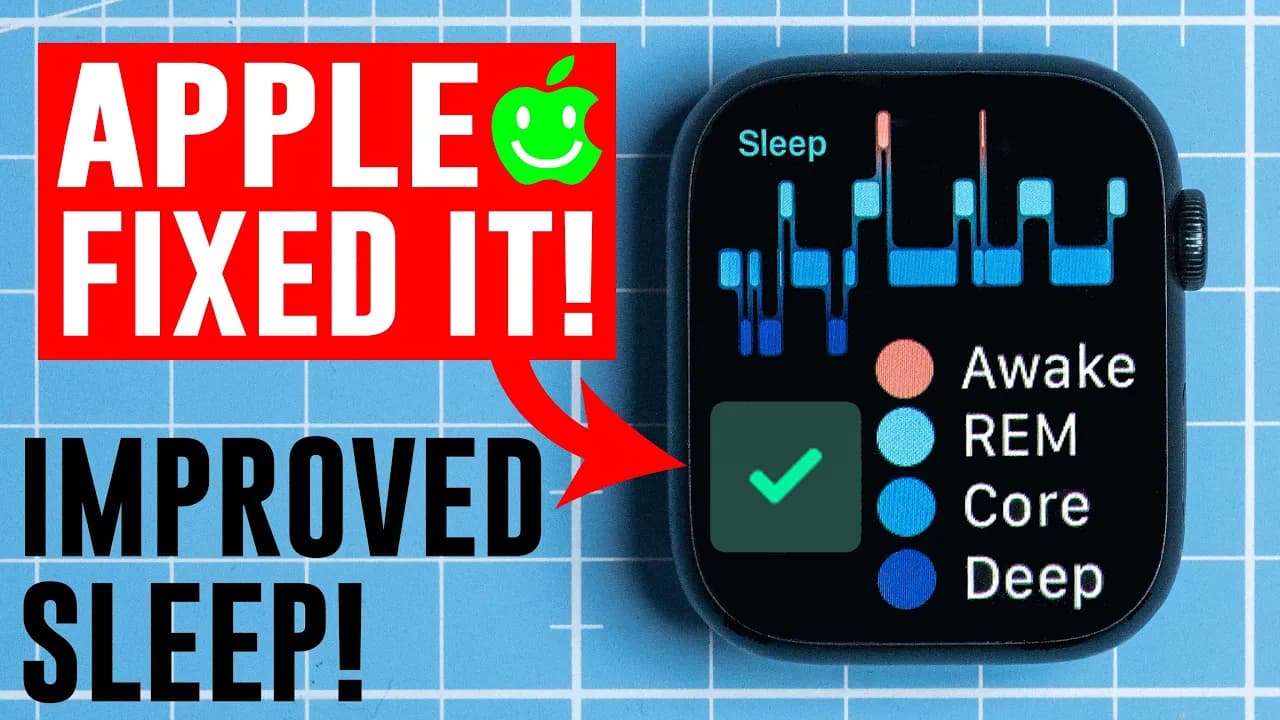
Switch from Oura Ring 2 to Oura Ring 3 slightly increased deep sleep, but life stress caused a decrease. Two major firmware updates: Sleep Staging 2.0 beta, with major changes at Sleep Stage Algorithm 2.0 release with Oura Ring 3. Deep sleep dropped from ~23% to ~17%. Oura Ring 4 release changed nothing in deep sleep. Hardware in mature products makes less difference; algorithms do.
Standard deviation (day-to-day deep sleep variation) dropped from ~6 to ~3 after 2.0 algorithm; no change with Oura Ring 3 or 4. Algorithm made the difference. There was an improvement in sleep stage tracking, but data lacking for visualization.
Whoop strap harder to evaluate as software changes came with hardware. From generation 3.0 to 4.0, sensors identical. Red line shows average agreement with reference (higher better). Increase at software/hardware improvement, likely more due to software.
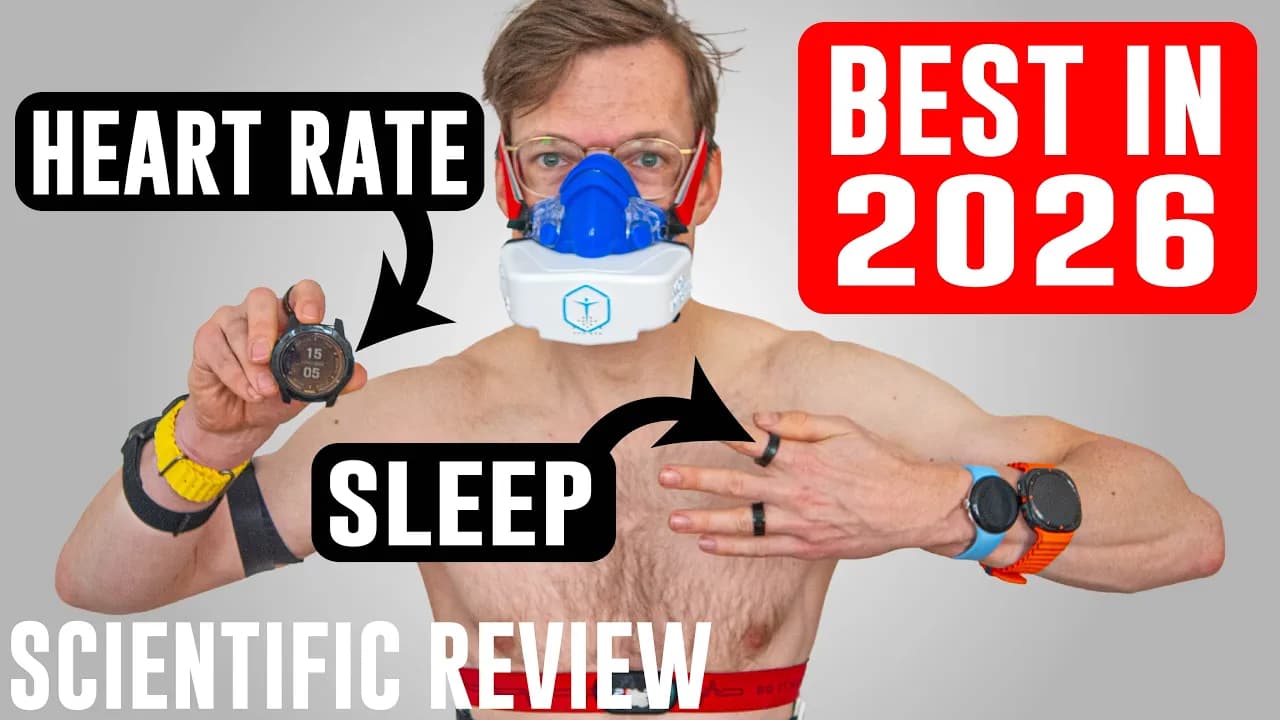
Sleep stages are second-order derived metrics: raw sensor data translated to heart rate, heart rate variability, movement, then to sleep stages (extra complexity). Heart rate is first-order derived metric: PPG sensor (green light) raw signals translated to heart rate (direct translation). Not all brands perform the same; huge differences in testing on his body.
Heart rate accuracy: brand is super important. Within brand, sensor updates cause small improvements or declines (usually improvements). Brand (sensor + algorithms) ~5x more important than sensor changes within brand. Many same algorithms used with new sensors.
Brands performing best on him: Pixel watches and Apple watches (top right, better performance). Not typical sports brands but outperform them, likely due to algorithms and AI expertise. Brands use calculations and AI to process noisy raw sensor data to heart rate. Google and Apple have AI experience, control over hardware/firmware, experience with other products.
Smaller/slower brands struggle more. Sports brands (Coros, Garmin, Suunto, Polar) do okay but lack AI expertise of Apple/Google. Limitations in testing; other brands may do well on others.
Running channel next to full-time scientist job is hard/expensive (pays editor Alex, bought cameras). Use affiliate links for Apple Watch, Amazfit, Garmin, Whoop strap, Oura Ring, Amazon for best discounts (except Amazon no discount). Supports channel/wallet. YouTube memberships for early video access.
Foundation models (like ChatGPT but for health tracking) enable third-order metrics (disease prediction, injury prediction, accurate recovery). Focus on disease prediction (heart/brain diseases). Recent study: single night sleep lab data predicts future diseases accurately via Sleep FM foundation model (see separate video).
AI for health invested by companies; some bubble but much valid. Job listings at Whoop, Oura, others seek AI specialists/foundation model experts for health/disease prediction using wearable data (e.g., heart disease, Alzheimer's odds in 10 years). Third-order: less direct, require more data/AI.
Some companies will get ahead, others behind. Issues: accuracy, availability, privacy, price, data security, rich-poor gap. For future video.
Garmin might stick to sports tracking, keep health basic. Share opinions in comments (keep civil). For new device (Garmin, Whoop strap, Oura Ring), improve sleep with Sleep Pod (favorite); use affiliate links. Check video on Sleep FM or ASleep pod (likely Sleep Pod).
Keep The Quantified Scientist in your library
Save the videos and channels worth coming back to, and find them again in one place.