First Month After Quitting My Big Tech Job as L8 Principal
In a Nutshell
Ex-L8 engineer quit Big Tech after nearly 20 years to build solo, prioritizing personal mission over higher expected earnings. First month showed extreme velocity—shipping multiple projects daily with zero overhead—plus rapid audience growth to 8k followers and 1k+ GitHub stars. Key lessons: clear personal mission prevents distraction, authenticity and craftsmanship drive traction, and autonomy requires intentional focus.
These notes were generated by AI and may contain inaccuracies.
About a month ago, the speaker quit their big tech career as an L8 engineer to become a solo builder. They worked at Meta, Microsoft, and Atlassian for almost two decades. The job was good, the people were great, and the compensation was strong, yet they still chose to leave. The video shares why this decision was made, how the trade-offs were evaluated, and how the first month has gone. The speaker wants to provide a real, transparent story for others considering a similar path.
The speaker had a great experience at big tech. They started at Microsoft as a junior developer, learned from talented engineers, gained significant autonomy as they advanced, and worked on large-scale problems. They grew from an entry-level engineer to L8 and do not regret the experience.
Over the last couple of years, several changes shifted their perspective. As they became more senior, their time was better leveraged by directing others rather than coding themselves. Helping a 500-person team avoid a wrong path was more impactful than individual coding, but they missed the hands-on process of building. AI created new opportunities for what one person or small team could build and changed how work gets done. Their son is now eight years old and more independent, giving both parents more breathing room and savings to consider new directions.
The speaker modeled four typical outcomes for people who leave to build independently:
- Nothing: building something no one wants
- Soft landing (also called acquihire): building something reasonable that demonstrates expertise, leading to acquisition of the team rather than the product
- Successful exit: building something with business traction that companies want to acquire
- Unicorn startup: achieving very high valuation
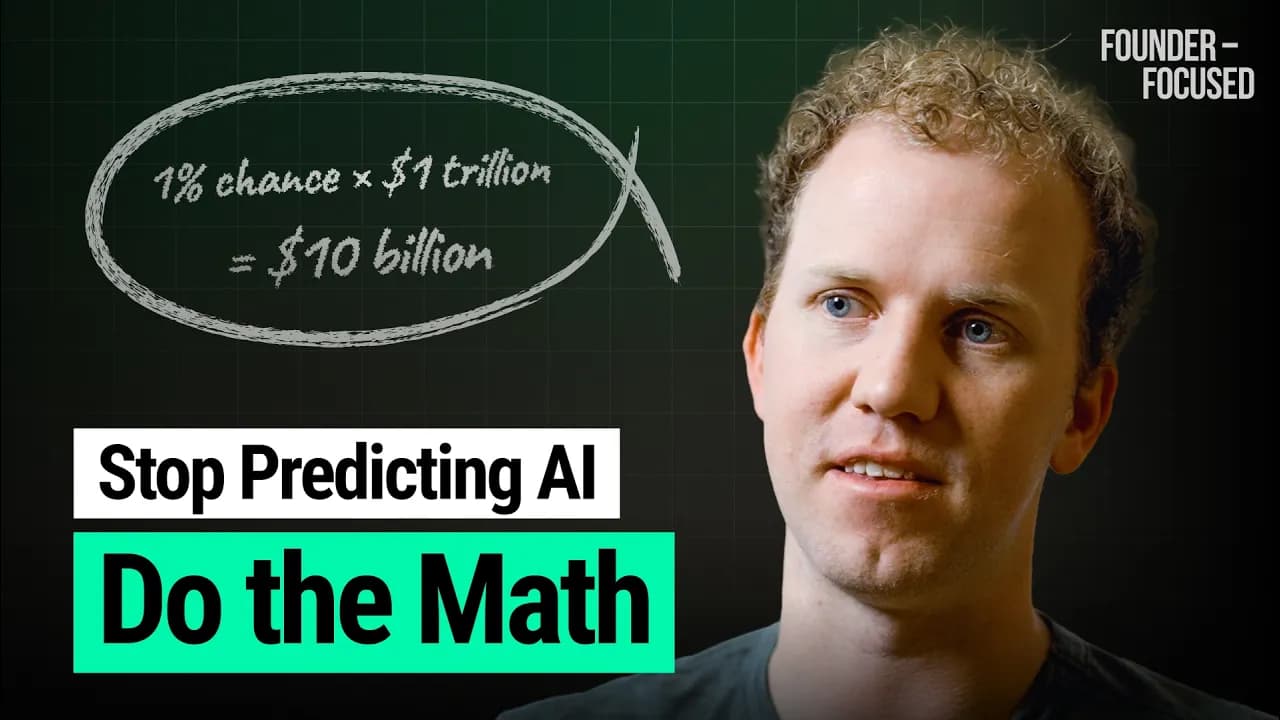
In a conservative probability distribution, most startups result in nothing, a reasonable portion achieve soft landings, fewer reach successful exits, and very few become unicorns. Even under optimistic assumptions, the expected financial return over three years remains significantly lower than staying in big tech. The speaker acknowledges the decision was not fully rational from a financial standpoint.
The speaker asked whether life decisions should be made purely with math. When looking back later in life, would they be satisfied having maximized bank account numbers without ever attempting to build what they wanted? The answer was no, so they acted on the decision and quit.
The first Monday after leaving, the speaker woke up, made coffee, sat at their desk, and realized there was nothing to do. Previously, opening a laptop meant responding to messages, prepping for meetings, and working through an infinite to-do list. Now there was only a blank canvas and complete freedom. They had to learn how to use that freedom.
The speaker began building ideas accumulated over the years, starting with an AI tutor for their eight-year-old son who is learning math, chess, and coding. An AI could provide more personalized learning than videos. Working solo with zero organizational overhead allowed extremely fast movement. New bottlenecks in the development workflow appeared that mainstream products did not solve, leading the speaker to build their own tools. These tools were shared as open-source projects, and the speaker unexpectedly became an open-source maintainer.
Since leaving the job, the speaker shipped: Good Night Have Fun, No Mistakes, Axi, Autopresso, Lavish Editor, and Simple Words, while also building the main AI tutor project. They were shipping 30 to over 100 well-tested and documented PRs per day. The quality and speed of thinking became the only bottleneck. Ideas often went from concept to live product used by others in about 15 minutes. The speaker plans a future video on their agentic engineering workflows.
Momentum built quickly. The speaker grew from almost no followers to over 8,000 on X by sharing their story and projects. Good Night Have Fun reached over 1,000 GitHub stars organically. They appeared on Steve's podcast for a three-hour conversation about software engineering changes; the episode has surpassed 20,000 views.
Three factors contributed to the early traction:
- Authenticity: The first viral thread was an AMA after quitting, offering to answer any questions. It received 200,000 views and over 300 questions. In an age of AI-generated content, sharing real human stories stands out.
- Craftsmanship: Good Night Have Fun was designed with personality rather than a generic name. The speaker chose the name and starry-night background because they mostly use the tool to run agents overnight, creating a feeling of zen while watching agents work. Users mentioned the pleasant experience as the initial draw.
- Connections: Earlier YouTube videos on career advice led to Steve noticing the work and later inviting the speaker on his podcast, which opened doors to other creators and builders.
Solo autonomy is unmatched. The speaker can pivot five times a week, discard ideas without losing credibility, and decide to work on non-business activities like a YouTube video without consequences. However, zero accountability creates the risk of scattering effort across too many directions.
The solution is having a clear personal mission, just as companies maintain focus by not pursuing unrelated businesses. After reflection, the speaker defined their mission as helping empower every individual to discover, pursue, and achieve their full potential. People often lack the education, support, or leverage needed. This mission statement now filters all ideas; anything that does not ladder up to it is not pursued.
The speaker is unsure where the next month will lead and views that uncertainty as the point of the journey. For others considering a similar move, they advise being honest about trade-offs, knowing what you are optimizing for, and ensuring you are running toward something rather than away from something. The experience so far has been incredibly fun, and more updates on solo building, AI workflows, and the process will be shared.
Keep Kun Chen in your library
Save the videos and channels worth coming back to, and find them again in one place.