Fitbit Air vs Amazfit Helio Strap (SCIENTIFIC Review)
In a Nutshell
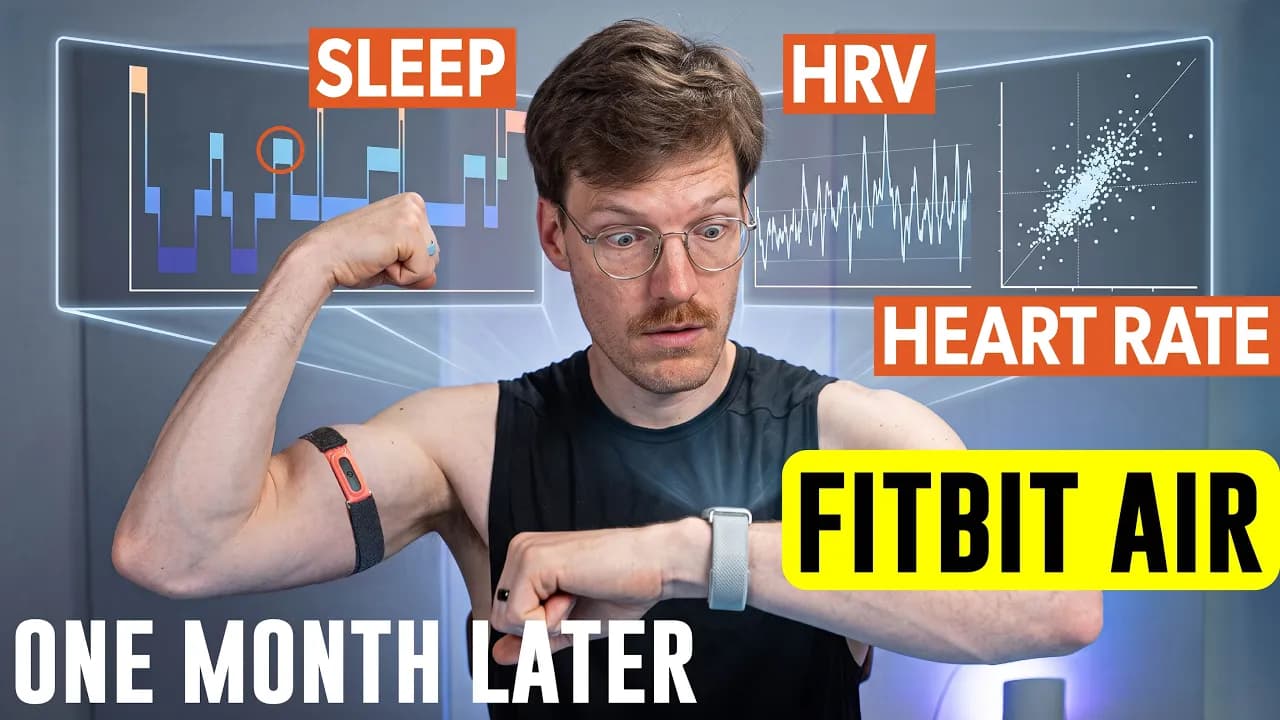
Fitbit Air and Amazfit Helio Strap both deliver top-tier heart rate tracking on the biceps (99.3-99.4 overall scores), outperforming 85-97% of tested devices across cycling, running, and weightlifting. Fitbit Air leads in sleep stage accuracy (78 vs. 70 score) with 75-82% agreement against EEG reference, while Helio Strap edges slightly ahead in heart rate during exercise but trails in REM/light sleep detection. The Fitbit app offers more customization, and the reviewer prefers Fitbit Air overall due to superior sleep tracking.
These notes were generated by AI and may contain inaccuracies.
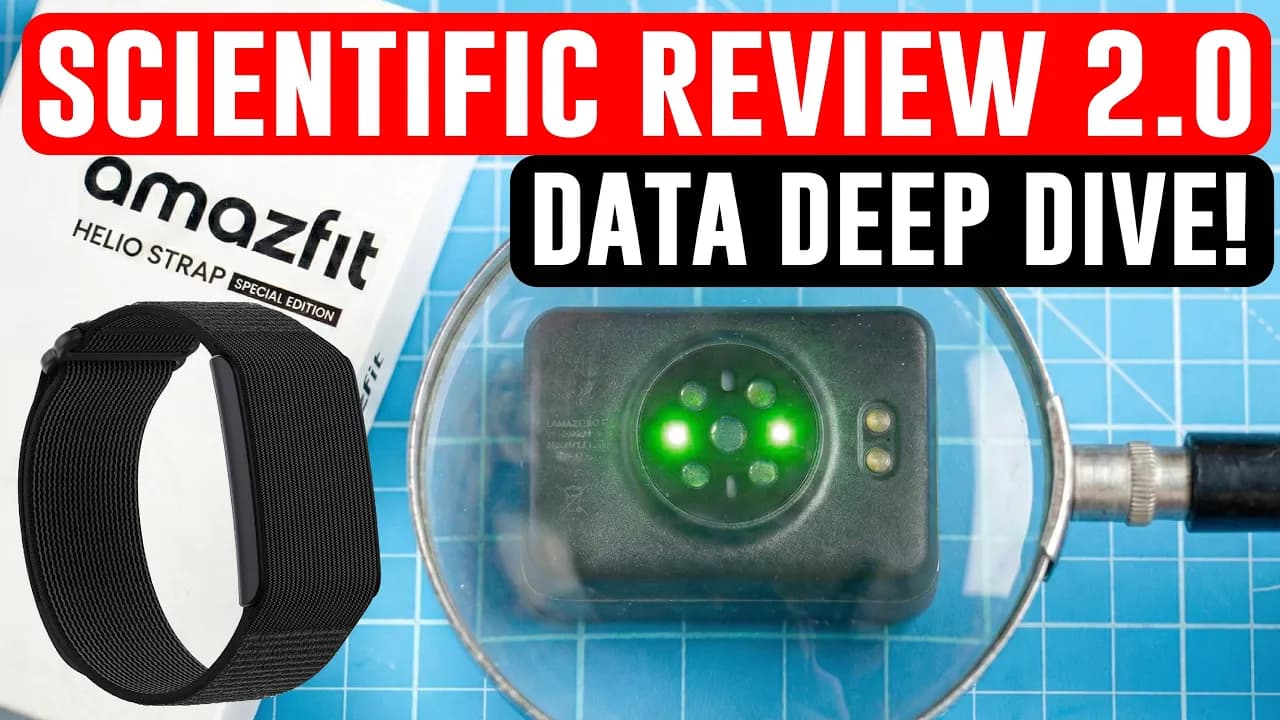
Both devices cost $99. The Fitbit Air and the Amazfit Helio Strap both offer strong performance, but each excels in different areas. The review focuses on data analysis to compare heart rate tracking and sleep stage tracking performance.
Indoor cycling is one of the easier exercises to track. The reviewer tested both devices on the biceps, the recommended wear position. The Fitbit Air on the biceps showed excellent performance with a correlation of 1.00 against the ECG reference. The Amazfit Helio Strap on the biceps performed slightly better, with points even closer to the reference line and a correlation also rounded to 1.00. Both devices achieved near-perfect overlap with the reference in individual sessions.
Running is more challenging due to increased movement. The Fitbit Air on the biceps achieved a correlation of 0.99. The Amazfit Helio Strap on the biceps performed slightly better with a correlation of 1.00 when rounded, though it showed minor deviation at higher heart rates. Both devices tracked individual runs accurately.
Outdoor cycling presents greater difficulty due to arm tension from steering and braking. The Fitbit Air on the biceps recorded a correlation of 0.98. The Amazfit Helio Strap on the biceps achieved 0.99, performing slightly better overall. Individual sessions showed minor deviations for both devices, with the Helio Strap having fewer small errors on average.
Weightlifting is the most challenging exercise for heart rate tracking. The Fitbit Air on the biceps achieved a correlation of 0.95 but missed some heart rate peaks. The Amazfit Helio Strap on the biceps achieved a correlation of 0.96, performing well at lower heart rates but missing several peaks. Despite the slightly lower correlation, the Fitbit Air captured more heart rate peaks in individual sessions.
The Fitbit Air on the biceps performed better than 85-95% of all devices tested. The Amazfit Helio Strap on the biceps performed better than 90-97% of devices. The Fitbit Air on the wrist showed lower correlations, particularly for biking and weightlifting, confirming the advantage of biceps placement. Overall heart rate tracking scores were 99.4 for the Amazfit Helio Strap on the biceps and 99.3 for the Fitbit Air on the biceps. Both devices achieved perfect heart rate tracking scores for cardio exercises.
The Fitbit Air on the biceps showed good agreement with the reference during nighttime heart rate tracking. The Amazfit Helio Strap data appeared to have API issues with a possible 2-hour time shift, making direct comparison unreliable. Average nightly heart rate correlation was acceptable for the Helio Strap, but the raw data export needs correction.
Sleep stage tracking was evaluated against the ZMAX EEG headband, which measures brain waves and serves as a silver standard reference. The Fitbit Air on the biceps achieved 82% agreement for deep sleep, 75% for light sleep, and 76% for REM sleep. The Amazfit Helio Strap on the biceps achieved 79% agreement for deep sleep, 65% for light sleep, and 67% for REM sleep.
On the night of June 25th, the Fitbit Air on the biceps showed strong deep sleep agreement with the reference, missing only a small segment. The Amazfit Helio Strap missed the second deep sleep segment and detected excess deep sleep near the end. For REM sleep, the Fitbit Air correctly detected all segments, while the Amazfit Helio Strap missed duration accuracy in several segments.
The Fitbit Air on the biceps and wrist performed similarly, along with the Pixel Watch, all using the same sleep stage tracking algorithm. Top sleep stage tracking devices include Google and Pixel devices, Apple devices, the Whoop Strap, the Oura Ring, and the Eight Sleep Pod. The Amazfit Helio Strap falls just outside the top performer area, showing improvement from previous firmware versions but still having minor deviations.
The Amazfit Helio Strap received a sleep tracking score of 70, rated as good. The Fitbit Air on the biceps received a score of 78, rated as great. The reviewer tested the Amazfit Helio Strap for only two nights, noting this limitation.
The Amazfit Helio Strap app provides a quick overview of sleep, recovery, and exertion on the opening screen. The Google Health app for the Fitbit Air offers more customization options, allowing users to add metrics like running distance, readiness, sleep score, and zone minutes to the home screen. The Fitbit Air app lacks detailed nightly heart rate and HRV patterns, showing only averages. The Amazfit app allows pinning resting heart rate and HRV to core metrics and provides nightly HRV graphs. Both apps have usability issues, with the Fitbit Air app occasionally crashing after workouts. Neither app matches the polish of the Whoop or Oura apps.
The reviewer slightly prefers the Fitbit Air over the Amazfit Helio Strap due to better sleep stage tracking performance. Both apps are usable but not perfect. The reviewer is interested in the upcoming Pro version of the Helio Strap but notes that sleep stage tracking improvements would require algorithm updates, not just hardware changes.
The speaker concludes the scientific comparison between the Fitbit Air and Amazfit Helio Strap with references to their month-long review of the Fitbit Air device and directs viewers to a separate video covering the HD Pod for additional information.
Keep The Quantified Scientist in your library
Save the videos and channels worth coming back to, and find them again in one place.