Horse Stories | 60 Minutes Full Episodes
In a Nutshell
Zenyatta, the undefeated thoroughbred, prepares for her 20th race and potential retirement, while Shergar’s unsolved 1983 kidnapping remains a mystery. Indian Relay racing revives ancient tribal traditions with high-risk, bareback relays among Native American teams. Polo champion Adolfo Cambiaso leads a cloning revolution, breeding dozens of genetic copies of his best horses to dominate the sport.
These notes were generated by AI and may contain inaccuracies.
Zenyatta, a six-year-old thoroughbred mare, has won all 19 races she has run. Next Saturday she aims for her 20th victory in the Breeders Cup Classic at Churchill Downs, potentially becoming the first great American athlete to retire undefeated since Rocky Marciano. She will be the oldest horse in the race and the only female competing against males. Zenyatta is adored by fans, and losing would be compared to Babe Ruth striking out in his final at-bat. Her life story is summarized as never having known how to lose.
Zenyatta is notably larger than most mares and unusually calm for a thoroughbred. She is affectionate with children and strangers, especially those bringing gifts. On the track, she transforms into a highly competitive athlete determined to outperform male horses. She is described as a Ferrari racing against Volvos. Her Hall of Fame jockey, Mike Smith, has stated that Zenyatta means more to him than all other championship horses he has ridden.
Zenyatta lives in Hollywood and is the biggest star in town. Before races, she poses, struts, and dances for cameras. During races, she starts from the back of the pack, appearing relaxed before suddenly accelerating. Track announcer Vic Stauffer has called all her races and recognized her as a future superstar early on. She always comes from behind, and her jockey believes she has never been pushed to full speed yet.
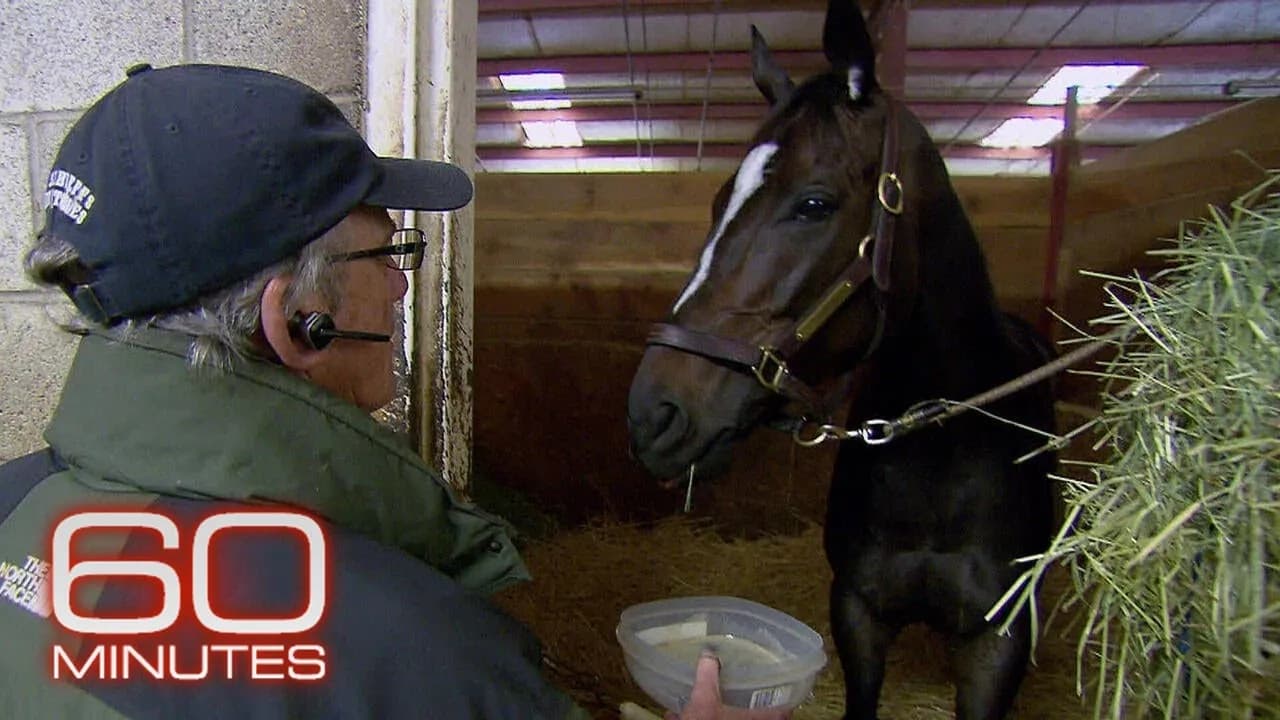
Zenyatta was purchased for only $60,000 at auction as a yearling due to a skin condition resembling ringworm. Trainer John Sheriffs has guided her career, earning over $6 million. She was considered too immature to race in the Kentucky Derby at age three. Sheriffs emphasized patience and a calm approach, believing horses sense tension. Zenyatta receives daily beauty treatments, leg bandaging, and has a lawn planted exclusively for her. She is handled by at least 14 people daily and has someone with her 24 hours a day.
Zenyatta trains five days a week at a controlled slow pace, which she dislikes. Once weekly, she is allowed to run freely. Her diet includes oats, hay, and aloe vera juice for stomach health. After good performances, she receives one Guinness beer, which she prefers over other brands. Sheriffs describes her as a prima donna when performing before crowds, becoming bright, alert, and focused.
Zenyatta has been profiled in W magazine and named by Oprah as one of 20 women rocking the world. Sheriffs communicates with her by expressing gratitude and praise. The Breeders Cup Classic offers a $3 million prize if she wins. She is considered potentially the greatest horse of all time by some. After the race, she will retire to green pastures and motherhood. No stallion is considered worthy of breeding with her. She retires while still in her prime.
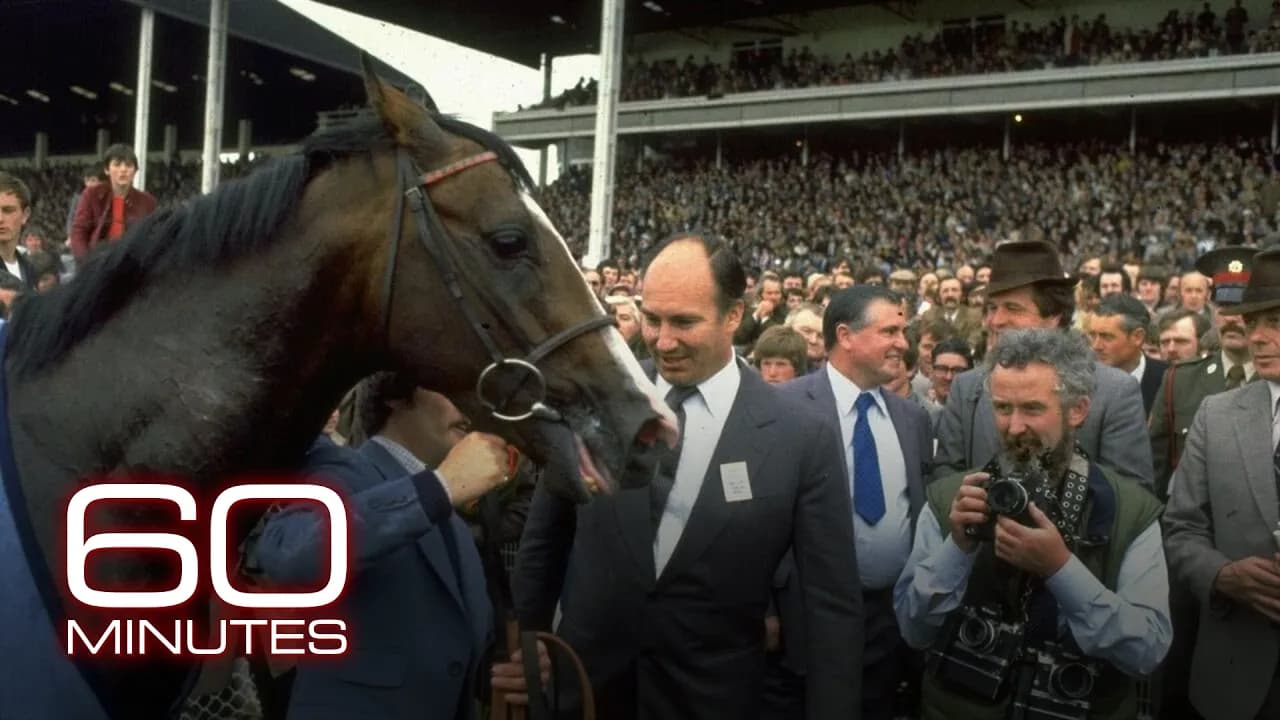
Shergar, Ireland's champion racehorse and 1981 Epsom Derby winner by 10 lengths, was kidnapped from Ballymany Stud Farm on February 8, 1983. Owned by the late Aga Khan, he had been syndicated for over $50 million in today's currency. Masked gunmen held head groom Jim Fitzgerald at gunpoint, forcing him to lead them to the horse before abducting Shergar. The kidnapping occurred during the Troubles in Northern Ireland.
The IRA was suspected of the kidnapping for ransom to fund weapons purchases. Ransom demands fluctuated from £40,000 to £2 million. Racing journalist Derek Thompson was contacted by kidnappers in Belfast and negotiated via phone for 12 hours before being told the horse had died. No arrests were made. Theories suggest Shergar was shot within days because the kidnappers could not handle a valuable stallion. Informant Shaun O'Callaghan's memoir named Kevin Mallon as the ringleader. The remote terrain of County Leitrim is believed to be where Shergar's remains may have been buried.
Indian Relay is a traditional sport among Horse Nations tribes including the Shoshone, Crow, Blackfoot, and Sioux. At the 2023 Championship of Champions, up to six bareback riders on thoroughbreds start simultaneously on a half-mile dirt track without saddles or protective gear. After each lap, riders must dismount at speed and leap onto fresh horses held by pit crews in a chaotic exchange zone. Teams include a setup person, a catcher, and a holder for the third horse. Injuries are common as riders and horses converge in the pit area simultaneously.
Almost every heat will have some of the guys getting run over, and it's going to be a collision. The comparison is made that the front line of the Kansas City Chiefs all combined in one would feel like getting run over by a 1,000-pound horse.
Injuries to both horses and humans are part of the sport. The team that best avoids collisions and wins the third lap on a third horse can be forgiven for showing off at the finish. Ken Realbird explains that the roots of modern Indian relay are in the horse stealing raids that tribes once staged against white settlers and each other.
"These young men of these different nations would travel when it was middle of the night. They would come and take the prize horse and hightail it back to their home country. They exchanged horses as they were running cuz they were being pursued."
Races in the organized sport were first conducted in the early 1900s. When they first started out, the majority of these races were happening within their own communities, native communities on the reservations.
Calvin Ghost Bear is a member of the Sioux Tribe and president of an organization called the Horse Nations Indian Relay Council. He explains that Horse Nations took races that were within tribal nations and brought them out into the mainstream and onto a bigger stage.
The summer Indian relay circuit crisscrosses the West and climaxes in Casper, Wyoming with a 3-day championship event that celebrates tribal culture in song, drum, and dance and offers more than $100,000 in prize money thanks to sponsorship from a casino owned by the northern Arapaho tribe.
The event includes a women's division with two laps and two horses rather than the three and three in men's races, though the athleticism and danger are every bit as evident. There is also a kids Indian relay with riders as young as six racing on ponies, climbing on and falling off.
On the Blackfeet Reservation in Montana, Irvin Carlson and his son Chaz have been competing in Indian relay for years. Chaz is one of the most seasoned riders on the summer circuit, and success in relay comes from practice, practice, practice, and years of experience.
Tuesday Washiki from the Shoshone tribe in Wyoming leads another team followed through the summer Indian relay circuit. Her younger sister Zia is the rider for their women's team. Both feel a close connection to their horses.
"If you're having a bad day and it's just not going your way, you can go out and you can catch your horse and ride them and things will just seem to be better."
Mason Redwing feels the same bond and obligation to care for his horses. He hails from the Crow Creek Sioux Reservation in South Dakota.
"When I was younger, I didn't know why I used to feel such anger and animosity towards my own people. I didn't want to be Native American and the horse helped me reconnect with my culture and be proud of who I am and proud of where I'm from."
Growing up on the reservation, he saw alcoholism, drug addiction, drug abuse, and suicide rates four or five times the national average. His own father succumbed to alcoholism.
"You said the horse saved your life." "Yep. Yes, sir. Essentially."
There is little glamour in Indian relay and lots of hard work. Every team is self-funded and nearly everyone has a day job to help pay the bills, but the sport is on the rise. Prize money is increasing and 67 teams competed in the 2023 championships. The quality of horses is rising too, with teams going to major racetracks like Churchill Downs to buy sprinters well suited to Indian relay.
Each team competed in one heat each day of the championships. Their cumulative time from the first two days determined whether they made the final championship heat on Sunday.
"Is the race usually won or lost in the exchange?" "Yeah. It's like a relay team in track and field."
In Indian relay, exchanges involve six riders, 18 horses, 18 other humans, and a cloud of dust.
Tuesday Washiki's women's team made the championship heat in Casper, and her sister Zia had a clean exchange in that race. They finished a close second.
The first place women's relay team came from the Colville Reservation in Washington State with rider Talia Timua, who won her first championship in Walla Walla when she was 13 and is now 17.
"Are you going to do it again next year?" "Yeah. We're going to do it as long as I can. I love this game."
"It is how we connect to the warriors of the past, the warriors of 200 years ago. It's that same bloodline of that warrior that is coursing through their blood."
Over three days of heats, Mason Redwing and his team went from frustration when an exchange went wrong to exaltation as another went right. They didn't find the perfect run in the finals.
The team that did win the championship was Irvin Carlson and his son Chaz from the Blackfeet Reservation. They received a check for $20,000, and a tribal elder sang a traditional praise song in honor of their victory.
Some of the most cutting-edge biotechnology is now part of the elite game of polo. On a trip to Argentina last December, several champion horses on the field at a big polo match were discovered to be clones.
It's a big day in Buenos Aires for the final match in this year's World Cup/Super Bowl of Polo called the Argentine Open. In polo, the horses called ponies are just as important as their riders. The two teams are La Dolfina in white and Ellerstina in black. Each team has four players who ride as many as a dozen horses during matches. All of the players have reached the highest ranking in the sport, a 10-goal handicap.
The player generating the most interest is Adolfo Cambiaso wearing a blue and white helmet. He's led his team to victory for the last 5 years. At 42, he's considered the Tom Brady of polo.
"I love the sport that I do. I love polo. I love horses. And so I try to be the best."
He has been number one in the world for 22 years.
At age 25, Adolfo decided to create his own polo team called La Dolfina and a breeding business from scratch. Today, he has nearly a thousand horses that are fed a special diet of plants and grasses grown on his massive farms. He built a swimming pool for the horses where they do laps and stretch out their sore muscles.
His most prized horse for a long time was named Aiken Cura. At the Argentine Open 12 years ago, Aiken Cura's leg was broken and Adolfo was devastated. Before they put the horse down, Adolfo made a fateful decision and asked his veterinarian to save some of the horse's skin cells, thinking that one day he could bring Aiken Cura back to life through cloning.
"I was really sad and I say cloning should work." "How did that come into your head?" "I don't know. I decided to keep some cells from him just in case years later cloning is normal."
Biologist Adrian Mutto, one of the first scientists to clone in Argentina, showed the cloning process. He starts with an egg extracted minutes earlier from a mare, eliminates all DNA from the egg with a needle, then replaces it with the DNA of the horse they want to clone. The new embryos are then incubated for one week. No sperm has been involved.
The incubated egg is implanted in a surrogate mare who gives birth to the clone.
Cloning represented a business opportunity to Texas oil heir and polo enthusiast Alan Meeker. He had long dreamt of building a fleet of champion horses and now had a way to do it.
"I did some short math and I realized it would take 50 years and about $100 million to do what I wanted to do. And I thought, well, why don't I just clone a bunch of horses, really, really good horses."
In 2009, Meeker founded a horse cloning business and a year later licensed the technology that was used to clone Dolly the sheep.
Meeker knew people who knew Adolfo and approached him about cloning. Adolfo said yes immediately.
"I want to tell him that I have cells from a horse that I really love that I would love to clone."
It took a while to get it right. One attempt failed, but after 2 years, Adolfo got his wish with the birth of a clone of his beloved Aiken Cura who grew into a magnificent healthy horse almost exactly like the original in strength, athletic ability, and temperament.
At the same time, Adolfo decided to clone another horse, his biggest star, a mare called Quartetera. Now 17 years old, the original has been playing polo since she was four, a year younger than most polo ponies simply because she took to the game so quickly.
"I think she's born to play. You know, there are those horses in life like soccer players like Messi."
He took them to the barn where she lives with eight of her clones.
In seven years, Adolfo and his partners have created more than a dozen clones of Quartetera. Dr. Mutto was hired as the lead scientist in Adolfo's cloning business. They now have 14 clones just from Quartetera, with plans for 10 more next year and 10 more in 2019. In all, they have produced more than 100 clones from several of their best horses.
In each case, the clones are strikingly similar to the originals in disposition, athletic ability, and appearance, but not exactly the same. For example, the Quartetera clones all have white markings, but with different shapes and in different places. Some on the face, some on the ankle. All the Quarteteras seem to have inherited the original's calm, self-contained personality.
"Do the clones have any special health issues?"
Scientists at the National Institute of Health were consulted and stated there was no evidence that cloned animals suffered disproportionate health problems, though they have a slightly higher infant mortality rate. At first, many of Adolfo's cloned embryos died during gestation, but they refined their technique and now have an 85% successful birth rate and have not experienced any health problems.
At the final at the Argentine Open, Adolfo gambled that his Quartetera clones would be as good as the original. For the first time, he rode them almost exclusively.
Regulators of thoroughbred horse racing worldwide have taken a firm stand against cloning, but there is no such prohibition in polo. Cloning is spreading to teams beyond Adolfo Cambiaso, raising questions about whether cloning gives a team an unfair advantage, if it is ethical, and where it will lead.
Out of more than 850 professional polo players, Adolfo Cambiaso is the best player in the world. He's held that ranking for 22 years and is now leading a cloning revolution. He's cloning his best horses, the ones he's riding as clones, competing on them and winning.
"At this stage of my career, the last couple of years for me to play and prove that the clone works and play with Quarteteras and everything is an extra motivation for myself for sure."
He's created 14 clones of his very best horse, a 17-year-old mare who is fast, easy to direct, and can turn on a dime. She was honored last year as the best polo horse in history. Her clones seem to be just as gifted.
Quartetera's clones are identified by numbers rather than names. They can now create 100 clones a year and are using them in Adolfo's already successful breeding business. They mate the clones with champion horses and sell their foals for up to $250,000, but they never sell the clones.
"You sell the clone, you sell the blood, you sell the line, you sell the DNA, you sell everything. If you sell the clone, we keep the key of the genetics."
The idea of never selling the clones came from Ernesto Gutierrez, a shrewd Argentine businessman who became a third partner in the cloning venture. The cloning operation was set up on his 500-acre property outside Buenos Aires that includes three polo fields and a nursery where the clones are born. They are carried by surrogate mares who treat them like their own.
Not everyone in polo thinks cloning is a good idea, including Adolfo Cambiaso's main rival Facundo Pieres, who is number two in the world. He showed what he can do, like dribble a 3-inch ball in the air while galloping down the field at 20 miles an hour. He's the captain of Ellerstina, an old-school team made up of three brothers and a cousin.
"There's a lot of guys cloning, but I think that they have to be careful, you know, because the thing is that they're opening too much, you know. I mean, the door is boxed. They open the lid and all the problems come out."
Ellerstina is headquartered at another sprawling estate where they operate a multi-million dollar breeding business selling foals and embryos. They believe they can produce better horses through their breeding practices by mixing the DNA of two different horses rather than by replicating just one.
"In polo, what's more important, the horse or the player? I was told that it's 80% the horse." "Yes, I agree."
Ellerstina has made it to the finals the last four years but lost each time to Adolfo Cambiaso's team. Fueling the rivalry on the field is a bitter history between them. Adolfo played on the Ellerstina team for 9 years before leaving. Before he left Ellerstina, Adolfo bought Quartetera as an embryo from the Pieres family - the very horse he is now cloning to compete against them.
"There are people who object to cloning on religious grounds or on moral grounds. So what is the answer when people challenge you? When they say man should not be doing this because of these difficult spiritual questions." "I don't see it wrong to be honest. I'm just doing something to improve my game, my sport. And I think the Quarteteras, it did improve my game, my sport, and I'm not going farther than that."
"But is there an unfair advantage in terms of the game, in terms of the sport?" "No, because everybody's able to clone now. Everybody's kind of trying to start cloning. So the advantage is that I did it seven years ago. So in 30 years, people will still be riding Quartetera. Yes. So it could go on forever."
Alan Meeker, the Texas businessman who's Adolfo's cloning partner, is well aware of the controversy around cloning technology in the US and the ban against it in thoroughbred horse racing.
"Is a really good polo player. Does he have an unfair advantage if he's on a clone of one of the best polo horses ever?" "Of course. Horses are 80% of the game anyway. So, if Facundo Pieres finds a horse that is better than Quartetera, then he has an advantage over his competitor. But he'll have only one and that horse will get tired and they'll have to switch to another horse in the game. Whereas Adolfo will have eight, right? So it's still an advantage, right? Is that fair?" "Under the rules, it's fair. There's no restriction on sportsmanship, just the nature of the game."
"Has this changed the very essence of the game of polo?" "No. I think what it's done is it's probably raised the bar." "You're going to have to clone." "Could be. Yes."
"Do you have any moral problems with cloning a human being?" "Yes, I disagree with it. I know a good reason, lots of good reasons to clone body parts like hearts and lungs and pancreases if it could be done in a productive manner that can save lives. But I've been asked by some of the wealthiest people on planet Earth to clone a human being. And they have absolutely and the answer is always a resounding no." "Well, they must have a reason and they won't give it to me. They don't tell you why. No."
"I'm thinking if science can do it, science will do it. And maybe one day, you know, there'll be clones and we'll laugh at all the people who are questioning the morality of it. Now, someday someone will do it. Yes. And we will either laugh or we will cry. But I'm not going to be the one to take that leap. It could be done today. Yes. I assume there'd be a big difference between a horse and a human. Lots of"
Surprisingly little difference exists between horses and humans genetically despite the obvious physical distinctions.
At the final match of the Argentine Open, the DOS team and the clones were expected to win. However, seven minutes into the game, Fakundo's team was ahead three goals to one. The Dolphos team fought back, and at halftime the score was the Cloner seven to the Breeders' six. The tension was so high that at times the match was as quiet as a tennis match. The end of the game proved thrilling as Adulo's team led 13-10 as expected.
Fakundo's team made a final push to tie the match. When asked about his mindset, he stated: "I never think I'm going to lose." In the moments before overtime, Fakundo was contemplating which horse would be best for the situation, debating between Quartet 9 or 5 before ultimately selecting number 6.
In the first minute of sudden death overtime, Fakundo's team lost control of the ball. Adalfo's team recovered possession, and Adalfo on his mighty Quartetera 6 outran everyone and struck the ball, setting up the winning shot.
Observers were left wondering whether it was the clones or the world's best player that made the decisive difference in the match outcome.
Keep 60 Minutes in your library
Save the videos and channels worth coming back to, and find them again in one place.