How A Prototype Built During A Missed Flight Became A New Gusto Product
In a Nutshell
Eddie Kim built a prototype of Gusto Co-founder during a five-hour airport layover using Claude Code, turning the experience of running a personal AI agent via Telegram into a product that automates small business workflows. The system uses a heartbeat cron model with LLM prompts to handle recurring tasks like payroll and time-off approvals, plus external automations such as weather-triggered customer emails, all accessible via SMS without logging into Gusto. A five-person team of AI builders shipped the product in ten weeks by eliminating traditional processes like specs, Figma, and meetings, relying instead on continuous Zoom collaboration and rapid code iteration.
These notes were generated by AI and may contain inaccuracies.
Eddie Kim is Gusto's co-founder and head of technology. Gusto participated in YC's winter 2012 batch, recently crossed a billion dollars in annual revenue, and serves over 500,000 small businesses in the US. One in five new businesses started today are Gusto customers.
Gusto Co-founder is a new product that uses AI to automate running a small business. It is designed for small businesses and automates most of the business processes that a small business has. Many of the processes are already handled on Gusto, but Gusto Co-founder can take those things and automate them fully. Examples include running payroll from start to finish, approving time off, reminding employees to submit time sheets, and handling tasks outside of Gusto such as texting a business owner if it is going to rain and then emailing customers to bring umbrellas for a tour guide business.
Small businesses are generally less technically sophisticated than typical YC or technology company customers. Most small businesses still use AI as a glorified search engine: they ask a question and receive a reply. More advanced users may have AI perform research, generate reports, summarize writing, or author content, but the interaction remains largely prompt-and-response. The promised agentic capabilities have not materialized for the vast majority of users. Only a small percentage of technically sophisticated people are creatively building automations across their lives, while 99.9% continue using AI as a search tool.
Gusto Co-founder was created to deliver the agentic promises of AI to small business owners. Instead of starting with an open-ended experience that presents a blank canvas problem, the product begins with the processes Gusto already solves for customers in payroll, HR, time, and scheduling. It suggests ways to fully automate recurring tasks such as running payroll and approving time sheets so users do not need to log into Gusto to complete the process.
The original idea came from Eddie setting up his own OpenClaw. He spent eight hours installing it on a Mac Mini, air-gapped the setup for security, and created a secure environment that only an engineer could realistically build. After setup, he found himself primarily using it as a glorified search engine. One notable feature was the ability to interact via Telegram, which provided a significantly better experience than opening a browser and logging into Claude or ChatGPT.
People underestimate chat as an interface. The natural inclination when building AI tools is to add more functionality or improve the client UI, but the better approach is to make the agent smarter so users can accomplish tasks from Telegram or similar channels without needing a fancy UI. Another key learning is the gap between reading about tools like OpenClaw and actually setting them up. Technical leaders should code and get hands-on experience rather than only consuming information about new technologies.
Eddie went on vacation to Madrid. On the return trip, he missed his connecting flight from London to San Francisco and had five hours of uninterrupted time in the airport lounge. Using Claude Code, he built a prototype of the product during that sitting. The core idea was to give customers the same power he experienced: instead of waiting for Gusto's roadmap, customers could describe what they wanted in a prompt and have Gusto build the experience for them.
After returning, Eddie shared the prototype with engineers, designers, and leadership. Over the following weeks, the idea was refined through conversations. Pieces that worked well were kept, while others were adjusted, ultimately leading to the development of Gusto Co-founder.
The initial prototype was a chat prompt where customers could request experiences such as sending forms to employees, building a to-do tracking application, or creating a CRM. The prototype would generate a web app using Gusto's design system so it looked like Gusto had built it. The app could then be added directly to Gusto. The prototype functioned as a CRUD web app builder that wrote code, saved it to a database column, and executed the code when the page was visited. It could store data brought in by the user but did not leverage existing Gusto account data.
The prototype did not leverage Gusto's existing customer data or context. The concept evolved from building arbitrary web apps to building workflows that automate business processes customers perform every week. Gusto has substantial aggregate data across all customers and individual data on what each customer does on the platform, including industry-specific patterns such as typical automations for a dental practice. The product now centers on automations that run on a regular heartbeat and can be triggered without the user logging in.
OpenClaw's architecture is a cron job that runs an LLM every 30 minutes. Gusto Co-founder uses a similar heartbeat approach. The product was also influenced by interaction methods such as texting via SMS or communicating through Slack. However, the team recognized limitations with a pure heartbeat model, particularly for deterministic processes like payroll. They improved the system by adding multiple trigger methods, including the ability to schedule jobs via regular cron expressions, and the system detects whether a task is better suited to cron scheduling or periodic LLM prompts.
Gusto's customers already perform recurring tasks such as running payroll and approving time off that they know waste significant time. One example is a massage spa business that exports data from MindBody into Google Sheets, performs calculations for commissions, tips, and hours, and only then imports the data into Gusto. When presented with Gusto Co-founder, customers immediately understand the value because these weekly calendar tasks can be fully automated, with the owner receiving a text summary and providing final approval via SMS or Slack.
Small business owners are entrepreneurial and scrappy. They want to do more with less and appreciate tools that save time so they can focus on growing their business. Unlike enterprise sales, there is no resistance from employees concerned about job impact; the value is viewed as entirely positive.
Successful use of the product is expected to free small business owners to spend time on growth activities such as expanding into new products and thinking about strategy. The name "Co-founder" reflects the ambition to go beyond business process automation. The product should proactively notify customers about tasks they should be doing, including compliance updates and identifying eligible tax credits such as the R&D tax credit. One real example involved Cabana Pools, where the system identified $50,000 in R&D tax credits the business was eligible for but unaware of.
One observed automation has the system review competitors weekly, generate a report, and provide suggestions for staying ahead. The product could extend to vertical-specific guidance, such as advising eBay sellers on optimal actions. The goal is to function as a proactive business partner.
The product was recently launched with 500 customers added. Prior to launch, a small business council of approximately 20 customers received early access and provided feedback. Feedback has been very positive, particularly around the ability to run Gusto processes entirely through text message after a simple phone number connection and eight-digit code setup. Customers appreciate being able to manage payroll or contractor payments from anywhere via SMS.
Many automations created by customers extend beyond Gusto's core functions. A tour business, for example, set up daily weather checks that trigger customer emails with umbrella reminders when rain is forecast. These automations have no direct connection to Gusto's existing payroll or HR services.
Planned additions include more communication channels such as Telegram and WhatsApp, which are popular with many businesses and address SMS character count limitations. Additional connectors are also planned beyond the current QuickBooks, Notion, and Google Workspace integrations. Vertical-specific connectors, such as Curve Dental for dental practices, are under consideration. The team intends to observe customer usage patterns and let customers guide roadmap evolution rather than prescribing usage in advance.
Gusto plans to open the next version of Gusto Co-founder to people who do not currently have a company. Currently, users must be a payroll administrator for an existing company on Gusto to access the tool. The underlying data models were built to support broader access, meaning users could work with Gusto Co-founder even without an EIN yet. This enables people thinking about starting a business or running a side hustle to use the tool to automate and grow their business. As the business scales, Gusto Co-founder can handle tasks like obtaining an EIN or registering as an employer in California, leveraging Gusto's existing capabilities.
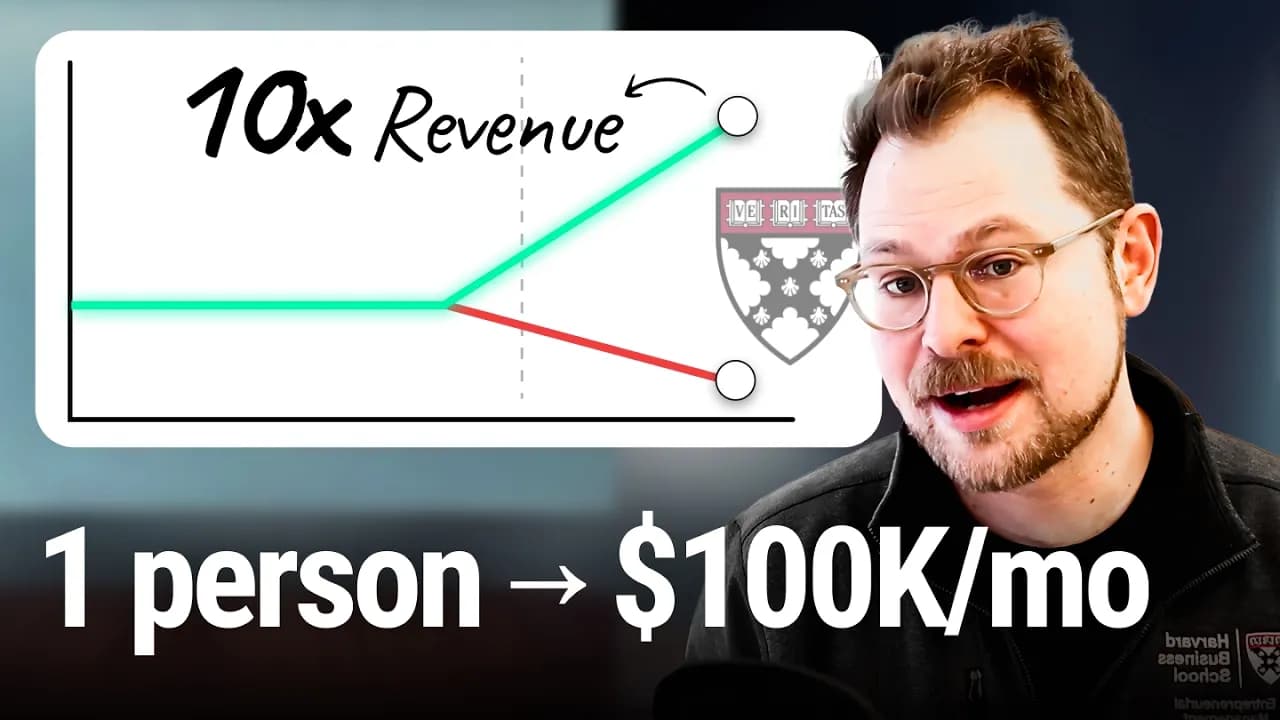
The development process for Gusto Co-founder felt notably different due to AI capabilities. The founder was able to build an initial prototype personally rather than needing to rally a team around the idea. The prototype began with a whiteboarding session and organically involved engineers and designers. The final product was built by a team of five AI builders—four engineers and one designer—over ten weeks from start to finish, culminating in a full tier-one company launch.
This outcome would not have been possible without AI. The founder, who had not coded in many years, was one of the five builders. The designer contributed as much code as any of the engineers, demonstrating how AI tools enabled non-engineers to write production-grade code. Engineers prototyped designs without concern for perfect execution or initial Figma use, and the designer refined those prototypes using AI tools. Conversely, the designer could implement desired functionality through code, which engineers then completed. This created a merging of roles where designers moved deeper into engineering and engineers engaged more with design. The shared responsibility across the team was writing and committing code.
The team achieved unprecedented speed by removing traditional development structures. They eliminated meetings, text specs, Figma designs, documentation, Jira boards, sprint planning, and retrospectives. The only structural element was a single permanent Zoom meeting that ran continuously, allowing team members to hop in and out as needed, along with extensive use of AI coding tools.
The absence of formal documentation was offset by richer implicit documentation through AI-generated transcripts paired with code, which captured thoughts and direction. The team discarded substantial amounts of code during development. Ideas were implemented directly as pull requests rather than being discussed or documented first. Team members would present working code in the Zoom for feedback, and a significant percentage of implementations were deleted when the group determined they were not the right direction. This approach proved faster than traditional processes involving PRDs, Figma designs, and approval workflows.
The low cost of writing code creates both opportunities and challenges. While it is easy to generate multiple implementations, maintaining product discipline becomes more important than before. The team found that building multiple permutations of a feature in code and then discussing the actual implementations led to better decisions than upfront meetings, documentation, and user research conducted without working code. Implementation itself provides critical information that cannot be fully captured through product requirements or user experience research alone.
High-bandwidth conversations with customers and direct observation of users interacting with a product remain essential, as current AI capabilities do not fully replace human judgment in these areas.
The trend toward easier small business creation has been ongoing for fifteen years, with Gusto contributing by simplifying back-office functions like payroll. AI represents a step-function improvement, automating processes that previously remained manual even after other simplifications—compliance work, benefits setup, and navigating HR regulations. This allows business owners to focus on building products, acquiring customers, and growing their businesses.
Census data shows increasing business applications, indicating more people view entrepreneurship as a viable path. The abundance of goods and services created by easier business formation also benefits consumers. The diversity of small businesses contributes to vibrant, interesting communities.
Keep Y Combinator in your library
Save the videos and channels worth coming back to, and find them again in one place.