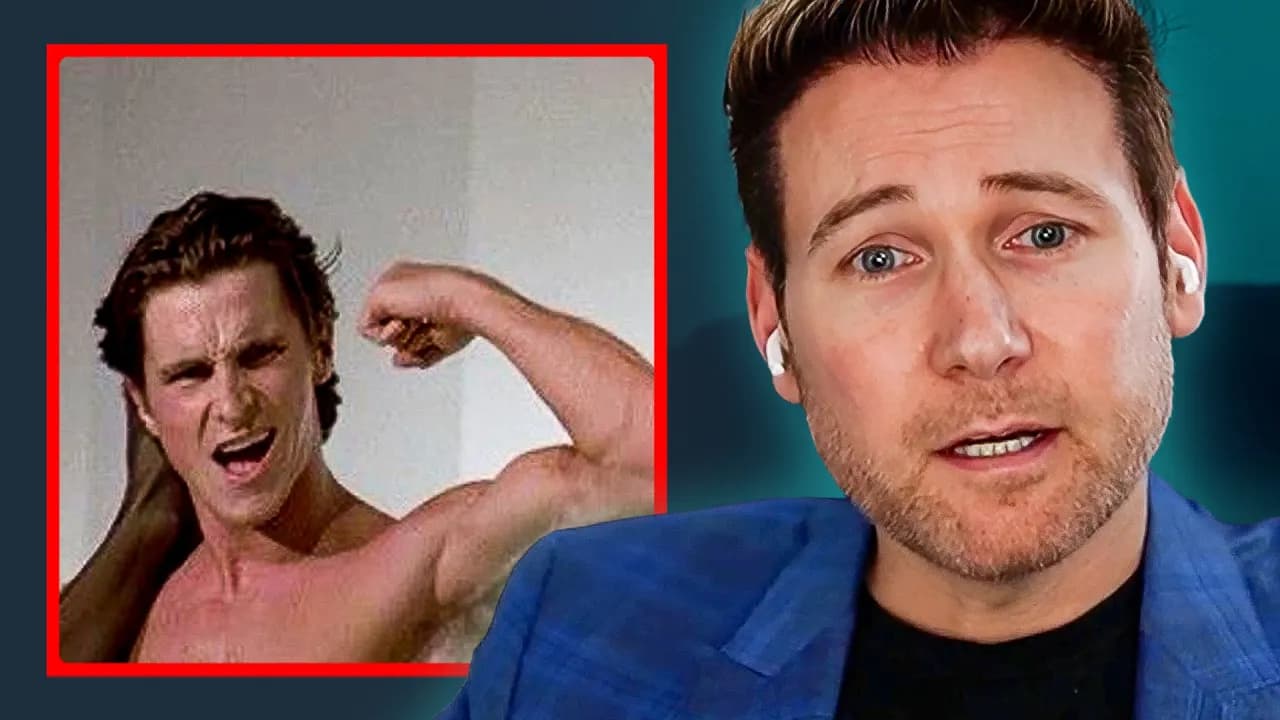
How Narcissists Hijack Your Brain - Dr Peter Salerno
In a Nutshell
Dr. Peter Salerno explains Cluster B personality disorders (narcissism, BPD, etc.) as genetically rooted antagonistic traits causing manipulation, grandiosity, hostility, and exploitation, persisting evolutionarily for short-term gains but hijacking victims' brains via deception detection disruption, idealization-devaluation cycles, and lovebombing. Victims lose reality confidence from traumatic cognitive dissonance, but resilience—not codependency—enables prolonged entanglement; recovery requires skeptical pattern investigation over forgiveness. No effective treatments exist due to egotonic nature and therapy resistance; avoid engagement, as 15-20% of people exceed disordered thresholds with minimal sex differences.
These notes were generated by AI and may contain inaccuracies.
Dr. Peter Salerno is a licensed psychotherapist with a doctorate in psychology. His work focuses on extensive research on the ideology or cause of personality disorders, specializing in assessing and understanding them. He helps people restore their reality confidence following toxic relationships involving personality disorders, which often include toxicity, conflict, strife, and abuse. In these relationships, the victim of someone intentionally manipulative, deceptive, and controlling loses their sense of what's true and real. He resolves traumatic cognitive dissonance, which occurs when the brain is forced to hold two contradictory realities simultaneously because someone convinces you two things can be true when they can't. Through consulting, he helps people regain understanding of what's real, what happened, and what they were convinced happened for someone else's convenience.
People intimately close to these individuals have their reality warped, making it difficult to reenter normal reality without the old version creeping back. The manipulative person makes deception and evidence invisible, covertly gaining advantage for selfish, exploitative reasons. Even after the relationship ends, victims might perceive it inaccurately years or decades later due to distorted reality.
Cluster B personality disorders are most associated with interpersonal conflict, abuse, and harm. They share overlapping features, so individuals often exhibit traits from multiple disorders, making pinpointing difficult. Pathological traits common in Cluster B cause the most interpersonal trouble.
A main umbrella term is antagonism, a personality trait where people intentionally put themselves at odds with others or create conflict between others to escalate problems rather than solve them. Example: triangulation—one person tells another something about a third to create a rift, then denies it, leading to rifts based on fabrications or lies without direct communication, benefiting the antagonist.
Under antagonism: grandiosity (seen in narcissism)—entitlement, arrogance, inability to see others as equals. Narcissists maintain hierarchy by antagonizing people to keep them beneath them; no equality exists. Also hostility: contempt, spite, resentment, envy, jealousy toward others, not collaborating to improve relationships. Can appear kind while covertly sabotaging due to hostility. Other features: deceit, manipulation, failure to fulfill obligations. Consistent chronic behaviors indicate an antagonistic person.
Personality disorders involve traits like antagonism that are pervasive, not context-specific (e.g., only with mother). Look for patterns interfering with the individual's and others' lives.
Most explanations attribute personality disorders or narcissism to childhood adversity or abuse ("hurt people hurt people"), but new research in the last 20 years shows traits are intrinsically built, related to DNA and biology across the lifespan, regardless of early life events. No nature vs. nurture debate—always both—but professionals underappreciate genetic contributions. Evidence shows severe narcissism or personality disorders can develop without adversity or trauma.
Kathleen Paige Harden's books The Genetic Lottery and Original Sin discuss how genes influence maladaptive antisocial behavior (robbing, stealing, lying, abuse).
Environment alone rarely creates Cluster B; needs biological/genetic underpinnings as "startup material." Possible to meet narcissistic personality disorder criteria from experience, but requires raw materials. Twin studies (identical twins raised apart, sharing 100% DNA but different environments) show psychological traits have ~50% average heritability across 50+ years of research on millions of twins and ~20,000 traits. Pathological personality traits exceed 50%.
Cluster B traits persist in the gene pool, implying adaptive benefits. Why mechanisms exist: individual differences (heritability) vs. why in population (random variation in DNA; traits reemerge like cooperation would). Serve purposes for immediate reward, gratification, or quick impulsive decisions. Not good/evil; useful in smaller doses. Extreme levels become harmful (e.g., pathological agreeableness is too much; need some disagreeableness).
Multiple systems involved: hormonal/endocrine, nervous system, brain networks. No single "narcissistic brain," but brain imaging shows structural/functional differences in lack of empathy, pre/post therapy (e.g., cognitive restructuring, mentalization-based treatment changes child brains). Not deterministic—probabilistic; intervention possible in most cases, though some have little hope for change.
Proactive aggression linked to less activation in fear learning/consequences. Some brains don't register fear from mistakes, no arousal/hypervigilance, no motivation to stop. Behavior feels rewarding or neutral, encouraging continuation (antisocial acts produce reward). Parents/teachers ratchet up punishment, but those blind to punishment learn via reinforcement/praise, not punishment—like pushing vitamin B into a methylation deficiency.
Narcissists persist with behaviors until they find something effective, like a heat-seeking missile for results, ignoring social mores and discomfort to others. Unlike people with l'esprit de l'escalier (staircase wit), who reflect and regret, narcissists do not self-reflect on their behavior.
Severe to extreme personality disorders lack capacity and interest in:
- Collaboration
- Problem-solving
- Self-reflection
- Self-correction
Stop assuming uniform motivations; variation exists. More nurture and empathy encourages exploitation in these individuals. They are immune to punishment and encouraged by empathy.
In clinical practice, individuals with severe personality disorders derail therapy by exploiting empathy, unconditional positive regard, and the therapist's belief in their narrative. They manipulate to prevent common ground, maintaining control and distance. They offer performative revelations or fake titrated information to feign collaboration, keeping therapy going without genuine change. Therapists often miss this, thinking progress is made.
Dr. Peter Salerno used to work directly with them but no longer does.
Transference: Feelings transferred onto the therapist by the patient.
Countertransference: Emotional reactions in the therapist during interaction.
These occur in all relationships but are crucial in therapy. They reveal how others experience the patient. A narcissist may not realize why others see them as insensitive, while the therapist feels the insensitivity via countertransference: incompetence, fear, feeling different.
Therapists feel:
- Incompetence (sudden self-doubt despite prior confidence)
- Devaluation (exported into the environment without words)
- Fear and dread
This hijacks the brain's deception detection network, causing victims to doubt themselves unconsciously in milliseconds. Notice patterns: "I feel incompetent, dread, fear, insecurity with this person, but not others."
Even experts are not immune; it's about awareness, not lie detection.
"Would I have been feeling this if I were sitting with anyone else right now?"
This devaluation creates interpersonal competition, prompting over-delivery to prove competence. It knocks therapists off their expertise, making them more agreeable and vulnerable—intentional abuse, not playing fair.
Personality disorders are egotonic: Individuals are comfortable in their skin, experience no internal symptoms or motivation to change. Conflict arises only from external confrontation. They lack awareness that problems originate from themselves.
Ego-dystonic: Interfering symptoms cause discomfort, motivating change.
Intentionality mirrors an introvert cultivating introversion-friendly environments—naturally selecting and modifying surroundings to suit traits.
Narcissists behave attention-seeking to center themselves. Behaviors cultivate feelings aligned with traits.
Disorders cluster by overlapping features:
- Cluster A (odd, eccentric): Paranoid, schizoid/schizotypal.
- Cluster B (dramatic, erratic, manipulative, exploitative, dangerous): Includes narcissists.
- Cluster C (anxious, fearful): Avoidant, dependent, obsessive-compulsive personality disorder (distinct from OCD).
Not separate universes; relationships reflect core characteristics (odd/eccentric, dramatic/erratic, fearful/anxious).
'Hurt people hurt people' is seductive because if environment causes it, environment can fix it. Behavioral genetics (e.g., Robert Plomin) shows heritability, but it's heretical—swept under rug as intimidating. Plomin is 5th most-cited psychologist of 20th century (despite Freud, Jung).
Evolutionary psychology and behavioral genetics are most taboo topics per Cory Clark's survey of US psychology professors.
In meritocratic capitalism, genetic predispositions feel disempowering (probabilistic, not deterministic: predisposes). Like Chris Hemsworth's Alzheimer's mutations—manage via lifestyle.
Pathologize severe dysfunction beyond 'differences' for societal bounds.
Freud's untestable unconscious theories dominate; science requires testability.
Plomin views everything as differences. Use 'disorder' for harmful thresholds in society.
Narcissism is excessive investment in one's preferred image at the expense of any authentic self. It is not a shame-based disorder or about low self-esteem. Behavioral geneticists and evolutionary psychologists refute the low self-esteem theory. Narcissists get hurt, offended, and defensive because they have no emotional muscle beneath their thin-skinned surface; nothing has been examined or cultivated underneath their preferred image.
They're emotionally thin skinned, but it's not because of shame. It's because they didn't put any emotional muscle underneath any of that.
Narcissists prefer their entitled, non-egalitarian way of being, expecting others to accept their superiority. The idea that narcissism compensates for low self-esteem stems from unreliable self-reports by narcissists to professionals.
Grandiose narcissist: Overt grandiosity, not concealing entitlement to special treatment.
Covert (vulnerable) narcissist: Conceals vulnerability or covertly grandiose. Terms 'covert' and 'vulnerable' are often used interchangeably. Both share inherent grandiosity and sincere conviction of superiority and entitlement, expressed differently.
The vulnerable/covert type is not compensating for hidden shame; they lack sufficient shame, empathy, and conscience to stop mistreating others. Recent studies show vulnerable narcissism is 90% identical to borderline personality disorder (BPD) in criterion traits. BPD involves fear of abandonment, suicidal gestures/attempts, chronic emptiness, frantic efforts to avoid abandonment, neurotic traits, negative affectivity, impulsivity, lashing out, pathological anxiety.
Grandiose narcissists do not experience themselves that way but can appear narcissistic externally or internally.
Narcissists live in a dichotomous world: people are either idealized (everything wanted) or devalued/discarded (useless). They lack gray area mechanisms like pause or limitation. They view humans and relationships by utility, not inherent worth.
Narcissism: Grandiosity at the expense of equality.
Psychopathy: Exploitation of others at the expense of honor. Psychopaths have no value for human life, see the world as dog-eat-dog, believe victims should have known better. Psychopaths have active grandiosity (make you pay if crossed); some narcissists have passive grandiosity (don't bother, you should know they're better).
Psychopaths are more retributively dangerous in some situations; malignant narcissists bridge NPD and psychopathy with exploitation and conning, part of the dark triad (narcissism, psychopathy, Machiavellianism). Dark tetrad adds sadism (pleasure from inflicting or witnessing harm).
All psychopaths are pathologically narcissistic. Not all narcissists are psychopaths. All psychopaths and Machiavellians are narcissistic. Not all narcissists are Machiavellian or psychopathic. Machiavellians are psychopathic and narcissistic. Sadism is possible without psychopathy, and not all narcissists are sadistic.
Narcissism is the foundational trait (like a white belt) that must be outgrown upon realizing others have autonomy and subjectivity (typically early in life when someone says no). Pathological narcissists never learn this lesson, holding resentment and entitlement (e.g., resenting mom for not changing diaper instantly).
No known cure or successful treatment for psychopathy; it can only be contained/managed behaviorally (even incarcerated psychopaths just behave differently, don't think differently). Grandiosity is practically the hardest trait to overcome, as the person is convinced they deserve unequal treatment and sees no need to change.
Grandiosity to me, practically speaking, would be the most difficult trait to deal with because this person seriously is convinced that you should be treating them differently than they should be treating you because they are worth more.
It precludes improvement; they are 'therapy resistant' like bacteria, immune because they like themselves and wait for acceptance.
Narcissists mimic pro-social emotions (e.g., friendliness) to appear normal, leading to seduction/lovebombing phase: they mirror your trauma, interests, lifestyle, goals to reflect you back, making you invest.
When the mask slips (red flag/inconsistency), do skeptical scientific investigation for patterns:
- Do not dismiss as 'bad day' or use confirmation bias to justify.
- Humans naturally justify staying (kinship, loss avoidance); counterintuitively investigate instead of erasing.
- Test for convergence/pattern/strategy.
People bank on your natural trust (e.g., repeated positive interactions feel good). Introduce analysis into your worldview to avoid devastation.
No particular victim profile; they pitch to everyone like used car salespeople, latching onto those resilient enough to tolerate multiple red flags without fact-checking (natural selection via drop-off).
Victims who end up deeply entangled in relationships with BPD or narcissistic personalities often possess emotional resilience. They endure prolonged abuse until they are biochemically hijacked by the dynamic, at which point exiting becomes difficult. Positive traits like agreeableness, conscientiousness, and kindness are not the problem; predators exploit them. No personality makeover is needed—victims are targeted opportunistically, regardless of background.
People from stable, well-to-do upbringings can still be duped, especially during vulnerable periods like widowhood at 60. A history of being a pushover or childhood abuse is unnecessary; cluster B individuals vet and exploit anyone. Therapists sometimes wrongly blame codependency, attachment issues, or childhood trauma, but the reality is that exploiters ignore social rules and seize opportunities.
Lack of assertiveness is common, stemming from fear of offending or disappointing others. Leaky boundaries, over-forgiveness, and turning the other cheek can be strengths turned excessive.
Seduction, charm, and charisma are central to cluster B personalities. Flirtation is inherently manipulative, used as a weapon even if there's genuine attraction.
Cluster B individuals are often perceived as physically attractive, though no specific physical type exists. Their high self-concept convinces others of their desirability, regardless of objective looks. They sincerely believe in their greatness, projecting beguiling, endearing, charming presentation.
Confidence serves as a proxy for competence, but in narcissists, it's arrogance—unearned self-regard without backing it up. They sell authentically because they lack self-doubt. People mistake arrogance for earned confidence, as narcissists appear relaxed and comfortable in their skin.
Confidence is an earned self-esteem; arrogance is claiming greatness without proof.
Cluster B individuals rarely collaborate or take accountability, even performatively. They can't maintain such behaviors long-term due to lacking the cognitive function; slips reveal inconsistencies.
Neurological soft signs—psychomotor tendencies like eye contact, body language, facial responses—can indicate processing issues, observable with training.
People in profound emotional pain can hurt others, but this is not causative for personality disorders.
Assuming genetic raw materials, specific childhood environments exacerbate disorders:
- Narcissism: Challenge superiority and grandiosity repeatedly; enforce equality and boundaries; nurture with kindness and love during tantrums or feeling misunderstood.
- Borderline: Threaten abandonment chronically; invalidate emotions to heighten fear of slights and abandonment.
- Histrionic: Deprive attention.
- Antisocial/Psychopath: Challenging authority or limits may exacerbate, but strong heritability makes prevention difficult regardless of environment.
To produce a psychopath: Challenge their authority and desires constantly; they resist limits.
Histrionic traits involve ruthless attention-seeking, lacking shame—behaving shamelessly in public for any attention, positive or negative (e.g., hijacking someone else's birthday).
15-19% of the general population exceeds the disordered threshold for these traits (about 1 in 5 or 1 in 6). No significant sex differences overall:
- Borderline: 54% female, 46% male.
- Histrionic: ~50/50.
Sex differences are minimal; more cultural/gender-based expression. Cluster B uses gender stereotypes strategically (e.g., vulnerability or dominance) based on context. Traits like callousness are sex-neutral. Differences arise from average sex differences in tools: females better at interpersonal manipulation, males at physical intimidation.
They study optimal stereotypes effortlessly to conceal manipulation and stay ahead.
From an evolutionary view, cluster B lacks collaboration/cooperation. Avoid them; don't engage morally. Accept their alien-like operation outside human social norms.
Dr. Peter Salerno's resources: Instagram @DrPeterSalerno, YouTube channel, books on Amazon, website DrPetersalerno.com.
Keep Chris Williamson in your library
Save the videos and channels worth coming back to, and find them again in one place.