How to Get Your First 10 Customers
In a Nutshell
Get your first 3 customers through your warm network of friends, former colleagues, and introductions. Land customers 4-10 by doing unscalable things: flying to meet buyers in person, DMing Reddit complainers, hosting small dinners, and sending researched personalized outreach—not by using Apollo, Clay, or email sequences. Only after 10 customers should you automate; before that, the founder must personally show up where customers actually spend time.
These notes were generated by AI and may contain inaccuracies.
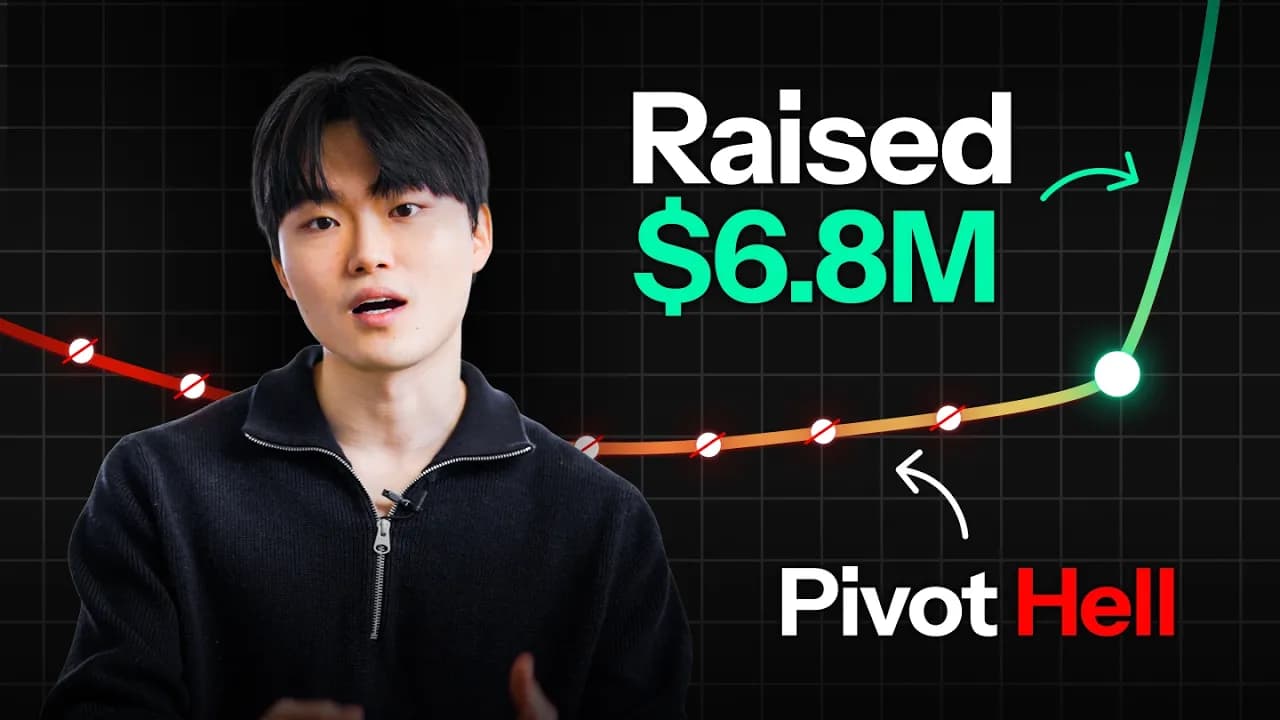
Max, a visiting partner at Y Combinator, addresses a common question from YC founders: once you know your target customer, how do you actually find them and start conversations? YC Startup School has released extensive advice on early-stage sales strategy including doing things that don't scale, founder sales, and charging for your product. This video focuses specifically on the tactics for acquiring the first 10 customers, compiled from dozens of founder responses to an internal Bookface post.
Before using any tools or channels, answer one critical question: where does your target customer actually spend their time? Most founders default to cold email and LinkedIn outreach because it's easy to do from a laptop, feels like productive work, and has abundant automation tools available. This approach works for certain buyers like sales leaders who live on computers and spend significant time on LinkedIn. However, many target customers such as school district administrators, property managers, insurance agents, and truck dispatchers don't sit at laptops all day and don't prioritize their inbox as their primary work surface.
One YC founder spent months on email and LinkedIn outreach to a legacy industry with terrible open rates and reply rates. When he finally attended an industry trade show and walked the floor, he closed more deals in 3 days than in 3 months of cold emailing. His customers were on job sites, attended conferences, and picked up the phone. Time spent refining email subject lines and copy proved wasted.
Before any outreach, spend an hour answering concrete questions about your buyer: What does their average day look like? How often do they check email? Do they attend conferences and which ones? Are they on Reddit or LinkedIn? Do they pick up the phone? Do they ask friends for recommendations or read industry newsletters? Inability to answer these questions indicates insufficient time spent with real customers.
Before using email automation or prospecting tools, begin with people you already have connections to. The first two or three customers almost always come from friends in the industry, former colleagues, classmates, or people one introduction away. The reason warm networks matter is that early buyers are purchasing because they trust you as a founder, not solely because of product quality. People willing to bet on a new product from a new company need to trust the person building it.
Work through network sources in order: First, your personal network of former colleagues, classmates, and friends in the industry—these people trust you most. Second, your second-degree LinkedIn connections. One YC founder received intros to approximately half of her closed customers through LinkedIn warm intros. Third, AI-powered network search tools like Happenstance, which allows natural language searches across extended networks to find people with specific roles or characteristics.
When requesting intros, be specific about who you want to meet, why they would care, and what to say in the forwarded email. The easier you make it for the person making the introduction, the more likely it happens.
Prospecting tools only become relevant after securing 10 to 20 quality customers. Many founders spend weeks setting up outreach tools while having numerous second-degree connections they haven't yet contacted.
Many founders closed their first customers by showing up in person rather than settling for Zoom calls. This tactic is slower, awkward, may require travel costs, and risks face-to-face rejection, but it works better than most alternatives.
One YC founder flew to meet a single executive buyer four weeks consecutively despite repeated rescheduling, eventually closing the deal. Another founder regularly showed up uninvited at customer offices and was frequently asked to leave. He flew to Hawaii to meet one customer who ended the conversation after 8 minutes, but through persistence that customer became one of his largest accounts.
Small conferences convert well. One real conversation at a small industry-specific conference can yield higher conversion than cold emailing the same person. A conference playbook used by multiple founders: set up Calendly with 15-minute back-to-back slots for each conference day; email the attendee list multiple times before the event and again during the event to catch non-openers; stack meetings throughout the day to maximize the conference.
Micro events like founder dinners or happy hours for 6-10 ideal customer profile prospects, costing $50-100 per person, convert better than large events. Once someone shares a meal, they're unlikely to ignore subsequent emails and may actively help.
For consumer products or small business products, customers often complain publicly about the problem you solve. Find these locations and show up as a real person. Reddit has been the source for many founders. A common pattern: founders post product videos on Reddit, receive harsh comments, but hundreds of lurkers quietly sign up. One founder sourced his first 10 customers by finding old complaint threads and DMing every commenter individually. A healthcare founder spent months responding to 2-5 Reddit and Facebook complaints daily, getting shadowbanned from some subreddits but acquiring customers.
This principle extends beyond Reddit to Facebook groups, Discord, YouTube comments, industry-specific forums, and trade association message boards. Reddit threads persist in Google search for years, making initial work continuously valuable.
Once you've worked your warm network, shown up in person, and engaged in relevant communities, outbound becomes necessary. The process involves finding companies matching your ideal customer profile, identifying the right contact at each, finding contact information, and reaching out.
Apollo was the most common starting tool among interviewed founders—a lead database with email finding and basic sequencing capabilities. The free tier is generous enough to build initial lists. For most founders at this stage, Apollo alone suffices.
Clay enables building research and enrichment workflows with AI on prospect lists. It becomes valuable when qualifying leads on specific criteria like software usage, hiring activity, or recent LinkedIn posts.
LinkedIn Premium provides the richest source of fresh professional data. One effective approach: send connection requests without messages, followed by short DMs once accepted. One YC founder acquired his largest customer through this channel, which was his highest-converting cold outreach method.
The most effective early outreach often wasn't framed as sales pitches but as requests for advice, mentorship, product reviews, or whiteboard sessions. This requires genuine openness to learning rather than disguised sales attempts.
One founder reached out to dozens of CEOs asking them to be his mentor. Messages were short and authentic; most recipients were flattered, several accepted, and some eventually became customers. Another founder spoke with 200 salespeople before building her product, maxing out LinkedIn connections weekly while testing specific hypotheses. She achieved 50% connection request acceptance and converted 20% of those into calls. By product launch, she had a pipeline of people who had already specified their needs.
A DevTools founder offered startups free whiteboarding sessions on agent architecture, then opened shared Slack channels for implementation help—the architecture happened to require his product. Another founder selling to lawyers offered $100-200 per hour for product feedback, with 30% acceptance. The math was expensive but customer acquisition cost remained reasonable due to high conversion rates. This approach works particularly well in high contract value markets.
The exact copy matters less than commonly believed, but several elements are critical. Keep emails under 75 words—longer emails get ignored and appear AI-generated. The most important element is a clear call to action specifying exactly what you want: a reply, a call, or a 15-minute demo. Make this explicit, otherwise recipients assume the worst.
Test whether emails sound human by reading them aloud to a friend. Rewrite any section that doesn't sound like natural conversation. This one-minute sanity check removes most AI-sounding language.
Highest-converting outreach gave prospects something before asking for anything. An API security company performed quick vulnerability scans on prospects' public websites. A mobile onboarding tool reviewed prospects' apps and provided specific suggestions. A compliance startup prepared short audit notes specific to each prospect's product before requesting meetings. This work isn't sustainable at scale, but for the first 10 customers, 20 minutes of preparation before requesting 30 minutes of someone's time is reasonable.
Follow up three or four times over a couple of weeks.
Customers 1 through 3 almost always come from personal networks—friends, former colleagues, and people one introduction away—with virtually no counterexamples in the founder survey.
Customers 4 through 10 come from doing things that don't scale: flying to meet customers, sending Reddit DMs, hosting small dinners for six prospects, sending personalized LinkedIn DMs, or offering free consulting sessions. This phase is tedious and manual but provides essential learning before automation.
Customers 10 through 50 is when the playbook shifts. By this point, founders have refined pitches, case studies, and clear understanding of what resonates about their value proposition. This is when Apollo, Clay, email sequences, and higher-volume outreach tools become appropriate—once the message is worth scaling.
The reason the 4-to-10 customer phase works is that founders personally execute these activities. When a founder shows up at someone's office, DMs on Reddit, or sends a researched email only someone deeply familiar with the problem would write, it signals genuine care that automation cannot replicate. This is the founder's advantage that established companies cannot match.
The first 10 customers will not come from tools. They come from manually tapping networks and showing up in person. Success requires willingness to do unscalable things that most salespeople and founders avoid.
Keep Y Combinator in your library
Save the videos and channels worth coming back to, and find them again in one place.