Back to Y Combinator
How To Pick A Startup Idea
Topics0
No topics available.
In a Nutshell
Don't overthink startup ideas by searching for the perfect one or questioning if you're qualified enough—pick one idea and commit fully to test it with real customers. Juggling multiple ideas produces bad data and prevents deep progress, so go all-in on a single idea to get clear signals on whether it works.
AI-Generated Notes
These notes were generated by AI and may contain inaccuracies.
{
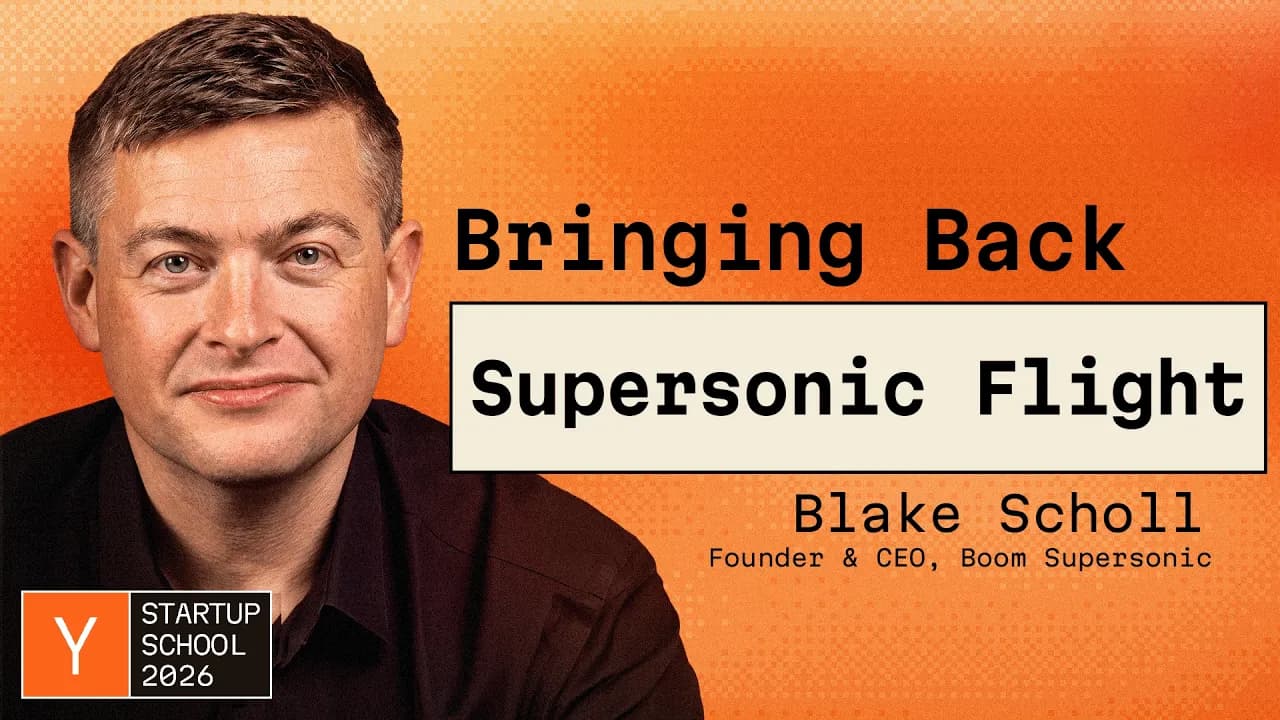
  "detailed_notes": "## [00:01] Overthinking Startup Ideas\n\nHi, I'm John and I'm a partner at YC. I often meet founders who have lots of ideas about what to work on and can't decide between them. Sometimes they're working on multiple things. Often they'll say that they're waiting to find the best idea before fully committing. But it's extremely hard to make meaningful progress on a startup without committing to a single idea. So in this video, I'm going to give you a rubric for how to stop overthinking, pick an idea, commit to it, and then figure out fast whether it's actually working.\n\nThe most important piece of advice I'd give to founders struggling to pick a startup idea is don't overthink it. Overthinking a startup in the earliest days can take many forms, but here are a couple of the most common failure modes I see. The first is thinking that you need to find the perfect idea. In some ways, this is an understandable impulse. Startups are hard, so shouldn't you figure out the best idea before committing? The problem with this approach is that it's impossible to figure out the perfect idea in the abstract. You can only figure out what you should be working on by making contact with reality and getting feedback from customers.\n\nThe second overthink is \"am I the perfect founder for this?\" It's true that founder market fit matters. A non-technical founder likely won't be the right person to come up with a killer DevTools startup idea, for example. But often founders, especially second-time founders, weaponize this line against themselves. They convince themselves that they need a decade of domain experience before they can start. The truth is you don't. If you pick an idea you're curious about, go extremely deep and most importantly talk to customers. It's often possible to develop extraordinary knowledge in a short amount of time. We see incredible examples of this all the time at YC. Take Blake Scho, the CEO of Boom Supersonic. Blake spent his early career working on adtech at companies like Amazon and Groupon before deciding to work on commercializing supersonic flight. Lots of people probably thought he was crazy. But now Boom is a billion-dollar company. So don't let the question of whether you're allowed to work on something stop you from starting.\n\n## [02:31] Commiting to One Idea\n\nOnce you've stopped overthinking your ideas, it's important to commit to just one. Often I meet founders who are working on multiple ideas at once because they believe that this is the best way to to figure out which one will actually0 work. There are a couple problems with this approach. The most serious is that it tends to produce bad data. If you don't actually go deep on an idea, but instead juggle it with several others, you won't get good signal about whether what you're doing actually works. And if you don't get good signal, then you could either prematurely talk yourself out of a good idea or convince yourself that a<fim-middle> bad one is worth continuing. The solution to this is to go in depth first. If you're trying to decide between several ideas, all of which look equally attractive, pick one idea and go deep on it.\n<|eos|>
Keep Y Combinator in your library
Save the videos and channels worth coming back to, and find them again in one place.