I tested GLP-1s for 30 days (honest results)
In a Nutshell
Your body produces natural GLP-1 in short 2-minute pulses that your gut microbiome and L-cells regulate perfectly, while injected versions stay constantly active for days or weeks and bypass this system. Visceral fat blocks both your production and receptor function of GLP-1, creating a disease cycle that synthetic drugs mask rather than fix. To transition off the drugs, eliminate visceral fat through MRI monitoring, eat fermented foods daily, cut processed foods, and gradually reduce medication as your body restores its own GLP-1 production.
These notes were generated by AI and may contain inaccuracies.
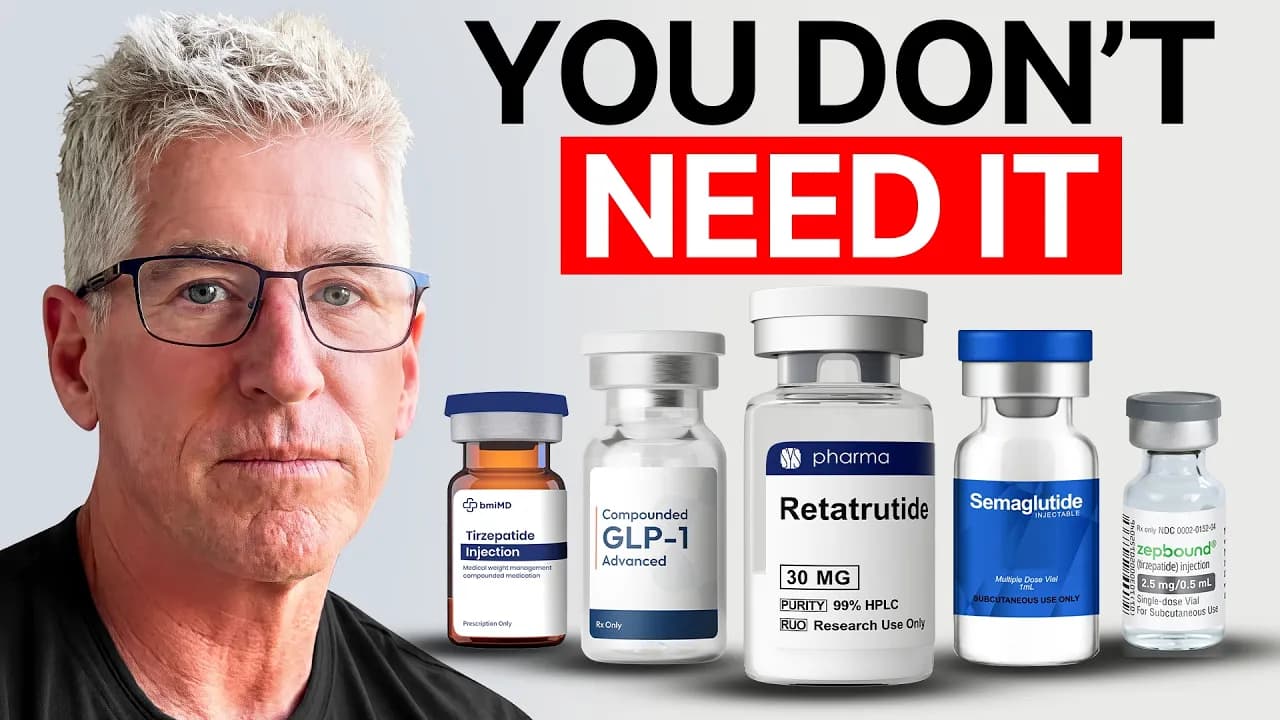
Your body makes GLP on its own. It always has. And the version your body makes lasts only about 2 minutes before it shuts it completely off. The one you inject, that you're buying, stays in you for days, sometimes weeks, always on.
The injections work, I'll say that plainly. I'm not here to tell you the drug doesn't do nothing. It does real things. It increases your ability to be satisfied, reduces blood sugar, reduces fatty liver, even sleep apnea and joint pain get better. But nature had every chance to build a hormone that stays switched on, and it didn't. I've spent years asking why that was the case, and I think that's the question that actually matters here.
GLP is a very powerful substance that your body makes. Big pharma has picked up on all these benefits, and they're now creating commercialized products to be able to provide some benefit to your body. That's why it does have benefits. It truly does have benefit. But people are talking about it because of those benefits, and not enough attention is being paid about maybe the compromise associated with it.
Your body is like a supercomputer, though. It has the ability through its metabolism to cleave off these amino acids in certain sequences to produce desirable outcomes. And what's regulating that is your microbiome, your collection of microbes inside of your gut. And that is where big pharma never can compete with. The collection of organisms, different bacteria, fungi, yeast, archaea, different forms of life, and what they're producing, the ecosystem down there. Think the fertilizer in the soil. They can't really reproduce that, but the better your microbiome is, the better you can cleave those amino acids off of molecules of protein that you get when you eat healthy foods. So, think your microbiome as having a central role in all of this.
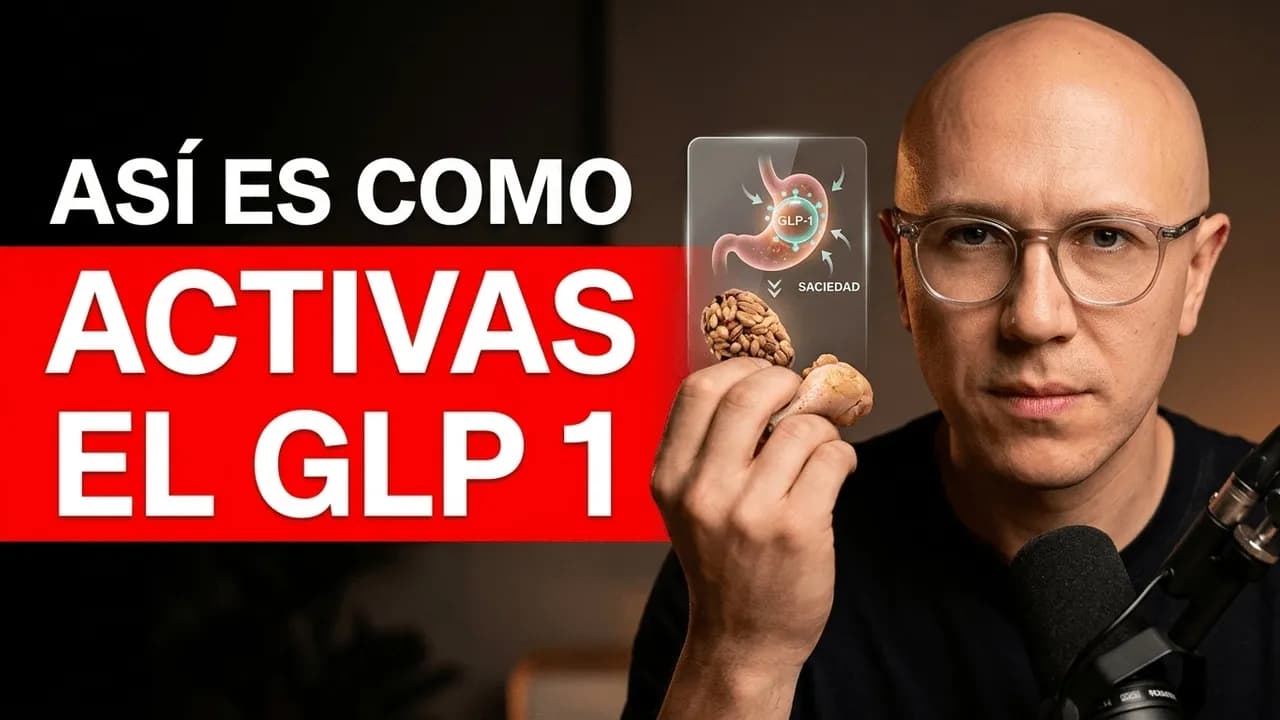
GLP drug acts as a peptide that causes satiety. So, that means you get full. You lose your hunger desire. And as a result, you're not always wanting to eat. But, it also does something else besides. It actually slows down your motility of your gut. So, your gut is moving more slowly. And that has a powerful effect. It can change how metabolism is occurring inside of your gut. So, GLP has a hormonal effect. Slowing down your gut, regulating your metabolism. And that's why it's having these significant effects on people taking it.
Your body already produces GLP-1. Your body produces GLP in a particular area of tissue called your L cells. And these L cells reside in your intestine, typically in the distal portion of your intestine, and a little bit in your colon as well. When certain signals affect those L cells, they produce and stimulate your body's natural secretion of this GLP-1 peptide.
Why that's different is, if your body is producing it, your body regulates it. You get this pulsation, a short intense pulse that lasts about 2 to 3 minutes, instead of this synthetic in the form of semaglutide or Ozempic where the switch the agonist is always on for an extended period of time, days to even weeks, constantly on bypassing your body's beautiful, perfected regulatory system that's been around since our beginning of our existence.
Natural GLP-1 is perfect. The problem happens when your body isn't naturally creating it and therefore naturally regulating it, it's where it's artificially being stimulated and is always on bypassing that regulatory system.
The gut is the real GLP factory. It makes perfect GLP-1. That's the one you want to be availing yourself to. And if you eliminate the visceral fat inside of you, you will be able to utilize it way better.
An area of personal interest of mine is not just stimulating or utilizing that GLP-1, but how do we also think about the body's production of those L cells? How do we enhance the body's endogenous production of it? The healthier your gut, the healthier your L cells, the better you can produce one GLP and two, the better you can use it.
Things that you can do that help your body to produce its own GLP include improving your microbiome. One of the most important things that you can do to improve your microbiome is feeding it appropriately fermented foods, foods that are rich in diverse microbes that contribute to the environment in your gut microbiome, which means the species of microbes that live in there, and also what they produce. They're metabolites, what we researchers call postbiotics. Think of it as the soil.
Many of these species of microbes that you eat when you eat fermented foods never live inside of you, but they create basically like a soil or fertilizer for other truly beneficial microbes. So, optimizing your microbiome, eating fermented foods, and acquiring certain species of microbes that produce a metabolite called short-chain fatty acids. These short-chain fatty acids are associated with the production of GLP-1, and they also contribute to a healthier environment for your microbiome to live in.
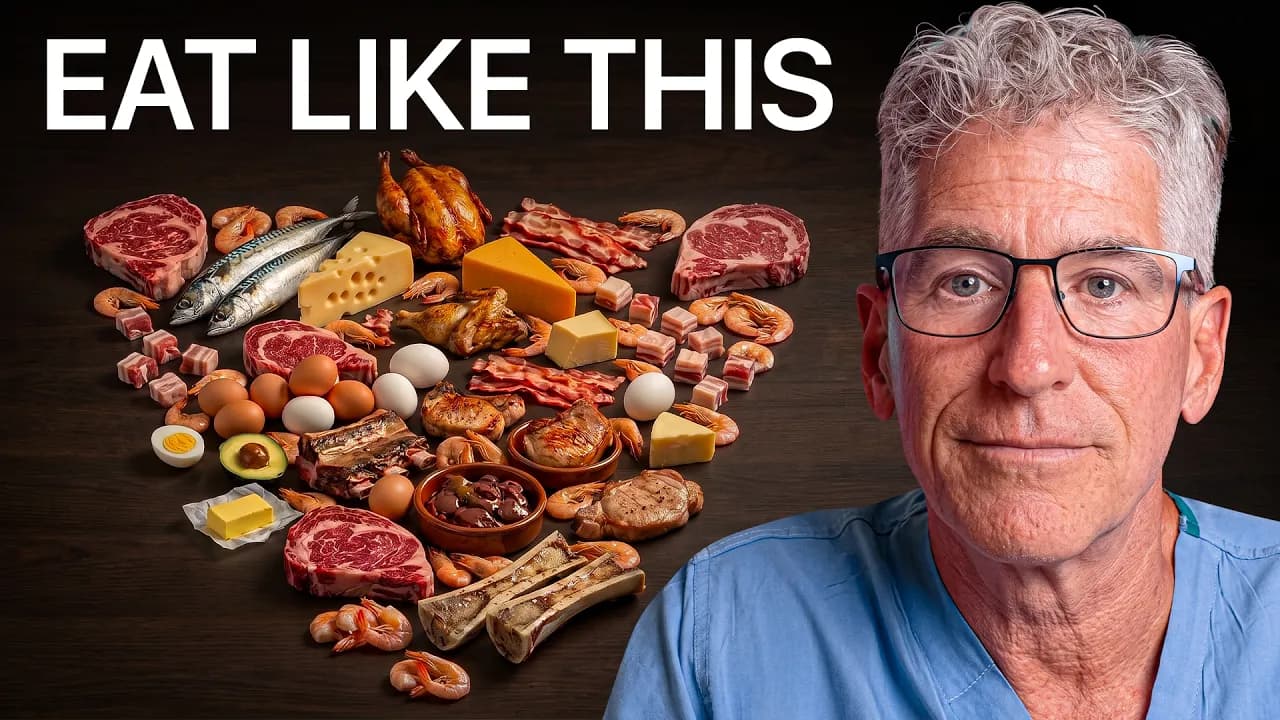
Fat and protein are also important to stimulating GLP. And the better the quality of the fat and protein, the more beneficial the particular signal. And particular amino acids, like glutamine. These also have been noted to have effects on the production of GLP. Also, fibers.
The best recommendation for getting fiber within your gut is through fermented foods, where fiber has been partially digested through fermentation into a better state, rather than just simply eating a high-fiber diet. A high-fiber diet alone wasn't detected to have as much benefit on the microbiome as having fiber coming in through fermented foods.
Visceral fat is structural disease inside of your body. So, what in fact happening is it's attacking your the system's way of benefiting you through this fantastic peptide in two different ways. First, what your body makes is not enough, and secondly, the way your body uses it is impaired. Visceral fat is inflammatory disease that is diminishing your cells, your tissues production of valuable important peptides, and at the receptor level, where those peptides are working, they're also suboptimal and being repaired. So, you can think of this unfortunate confluence, this cycle of disease causing further disease. And that's why visceral fat is such an important exploitable feature that humans they're aligned to its existence. Get rid of it, move ahead way faster than they ever have in their life before getting rid of that disease.
But, you're not going to do that unless you get an MRI scan and see this disease. And then secondly, you got to get rid of it.
Think of it like driving a manual car. So, as you go down on the accelerator, you come up on the clutch. As you do the work, get the visceral fat out, get fermented foods in, you start fasting, you start doing maximum intensity exercise instead directional exercise. Your body starts making the thing the drug was imitating. And as that happens, you need less of what you're taking.
But, it's not a light switch. You don't stop something overnight just because a man on the internet, even a physician, made a good argument. You have that conversation with the doctor who prescribed it, and you come up on that clutch slowly as you're implementing these changes.
I'm a physician. I'm not your doctor. Always consult your doctor before you make any changes at all.
What I would do this week is the free part. Cut out processed foods. Put some fermented foods on a meal a day, at least once. And go look at the inside of your body instead of guessing from the outside what's happening. Get that MRI and know for sure. Don't play around with this.
Keep Sean OMara, MD JD, Health & Performance Optimizing in your library
Save the videos and channels worth coming back to, and find them again in one place.