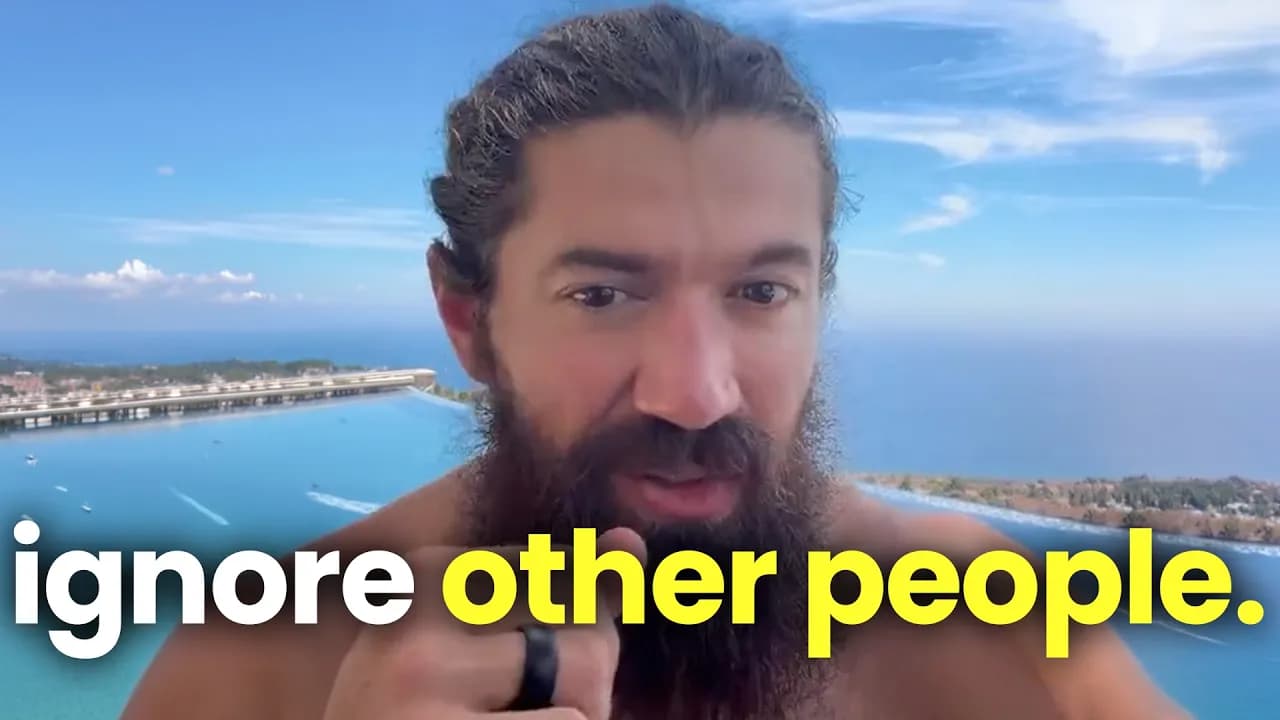
If you're ambitious but unhappy, watch this...
In a Nutshell
The core message is that most people play games designed by others—whether fitness competitions, business metrics, or social approval—and even winning those games produces prizes they don't actually want. To avoid this, evaluate any pursuit by asking: Did you design the game? Would winning make you genuinely happy? And is the required sacrifice worth the outcome? The solution is to design your own games with self-defined winning conditions and personally acceptable costs.
These notes were generated by AI and may contain inaccuracies.
A friend competing in a fitness competition didn't win and questioned whether she would want to look like the winner. This led to the realization that if you play stupid games, you win stupid prizes. Many people work hard, sacrifice significantly, reach the top, and receive a trophy they realize they don't actually want. The game may have been designed to win approval from people they don't care about.
Life can be understood through game design, as people simultaneously play multiple games including business, fitness, and relationships. Some games are finite while others are infinite. The key is understanding who defines the winner in any particular game. In the fitness competition example, the competitor is not defining the winning physique—someone else is. The criteria aren't clearly defined, and even if they were, the question remains whether that outcome is actually desired.
Bodybuilding and aesthetic shows signal what they want by selecting winners, which then influences what competitors aim for in subsequent contests. If organizers want to shift the desired look, they change who wins. This creates a cycle where competitors chase an externally defined standard that may require sacrifices too costly to other life areas.
People live mediocre lives because they play games designed by others, where even winning wouldn't produce a desirable prize. When playing any game, three questions matter: if taken to its natural extreme, is this a game worth winning? What is the price of winning? What is the benefit of winning?
Many people in fitness believe becoming a pro or winning shows will lead to business success, but this is false. There are numerous broke fitness professionals, including past champions whose sponsorships ended and left them financially ruined. People often stick with fitness because they understand how to improve through reps, diet, and cardio, avoiding the discomfort of being beginners in business, marketing, or sales. They dedicate 5-10 years and potentially harm their health without achieving their actual goals.
From an interview on David Senra's Founders podcast, the concept emerged that the business playing the most dominant game wins. MySpace played the "get the most users" game while Facebook played the "monthly active users" game. The monthly active users metric was dominant because actual usage matters more than sign-ups, and the spoils went to whoever played the superior game.
Finite games have known rules, known players, and an agreed-upon outcome. Infinite games have known and unknown players, no fixed rules, and the goal is to keep the game going. When an infinite game player competes against a finite game player, the infinite player always wins. The Vietnam War example illustrates this: the US had a finite goal of winning the war, while Vietnam's goal was to keep fighting until the US gave up.
Current games being played, whether consciously or unconsciously, should be evaluated with these questions: Did I design this game? If not, do I want the prize that comes with winning? Am I willing to pay the required sacrifice, and is it globally worth it? Local wins can come at the cost of global losses, which should be avoided.
If someone enjoys competing, they should control the controllables: look the way they want to look, work hard on posing, prepare properly, and judge themselves by their own standards. If they think they look the best on stage by their criteria, they won, regardless of the trophy. Using fitness competitions to make money is inefficient compared to other business approaches.
Play your own games of your own design where winning would make you happy and the price is one you're willing to pay.
Keep Alex Hormozi in your library
Save the videos and channels worth coming back to, and find them again in one place.