Inside America’s Largest AI-Native Robot Maker | Standard Bots
In a Nutshell
Standard Bots is the largest US robotics company making AI-native industrial arms that any worker can program via iPad in ~15 minutes, aiming to close the manufacturing gap with China. The company vertically integrates every component—from motors and circuit boards to full software stack—enabling rapid iteration and independence from overseas supply chains. By focusing on reliability, ease-of-use, and data-driven AI training, Standard Bots seeks to boost American productivity and preserve high-paying manufacturing jobs rather than replace workers.
These notes were generated by AI and may contain inaccuracies.
China has deployed nine times more robots than the United States in the past year. China deploys more robots than all the rest of the world combined. The United States is no longer competitive in manufacturing and is falling further behind every day. Robots are not just a category of hardware but the department that makes everything else including semiconductors, pharmaceuticals, defense systems, and energy infrastructure.
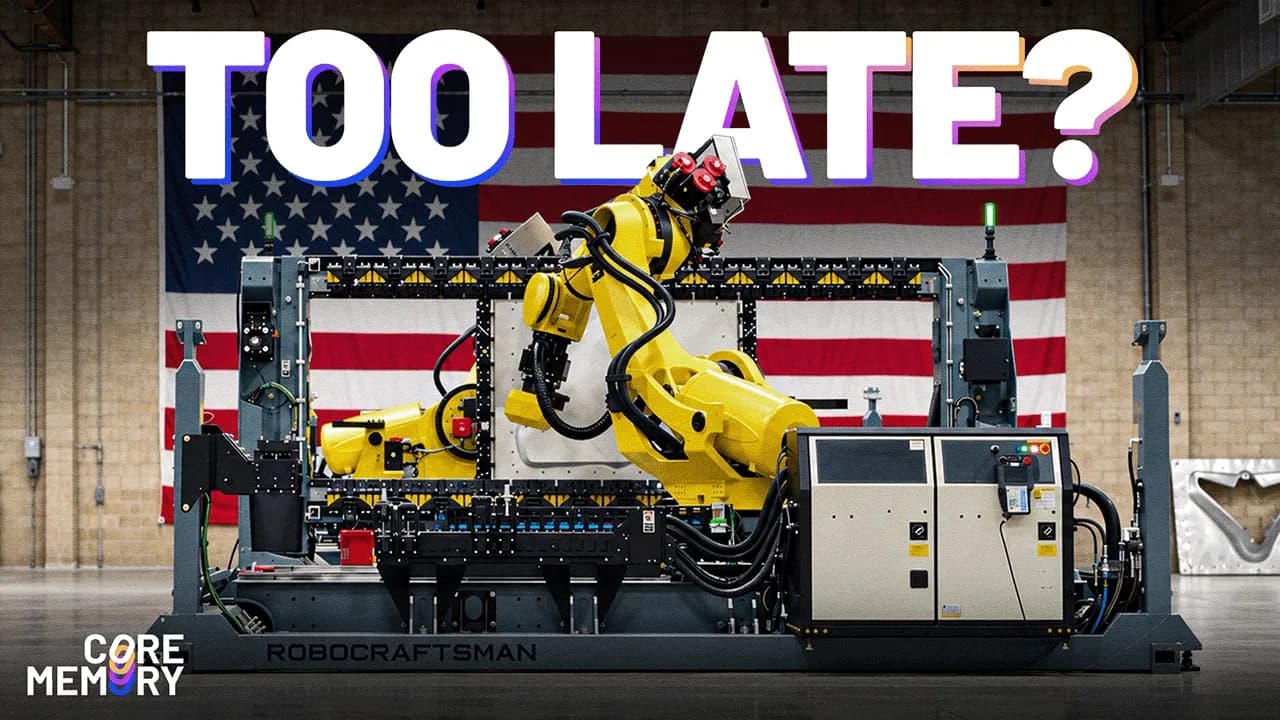
Standard Bots is a robotics company in the US building hardware, software, and AI stacks. Their robotic arms work in factories for small businesses to Fortune 500 companies including Lockheed Martin, Verizon, and NASA. When customers succeed, America succeeds. The company focuses on solving real problems for real people rather than creating robots that can do back flips or compete in races.
The company is growing so fast that additional factory space is being added every 6 months. Standard Bots officially started 10 years ago, but the first few years were spent experimenting with how to build. The company took 7 years to sell their first 100 robots. They are now growing five to ten times every year and by the end of next year are on track to be 10% of new installations in the US.
Each robot contains over 2,000 parts with more than 200 sub-assemblies inside. The company built everything from scratch, designing their own motors and motor controllers, which most companies cannot claim. When the platform changes, there is an opportunity to build a generation-defining company as big and important as Apple or Nvidia.
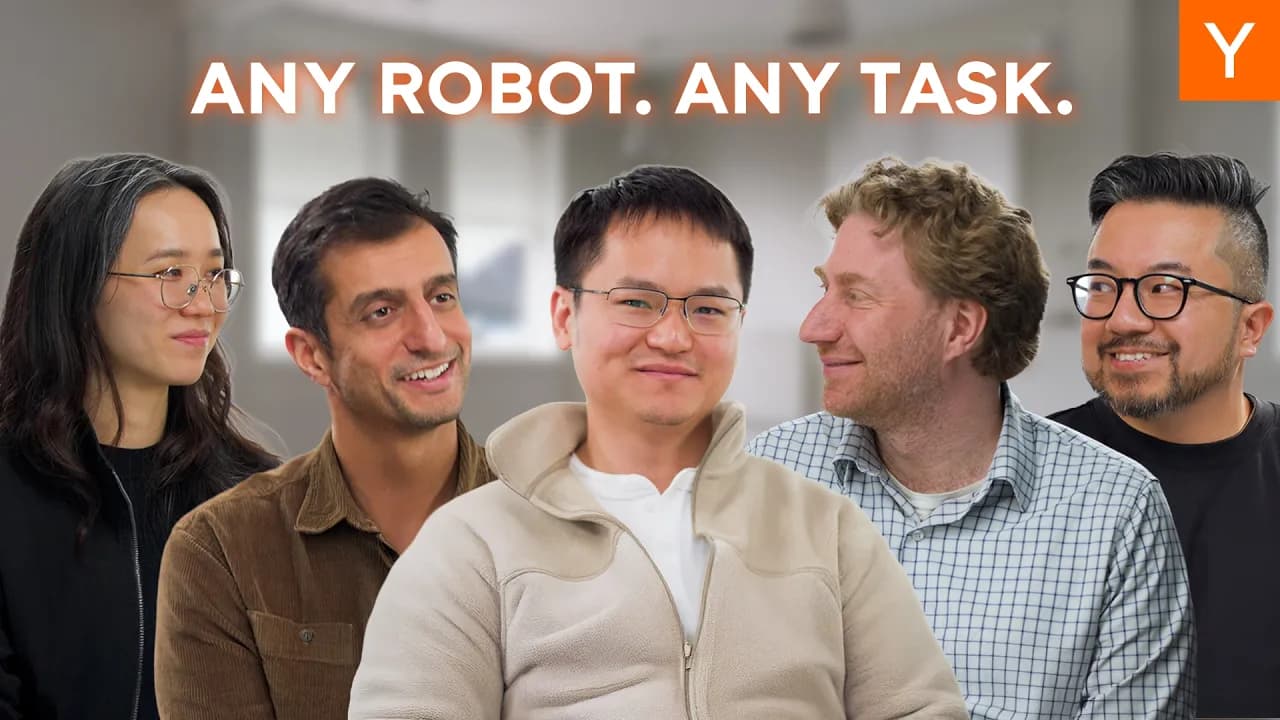
Evan Beard is CEO of Standard Bots, America's largest AI-native industrial robot manufacturer. Their robots are used in Fortune 500 companies across automotive, aerospace, oil and gas, and defense sectors, plus small and medium-sized business customers in almost every state.
The company chose New York over Silicon Valley because Silicon Valley employees stay less than a year on average and change companies repeatedly. When trying to do something really hard, founders want people to stick with them through the challenges.
Evan Beard discovered web design in sixth grade and started earning money building websites. After graduating from Duke with a computer science degree, he joined Y Combinator building a CRM. At Y Combinator, a partner was building an 8-foot tall humanoid robot with a machine shop in their office. After Y Combinator, the robotics partner gave Beard books on electrical and mechanical subjects, leading him to realize robotics was what he wanted to spend his life doing.
The early years were like a self-taught PhD, figuring out how to build products from scratch. The first customers came from speaking to 100 customers and asking what they liked and didn't like about their robots. Most robots are very difficult to use with interfaces requiring memorization of single-letter menu options.
Customers said they couldn't set up robots themselves - their teams could only press start, stop, and reset buttons. Companies spend $50,000 to install robots but can only turn them on and off. User interfaces are designed to be very rigid and step-by-step, extremely difficult to use. Once someone learns to program a FANUC robot, it becomes very difficult to program any other robot.
Programming other robots requires spending time in a three-day workshop. Three people from the company must stay for training, and one must get more than 90% marks on the exam. Standard Bots created the "locate skill" or identification skill to make it very easy to find and get parts for robots.
Previously, moving 60 pieces one by one required programming 60 points separately. Robots were historically pretty stupid - they could only do a simple task and go to a specific place, and if the thing wasn't there, everything would fall apart. The goal was making robots so simple that anyone who can use an iPad can operate them.
New employees with no robotics experience can pick up an iPad and create their first routine in about 15 minutes. Standard Bots changed how robotics works in America by making systems flexible rather than profiting from customer problems. The goal is to make profit based on customer production, not their suffering.
Any hardware company will say it could be 5 to 10 times cheaper to import from China. However, manufacturing in America provides control over production and eliminates communication problems from language and cultural barriers when working with foreign manufacturers. Having their own factory eliminates these issues.
The current factory occupies about 30,000 square feet, expanding to 70,000 square feet. Everything is designed by Standard Bots. The SMT room is where blank green circuit boards are populated with components. All electronic boards used in Standard Bots products are made in this room.
Blank boards come in via conveyor belt to the "Pick and Place" machine that installs hundreds and thousands of parts per minute. Operators manually check large parts that can't be installed by the machine. Parts then pass through Aerial Optical Inspector (AOI) where cameras verify each component is seated and connected correctly.
Full stack vertical integration provides advantage because AI requirements change rapidly. Having in-house capability means producing boards within a day or two of new designs rather than waiting six to eight weeks for external boards. This also provides freedom from global restrictions on production and design.
The core platform of this generation makes construction work very easy. Programming robots is currently difficult, slow, and expensive, with everyone solving the same problem repeatedly. Platforms change occasionally - PCs replaced mainframes, internet replaced PCs, mobile took the place of internet. Software is now exiting the screen and entering the physical world, requiring robots as the new machines.
Beard's parents came from Cuba in the early 1960s. His father drove a taxi, his mother was a secretary. They worked hard, saved money, and bought their first house, embodying the American dream. There was economic dynamism with plenty of jobs available to move up the social or economic ladder.
As the country moved from hardware to software, manufacturing work was outsourced. Manufacturing jobs continue moving to other countries annually. Manufacturing is the real heart of the American middle class. The only way to change this is by increasing worker productivity, with robots as the perfect tool. Robots enable earning the right to create high-paying jobs and continue making products in the United States.
The US manufacturing base, especially in robotics, lags far behind. It is very difficult to procure high-quality parts in short time and large quantities at low cost. Vertical integration completes almost every production process in their own factory. Building hardware is difficult - mistakes aren't realized until deep into projects without mass production design experience.
The first prototype took a few weeks to build, but getting 100 customers took six or seven years. Friends questioned whether Beard could build robots after years without shipping products. The company built everything from scratch, designing motors and motor controllers, writing firmware for efficient motor operation.
The early team was very small. For the first robot, Beard did software and electrical design while his co-founder did mechanical design. The original design was a home robot made entirely of plastic, but plastic wasn't optimal, especially without FEA knowledge. Gears would break due to lack of mechanical expertise on the team.
All prototyping was done in an office in Westchester, New York with a 3D printer running all night. Designs were worked on during the day and printing left for overnight. The printer was noisy and disturbed Beard's wife's sleep. Every day brought new challenges with unknown failure modes. There were moments when it seemed the project might sink.
Beard's wife compared him to a naked artist sitting in the garage painting. The hardest part was looking in the mirror and deciding it doesn't matter what others think - this is the right decision to move forward. Hundreds of robots now work brilliantly in the field. Every robot made was shipped immediately.
The company is growing so quickly the work pace exceeds the construction team's ability to set up space. Hardware engineering test cages were moved before space was fully ready. The remaining area under construction will house customer service, AI testing area, and application team.
Ivan has unique ability to set aggressive deadlines that seem impossible. The team often says tasks can't be done in a week, but Ivan insists. He's correct about 80% of the time, wrong 20% of the time when it takes a year. This leadership style makes the team believe they can accomplish ambitious tasks.
At the Automate exhibition 9 weeks after a team member joined, Ivan wanted a live demo on stage despite the team saying it was a terrible decision. They worked through the night and succeeded. Ivan came to the factory every day until problems were resolved, showing that full energy and the right mindset enables accomplishing anything.
Whatever you decide you can achieve in life, you can. If you think something will take a certain amount of time, it will take at least that amount. Setting tight deadlines and thinking deeply about the fastest way to accomplish tasks is key. The ability to believe you can do ambitious tasks in reasonable timeframes, or break down problems to make them achievable, is essential.
A demo working doesn't necessarily mean it's a good product. Customers fall into two camps: those who believe robots can do everything and those who think robots are completely exaggerated. Reality is somewhere in between. Capabilities are improving rapidly with achievements impossible a few years ago, but many tasks robots cannot yet do reliably or quickly enough. YouTube videos are often sped up, and super-gravitational acceleration indicates cheating.
When people see humanoid robots, they imagine human-like behavior. Standard Bots has a "Home Alone Evaluation" theory - humanoid robots must survive five- or eight-year-old children trying to stop them or throw them down while climbing stairs. If hundreds of pounds of metal fell, it could break legs or worse. Walking humanoid robots aren't the solution, hence focus on arms and wheelbase.
Reliability is one of the most important factors. There's a gap between foundation model companies and real industrial users. Researchers focus on improving success rates from 30% to 80% because it's easier to obtain statistically significant trials. Industrial applications require 99 to 99.9% success rates - 70% success makes a bad coworker. While generalization work is good, system reliability needs improvement.
Everyone agrees the best information comes from the field. Having robots working in the field provides unique advantage for getting the right information to make robots completely reliable. The Echo device is a data collection tool with a camera installed in a small hand-held gripper that collects data by grabbing and moving things.
The camera perspective matches exactly what a robotic gripper sees, so videos can be used for training. Humans naturally know where to start, but AI models lack this knowledge and must be taught through training data showing objects from different angles. Multiple versions of the device were developed over months to improve effectiveness and comfort.
Initial prototypes caused hand pain after 20 minutes of use. Current versions allow working up to a few hours with breaks, enabling all-day data collection. Multiple methods exist for teaching tasks, including "show path" where showing a robot a task enables it to learn and understand what to do when moved.
There is a labor crisis in the United States with difficulty finding good employees. There will be a shortage of millions of workers in coming years. It's very difficult to find manufacturing workers needed to expand businesses. Skilled craftsmen are retiring due to age. The goal is utilizing remaining skilled workers and pushing them into more complex tasks.
It's important to design for the common man. During the Industrial Revolution, Britain controlled the world through automated textile manufacturing, but hand textile makers couldn't operate the machines, leaving people behind. Standard Bots sees this as both customer demand and need - teams must be able to use robots out of the box. This aligns with investor expectations for scalability and ensures current workers transition to higher-paying, more secure jobs.
Current workers can transition to higher-paying and more secure jobs operating these robots. These are 21st century power tools designed to make their work easier. Standard Bots aims to empower people with the world's most accessible robots, creating robots that anyone can buy and use while making them more capable through AI. This enables automation of tasks that weren't possible before.
Customers report that hiring employees is very difficult, and robots address this challenge. Instead of welding yourself, you can operate six welding robots, which represents an advanced job. This could be a higher paying job where workers don't have to be in welding fumes, making it a safe job. The robots are surrounded by welding fumes. They are not replacing people, they are making people more productive.
The platform works in the same way in terms of hardware as it does in terms of software. It's like industrial Lego where customers can get the ideal size for their application. It can be six hands on a mobile base, giving the best ROI as a customer.
After 10 years, the chances of success were always slim. Trying to start the world's largest robotics company is a lot like being an NBA player, and it's really hard. Standard Bots has reduced a lot of risk to where they are today. These robots have been deployed in various sectors of Fortune 500 companies. They operate in almost every state with hundreds of use cases created. The chances of success are increasing every day, though the grand goal of building a company like Nvidia or Apple remains difficult to achieve.
At the end of the day, people are on earth for a very short time. If they can give back in some way, that's the best and noblest thing to do. It's like giving a gift to the world, and the founder's unique talent is building robots.
Keep EO in your library
Save the videos and channels worth coming back to, and find them again in one place.