Inside Kalshi’s Breakout: How It Became a $22B Prediction Market | The Kalshi Story
In a Nutshell
Kalshi, co-founded by disciplined MIT ballet dancer Tarek and adaptable Lebanese math whiz Luan, sued the CFTC and won, legalizing U.S. prediction markets and sparking explosive growth: 2 million customers and $2B volume in weeks post-2024 election, where they accurately forecasted Trump's win before media. Incentives via real-money bets deliver superior, unbiased forecasts over biased opinions or polls, powering markets on politics, economics, weather, culture, and more—with traders like teachers and accountants profiting $150k+ through savvy edges. Backed by a $1B Series F at $22B valuation, Kalshi eyes global expansion, institutional liquidity, and rivaling stock markets as a fair, transparent alternative to Wall Street.
These notes were generated by AI and may contain inaccuracies.
Disagree that without money you can get the same level of accuracy. Research is in controlled environments with small sets of people testing specific things. In the real world with millions of people, incentives matter. When people put money behind convictions, you get the best forecasts because they are incentivized to make money. People say one candidate will win an election due to bias, but when asked if they would bet on it, they hesitate considering factors like inflation or COVID. > Talk is cheap. On prediction markets, you're able to put your money where your mouth is.
We wanted prediction markets to exist mainstream to show their power.
Called 60 or 65 lawyers in a single day; none said it was possible. Every lawyer rejected them. Regulatory-first approach showed no progress while other batch companies shipped products and grew users. Only choice if believing they were right on the law was to sue their regulator.
Forget product market fit. He doesn't have regulatory market fit. There's probably nothing more bold, more ambitious than suing your regulator.
Won the lawsuit; office celebrated with screaming and chairs flying.
Got over 2 million customers in 2 weeks, did over 2 billion in volume with a team of 20-25 people. Scaled 100x overnight.
Kelchi announced $1 billion series F round valuing at $22 billion, double the $11 billion valuation 5 months prior after $1 billion series E.
Started ballet at age 2, pursued professionally. Days: wake at 6am, eat, technical school 7am-12:30pm, ballet school 1pm-9pm, study until late. Slept 4 hours/night for 3 years. Parents joke about normal height despite lack of sleep. Disciplined from young age, gets pleasure from hard work. Likes delayed gratification; ballet rehearses a year for one hour on stage. Personality matched challenges. Clear goal: excel in school and ballet for 3 years. Not typical teenager; skipped parties to study or sleep.
Decided to study in US, picked MIT to get out of comfort zone. Hard transition: tried Boston Ballet class first Saturday, saw losing form, decided to stop completely to preserve memory of being good.
Big math nerd, grew up loving math. In Lebanon, everything dynamic: war, civil war, bombs one day, okay the next. Lebanese are adaptable, change life quickly, always smile at life, party after bombs without canceling plans. This adaptability helps in founder journey: get hit hard, adapt without complaining too much, hope it works out long-term.
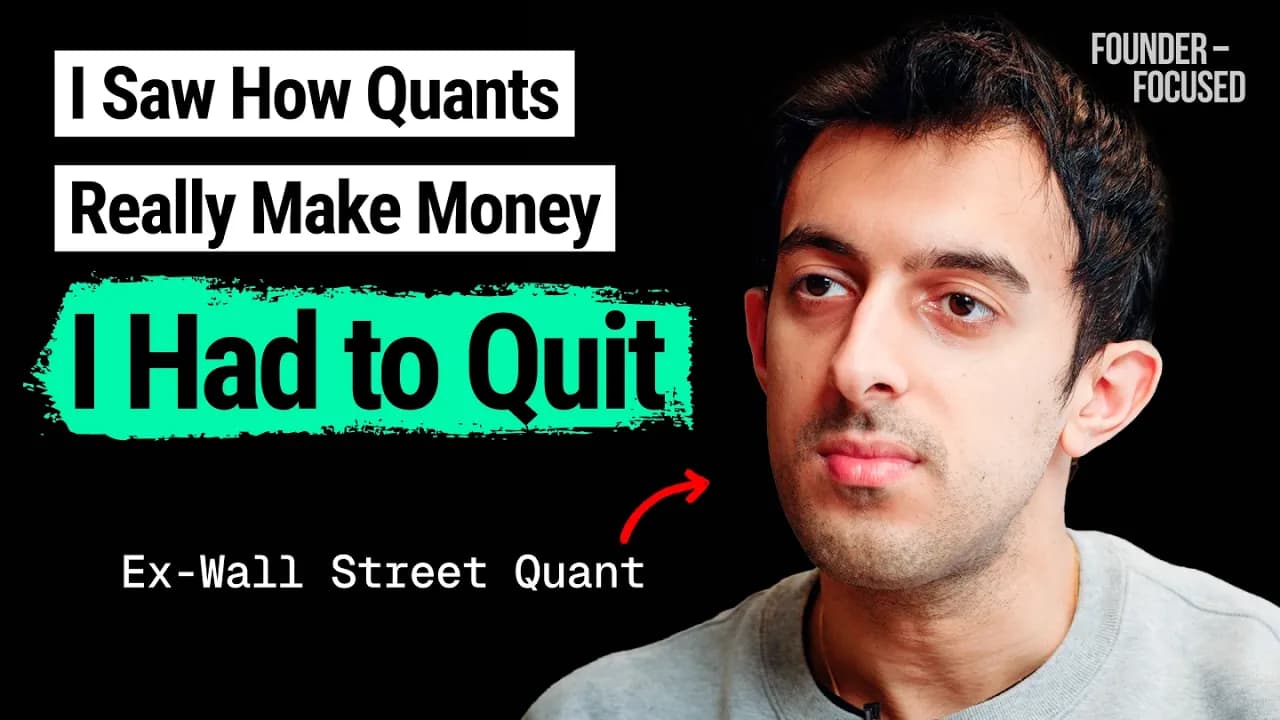
Interned at Goldman Sachs in 2016, young, discovering financial markets. Institutions cared about Brexit or Trump 2016 election, not stock prices. No good exposure; Trump trade was shorting S&P election week—bad trade despite correct prediction. Idea: build financial market for yes/no questions on events for precise exposure.
First fully discussed at prop shop Five Rings internship, market making game all day. Connected ideas from Bridgewater, Five Rings, kashi behavior. Insane no legalized liquid US prediction market to trade everything. Winter 2017 or 2018 put together core idea.
Called 60 lawyers via spreadsheet. None said possible. Through contacts, got to Jeff. First call: listed difficulties of regulated exchange and clearing house, 23 core principles to satisfy. By Monday, analyzed full system to abide by 23 rules. Jeff realized they were serious, understood regulatory journey, got excited to join.
Summer at Citadel, tried Y Combinator hackathon with janky demo like stable Coinbase, simple UI. PG said illegal, why haven't others done it. Defined principle: regulatory first—no launch, market, product until legalizing and regulating for safe ecosystem. Informs everything at Kalshi.
Michael Seibel said sounds insane but motivated MIT kids, gave try. YC batch had metric growth; theirs was talking to lawyers, filing documents—stagnating, unsexy work. Competitors launched offshore without license. Hardest: no tangible progress. Committed because wanted prediction markets to exist for truth and objective conversation.
Hard to find reliable data amid Twitter noise, bots. Prediction markets aggregate millions putting money on line for unbiased forecast. Price is key data point benefiting everyone, even non-traders. Best way for correct unbiased future forecast.
First meeting with Tarek at crowded Cafe Liria NYC. > Forget product market fit. He doesn't have regulatory market fit. Told story of suing regulator. Love backing bold ambitious founders.
Engaged regulators 2+ years on election markets, public comment with 200+ including head of council of economic advisors supporting. Regulators blocked. Instead of listing like competitors, sued regulator. Hard for startup to sue overseer. Believed markets holy grail, right on law. Won district and appeals court. Government appealed despite losses. 2 months before 2024 election, stress of potential clock run-out. Listened to appeals hearing, couldn't focus. Won at 1pm; next day launched market. Intense 4 weeks from niche site to key 2024 election data source.
We won. We won. We won. We won.
Celebrate big wins after frustrations, but briefly—next milestone to scale product, customers for election market in 1 month.
Story tied to external factors like government, lawsuit. First time fully in their hands. Fought years for chance, couldn't mess up. Entire team (engineers, product, markets, marketing) paused life, 24/7 including weekends for 4 weeks. Scaled 100x overnight: 2M customers in 2 weeks, $2B volume. Everything breaking: deposits, signups—had to slow down.
Key pieces: exchange matches buyers/sellers; clearing house handles money, margins, safety. Had Kalshi exchange, third-party clearing house; approved own but not ready. Post-lawsuit, third-party blocked election market. Had to migrate all business to own clearing house over weekend (normally 6 months). Engineers navigated incredibly.
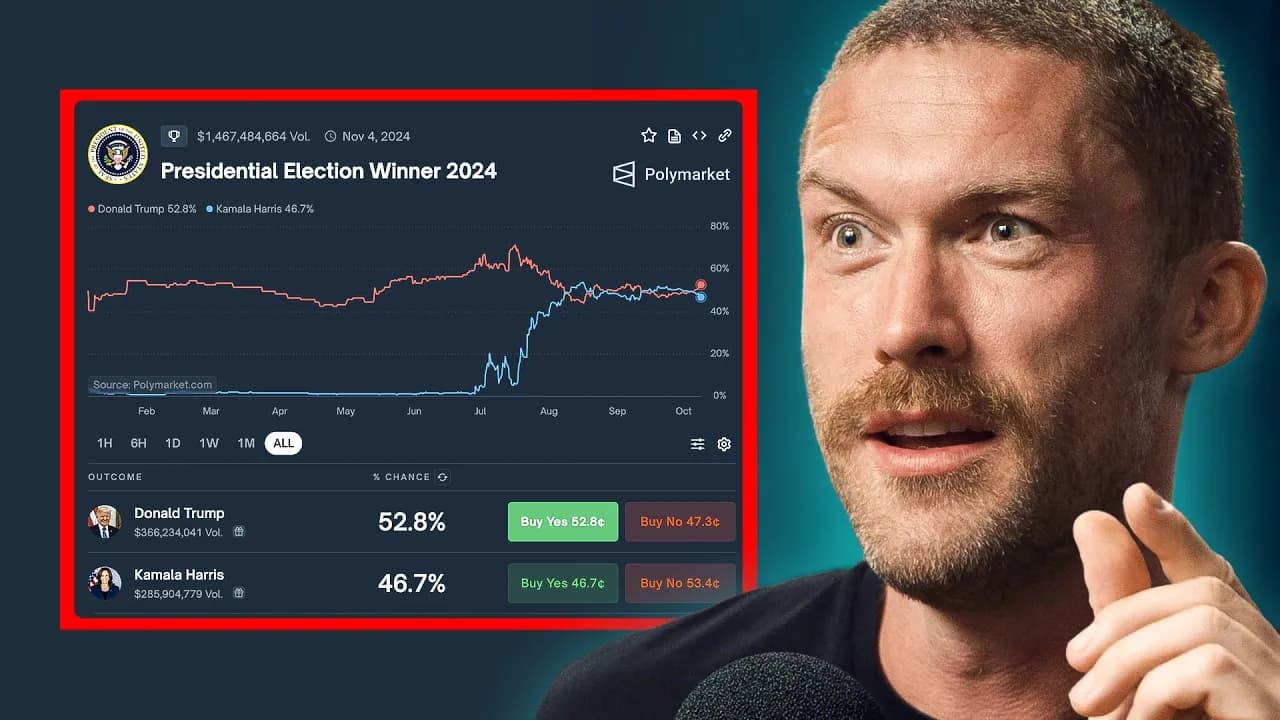
Kalshi called 2024 election results before media with live probabilities. Long before media declared Trump winner, the question of whether prediction markets are betting or gambling is very similar to the question of whether
Financial derivatives are often questioned as gambling or betting due to speculation in financial markets, where you're putting money to make more on something you don't control. Key differences: participating in natural, tangible real-world risks that people care about, unlike artificial dice rolls created for betting. Second pillar: market structure. In gambling, the house's revenue equals customer losses, creating inherent conflict of interest. Prediction markets, like the New York Stock Exchange, are open marketplaces where people trade against each other; the market is neutral and doesn't profit more if customers lose, making it fair and transparent.
I disagree that without money, you can get the same level of accuracy.
Research in academia uses controlled environments with small groups, but in the real world with millions, incentives matter. Putting money behind convictions yields the best forecasts because people are incentivized to make money. It decreases polarization: people claim certainty on elections without stakes, but with money, they reconsider factors like inflation or COVID.
Prediction markets cut through the noise. They're the true signal of what's happening. If you think about social media, it's qualitative opinion. If you think about prediction markets, it's quantitative conviction. Talk is cheap. On prediction markets, you're able to put your money where your mouth is.
Regulation buckets into market integrity (fairness) and customer protection (clarity, transparency). For wrongdoing like insider trading on Kalshi, fines or government referral apply, same as stock market. Rules ensure a fair marketplace. Customer protection requires treating all customers equally, public trade visibility, government reporting, no discriminatory access. Cannot block winners or promote losers like some gambling sites; must remain neutral.
Biggest misconception: prediction markets are just sports. Sports is 10x volume, but non-sports has 300-400 million weekly volume ($15-20 billion annualized), growing 5x year-over-year. Covers economics (interest rates), politics (next president, Fed chair), culture (Oscars), weather (snow in New York).
Joel, full-time prediction market trader and content creator for six months, trades mention markets (what someone says in speeches), focused on Trump speeches. As accountant who reads 10-Ks/10-Qs, saw prediction markets as inefficient vs. equities dominated by hedge funds. Made over $200k in past year, $170k in last 5 months full-time since end of September. Research: historical speeches, administration talking points, watches every Trump/Manny/Powell speech, global news impact. Uses database of historical speeches; watches live. Started quantitative, evolved to intuition from hundreds of speeches.
Brandon Fiend, 25, Bucks County, Pennsylvania, public school teacher (sixth graders, school plays). Made $150k on Kalshi, hit milestone today ($8k recent win). Studied music charts since 8th grade, tracked in notes app. Example: Travis Scott's 4x4 single, checked HTML source code for inventory, bought low stakes, paid out $8k from one click on public info.
Shannon, Kalshi operations, from Alabama. Started trading 2021 with $50 after meteorology school friends mentioned high temperature markets. Rode out Hurricane Ivan (2004), Katrina (2005), Michael (2018). Uses weather markets as insurance: e.g., $10k homeowner deductible for hurricane; buy $1k on 'yes' hurricane hits at 10:1 odds for $10k payout to cover deductible.
Company grown via network effects, exponential compounding noticeable at big numbers; gone mainstream with percentage of Americans active (trading or using as news feed). Global recognizable brand. Invest in defining brand: who we are/not, goals. Go international, diversify customers. Early innings; enter every internet corner with markets for interests (politics, culture, sports). Vision: accessible alternative to rigged Wall Street—topics people follow on news/X with similar passions.
Want institutional use case: originated from institutions like Goldman Sachs, Bridgewater, Five Rings, Citadel. Goal: extremely liquid markets with retail to institutional traders. In five years if successful, prediction markets size of stock market with similar participation, more mature.
Keep EO in your library
Save the videos and channels worth coming back to, and find them again in one place.