Jake Paul & The Chainsmokers: Turning Fame into Funds, Jake Enters Politics? & Venture Bubble Signs
In a Nutshell
Jake Paul and The Chainsmokers transformed fame into scalable businesses by building direct audiences, monetizing attention through boxing/MMA ventures and live performances, then deploying capital into early-stage AI, cybersecurity, and infrastructure startups. Both emphasize that consistent returns and operational involvement—rather than passive celebrity checks—separate enduring winners from one-hit fame plays, warning that the current liquidity-fueled valuation bubble rewards short-term exits over durable fundamentals. Paul sees politics as the logical next platform for mass impact, while The Chainsmokers stress that venture capital, like music, now demands full-time execution and niche expertise rather than brand-name capital alone.
These notes were generated by AI and may contain inaccuracies.
Jake Paul is described as a multi-talented star bridging social media and professional boxing, working as a boxer, content creator, entrepreneur, and philanthropist. His two main goals are to become a world champion and to sell a company for a billion dollars. Paul states he was never a supporter of the idea that social media is the new wave, but rather that he was the wave. He started on the Vine app before TikTok and YouTube, with success building upon itself. He does not remember a time when he was not gaining followers since he was young, and believes he was doing it before it became popular because it was his passion. Paul emphasizes that people who deliver genuinely entertaining content, have a distinctive vision, and fill a void in the entertainment industry, especially on social media, are the ones who succeed. He loved creativity at first when he started publishing, having a story and idea in his mind that turned into reality, sharing it with the world, putting smiles on people's faces, and changing their lives.
When Vine disappeared, Paul was not too worried. He recounts that the top 20 users on Vine told the platform they needed to start paying them or they would stop posting, as they were bringing in all the content, views, and fans. They demanded a million dollars each per year. The platform refused, the creators stopped posting and moved to Facebook, YouTube, and Snapchat, and within two months Vine disappeared. Paul sees this as a valuable lesson for business owners.
Paul discusses the evolution of live streaming and its popularity, noting that it has been 15 years since he started. He grew up in an era where he had to knock on his friend's door to spend time together, acquiring technology but also living real life, creating a balance. He states there is a lot of bad content on streaming platforms, with people doing things just to attract views. He calls this phenomenon "YouTuber disease," where many fall victim to saying silly things to attract more media coverage and daily views. He believes YouTube cannot solve this alone, as if they stop the phenomenon, viewers will go to other platforms like Twitch, Kik, Twitter, Instagram, and TikTok. He argues that platforms must unite to solve the problem.
Paul explains that content creators typically evolve by moving into event sponsorship, launching their own products, and then owning assets when cash flow is available. He describes himself as a natural entrepreneur who went to Silicon Valley in San Francisco before becoming famous on YouTube, where he was impressed by startups like Google, Twitter, and Uber. He started angel investing and founded his own startup, a social media brand. He founded Team 10, building more than 20 people each with millions of followers, revolutionizing the world of content creation. He has always been involved in startups and investing, and has been part of Silicon Valley since he was young.
Paul's boxing career started when two brothers from the UK proposed settling differences with boxing gloves. He signed a contract to face them three months later, trained at a professional boxing club in Ohio where he grew up as an athlete, and achieved a knockout victory in Manchester on the opponent's home ground. He describes this as one of the greatest feelings of his life. Boxing became the biggest paid event in the history of amateur boxing, with 108 million people watching the fight and 138 million on Netflix. He moved from Los Angeles to train in a secluded area of Puerto Rico to dominate the sport. Unlike most boxers who build their record gradually against weak opponents, Paul built a fan base of 100 million followers watching every fight. He replicated his influencer model in boxing, now having 400 fighters in boxing and mixed martial arts under the MVP umbrella, looking to join Dana White, Superboxing, and the UFC.
Paul states that the UFC does not put fighters first, paying them approximately 15% of total revenue compared to 50% in other professional sports leagues. Fighters feel resentful and want to leave for professional boxing or other opportunities. Sean O'Malley earned $600,000 in the White House fight. Major fights are not taking place because they are not prepared to pay for them, and the public does not want to take the risk. Paul states they do not organize the fights fans want to watch. His company recently merged with the PFL, and the next few years are expected to be very exciting.
Paul started angel investing when he was 18 years old after going to Silicon Valley, making mistakes, and then setting up a formal fund with partner Jeff Wu. He believes they are in an attention economy where capital is a commodity. He references Elon's purchase of Twitter, noting that when creating a new Twitter account, the first suggestion to follow is Elon. Paul states that attention and capital schedule are extremely important, and founders need and want this. He is an investor in OpenAI, Cognition, and SpaceX. The downside of the attention economy is that people forget to build great things and focus only on building something to attract attention and views. He believes the lack of credibility that may accompany the attempt to gain views is a major problem in journalism, reporting, and the online content industry. People express extreme and controversial opinions because they know it will attract views and generate money.
Paul participated in the entire development process of OpenAI Sora, suggesting the idea of launching a social networking application. He granted them the rights to use his name, image, and personality so users could create videos using the app. His fund, called Counterbox, recently raised $100 million. He states he wants to compete against traditional venture capital firms like Sequoia, comparing dividend payout ratio and internal rate of return over five years. He adopts a multi-faceted approach to investing, connecting with founders, helping them build companies from scratch, identifying talent, then moving to the growth phase and investing in companies with proven track records, including founders like Sam Palmer. They diversify investments on both sides.
Paul sees his work as a renewable cycle where participating in fights draws attention to all other work, investing grows his brand, and producing content increases followers. He has established 40 gyms for children to practice boxing for free, sending them to boxing events and championships and sponsoring their participation. He sees 40-year-old Jake Paul in politics, believing politics is one of the best ways to bring about change in the world. He finds greatest satisfaction when helping people, currently in women's boxing, giving young female boxers support and opportunities. He states he has revolutionized women's boxing, making it more like the WNBA, where before they were paid meager wages and hardly appeared in fights. He believes the next step is to help the world through politics, stating that future officials will have a natural popular base they can connect with. He references Spencer Pratt as an example of someone with an engaged audience on social media entering politics, noting Trump was the first but did not have an engaged social media audience or create content himself.
The Chainsmokers, Alex and Drew, have music that achieved 25 platinum sales. They are one of the most famous DJ groups in the world. They have been staying at the Wynn Hotel in Las Vegas for 8 years, in Las Vegas for 10 years, and think they will stay until the end as long as they remain influential. They do not wish to be buried in EBC, the best beach club. They met through a friend of a friend. Alex started The Chainsmokers with someone else, then had a falling out, and was doing gigs all over New York City in 2011 or 2012. Drew was studying at Syracuse University about to graduate. Alex wanted to find a third member. They met and decided to start a band 14 years ago and are still best friends. They state they are very much in agreement on many other issues.
The Chainsmokers created a voice that people are used to hearing from them. They like to challenge themselves and follow their creativity wherever it leads, not classifying their music within a specific genre. They witnessed a trend of nostalgia in January 2016, a very special year in their career. As they approach the end of 2026, they ask how to strike a balance between what makes their music enjoyable to compose and perform, and evoking that special feeling. They note that their teenage kids' Spotify playlists are full of old songs by artists like Elton John. They believe everyone remembers the past better than the present and wants to live in a time colored with their own memories.
The music industry is very competitive, with 300,000 songs uploaded to Spotify every day. When The Chainsmokers started in 2012, it was before the era of live streaming. They were making their way in dance music as producers and songwriters, making remixes of electronic indie music. They used Hype Machine, which was the first scheme to spread rapidly on the internet before music streaming services. The algorithm was based on the number of times certain blog posts about the artist were published and the number of likes they received. They contacted all the artists they loved on the chart begging them to make remixes. Alex went into the back-end system of Hype Machine and found every young person writing on every blog quoting music from it. They made remixes of songs already releasing, and Alex sent very funny and personal emails making fun of their schools, realizing all these young people were university students who wanted to get closer to artists. Generic promotional emails from companies were uninspiring. In their first year, they went from being completely unknown to having about 30 number one songs on that site. Alex developed the most powerful promotional platform, more so than any other company at that time.
The current state of music is somewhat flawed, with many similarities between what is happening in the field of investment and what is happening in the music production companies sector. There are more distribution channels than ever before, allowing the artist to build their own audience, communicate directly with their fans, and create their own community.
There is a vicious cycle in the world of music, which is difficult to break through. When an artist finally succeeds, they find themselves in a position where they are likely offered the first two million dollars they will ever earn in their life for work into which they have put all their effort and energy. Then they also think about all the people they have admired throughout their life, almost all of whom have signed contracts with production companies.
"Is this the moment when you decide to truly bet on yourself and take the direct route in every sense of the word, or will you choose the safer route, but in the process sell a part of yourself and your future to the production company model?"
Production companies still offer great value in different ways, but the world is completely different now. No one has the slightest idea what's going to happen, especially with artificial intelligence, music, live streaming, YouTube and all these other platforms, and people's diminishing attention spans.
Live performance is the norm in the business world today compared to digital performance. For The Chainsmokers, it depends on the type of tours they do. They have songs that they perform live, sometimes accompanying a full band and touring large gyms, which is very expensive. They started their career in dance music as DJs before becoming anything else, which is a big part of their touring business. The economic situation is also much better in this area.
The Chainsmokers' relationship with technology has always been generally positive. They used that in very smart ways throughout their careers, such as the rapid growth strategy. Their friend James invented a conference technology called "Tilt" which they used for tour data, before the advent of cloud computing and before all this background data was available to them.
Their start in venture capital was very traditional. They were lucky to be successful artists with a distribution and marketing platform through The Chainsmokers group, making them an attractive target for brands. What really caught their attention was the relationship with the founders and their ability to add value to their business, which surprised them.
Instead of treating investing as an opportunity to generate passive income, they wanted to be pragmatic and take matters into their own hands. Drew Taggart adores creative people and thinks working in the music industry is wonderful, but there is something inspiring about working with an entrepreneur who risks everything and devotes his time and effort to achieving a big goal.
They met amazing founders like Brian Chesky, Drew Houston, Michael Seibel and the Khan brothers. They had to ask themselves: "How do we want to invest our time and money? Most projects are unlikely to succeed, so let's at least invest in projects that we think are really interesting and could have a positive impact on the world."
Drew personally invested in a funding round like Uber's G round, in the final round. He thought he had done the smartest and most wonderful thing ever. He made about $25 off that investment today, but for him, that was the kind of thing they wanted to be a part of in the future.
This has led them to solidify their position as great partners for cybersecurity, artificial intelligence, infrastructure and advanced technologies companies, and they take this very seriously.
The most important thing is that they will be present and they will be good partners. They will not make the traditional offers to get what they want and then disappear in the middle of the battle. After talking to many of the founders they were fortunate enough to build relationships with, they felt that the things that were troubling them and challenging their abilities while building their modern businesses were the same things they had extensive experience with.
They make music in almost the same way they did 15 years ago, but everything else related to this business has changed completely in terms of how it is distributed, how a community is built, how it is sold, how its tours are organized, and all of that.
When building a company, one still cares about revenue, net customer retention, customer acquisition costs, cost of goods sold, and all of those things, but the inputs through which it is achieved are different. They felt there was an opportunity to build a different kind of distinctive company, not meant to be a replacement for companies like Kraft, Sequoia or others, but a collaborative partner.
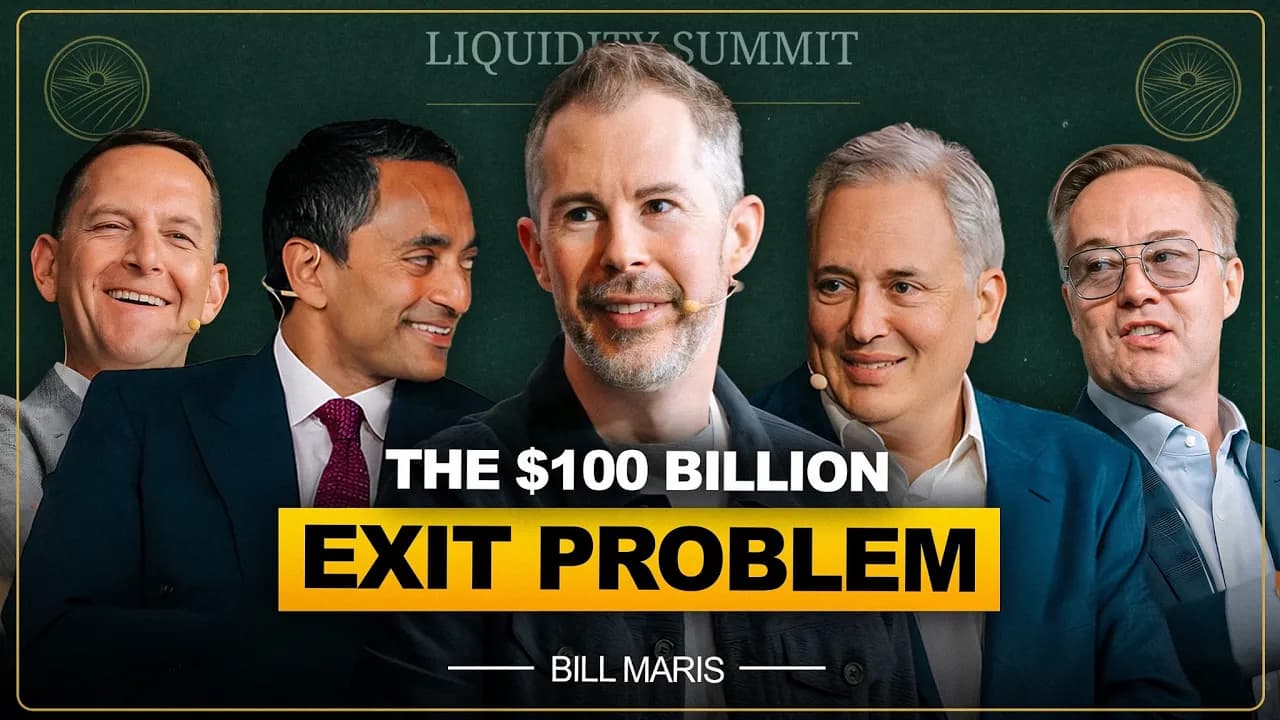
Jeff, Drew, and Milan founded Grove. They have a number of distinguished partners. At Grove, they specialize or focus on the areas of cybersecurity, artificial intelligence, infrastructure, advanced technology, and health technology. They invest in startups in their initial founding and funding stages. They do not hold leadership positions; rather, they prefer to be the sixth member of these teams.
They compare themselves to Robert Horry, who has a huge number of championship rings, noting that you can have great success without being Shaquille O'Neal on every team.
They were a great help in building marketing relationships and developing the brand. This has become extremely important in their time, especially with the weakening of the ability to defend technology caused by artificial intelligence. You really need to take advantage of every opportunity.
Making a business in the music industry a success is one of the hardest things to do, much harder than developing software. Therefore, they have great credibility in this field, whether in marketing, supporting others and building relationships, or even knowing when to withdraw.
The flow of deals is the most difficult part of venture capital work. They are lucky with this podcast, which gives them the ability to get a lot of deals. They are also fortunate because they are highly respected in their field. Many of the founders may have attended their concerts and enjoyed their music.
It is true that some may mock them, but they are making a great effort. It's easy to ridicule a venture capitalist, but hard work takes effort. Being in the position of the vulnerable is the best position.
The first question would be whether they have paid off their home loan. If they have done that, the advice would be that venture capital is the last area to invest in, because it generally relies on long-term, illiquid assets. Venture capital is extremely difficult.
A chart showed that the top 5% of investors are making 90% of the returns. You need to be in the best companies. Therefore, it is very difficult to achieve success in two fields, whether it is sports, Hollywood, music, or venture capital. You have to deal with everything in the same way, as if dedicating all time to these two areas.
They work 24/7 and have a strong presence in the market. They have seen many people asking them about entering the world of venture capital. They rarely respond, usually when meeting with them, they meet with their teams and they do not attend the meeting. People don't realize the amount of work required.
Fame is both beneficial and harmful. There are clear opportunities to connect with people who might want to connect. Drew is constantly on LinkedIn, using his name to connect with people he wants to talk to.
But there is the fundraising aspect, where you talk to a manager at an organization, and he tells you he admires what you are doing, but will not invest in the Chainsmokers Fund, because you will be the first to be criticized if something goes wrong.
The most important thing learned as an investor is the ability to generate consistent returns, which enables them to get through all the noise, whether people have problems with you or not. What is undeniable is the returns, and the ability to turn any asset you have—whether it be interest, fame, a proven track record, technical expertise, or anything else—into tangible results.
Investors' memory is very short except for returns. It has been 7 to 12 years since their first check, and 7 years since they started the fund, and they still feel like they're new to this business.
The challenge now is that there's so much liquidity flowing into everything right now that it's not just about investing in a company you know will increase in value simply because there are people in it. The hard part and the responsibility of being a good manager is to invest in ideas, founders, and companies that look real and tangible, rather than the over-promotional side of venture capital.
You can honestly invest in a large number of companies that you think will increase in value, but you don't see a long-term vision for their future.
Jason introduced Travis to 21 angel investors, and he rejected 19 of them. Three people agreed: Jason, Sian, Bannister, and First Round Capital. The reasons they refused were that this is a dirty business in reality, they don't want to get involved in it, they invest in software companies. If Travis sells the software to taxi companies, then they will support him, but they don't want to get involved in this dirty business in reality because someone will get hit by an Uber and die, and then they will be responsible for that.
The same applies to Robinhood. They looked at Robinhood and mocked that company. When that company was raising its initial funding (Series A), it was ridiculous. People were saying this is the stupidest thing.
What Jason did wrong in Robinhood was the whole thing stemmed from his vanity. They had a registration list of millions of people, and one of his bosses was adamant about investing in this project. But what he couldn't get over was his previous experience with Facebook, and how he contributed to designing its growth mechanism, which went against many of his principles.
When you look at it, you'll find it's a billion-dollar mistake, which is terrible. They do not invest in music apps or anything closely related to them because they find it extremely difficult not to be pessimistic about these opportunities.
When Jason met Vlad and his partner, and they said that they were going to get the millennial generation to invest, and they would do it because they would invest for free, all he could think was that these guys were exceptional. They are very smart, they specialize in quantitative analysis, and now they are going to build this application.
The difficult question is to pause for a moment and ask: "What if this succeeds? What will the world look like now?" After more than 10 years in Robinhood, Jason hasn't sold a single share. In fact, he bought a lot of shares when the share price was $9 on the public market.
When you look at the top investors in a particular asset class, they often have no prior experience in that class. Mike Moritz was a journalist. John Doerr worked in Intel chip sales. Look at the amount of work they have done online. There is no prior information.
If you look at the current generation of prominent investors, you will find that there is an advantage to staying out of the spotlight, but having curiosity, the ability to build relationships, and the ability to think critically about problems is a very good thing.
When choosing venture capital funds to invest in, four key criteria are relied upon: deal flow, decision-making, doubling down on investment, and distribution and early selling.
They are approaching their seventh year. They recently witnessed one of the first real asset monetizations with one of the fund's leading companies, Underdog Fantasy, which is a subsidiary of HG IG International. It was a wonderful day to send money to investors.
They have achieved 75% of the business model, but really need to get the cash back to the investors. Otherwise, none of this will ultimately matter.
They think about the characteristics of the people, especially in the early stages with the first and second funds that invested with them. They are not usually there to play safely. Therefore, they believe they have some additional freedom in supporting profitable companies.
Dandy in the first fund is a fantastic company that doubles in value every year and has just begun to expand internationally. In the current state of artificial intelligence, the flow of capital into it, and the external discussions surrounding it, they wake up every day and think maybe you could build a business model based on participating in highly competitive funding rounds (Series A), adding value, and then exiting the funding round (Series B or C).
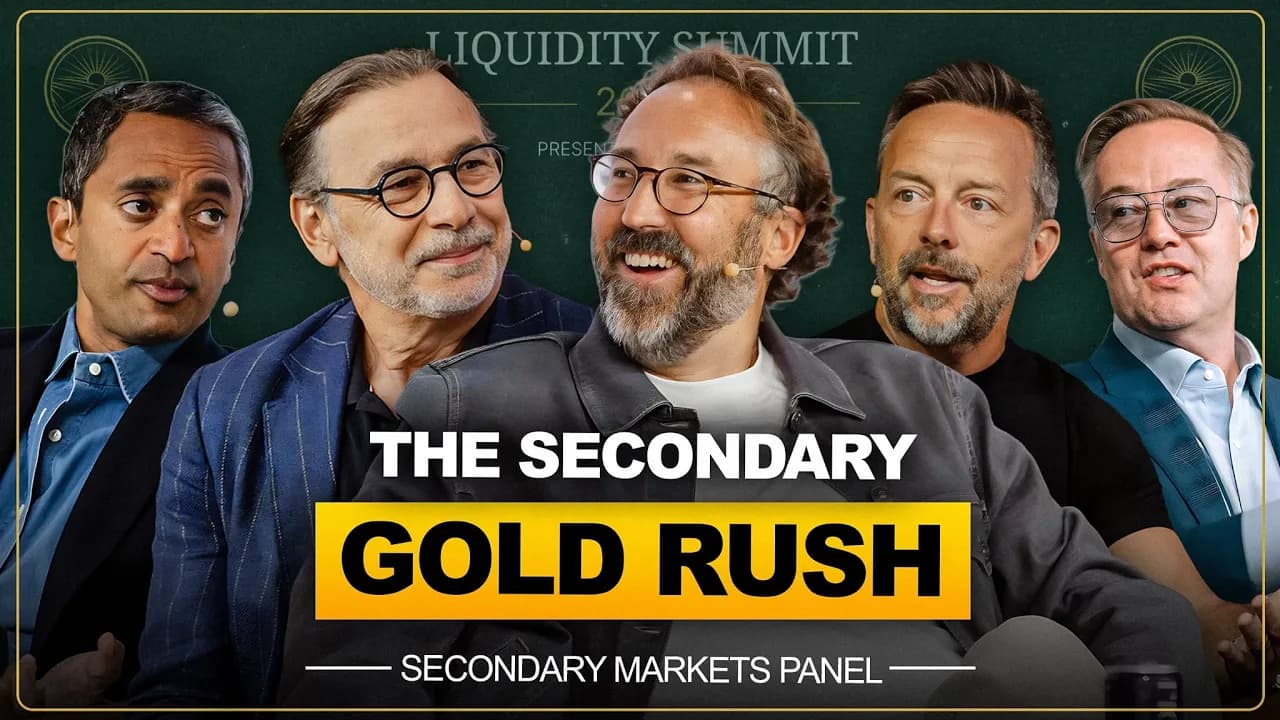
It is important to pay attention to supply and demand indicators. The secondary market receives emails daily, and these are opportunities available to obtain liquidity. But sufficient time should be devoted to studying the IPO and trying to fully understand the potential of these companies.
Focusing on profitable companies is a skill that requires time and experience to learn, and having the courage to know what it is. Brian Singerman gave a nearly two-hour lecture on the importance of follow-up.
The Founders Fund is great in many ways, but one of them is that it forces you to find the right fund in its portfolio and says, "Great, we'll put 25% of the capital into each fund. Every single fund. You have to find one." This is a very scary thing to be forced to sit there and agree to a deal, your deal and the other partner's deal, and cancel everything else.
They discuss the matter of setting up a growth fund constantly and are inclined towards the idea. The other very elegant option is special purpose vehicles (SPVs), and it worked very elegantly for them.
One of the things that has started to happen is that if you do it right, you will be able to select a limited group of investors. They have several family wealth management firms that wish to invest in the later stages. Therefore, they are very interested in the Zipline deal, the Fast deal, and the Atoms deal that they made.
They also have early-stage investors. They had a very successful company, go.ai, and they had early-stage investors who had invested less than $10 million and were looking for liquidity. Some liquidity was available, and they were prepared to sell their shares reasonably. Then they had several late-stage investment funds that wanted to buy it, and they were also buying in the latest $500-600 million funding round.
This is happening now with Sequoia, as well as with Founders Fund. They buy and invest in companies, whatever they may be, whether it's Stripe or SpaceX, etc. They also sell at the same time. Because companies stay in the market for a long time, you can actually combine these two parts of the business into one business.
The essence of venture capital is where you can own a very successful late-stage company with just your top 10 people. The size and scope of these companies now is impressive.
The concept of a "billion-dollar company" needs to be redefined based on revenue rather than valuation. Companies generating $1 billion in revenue should be considered billionaire companies. The speaker no longer focuses on book value and instead tracks actual revenue figures, noting a company that recently reached $700 million in revenue and needs an additional $300 million to become a billion-dollar company.
When exiting the market, investors sometimes pass around bags in double or triple slices. Current deals underway are understood from the perspective of firms like Sequoia, Benchmark, Index, and Kleiner, as their cost of capital differs from other companies. The person investing in the second tranche pays a large profit margin, sometimes reaching two or three times the initial market value with little to no change in underlying performance.
These are the bubbles. This is the behavior of a bubble market, by the way. When you see that, it's the right time to take some money.
The pattern of gaining fame and attention, developing skills, and turning them into tangible results repeats consistently. Celebrities show great admiration initially, but after three months the glamour fades and only hard work remains. Work is what sets successful people apart from others.
We don't pay attention to the first three months. Work hard. You will achieve great success within 15 years.
Keep All-In Podcast in your library
Save the videos and channels worth coming back to, and find them again in one place.