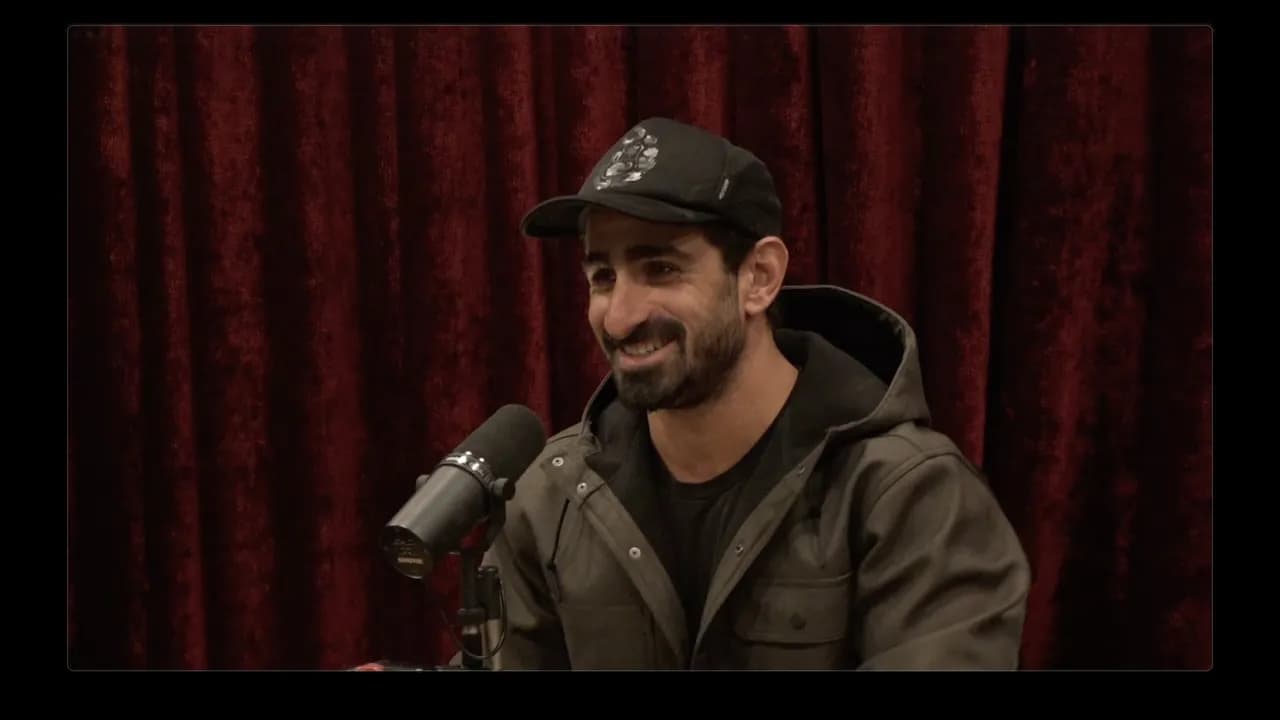
Joe Rogan Experience #2531 - Forrest Galante
In a Nutshell
Forrest Galante discusses the possibility of undiscovered species like black panthers and thylacines, while explaining that trail camera photos of "black panthers" are actually melanistic jaguars or leopards. The conversation covers orca intelligence and newly documented behaviors like exploding sunfish, elephant rescue work in India, and the dangers of keeping marine mammals in captivity. They also explore cryptid research methodology, the impact of Bill Gates' mosquito net distribution destroying African fisheries, and the disconnect between academic wildlife experts and actual field experience.
These notes were generated by AI and may contain inaccuracies.
Joe Rogan shares a trail camera photo of what appears to be a black panther. Forrest Galante explains there has never been a documented melanistic mountain lion. No melanistic mountain lion has ever been seen, hit by a car, or born in captivity.
The trail camera photo is actually a melanistic jaguar or black leopard, both of which can have melanism while still displaying rosettes beneath the black coat.
Galante notes that people are drawn to what's different and rare. Rogan compares this to Bigfoot discussions, arguing that orcas are more interesting than Bigfoot.
Orcas have distinct languages that humans cannot decipher, specialized diets, and different cultural groups that cannot communicate with each other. Rogan compares this to how humans from different continents might interact - they can communicate somewhat but have different customs and diets.
Orcas have large brains, are highly intelligent, and generally do not kill humans except when in captivity.
Galante describes swimming with transient orcas in Baja, Mexico three years ago. Transient orcas primarily eat seals and sea lions. He, his friend Mike, and the boat operator jumped in ahead of the pod. The bull orca stayed away while the cows and calves circled them before swimming away.
Newly documented behavior shows orcas headbutting sunfish hard enough to explode them on impact. This appears to be intentional behavior, possibly for entertainment, similar to bored humans hitting turtles with vehicles.
Rogan and Galante discuss "Run Nation" (RNC), a rugby drill where participants run full speed at each other. Galante played rugby growing up in Zimbabwe, where rugby culture is as prominent as football in the American South. He still plays intermittently but one game now sidelines him for weeks.
Galante has had only one diagnosed concussion but acknowledges likely subconcussive trauma from years of rugby. Rogan explains CTE (chronic traumatic encephalopathy) can result from repeated impacts, including soccer headers, jet ski riding, and head banging.
CTE susceptibility may involve the APOE4 gene variation. Concussions can result from impacts to the neck or body, not just direct head hits.
Galante discusses Pacific Islander rugby players, noting their exceptional physical build. Rogan mentions David Tua, the Samoan heavyweight boxer known for his ferocious fighting style and tank-like build.
Galante and Rogan discuss how natural selection has shaped different human populations. Pacific Islanders who survived ocean voyages represent the strongest individuals. Similar selection occurred with Vikings colonizing Iceland and enslaved Africans brought to North America.
Rogan points out humans occupy an unusual position - intellectually dominant but physically not at the top of the food chain. Humans can kill large animals like grizzly bears from a distance using technology invented by others.
If aliens studied humans, they would see a species that is parasitic and colonizing, fundamentally altering the planet compared to other animals that simply exist within their environment.
Rogan references a South Park episode depicting Earth as a reality show for the universe. Social media creates constant information overload, reducing attention spans, yet podcasts represent a counter-trend toward long-form content.
Galante describes consciously trying to avoid mindless scrolling on Instagram, where his feed contains mostly animal content, much of it now AI-generated. The dopamine hits from scrolling are particularly concerning because they provide little actual reward or retained information.
Rogan and Duncan Trussell investigated Bigfoot claims for the show "Joe Rogan Questions Everything" around 2011-2012, spending several days in the Pacific Northwest with Bigfoot researchers. Rogan notes the demographic observation that Bigfoot hunting attracts predominantly white men.
Recent research suggests Gigantopithecus was likely not bipedal but moved more like an orangutan. The species is known from limited fossils, primarily jawbones.
Galante recently returned from India working with Wildlife SOS (referred to as Ventara), the world's largest wildlife rescue and rehabilitation center, privately funded by Indian billionaire Anand Ambani. They rescued an elephant hit by a car whose leg was injured.
Elephants use their trunks as a fifth appendage when injured, shifting weight distribution to avoid putting pressure on damaged legs.
The rescued elephant will receive treatment at the facility, which is described as vastly larger than San Diego Zoo. Mahouts (elephant handlers) in Indian culture grow up with specific elephants, spending their lives working with them in logging operations. Elephants used for logging develop leg problems from carrying excessive weight over time.
Elephant sanctuaries use a combination of Eastern and Western medicine to treat injured elephants. Pain management is the primary approach for broken legs since casts are not typically used. The sanctuaries feature a massive hydrotherapy pool the size of a building where elephants with arthritis, damaged feet, or leg injuries can spend their days with no weight on their limbs. These facilities provide comprehensive medical care including anti-inflammatories and other medications.
Rescuing elephants is emotionally powerful because of their high intelligence. When an elephant in pain looks you in the eye during treatment and begins to experience relief, the interaction is deeply moving.
In Thailand, tourists can visit places with wild elephants where they first feed the animals sugar cane, spend time with them, and pet them before being allowed to ride. The elephants signal permission by extending their trunk. While the riding aspect felt ethically questionable, the elephants themselves are remarkably gentle and affectionate. One elephant was observed chewing on a log while being filmed. At the end of visits, tourists wash the elephants in ponds, which the animals enjoy.
Elephants have been used historically for war, logging, and circuses. Over the past 20 years, awareness has grown about the damage caused by lifetime riding. Visible effects include deformities, bed sores, and hip issues. Despite their size, elephants are not designed to carry weight on their backs. The most damaging aspect is not the riding itself but walking on concrete, as elephants have soft padded feet not adapted for hard surfaces. The combination of heat from asphalt and added weight compounds the damage.
Elephants walk on their toes rather than having toes that split outward like human feet, making the impact of hard surfaces particularly harmful.
The ancient belief in cyclopses originated from discoveries of elephant skulls, where the single large nasal cavity was mistaken for an eye socket.
The Explorers Club in New York City houses the Champawat tiger, which killed over 400 people before Jim Corbett shot it. The club also displays the only known four-tusked elephant skull, a complete genetic anomaly with four tusks growing in asymmetrical directions.
Elk can develop unusual antler deformities when injuries occur to the skull area where antlers grow. One documented case involved an elk with normal antlers on one side and a single spear-like antler on the other, which it used to stab other elk during mating competitions instead of the typical interlocking behavior.
The babirusa, an Indonesian wild pig, grows horns that curve backward into its own skull if not broken off during fights. These animals do not shed their horns like deer shed antlers, so the horns continue growing throughout their lives.
A sable antelope suffered a horn injury that caused one horn to grow in a circle back into its own skull. The horn was surgically removed with only millimeters remaining before it would have penetrated the brain.
Javelina, technically a peccary rather than swine, tastes poor. This is likely due to their diet consisting primarily of garbage.
Bear meat can taste strongly of fish if the animal has consumed large quantities of fish. One case involved a bear ham being smoked where the smoker smelled entirely of fish despite never having cooked fish in it previously.
Searches for the thylacine (Tasmanian tiger) continue in Western Papua and Papua New Guinea through Mammal Watching groups that distribute trail cameras. Evidence and local legends are becoming fewer over generational time, suggesting any remaining population is likely dying out.
Scientists searching for giant sloths in the Amazon face the risk of pursuing non-existent animals based on local accounts. The documentary subject spent years searching and potentially damaged his career chasing something that may not exist.
The saola, known as the Asian unicorn, was dismissed by Western scientists until a specimen named Martha was documented. Bill Robichaud was the only Westerner to see a live saola when a prince captured one, but the animal died overnight and was eaten before scientific study could occur. The saola gets its unicorn nickname from its symmetrical horns that appear as a single horn in profile. It is a bovid related to cattle.
The Amazon rainforest spans multiple countries including Peru, Bolivia, Brazil, and Argentina. Its vast size makes comprehensive exploration impossible. Uncontacted human groups still exist within the Amazon, as documented by explorer Paul Rosolie.
A four-hour flight from Tufi in Papua New Guinea revealed no buildings or signs of human development across the surveyed area.
One proposed explanation for Loch Ness monster sightings involves whale penises breaking the water surface. The famous 1934 photograph is considered a proven hoax created from wood.
Searching for cryptids requires identifying geographically isolated areas such as mountain-ringed pockets that remain unchanged due to isolation from surrounding ecosystems. These areas function like islands where species may persist after disappearing elsewhere.
The Younger Dryas climate event at the end of the ice age caused approximately 65% of North American megafauna to go extinct in a short period. This extinction event was less severe in South America, leaving open the possibility that some species like giant sloths survived in isolated southern populations.
There are approximately 5,000 tigers remaining in the wild worldwide. More tigers exist in captivity in Texas alone than in all wild populations combined.
Austin maintains a unique balance as a liberal, progressive city surrounded by conservative areas. This creates a distinctive social environment where extremism is moderated. The city has become the comedy capital of the United States with numerous comedy venues clustered together, making it easy for comedians to perform at multiple locations in a single evening. Austin is also considered a major jiu-jitsu destination with multiple high-profile schools including Gordon Ryan's B Team, Kings World, and various Gracie Barra and 10th Planet locations.
Joe Rogan lived in Colorado at 8,500 feet above sea level with his wife during her pregnancy. At that elevation, she experienced health issues that resolved when they temporarily returned to LA. Medical concerns about low birth weight and premature birth prompted their decision to relocate permanently back to lower altitude. Rogan had previously experienced altitude adjustment after living in Gold Hill, Colorado, where he trained jiu-jitsu in Boulder at 5,500 feet after adapting to the higher elevation.
Rogan described feeling significantly stronger after returning to sea level following altitude adaptation. He noted this creates a massive advantage, which explains why fighters train at altitude. The adaptation process took months, and he could feel the difference between training at 8,500 feet versus 5,500 feet, with the higher elevation making kettlebell workouts feel disorienting.
During a red panda expedition in the Himalayas, Rogan started at sea level in Santa Barbara and had to rest every 15 minutes for the first couple days due to the sudden elevation change. He referenced a recent video of a hiker who slipped during a summit attempt and slid uncontrollably down ice and snow while friends watched helplessly.
Rogan discussed the tension between wanting to protect his six-year-old while also exposing him to calculated danger. He believes children benefit from experiencing risk and gaining broader world understanding beyond places like Santa Monica. He contrasted America's convenience culture with situations where stores close early or on certain days, forcing people to adapt and problem-solve.
Rogan mentioned reading about how the eight-hour sleep schedule was supposedly invented by a mattress company, though this was identified as a myth. The conversation shifted to historical segmented sleep patterns where people would wake in the middle of the night. Before electricity, people naturally went to bed earlier following circadian rhythms, especially when camping without artificial light.
Forrest Galante noted that giant pandas are absent from ancient Chinese cultural records, with no depictions on bronzes, pottery, or in classical literature until the 16th or 17th century. After pandas gained global fame in the 20th century, scholars searched historical texts and found only ambiguous references to creatures called "pi" or "mo," which may have referred to leopards or mythical beasts rather than pandas.
The panda's status as a Chinese national treasure is a post-1949 invention. Unlike dragons, tigers, or phoenixes, pandas had no symbolic role in traditional Chinese civilization. Emperor Wen of Han reportedly had a "mo" buried in his mother's tomb in the 2nd century BCE, though identification as a panda remains contested.
Pandas are taxonomically classified as carnivores despite their bamboo diet, possessing short digestive tracts and gut microbiomes typical of meat-eaters. They have minimal nutritional value in their diet and exhibit unusual behaviors, including poor parental instincts where zookeepers can distract pandas with food to remove their cubs.
Galante described pandas as having remarkably poor parental instincts, willing to trade their babies for apples. This behavior suggests they may lack typical wild animal survival instincts. Their extreme cuteness compared to other bears, combined with their bamboo-only diet, has led to speculation about whether they were selectively bred, though no specific theory originator has been identified.
Galante discussed the proliferation of AI-generated animal content on social media, noting difficulty distinguishing real from fake footage. He described a fabricated video of a wildebeest carrying a leopard into crocodile-infested water, pointing out visual inconsistencies like missing claws and unnatural saturation levels.
Galante participated in a Discovery Channel project where he lowered himself into crocodile-infested waters inside a small steel cage resembling a coffin. He carried a scuba tank with 30-40 minutes of air as backup, with production planning to use a grappling hook for retrieval if cables failed. The stunt coordinator hadn't considered complications like hitting underwater logs with the hook.
The conversation covered a viral video of a man in a plexiglass box being actively hunted by a polar bear, demonstrating their aggressive predatory nature compared to other bears where attacks typically result from surprise encounters. Galante mentioned an abandoned Russian mining town on the Bering Sea that polar bears have taken over as dens.
Polar bears have been documented swimming 200 miles from Greenland to Iceland, with at least one case in 2008 where a bear that made the journey was subsequently shot. These long-distance swims demonstrate their capability to colonize new territories across significant ocean distances.
Polar bears are capable of swimming significant distances, with a recorded 200-mile swim. While it's possible the bear used floating ice pieces for assistance, even a 50-mile swim is considered substantial. Polar bears utilize their substantial body fat reserves to sustain long swims and have been observed snooze floating in the ocean during winter when they store fat for periods of reduced hunting activity. During midsummer, they don't actively hunt due to excessive heat.
The oldest recorded polar bear sighting in Iceland dates to 890, occurring 16 years after the first human settlement. Without human interference, two polar bears washing up on the island over their lifetimes could theoretically establish a population, given sufficient food availability.
In 1252, Henry III received a white bear as a gift from King Hakan IV of Norway. The bear was housed in the Tower of London rather than the royal menagerie at Woodstock because it required fish. The sheriffs of London spent more than a shilling weekly on its upkeep, equivalent to a knight's annual income. The bear had a muzzle and chain on land, a Norwegian keeper, and was taken on fishing trips into the Thames using a long swimming leash while the keeper wore waterproof clothes. Salmon were present in the Thames during this period.
Sloth bears, found in India and Nepal, exemplify the principle that the fight in the dog matters more than the size of the dog, as these smaller bears will confront tigers. A tribe in India formerly captured sloth bears, fitted them with nose rings, and forced them to dance on heated sheet metal over fires as street performers. This practice was known as dancing bears and has since been discontinued.
Bear baiting involved chaining bears and allowing dogs to fight them. Similar practices occurred with bulls and dogs. In early colonial South Africa, baboons were pitted against dogs for betting purposes. These practices occurred during eras when life was valued differently due to widespread violence, plague, and high mortality rates.
The Colosseum hosted ship battles when flooded. The Parthenon in Athens was the center of democracy. The Eleusinian mystery schools at Eleusis involved psychedelic rituals where participants would fast and walk from Athens to experience psychoactive ceremonies. Residue analysis of clay pots from these sites revealed ergot, a fungus containing lysergic acid with psychoactive effects similar to LSD.
Ergot poisoning through wheat has caused deaths and may be connected to the Salem witch trials through early frost conditions allowing infected wheat to survive. The 1951 Pont-Saint-Esprit incident in southern France affected 250 people with violent hallucinations, convulsions, insomnia, and psychotic episodes, resulting in 50 asylum commitments and 7 deaths. While officially attributed to ergot-contaminated rye flour, investigative journalist HP Alberelli argued in 2009 that it was a covert LSD field test conducted jointly by the CIA's MK Ultra program and US Army Special Operations Division at Fort Detrick, with Sandoz supplying the compound.
MK Ultra included Operation Midnight Climax, where the CIA operated a brothel and dosed clients with LSD through two-way mirrors to observe effects. Frank Olson, a CIA scientist, died in 1953 after being dosed with LSD by colleagues. Evidence of MK Ultra was discovered in storage, and obtaining complete records remains difficult despite Freedom of Information Act requests.
Lyme disease existed historically but not at current prevalence levels or geographic spread. Plum Island conducted gain-of-function research on ticks, engineering them with diseases to overwhelm medical systems and potentially wipe out food sources. The alpha-gal syndrome, causing meat allergies, emerged 30-40 years ago and is carried by the Lone Star tick. The World Economic Forum has discussed creating more ticks with alpha-gal as a moral obligation related to climate change concerns.
During World War II, the Russians implanted hearing devices in street cats to eavesdrop on British back-alley meetings. The CIA's Acoustic Kitty project in the late 1960s involved surgically implanting microphones in cat ear canals, radio transmitters at the skull base, and wires through fur to spy on the Kremlin. The first mission ended when a taxi allegedly killed the cat outside the Soviet embassy in Washington DC.
In 2006, DARPA requested cyborg insects for espionage. Cal Berkeley created a controllable cyborg beetle in 2009 with a battery and microchip. Historical military programs included lighting bats on fire to burn towns and using spy pigeons with cameras.
The US Navy's secret dolphin program began in 1959 to detect underwater mines and enemy divers. Dolphins would use echolocation to identify objects and signal handlers. Dolphins have demonstrated playful behavior, picking up on human energy and performing for audiences.
A beluga whale named Vladimir escaped from a Russian spy program and appeared in Norway wearing spy gear harnesses. The whale was tracked before being mysteriously shot. Military deception tactics include releasing false information about animal weapons programs to force adversaries into resource-wasting investigations.
John Lilly invented the sensory deprivation tank and served as the inspiration for the movie Altered States. Lilly was known for taking intramuscular doses of ketamine and entering sensory deprivation tanks to explore consciousness. He was also a pioneer in interspecies communication, specifically working to establish communication with dolphins.
Researchers set up a house where a woman lived with dolphins in water approximately four feet deep to coach and communicate with them. The dolphin was extremely sexually aggressive, requiring the researcher to manually stimulate it to gain cooperation for the communication experiments. When authorities discovered this practice, they terminated the research funding.
Dolphins cannot produce human-like vocalizations because they lack the necessary vocal cord structure. AI technology may bridge this gap by analyzing large databases of dolphin and whale vocalizations to decode their language patterns. Researchers are currently training AI systems on existing recordings to identify what specific sounds mean.
Orcas have demonstrated the ability to imitate human speech, with recordings showing them attempting to say words like "bye-bye," "Amy," and counting sequences. The vocalizations appear to be efforts at communication rather than natural orca sounds.
SeaWorld facilities have been compared to prisons for marine mammals. The documentary Blackfish significantly shifted public opinion against keeping orcas and dolphins in captivity. France has a closed marine park where two orcas remain trapped in abandoned tanks after the facility shut down. The owner claims ownership and cannot afford proper care, while the government refuses to intervene. The animals receive sporadic feeding from the owner's personal funds.
Phil Demers helped shut down Marineland in Canada, which operated under poor conditions. Many captive facilities worldwide continue operating despite documented welfare issues.
Dolphins possess cerebral cortexes 40% larger than humans. Elephants demonstrate emotional intelligence significantly beyond human comprehension, with brain regions dedicated to emotional processing substantially larger than in humans. The trauma elephants experience from losing companions or enduring abuse is estimated at ten times what humans can emotionally process.
Current definitions of intelligence focus on environmental manipulation - creating tools, building structures, developing technology. This framework may undervalue species that don't require such manipulation due to their ecological niche. Orcas operate in three-dimensional aquatic environments, can hold breath for an hour, find food everywhere, and sit at the top of the food chain without needing constructed shelters.
While captivity conditions for marine mammals deserve criticism, zoos present complex tradeoffs. San Diego Zoo represents high-quality facilities that contribute to species conservation and education. Wolf sanctuaries present ethical dilemmas around sterilization versus allowing natural pack dynamics, with concerns about genetic integrity when releasing wolf-dog hybrids.
Genetic research confirms that black coat color in North American wolves originated from domesticated dogs through hybridization events. The mutation occurs at the K locus with a three base pair deletion in the CBD103 gene, producing dominantly inherited melanistic phenotypes. Analysis of 331 wolves and 20 dogs indicates this trait entered wolf populations through a single introgression event from dogs, likely in the Yukon or Northwest Territories around 2009 research findings.
Colossal has created dire wolf specimens through genetic work. A four-month-old female named Kesi weighed approximately 40 pounds and displayed dog-like affectionate behavior. Two males named Romulus and Remus were also part of the project. The animals developed manes similar to lions, a trait not previously documented in dire wolves. Questions remain whether these represent true dire wolves or genetically modified gray wolves expressing dire wolf traits.
Short-faced bears, twice the size of polar bears and capable of running 50 miles per hour, may have prevented human migration across the Bering land bridge. These hyper-carnivores potentially scavenged kills from other predators using their size, sense of smell, and long-distance pacing ability. Human weapons technology at the time - primarily spears and possibly early fire use - would have been inadequate against such formidable predators.
White Sands footprints dated to 22,000 years ago predate known human presence in the Americas. Evidence in Mexico suggests human predation on mammoths through spearheads and carved bones showing marrow extraction, though some researchers attribute bone damage to natural rock falls rather than human activity.
Historical hunting methods against brown bears involved targeting them in dens and using fire to seal entrances. Modern demonstrations show the extreme difficulty of defending against charging bears with handguns, as drawing, racking, and aiming takes too long when bears can cover significant distances rapidly. Atlatls provide mechanical advantage for spear throwing through leverage and wrist action, though accuracy remains challenging.
Modern compound bows incorporate extensive technology including laser rangefinders that measure distances like 52 yards, which then gets dialed into sight tapes on the bow. Archery software calculates arrow weight and speed, with a 500 grain arrow traveling at 390 feet per second. This data gets processed through computer systems that generate precise sight tapes allowing archers to place shots within a quarter at 52 yards.
Traditional bows lack mechanical advantages like cams, fiberglass limbs, and adjustable systems. Traditional archers must rely on estimating arrow arc and judging distances without technological assistance.
Traditional archers purchase arrows that weigh identical amounts and maintain perfect consistency. With daily practice of three hours, archers develop the ability to judge distances and understand arrow drop at various ranges. Some archery tournaments prohibit rangefinder use, forcing participants to develop distance judgment skills through practice.
Tournament participants learn to accurately judge five-yard increments, then double and triple those measurements to estimate distances within 10-15 yards. This margin of error creates significant challenges even with arrows traveling 300 feet per second, but becomes far more problematic with handmade wooden arrows featuring stone tips.
Handmade arrows with stone tips can vary by 15 to 50 grains between individual pieces, with completely different aerodynamics due to varying flintknapping techniques. These primitive weapons lack the precision and consistency of modern carbon fiber arrows with high front-of-center weighting.
The stress of hunting with primitive weapons involves life-or-death stakes, where missing a kill means either death or starvation for the hunter.
Short-faced bears left claw marks visible in Missouri caves where they once lived in dens. These prehistoric bears measured 11 to 12 feet, though Kodiak bears can reach similar sizes. The largest recorded Kodiak bear weighed 2,130 pounds, with another specimen reaching 1,656 pounds and measuring 18 inches on the hind foot.
Short-faced bear weight estimates rely solely on bone measurements since no complete specimens exist for reference.
Fred Bear popularized bow hunting as the first modern bow hunter, shooting a world record Alaskan bear in 1962 with a recurve bow and wooden arrows. His legacy represents the transition from necessity-based hunting to recreational bow hunting made possible by abundant food supplies.
Some contemporary bow hunters reject compound bows as too easy, returning to recurve bows despite having mastered compound bow hunting. World-class bow hunter Aaron Snyder switched back to recurves after feeling compound bows made hunting excessively simple.
Competition drives human advancement across all domains, from technology development to athletic achievement. Without competitive rewards, individuals lack motivation to create spectacular innovations like laptops or high-speed internet. Socialism fails because it removes the profit incentive necessary for exceptional achievement.
Regulations must prevent successful competitors from establishing monopolies or taking over entire countries, as occurred with Microsoft during the 1990s antitrust trials involving browser wars and monopolistic practices.
During the 1990s, Bill Gates faced United States versus Microsoft Corporation antitrust lawsuits filed by the Department of Justice and 20 states. The cases centered on browser integration and monopolistic practices targeting competing software developers.
Gates later reinvented his public image through massive donations to media outlets including NBC, CBS, and CNN, followed by establishing the Bill and Melinda Gates Foundation focused on global health initiatives.
The Bill and Melinda Gates Foundation distributed millions of mosquito nets throughout the Kabompo Basa Delta in Zambia to combat malaria. Local populations used these nets for fishing instead, catching baby fish in this critical breeding ground and nursery area for fish populations.
This intervention destroyed one of Africa's most abundant freshwater fisheries, creating widespread hunger in previously food-secure communities. The fine mesh designed to block mosquitoes proved equally effective at trapping juvenile fish, collapsing the protein source for millions of people.
Bill Gates maintains significant influence over global health policy despite lacking formal medical training or completing college. His relationship with Jeffrey Epstein involved multiple meetings over several years, ostensibly to discuss philanthropy funding.
In a CBS interview, Gates stated he regretted the meetings because Epstein promised donations to global health initiatives that never materialized. When asked about lessons learned, Gates responded "he's dead now," which some interpreted as a veiled reference to Epstein's death.
Epstein operated as a social facilitator for wealthy individuals, providing access to private islands and parties without conventional rules. His connections extended to powerful figures across business and politics.
Les Wexner, founder of Victoria's Secret, granted Epstein control of 100% of his finances and gave him a house. Epstein's tax attorney was murdered in a mob-style hit in 1984 before he could provide information to the IRS.
Epstein acquired property in New Mexico to establish proximity to Los Alamos scientists who were underpaid relative to their expertise. He approached these researchers with business opportunities promising enormous financial rewards.
Eric Weinstein met with Epstein and recognized him as a construct rather than a genuine finance professional, declining to engage in proposed business ventures despite the potential for substantial earnings.
Epstein had relationships with multiple physicists and scientists including Einstein. The New York Times reported that Epstein hoped to develop a super race of humans with his DNA. He maintained connections to the UAP world and the Los Alamos facility in New Mexico. His purchase of a ranch in New Mexico provided access to scientists who were famously underpaid. Epstein's wealth source remains unexplained by any rational means.
Extremely wealthy individuals often attract people who become enamored by their wealth and want access to their parties and lifestyle. Billionaires typically work 18-20 hours daily, making their work their entire life. Eric Weinstein described Epstein as providing scientists with "experiences" that compensated for their low salaries.
Living in the United States places individuals in the top 1% globally, requiring only $50,000-$60,000 annual income. The majority of Americans fall into this category. While some argue billionaires should redistribute wealth, the same logic could apply down to $100,000 yearly income when comparing globally.
A new monkey species was recently discovered in the Congo featuring an orange mouth resembling someone who ate a freeze pop. New primate species continue to be discovered regularly. The Bondo ape is believed to be an isolated, larger group of chimpanzees that are more aggressive, with distinct cranial ridges indicating stronger jaw muscles.
A documented conflict exists between chimpanzees and gorillas along a particular river in the Congo where the two species throw objects at each other across the water. Chimpanzee wars appear to be social constructs similar to human conflicts, often triggered when populations become too large with imbalanced gender ratios. One documented case involved a harmonious troop splitting into two warring clans over leadership and female availability.
Younger gorillas and chimpanzees have been observed hanging out together in the same trees, with chimpanzees mimicking gorilla chest-beating behavior. This interaction appears to occur in areas where both species seek figs from the same trees.
The documentary "Relentless Enemies" documents lions that grew enormous from exclusively hunting cape buffalo on an island formed by river path changes. These lions became as large as male lions elsewhere, with females reaching exceptional size due to the necessity of hunting massive prey. Cape buffalo, known as the "black death," frequently kill lions attempting to hunt them.
Animals isolated on islands undergo either insular dwarfism or insular gigantism. Lizards and tortoises typically become larger on islands due to absence of predators and unlimited resources, growing to outcompete each other for food.
Miss Waldron's red colobus represents a primate species with only three or four museum specimens and no confirmed live sightings. Several such lost species exist, particularly in the Congo where dangerous conditions limit research access. Local populations often know these animals exist but lack communication with the scientific community.
The dinosaur in the Congo theory lacks credibility. Rumors persist about giant sloths and Asian unicorns that deserve investigation. The Congo jungle spans nearly the size of the contiguous United States, making it one of Earth's largest unexplored regions.
A six-minute, twenty-two-second total solar eclipse will occur over Egypt in April 2027, representing the longest eclipse in 80+ years. The eclipse will occur in a region with minimal cloud cover, making it ideal for viewing at the pyramids.
During recent eclipses, animals became silent before the event, suggesting they sense impending changes. Ancient people would have interpreted total eclipses as magical or supernatural events, potentially triggering extreme reactions including human sacrifice.
The sun and moon's precise distance relationship creates perfect solar eclipses where the moon exactly covers the sun's disk. This represents an extraordinary coincidence given the moon's much smaller actual size compared to the sun.
Some theories propose the moon is artificial, placed by aliens to sustain Earth's stable orbit. The moon ranks as the fifth largest in the solar system with a diameter equal to the contiguous United States' width. Its size relative to Earth creates a double-planet system unlike any other in the solar system.
During the 1969 Apollo 12 mission, NASA crashed the lunar module's ascent stage onto the moon, which rang like a bell for an unexpectedly long duration. This experiment revealed unusual acoustic properties about the moon's composition.
Seismometers recorded long-lasting vibrations for nearly an hour on the moon. This is a metaphor for how dry, cold lunar rock reverberates without water to dampen the shock waves. People dismiss this as evidence the moon is hollow and made by aliens, or that there are cities and bases on the far side that we cannot see. These ideas appear on weird message boards rather than mainstream platforms like Reddit.
The hollow moon theory proposes that Earth's moon is either wholly hollow or contains a substantial interior space. No scientific evidence supports this idea. The spaceship moon theory suggests the moon is an artificial hollowed-out satellite constructed by an alien civilization, similar to the Death Star concept. Soviet scientists Male Vasine and Alexander Sherbakov popularized this theory in 1970, proposing the moon was reinforced by an armored titanium hull to survive impacts.
There exists a community of people who believe space is fake. Some individuals develop fake theories on platforms like Reddit and 4chan specifically to test whether others will adopt and spread them. These creators often include people with mental health issues who frequent such forums. The theories serve as experiments to see what gains traction.
People form communities around unconventional beliefs such as flat Earth theory, meeting regularly to discuss their views. These groups provide social connection for individuals who feel isolated. Similar dynamics exist among Bigfoot hunters and others pursuing cryptids. These communities often consist of socially marginalized individuals seeking purpose and belonging.
Cryptids become interesting when local communities report animals that turn out to be real but previously undocumented. For example, stories about a burrowing snake that bites when people dig crops may represent actual species living in mud that nobody has searched for. The generational legends persist because the animals exist but remain hidden from scientific documentation.
Modern society exhibits arrogance in assuming complete knowledge of all planetary animals. This assumption leads to the belief that everything has been quantified and catalogued. The scientific community engages in speciation practices where minor differences, such as populations living on opposite sides of creeks or different mountain patches, justify creating new species classifications.
Scientists face pressure to speciate organisms to secure research funding. The criteria for naming new species are relatively easy to meet, requiring only physical or genetic differences and a viable population. This creates a system where researchers split existing species into multiple classifications to publish papers and maintain funding streams.
Excessive speciation reduces conservation value for species. When one frog species becomes four separate species based on geographic separation, extinction of one population appears less significant. This practice undermines broader conservation efforts by fragmenting species into smaller, seemingly less critical units.
Wildlife scientists often lack strong social skills and tend toward introversion. These individuals compete for limited research funding while holding positions of academic authority. The resulting system encourages headline-worthy research over substantive conservation work, with scientists competing against each other rather than collaborating on species preservation.
Conservation success is straightforward to measure: determine whether target animal populations increase after intervention. The complexity of academic publishing and research requirements creates barriers that prevent public engagement with conservation issues. Most people never read scientific papers about species like frogs.
Effective conservation communication requires making issues understandable to general audiences. Frog hotels represent practical conservation solutions that address widespread fungal diseases killing amphibians. These concrete approaches generate public interest and funding more effectively than complex academic publications.
Activities like entering crocodile cages serve to generate public interest in animals. YouTube content creation aims to increase public concern for wildlife, which expands available conservation funding. The goal is making people care about issues rather than securing personal funding.
David Attenborough created groundbreaking documentaries that documented previously unknown behaviors, such as chimpanzees eating monkeys. His work represents the gold standard for wildlife communication. Field biologists must engage directly with animals and their environments rather than relying solely on laboratory analysis.
Some world-leading experts on species have never observed living specimens. An expert on a specific shark species had published 50 papers but had never seen a live shark, could not swim, and had never been in the ocean. Local villagers who fish and eat the sharks possess more practical knowledge than such academic authorities.
True authority on species requires observational knowledge of animals in their natural environments, not just analysis of preserved specimens. Physical contact is not always necessary or advisable, as with wild chimpanzees, but understanding their habitat and behavior through direct observation is essential.
Scientists embedded with chimpanzee troops for over 20 years represent genuine field science. Long-term behavioral observation provides insights that specimen analysis cannot match. Protocol requirements include maintaining 20-yard distances, avoiding food near animals, and not making direct eye contact.
Extended observation periods can create mutual respect between researchers and highly intelligent animals. This respect allows animals to behave normally rather than reacting to human presence as an anomaly. Animals become accustomed to consistent human presence when protocols are followed consistently.
Timothy Treadwell attempted to live among grizzly bears with fatal results. The documentary suggests his death may have been intentional, described as suicide by bear. Werner Herzog's editing choices in the film appear designed to elicit audience reactions, including humorous moments such as a sheriff describing Treadwell as retarded.
Werner Herzog's documentary Happy People documents subsistence communities in Siberia. Residents hunt, fish, trap, and use snowmobiles while living in extended isolation periods. The communities exhibit no mental illness despite harsh conditions, with residents appearing consistently happy through their simple lifestyle.
Extended time alone in nature reduces mental health issues by forcing focus on immediate surroundings rather than internal problems. Subsistence communities eliminate social comparison since all members engage in identical activities. The lifestyle reduces depression and anxiety through present-moment awareness and community support.
Modern society requires both innovative thinkers and those who prefer simple subsistence living. Snowmobiles and other technologies used by Siberian communities were invented by people outside those communities. Both approaches to life serve essential functions in maintaining functional societies.
A homemade crocodile cage was constructed using village-sourced cables tested only with rocks. The structure appeared flimsy and dangerous during use, with crocodiles performing death rolls nearby. Despite the poor engineering, the footage successfully educated viewers about crocodile behavior.
Shark Week programming has continued for 39 years. Upcoming content includes Alien Sharks and Untamed America, focusing on unusual American shark species. The YouTube channel serves as the primary platform for ongoing content distribution.
Keep PowerfulJRE in your library
Save the videos and channels worth coming back to, and find them again in one place.