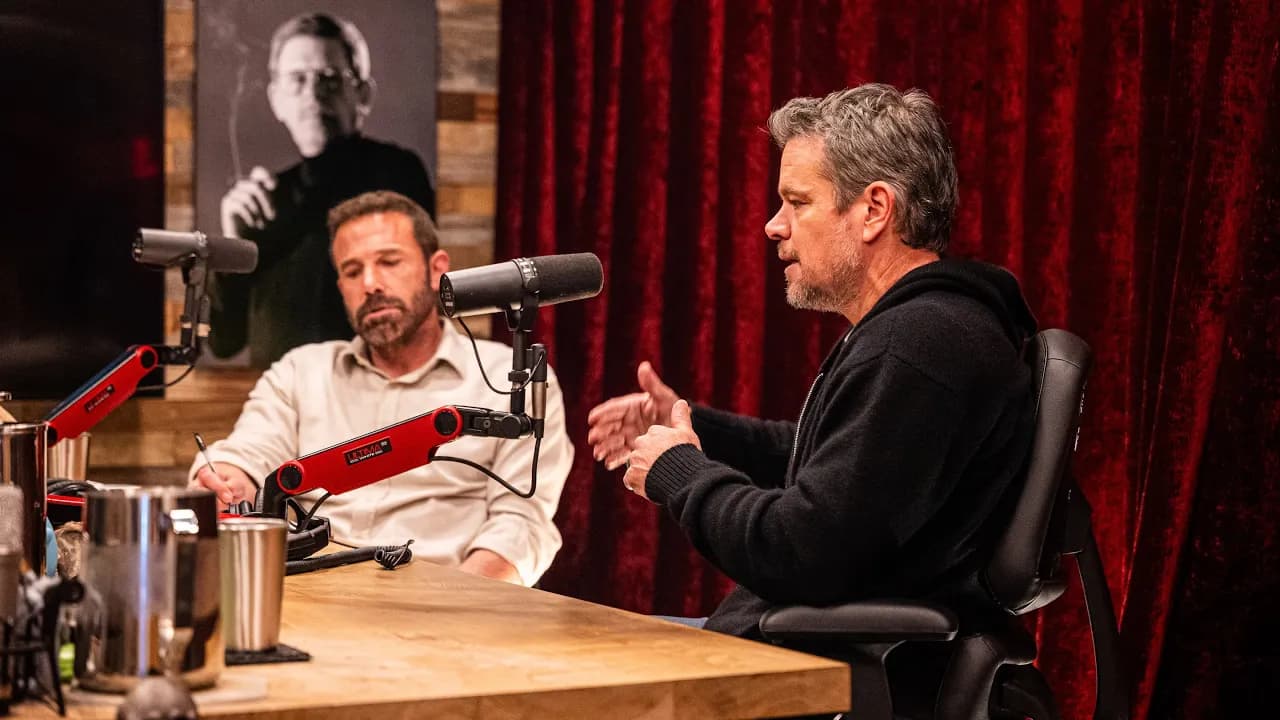
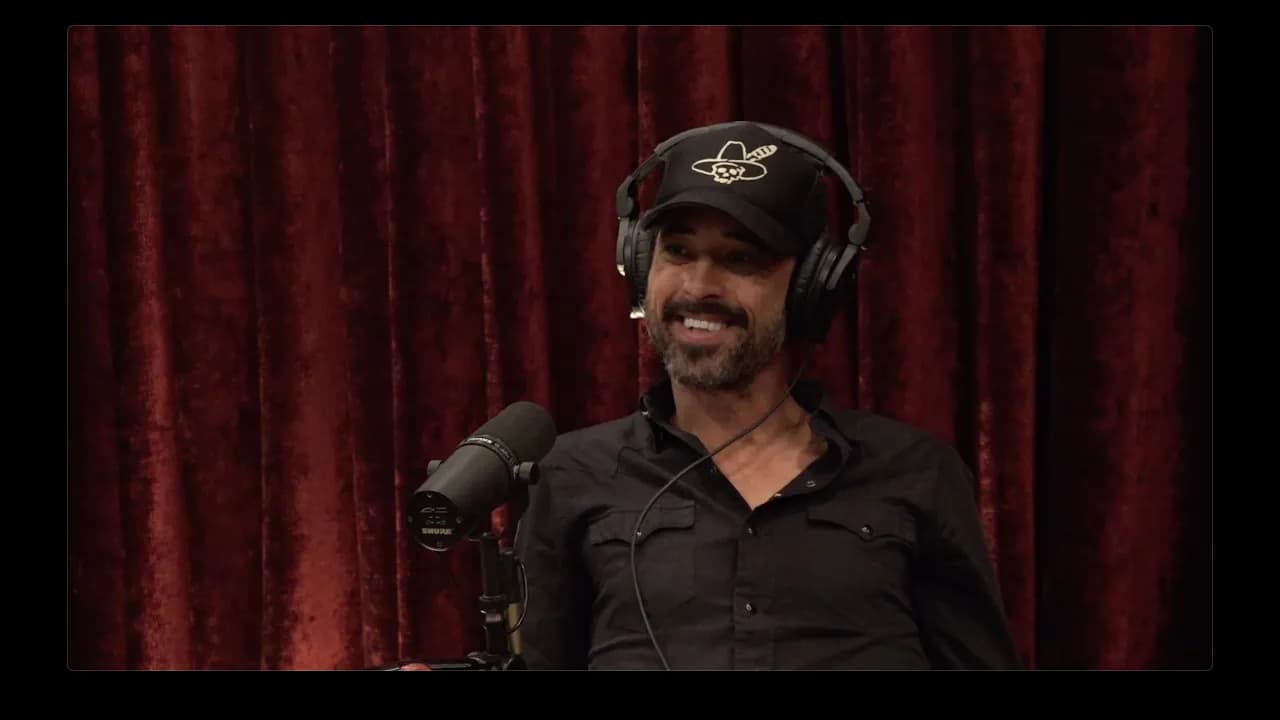
Joe Rogan Experience #2468 - Luke Grimes
In a Nutshell
Joe Rogan and Luke Grimes discuss Yellowstone's success under Taylor Sheridan, Grimes' music career struggles with stage fright and impostor syndrome, and passions like hunting in Montana, MMA's evolution from UFC origins to modern stars like Fedor and Dagestanis, and jiu-jitsu's life lessons in humility and resilience. They critique Hollywood's fake culture, fame's ego traps, Vegas gambling excesses, Bigfoot skepticism, and social media's insanity versus nature's grounding, emphasizing showing up daily for creativity, avoiding hard drugs/hangovers, and prioritizing family over touring or risky thrills. Key takeaway: Pursue hard passions like BJJ, hunting, or comedy to build mental toughness, stay humble amid success, and live close to wild nature for true sanity.
These notes were generated by AI and may contain inaccuracies.
Joe Rogan welcomes Luke Grimes, who has listened to the show for years. Rogan praises Yellowstone as awesome and asks if Grimes knew it would be so successful. Grimes says no one did; Taylor Sheridan was hot in film, nominated for Oscars, surprising he wrote TV. Rogan marvels at Sheridan's output: new shows constantly. Grimes calls it impossible, unlike directing a movie like Unforgiven (directed by Clint Eastwood, greatest western ever). Sheridan makes up for silly westerns, showing real hardships, stone-cold killers. Munny starts timid, loses power, one whiskey sip changes everything.
Sheridan scrambled until almost 40, real-life Rocky rags-to-riches. Knows poverty, had kid on way, buckled down, kept foot on gas. They keep in touch; Rogan loves him, worries about heart attack from workload. Sheridan balances fun life, family, friends. Moral: don't play golf, it takes time. Jamie's a golf addict with simulator. Rogan refuses despite friends like Ron White, Tony Hinchcliffe playing daily; 6-hour commitment, addictive for him.
Can't play golf and match Sheridan's output, nor Trump (criticized for golfing too much amid chaos). All presidents golf, make deals with cocktails. Rogan prefers wilderness over manicured lawns, addicted to pool instead: 8 hours/day in NY, tournaments, travel. Plays competitively now, but limits time. Music and acting hard to manage with 18-month-old; no sleep. Music low-pressure passion alongside day job acting supporting family. Won't tour excessively to stay with family. Touring at 40 tough vs. 20s (bus with 12 dudes, drinking, country music). Full tours: 3 shows Thu-Sat to cover bus/equipment/salaries.
Standup easier logistically. Rogan did 2007 Bud Light Maxim tour with Charlie Murphy, John Hefron: 22 dates in month, woke disoriented (e.g., Columbus). First standup scarier than first fight; nearly chickened out. Grimes gets stage fright every music show, wants to cancel. Always drummer in bands, wrote songs but never frontman. Loves studio/writing/recording, hates performing for ticket-buyers (impostor syndrome). Started acting 20+ years ago; music impostor syndrome worse.
First singing stage at 39. Karaoke before. On Yellowstone set, manager Matt Graham called: loves show, bet on record deal. Talked 2 years; father's death pushed him: do what you want. Made album as successful actor. First show: Billings, Montana, Pub Station, 1,200 people; blacked out on nerves (shaking, no beta blockers). Fourth: Stagecoach (big stage, earlier slot). Improves but persists. Oliver Anthony's first live show: 20,000 people after Richmond exploded fame.
Anthony freaked out post-fame. Rogan advised pre-deals: don't sign, got talent, avoid vampires offering $7M advances. Was heavy equipment salesman; one song, guitar in field. Grimes: opposite story, actor got deal easily, but lacks cool backstory (worked hard from nothing). Forces harder work to prove legit against "pretty boy TV star" hate ("Fuck Casey Dutton").
Rogan followed passions luckily. Podcast started fun, not profitable; skipped Disneyland once, now wife grateful. UFC 1997: UFC 12, Dothan, Alabama high school auditorium, propeller plane, DirectTV only, empty crowd. NewsRadio cast warned it'd ruin career like porn/snuff films. Rogan hooked since UFC 2 VHS from Blockbuster (Bloodsport era). Karate vs. judo debates settled by UFC proving most effective martial art.
Rogan hated LA actors/producers/casting agents as fake groupthink vs. raw fighters/comedians/pool players. Lived 16 years; everyone trying to become same undefined person, adapting to industry. Same progressive politics signal something wrong. Desperation from leaving families for dream molds them. Ruins comics: TV success tempers material, velvet prison. Grimes has boss (Yellowstone company), self-censors even here (no trans talk). Acting requires casting approval; many seek attention missed in youth. Rogan became comedian for fame.
Luke Grimes decided he wanted to be an actor at age 5, without knowing the craft. He loved movies more than his own life and wanted to live in them. At the movie theater, he believed he could do whatever skill the actors had. He credits being somewhat right, or he'd be waiting tables in LA.
Joe Rogan notes acting seems like normal life—pretending to act and behave believably—but there's a crew with a bearded guy holding a microphone, 200 people waiting, sipping coffee, judging if you mess up a line.
It's a weird gig, man. It's a weird gig. And it's not what most people think it is.
Real masters like Daniel Day-Lewis or Gary Oldman transform completely; you believe Gary Oldman as Dracula despite knowing it's him.
Both Daniel Day-Lewis and Gary Oldman are amazing. They discuss Slow Horses, a great show; Joe loves it and can't wait for the new season. Gary Oldman plays the lead, a total piece of shit, unlike typical leads except Tony Soprano.
The Sopranos was groundbreaking: a murderer and thief you love. James Gandolfini was believable with real danger in his eyes from personal demons. He sustained that intensity for seven years on TV, harder than a couple months on film. There was menacing danger; you believed he could kill. He was out of control; his pre-death consumption list is bananas.
Joe asks if Luke has seen the Hunter S. Thompson daily routine narrated in a dance song by him and Greg Fitzsimmons, with Beardy Man. They can't play it due to revenue issues. Hunter's end-of-life Conan O'Brien appearance was sad—he could barely talk, mumbling, after being smooth and articulate. Drugs and booze destroyed his brain.
Luke hasn't read Hunter; Joe recommends starting with Fear and Loathing in Las Vegas. Hunter got a Sports Illustrated assignment to cover a motorcycle race, brought every drug, drove through the desert with a friend, wrote an insane book about chaos in Vegas unrelated to the race. Brilliant.
Joe goes to Vegas for fights, restaurants, pool—considers living there but no. Talking to Tony Hinchcliffe about Kill Tony (huge show, sells out arenas, on Netflix), a Vegas casino offering big money wouldn't work. Vegas feels like sleeping next to a vampire or booze you get sick from—gross upon landing.
People in Henderson and outskirts love it: beautiful neighborhoods, stores, restaurants. But next to the Death Star—neon vacuum sucking money. Everyone there to lose money, make bad decisions. Casinos built on suckers; unfair exchange. If you win too much, they kick you out.
Luke never gambled much, bet on fights, played blackjack a few times, no real losses.
Dana White is a degenerate gambler. Joe visited at Red Rocks Casino; Dana down $600,000 on arrival, normal night, casual handshake. Joe got massive anxiety. Dana coached Taylor Lewan on blackjack; Taylor down $125,000 in five minutes, then quit ahead $100k. They play back betting up to $500k per hand.
Baccarat: bet on dealer or player, big long table. Dana switched to it for faster, higher gambling—mainlining it. Lost $6 million one night on Flagrant podcast.
Joe theorizes Slap Fight is Dana's gambling revenue source outside UFC to not lose UFC money. Tough to watch: saddest people getting brain damage. Insulting to call it fights.
Dana loves Vegas action. Joe wouldn't live there, even outside. Discussed second Comedy Mothership in Vegas or New York; Vegas no due to needing presence for right vibe—friendly, supportive of new comedians.
New York better: more talent for headliners, Tuesday/Wednesday shows. Austin worked because pandemic exodus: Ron White, Joe, Tony Hinchcliffe moved; LA shut down 1.5 years. Started indoor super spreader shows November 2020. Tom Segura, Christina Pazsitzky, Tim Dillon, Shane Gillis moved. Now 17-18 world-class comics live there, seven comedy clubs on Joe's street—one big live comedy hub.
Pre-pandemic: Cap City for sale (Joe considered buying), Velveeta Room (100 seats), small scene.
Luke lived in Austin December 2019 post-marriage (wife Brazilian, him Ohioan, post-16 LA years). Best two months, then lockdown in apartment. Bought Airstream, traveled, parked in Montana for Yellowstone work, never left.
Montana awesome, best. Joe hunted pheasants there with Bourdain near Billings/Bozeman—one of last times seeing him. Summer perfection: green, mountains, wolves howling, elk herds, light till 11pm (confusing for dinner), winter dark at 4:30pm.
Opposite of LA, no FOMO—just think, sleep, read, watch films. Yellowstone brought unhappy transplants. Locals wrote "go back" on California-plated cars after hikes. Similar 2012: Missouri Breaks restaurant rental car vandalized "Montana's for Montanans."
Retards everywhere; if 100 people, one's idiot. Town of thousands has dumbasses claiming ownership. Everyone's ancestors moved somewhere. Most American: choose where to live. Like band fans hating success. Montanans fiercely proud, state generations (Luke third-generation via son). Yellowstone Club: fake Montanans to locals; sewage dumped in river, locals angry. Rich people disregard others. Views insane, mountains center and humble you—natural art. Driving to grocery fun vs. LA hell. No fast pace, socialization, dating.
Austin upset at Californians blaming Joe, Elon—now more awesome: restaurants, comedy.
Luke attached to film as stand-up, planned 15 minutes material but glad it fell through. Seems easy—people talk, tell stories—but hard. Joe bombed first night but hooked by couple laughs.
Joe Rogan was more scared before a big fight than during it. Whitney Cummings explained that people fear public speaking because in tribal societies, speaking in front of a large group meant you were being judged and possibly killed. Example: "Guys, I didn't steal the tomatoes." No place to hide, especially if bombing on stage.
People have recovered from bombing sets. Joe has done it a couple times, but usually bombs forever. Bombing forces reexamination of material: review recordings, trim, change things. Losses are important in fighting, comedy, and life. Joe advised his kid after a breakup that it builds resiliency. Shared story of first breakup at 17: devastating, felt life over, but taught that it's a moment in time. People don't know what they're doing in relationships; breakups and makeups teach lessons. Losses prompt self-reflection: Why am I annoying? Selfish? Why pick heart-breaking partners? Adjust, spend time alone to figure yourself out.
Bombing motivates comics to improve career or wreck confidence forever, like fighters who lose and never recover or emerge stronger.
Charles Oliveira: Thought quitter for long time, now one of scariest fighters. Dominated Max Holloway (2-to-1 favorite) every round last weekend, shut him out despite ground focus. People complain about ground battles, preferring slugfests, but it's the sport. Exciting watching dominance over world champion.
Luke wishes he started jiu-jitsu young; tried late 30s, feels like being smothered, takes long time to not feel chaotic. Joe: Layers of intuition even at black belt; humiliated by better like Gordon Ryan (Abu Dhabi champion, greatest grappler ever, 30 years old, trains 365 days/year, 2-3x/day). Gordon predicts submissions (e.g., triangle) on paper before fights, passes others, plays with world champions. Competence in 2 years with consistent training. Anthony Bourdain started at 58, got shredded, trained daily/privates, everywhere including foreign countries, local gyms while filming. In Montana hunting, learned Japanese necktie on dirt, inspired crew.
Great for kids' confidence; prevents drug addiction if passionate (can't do both). Know how to fight avoids fights via reputation/quiet confidence. Most untrained swing wildly (see right foot back). Street fights scary: head hits ground, stomps/kicks when out lead to death/jail. Fighting teaches not to fight; trained friends avoid street fights.
Joe never fought since high school, avoids. Pointless: revenge possible (run over, shoot). De-escalate by hands up, moving. Untrained can't hurt trained unless asleep/drunk. Gordon Ryan put homeless guy to sleep in Austin after guy messed with girlfriend/other, called cops.
Street fights pointless; MMA is organized high-level problem-solving with physical consequences, like chess match where you can't breathe, infinite variations plus striking/wrestling. Joe loves MMA most, prioritizes over other sports.
Luke prefers MMA's one-on-one high stakes over team sports like football (didn't grow up with it). Joe grew to love football via wife/UT games: communal cheering when team scores, everyone in colors.
MMA champions are special humans: dedication, drive, focus, discipline, courage. Enter cage in underwear, tiny gloves, vs. trained killer after 18 weeks prep, door shut, referee: "Fighters ready?" Whole world watching.
Hard to sleep night before; Joe got sick before tournaments from hard training/no sleep/no vitamins (stopped fighting at 22). Fighters learn to relax, become scarier. Anderson Silva won at weigh-ins via stare-downs. Mike Tyson scariest: opponents fainted in staredowns (e.g., Bruce Seldon). Ran through everyone 1986-1990; PPV buyers hoped for money's worth despite quick KOs.
Trainer Cus D'Amato (trained Floyd Patterson, Jose Torres; hypnotist, psychologist) adopted 13yo Tyson from Bedford-Stuyvesant, taught: "You don't exist, only task exists." Manager Jim Jacobs: boxing historian with library of greats (Jack Johnson, Stanley Ketchel, Sandy Saddler, Roberto Duran). Tyson absorbed old fights on projection. Modern MMA skill exploded from accessible footage; kids imitate elites like Jon Jones, Cain Velasquez. Tyson had rare access then. Fought no socks/no robe like old-schoolers (Sugar Ray Robinson) who fought weekly/biweekly.
Dude, is that how often they were doing?
Oh, they fought so many times. I think
Sugar Ray Robinson was 90-0 before his first loss. Those fighters fought many times. Watching that kind of stuff young allows absorption. Kids playing instruments now, like an eight-year-old online better than any drummer in the 70s, improve quickly with constant access to everyone.
This applies to all sports. Basketball players can watch Jordan, Larry Bird, LeBron, Kobe. In the 60s or 70s, you only saw local people, so being in great high school/college programs was crucial. Then going to the States shows better competition.
Joe Rogan shares wrestling story: At Newton South High School, their wrestlers seemed good until states or camps. Kids there wrestled 365 days a year, obsessed. In Iowa, it's a religion; they've done it since babies. You absorb what you see, brain rises to competition level.
Last boxer really into was Lomachenko (Loma). Cool story: Dad pulled him from boxing for two years of Ukrainian dance. Moves unreal, like Matrix. Footwork no one considered: slipping side, angles, changing direction. Smaller than everyone: 126 lb supposed, up to 140 lb division.
Is that style common in younger guys? One-off. Usyk does it, trained by Lomachenko's father, so heavyweight Lomachenko. Usyk beat Tyson Fury (280 lb) as cruiserweight, really 200 lb blown up. Fast, pattern recognition, elite boxing understanding. At 38, in prime. Clean life, serious Christian, rigid discipline, no partying.
Ukrainian/Soviet discipline: Comprehensive technical program, e.g., Dmitry Bivol best example. Movement-based, difficult. American fighters rigid, forward, big shots. Bivol moves around, popping you. Like Dagestani guys in MMA.
Dagestanis taking over striking. 22-year-old Abdulla Imangazaliev destroying world champions in Muay Thai. Freak, fluid, moves uniquely. Tall for weight class, keeps distance, fucks you up from outside. From hard world, fighting for dinner. Culture reveres combat sports: Islam Makhachev, Khabib Nurmagomedov legends.
Fedor from Russia, first big one. Even keel, stoic mindset, heart rate unchanged, expression never changed. All-time great. Heavyweight who submitted/knocked out, fast, 5'11, unassuming, belly fat, didn't care about looks, all about performance.
Part of MMA emergence in Japan, Pride days huge: 90,000 in Tokyo Super Dome. Yakuza scandal ended it; MMA bigger there than anywhere.
Joe went to UFC in Japan: Fans educated, quiet during fights, clap for technical moves like guard passes. Hear corners yelling. 16,000 people, silent, respectful, knowledgeable.
In person best for energy, but spoiled seat near cage. Nosebleeds better at home for commentary, replays, close-ups on big TV. First time close: Paddy Pimblett fight, amazing, different sound.
Favorite: Pandemic Apex fights, no crowd, world titles, 50-100 people (staff, trainers, fighters, friends). Smaller cage, 40% smaller. Less movement space. Francis Ngannou vs. Stipe Miocic there: Hear bat-on-pumpkin hits, breathing, grunts, coaches yelling "Hands up, move, 1-2."
Amazing crowds great too: Vegas, Madison Square Garden (history). Favorite Apex.
Nervous about White House card amid war, room for tomfoolery. Not all world titles as wanted. Matchmakers hard: Fighters always injured, train/fight hurt, staph infections, muscle pulls, antibiotics affect endurance. Francis Ngannou beat Ciryl Gane with blown ACL, one leg. Alex Pereira beat guys with broken foot, bad knee needing surgery. Vs. Jiri Prochazka, knocked out, forward roll off due to leg, surgery after. Not known during fight.
Big in Brazil house. Brazilians love each other; wife cheers any Brazilian fighter. Brazil where MMA started: 1930s fights.
Helio Gracie father of Gracie clan, greatest martial arts story. Carlos, Helio, Carlson Gracie competed no-rules fights in Brazil 1930s-40s: No time limits, no gloves, giant crowds. Figured out submissions from judo (mostly throws), created Brazilian jiu-jitsu (BJJ), more technical than Japanese jiu-jitsu. Even Japanese train BJJ now. Can't really compete purely Japanese; BJJ everywhere, including Russian sambo.
Helio UFC not best: Brother Rickson killed him. Rickson undefeated freak: Yoga, meditating, stomach breathing, flexible (splits on balance bar), strength/conditioning. Taught seminars, rolled non-stop with black belts/world champs, tapped all.
Wrote book, documentary Choke on Vale Tudo Japan rise. Pride based on him, first Pride champ, superstar in Japan. They chose smaller Helio for technique demo; plan throw in Rickson if needed (boogeyman). Friction with brother Rorion (UFC starter).
UFC 1: Art Jimmerson one glove to hold/punch right. No one knew; thought striking until takedowns. Helio fucked him up. Changed martial arts; Joe started BJJ immediately after Taekwondo/kickboxing. Cocky at first, got manhandled as beginner.
Humbles quick. To start: Get trainer for one-on-one drills, repeat finer aspects, then group classes. Boxing/Muay Thai feels good hitting bag. BJJ rolling frustrates more, but first tap (armbar, triangle) revelation. Trust process, tall mountain, body doesn't know motions. Drill without resistance to program body: Switch hips, catch arm, secure legs automatically. Live sparring alone causes panic.
Injuries part of it (knee/ankle), but find good partners, avoid spazzes (strong blue belts yanking). Good grapplers avoid spazzes.
Bourdain 58-year-old white belt, got to blue (maybe purple), won tournaments. Obsessed despite no athletic background. Had substance abuse past; addicts excel channeling to good thing. Flip side: Sport addicts become drug addicts, same brain hijack.
BJJ good for head: Hardest thing (I kill you or you kill me). Tapping means "you killed me, thank you for not." Rest of life easy after. Stress of fame/Hollywood nothing vs. arm triangle. Choose harder thing (mind/body/spirit) makes other tolerable. Keeps humble.
Fame leads to intoxication from constant praise, an easy trap where actors become inflated. Luke Grimes notes he's never thought he was great at anything, enjoys activities but is hard on himself, avoiding external validation. Once validated externally, you're screwed because you believe it.
Being a star means the show's world revolves around you, with everyone kissing your ass, creating a reverent atmosphere that's weird. This is new for Grimes after Yellowstone's success and his new hit show where he's number one on the call sheet, treated as an asset.
Production insurance restricts dangerous activities like jiu-jitsu, skiing to avoid shutdowns from injuries. Horseback riding, required for the show, is the most dangerous and scares Grimes; it didn't come naturally.
Joe Rogan's daughter did horseback jumping in California, fell multiple times, badly hurting her wrist once; he begged her to stop, citing risks like Christopher Reeve's paralysis from a similar accident.
Neither rides motorcycles. Rogan took lessons with Fear Factor crew, enjoyed it initially like a dirt bike, but three friends had accidents soon after: one wiped out and messed up shoulder, one hit by car broke leg, one witnessed rear-end crash sending rider flying.
Rogan had a bike in LA, rode Pacific Coast Highway, nearly crashed into cliff by staring at it while zoned out alone; decided he didn't love it enough to die that way and quit.
Grimes might ride in low-traffic Montana. Rogan's 70-year-old neighbor Steve hit a deer at 70 mph on BMW adventure bike, killed the deer, got road rash, recovered in weeks; he's a tank with 500-yard backyard range, every firearm imaginable; they shoot together.
Deer videos show them leaping in front; suicidal deer pop out near Grimes' house, especially during rut when bucks chase erratically.
Rut makes deer dumb when horny, once a year. Humans rutting once yearly would cause chaos: murders, car accidents; Rogan would bunker with Netflix. Movie idea: The Rut—genetic engineering for overpopulation, breeding only in November, eliminating dating app/bar distractions.
Grimes' 20s/30s wasted on it; bucks ignore does in June without antlers, lose masculinity; antlers fastest growing bone, elk 400-inch racks in months; elk fight to death, often found killed by others.
Grimes hunted mule deer, pheasant in Montana; with Bourdain; whitetails from age 10 in Ohio; first elk hunt public land near Dillon with contractor friend, bow hunt, camped a week, tapped out day four from leg fatigue.
Prepares with Tabata sprints on Airdyne bike (20s sprint/10s rest), box step-ups, weighted vest, farmer's carries with heavy kettlebells for hills/legs. No local mountains; used to hill run with dog in California.
Elevation worsens it; temperature swings 0°F mornings to 50-60°F days require dressing cold in base layer, add layers when stopping. Merino wool key: wicks sweat, doesn't chill like cotton; organic, not synthetic.
Deer hunting: walk to tree stand in half gear, add rest to avoid sweat freeze; freezing silent retreat, weak bow pull from cold.
Elk hunting blows mind: constant all-day with mountain goat locals; can't start from couch, need shape like ultra-runner Cam Hanes (250-mile, 3-day runs).
Amazing glassing at sunrise far out. Grimes missed last years (baby, shooting show) but going this year. Satellite phones: T-Mobile/Starlink soon, iPhone texting, 911; Rogan uses Starlink Mini (iPad size, high-speed internet via app) in Utah woods.
Elk excitement: moving targets, play wind, demonic screaming bugles like T-Rex. Difficult: shape up, navigate mountains day-after-day, brief 65-yard shots; mess-ups common, success grilling steaks unbeatable.
Vitamin-like: impossible to be mentally unwell, better air/focus/aliveness, nature's majesty (eagles, trees, mountains); day three want to live there permanently.
Grimes wants mountain retreat to disconnect; with kid, school concerns—hour south of Missoula (good schools/university), might need populated area plus cabin.
Records demos in home setup like mic/computer; writes songs in Montana. Process varies: melody, riff, lyrical hook; solo or Nashville co-writes.
Coolest: making something from nothing, addicting like jokes—ideas from ether, can't take credit; show up/receive (Michael Pollan discussion).
The War of Art by Steven Pressfield: treat muse/god like entity, show up daily on time; some days nothing, keep going—ideas come mysteriously when mentally/emotionally/spiritually good (sleep, self-care).
Some (Aness Thompson, Hemingway) get it blasted to escape heads; Stephen King's On Writing great, wrote masterpieces obliterated but later work incomparable after sobriety; some clean artists/comics lose edge (David Tell improved quitting drinking).
Joe Rogan describes his essay-style writing process for comedy. He ruminates on ideas like immigration, exploring every angle in 2,000 words to find one perfect paragraph. He extracts it, introduces it on stage, segues into it, expands it, and considers opposite perspectives—what if he were on the other side or experiencing it personally. He compares building jokes to layering paint on a mountain, a brutal process, though some jokes arrive fully formed. > "The key is just showing up." He types on a computer because he touch-types faster than handwriting, capturing thoughts quickly, cutting, pasting, and reorganizing. Some prefer notepad and pen.
Luke Grimes recounts a unique "pressure cooker" process for his new album: only two of ten songs pre-written; eight written the day of or night before in the studio to keep it personal and authentic, avoiding gimmicks on heavy subjects like grief. The goal was truth-telling, core to country music. They'd write after cutting tracks or early the next day. No demos—straight from heart/brain to tape. This cathartic method avoided over-familiarity from repeated demos. > "I doubt I'll ever do that again."
Pressure forces creativity, like synapses firing. In comedy, testing unfinished bits live reveals beats and sparks new ideas under crowd pressure, creating flow states without procrastination. John Mellencamp wrote "Hurt So Good" in the shower: > "Come on, babe. You make it hurt so good. Sometimes love don't feel like it should." He chain-smokes in his 70s; > "Find something you love and let it kill you."
Luke Grimes plans to quit smoking before his kid arrives, using nicotine pouches, but struggles pairing drinks with smoking—may need to quit drinking too. Joe quit drinking for eight months, missed it moderately, now drinks sparingly (wine with dinner, pre-stage), avoids hangovers and drunkenness. Owning a comedy club led to fun shots with animal friends like at Mitsy's bar, but mornings wrecked workouts despite water, electrolytes, cold plunges. > "Getting drunk is the problem." A glass or two of wine leaves him fine with hydration and sleep. Day-drinking at bars or airports connects strangers. At 42, hangovers deter Grimes; at 58, Joe prioritizes fitness. Shane Gillis pushes shots, making it irresistible fun—red faces, crying laughter—but costly, especially hungover around kids. > "Nothing makes you feel like a bigger piece of shit than being hungover in front of your baby."
- Glutathione: Liposomal in high doses processes alcohol faster.
- Electrolytes: Combat dehydration; brain like a dried sponge.
- Avoid "hair of the dog" (craving more alcohol, e.g., Bloody Marys).
Jean-Claude Van Damme hydrates with a gallon jug per gym session or shot. Joe hasn't interviewed him; he'd be fun but talks comeback fights at 70, linked to cocaine indulgence.
Luke avoided cocaine; Joe never tried it, saw a high school friend's cousin destroy himself selling/using it—haunted, skeletal, sketchy, TV all day. Fear of becoming a loser kept him away. Ambition course-corrects darkness. Substances take over aimless lives. Hunter Biden praised smoking crack over powder (faster delivery like cigarette vs. Zyn pouch); Richard Pryor freebased it. Heroin and smoking crack hook instantly. Joe hammered a morphine drip button post-ACL surgery ('90s), euphoric despite pain, but Percocets dulled him—he sold them. Military morphine lollipops for wounds; fentanyl versions stronger. Fentanyl-laced bags kill today.
Plane crash: five minutes strapped with screaming strangers. Bear attack worse—no audience, eaten alive legs-first without quick death (bears eat salmon-style). Grizzly Man: Timothy Treadwell and girlfriend's audio (lens cap on, camera running) so horrific Werner Herzog ordered it burned. Fake versions online; real lasted five minutes.
Joe saw a six-foot grizzly in Alberta with guide Jen (Jen and John run hunting outfit). Grizzlies lock eyes predatorily unlike skittish black bears; Jen screamed it off, racked shotgun, cracked tree. Husband John pepper-sprayed a big one from a tree—no effect. Grizzlies: 9 feet, 45 mph. Montana/Wyoming full of them; bowhunting requires sidearm (9mm useless—"shoot yourself"; needs .45 or 10mm). Cam Hanes bow-hunts/stalks grizzlies, killed several; > "If this is how I go, this is how I go." His photos: paw as big as torso, massive claws. Recent record bear in Alaska (only legal state). Spot-and-stalk on ground; rifle backup needed. Lower 48 illegal despite human conflicts; delisting hard for tags. In Alaska, bears fear humans more.
People hunt grizzlies, creating fear of humans, which is better than zero fear. In Montana, Wyoming, and Idaho, grizzlies have zero fear of people. Discussion of a 1,600 lb grizzly, second biggest ever taken by 100 lbs, described as immense and terrifying.
Reports of Bigfoot sightings in Ohio, possibly pranks or black bears walking upright. Sightings reported from 8 to 11 feet tall, but sizes are guesses without measurement. Someone at a show claimed his dad filmed the Patterson-Gimlin footage. Trail cameras everywhere make it unlikely Bigfoot is real, as no clear photos exist. No hunters in Pacific Northwest have seen one. Joe Rogan and Duncan did a show looking for Bigfoot, concluding it's people in Sasquatch costumes. Multiple sightings on March 6th, 7th, 9th, and 10th by different people, possibly a group pranking by calling in reports or running in woods, but risky during hunting season.
Bigfoot may have been real due to dozens of Native American names for a big hairy wild man in woods across tribes. Possibly Gigantopithecus, with bones found only in Asia, but Bering land bridge allowed migration to North America via Alaska and Pacific Northwest. Alaska has many sightings, likely bears or cracked-out people. Native stories thousands of years old.
Michael Button, historian on ancient civilizations, notes dinosaurs existed hundreds of millions of years with only thousands of fossils. Fossilizing is rare, requiring perfect conditions; most things never fossilize. Humans in North America at least 22,000 years ago per White Sands, New Mexico footprints carbon-dated via seeds and organic matter (previously thought 13,000 years). Likely earlier, possibly 50,000 years ago, aligning with Gigantopithecus fossils dated 100,000 years old. Gigantopithecus teeth found in 1920s-30s in Chinese apothecary shop; jawbones later confirmed bipedal, 8-10 feet tall, orangutan species giant primate.
Younger Dryas impact theory: comet ~11,800 years ago ended ice age, created Great Lakes, melted North American ice. Eliminated 65% of North American megafauna: woolly mammoths, giant sloths, American lion (bigger than African lion). Debate exists, but many scientists convinced. Berserker theory (humans overhunted) unlikely—no bow and arrow evidence, ice age people with stone-tipped spears on foot, low population. Comet more likely wiped them out, possibly including Bigfoot.
Sasquatch recordings (called samurai recordings) sound like fake Japanese speech. Bigfoot enthusiasts get defensive. Joe met committed group in Pacific Northwest outside Seattle; one lady convincingly saw 'gorilla in woods,' likely bear standing upright (black bears do this, especially with hurt paw). Dense Pacific Northwest woods like box of Q-tips; glimpsing tall figure creates narratives.
Finding Bigfoot's Bobo upset when told Patterson-Gimlin is fake, looks like guy in gorilla suit. Man thought to be in suit walked identically, big tall cowboy. Roger Patterson filmed it; possibly he or Gimlin in suit. Side-by-side comparisons match.
No flat earthers on podcast, but some dabble—dismissed as crazy. Earth round like everything else; space station orbits, photos, satellites exist. Flat earth believers claim fakes, often schizophrenia or biblical (firmament). Bible never says earth flat; ancients knew it was round (snipers calculate curvature). Pilots don't manually adjust for curve due to autopilot maintaining altitude. Guy flies flat earthers to Antarctica proving it's flyable, not ice wall; restrictions due to crash risks. Possible secret WWII bases, weird experiments, directed energy weapons, neutrino detector possibly causing earthquakes/weather manipulation.
Era of all information yet no government trust due to Epstein files, JFK. Older generations distrusted; now everyone does with evidence. Moon landing skepticism: if they lie about Vietnam, Kennedy, 1960s events (controlling info), why trust that? More info access today means more reasons for distrust.
While deciding to move to Montana, Joe and wife on mushrooms saw sky performance with friends; others on same dose didn't see it. Felt like personal spiritual sign confirming move. Montana/Wyoming wild, humbling, untainted nature.
Nature is novelty now, but concrete should be; humans meant for it. Guy above Arctic Circle in Vice doc Hinmo's Great Adventure lives in log cabin since 1970s, hunts caribou, fishes, gets supply drops. Describes calm, natural life.
City/phone/Instagram makes insane; going outside restores sanity, hope via real interactions. Phones bridge to crazy, feeding AI terrible online data, accelerating negativity. AI misses real world (99% fine), art, love, community, neighbor shooting 500 yards, 70-year-old hunting deer like John Wayne.
AI makes incredible songs in 10 seconds from prompts, but derivative conglomerations. Humans mostly derivative too, but personal. Support underground artists before fame. First Coldplay album amazing, but hated for hugeness/stadiums/mom appeal. Nickelback like first AI music: perfect autotune, generic 'Rockstar' (Cypress Hill's more genuine), sounds inhuman, heard-it-before subjects.
Joe expresses enjoyment in the discussion and thanks Luke for being on the show. Luke reciprocates, saying he loves the show and can't wait for Joe to watch Marshals because he enjoyed Luke's role on Yellowstone, calling it a great show. Joe mentions being bummed that Luke's wife is dead now.
Luke agrees it sucks and shares that it was rough. He loved Kelsey and working with her, but notes you don't want to just watch a guy be happy, as that wouldn't make a good show. They needed a motor for the character.
Joe comments that they had a cool relationship. Luke acknowledges it was fun, but the character had his dream life and they were happy together, so you can't watch that for 50 hours or however long the series ends up. Joe praises the creator, saying Taylor knows how to throw a monkey wrench into things, make it crazy and interesting.
Luke agrees absolutely. Joe reiterates excitement to watch it. They thank each other, with Luke saying thanks for having him and Joe bidding bye to everybody.
"I love your [] show. I can't wait to watch Marshalls because I love you on um Yellowstone. It's [] great show."
"Ultimately, you don't want to just sit and watch a guy be happy."
"You can't watch that for 50 hours or however long this ends up going."
Keep PowerfulJRE in your library
Save the videos and channels worth coming back to, and find them again in one place.