Low Reps Aren’t Worth It (for Muscle Growth)
In a Nutshell
Low reps (under 5-10) are not required for muscle growth and carry higher injury risk, especially for older lifters or those with prior injuries. Research shows sets of 5-30 reps taken close to failure produce equivalent hypertrophy over 4-16 week training blocks. Dr. Mike trains primarily in the 10-20 rep range for safety and recommends beginners start with 5-10 reps for foundational strength before experimenting with all rep ranges as an intermediate.
These notes were generated by AI and may contain inaccuracies.
The number one reason people lift heavy and for lower reps is because it's fun as hell and it strokes your ego. That's a real thing. People who train heavy have a higher chronic injury risk. If you go heavy all the time, your probability of getting injured is much higher than if you go light all the time. If you're bigger and stronger, you can exert more force and more force is what causes injuries. If you just want to be jacked, then you have to be open to all rep ranges as potential tools in the toolbox. Be careful looking for that one correct rep range for yourself because it literally might not exist.
Dr. Mike from RP Strength no longer trains with sets of under five reps and often trains with sets of more than his 10 rep max for muscle growth. He stopped doing anything less than really 10 reps or his 10 RM based on research insights and safety insights.
There are 20 years of research on rep ranges and growth with multiple reviews of literature saying the exact same thing. Between sets roughly between your five rep max (though a little lower is fine) and roughly your 30 rep max (though a little higher is fine), as long as those sets are taken close to failure (three reps in reserve or closer), those sets are roughly equivalent over months of training time for muscle growth. Study after study shows that set for set, hard set for hard set, close to failure set for close to failure set, within the context of 8, 12, 16 weeks of training, high rep sets and low rep sets cause undifferentiable growth on average.
This does not mean that rep ranges and growth is identical for everyone. This also doesn't mean that if you train for a long time, maybe going a bit heavier or going a bit lighter is a long-term, years, better strategy. But it does mean that in any given program that lasts 4 to 16 weeks, you grow about as much muscle with sets of six reps on average as you do with sets of 18 reps on average, set for set.
The number one factor in injury risk in lifting is the amount of load on the bar. Your two repetition max is categorically heavier than your five rep max, than your 10 rep max, than your 30 rep max. Training in the five to 10 rep range is categorically more risky than the 15 to 20 rep range. If you have a history of prior injuries to an area, the probability that lifting heavy will make you hurt again is much higher. Your probability of getting hurt from heavy weights is much higher if you're bigger and stronger. Major muscle tears are way more common in male super heavyweights than they are in female lightweights by orders of magnitude, factors of 10.
Your chance of injury goes up if you're in a high fatigue state. If you're benching 190-200 for sets of five and you're really fatigued but still grind through the set, that set is very high risk compared to if you weren't fatigued. Fatigue doesn't itself mean that you're going to get hurt. If you combine high fatigue with a load of willpower and a lot of caffeine, your probability of injury is just straight up higher. Getting older increases your probability of injury past your 20s and definitely into your 40s and older.
Dr. Mike gets excellent growth from sets of 10 to 20 repetitions. At 41 years old, he's injured damn near every single part of his body. He has the risk factor of prior injury. He's pretty big and pretty strong relative to where he started (100 lb freshman year of high school). Every time he's pushing it hard in the gym, there is a distinct risk of injury. He's often traveling or in a high fatigue state from work. He loves training and if he gets hurt, he can't train. For him, injury is a giant "I'm not."
Dr. Mike does most of his working sets, especially in the first set when fresh, in the 10 to 20 rep range. He typically uses his 12 to 22 rep max. Most of his sets are somewhere between 10 actual reps, two reps in reserve, and 20 reps, two reps in reserve. The reps fall with each successive set. Sets of eight are usually for later in the workout when he's more tired for that same muscle, not his true fresh 8 RM.
Lower reps have a higher acute injury risk because they're heavier. They have a higher chronic injury risk. They require longer warm-up demand in many cases, especially in large muscle mass compound movements. When training heavier and for lower reps, you have more precise equipment demands - you need the right rack, belt, shoes. Lower reps and heavier weights confer more spotter responsibility. At high volumes, you experience more deep psychological fatigue. For general fitness, lower reps don't confer as much cardiovascular health advantage as higher reps do.
Lower reps have lower metabolic fatigue. They're less painful at the end of sets. For the average person, you're more likely to hit your reps in reserve target because there's no pain. Some muscles and some movements love lower reps - some people's forearms like really heavy weight, hamstrings in many people respond really well to lower reps. Exercises like good mornings and stiff-legged deadlifts are limited by spinal erector fatigue, so you really can't do them for sets of 15 because then it's just back work. Lower reps, especially sets of 5 to 10, are amazing for reinforcing good technique for beginners. The number one reason people lift heavy and for lower reps is because it's fun as hell and it strokes your ego.
Individual differences are massive. Some people grow muscle way better on higher reps, some on lower. Even individual muscles like triceps versus biceps have different rep range ideals in many cases. Your quads could love higher reps and your glutes could love lower reps or vice versa. Even if you have a bias in one direction or another, variation exists. Lower reps are cool for a few months, but then they get stale. Same is true for higher reps. Every now and again, you have to switch to lower and higher reps just because variation's a thing.
If you just want to be jacked, you have to be open to all rep ranges as potential tools in the toolbox. If you're really injury averse, you can prioritize higher reps damn near all the time. If you want size and strength, lower reps really are the only answer much of the time such that you should spend most of your time training in the 5 to 10 rep range. The best combination of size and strength probably for many people exists somewhere in that area of the 5 to 10 RM zone.
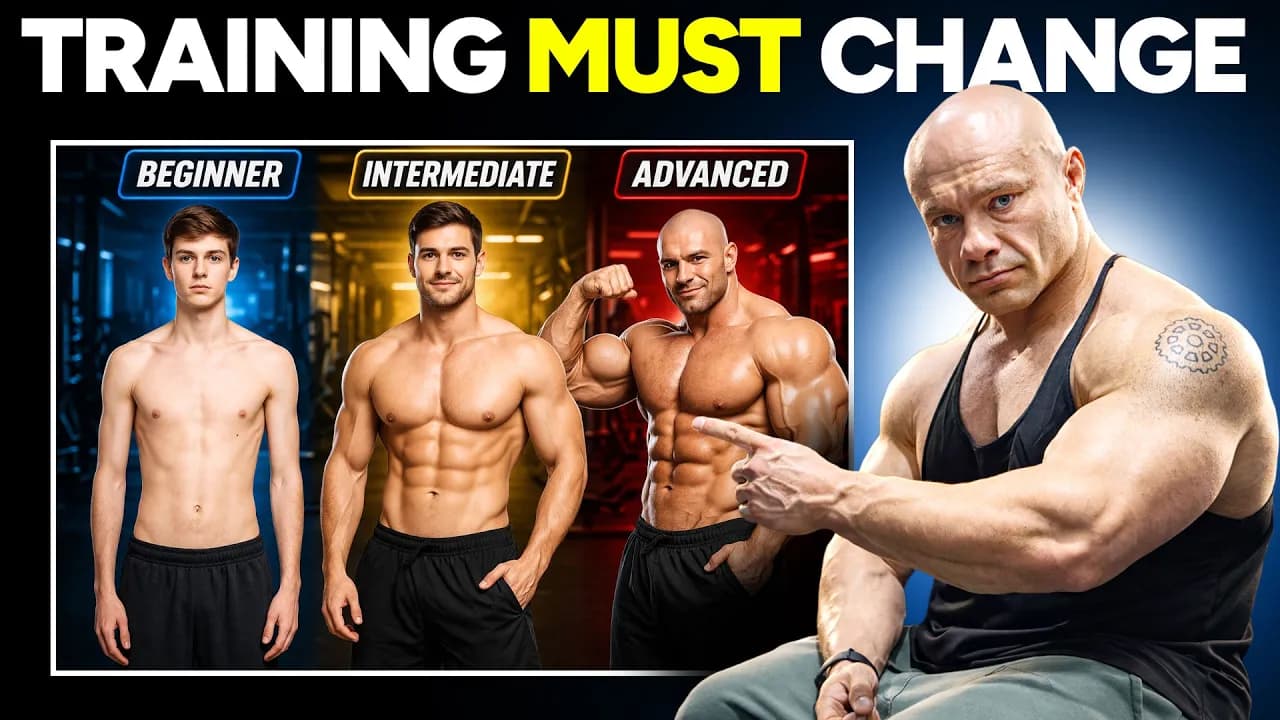
Dr. Mike's recommendation to beginners who want to be super jacked eventually is to almost only do sets of roughly 5 to 10 reps for the first few years and mostly in free weight compound basics. This gets you stronger from muscle to tendon to bone and makes you resilient for future heavy training. It teaches you how to lift properly because it reinforces good technique. It gives you the highest ROI on your time in the gym typically because it zaps both strength and size with the same set. For beginners looking for adult fitness, sets of 10 to 20 are totally awesome.
For intermediates looking for their best long-term size and strength, the recommendation is to experiment with all of the major hypertrophy ranges in all of the muscles and all of the exercises - sets of 5 to 10 reps, sets of 10 to 20 reps, sets of 20 to 30 reps in biceps, triceps, hams, chest, etc., all the muscles and in all the exercises.
You might find that sets of 25 on walking dumbbell lunges are amazing for the glutes, but that sets of eight on stiff-legged deadlifts are amazing for hamstrings. You might find that sets of 20 are amazing for side laterals for delts, for dumbbell side laterals, but for sets of six on that exercise, it feels like you're doing experimental surgery and it's going very wrong.
Once you are advanced, because remember, in the intermediate days, this is your time to experiment. When you're a beginner, you do the sure fire way to get big and strong, which is sets of 5 to 10 with compound free weight and body weight basics mostly. That builds basic competence in a way nothing does. When you're an intermediate, you expand to everything. You try to do it all, not at the same time, but through variation. Once you're advanced, remember you have years of being an intermediate under your belt, tons of data collected.
Once you're advanced, you'll know very well what rep ranges fit best with which muscles and which exercises. You will continue to employ variation in rep ranges, but they will be matched to the muscle and exercise, not just random. So, if I was an intermediate and I was training with you and you were like, "Hey, you want to do stiff-legged deadlifts for sets of 20?" I'd be like, "Yeah, let's get it." But because I'm advanced, if you were like, "Hey, you want to do stiff-legged deadlifts for sets of 20?" I'd be like, "That probably not going to work for me." Because I know because I've tried it a whole bunch.
And if you're previously hurt in an area, been previously hurt in an area, or you're older, or you're just very preference-wise very uninterested in injury, and you respond very well to higher reps, then higher reps than average, you know, sets of 10 plus, 15 plus, are probably the way to go. And if you're traveling, low on sleep, high fatigue, and you're hitting the gym, the conditions are not ideal, higher reps are almost certainly the way to go because you can always get back to lower reps later when things are much less likely to get you hurt.
And best news of all, the RP Hypertrophy app is completely agnostic to reps in the 5 to 30 rep range. It'll flag it when your reps are way over 30. It'll flag you when your reps are way under five. But other than that, you can do what you want. You can choose your reps. You can fill in the ratings and the app will help you learn over time which rep ranges work best for you and your own perception will also help in that regard.
Anyway, if you're confused about what reps to do, probably no longer confused. Still confused? Shoot some questions in the comments. Hopefully folks help you out. Maybe you can join our member section, which will definitely help you out. And remember, be open-minded, but be smart. Injury sucks and you can do better.
Keep Renaissance Periodization in your library
Save the videos and channels worth coming back to, and find them again in one place.