Netflix CPTO on AI and the future of product and tech roles | Elizabeth Stone
In a Nutshell
Elizabeth Stone argues that AI is triggering a "storming phase" of role fluidity—PMs shipping code, designers writing PRDs, engineers productizing—but craft excellence in engineering, data science, and design remains scarce and irreplaceable. Netflix is responding by hiring more systems thinkers who can build shared infrastructure, guardrails, and paved paths, while pushing "AI fluency" across all levels rather than narrow specialization. The company's high-talent-density, high-agency culture is the operating system that lets it absorb this change without adding process when things get hard.
These notes were generated by AI and may contain inaccuracies.
Anyone can be everything now. PMs can ship code, designers can write PRDs, engineers can product, and there's confusion and frustration around what one's job is anymore. Anytime a new technology comes along, there's a storming phase before the forming phase. We're in the middle of that right now. That doesn't mean putting AI back into the box and not using it.
If we all become builders, will we still need separate functions? There is still craft excellence that's really important and won't go away anytime soon. Great engineering is still scarce. Great data science is still scarce. Great creativity is still scarce.
The early culture deck of Netflix emphasized high agency, autonomy, and paying top of market. These are the same things heard constantly now from how the top AI labs operate. Netflix's culture has always been excellence as an operating system. It's a resistance to doing the thing that a lot of bigger companies would do and feeling comfortable in that discomfort very often.
Talent density is the non-negotiable. Being very comfortable with risk-taking in cases where things are not going well, and not assuming that process is going to fix it.
More systems thinkers are being added to career ladders. These are people who can look across all the business domains and abstract that to the building blocks that will be needed.
A small trick for learning systems thinking: for each problem being solved, step out one click to what is being assumed is true about the broader space.
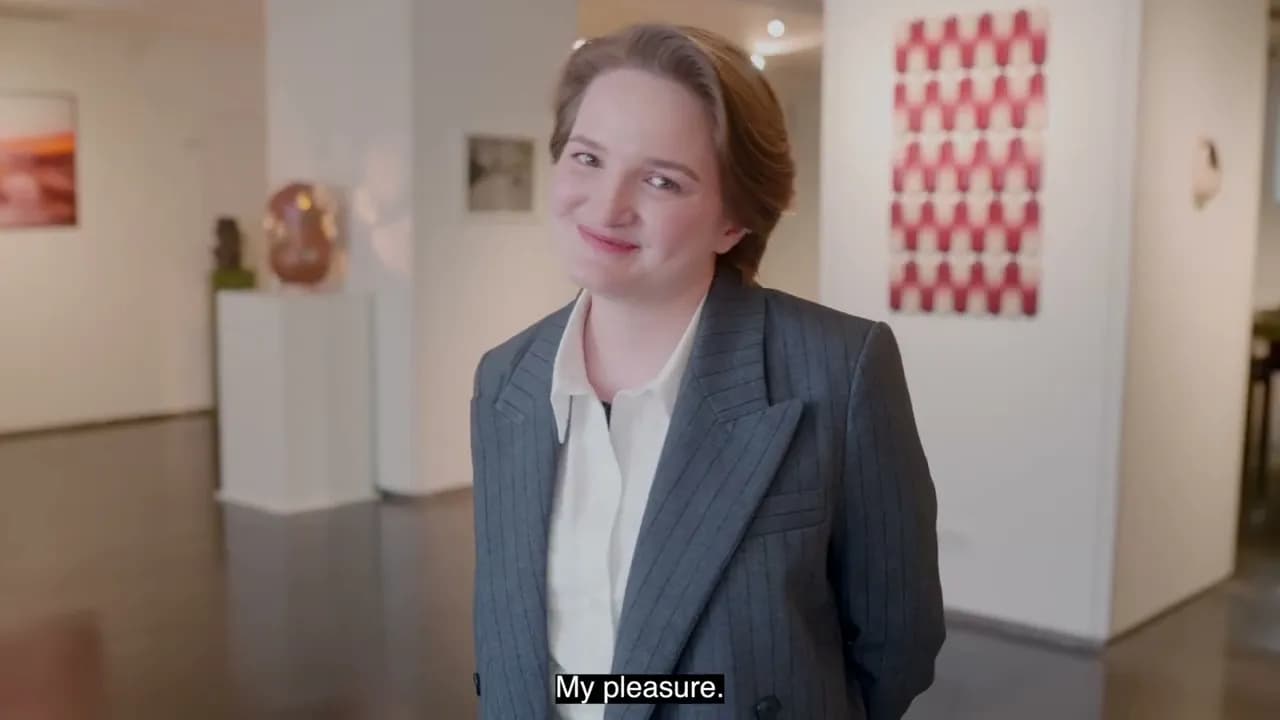
Elizabeth Stone is the product and technology officer at Netflix. This is her second visit to the podcast. Her first visit, when she was just a CTO, was one of the most popular episodes. AI was only starting to emerge two and a half years ago. As a long-time head of engineering, product, and data science, she has a unique perspective on where things are heading.
Prior to Netflix, Elizabeth was VP of Science at Lyft, Chief Operating Officer at Nuna, an economist at The Analysis Group, and a trader at Merrill Lynch.
PMs can ship code, designers can write PRDs, and engineers can product. There's confusion and frustration about what each person's job is. This is heard within Netflix. Anytime a new technology comes along, especially one as transformative as GenAI, there's a storming phase before the forming phase. We're in the middle of that right now.
This doesn't mean putting AI back into the box. It means being thoughtful about getting the benefits while reducing the costs. It's good that people are experimenting with developing ideas faster, prototyping, and putting together initial sets of code. However, not everyone should be shipping code to production or doing everything. It's healthy for there to be some fluidity in roles when the business problem is clear. Product and design can move faster without waiting for engineering, but they should still work with engineering partners to think through productization, scaling, and guardrails.
Functional expertise is not obsolete. Teams need to be more comfortable with fluidity that helps move faster in certain directions.
Things needed to make this coherent and less frustrating include clarity on source of truth data, guardrails on shipping code to production or testing before making large changes, and thinking about opportunities where AI output can be trusted versus where review processes are needed. Humans are still responsible for what happens. An agent may have written the code or helped with analysis, but that doesn't remove responsibility for outcomes.
PMs, designers, and data scientists are able to get farther in the product development life cycle before engineering needs to be front of the line. This comes with caution. It's not great to suddenly have thousands of prototypes if they're not aimed at important business problems with engineering partners aware of what's being solved. When the right problem is approached thoughtfully with alignment, product, design, and data science can move faster toward testable hypotheses through prototyping and writing code.
Netflix has experiments run over decades, consumer insights, and stakeholder input. AI is powerful at distilling information, looking across broad sets of things, doing analysis, and getting to the core of insights to start with. It shouldn't be relied on exclusively, but it provides a head start. Instead of sending emails to remind someone of past research, that information can be found almost instantly, allowing people to form their own views on what's interesting and skip steps toward actionable insights.
Hypothesis generation, prototyping, and deep problem thinking are accelerating. Functions can do this in a more fluid way. Business stakeholders in finance, content, and advertising can also do this and bring back initial hypotheses to work more deeply with data scientists and engineers.
Comparative strengths remain. Data scientists are still experts at trusting data, interpreting it correctly, and determining what data versus judgment should be applied. Product managers are still exceptional at framing the "what" of the problem correctly. Engineers still have craft around the "how"—how things scale, what high quality looks like, and what problems might be created based on how something is built and deployed.
Even if everyone becomes builders, separate functions will still be needed. Craft excellence in the disciplines is still really important and won't go away anytime soon. Humans still have to make sure what's being done makes sense and solves the right problems in the best way for Netflix members or business stakeholders. People speak more languages now because of AI tools, but there's still something not replaceable about craft and how they think about what good looks like. This feels true across all levels.
More systems thinkers are needed in a world with AI. In core infrastructure at central engineering, Netflix's past success came from local teams moving fast on specific business problems without necessarily being on a central paved path. In a world of AI with agents operating across multiple systems and needing source of truth data, preferred paved paths, guardrails, common infrastructure, and solving problems once with core capabilities become more important. More people are being hired who can look across business domains and abstract to the building blocks needed in a world with AI.
What got Netflix here won't get Netflix there. Stronger infrastructure is needed to move quickly. Engineering profiles are more distributed systems, more infrastructure, and more systems thinking mindset than local business expertise, though deep expertise in personalization, advertising, and content delivery is still maintained.
For design, it's extremely important that the experience design team develops templates and systems thinking for what great user design looks like at Netflix. This enables many people, including non-designers, to develop coherent products that fit the end-to-end member experience. There's concern about different design languages or user interactions creating "Frankensteins." Designers are being hired for design systems thinking—templates, brand expression, good user experience, and Netflix's differentiated special sauce—more than for designing specific features.
Across all functions, there's a stepping back to look at the big picture. This requires reorientation of skills among existing teams and hiring people with that expertise. Across everything, there's a mindset shift. People are not being hired who are not excited to explore, try new things, understand that lots is changing, feel comfortable with ambiguity, and be comfortable with blurring of how work and partnerships happen. Curiosity and innovation mindset has never been more important.
Velocity is a reason systems thinking is becoming more important. Platforms have a benefit of leverage, getting most teams 80% of the way there without reinventing building blocks. There are more bets being made across the business. Platform mindsets are good and relatively more recent for Netflix as a critical enabler.
There's also the sense of scaffolding in a world of AI. With more people doing more types of new or different work, there's risk around access, identity, security, and shipping high-quality code, design, and user experiences. It doesn't scale well for each person to figure out what good looks like and what guardrails to keep in mind. That needs to be encoded in paved paths and ways of working. For data science, encoding source of truth data, how to interpret it, how to access it, what to do with it, and what to be careful with is needed. Organizations with thousands of people can no longer rely on tribal knowledge or finding the one person who knows something.
Agents are now doing a lot of work. Giving them context, scaffolding, and design language speeds things up. One vision at Netflix is having so many agents contributing to work that humans need to be able to reason and rationalize throughout that. Humans guide what problem needs solving and whether output is impactful and high-quality, but work will be done by both humans and agents. This creates velocity and benefits but also risks. From an engineering perspective, it's important to manage this so people can move quickly without creating undue downside or risks for the company.
For the most important priorities, design is still critical to solve things in the right way. Time is still made for important design work. It can move faster. Designers have more tools, so they can do incredible work at faster velocity, show more options, learn, iterate, and test more quickly. It would be a mistake to say design and deep design expertise get squeezed out just because code and data analysis can be written faster. For a large-scale consumer product like Netflix, the product, technology, and design making complexity invisible and creating a seamless customer experience is one of the things that makes Netflix great. That design mindset has to be core. The work itself might look different, but the mindset isn't lost.
The days of very narrow, deep specialization feel more limited. There are still examples where it's needed because there's industry or technology expertise where only a few people in the world really know how things work—examples include encoding or how playback systems work. Specialized practitioners are still needed in those spaces.
As a general rule compared to 5 or 10 years ago, there are fewer specialists and more generalists or people adaptable in multiple directions. This could be adaptability across functional expertise or flavors of engineering—navigating both back end and front end systems, hooking into infrastructure. The mindset now needs to be the ability to learn quickly, which goes back to systems thinking. Specialists can learn to have a broader array of tools more easily than was true in the past. Fewer of them are needed because talent is able to grow in that direction.
There's something about sticking to a narrow specialty that triggers concern about the mindset of growing in different directions and exploring. It's important that specialists still have the sense of wanting to try a new way of solving problems versus the way it has been done in the past.
Specialists can be thought of as front-end engineers versus back-end engineers, or domain expertise such as payments expert, ads marketplace design expert, or expert in specific tooling that studio productions use. Specialization in subject matter expertise is an advantage provided the person is willing to grow and extend into whether this is still the right tool or the right way to think about the problem. There's less specialty in layers of the stack from an engineering perspective.
Elizabeth recommends a practical approach to building systems thinking: for each problem being solved, take one step back and examine broader assumptions. Rather than trying to solve Netflix's entire strategy, zoom out one level from the immediate task. For example, when building a feature for the member experience, consider the larger consumer problem, the types of content the feature will support, whether the approach scales across multiple content types, and whether it contributes to platform capabilities. The key is asking whether the right problem is being solved in the right way that matters for the end consumer, without spending too long in the questioning phase that stalls progress.
Another approach is to adopt a manager's broader perspective across multiple teams, problems, and KPIs rather than focusing on a single team's metrics. Elizabeth shares advice she has given over the years: find ways to do your job that helps your manager do theirs. Thinking from a manager's perspective naturally incorporates finance, content, and other business areas, leading to consideration of how component pieces come together and create outcomes greater than the sum of the parts.
For engineers, systems thinking involves considering how to leave better versions of systems and build things that scale for others. This connects to Netflix engineering principles of doing what is right for the broader organization rather than just what is right locally. It is not just about seniority but about breadth—building things that will be useful to colleagues and leaving stronger foundations for future innovations.
Netflix recently added career ladders and levels, a newer development for the company. Rather than articulating exactly how AI changes expectations at each level, they have placed an overlay across all talent focused on an aspiration for AI fluency. This varies by function, career stage, level, role type, and persona. AI fluency includes having an experimentation mindset, knowing where AI is useful and not useful, and having actually built things using AI.
The aspiration evolves rapidly because the technology advances so quickly. The most useful approach is not to make it level-specific or role-specific but to encourage everyone toward AI fluency. This does not mean using technology for its own sake but applying it where useful, exercising good judgment, and maintaining an open-minded mindset to explore and try new things. This expectation applies even at the most senior levels, where leaders need deep fluency in AI even if they are not writing code in their day jobs.
Netflix has shifted hiring practices to explore how candidates think about AI or technology, what they use in their day-to-day work, and how comfortable they are with change and exploration. Coding interviews now allow candidates to use AI tools since that reflects the actual work requirements.
Beyond coding and prototyping, two major AI use cases stand out. The first is data analysis, distillation of information, and modeling—using tools to rapidly synthesize insights from experiments, metrics, and consumer research. This enables higher velocity and higher quality analysis, provided results are validated with data scientists and source-of-truth data is used. Elizabeth personally uses these tools most for this purpose, extending beyond prototyping into analytical thinking and translating data into action and insight.
The second area is content production and creation. ML and AI were already deeply embedded in production tools before generative AI for tasks like creating promotional assets at scale and localizing subtitles and dubs. Generative AI represents a step function improvement, particularly in creative ideation and pre-visualization—bringing a creator's vision to life before physical production begins.
Post-production applications are also significant. Netflix acquired Inner Positive, a company founded by Ben Affleck, which built models allowing filmmakers to relight, reframe, reshoot, and change dialogue after shooting. This enables higher quality content while remaining led by the creator's vision. Additional use cases include creating high-quality trailers, images, and artwork at scale to help titles find audiences globally. These capabilities apply across studio productions, advertising, marketing, and off-service campaigns.
Netflix has been using AI and ML for a long time, demonstrated by the Netflix Prize contest that offered a million-dollar prize to optimize the ranking algorithm. The contest attracted top talent globally and showed early commitment to personalization. Personalization has been central to delivering great member experiences given the breadth of content. As the catalog expands to include film, TV, games, live content, and podcasts, personalization becomes even more important for matching the right title to the right person at the right moment.
The same pattern applies on the creative side where AI and ML have long been used in visual effects and language localization. The question now is what the next era looks like with more powerful technology. Netflix's strength lies in marrying entertainment and technology to stay ahead and deliver better experiences.
Elizabeth notes that terminology has shifted—what was once called machine learning is now often labeled AI, and everything tends to be bucketed under AI now. Netflix uses a broad array of AI applications beyond generative use cases, applying the technology across creative outlets, consumer products, and infrastructure.
Elements of Netflix's early culture—high agency, autonomy, high talent density, bottom-up thinking, quick experiments, and paying top of market—align with how leading AI labs now operate. Elizabeth describes these cultural elements as excellence as an operating system. The goal was never agency or lack of process for their own sake but the strongly held belief that excellence comes from giving people agency and accountability, pushing decisions deep in the organization, and hiring people who can be trusted to exercise good judgment.
This approach drives better outcomes plus greater motivation and sense of responsibility. When people know they carry significant trust and accountability, they want to do their best work. The culture aims at excellence by trusting exceptional talent to do their best work without micromanaging or drowning it in process.
Talent density is the non-negotiable starting point. Without it, there cannot be confidence in decision-making at all levels or the ability to take risks and innovate quickly. Another element is comfort with risk-taking—the culture does not try to avoid failures but focuses on recovering quickly when they occur. The live content launch was cited as an example of taking substantial risk, knowing it would be imperfect, learning fast, and improving as a result.
Outcomes must drive value for consumers and Netflix rather than personal success or preferences, requiring a degree of selflessness. Leaders must also get comfortable with unnatural behaviors: allowing people to make decisions even when the leader might choose differently, as long as the decision is not material. The approach is to let people make decisions, learn from them, and reflect afterward rather than stepping in to overrule.
When things are not going well, the instinct to add process should be resisted. Adding constraints when planning or decision-making is difficult does not improve outcomes and works against finding creative solutions. The best people want to know there will be a blameless retro and that they will be held individually responsible for finding better approaches, not through process but through sharing learnings and changing how work is done.
The keepers test remains a core part of Netflix culture. While often associated with deciding to let someone go, it is equally used for conversations about how extraordinary someone is. The entry point is asking, "How am I doing on your keeper test?" The majority of responses are positive, with the manager expressing they would fight hard to keep the person and providing detailed feedback on strengths and impact areas, along with suggestions for further improvement.
The framework also creates space for harder conversations when someone is not passing the test. In some cases there may be a path forward with specific milestones and feedback. In others the assessment is that despite efforts, there is no clear path to success. The keepers test serves as an anchor for regular feedback conversations and forces engagement with tough topics rather than avoiding them. It also provides a structured way to recognize and value great talent.
The Netflix culture emphasizes constantly evaluating team members using the keeper test: if a manager were to hire someone today, knowing what they know about them now, would they still hire that person? A corollary asks whether a manager would fight to keep someone if they announced they were leaving, or whether they would feel relief at the prospect of replacing them. This approach prevents settling for mediocre performance and encourages proactive conversations when someone is not the right fit for their role.
Maintaining high talent density requires constant diligence because these practices do not come naturally to most organizations at scale. Netflix also emphasizes context not control among leaders and being highly aligned but loosely coupled, with light process focused on clarity around priorities and execution.
Netflix faces significant competition for talent, particularly from well-funded AI labs offering substantial compensation. The company maintains strong talent on its teams, including both recent hires and long-tenured employees. To attract people who thrive specifically at Netflix rather than frontier labs, the company looks for individuals passionate about the application of technology, building products to solve specific problems, entertainment, consumer products at scale, and the global nature of that work.
People who are excited by foundational model development at frontier labs represent a different persona. Netflix targets those who get excited about applications of technology connected to things consumers love and use daily. This focus on application work in the intersection of tech, product, and entertainment is what the company sees as its distinctive value proposition.
Netflix continues to hire junior people as a critical part of its talent strategy. The company maintains an intern program and a new grad program that was introduced a few years ago, after previously focusing only on experienced talent. Younger employees tend to be more open-minded and native to new ways of working with AI tools.
For early-career talent, mastery of craft remains essential. Junior engineers, PMs, and designers are still held accountable for the quality of code submitted to production, product quality, design quality, and consumer experience. Mentorship focuses on teaching what good looks like and how to use AI tools while maintaining accountability for outcomes. Craft excellence and the ability to recognize excellence in products that solve meaningful problems remain scarce skills that require deliberate investment.
Understanding how code, computer systems, and products work will remain important even if writing lines of code in specific languages becomes less central. Being able to determine whether something is a good or bad product, whether it is working as expected, and how to fix issues when it breaks requires fluency in how systems function. Agents may help detect anomalies or triage problems faster, but engineers still need to understand what is being built and how it works.
Current AI-generated code can be difficult to follow, creating discomfort around performance gains without understanding why something works or how to fix it when broken. Engineering will evolve to develop comfort and fluency with guiding agents and new capabilities while ensuring confidence in outputs. The pace of change in engineering has accelerated dramatically, though similar transformations have occurred over longer timeframes in the past.
Entertainment at Netflix is already expanding beyond traditional film and TV to include mobile and TV games, cloud games, live content, and podcasts. This reflects consumer expectations for greater variety across formats, devices, and moments throughout the day. The goal is to create seamless journeys where users can move between listening to a podcast, watching traditional content, and playing games across TV and mobile devices.
The future of entertainment will be more personalized, immersive, and interactive, allowing exploration in different directions depending on what someone seeks in the moment. Discovery and engagement need to become much easier given the volume of content available, which feels fragmented today. Netflix sees itself as well positioned to solve this problem through its combination of entertainment, product, and tech capabilities.
Netflix takes a creator enablement approach to AI tools rather than a prescriptive one. Some creators want nothing to do with AI in their production process, and the company respects that. A growing number of creators are interested in exploring whether generative AI tools can enable new storytelling possibilities, higher quality, or more creative approaches, and Netflix supports them as well.
Storytelling is viewed as inherently human, with humans remaining central to creation and performance. Characters on screen without humanity feel less compelling. AI will play a material role in some productions and help achieve certain looks and feels, but the human element is expected to remain the backbone of entertainment.
This period represents a high-velocity innovation time in building products in entertainment, with rapid changes in technology, consumer behavior, and the definition of entertainment itself. The focus should remain on building great consumer products and entertainment that people love, rather than getting lost in pure technology capabilities.
Consumer product success remains rare, making Netflix's continued delivery of strong consumer products and business notable. The company plans to maintain this focus on creating products and entertainment that resonate with audiences worldwide.
Recommended books: Into Thin Air by Jon Krakauer and Liar's Poker by Michael Lewis.
Recent favorite: Remarkably Bright Creatures, recommended by her mother.
Favorite recent product: Eight Sleep, described as critical for health and well-being.
Life mottos from parents: Something good happens every day—watch for it, even in stressful times. The last 5% of effort usually makes all the difference.
Upcoming cycling event: Riding alongside the Tour de France for the final week with mountain stages, riding part of the route each morning and watching the race in the afternoon.
Online presence: The Netflix tech blog serves as the primary place to find information about work being done and to reach out.
How listeners can help: Try new Netflix offerings including live events, games, and the vertical video feed called Clips on mobile; provide feedback to help improve these zero-to-one efforts.
Keep Lenny's Podcast in your library
Save the videos and channels worth coming back to, and find them again in one place.