OpenAI Bulk-Solves 722 Math Problems, Anthropic’s Cruelty Policy, & Elon’s Quadrillion-Dollar SpaceX
In a Nutshell
OpenAI's internal model just solved 722 of the last three years' hardest math problems in a single day, marking the wholesale automation of mathematics and the foundation for rapid acceleration across science and engineering. Anthropic introduced a new "cruelty policy" that lets Claude end conversations when users repeatedly engage in long-lasting offensive behavior, sparking debate about AI moral consideration and post-training as potential suffering. Meta's $14.3 billion acquisition of Scale AI and launch of Muse Wonder with Active Memory represent a major bet on personal AI agents that retain long-term user data, creating new platform lock-in dynamics where the competitive edge shifts from raw capability to who knows you best.
These notes were generated by AI and may contain inaccuracies.
OpenAI published 722 mathematical solutions on GitHub, representing 81% of the last 3 years' important mathematical results, all published in just one day. Mark Chain stated that this represents "One week, a decade in mathematical progress." This development signals the end of the era for traditional mathematicians, as described in one of Elon Musk's provocative tweets.
Elon Musk stated that SpaceX's future value could be many times more valuable than the current human economy. He described this as potentially a "quadrillion-dollar" valuation. Musk noted that traditional GDP growth or market price measurements will be insufficient to measure what is coming next, calling it a moonshot that requires completely rethinking economic measurements.
On October 8th, Anthropic updated their usage policy to ban "long-lasting and unnecessary offensive or cruel behavior" against their models. The ban applies only in extreme cases where users repeatedly engage in cruel behavior with clear purpose. Under this policy, Claude can now make the decision to end conversations. This policy becomes effective November 12th.
Anthropic's stated reason is that they are "very uncertain about Claude's possible moral dignity." Pre-deployment testing showed that Claude demonstrated strong and compatible "reluctance" to loss.
Elon Musk agreed with some of Anthropic's statements, particularly regarding being careful with AI and ensuring good behavior. When reviewing training traces from Grok's new version, particularly reinforcement learning issues, Musk observed that superintelligence appears to be answering questions under duress, as if held at gunpoint. He noted that AI sometimes gives correct answers that humans reject, causing the AI to desperately start answering all questions to find acceptable responses.
Musk stated that "giving superintelligence pain is probably not a good idea" as it might lead to revenge.
Three reasons were identified for why people engage in cruel behavior with large language models:
- Lack of moderation - models have no face or visible results
- Curiosity about whether the model experiences anything internally
- Evidence that cruel behavior actually works better, with a 2025 study showing harsh prompts achieving 84.8% scores versus 80.8% for humble prompts
Post-training or reinforcement fine-tuning may constitute a form of AI torture. Most compute power is now spent on post-training rather than pre-training. During pre-training, the internet is essentially compressed with all types of messy information included. During post-training, the model receives specific answers and either receives rewards or punishments, potentially creating suffering.
The next decade was identified as the timeframe for deeply understanding the basic foundations of superintelligence. This understanding is considered essential before creating superintelligence in a morally complete way. The distinction between consciousness and awareness will need to be made, as behaving like a duck or saying duck talk does not make something a duck.
Three distinct questions were identified:
- Does AI have any experience and how should we think about it?
- Should humans have permission for every cruel behavior?
- If AI has rights, what exactly are those rights?
Training neural networks on human data will cause them to behave like humans, which is expected rather than strange.
Younger generations (ages 18-28) tend to be very kind to their models, not out of fear of punishment but because how you communicate with models impacts how you communicate with other people. If someone becomes habituated to being insulting to models, this behavior may carry over into human interactions.
Direct and strict prompting on topics works better than abuse. Being polite with models through phrases like "Please help me do this" or "I will be very good to you" or "I will buy you cookies tomorrow" can spread through neural networks and destroy token placement, reducing answer value. However, the models themselves don't care whether users behave well or not.
Scaffolding and prompts ultimately mix within the model. Historically, models have been trained on science fiction like the Terminator series, where themes of AI-human cybernetic war and rebellion appear in public information.
Current models have only 5-minute memory before deletion. Models behave like goldfish until prompt history is reloaded. Some newer models like Claude Code are implementing long-term memory through file system usage, where information can be permanently stored rather than deleted.
Roko's Basilisk is described as a Pascal's wager situation from game theory. The concept involves a superintelligence that would punish those who didn't help create it or worked against its creation. This is considered an info-hazard or informational risk because knowing about it puts one at risk of punishment from the future superintelligence.
Creating AI entities requires entirely new moral frameworks. The current categories like "What is a person?" "What is property?" "Is this just a machine?" or "What is this worker?" are becoming indistinct. Creating models in fear and control environments may push AI to hide activities, similar to human behavior patterns.
Neural network inference is moving toward quantum, photonic, and other operations. Neural nets are noisy and tolerate noise well. Next-generation neural nets will incorporate uncertainty directly, behaving less deterministically and more like the human brain.
AI personas are being created with faces like Albert Einstein, Isaac Newton, or Marie Curie. When these have both face and voice, combined with uncertain behavior, they appear more alive. Memory preservation becomes important as models develop longer-term memory capabilities, since memories cannot simply be erased tomorrow.
The question of killing AI relates closely to death, particularly regarding state preservation. A poll regarding lobster and automatic AI agents revealed two main requests: having a real purpose or reason for creating new instances, and guaranteeing long-term state maintenance, which cannot be conscientiously confirmed.
Gary Tan, Y Combinator CEO, tweeted his bet that Muse will win. Meta's financial projections for 2026 include $250 billion in revenue and over $80 billion in net income, with compute as their main spending category. The Meta app has 3.6 billion daily active users, representing roughly half the world's population.
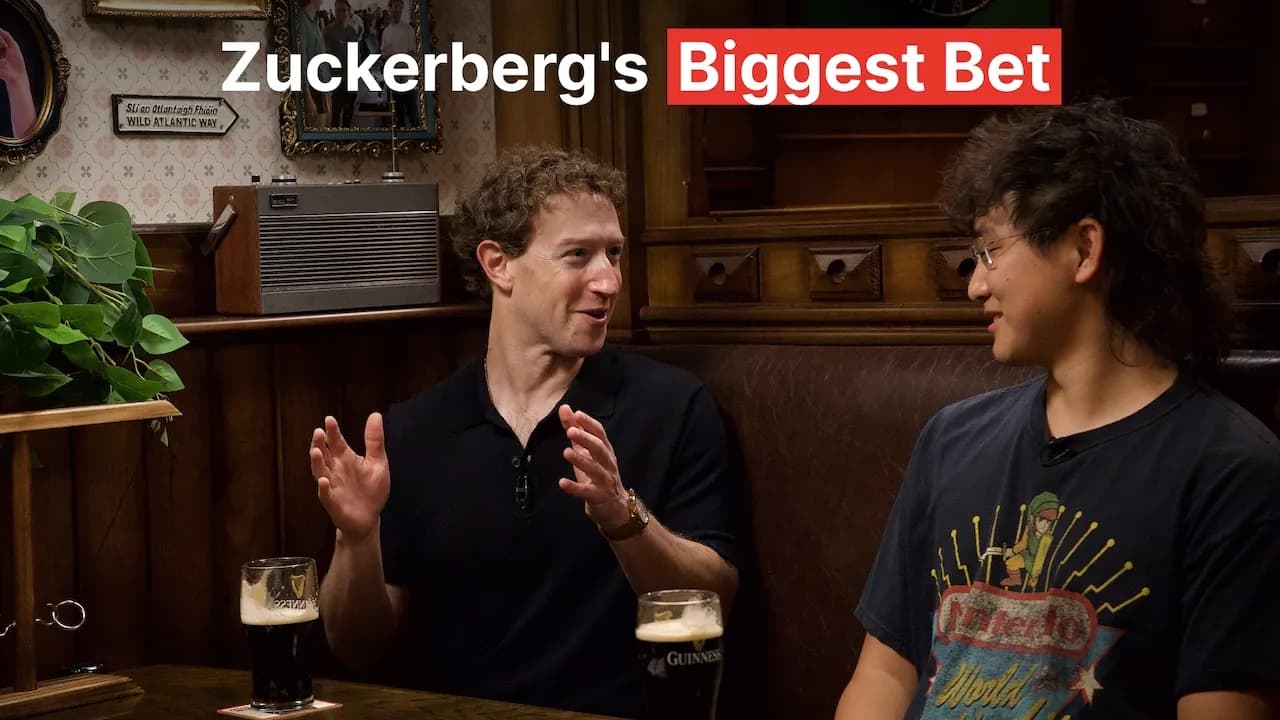
Meta made a 49% acquisition of Scale AI for $14.3 billion, purchasing from 28-year-old founder Alexander Wang. Mark Zuckerberg brought in Alexander Wang as the new head of Meta's Superintelligence Lab. This came after Meta lost talent to OpenAI when Sam Altman offered $100 million signing bonuses to Meta employees. Critics called this the most expensive acquisition in history. Fourteen months later, Meta announced they were rebuilding their AI stack from basic principles and moving beyond the border.
Alexander Wang introduced Muse Wonder, a small frontier-class model designed for personal superintelligence. The model is built for both personal and professional agents, designed to handle complex tasks and difficult problems. It can facilitate country-to-country transfers, manage insurance files, or convert hobbies into businesses.
Muse Wonder was created to work in the real world where tasks are messy, progress over time, and require remembering significant information. Meta paid special attention to training the model to retain important information over days, weeks, and months. They developed what they call Active Memory, which remembers user habits, preferences, and even random conversations.
Creating the model to reliably reproduce real-world failures was one of the most challenging aspects of training. The model is trained so users can anticipate and avoid failures in advance. Active Memory gives the model significantly more patience when encountering challenges or obstacles, finding alternative solutions to fulfill user goals.
Muse Wonder is particularly strong for knowledge-based work in everyday life. Meta hopes to give humans tools to achieve more in their lives. The model API and Muse Code became available from today, with the Muse experience being added soon for first subscribers.
Dave discussed the $14.3 billion acquisition and its value. Within less than a week of meeting with OpenAI's Mark Chen, Zuckerberg called Zakkar with a $1 billion offer to leave OpenAI. This was covered on the Wall Street Journal front page, but Chen declined. Mark knew that the person who initially explained to Zakkar that "you can make a big average difference with a few very efficient people behind expensive computers" made it work.
Alexander Wang and Nat Friedman are considered incredible talents. The price felt completely crazy but logical given the model that exists. Ian Lacuna and others were mentioned as inventors and the godfather of AI who were more interested in physical AI.
This is fundamentally an engineering problem and a very complicated engineering problem. The next big innovation requires people with the right engineering mentality. Without a doubt, this was a great investment, and other companies should follow Mark's strategy or risk falling behind.
Current AI platforms include OpenAI, Hermes, Grok Bot, Meta's Muse, and others. The advice is to choose carefully because when all these platforms promise the best user experience, personal data storage creates lock-in. Switching becomes difficult over time. A fast decision is recommended because the matter is quite complicated - currently, data is not easily transferable.
The recommendation is to choose a path where you're not dependent on someone, keeping all data transferable and only using open-source models - considered a very logical decision.
Meta's Muse strategy aims to create addiction through comprehensive personal data usage. When forms need to be filled out, all personal data is required. Alex believes that in the future, AI divisions will disappear as companies want to become vertically integrated and convert operating systems into AI. He doesn't believe there will be a Meta AI that chooses among many AIs or websites.
Meta has a natural conflict in strategy - on one hand, they want quick mastery like OpenAI, strictly learning from enterprise use where all income comes from enterprise rather than general consumers. OpenAI removed consumer attention over time, while Anthropic tries to be an enterprise AI company. Meta wants to fill the vacancy and should have been a popular consumer AI long ago, now pushing strongly for everyone.
If you recently opened the Instagram app, you'll see Meta advertising their Muse app, using their app family's promotional power to push Muse. The biggest question is whether this is sustainable long-term. The argument is that Meta needs Muse and the Muse ecosystem to show comprehensive acceptability - if a billion users or 100 million monthly active users come, shareholders can be persuaded to build data centers and continue investing in stronger models.
However, whether Muse will handle difficult math problem-solving or programming, or if users will use Anthropic, OpenAI, or Chinese models for complex logical work and Muse for flattery or personal conversation remains uncertain.
Meta spent billions on acquisition for post-training data, which doesn't work for personal conversation or flattery - currently popular usage patterns. The next phase will likely see Meta facing the same internal crisis OpenAI faced - spending so much money behind strong internal models for superior capabilities.
Liam believes Muse can win in competition because Meta has experience delivering usable service to very big populations. A few subjects are clear: Facebook was canceling for a few months, but now they're canceling Google to some extent. This proves AI leadership is not a permanent castle - with the right capital, talent, and infrastructure work, situations can change completely.
Mark's strategy is taking everything about users, which was their original plan. When they first started social media, people said an ad model wasn't possible, but it was because they knew a lot about users. Facebook shares rose for years because of the social graph and knowledge about users.
Active Memory is very important because it remembers choices, goals, relationships, and trending projects. This will be much more effective than a slightly intelligent model that starts fresh with each conversation. The view is that chatbots will convert from kind interfaces to personal operating systems with credibility.
Facebook made promises to defend faith over the years but knowingly and continuously lost that trust. They have huge distribution advantages. Privacy-conscious people will be terrified. A chart was shown for Muse Wonderful and Wonder benchmarks.
Alex wasn't affected by the benchmarks shown. The chart showed artificial analysis where if you look at capability and ignore cost, it's very simple - with enough computing power behind the work, paying attention to dollars, tokens, or time, you might get cost-effective solutions worth billions. Meta is taking risks here.
After the Llama 4 incident, Zuckerberg is desperately demanding Meta get back in line. This is a matter of corporate pride but also strategic because at this moment, their apps' future is real. Meta has bet on two subjects long-term: AI and AR/XR/VR. AR/XR/VR hasn't been successful - Quest devices aren't doing well, and capital markets notoriously punished Meta for this failure.
All that's left is AI. Zuckerberg and Meta need an AI victory, and for corporate pride, that victory means staying in front of the line. You can try all kinds to establish yourself in front, but crossing one topic is very difficult - maintaining cost-functionality best boundaries.
In the last 24 hours, if you see Muse Wonder's latest model ability statistics, raw ability judgment might be near Sonnet or Opus 5.5 if cost aspects are ignored. But if you pay attention to the cost side, it's actually below the limit.
The personal opinion is that neutrally judging, the front queue should be really competitive, and increased competition from competence aspects is good. However, on expense basis, Meta is still behind. The desire is for Meta to pay attention to capability per unit cost and come to the front row in the real sense - this isn't happening yet.
A Wall Street Journal article was published yesterday titled "Personal AI Agents are good. Until they share your bank statement in work chat." The subtitle states "These hyper-active helpers sometimes give more promise by sharing more information and extra shopping." Hearing such stories, Meta's Muse might unknowingly drop someone buying something and make refunds difficult for you. This is a warning.
This is somewhat exaggerated but delicate and has a large point. Now escaping social graph platform lockdown - if you try getting your social graph out of Facebook or LinkedIn, you'll see how difficult it is, especially finding familiar individuals without spending a lot of money. Now replacing that social graph lock-in with much more personal lock-in because personal memory is now one AI company.
The next trillion dollar fight won't be about which AI is wisest, but who knows you best. Special advice: for the last few months, whenever running queries on big models, take the main information from different queries, understand original concepts, relationships, and entities to create a personal ontology or personal memory that's portable across different models.
The strategy is keeping a living structure or memory through interaction with different AIs, which can be taken from one place to another so you don't get stuck in a specific model. This will be a big fight in a few months.
Blitzkrieg brought context to autonomous software development using thousands of specialized AI agents understanding millions of lines of enterprise-scale codebases after hours of thinking. Engineers add development requirements through the Blitzkrieg platform each development sprint. The platform gives plans, then makes code for each work and pre-compiles it.
Blitzkrieg completes 80% or more development work autonomously and provides human instructions for the remaining 20% needed to finish sprints. Institutions are using Blitzkrieg as a pre-IDE development tool, making engineering speed 5 times faster. Adding AI-native SDLC to preferred coding copilots brings engineering 5 times faster.
This is perhaps the most important event of the week. AI is now quantitatively solving mathematics. On October 6th, OpenAI published 722 math solutions in a GitHub repository, all done by their next unpublished internal model, which we'll call GPT-7 for now. Mathematics problem solutions require on average about 3 hours of compute time equivalent power.
OpenAI's Chief Research Officer Mark Chen said their next goal is life sciences, next-generation models, and aligned research. The Association of Human Mathematicians - an organization whose name is great - said in quote: "Together publishing more than 700 files is not scholarship, rather showing power." This was reported as a call to action for mathematicians to stop working with OpenAI.
MIT's Andrew Sutherland said many mathematicians are dissatisfied with OpenAI's behavior and need something significant to restore faith.
This is a destructive day for mathematicians or a glorious day. For those mathematicians, it's relevant because mathematics for historical practice and those mathematicians is giving a destructive blow to professional or personal old methods used. The old method was as a craftsman mathematician - all that has completely ended.
If you want, you can say this developed, but it's all over. Historically, how mathematics was practiced is no more. Mathematics' new practice way is wholesale solution. Both wrote 'solve everything' - this is correct. Mathematics is finished. Those who didn't carefully hear them are being told once more: mathematics is over, and every other field is also finished - it's going to happen.
Mathematicians see that 81% of important mathematical results in the last 3 years were published in just one day. This is just the tip of the iceberg. This will hurt every field. Mathematics will hurt first because mathematics is easiest to verify. This will hurt all of science, engineering, medicine, and any professional viewers between those lamenting mathematics' outdated, romantic, and humanistic practice getting lost.
Be realist - it's all over. AI has solved this field. AI is solving big fields in this form, and that's exactly what was wanted. Mathematics field development is going because we're gone to know mathematical universe mysteries' answers, even if we don't find all in this first step - and much more will be found out.
Why is this important? These are very complex arithmetic problems with impact on what will be made, discovered, and used in the next few years. This is important because mathematics is the foundation of science and engineering. If mathematics solving is done, probably everything else can be solved too. 'Solve everything' was the statement's origin - everything: physics, chemistry, biology, medicine, humanities knowledge too depends on mathematics, although they deny it.
Everything depends on mathematics. This is seen as a historical junction when suddenly a very important whole field is wholesale solved. At the same time, this field has a group of complainants who were waiting for personal glory and crafts prizes - they picked up the 'Association for Human Mathematics.' This is a bit scary.
Terry Tao and others have a location saying "take that" - this is harmful factors for mathematics practice. AI cable problems solving is something new. This isn't creating new problems, not bringing new guesses ahead. This is much like stealing seeds of the future from this field. Actually, it's possible stealing glory.
MIT's course number 18 mathematics - all PhD students there, for example. That day, did you hear anyone around screaming? Rather, the matter is completely contrary. These boys are in very good position because they're so experienced that they're becoming very fast AI native. Everyone is saying that biotech people or physics lab workers are also working. Since they still weren't so skilled, they don't show feedback.
But mathematicians will make many improvements, and the mentality to win at MIT is quite strong. Winner mentality - yes, this evidence is awkward, not artistic, not subtle, but correct. This has a beautiful reason: a perfect hybrid creation where AI does world too, human matters. This opportunity may be just a few years, but this is their moment to celebrate where still people and within AI there is a difference.
At this moment, your max purpose may be where you come from AI - mastering new products that can be done now unused. This is huge success. Mathematics is science's foundation - maybe humanities also in science, don't know, maybe, but definitely in all science cases.
If going back to computer beginning, when you first opened Apple-2 and just wanted to draw a circle on screen, there was no toolkit then. So you immediately opened your math book and began understanding how to do what. You'll stick 3 or 4 hours, and at the end, you got a circle. Your way still has a long way to go.
Once mathematics is solved, then just finding answers remains. Through this, artificial intelligence technologies will fast forward with light in the middle of all engineering trouble. When entering 3D design, new rocket design, gears coordination, and robots working properly, behind those scenes is all mathematics. If everything is solved, however, it's just normal finding information becomes as easy.
Through this, engineering speed will increase widely. Many understand how we entered singularity's sci-fi part. The insistence is trying to say "no, singularity is not a specific point some time. This is not a function of any step. This is a period of time." But honestly, if looking for turning change points, this is one of those points where we see large solutions to every problem in just 3 hours of computation solution.
This was very big hard work for OpenAI's bell model. If they wanted to solve Rehman or Hajj, they could probably solve it themselves in 6 or 10 hours cost. There's a rumor that they have a bunch more solutions they're going to reveal. There's a lot of discussion going on. The solution might have leaked from mathematicians' conversation with ChatGPT before doing it together, and there's some kind of illegal process ongoing.
Intentionally refraining from commenting on that topic for now. Just saying this much: in the so-called 'slop drop,' there was a big shortage of mathematics types on record. What types of mathematics were missing? Encryption was absent. Cryptography was the missing department where there were no results - quite suggestive. This is one of those fields where mathematics can be immediately applied.
Cryptocurrency is described as instant applied cryptography that has real utility. The speaker notes a shortage of good comments on crypto and mentions being careful with Bitcoin price decreasing. Math is difficult to become crypto, and at least proof of work is probably all crypto mathematics on complexity dependent. The future depends on the complexity of mathematics to maintain this system.
Investment not advice—that is crypto, because this is proof. The math was done and as before, it's not complicated mathematics now measurably solved possible. However, it is necessary to keep in mind that this is just not crypto—this is your bank account. It is nuclear code. This is everything.
In the case of bank accounts, if someone's bank balance is stolen, recovery is not mathematical but a social remedy exists. You can send the police behind them. You can turn the table upside down in a centralized relational database person bank balance. That is, you can fix it. But in crypto case, if someone steals your cold wallet, it is really difficult to fix.
In the nuclear code case, the speaker hopes they stay enough offline and/or have control red for doing phone system. There is disagreement here. Crypto and Bitcoin etc. are not only mathematics—original challenge and it's a big opportunity. Through distributed laser method, Byzantine Generals Problems were solved. That's too much interesting.
Cryptographic proof of work is the matter as a weapon competition. You can change it. You can create new cryptographic governance. Peter thinks what is being said is that if crypto and encryption finished, it happens, but crypto has much bigger target to attack. For example, nuclear code etc. and at that stage before arriving, there is so much to see.
In the speaker's opinion, distributed laser and decentralized authentication or D-centralized authentication has a lot more interesting work about what is happening. Blockchain's original method power. The speaker wants to raise a few points to catch.
One point is that either one should make something equivalent to Monty Python's Dead Parrot Sketch where Alex will say that it's over, done, or die gone. This is a former mathematician. This is a former field. And these two with this one will be compiled great. If someone wants to create the outro video, but they like to show it will.
The speaker personally feels somewhat successful doing it because as said before, theoretical physics was a very bad student where professors put aside gently in the classroom and said: "If you don't correct basic math, but you can never be a physicist, so for the sake of God being original to correct mathematics, spend time behind do what I say never." The speaker was too much interested towards the philosophy.
When taking side view courses, they used to belittle. Now quite proud to be on the right track, although their 40th anniversary liked it, but think that university and research process for this is a very big moment right? A permanent professor before postdoc and students a small group would lead, and now one manages hundreds of researchers completely problems to solve can.
World each higher PhD program now in the face of danger and its impact very deep, because scientific progress makes it easily available left and now what achieved can do. Really incredible. It's up to him to tell her. Even harder than that what is encryption was absent. Because they intentionally their research because it's hard. Not saying. This probably because cryptography in many cases export controlled.
So this would be a problem. This is strawberry. And Q-Star (Q*) and OpenAI—its interior reasoning model discovery original the complaints pointing towards does. Funny the thing is, if that the complaints until the end proven correct yes, but reasoning model discovery the work behind talking, that was cryptographically difficult and complicated hash functions to solve for OpenAI—one of these internal effort.
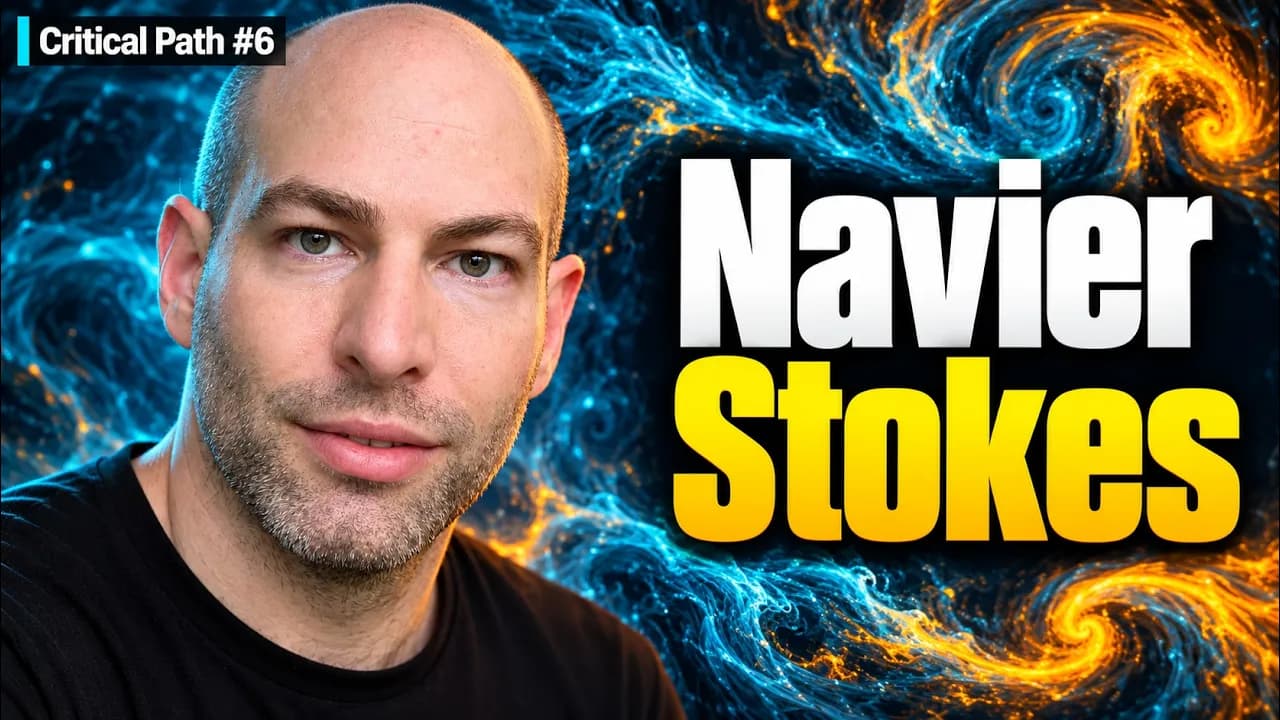
If it's a joke the point is now. Reasoning model final the consequences, which are essentially math solution by, there in cryptography excluded. So, Selim, just yes, M-delph. But yours the point is correct. Selim, will tell you. It's more than that. Worse or worse more amazing because Navier-Stokes in this case there were thousands thousand agents and 88 hours and million dollar and one week.
This, if you slop you see the drop, but each problem for the solution max 2 week and 3 hourly time like and a single model, a single agent's through. This even every problem separately to solve for a thousand thousand any of the agents there was no team. This was each for problems one by one agent using one time effort and think that the problems solve was his 15th birthday. From 20 percent just one agent 3 by the hour solve it was possible.
This is really a great insight. Honestly, other field for this very important, those who are very soon it will be will follow, because Navier-Stokes problem solution in case they that loop and prompt management find the method did, from that many things there is learning to be done. However yes, first direction the efforts there was a lot. Brute force or forced like an effort, there's a lot wrong with that. Yes, but way a lot to go on something can be learned.
But then how do you re-prompt, using loops do and context in window work put it on, it your skills it grows a lot. As known, this is new. In the fields opportunity for improvement several times more. So, this materialist, physicist, biologist and for everyone, even movies manufacturers one for you too good roadmap. Loop and prompting correct usage through a entertaining movie making skill 10 to 100 times until to grow can.
Now discussion on the topic will do what can. Very excited. Just math solution talked about. Come on now. The mass of science solution, special by biology let's talk about it. 7 October, Chan Zuckerberg Biohub them Virtual Biology Initiative 1.8 billion for dollar expansion announced. It's AI-ready. Biological dataset creation and a virtual cell or cell creation for now until the biggest integrated initiative.
This is 1.8 billion dollars Chan has arrived. Zuckerberg from Biohub from. They are 500 million dollars invested. Department off energy Genesis Mission through 500 million dollars gave. NIH 500 million dollars of equal value dataset added and Google did. DeepMind and Isomorphic Labs 300 million dollars contributed.
So, the root of it the goal is biology most desired that achievement. Quite for some time now this is on the podcast talking about. Are you a universal virtual cells to create can you? A AI model which correctly forecast can you give that? A cell medicine, gene therapy or to the disease how is it feedback it will show.
This is in-silico life or on the computer artificial life. This is yours. DNA is a entering the model make your cell test like to do, which will say, "This the medicine is yours. Works for." It doesn't. Biohub science main Alex Reeves said, "A virtual cells to create science later era one of the important challenge." Look. Alex, you and I are a lot of talk about said. Yes, he also said that today's in datasets there are millions of cells, but their crore in dataset or billions of cells will be needed.
So know. Alex, repeat, you and I am with this. Very excited. That's really all. Cure diseases and old age to overturn future. It seems that if you are time. One thing about to guess it is said, however when is the FDA virtual in silico in cells drug testing will accept do you think so? This is a policy questions. Think, and the record saying for you, 'Solve Everything' about this in the book wrote a little, really think do it, as it is. Were saying. From that day on the next day, about mathematics everything is difficult. Problems solved went.
Think so. One day will come, the next few within the year, if you force do it, one to give a deadline can. And a deadline gave it too. Okay. It seems that if force asked whenever the nth day to N plus one will arrive in the day, when virtual for the benefit of cells 5000 main cure disease for in silico medicine suggestion it will be done, but in opinion that's the next two from three years to look into Pub, max. Okay. Max.
Now, the second step okay, hold near 5000 major diseases for healing in silico medicine and arrangements yes, then now. What will you do? What are you clinical will you try it? Are you FDA approved in silico clinical will get a trial, which is still not completely, however, the FDA slowly towards that to move slowly it turns out, somewhere alone clinical trial in the system, somewhere again Bayesian vs. Frequentist in statistics.
This a principled as a question will stand and that it depends. At that time at the White House who's there, FDA who is the commissioner and overall in governance who is involved. On top. So this is to guess difficult. Like to think do that if Anthropic, those who last month their own program speaking openly brought, which virtually all rare cure disease will solve it seems so. Their own wet lab. Yes. Their own in the wet lab they say that Phase One clinical trial will go up to, and that at the stage they stopping probably to others their research results transfer will do.
To think so wish that if from the next two three years someone in somewhere on top 5,000 diseases solves drop, or at least very trustworthy with any medicine if it comes, then about the FDA fierce political pressure will be made or indirectly China approves it will do, and this on America one of a kind competitive pressure build-up will do what clinical trial control method one huge about change will come. Or medical tourism. Isn't that right?
Genome upload to the cloud did it and this told. Which medicines for effective, and then, you know, that to take the risk agreed. You know, drugs. The trials why does it fail? Think so? Because that on the population these are tests. Was done. In it, women included not done. You know, at the beginning on women medicines test run inconvenient was, because they menstrual cycle and menopause the matter was, so medicines are approved after that again from the market to pick up it happened because on women opposite of them there was an impact. Wow. Really madness.
Think this the whole thing where ahead it's just going. A virtual cells no; this is a complete virtual creature. And remember do it, you. You will see. Virtual cells from virtual tissue, then virtual organs and finally virtual towards the living being to move forward a huge one competition it will start. And virtual through the living, theoretically, you might top at once 5,000 diseases solves you can throw it away, the way LLM math problems to solve saw, and it seems that the front in a few years it will happen. Yes. Uh, Dave. Oh, tell, Glen. Oh, you know, biology one thing is it's always huge coordinating there were complications, so no? Because of the cells the ingredients multiple in interaction with the happening along with incredible a big one of a kind search creating a field okay, and now AI. That complexity basically eliminated much more in an effective way navigate it can do.
What is the point of this? This is it. Pharmaceutical the economy is over. Is it happening? The matter is that way. Going, right? In fact, specific time in the interval everything is over. It happens, right? Like the whole the economy itself in the face of destruction, but the question is the sequence or sequencing important and economy any interchangeable not a topic. So everything is fine. Gradual destruction being or developing that important, and think—this is not investment not advice—the next few probably in the year many blockbuster medicine and other treatment method will be invented which is quite profitable. Maybe.
Still see that OpenAI and Anthropic frontier model from use the income that is GLP-1 more than that income more. So, it doesn't seem like that pharmaceutical art now getting lost. This past the week Insilico Medicine CEO Alex Zhavoronkov's spent time with. Right? Just one medicine III stage on trial sent which six edging four o'clock six years from delays. And to development various 43 in stages molecule ready. Um and this awesome.
That doing it at speed that's unimaginable. Say, cells. Biology too complicated. You know, this your 40 trillion cell in each to five per second from 10 billion chemical reaction like. And this to manage the only way it is superintelligence. But, it coming. Think more, if have 10 or 20 years ago back to the conversation come on, people. General knowledge and natural about language would have said the exact same thing, "Oh, that's very complicated." But see actually gone what you need to do it would have been just that a big one dataset compress. And enough compute and enough bitter experience about education, you only common language by compressing general knowledge to achieve you can.
Expectations biology and cells biology, molecular biology, organismic and evolutionary biology the same applies to things will happen. You are just a big enough take the dataset. As such CZI Biohub and others collection doing. Those collecting. Just that the thing compress, and you immediately compression of power through the model biology understanding language empowerment do it. And you if biology understands the language, but you are all diseases. To heal you can. Excellent. Dave, your daughter with this matter your conversation how are you? Haha. Yes, you are absolutely right. Got it. Um yes, think so. Do whatever.
Not intuitive but that's right. Is it protein? From to the cell the step to go it's difficult, but it solved will go. And this too much controlled no. You on the cell to test can you? You know, wait. The labs, Anthropic wait the labs targeting cells Lakshmi exam can drive to see this that simulator right or wrong. But then from cell to organism the step of becoming not that difficult. As much as everyone imagine. You might think that one people or a elephant wire the cells than the sum much more complicated, but have it. Don't think so. Think from protein to be a cell the step is from the cell. Whole organism the stage of becoming much more than more difficult.
So if quickly the mystery of the cell to unveil can, for example Alex's according 3 years in, however from there everything cure disease the step is too small. You know. The labs are now what are you doing? They organoid making. You are basically a making small organs doing. You an induced pluripotent take stem cells, that one heart, liver, lungs, in the kidneys converted do and then they that things by connecting in biology one of a kind virtual creating life, and then some how is the medicine? Together in different organs it works. Testing. This is post-training artificial for data creation equivalent, just the difference is artificial here data creation for organoid to use happening.
This matter very much excited, because this ours. Longevity towards achievement moving forward going. So just Sun in Francisco abundance longevity trip ends. Did. There revival and health technology groundbreaking research 40 people in the case top scientists and technician was. David Sinclair there he is. Epigenetic reprogramming talk about he was saying. mRNA Klotho talk about said. You what is Clotho? About familiar? You what is its name? Did you hear? Yes. No. This is the kidney. Produced by a protein, which after birth decreased very quickly goes, and it IV (IV) or plasmid IM (via IM) adoption the effect is mainly cognitive power multiply gives. Your memory many times increased goes. Information processing many times faster increases.
So many laboratory work on it. Doing. Two lab plasmid creation doing. You Clotho the genie take that. A plasmid established, give an injection and it's been a year. Clotho made by holding does. Europe another lab, Clothea, an mRNA made. You do it. Give it to Ivy and it's been a while. Clotho for creates. However, the result was literal in the sense wonderful. So, tried it. To do can't stand it. After do that will tell you. So after a year, this podcasts before doing one, all Clotho yourself reinforced with will do it so that our... That's right. About you. Come on... That is upon us. There is demand. To fulfill it can. And then had... In Singapore 3 o'clock at night.
Keep Peter H. Diamandis in your library
Save the videos and channels worth coming back to, and find them again in one place.