Rust & AI: Keeping Humans in the Loop
In a Nutshell
Jen Nelson created Rust's LLM policy because AI-generated PRs and comments were creating review burden, obscuring human effort, and sparking conflict without any established rules. The policy requires human-written documentation, mandates consent before reviewing LLM output, prohibits AI in safety-critical compiler code, and demands disclosure when AI is used—while allowing quoted AI assistance only as supporting evidence, not as the entire contribution. The core tension is that AI reduces the satisfaction of craft and community while widening the gap between those who prioritize code that works versus those who value the human process of building open source together.
These notes were generated by AI and may contain inaccuracies.
This live stream is part of a series from JetBrains and the Rust Foundation exploring the intersection of Rust and AI, specifically how AI changes open source contributions in the Rust project.
Jen Nelson serves as compiler team lead at Ferris Systems and authored the new LLM policy adopted by the Rust project. She has been working on the Rust project for about seven years, describing herself as doing "the strange things that no one else thinks to do."
Jen started contributing to the Rust project through docs.rs, the documentation site, then moved to Rustdoc (the tool that generates documentation), and then to Bootstrap where she founded the Bootstrap team that currently exists.
In March of the current year, Jen had not been active in the Rust project for several months and was working at Ferris Systems. Ferris Systems is a fork of the Rust compiler (not exactly a fork - they try to stay as close to upstream as possible) and does not currently allow LLMs for most uses. Jen noticed that people on the Rust Zulip (where most discussions happen) were constantly upset about LLMs, sometimes about specific PRs causing burden, but often upset at each other, causing conflict within the project.
Jen stated: "I don't really care what the policy is, I just want there to be a policy so we can all stop arguing about it." Her position as a neutral party, not being affected by LLMs and not wanting to use them, put her in a good position to handle the diplomacy the policy required.
Ferris Systems builds a safety-critical-focused Rust compiler. Jen explains that Ferris Systems is affected by the code that LLMs write (if something gets merged to the Rust monorepo, that does affect them), but what does not affect them is the review burden.
Jen explains that if someone opens a PR that is fully or mostly LLM-generated, it is very, very hard for a reviewer to tell how much effort they have put into it. Previously, if someone had taken the time and fixed all the typos and written a complicated PR, you could tell they put thought into it. Now that an LLM can do that, you cannot tell how much effort was put in. This takes the existing asymmetry of it being easier to write code than to review it and makes that gap even larger.
Ferris Scene is the name of their safety-critical compiler. Every few days, at least once a week, sometimes more, they take a giant PR which is a big merge of every single thing that has been merged to the Rust monorepo since the last merge, called "upstream pulls." The Rust monorepo is upstream, and Ferris Scene is downstream.
These upstream pulls are complicated partly because Ferris Systems tests things that the upstream Rust project does not test. They have several targets that either don't exist upstream or are tier three targets upstream, so those tests simply aren't run upstream. When they run them on their CI, they fail, and isolating that failure when there are 30 or 50 or sometimes more PRs can be quite tricky.
Ferris Systems needs to be compatible with many different standards that must be followed for safety-critical systems. This is tedious work.
There are roughly three kinds of work: upstream pulls (which take a lot of time), feature work (adding new lints downstream that don't exist upstream), and other work. For example, they add lints that say you can use exactly specific functions in a safety-critical system, and any other function hasn't been tested and doesn't have code coverage.
Jen first used AI in 2023 or 2024 and found it not very useful or smart. She asked it specific questions about Bootstrap and it got most of them wrong and couldn't use Google search properly. Then in 2025 and 2026, she started seeing people talking about it more.
A professor at the University of Utah named John Rager, who does work on LLVM (the compiler backend that Rust uses) and has written a lot of the LLVM language reference, was talking on Mastodon about how he used AI all the time in 2025. He used it for projects that he otherwise did not have time to do. As a professor deeply involved in open source projects, AI allowed him to throw an idea at it and have it work on it, even if it might not work, because before he simply didn't have time to try it at all.
Another story came from Sriram, an HCI professor at Brown University known through Will Crichton (who has done HCI work on the Rust toolchain). Sriram said similar things - AI gave him time to do projects he simply would not have done before.
In March of the current year, when Jen saw people within the project talking about how AI was a big help to them, including people on the Crate.io team and Cargo team, she started thinking that even if it wasn't useful for her personally, there was something there because she trusts these people.
The first public thing was when Niko opened Symposium, a project goal. Project goals are an initiative that Niko Matsakis created in 2024. The idea is that you bring together maintainers in the project, companies who want to fund work, and goal owners who make sure the work gets done.
Niko had opened a project goal for Symposium, which is about how companies that use Rust can take better advantage of AI when using Rust. This was deeply unpopular within the Rust project for many reasons, but one was that if you call something a project goal, it sounds like something the project as a whole wants. People did not want to be represented that way - they didn't want people to think of Rust and think of making AI easier to use. They had a very strong aversion to AI.
Jen does code review on the Ferrocene side and does code review for the Rust Compiler Development Guide (documentation about how the compiler works). She generally does not do very much review for the compiler itself. People tend to believe she is on the compiler team, but she is not and has never been, though she has worked with the compiler quite a lot.
For reviewing PRs that someone has created without an LLM, Jen tries not to use AI, especially in upstream Rust, for people who have not asked that she do so. Posting LLM text is considered rude - if you ask an LLM a question and it gives an answer, and you post that answer and just copy it over to GitHub, that's rude. The author of the PR could have done that.
If someone has not used AI to open a PR, especially to Rust, they generally don't like LLMs. If you say something like "I don't know exactly what's wrong here, but the AI said it's probably wrong," they generally don't like that. Even if the AI is right, the idea of someone outsourcing that effort is generally frustrating.
If someone has used AI for their own PR, such as in Ferrocene, then Jen does use AI for review, especially because AI is very good at catching bugs. There are security findings coming from AI these days. Jen wrote a blog post about that a few months ago.
Jen believes strongly that if you use AI the right way, you can use it to write code that is better than if you had just written it by yourself. She tries to use AI not to work faster, but to emit a better product in the end.
The policy states you can post comments from an LLM if they're quoted, but the quote cannot be the only thing in your comment. You have to say the thing you mean, and the quote can only be supporting evidence.
Documentation always has to be written by a human. LLMs tend to emit slop and aren't very good at writing. Even if every single fact is correct, it just reads bad.
Documentation has to be for humans first. AI is already good at reading English. If your documentation is good at reading English, then it's good for humans. If documentation is only written as an agent skill, that is easy for AI but hard for humans.
The AI cannot approve a PR by itself. You can say "I consulted with the AI, and it makes me more sure than I was before." You cannot say "because the AI said it's okay, I'm going to merge it."
The policy was adopted by five Rust teams in August 2026. The policy does not say "the Rust project" - it says "Rust lang/rust" which is the monorepo. There are parts of the Rust project that are not part of that monorepo, including crates.io, Rustup, and infrastructure.
The reason for scoping it to the monorepo is that they couldn't agree on a broader scope. The very first comment on the PR states they spent months arguing about this and couldn't agree, so they scoped it to specifically the Rust monorepo where they could come to a consensus.
Jen described the policy as "almost every sentence in this policy is a carve out to someone." It's not all the same person - there are many different people who contributed to this policy. Almost every sentence is because someone said they think something should be changed.
AI did not write a single word in this policy. Jen did use AI to review it at some points - it caught typos and contradictions between sections - but it did not write a single word. All the content was written by humans.
The biggest problem causing the most issues was that people would copy-paste things into an LLM and post the output without saying they were doing that. You would get a giant wall of AI slop full of codisms. People would ask, "You're messing with us and you don't even tell us?"
Another problem was that issues opened by AI are generally very hard to read. It's a hard thing to say no to that issue because it is usually a problem, but if you can't read it and understand it, it's almost useless.
The third big point of conflict was whether AI code should be allowed. If someone in the Rust project who is trusted by everyone uses AI as part of their workflow, how do you know whether their code is good or not? How do you know they've put time and care into it?
A lot of people felt that if you used AI to generate the code, you would not have thought about it in as much detail. They wanted to ban every single type of AI-generated code regardless of time, because you can't prove effort. All you have is the artifact itself.
There are several different positions: some believe you just shouldn't use AI at all, ever, as it's unethical and immoral; others believe you can use it for research but it should never touch your code; others believe you should only use it for tests and similar things (this is where Jen positions herself); some believe as long as you put time and care into it, it's fine; and some, like Steve Yegge's Gastown position, don't even look at the code - they only care if it does the thing and don't care how many tokens it uses.
AI is uncovering cultural splits that did not exist a year ago. A year ago, if you wanted to produce the best code possible, you would get into a community like the Rust community and talk to people and learn. Now you don't need to do that so much - you can sit down on your own as a developer and write quite a complicated tool or product that mostly works without ever talking to another human being.
This has created a gap between people who say "if it works, I don't care" and people who say "it's the community that matters - without the community, Rust wouldn't even exist." People who previously had nothing to quarrel about suddenly have this giant gap between them.
Jen notes that whenever we ask questions about AI, we have to ask ourselves how we are choosing these questions, what framing produced these questions, and what questions we are not thinking of.
Some argue that the Rust policy creates a higher bar for LLM-based contributions, questioning why LLM-produced code should face stricter requirements if it is objectively better than human-written code. The challenge lies in determining what "objectively better" means for code, as everyone has different standards for quality.
A pre-existing problem in the project is that depending on which reviewer a PR receives, the same code might be merged or rejected. Rather than trying to define a universal standard for "better," the policy addresses specific concerns.
The policy specifies that AI-generated code must be non-critical. In compiler components where a logic bug could become a memory safety bug, AI is not permitted at all. The memory safety guarantees of safe Rust depend on the compiler always being correct.
For parts of the compiler where invariants are hard to enforce, AI-generated code requires tests even when human-written code would not face the same requirement. An example is the resolve_vars function, which must be called when possible; forgetting this can cause crashes in complex programs involving associated types or super traits.
The policy requires code to be "well-reviewed and high quality," though these criteria are subjective and depend on the discretion of the author and reviewer.
AI usage creates externalities—harm caused to others without compensation. AI-generated comments and PRs obscure the amount of human effort involved. Additionally, AI pollutes the information ecosystem by making it harder to distinguish human-written content from AI-generated content, similar to how recipe sites became filled with low-effort, ad-heavy content.
AI has very bad taste, producing code that fulfills instructions but in weird and suboptimal ways. To combat this, writing specifications first and conducting adversarial review on the specification rather than the code can help keep entropy manageable.
Skills tailored to personal workflow and specific constraints can be useful, while skills attempting to make the model generally smarter are less effective. A skill called "holistic writing" instructs AI on how humans read writing, making READMEs more readable without needing AI summarization.
AI discussions have caused people to abandon the principle of liberalism—the idea that people with different beliefs can still work together toward shared purposes. Within the Rust project, some view AI as intrinsically evil, while others see it as a tool like any other technology.
AI is a tool of power, comparable to cars: dangerous but necessary due to economic conditions. The speaker argues that AI is not intrinsically evil but becomes harmful because of the society and material conditions that incentivize its problematic uses. A blog post on this topic is available at gin.dev.
PRs that violate the policy are closed. The policy provides a bright line: if broken, the PR is closed without further effort spent reviewing it. Moderator judgment applies to additional consequences.
Reviewers must consent to seeing LLM output before an LLM-generated PR is submitted. The principle is that people should not be forced to use AI if they don't want to, and should not have to review LLM-generated text if they prefer not to.
If AI is used to write a PR, disclosure is required. If no AI was used, disclosure is not required. An earlier policy requiring disclosure of non-use was abandoned because it forced contributors to think about AI for every PR.
Open source can be viewed two ways: as a gift from volunteers sharing work they're proud of, or as an adversarial system where contributors trade time for reputation and job opportunities. The reality is both simultaneously.
The culture of open source should not be assumed to be good. Feedback loops encourage participation without questioning whether it's beneficial for contributors. Many people spend years on projects that provide no return and may not align with their actual goals.
When AI automates the craft of coding, it reduces the satisfaction programmers derive from their work. This creates irony: programmers spent decades automating other professions, and now automation of their own work feels unwelcome. Economic changes may be needed to allow people to pursue programming for reasons other than livelihood.
The speaker's motivation for contributing to Rust has always centered on effects and consequences rather than the craft itself. AI remains effective at certain tasks, and the speaker would still contribute to fix problems and benefit the community despite AI's drawbacks.
The LLM policy will evolve as AI tools improve. Whether the core rules remain stable depends more on project culture than on technical capabilities. The speaker declines to predict cultural changes.
OpenAI recently contributed over half a million dollars to the Rust Foundation through grants, maintainer residencies, and security scanning tokens. Four US companies that depend on open source are contributing reasonably well, though the economic balance enabling open source remains fragile.
The policy resolved external conflicts about handling AI-generated PRs but did not resolve deeper cultural conflicts about what AI means for open source's future. Trust issues persist due to LLM-generated content.
Vibe-coded projects function as effectively closed source because the source cannot be read without an LLM explaining it. This creates a mockery of open source principles. There has historically been confusion between source-available code and free software in the Free Software Foundation sense.
Most freely available code on GitHub is not truly open source. True open source involves a community of people building a shared project. Vibe-coded code on GitHub should be described as source available rather than open source.
LLMs are used for security scanning in the Rust ecosystem, the compiler, and the rest of the project. A very high percentage of security issues in the standard library were recently caught by LLMs. Predrag Grevski, maintainer of Cargo Sunver checks and OpenAI representative on the REST Foundation board, has written several posts about security bugs caught using security scanning. A live stream was recorded discussing these findings.
AI can help learning when used judiciously for research and finding papers. However, a slippery slope exists: using AI to explain concepts, then write code, then write all the code. This progression undermines actual learning. The extent to which AI helps or hurts learning is unclear.
Research papers are found through Blue Sky's active AI and current events community. Other sources include friends posting on social media and links from blogs.
New developers who graduated computer science in 2024 or later face an extremely difficult job market. Companies are not hiring junior developers, creating a situation where senior developers will age out without replacements. This is economically harmful to new developers and short-sighted for companies. Companies are eating their own seed corn by eliminating entry-level positions, potentially becoming dependent on AI in the future.
The question of whether Rust is the best language for AI depends on the purpose. For quickly knocking something out, language choice may not matter. For maintainable code, the language alone is insufficient - stricter processes and ways to avoid entropy are needed. Rust may help slightly with maintainability, but this is not quantifiable.
Rust's compiler prevents mistakes, and generated code works. However, soundness in safe Rust code written by AI cannot be trusted. The Rust compiler is not completely correct - approximately 50 issues labeled as unsound exist on the issue tracker at any time. These represent cases where safe Rust code causes memory safety issues. Such code is unusual and hard to think about, but AI specifically writes bad code that is complicated and hard to think about.
OpenAI claimed AI solved problems by formally proving them in Lean. The proofs actually demonstrated that the Lean compiler had a bug. This shows AI-generated formal proofs cannot be trusted.
The project is at a watershed moment where days feel like weeks and weeks feel like years. Small actions have outsized effects. The desired future involves people using AI to write code that is better, not faster to generate, but this may not be the outcome.
AI can be used locally to do good despite its harms. The more personal effort invested, the better AI performs for good purposes. Constrain AI so that human judgment is amplified rather than whatever the AI generates. Use your judgment as the forefront consideration when using AI.
Vibe-coded alternatives to big projects are already used. Curl would not be used as a vibe-coded version due to security sensitivity. A local issue tracker that is vibe-coded is used. A sandbox based on Py and vibe-coded on top of Docker is used. Trust depends on the foundation - if the foundation is secure and trusted, bugs can be fixed as they arise. If the foundation cannot be trusted, problems occur.
A sandbox uses Py on top of Docker. A broker system was introduced to allow Git commits without allowing deletion of the Git directory. When the AI requests Git commit, the command does not run directly - it crosses a network boundary where the actual Git commit executes. The Git folder is mounted read-only in the agent's environment. This network boundary enables very fine-grained permissions.
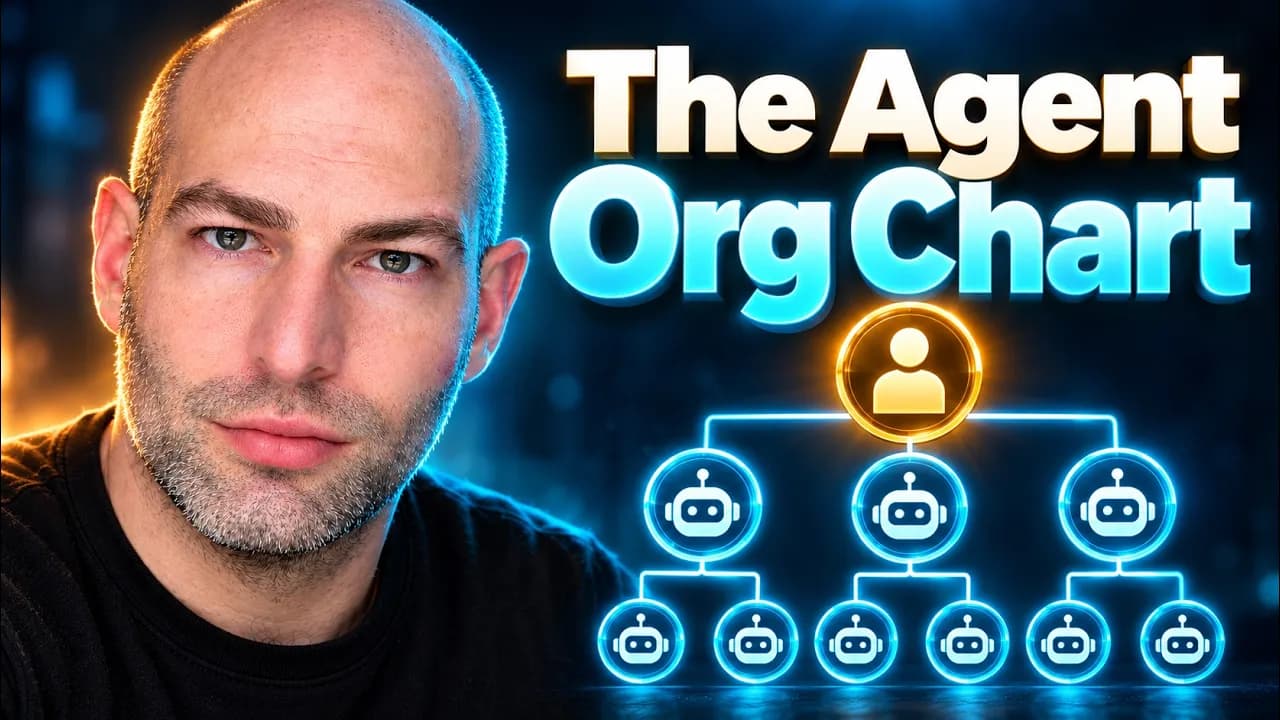
An 18-hour AI task ran successfully with only two or three corrections. The system includes:
- An executive whose only job is ensuring everyone does important work, not just any work
- A builder role that builds things
- A QA role that critiques the thing
- A strategist role that asks good questions when the executive is confused
The strategist's prompt assumes the executive is confused and wrong, and asks questions to return to the right path. Rather than giving direct instructions, questions are asked: what has happened, why has it happened, why is the added complexity necessary, and what are ways to simplify it.
An executive does not give advice because they lack sufficient information. The executive has two jobs: enforcing culture and values, and ratifying decisions already made. If an executive dislikes a decision, they send the two people back to figure out something else until a better solution emerges.
The human gets handed things the agents cannot handle, identifies where things are broken, and hands that back to the agents. A blog post about this setup is planned but not yet written. Partial information exists at ai-maintainers.jin.dev.
Be intentional in how you communicate and know the outcome you want. Have positive visions of the future. These two things are very important.
Keep JetBrains in your library
Save the videos and channels worth coming back to, and find them again in one place.