Serotonin Has Nothing to Do With Happiness. Here Is What It Actually Does.
In a Nutshell
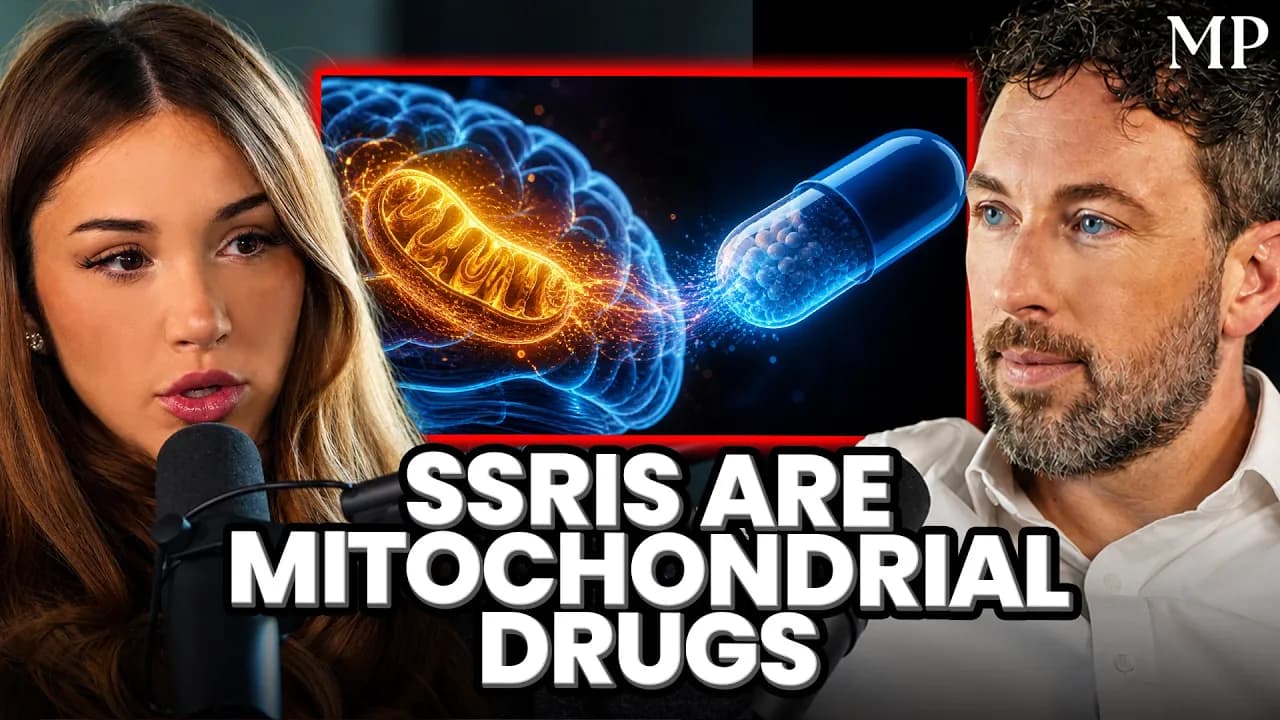
Serotonin does not boost mood or happiness in the brain as SSRIs misleadingly marketed; instead, it primarily regulates mitochondrial adaptations to oxygen deficits, acting as a "traffic cop" to redirect blood from poorly oxygenated lung areas and control breathing rate during hypoxia from exercise or metabolic shifts. In the gut, where 95% of serotonin resides, it prevents tissue death by managing motility and oxygen use during digestion, explaining SSRI side effects like nausea and serotonin syndrome from excess. Evidence from isotopic labeling, mitochondrial experiments, and receptor blocking confirms serotonin's intracellular role in energy production and melatonin synthesis.
These notes were generated by AI and may contain inaccuracies.
SSRI science destroyed the integrity of serotonin science. The idea that serotonin primarily acts in the brain, on neurons, to boost mood and make you happy is total nonsense. This arose as a marketing campaign due to SSRIs in the 80s. Serotonin's primary role is to assist mitochondrial adaptations to absolute or relative deficits of oxygen.
When you inhale, not every segment of your lungs is equally oxygenated, especially since most people use only a third of their lungs. Serotonin acts as the traffic cop that sends blood away from poorly oxygenated parts to oxygenated parts. Hypoxia does not mean strangulation; it occurs during exercise when you need more oxygen than available, causing harder breathing, or upon waking when metabolic rate increases as mitochondria adjust.
Morning sunlight signals serotonin to rise in the brain, creating mitochondrial adaptations. Serotonin is a major controller of breathing rate: insufficient oxygen relative to needs releases serotonin in the brain stem, making you breathe more.
95% of serotonin is in the gut, regulating gastrointestinal motility. When you eat, the gut uses up oxygen to digest food; serotonin pushes it along to prevent hypoxia and tissue death in intestinal segments.
Two weeks of an SSRI causes nausea and vomiting because the gut overdoses on serotonin. Taking an MAO inhibitor with an SSRI causes serotonin syndrome, leading to breathing too much. Serotonin is a whole-body chemical coordinating breath, mitochondrial energy production, and proteins.
Serotonin moves in and out of cells. To measure this:
- Synthesize isotopically labeled serotonin applied outside cells; detect it inside to distinguish from cell-made serotonin.
- Examine biochemical pathways from multiple angles; consensus across angles confirms the picture.
- Incubate isolated mitochondria with or without serotonin; serotonin increases melatonin production dramatically.
- Block specific receptors to test their role in effects.
I can show you pictures of the stacks of the papers that I read with all the highlighting notes all over.
Keep Mikhaila Peterson in your library
Save the videos and channels worth coming back to, and find them again in one place.