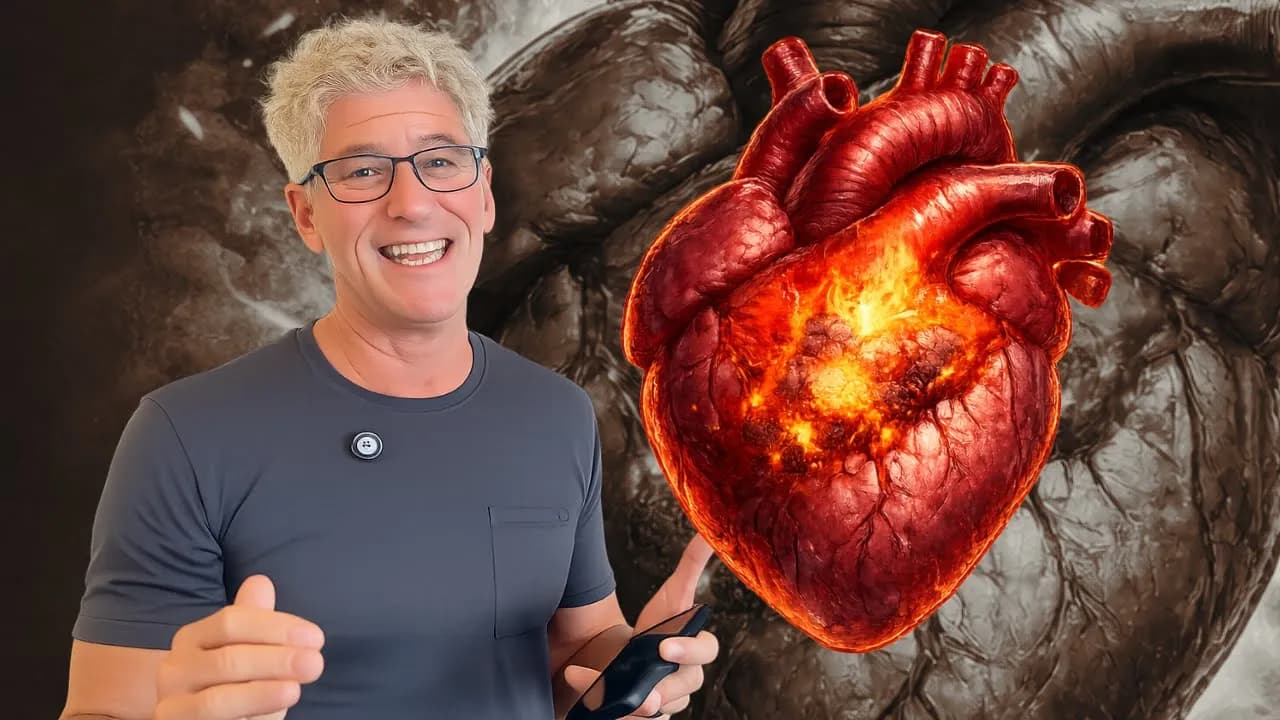
The Dr. Berg Show LIVE - September 4, 2026
In a Nutshell
Dr. Berg emphasizes that health improves by activating genetic survival programs through intermittent heat and cold stress, optimizing sleep and meal timing, and removing environmental triggers like processed foods and constant smartphone use. Key interventions include 16-18 hour fasting for acid reflux, saunas 5x weekly at 190-200°F, morning sunlight, consistent sleep schedules, and closing the kitchen after dinner. He reframes dopamine as a driver of wanting rather than pleasure, serotonin as an emotion regulator rather than a happiness chemical, and stresses that insulin resistance—not just blood sugar—is the early warning sign detected through fasting insulin tests.
These notes were generated by AI and may contain inaccuracies.
Dr. Berg opens the Q&A session stating that anything said is not intended to bypass medical doctors or cure diseases. Viewers should check with their doctors. The session is for educational purposes and research. The show is multi-channel.
L-lysine can help put the virus back into remission. L-arginine will bring it out of remission and is high in nuts and seeds. Canker sores are typically viral-related and come out of remission due to stress. The recommendation is to identify and reduce stress triggers.
Over-sterilizing with antibacterial soaps can kill the microbiome layer, leading to rashes and redness. Recommended: regular natural unscented soap. Tallow-based soaps and coconut oil-based soaps are mentioned as good options. No specific brand is recommended.
Antibiotics, especially full-spectrum, cause massive destruction to the microbiome. The microbiome never fully returns to its original state. Recommendation: take a probiotic while on antibiotics and continue afterward. Find a high-quality probiotic for long-term use. Antibiotics only work on bacteria, not viruses, fungus, yeast, mold, or candida. Dr. Berg suggests trying other approaches first before using antibiotics.
Eighty percent of the population has H. pylori, but it typically doesn't cause problems until the environment changes. H. pylori thrives in alkaline environments. The stomach normally has a pH of 1-3, which keeps H. pylori in check. When pH rises, H. pylori produces ammonia to alkalize the stomach for survival. Sulforaphane from broccoli sprouts is mentioned as a natural approach. Research on this is recommended.
A story is shared about a man with a genetic mutation linked to Alzheimer's who shows minimal cognitive decline. He worked in the Navy around boilers and was periodically hosed down with hot water for decades. The theory is that heat shock proteins developed from high-heat exposure prevent amyloid plaque from damaging neurons. An MRI showed some plaque but minimal cognitive impact.
Dr. Berg recommends saunas 5 times per week for 18-20 minutes at 190-200 degrees. Membership at health spas provides access. The body has genetic programs for protection against heat and cold that aren't activated in comfortable modern environments. Both cold and heat exposure provide different benefits. Combining cold exposure (cold shower or plunge) followed by heat (sauna or hot shower) after 20 minutes may compound survival benefits. Intermittent stress, not chronic stress, creates health benefits.
Nicotine is a drug that stimulates certain functions and is addictive. It is not recommended as a health practice. It is an upgrade from smoking cigarettes due to avoiding smoke and chemicals. It may help transition off smoking. Nicotinic acid and B3 do not increase NAD. Dr. Berg is not a fan but acknowledges other ways to get healthy exist.
Benfotiamine is a synthetic fat-soluble B vitamin. No side effects have been observed. It supports the heart by supporting the autonomic nervous system. B1 deficiency is one cause of heart problems. The natural version allithiamine is recommended. Both support heart function.
Fat-soluble vitamins like vitamin D typically come with a small amount of fat in supplements. Absorption may be 90% instead of 100%, which is not considered significant. If concerned, add an eighth of a teaspoon of olive oil or coconut oil.
A 42-year-old woman with breast fibroids is taking estrogen support, iodine, vitamin D3, K2, and magnesium glycinate. Additional recommendations include a low-carb ketogenic diet because insulin is an anabolic hormone that makes things grow. Avoid dairy products, especially milk, as they are designed to make calves grow quickly.
Shaking during nervousness or panic attacks is a normal physiological response. The nervous system needs sufficient vitamin B1 to remain calm and steady. Deficiency can cause trembling and panic attacks. Magnesium also calms the body. Breathing through the nose slowly helps during panic attacks. A personal story is shared about helping someone through a choking incident by massaging the neck and encouraging relaxation.
Lymphocytic colitis involves inflammation in the colon, typically triggered by something eaten. GI doctors typically prescribe antibiotics or steroids rather than addressing food. The carnivore diet with intermittent fasting is recommended because meat provides glutamine to help heal the gut. Probiotics are beneficial. Emulsifiers, chemicals in food, and even fiber can irritate the digestive system. European approaches use elimination diets rather than medications.
Dopamine is not a pleasure chemical. It increases wanting and drives impulses toward things. In rat studies, removing the dopamine center eliminated the drive to eat, though pleasure from eating remained. Dopamine is behind addictions because it drives anticipation of abnormal triggers like alcohol, drugs, gambling, pornography, and junk food. Over time, the event itself provides less satisfaction, and the addiction becomes about relieving stress from not engaging in it.
There is no data showing causation between skipping breakfast and gallstones. The claim that breakfast is the most important meal originated from a Kellogg's employee. Any association between fasting and gallbladder concentration does not apply to simply skipping breakfast.
Twelve hours of fasting provides no benefit. Benefits begin at 16 hours, with more at 18 hours. For acid reflux, 16-18 hour fasts are recommended. Test with a teaspoon of apple cider vinegar in water first. If it doesn't worsen symptoms, the issue is likely not inflammation or ulcer. Betaine hydrochloride can acidify the stomach and help keep the valve closed. Both acid heartburn and acid reflux are valve problems, not too-much-acid problems.
Silver fillings contain mercury. Vapors can be released while chewing. Activated charcoal is not considered an effective antidote. A biological dentist experienced in mercury removal is recommended. Immune system strength affects tolerance. The mechanism itself suggests it is not ideal.
When beta HCL and apple cider vinegar worsen acid reflux, inflammation is likely present. Healing the stomach should precede introducing acidifiers. Allithiamine (or benfotiamine) in therapeutic dosages supports the nerves controlling the valve. Zinc carnosine helps heal the stomach. Intermittent fasting and chlorophyll soothe and heal irritated stomach tissue.
Insulin acts as a silent worker clearing sugar and starch from the bloodstream. When insulin becomes exhausted, blood sugar problems emerge. A fasting insulin test can detect elevated levels before blood sugar becomes abnormal. High fasting insulin indicates the need for a low carb diet combined with intermittent fasting.
A1C measurements can appear normal for many years because the body clears sugar rapidly, preventing prolonged exposure to red blood cells. This creates a dangerous time delay in detecting metabolic problems.
- Maintain consistent wake-up and sleep times. Rotating schedules like shift work disrupts the body's systems.
- No snacks after dinner. Close the kitchen after dinner and brush teeth immediately to signal eating is finished.
- Get morning sun exposure without sunglasses for 30 minutes.
Diastolic pressure measures vascular system contraction and relaxation. The primary cause is insulin resistance from carbohydrate consumption, frequent eating, low potassium, and high sodium intake. Increasing potassium helps address this issue.
- Ox bile salts for lubrication
- Fermented foods
- Vitamin B1
- Magnesium
- Donate blood
- Consider copper supplementation
- Eliminate iron-rich foods, especially from cast iron skillets
- Reduce red meat and iron supplements
When gallbladder issues are ruled out, use myofascial stretching. Bring the shoulder to end range of motion, contract against resistance for 10-20 seconds, then contract in the opposite direction for 10-20 seconds. Repeat contractions toward and away from the range of motion to progressively increase mobility.
Itchy skin indicates low bile. Use ox bile supplementation. Betaine hydrochloride addresses low stomach acid, which indirectly increases bile production from the liver.
A nervous breakdown represents an overwhelming situation where the nervous system lacks tolerance. The autonomic nervous system has been triggered excessively, often with insufficient sleep and low vitamin B1. Recommendations include more sleep, walking, nasal breathing, and B1 supplementation.
Treatment depends on disease stage: fatty liver, inflamed liver, hepatitis, or cirrhosis. Once cirrhosis sets in deeply, reversal becomes difficult. Tocotrienols (vitamin E complex including alpha, beta, delta, and gamma forms) and serrapeptase enzyme may help. Some data supports tatka for cirrhosis treatment.
Serotonin is not a "happy brain chemical." Recent findings show SSRIs don't improve serotonin levels and increasing serotonin doesn't correct depression. Serotonin functions as an emotion regulator and amplifier, preventing extremes rather than creating happiness. 90-95% of body serotonin is produced by gut microbes and doesn't cross the blood-brain barrier, affecting peristalsis and elimination rather than mood.
Infrared light penetrates the body and gets absorbed by the final step in mitochondrial machinery, increasing ATP production efficiency. This addresses the root cause of chronic illness: insufficient mitochondrial energy production. Research shows effectiveness for androgenic alopecia (hair loss), chronic knee pain, and arthritis. Infrared also increases nitric oxide for blood pressure regulation and reduces oxidative stress.
The sensation of thirst is real and reliable. The claim that people are already dehydrated by the time they feel thirsty lacks validity. Excessive water consumption without electrolytes, especially on low-carb diets where glycogen and electrolytes are depleted, can worsen dehydration. A straw-colored urine indicates adequate hydration rather than completely clear urine. The recommendation is 2.5 liters daily, consumed when thirsty.
Humic and fulvic acids support the microbial environment in soil. Even sterilized dead microbes can change the gut environment beneficially. Yogurt changes gut conditions through lactic acid production even when microbes don't survive stomach acid.
Betaine hydrochloride addresses low stomach acid common with aging. It helps with indigestion, gas, bloating, acid reflux, GERD, and heartburn when food sits undigested.
Soaking chia seeds creates a gel beneficial for consumption. Grinding exposes seeds to air and oxidation, so ground seeds should be consumed immediately.
Potassium bicarbonate is acceptable. Potassium citrate may be preferable for those with kidney stones due to citrate deficiency.
Dietary changes provide greater benefit than supplements like citrine for lymphedema.
Pituitrophin PMG from Standard Process may support pituitary function and growth in young people.
Nattokinase acts as a natural anti-coagulant. Avoid combining with Coumadin due to blood thinning effects. Medical supervision is recommended.
Vitamin B6 in the P5P (active) form helps carpal tunnel syndrome. The synthetic version may block the active form and create problems.
There's a book that walks people through nine different environments and step by step of what you need to do. It combines ancestral mismatch research with practical things that should be done for environments. Currently doing almost everything in this book and it's working because all habits and environments are being optimized.
The grocery store creates an illusion of choice with 30,000 items, but most of them are just three ingredients: sugar, starches, and seed oils from corn, wheat, and soy. There's actually not much choice. The grocery store is a landmine because everything from the music to the smell to where things are positioned sets people up to buy the wrong foods.
The goal is changing environments to the point where it puts you back in control over all of these things that you're not in control of, including the cell phone.
Have a wonderful weekend and go out for a long hike this weekend and up hills down hills without your cell phone looking at things.
Keep Dr. Eric Berg DC in your library
Save the videos and channels worth coming back to, and find them again in one place.