The $19 Billion Dollar Lie
In a Nutshell
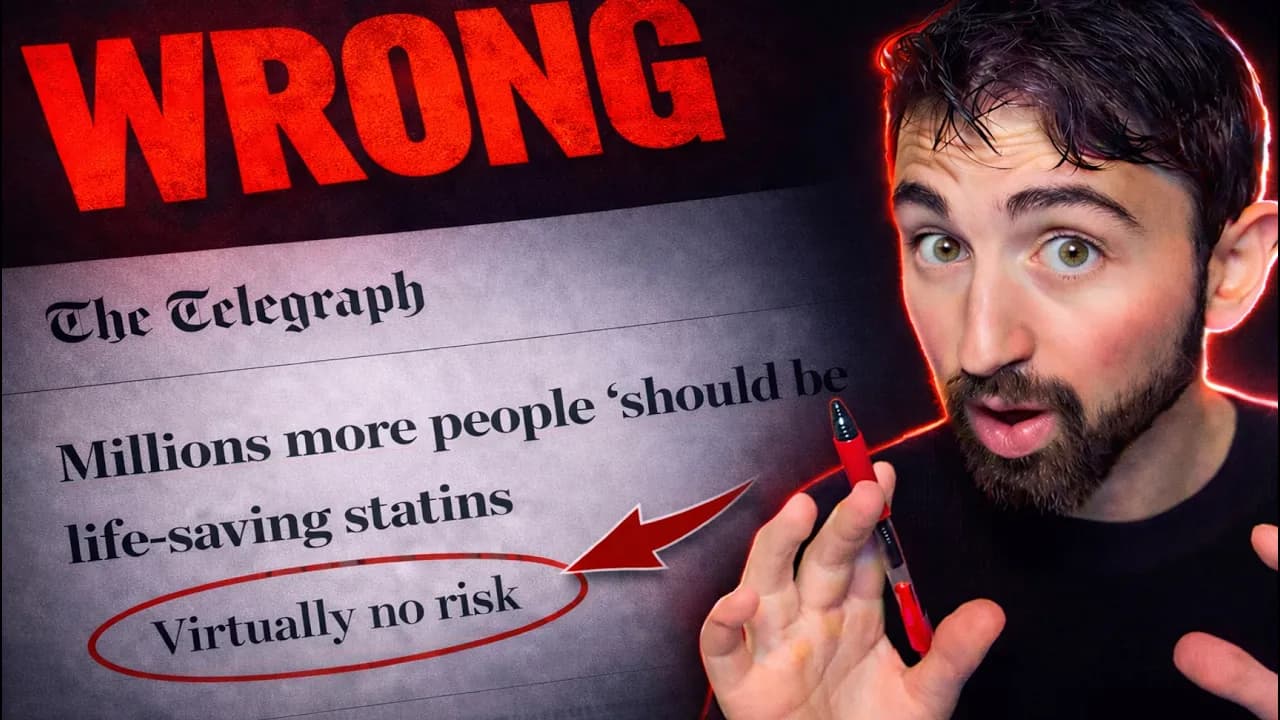
The $19 billion antidepressant industry relies on a lie: FOIA-released data from 74 trials shows placebos drive 82% of improvement (9.6 points on the 51-point Hamilton Depression Scale), with drugs adding just 1.8 points—less than a good night's sleep and below the UK's 3-point clinical significance threshold. Informed consent forms bury this, along with severe side effects like 40-60% emotional blunting, up to 74% sexual dysfunction (often permanent), black-box suicide warnings, and brutal discontinuation syndrome requiring months-long tapering. Patients deserve full raw data visuals to weigh tiny benefits against harms, opting for alternatives like exercise, St. John's Wort, or omega-3s instead.
These notes were generated by AI and may contain inaccuracies.
There is a $19 billion lie being told in medicine right now involving 30 million Americans, probably not even one of them knows it's going on. It involves a sugar pill and a number so tiny you can barely see it. This is a form that all doctors are supposed to give before you accept a treatment or medication: three pages of fine print, legalese, and massive confusion. Reading every single line took 8-9 hours because it didn't make sense, was totally confusing with conflicting information. Average patient in the waiting room spends about 30 seconds looking it over then signs off. It's called informed consent: signing that you understand the risks, benefits, and harms of that medication. Today, making this super simple and showing what's not communicated in this form. If truly informed and understood what you're getting into, you would never in a million years sign off on this informed consent.
Clinical psychologist Irving Kirsch used to believe in antidepressants and recommended them to certain patients. He filed FOIA (Freedom of Information Act) requests for raw data from every antidepressant trial: 74 trials total. Drug companies keep raw data confidential. They only published the ones that worked: 31% of publications never published because they didn't come out right; another 15% rewritten to make them look positive. Medical doctors don't get raw data to verify if correct. Drug companies inflated results by 32%.
Entire antidepressant industry ($19 billion) uses Hamilton Depression Scale from 0 to 51. Items answered by doctor, not patient (e.g., if someone looks depressed, check off depressed). This is how depression is diagnosed: not by blood test or anything objective, but subjective Hamilton scale. Hamilton never designed it to diagnose depression, but it's the gold standard. Higher number means more severe depression. Envision 0 to 51 as 51 ft across whiteboard.
Drug companies tested drug against placebo (sugar pill). Placebo reduced depression by 9.6 points (just under 10 points). Drug added tiny additional 1.8 points. Placebo does heavy lifting: 82% of improvement from sugar pill; only sliver from drug on 0-51 scale. $19 billion industry based on this tiny improvement. Good night's sleep lessens depression by 6 points—more than three times drug effect.
In UK, National Institute of Health says need at least 3 points for clinically significant. Only in America allow this tiny number (1.8) as significant. For 1.8 points, patient gets black box warning (increased suicide risk), sexual dysfunction/decreased libido up to 74%, post-SSRI sexual dysfunction (persists after stopping drug). Worst side effect: emotional blunting (40-60% of patients)—not in informed consent. Emotional blunting: can't feel enjoyment/pleasure, become numb. Less sad/less depression, but no emotions. Leads to discontinuation syndrome: can't come off easily; need doctor to taper slowly over months/years. Some spend $30,000/year to taper off. Other side effects: insomnia, nausea, anxiety, even depression.
They treat placebo effect as 'noise' and subtract it, despite it being something—believing in something, patient's mind healing body. It's the heavy lifter (82% improvement). Should research what does heavy lifting: focus on lifestyle changes without massive side effects/harms. Not doctors' fault—they don't get raw data. Both doctors and patients misinformed: not true informed consent.
Create quick visual of true data: placebo benefit, drug benefit, all real side effects, all published data. Taxpayers indirectly pay for Big Pharma research but no access to raw data to verify. With all raw data/all trials, more informed; patients decide if want drug they can't get off easily, if benefits outweigh harms. If knew can't come off easily/major side effects on withdrawal, might try exercise, St. John's Wort, omega-3 fatty acids, better sleep—better benefit-harm ratio.
Took 8-9 hours to understand; average patient has no clue. Not telling anyone to come off medication—that's between you and doctor. Depression is real. Patients need true information in advance to decide. Current system based on lie, sleight of hand. Since on depression topic, watch video on alternative things for depression.
Keep Dr. Eric Berg DC in your library
Save the videos and channels worth coming back to, and find them again in one place.