Could All the Experts Be Wrong About Statins?
These notes were generated by AI and may contain inaccuracies.
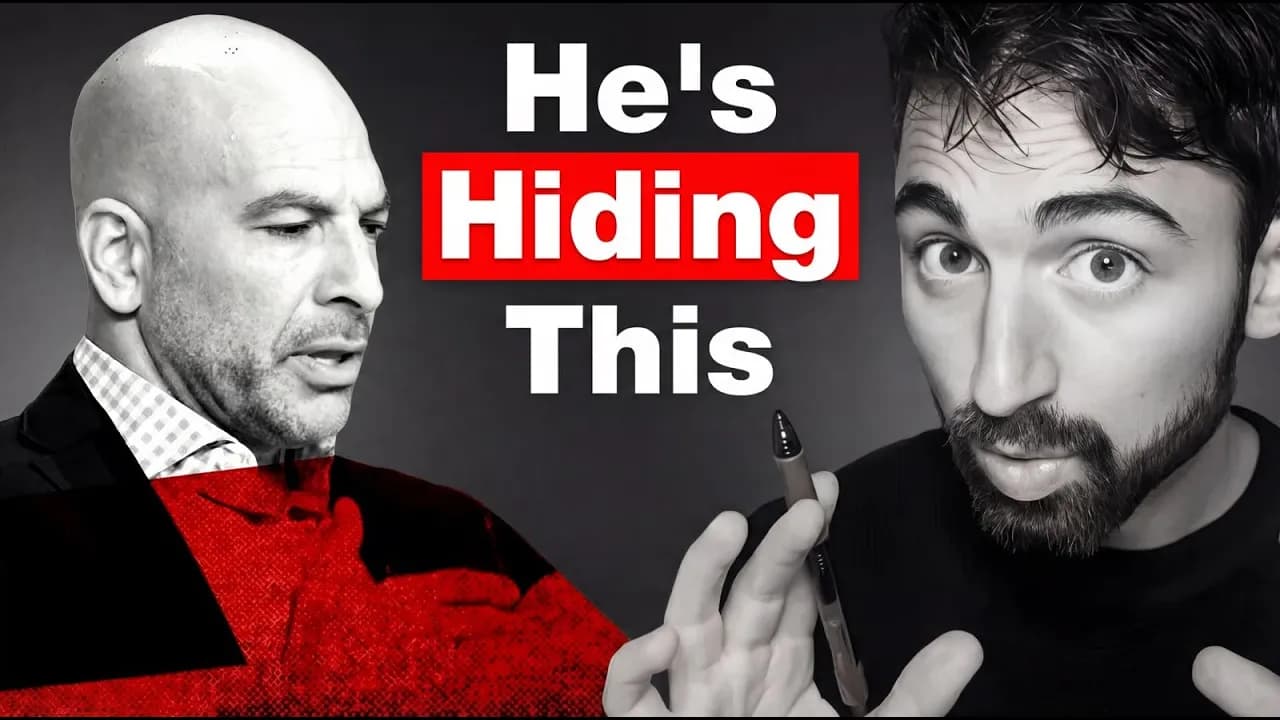
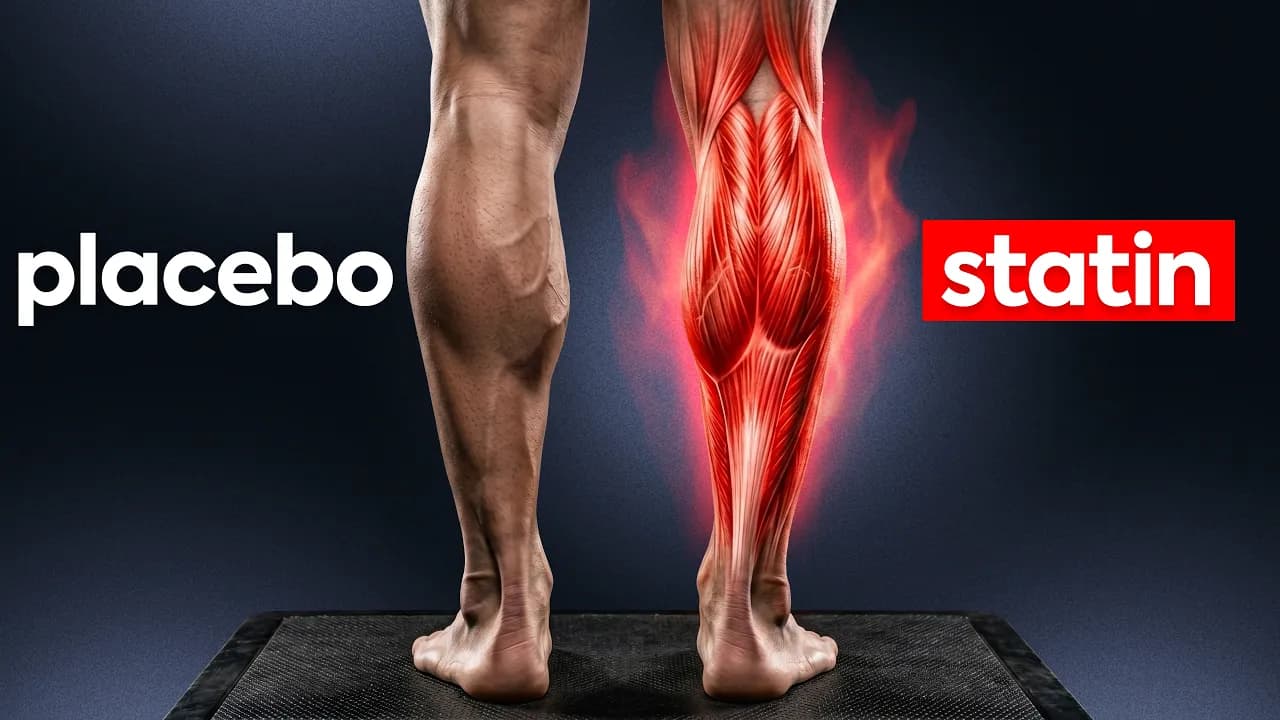
Are you ready? I'm about to take you inside a study that broke media headlines: "Millions more people should be taking life-saving statins. Most feared statin side effects are unfounded. Landmark study finds." Every time a study like this drops and sounds rigorous, headlines and influencers run rampant, but without first digesting the data. As an MDPhD researcher obsessed with the nuances of heart health science, I find this so frustrating. The more I looked into this paper, the more I got obsessed that all of these reporters and doctors and so-called expert bodies are getting it totally wrong. The headlines scream safety with certainty, but the data hint at new risks. Could statins actually make you fat?
Trust me, you're going to want to sit through for this one because I'm not only going to rewrite what you know about statins, but rewire how you think about certainty in science. It is a communication failure, the p value propaganda that erects brick walls in front of informed consent. People have questioned whether the display is meant to be intentionally confusing, a statistical lie, incompetence, intent to mislead, or maybe just laziness. People still died. Human people still died.
Before we begin, hang in there for just a little bit longer than usual for a really important preamble. The challenge is this: Listen really listen to what I am saying and more importantly to what I am not saying because there's going to be a theme that will run through this video. Science and medicine don't operate in binaries, blacks and whites, ones and zeros. To say that we are not certain of something is not to say we are certain of the opposite. That sounds vague right now, but it'll make a lot more sense as we go through this paper together.
The promise: I didn't want to make this video. I generally don't like making reaction content. I'd much rather spend my time reading new Cell and Nature papers, getting genuinely excited about the newness of discovery and bringing those scientific frontiers to you rather than intellectually sword fighting with what I see to be distortions of the evidence. But where there is real opportunity to deliver genuine clarification and educational value, I do what I think is necessary. I'm not doing this for easy clicks, to stir outrage, or to feed conspiracy theory thinking. Yes, there's a hook: The headlines scream safety with certainty, but the data hint at new risks. That's to get you right here where I want you. But everything that I'm going to say is grounded in logic, verbally precise, and honest, and sometimes the truth is uncomfortable.
What I give you here is the concise version. If you want extra nuance, more depth, and more references, you can find that at the written newsletter linked in the video notes.
Here's the road map:
- Walk you through this big new study, what they did, and what made it such massive news.
- Explain the data and how they actually should be interpreted.
- Show you the big blind spot and why the omission matters so much.
- Reveal other limitations, big ones, and why they need to be part of the conversation.
- Respond to push back.
This was a massive labor. It truly was a meta-analysis of large double-blind statin randomized control trials to assess for the negative side effects caused by statins. The research group pulled data from studies where patients were randomized to a statin or placebo and both the patient and the provider were blinded to the assignment. In the end, they included 19 total trials with a median follow-up period of 4.5 years in a total of 123,940 individuals.
Using the side effects listed on statin product labels, they assessed for 66 additional undesirable outcomes beyond effects on muscle and diabetes which they present as previously reported. Their headline conclusion, quoting right from the Lancet Group's professional LinkedIn account: "Knew almost all side effects on statin labels not caused by statins." Bank that claim in your brain because I'm going to prove that it is unequivocally inaccurate and effectively a statistical lie based on their own data.
This is where we get to have a little bit of fun together. I want to show you how to understand their main graph. Fair warning, it looks confusing as heck. In fact, people have questioned whether the display is meant to be intentionally confusing since this sort of graph called the forest plot isn't usually presented this way. It's usually presented in a clearer vertical form. To help you understand it, indulge me as I walk you through a simplified vertical version and then we're going to translate it into the graph at hand.
Here's what you need to know. The horizontal axis represents what's known as a relative risk or risk ratio abbreviated RR. That's the probability of an event occurring in the treatment group (statin group) versus the control. A relative risk of one means no increase in risk. Values greater than one (to the right of the line) are associated with an increased risk of the outcome given statins. If less than one, statins reduce risk.
The risks for various specific outcomes are plotted vertically and the circles represent the average risk ratio and the horizontal line represents the confidence interval. The confidence interval is critically important. It tells us how noisy the data are. Very importantly, if the confidence interval crosses the risk ratio line of one, we say the result is nonsignificant.
What does nonsignificant mean? Does it mean that the statin does not cause an outcome? No. It means the data aren't high resolution enough to claim with enough certainty that statins do cause the outcome. So if we are 90% certain that statins cause weight gain but it doesn't reach statistical significance because the confidence interval crosses that line of one, we slap the term nonsignificant on it. That is not a comment on biological reality. It is statistical semantics.
Example: A drug that causes a five-fold increased risk of death within a year, but if there's enough variation in a study such that it's underpowered and the confidence interval just crosses that risk ratio line of one, it's non-significant. There's still probably a 400% increased risk of outright death in a year, but if it falls shy of that arbitrary threshold, we call it non-significant and it can get brushed aside.
Their graph is just what I explained, except they twisted it into a circle for who knows what reason. What is clear is that there's a ton of trends suggesting cause-effect relationships between statins and negative outcomes, including weight gain. We also see clear causal trends for male breast enlargement and gynecomastia, skin conditions, and significant effects on liver function tests, nuance of diabetes in edema (swelling).
Do you see now why the headlines are not supported by the data? The study did not show millions more people should be taking life-saving statins. It did not show that concerns are unfounded. It did not show that almost all statin side effects are not caused by statins, which is from the Lancet group themselves. If you're trying to present yourself as a serious scientific group, that form of verbal imprecision reveals either incompetence, intent to mislead, or maybe just laziness.
Figure two looks similar to figure one, but it compares high-intensity statin versus low-intensity statin, looking for a dose response. A trending increase in weight gain that just misses statistical significance.
Logic this through: There's a trend towards weight gain when comparing statin to placebo (Figure 1) that just misses significance. Also a trend towards weight gain when comparing high-intensity versus low-intensity statin treatments. Both trends hover near statistical significance. If you isolated people on high-intensity statin therapy and compared them to those not on statin therapy, you'd see statistically significant weight gain. They didn't do that test in this study. I'd try to do the analysis myself if I had access to the individual participant level data. Unfortunately, the raw data are guarded.
Interesting note: They had conflicts of interest with many pharmaceutical companies including Merck, AstraZeneca, Eli Lilly, Novartis, Amgen, Pfizer, and so on. Maybe this influenced what tests they ran.
There are a ton, but let me highlight four.
-
Beyond the study duration: The paper clarifies that these findings can't exclude the possibility of adverse events associated with statin use beyond the study duration. They report statins don't increase dementia risk, but with median follow-up of 4.5 years, we can't rule out statins could cause dementia over longer time horizons. The claim is not that statins cause dementia; it's about the limitations on the data.
-
Bio-individuality: My goal is not to label statins or any medication as universally good or bad. Biology is deeply complex. Those complexities should be humbling rather than flattened into blanket statements. Variables: baseline metabolic health, genetics, Lp(a), microbiome.
-
Excluding observational side effects: Not all adverse effects will be identified in RCTs. Example: Cerivastatin (one of the earlier statins) was linked to dozens of deaths, leading to its withdrawal worldwide. Those harms were never proven in RCTs. People still died, and it was withdrawn.
-
Biochemical analyses excluded: All outcomes reported were derived solely from adverse event reports. They did not incorporate systematic biochemical analyses. Relate to demonstrated effects of statins slashing GLP-1 levels substantially. Those are biochemical data, but wouldn't show up in adverse event reports. This can plausibly explain the trending signal around weight gain. Statins also cut leptin levels in some trials by as much as 67%.
Do we say just because we haven't collected definitive causal proof that there's nothing going on here, innocent until proven guilty? Obviously not.
Broadly, push back falls into three categories.
-
Fear-mongering accusations: "You're scaring people away from potentially life-saving medications." Response: People bring their own confirmation bias. Would you stay silent because some misrepresent your position? The problem is the distortion of truth, the p-value propaganda that erects brick walls in front of informed consent. People have the right to understand what they're doing to their bodies.
-
But statins save lives: In metabolically compromised individuals and in secondary prevention, statins may confer a net benefit. But that doesn't mean every tool is appropriate for every case. Hammers are great at driving nails, but improper for opening jars of pickles.
-
Lumping me in with woo woo wellness influencers: I was valedictorian in undergrad studying cell bio and biochemistry, earned a PhD from Oxford, and MD from Harvard. Grew up with two parents who had four doctorates between them and have two siblings who are also in medicine. Family is batting five for five MDs with most having PhDs too.
This new study does not show what the headlines or self-important experts and institutions claim. It does not prove that statin side effects are unfounded, nor justify sweeping certainty about safety. What this shows is that signals of harm can be erased with rhetoric. That eraser is not science. It is a communication failure because medicine is not about binaries. A probability threshold doesn't dictate biological reality. The real ethical obligation is to protect informed consent.
I'm here to give you the respect you deserve by diving into the data, the good, the bad, the ugly. Stay authentically curious.
Keep Nick Norwitz in your library
Save the videos and channels worth coming back to, and find them again in one place.