The Cholesterol Myth Doctors Still Believe
In a Nutshell
Richard Smith argues that cardiovascular disease begins in childhood due to plant sterols, which the body actively eliminates through dedicated transporters, unlike essential human cholesterol that the body increases production to maintain. He claims mainstream medicine treats symptoms rather than root causes because doctors receive little nutrition training and pharmaceutical profits depend on lifelong medication use. Smith transformed his health through a meat-based diet that eliminated his insulin resistance, anxiety, depression, and multiple medications after years of failed conventional approaches.
These notes were generated by AI and may contain inaccuracies.
Cardiovascular diseases can begin in childhood, as early as age five. This early onset is connected to plant sterols. While plant sterols lower cholesterol levels, this reduction is not beneficial for health.
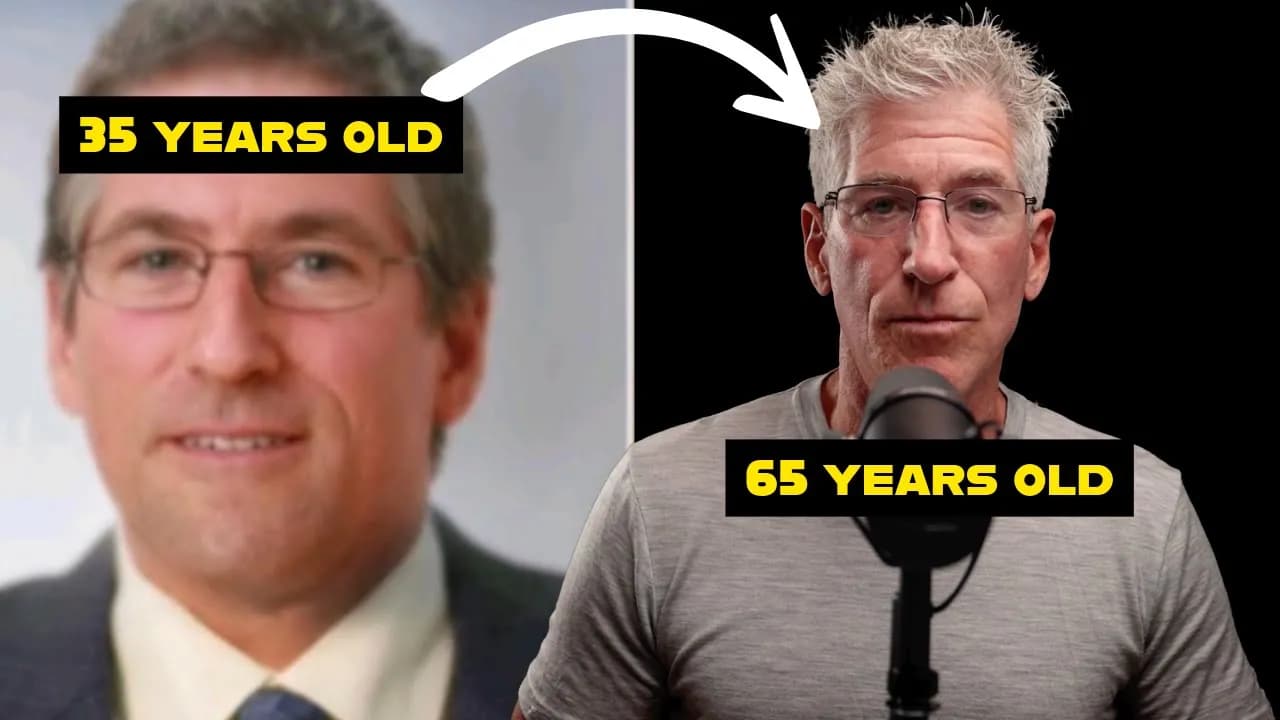
Richard Smith is recognized as the UK's leading nutrition expert. He trained in molecular biochemistry, clinical blood analysis, and epigenetics. He is the founder of "Keto Pro" and serves as an ambassador for the Knox Foundation. He lost 107 pounds of weight and has worked with over a thousand clients. He teaches doctors and healthcare professionals on stages around the world.
Carrie from "Healing Humanity" welcomes Richard Smith to discuss the power of a healthy human diet. The conversation references their recent meeting during the "Healing Humanity" tour in the UK, where Smith was impressed by the documentary.
Smith has attended "Healing Humanity" meetings in the United Kingdom. He has been featured in two previous videos on the channel. His Q&A responses about the carnivore diet are highly valued, with audiences frequently requesting his input on difficult questions.
Smith's health journey began in his mid-to-late twenties when he was in very poor health. He was clinically obese and suffered from insulin resistance. He experienced debilitating daily migraines that caused vision loss and required three different medications. Additional conditions included irritable bowel syndrome, severe skin conditions, joint pain, chronic fatigue, depression, and anxiety.
Smith described his life as literally spent inside boxes. He lived in his home box, drove his metal box (car) to work, worked inside another large box (office building) within a small office box, and reversed this process at day's end. The anxiety and depression were so severe that leaving these boxes became extremely difficult. He visited doctors frequently due to his multiple health problems.
Through dietary changes, Smith lost 107 pounds and eliminated insulin resistance. He stopped all medications, including those for migraines, depression, and anxiety. His irritable bowel syndrome disappeared completely. His skin condition improved significantly. He considers eliminating anxiety and depression as his most important achievement.
In his mid-to-late twenties, Smith experienced extreme difficulty climbing stairs, needing to stop frequently and feeling severely short of breath at the top. Despite being a young man, medical professionals had convinced him this was a normal part of life.
Smith now follows a meat-based diet, which he has maintained for over a decade. However, he did not begin with this approach. Initially, he tried every diet imaginable, along with multiple nutritional supplements and vitamins, without success. His doctor repeatedly stated his conditions were simply facts of life with no solutions available.
The breakthrough came when Smith stopped eating bread, despite having no formal nutritional training at the time. He noticed bread caused bloating and discomfort. After eliminating bread for two months while making no other changes, he lost 2 stone (approximately 13 kilograms or 28 pounds) and felt better than he had in years.
At the time of his initial changes, keto and carnivore diets were not mainstream. Limited and conflicting information was available. Smith progressed from a low-carb diet to "dirty keto," then standard keto, clean keto, and eventually toward animal-based eating. After several years, he transitioned to what is now known as the carnivore diet.
Smith maintains flexibility in his current diet rather than strict adherence to beef and grass-fed lamb only. However, grass-fed beef and lamb form the majority of his daily intake.
When Smith returned to his doctor to share that he had eliminated insulin resistance—a condition requiring lifelong medication—his doctor advised returning to the previous diet that had caused his illness. The doctor's concerns focused on salt consumption, red meat, and saturated fats, warning about cardiovascular disease and blood pressure despite Smith's resolved high blood pressure.
The doctor advising Smith to return to his previous diet was twice Smith's size and suffered from severe insulin resistance himself. Despite this, Smith initially trusted the doctor's advice due to cultural conditioning to trust medical professionals.
Smith emphasizes this is not an attack on doctors, whom he considers extremely important. He notes that doctors receive training primarily in drug therapy rather than nutrition. Many doctors in the functional medicine field possess deep knowledge about nutrition and diet.
Smith faced significant social pressure from friends and family who expressed concerns about cholesterol, red meat, and saturated fats. This occurred during a time when keto or meat-based diets were unknown to the general public. He felt isolated, lonely, and rejected but chose to persevere based on how he felt.
Smith retrained as a nutritionist to understand why he felt dramatically better and why mainstream dietary advice had failed him. He has since worked with well over a thousand clients, with the total approaching two thousand since beginning his practice.
Smith knew from personal experience that dietary changes led to health improvements but sought to understand the underlying biochemical mechanisms. He pursued additional studies in molecular biochemistry, epigenetics, and clinical blood analysis, spending his days studying biochemical pathways and conducting research.
Smith uses the analogy of high-performance machines, comparing humans to jet engines or Formula 1 racing cars. Just as these machines require quality fuel, humans cannot expect optimal function when consuming toxic compounds. When health problems arise, medicine is typically sought rather than examining dietary inputs.
Medicine treats symptoms rather than root causes. When nutrient-rich animal proteins and natural fats are consumed while toxic compounds are removed, health problems typically improve significantly or disappear completely.
Carrie shares similar experiences with depression, anxiety, and the "boxes" lifestyle. Both experienced doctors who showed minimal interest in their dramatic health improvements. Carrie reversed congestive heart failure confirmed by heart scan, yet her doctor responded only with "Interesting" without further engagement.
Both reference ancient medical wisdom: "Let food be thy medicine" and "All disease begins in the gut." They note the frustration that these fundamental principles seem obvious yet remain unrecognized by mainstream medicine and society.
The most difficult challenge involves resistance from friends and family who refuse to consider dietary changes despite visible deterioration in their health. The speakers describe having access to what they consider a "magic elixir" through simple dietary changes.
Both acknowledge medications have their place in modern medicine and have saved lives. However, they argue medications should serve as short-term bridges while addressing root causes, not as lifelong treatments for symptoms.
In the UK healthcare system, doctors have only 15 minutes per patient, creating systemic barriers to addressing root causes. The speakers suggest this time limitation is not accidental but serves specific interests.
Significant financial incentives exist against promoting dietary solutions, as healthy populations require fewer medications. Some medications generate substantial profits, with cholesterol-lowering drugs being among the most profitable pharmaceuticals worldwide.
Dr. Tony Hampton, featured in the documentary, has practiced medicine for 30 years with the mission of helping patients stop taking medications. He sees hundreds of patients weekly and helps many discontinue their prescriptions by addressing root causes.
Modern society conditions people to accept medical authority without question. The speakers note that new doctors receive prescription pads and follow flowcharts for conditions like elevated cholesterol, prescribing statins without investigating underlying causes.
The speakers predict the next generation of doctors will face disappointment when they realize their role has been reduced to writing prescriptions without seeing patients improve. They hope exposure to successful practitioners like Dr. Tony Hampton and Dr. Ken Perry will inspire change.
Carrie describes taking acid reflux medication for 10 years while still experiencing acid reflux, questioning why the underlying problem was never addressed. Medications should serve as bridges, not permanent solutions.
Cholesterol is essential for life and cannot be eliminated without fatal consequences. It forms every cell in the body, constitutes brain tissue, creates the myelin sheath for nerve signal transmission, produces hormones, and provides protection against sunlight.
An NHS doctor working with Parkinson's patients immediately stops cholesterol-lowering medications because cholesterol is essential for brain function. Low cholesterol contributes to Alzheimer's disease, dementia, and Parkinson's disease.
Cholesterol can be obtained through diet or synthesized internally. When fats are consumed, beta oxidation creates acetyl-CoA, which enters the HMG-CoA pathway leading to cholesterol production. Similarly, carbohydrate consumption through glycolysis produces pyruvate, which converts to acetyl-CoA before entering the citric acid cycle and subsequently the cholesterol synthesis pathway.
When dietary cholesterol intake is reduced, the body increases internal production rather than reducing overall cholesterol levels. This demonstrates cholesterol's essential nature for survival.
Plant sterols, the plant version of cholesterol, compete for absorption and lower human cholesterol levels through multiple mechanisms. This is why plant sterol-fortified margarines are marketed as cholesterol-lowering products. However, the body actively attempts to eliminate plant sterols through ABCG5 and ABCG8 transporters.
Sitosterolemia is a genetic condition where ABCG5 and ABCG8 transporters are defective, preventing elimination of plant sterols. Despite claims that plant sterols are beneficial, individuals with sitosterolemia experience early onset cardiovascular disease in childhood, sometimes as early as age five, and may die young from accumulated plant sterols.
The body increases human cholesterol production when dietary intake is insufficient, indicating cholesterol's essential nature. Conversely, the body actively eliminates plant sterols through dedicated transporters, recognizing their potential to cause cardiovascular problems when accumulated.
Cardiovascular disease is a problem related to plant sterols. Very few research papers have examined atherosclerotic plaques in cardiovascular disease or heart attacks. Only five research papers have examined and compared the volume of human cholesterol with plant sterols. There is a correlation regarding the amount of plant sterols present, compared to those who follow a healthy diet and do not suffer from cardiovascular disease. The blockage or cardiovascular event is not only caused by seed oils, fatty acids, linoleic acid, insulin resistance and high blood pressure, but plant sterols are one of the main causes.
Macrophages remove cholesterol and low-density lipoprotein (LDL) particles when they are damaged by consumption of carbohydrates and seed oils. When trapped in the space under the blanket, macrophages engulf them and convert them into free fatty acids. This is a natural process, but the body cannot do that with plant sterols. Plant sterols damage macrophages that actively try to remove them. Human cholesterol is essential for life, and lowering human cholesterol using statins or other cholesterol-lowering drugs does not make sense.
After switching to a meat-eating diet and changing eating habits, hormones regulate themselves. Testosterone levels doubled with the meat-eating diet. Sleep quality improved, and the immune system became stronger. Many of these benefits are related to hormones. When looking at cultures and groups of people who avoid fatty meats and rely mostly on plants, epidemics of fertility problems, hormonal problems, depression, anxiety, and infections result from that. The weight loss argument is incorrect because hormones play a big role in gut bacteria.
Mainstream advice from news, social media, and nutrition studies does not support a meat-eating diet. Most praise the plant-based diet and recommend eating fiber. The prevailing dietary advice includes the food pyramid and healthy eating plate, which are rich in grains and seed oils. Since this nutritional advice has been in mainstream media for 50, 70, or 100 years, it should be examined for effectiveness. If the advice were true, people would be fitter and healthier.
People are following mainstream dietary advice. More people are running in parks on Saturdays, counting steps on Garmin or Apple Watch, working out at the gym, and doing yoga. Research shows lean meat consumption is on the rise, red meat consumption is falling, saturated fat consumption is falling, and plant sterol consumption is rising. People are doing everything they are told to do, yet the problem has not been solved. Walking around local shopping centers reveals very few people look healthy, with most significantly overweight. In the UK, many people use scooters and are very sedentary.
The body heals and repairs itself by supplying nutrients that are used to heal and repair. Protein synthesis is one of the biggest and most important processes. DNA is wrapped around histone proteins very tightly. If unwrapped, DNA would be over six feet long in each single cell. When unwrapped, DNA looks like a pen. Copies are made of this DNA by unwrapping the chromatin, creating messenger RNA (mRNA) that goes to a ribosome. The ribosome reads the code on the DNA, where three tiny nucleotides form groups called codons that code for attracting a specific amino acid. These amino acids link together to create a peptide that makes human protein.
Animal protein is consumed, broken down into amino acids, and reconstituted into human protein. This literally heals and repairs every cell in the body, including hair, skin, nails, liver, and kidneys. While amino acids can be obtained from plants, they are not identical, and a variety of plants from around the world would be required. This could not have been how people got through ancestral periods because these plants were not available. Plants contain proteins that inhibit absorption of specific amino acids and cofactors.
Research in epigenetics proves that humans are not designed to process plant proteins the same way as animal proteins. Plant compounds contain antinutrients and compounds that inhibit and damage DNA. Plant compounds can cause clastogenesis, which is chromosome breakage, literally breaking DNA. Plant compounds cause chromatin to fold, preventing high-quality gene expression. Animal proteins cause chromatin to unfold. Animal proteins allow for high-quality photocopying, while plants cause chromatin to fold, preventing good copies from being made.
Plant compounds in modern life are not what they used to be. Seasonal, locally sourced fruit might have been consumed ancestrally, though some do not eat fruit. Vegetables are survival foods and medicines that contain compounds that literally damage DNA. The protein synthesis process is what makes humans human. Plant compounds are considered both medicine and food for survival.
Fiber is said to nourish gut and colon cells through butyrate, a short-chain fatty acid. Animal proteins contain other short-chain fatty acids called isobutyrate, isovalerate, and propionate, which nourish colon cells at a higher rate than butyrate. Animal proteins contain what can be called animal fiber. Butyrate or short-chain fatty acids found in meat nourish colon cells at a higher rate than plant-derived butyrate.
Plant-derived butyrate breaks down into beta-hydroxybutyrate, or ketones, even when not in ketosis. Those following a meat-eating lifestyle are constantly producing ketones that circulate in veins, nourishing colon cells from within. Ketones circulate in the system constantly, so fiber is not needed to bind to the outside of colon cells. The need for fiber or plant fiber is absolutely zero. Fiber is argued to be harmful and bad for the gut for several reasons. No fiber has been consumed for almost a decade.
One argument for fiber is that it slows the effect of carbohydrates consumed, preventing blood glucose from getting too high. This is considered patching up the problem rather than consuming fewer carbohydrates. Diabetes is considered a blood sugar problem rather than an insulin problem. Injecting insulin to keep blood sugar levels down addresses the symptom rather than the cause. Carbohydrates raise blood sugar, so cutting down on carbohydrates or sugar consumed is suggested instead of taking insulin to lower blood sugar.
People with type 2 diabetes in Facebook groups react negatively to suggestions to cut down on carbs. Many people with type 2 diabetes become angry when learning the solution might be cutting carbs after being on medication for decades. These people are not told this and are often misled into thinking the solution is continuing the same treatment. People are losing limbs because of the food they eat, which is the first time in human history this has occurred. Children now have fatty liver disease, prediabetes, depression, and anxiety. This happens slowly over time until it becomes a social norm that is accepted.
A friend with type 2 diabetes at risk of leg amputation continued eating the same foods despite the risk, responding that they really like custard cream biscuits. Custard cream is a type of biscuit in the UK. People are told carbohydrates are essential, even in hospital settings where doctors recommend ketogenic diets for epilepsy but add that carbohydrates are essential and suggest supplements like Keto Cal containing BHB and seed oils.
Teaching doctors worldwide about these topics faces resistance, as people are not ready to listen and get annoyed. Attempts to help people with various problems, including cancer, face resistance when doctors recommend certain glucose intake. The foundation of what is put into the body is considered essential, though medication may still be necessary.
The documentary is expected to inspire people by planting ideas in their minds rather than directly telling them. Seventeen screenings have occurred in 17 cities, with people traveling long distances to see it again and bring families and friends. Some people need to hit rock bottom before wanting to change. A less strict approach is possible with a cleaner lifestyle while maintaining consistency. Nutrient-dense food provides everything needed in the right proportions, creating feelings of fullness and satisfaction.
Many new followers experience amazing healing at rates never seen before. Making the decision to try the diet is the hardest part for many. A book started with 20,000 healing stories that was reduced to a few thousand because the group of 20,000 was that high. The book was jokingly going to be called 10,000 Tales because everyone says healing is just a story, but hundreds of thousands of people on meat-based ketogenic diets experience amazing healing. Sometimes people fail or make mistakes, or healing stops or weight loss stops after initial success.
There are a number of mistakes people make that lead to failure. Seven meat-based diet mistakes were recorded and will be available on YouTube soon. Most clients who go straight to a meat-based diet have more problems than if they made a series of gradual changes. A series of gradual changes is helpful, such as eliminating certain things gradually.
Grains and seed oils are the two most damaging compounds you can consume. Milk or dairy products are probably third on the list. Once those two are eliminated, cut down on carbs, increase animal protein, and consume more natural fats to be well on the way to success. Doing this through gradual steps allows adaptation and allows the gut microbiome to adapt.
Sodium or salt is very important when starting the diet. When insulin levels drop on a low-carb diet, the body loses electrolytes like sodium and potassium because insulin is responsible for pulling sodium back into the bloodstream through four points in the nephrons of the kidneys. This is why people experience the keto flu. Celtic sea salt is best, and salt should be added to meals.
When people find their way and see progress, several things can happen including gaining extra weight or weight loss stalling. The mistake usually made is drinking fat. Coffee with heavy cream is very tasty, but if weight loss has plateaued, look at the fats being drunk. Dairy products, heavy cream, milk, raw A2 milk, cheese, and butter are processed differently than meat fat.
Meat fat and protein go through the acetyl-CoA pathway into ketone production via HMG-CoA. Dairy contains single-chain fatty acids that go through a different pathway involving propionyl Coenzyme A then succinate coenzyme A, which enters the gluconeogenesis pathway and in most cases is stored as fat. Even if the fat content or caloric value of cream or meat is the same, the processing is different, resulting in fat storage. If struggling to lose fat, look at how much fat is being drunk, how much cheese, cream, milk, and butter is consumed. When cooking with butter, substitute with beef tallow or beef fat, or use the fat in the meat itself.
People often get wrong that they can eat whatever they want. The difference is when the body is in a state where it can recognize satiety signals and hormonal imbalances have been recovered. When starting the regimen, eat a lot of fat because it is needed to produce hormones and for the body's resetting, healing, and repair. After nine or twelve months, sometimes two years, fat may not taste as good and may start to upset the stomach. This signals the body probably needs to cut down on fat and not add fat to everything.
Instinctively start cutting down on fat by eating fat the way nature intended - not just eating lean cuts of meat, but not adding too much fat when cooking, or not adding fat at all, or alternating between fatty and lean cuts the way nature intended because animals have lean and fatty parts. Alternating depending on how you feel is a process to go through after the body has healed and recovered. It is a journey of eating high-fat and low-fat, sometimes cooking with fat and sometimes not.
Be very conscious of the type of fat being drunk, such as heavy cream. Do not drink milk. Milk and dairy in general cause problems for a lot of people. It might be helpful in the early stages, but after a year or two, the body starts rejecting the casein and lactose in milk and that becomes a problem.
Not eating enough protein is another mistake. Do not be afraid of protein because protein is very important. There are seven mistakes on the carnivore diet that have been made. Going straight to the carnivore diet from the standard American diet increases chances of failure because of the gut microbiome and lots of other things. Taking it step by step is recommended, such as doing the keto diet before starting the carnivore diet.
Richard Smith can be found on YouTube under 'Richard Smith', 'Richard Smith Nutrition', or 'Richard Smith The Keto Pro'. A private community is run with Lauren offering free Q&A sessions three times a week. Links are in the YouTube video. Richard Smith is also on Instagram as 'Richard Smith Nutrition' and on Facebook as Richard Smith.
Keep HomeSteadHow in your library
Save the videos and channels worth coming back to, and find them again in one place.