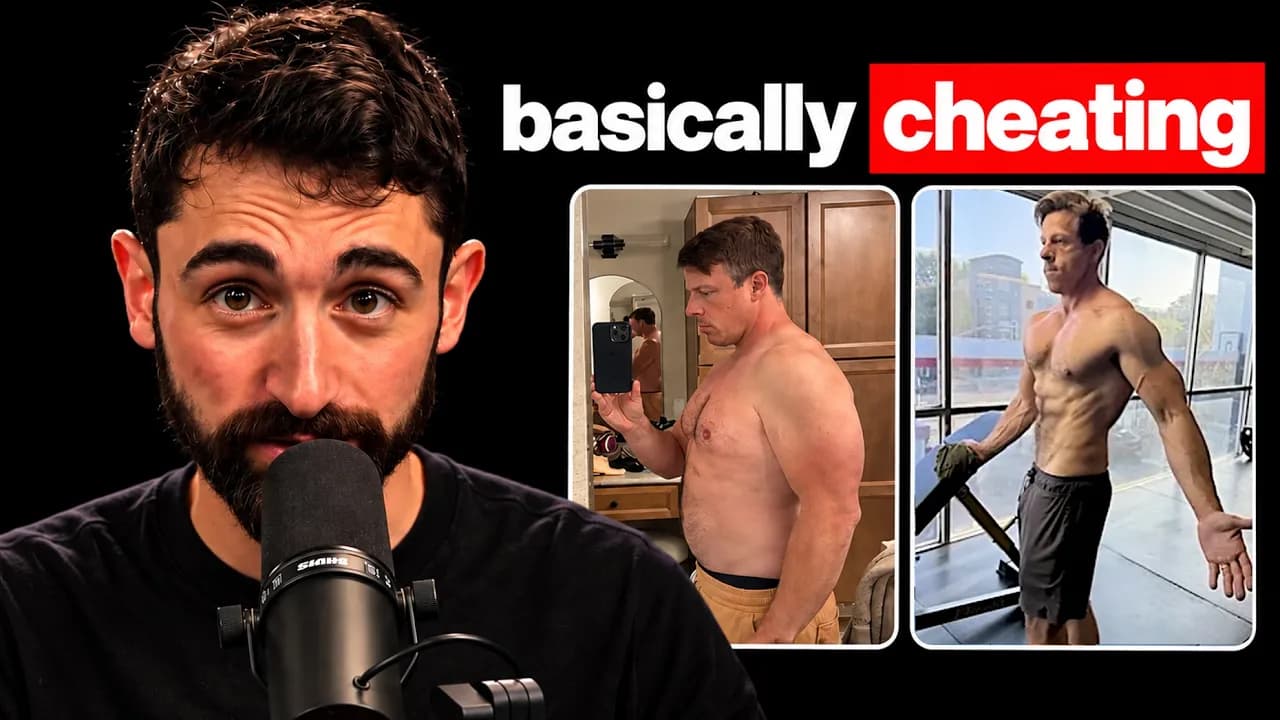
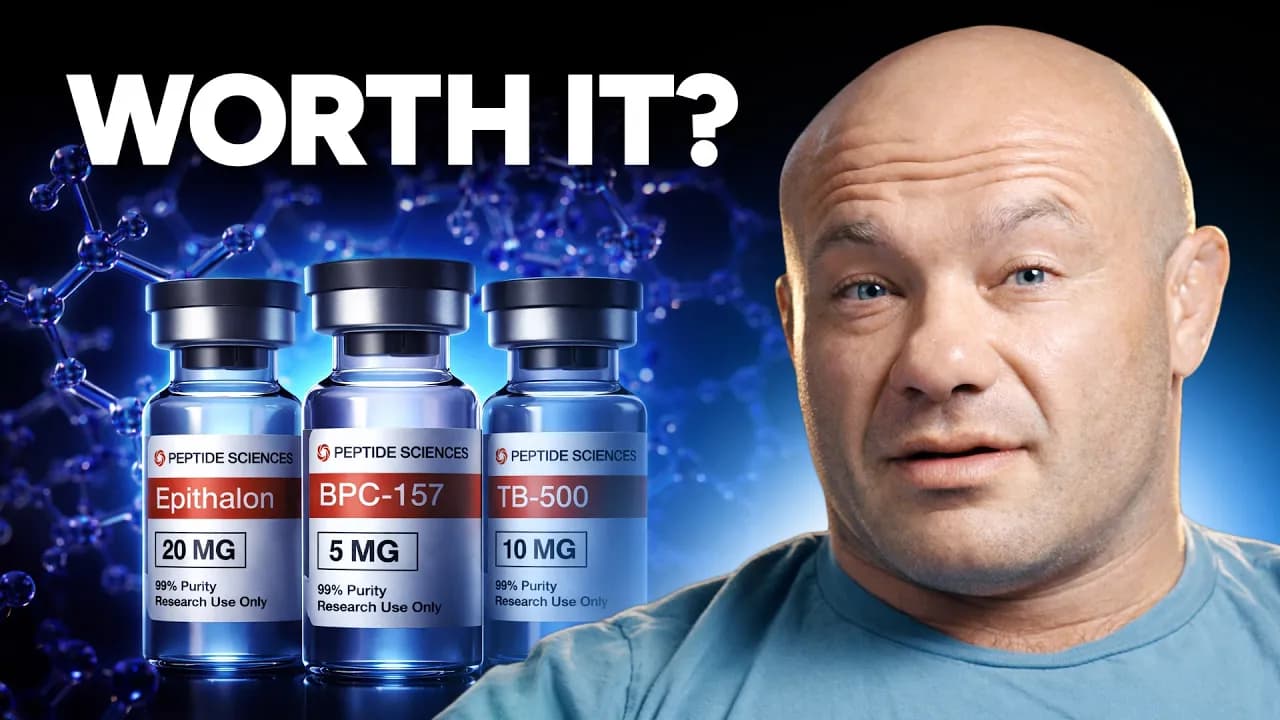
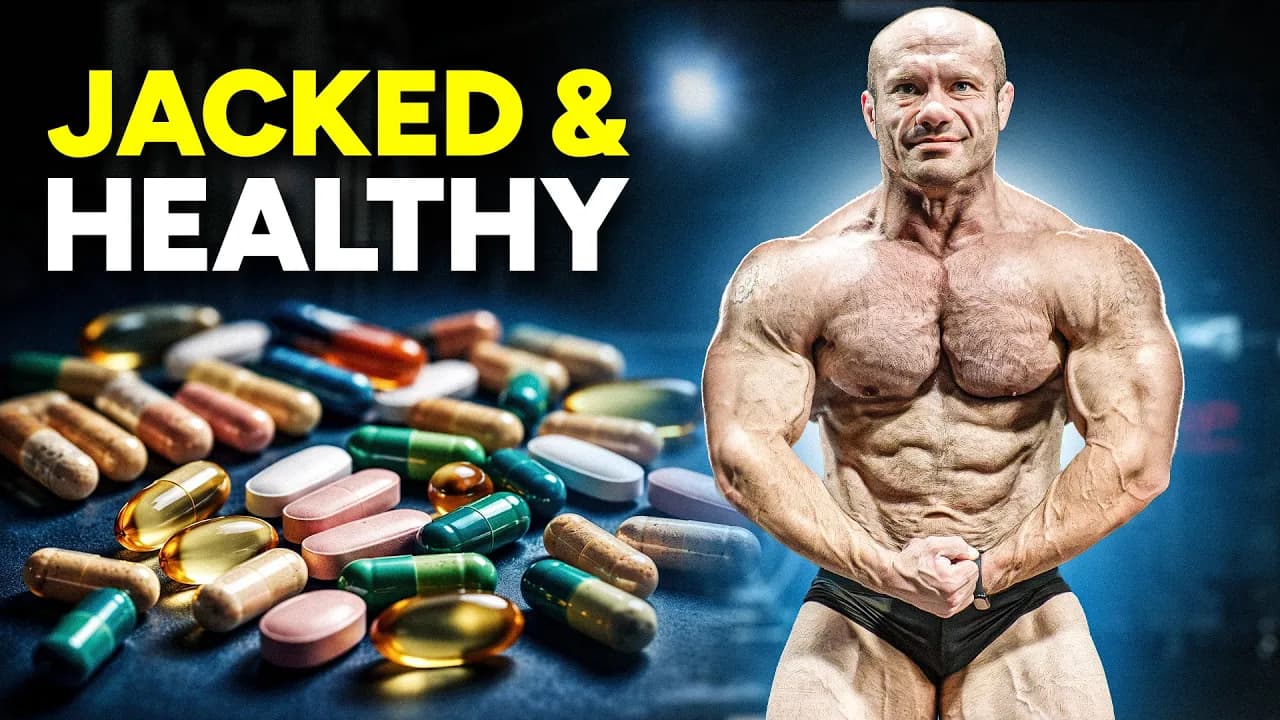
The First FDA Approved Muscle Growth Drug Is Here! Here’s the Catch.
In a Nutshell
The first FDA-approved myostatin inhibitor, abitgramab, can preserve 55% more muscle during weight loss and promote significant muscle growth without training, but requires hospital IV administration and costs $350,000 per year. Current limitations make recreational use impractical, though future home-injectable or oral versions may become available at lower prices. These drugs could eliminate genetic muscle-building limitations, prevent muscle loss from weight-loss medications, and potentially replace steroids for most users.
These notes were generated by AI and may contain inaccuracies.
The first myostatin inhibitor drug has received FDA approval for general use, with potential to unleash professional bodybuilder-level muscle growth in all skeletal muscles without training. Two major caveats exist: the drug requires hospital administration via intravenous injection and costs approximately $350,000 per year at current pricing.
Skeletal muscle cells naturally want to grow constantly by default. Myostatin is a protein that reduces muscle growth to preserve metabolism for other vital organs, an adaptation from evolutionary periods of intermittent famine. Without myostatin regulation, excessive muscle growth would deprive the liver, kidneys, heart, and brain of necessary nourishment.
Myostatin inhibitors work by blocking myostatin effects, reducing its production or expression, thereby unleashing muscle growth to near-maximum potential.
Complete myostatin inhibition can produce professional bodybuilder-level muscle growth without training. Evidence includes:
- Mice with blocked myostatin compared to normal mice
- A hunting dog lacking functional myostatin gene with extremely large muscles
- Cows lacking myostatin that no longer resemble typical cattle
- Human babies born without functional myostatin, documented as one-in-a-billion cases, showing enormous legs even in infancy
Myostatin inhibitors can control muscle growth with minimal side effects since only skeletal muscles are affected. Research trials show health improvements rather than harm.
Myostatin inhibitors could theoretically give anyone genes favorable for muscle growth regardless of genetic starting point. This could enable radical reduction in sarcopenia (age-related muscle loss) in older adults, resulting in:
- Greatly boosted metabolism
- Improved overall health
- Drastically reduced inflammation
- Improved strength and mobility
- Greater independence after illness
- Addressing effects of aging
Myostatin inhibitors could prevent nearly all muscle loss during fat-loss diets, especially when combined with weight loss drugs like terzipatide. In maintenance or bulking phases, they could dramatically double weight training effectiveness, requiring adequate protein intake and sufficient calories.
The drugs enable targeted body sculpting where specific muscles can be prioritized for faster growth while maintaining minimal training for others.
The newly FDA-approved drug is called abitgramab, a monoclonal antibody that stabilizes myostatin and increases muscle growth. It was developed by ScolarRock and has received FDA approval.
In experiments at very low doses over 24 weeks:
- Terzipatide alone caused loss of approximately 7.6 pounds of muscle mass
- Terzipatide combined with abitgramab resulted in loss of only 3.4 pounds of muscle
- This represents a 55% reduction in muscle loss
- No weight training was performed - results were from drug effect alone
- Fat loss was not compromised; participants lost about one pound more fat than with terzipatide alone
- Muscle preservation resulted from increased calorie consumption by growing muscle tissue
In people with severe muscular diseases, abitgramab improved both muscle mass and physical function, producing real functional muscles.
The drug requires intravenous injection in hospital settings, meaning patients must visit hospitals, receive IV drips, and remain for administration every few weeks or months. The medication remains effective for weeks to months afterward but requires repeated hospital visits.
Black market acquisition is not feasible as the drug is a biological requiring hospital administration. Forging prescriptions for hospital injections is impractical, and the drug cannot be obtained through pharmacies or stolen.
Current estimated cost is approximately $350,000 annually. These prices reflect therapeutic doses, not bodybuilding-level dosing. The cost makes recreational or muscle-building use economically unfeasible compared to alternatives like steroids.
Price reduction is expected: within one year costs may drop to tens of thousands, and within two to three years reach normal medication pricing. However, affordable recreational use remains unlikely in the foreseeable future.
Desired alternatives include drugs like pemagrumab that can be injected at home (reconstituted from vials, injected twice weekly) or ideally small molecules taken orally in tablet form. Multiple companies are developing these solutions.
When released, these drugs could eliminate need for steroids for most users. Women could build large muscles without masculinizing effects. Public health improvements could occur as people using weight loss drugs like Ozempic and Terzepatide maintain muscle mass. Gym culture might shift as genetic limitations are removed, potentially increasing training intensity among those previously discouraged by poor genetics.
Unofficial copies from China may become available within the next 3-5 years at competitive prices.
Keep Renaissance Periodization in your library
Save the videos and channels worth coming back to, and find them again in one place.