Lose Fat While Gaining Muscle (Proven by DEXA)
In a Nutshell
Losing fat while building muscle is biologically possible and has been demonstrated through a combination of resistance training, adequate protein, and sleep, as well as advanced tools like 5-Amino-1MQ, ATX-304, and growth hormone peptides. Myostatin inhibitors represent the next frontier, with one human trial showing a single injection produced 7 pounds of muscle gain and 9 pounds of fat loss in eight weeks. The core message is that while the basics work, newer compounds can dramatically raise the ceiling for body recomposition beyond what natural methods alone can achieve.
These notes were generated by AI and may contain inaccuracies.
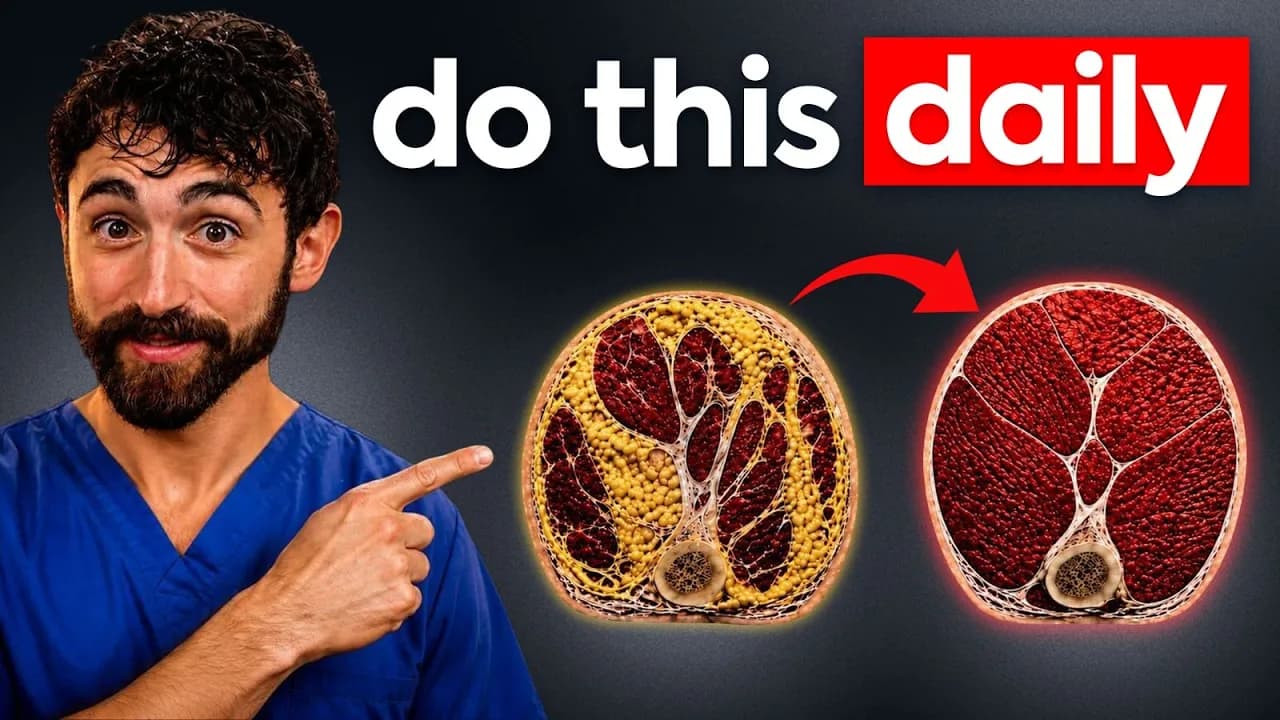
It is impossible to lose fat while building muscle. Or so we thought. Is it possible to acquire this ability? But there is nothing in our biology that prevents us from doing both things at the same time. It is true that the body is usually in a state of building or a state of destruction at any given moment. However, even during short periods of time, the body can provide building blocks for one system, such as muscles, and break down another system, such as fat.
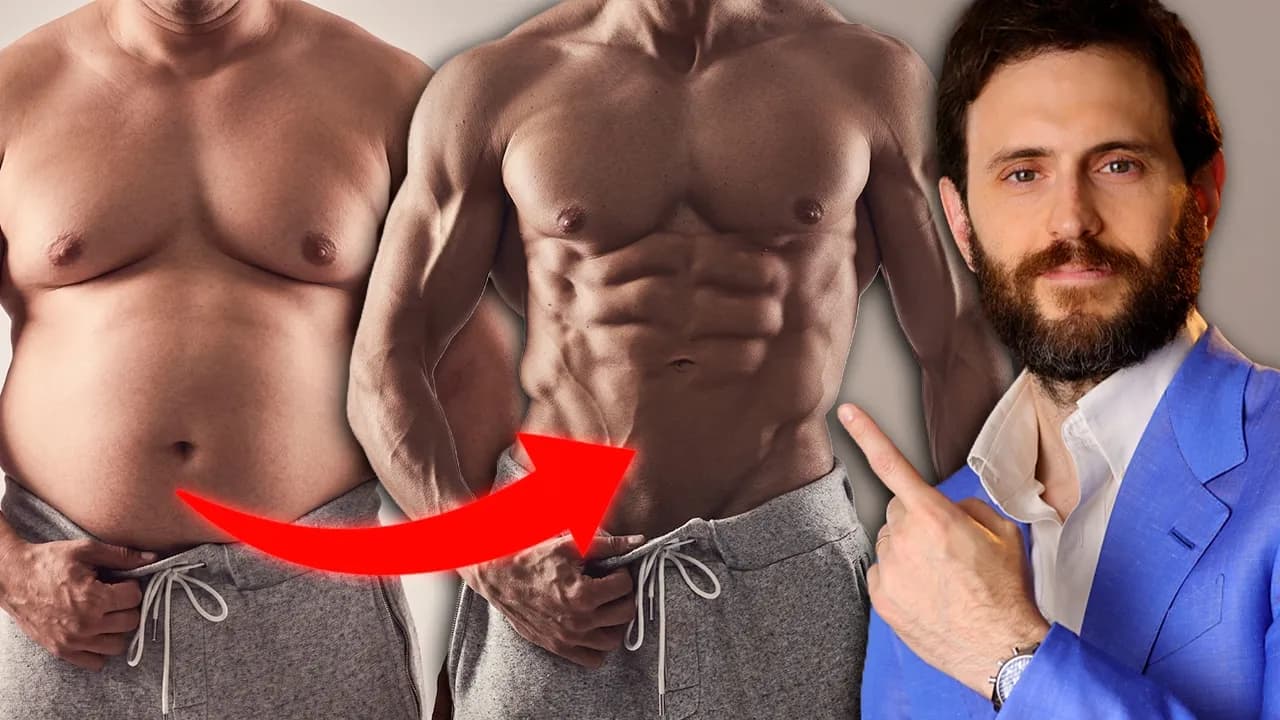
Over the course of approximately a year and a half, he lost 50% of his body fat while gaining 25.6 pounds of muscle. Without the need for steroids or banned compounds. Although this is an extreme example, it proves an important point. It's possible.
He was diagnosed with hypogonadism and low testosterone. What he did was receive a combination testosterone replacement therapy to restore normal testosterone levels in men, while he was taking the GLP-1-based drug terzepatide along with a low-carbohydrate diet. He also did resistance training regularly, and walked about 10,000 steps a day. Using these tools, he lost approximately 50 pounds of lean fat while gaining 26 pounds of muscle.
Today, I will show you how to lose fat, especially visceral fat. If you go beyond this limit or try to do so, things will start to go wrong. You can push that ceiling upwards. Using those tools, he got rid of nearly 50 pounds of pure fat, improved his grip strength by 40%, and exercised with 20% more muscle than a massive Belgian Blue. 100% of that lost weight was fat mass. One injection, 8 weeks, gain about 7 pounds of muscle, and lose 9 pounds of fat.
I will divide this discussion into three parts: Natural, Next Level, and New Horizons. In the "Natural" section, we will address a simple question: Can you survive without any supplements at all? Now, "natural" is not a value judgment; there are plenty of tools that simply help you gain an advantage. Some of them are available today, as I mentioned, and that's what the "Next Level" section will be like. Then we will discuss "New Horizons," which are tools currently under development that may change your view, my view, or perhaps the view of our entire human race for tomorrow.
The ideas I will share in this video are derived from dozens of scientific studies that have been summarized across numerous articles on the topics we will cover today. Each one corresponds to a dedicated in-depth article of 3,000 to 5,000 words on that specific topic, and all are found in the links below.
It is possible to lose fat and build muscle without any supplements or drugs. How effective you can do this depends on your starting point. Are you an experienced athlete or a beginner? How much fat is in your body? What does your basic diet look like? But the general approach can be summarized in what I call "FLAP". Sleep, weightlifting, and adequate protein intake.
Sleep is not only important for recovery. During sleep, specifically in the third and fourth stages of deep sleep, the growth hormone increases. Growth hormone, of course, helps support muscle growth and also promotes fat loss, especially visceral fat, which is the inflammatory fat that accumulates around your internal organs. Many muscle-building peptides actually work through this mechanism. Because there is a reciprocal relationship between growth hormone and deep sleep, it is often used to improve deep sleep.
As a general rule, I suggest at least two to three resistance training sessions per week. Whether you prefer bodyweight exercises or heavy weightlifting, there is no single right approach. What matters is a concept called "gradual increase in loads". Each time, ask your body to do a little more, so that it can adapt and become stronger.
I use the "perceived effort scale" (RPE), which ranges from 0 to 10. It is a completely subjective scale. Zero means no effort, and ten means maximum effort, after which you lie on the ground wondering about your life choices. For most people, performing most exercise sets in the range of 7 to 9 repetitions, occasionally reaching muscle fatigue, is an effective way to stimulate adaptation. When you exercise intensely, microscopic damage occurs in your muscles, and the muscles respond not only by repairing it, but also by activating stem cells called "satellite cells," which give nuclei to the main muscle fibers, allowing them to grow by providing additional control centers for muscle protein synthesis. This is one of the main mechanisms behind muscle hypertrophy.
The ideal point is generally considered to be between 1.6 and 2.2 grams per kilogram of body weight. Anything beyond that means diminishing returns and simply turning your money into a costly bill. Whole eggs are better for building muscle than egg whites, even when the amount of protein is equal, because egg yolks contain nutrients and fats that help in building muscle. Therefore, eat the whole egg with the yolk, not just the white.
If you can consistently do these three things, remember the word SLAP, it is entirely possible to gain muscle while losing fat without counting calories or consuming any external compounds. To a certain extent. This approach has a limited scope. Because if you really commit, you will eventually reach your natural limit where trying to do more becomes counterproductive. At some point, your ability to heal becomes the obstacle. If you go beyond that or try to, things will start to deteriorate. Overtraining is a very real phenomenon and can negatively affect hormones such as testosterone, cortisol and the thyroid gland, and even lead to consequences for bone and heart health. Each of us has a natural ceiling imposed by genes. However, you can push that ceiling higher using the tools we will discuss.
Five Amino 1MQ. It is a very remarkable molecule. There is an enzyme in your body called NNMT, which stands for "Nick Norris, a brilliant speaker". I'm just kidding. I mean, I'm joking, but let's get back to NNMT. In many ways, NNMT acts as a kind of metabolic infusion. It depletes your NAD system, as NAD is one of the central molecules in cellular energy metabolism. It is important to note that it is depleted in many metabolic diseases, ranging from aging itself to Alzheimer's disease. It should also be noted that this enzyme, NNMT, this metabolic leak, is overactive in metabolic diseases and obesity. So, unfortunately, the worse your metabolic health becomes, the faster this metabolic leak will drain you.
This is where 5-amino-1MQ comes in. It acts as an inhibitor of NNMT. It shuts down metabolic leakage and, in doing so, helps to conserve the main energy molecule, NAD. Instead of being depleted, it allows your cells to redirect it towards energy production, repair, and growth. When given to mice, 5-amino-1MQ improves strength. In fact, he does more than just exercise. 5-amino-1MQ improved grip strength by 40% and exercise by 20%, and together they improved strength by 60%. Animals treated with 5-amino-1MQ also showed a decrease in fat leakage into their muscles. So, less fat muscles, and higher quality muscles. 5-amino-1MQ has also been shown to activate muscle stem cells to help with what is essentially muscle growth, and it has been shown to help with muscle growth and repair. Moreover, 5-amino-1MQ protects against obesity when animals are fed a high-fat and high-sugar diet. I think of it as the human equivalent of a vaccination against the McDonald's diet.
Right now, there are no randomized, double-blind human trials for me to show you. 5-amino-1MQ is an example of a compound that already exists and can help people. It is admittedly expensive, and that is why I honestly do not take it every day. However, I will provide a link with a Stay Curious discount code below for a 10% discount if you would like to try it.
ATX-304. If 5-amino-1MQ fills a metabolic gap, ATX-304 ignites the metabolic furnace. It is currently being investigated as a drug for diabetes. Most diabetes medications work by increasing insulin secretion, improving insulin sensitivity, or somehow increasing glucose excretion, i.e., getting rid of it through urine. But the ATX-304 does something completely different. It activates one of the main organizers of energy metabolism in the body, AMPK. This is the same protein that is activated during fasting, ketogenic diets, or exercise. Essentially, AMPK is a switch that directs the body to switch from storing energy to producing energy.
In one experiment, researchers put two groups of mice on an obesity-inducing diet, rich in fat and sugar. The group that initially received the ATX-304 is represented by the black triangles here. What you can see is that throughout the 50 days they consumed ATX-304, they gained almost no weight despite consuming a lot of fat, sugar, and unhealthy foods intended for mice. The researchers switched groups, giving the mice represented by the white triangles the ATX-304, and you can see what happened. A complete opposite effect of weight. Animals that started taking ATX-304 lost weight rapidly, while animals that stopped taking it and took the obesity-causing diet gained additional weight. Then, around day 56, the groups were switched again. Such as the maximum "yo-yo" effect of weight. Calorie intake was higher in the groups that were losing weight at any given time point. In other words, ATX101 caused weight loss despite not reducing food intake, and in some cases even increasing food consumption and calories.
In another animal study, 32 days of ATX101 treatment resulted in a 21% reduction in body weight, 100% of which was from fat mass. Entirely. No loss of muscle mass, not even one gram. Although there are no human trials specifically targeting body composition to date, ATX101 has successfully completed Phase II human clinical trials and appears to be well tolerated with early documented benefits on blood sugar and vascular health.
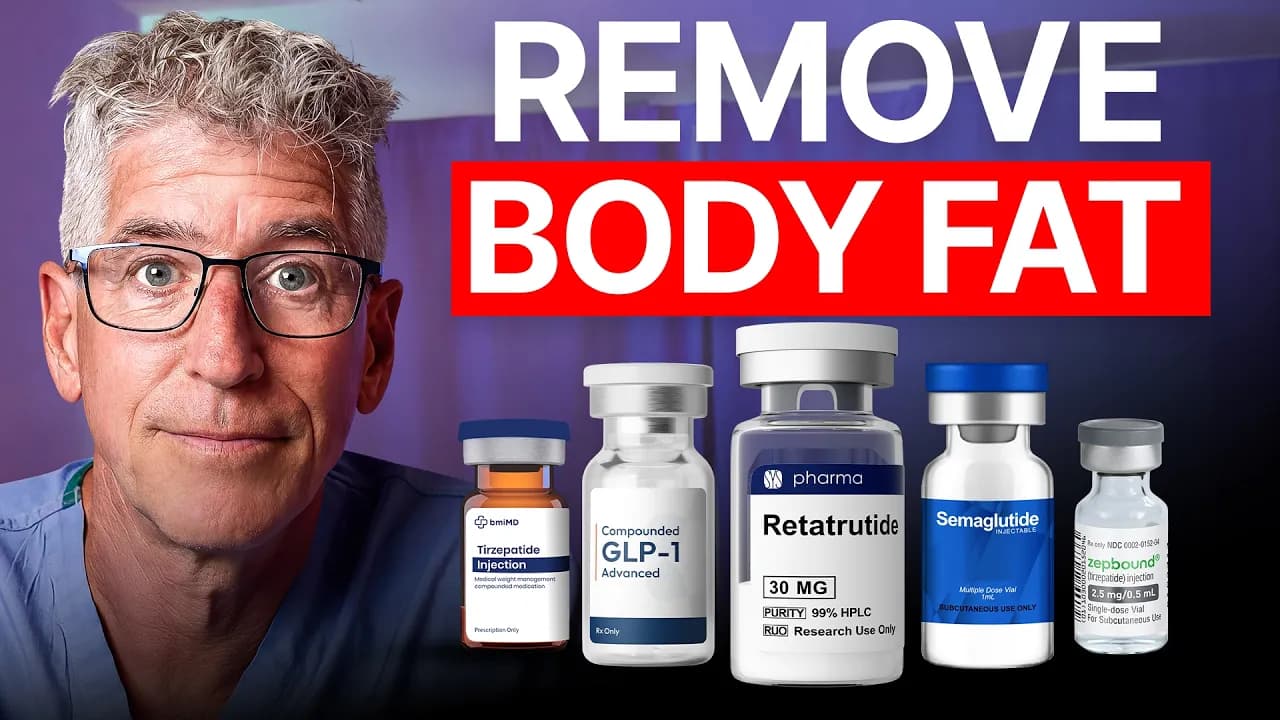
Muscle peptides. This is also a different delivery system. None of what we have discussed so far requires injections. However, these muscle peptides require it, and they generally work on the body's growth hormone system. As a quick introduction and related background, the brain secretes a substance called growth hormone-releasing hormone, which performs its function as its name suggests. It prompts the pituitary gland to release growth hormone. After that, growth hormone stimulates a variety of subsequent effects, including muscle protein synthesis and the breakdown of visceral fat.
I will discuss several different muscle-building peptides, including CJC-1295, Ipamorelin, Sermorelin, Tesamorelin, MK-677, and others. Let me focus on what is probably the most well-known combination in this field, which is CJC-1295 and ipamurelin. If you search for it on Google, you'll see this mix everywhere.
The basic idea is that the CJC-1295 component acts as a gas pedal in the growth hormone system. It is an analog of growth hormone-releasing hormone (GHRH), meaning it amplifies the body's natural growth hormone signals. It does not replace growth hormone. It is not a growth hormone. This is not like giving human growth hormone. It even encourages your pituitary gland to release growth hormone in larger but still physiological pulses. The other component, ipamorelin, works through a complementary mechanism, partly by helping to remove the brakes from the system, a hormone called somatostatin. The simple way to think about it is that CJC-1295 pushes the gas pedal to build muscle, and ipamorelin lifts the foot off the brakes.
I have personally seen people gain 10 pounds of muscle while simultaneously losing fat over the course of a few months. These are the "before and after" photos of Matt Mazzew, CEO and co-founder of NOHO Labs. Matt was a remarkable person in the best sense of the word. He is a wonderful man. But his company grew out of a series of personal experiments with peptides that changed his life, not just physically, he says. He had been following my work for a while and admired it, which is why he contacted me, and that's how our clinical partnership really began.
Tesamorelin works similarly to CJC-1295 in terms of stimulating the production of growth hormone in the body. However, in some respects it is more potent and subject to careful study, especially for reducing visceral fat. Interestingly, many of the original studies focused on HIV patients. Some HIV medications can cause visceral fat accumulation, making this category important for studying therapies that target visceral fat. In multiple randomized, double-blind, placebo-controlled trials, including studies published in prestigious journals such as the New England Journal of Medicine, testosterone consistently reduces visceral fat compared to a placebo, often by as much as 20%, which is remarkable.
The underlying vision behind this class of molecules comes from the fact that biology actually puts in place a inhibitor of muscle growth. Evolutionarily speaking, this makes sense, because muscles are energy-intensive. In an environment where food was scarce and energy was precious, she didn't want a lot of muscle. It would only waste energy. Clearly, the situation is different today, both in terms of our food environment and the goals of our body composition. However, those biological brakes on muscle growth are still in place, and our bodies even have redundant brake systems as a backup, including pathways involving myostatin and activin A. They are supplemental systems to prevent excessive muscle growth.
Interestingly, some animals, and even a few humans, are born with a deficiency in these muscle inhibition systems, resulting in what is known as a double muscle pattern. Think of cattle with massive muscles like the Belgian Blue, or dogs with exceptional builds like the Bully Whippet, and a handful of genetically gifted humans who possess amazing amounts of muscle with minimal or no effort. I don't even exercise.
In a recent study published in the journal Nature Communications, researchers treated monkeys with molecules that disrupt the myostatin and activin A signaling pathways, resulting in a 30% reduction in fat mass while simultaneously gaining 10% muscle mass. What's even more interesting is that there is considerable interest in combining these muscle-building therapies with modern weight-loss drugs such as GLP-1 receptor agonists, drugs like Ozempic and Wegovi. At least in monkeys, when researchers combined these two approaches, fat mass decreased by 50% while muscle mass increased by 6%.
These treatments are already being explored on humans. In one randomized, placebo-controlled human trial, a single dose of one of these treatments produced a gain of 6.6 pounds of muscle mass with a loss of 8.8 pounds of fat mass over 8 weeks. Think about that for a moment. One injection, 8 weeks, approximately 7 pounds of muscle gained, and 9 pounds of fat lost. This is amazing. Now, there were some side effects, to be fair, including headaches, nausea and urinary tract infections. So, it's not ready for general use yet, but it's coming. It is already moving rapidly through human clinical trials.
Is this desirable? Objectively speaking, as a people, we tend to be low in muscle and high in fat. Therefore, there is a clear health need to improve body composition at the population level. However, to what extent? Personally, I don't believe that our cultural ideals of men's or women's bodies are necessarily ideal for health. I think we need to keep that in mind. What does health really look like? That's a much more precise question. The reality is that everyone's version of health looks different on their bodies.
As much as I find tools like these exciting and love exploring science with you, this is not the kind of video where I'm trying to invite you to run around and try everything available, whether by swallowing it or injecting it. I have tried and will continue to try some of these compounds because I find them scientifically fascinating. My priority is simply to stay healthy and productive. Currently, my body can do almost anything I want, relying mainly on the basics. Currently, I have the advantage of youth, but in 10 to 20 years, I will rely more on these tools as needed. This is the crux of the matter. Tools, effectiveness, and empowerment. Because ultimately, what I offer you is not a prescription for what you should do, but for what you can do.
Keep Nick Norwitz in your library
Save the videos and channels worth coming back to, and find them again in one place.