The grief, loneliness, and burnout sweeping through the tech industry right now
In a Nutshell
The tech industry is experiencing widespread grief, exhaustion, and loneliness as AI fundamentally transforms roles—engineers miss hands-on coding, designers feel pressured by speed demands, and managers struggle to guide teams through unprecedented change. The classic "give away your Lego pieces" career advice no longer fully applies when delegating to AI, since humans remain accountable and must supervise AI output like lazy interns rather than senior engineers. Success now requires accepting these losses while actively shaping what your evolving role becomes, focusing on uniquely human judgment and vision rather than clinging to outdated tasks or fearing replacement.
These notes were generated by AI and may contain inaccuracies.
The famous advice about abandoning Lego pieces in career paths faces a new challenge in the world of artificial intelligence. The prevailing narrative suggests that new employees are the smartest people ever met and will take jobs within six months, creating reluctance to share knowledge with AI systems. The question becomes: are there Lego pieces that should not be abandoned?
Certain work should not be attributed to external parties. This differs from the advice given over the years. When personally excelling at a set of things, these should not be assigned to strange robots that are, in fact, summer trainees. AI captures many Lego bricks whether liked or not, encouraging the giving up of these bricks for the benefit of artificial intelligence.
A guest spoke about a job that was previously rowing and is now guidance. Many engineers say they miss what was in their previous position. Change is difficult, may be great too, but there is no reason to be perfect. The debate turns to what AI should do, where to want intervention, and where not to want it. The question is what would happen if jobs thought to always exist will change completely every six years.
Molly Graham returns for a second visit to the podcast. The framework is her classic advice about giving up Lego pieces but in the world of AI. Over 13 years, she advised that professional journeys would be better if projects, teams, and responsibilities were given to others as companies grow, instead of clinging to them. The advice is to give up resources. After 13 years of giving this advice and achieving resounding success for many people, she realized this is no longer true when it comes to giving up resources to AI. The matter is now more complex and precise.
Molly Graham has spent more than 20 years assisting institutions and their workers on keeping pace with growth and change. She held leadership positions at Google, Facebook, and the Chan Zuckerberg Initiative. She currently works on the WorkLife podcast on the TED platform, which she took from Adam Grant. She runs a highly important leader community called "The Gum Club" and writes a newsletter titled "Lessons."
The conversation addresses the famous advice related to Lego cubes in the strange world of artificial intelligence. AI takes over many Lego bricks whether liked or not, encouraging abandonment of these cubes for artificial intelligence. People are afraid that AI will take over their cubes, and the question is how this advice can now be applied in the AI world.
The idea began when working at Google and Facebook. Google was a huge company when joined, with approximately 10,000 employees in 2007. The department grew from 25 people to 125 people within 9 months. This was the first experience with rapid growth. Then moving to Facebook, the company had 500 employees and 80 million users when joined, younger than MySpace. During five years there, tremendous growth was witnessed, leaving after five years with 5,500 employees and more than one billion users.
From the perspective of expansion, it was seen at Google then at Facebook how difficult and horrific this experience was for employees. Many move from the building phase of something, then become responsible for the blog or part of the system or product, and build their own identity. They become that person. Then naturally with expansion, everything around them changes. The manager says they must hand over the thing they built around which their entire identity revolves to another person, and move to something else. The first reaction is resistance: "What? No, I don't want to abandon it."
People tend to cling to their work. The metaphor involves a mobile puppet show with little monsters dancing and singing. Kindergarten children are used as a metaphor, where one pours a pile of Lego bricks in front of them. Initially interesting, perhaps a little confusing, then they begin building. But the moment of abandoning Lego bricks is like the feeling when another child tries to seize the tower. The child says: "Get away from here!" When there are more people, this means the ability to build something new and enjoyable, to start from scratch and learn something new. The natural human instinct in confronting change is holding on to things. Resistance to change is natural because humans are possessive.
The lecture was delivered to teammates to help them understand the change coming. It was later sent to friends at First Round who were working on First Round Review at the time. This statement dates back 13 years. The lecture thrown at Facebook is more than 20 years old. It was sent to First Round and published, speaking to people going through similar experiences to Facebook. The article addressed those working on platforms like Stripe, Slack, or any other platform popular in 2013. After publication, email messages were received from all around the world, including from Safeway and a founder in Nigeria whose team grew from two to four people.
Messages are still received multiple times per month to the present day. The Lego basics spin regarding change, and when going through change, many bad things happen. It is a very special experience. The advice remains relevant for anyone passing through rapid expansion. The Lego pieces remain extremely important. Over the past two years, more inquiries have come from managers and leaders around Lego. More people face change within their companies, and this has become more common. Every company in the world is undergoing enormous changes in diverse forms and types.
The main message of Lego advice is how to deal with change and how to be at best moments confronting it. What remains true is that change is scary and extremely difficult. The article was summarized in two sentences: first, the basic task in facing growth and rapid change is to make one's self irrelevant, because this is the only way to be prepared for anything coming. Second, don't worry, everything will be alright. The Lego article and speeches delivered are like a group therapy session, more like a warm hug. It may look chaotic, confusing and stressful, but there are many opportunities on the other side.
Change comes accompanied by a group of huge range of emotions. It is a turbulent journey. The reason for talking about Lego cubes at Facebook and the team was to explain to people how they feel with all these feelings, and this is what everyone feels around them. This doesn't make them crazy or broken. It does not mean there is any mistake, rather it means everything is going as planned. When traveling and talking with leaders, mostly sadness and other different feelings are heard. There is of course excitement and joy at this moment of chaos and change with AI, but there are also much sadness and a lot of feeling exhausted.
Two things are still believed valid: first, the future will be determined by those who learn, not those who know. What can be learned tomorrow is more important than what is known today. This is the most truthful phrase said about the age of AI. Whatever was thought known six months ago should be forgotten, there is something new true today. The advice is to look at the graph illustrating the speed of growth of the company. The curve shows the feeling of falling off it at Facebook. This is the graph for the company's rapid growth, but it is also the drawing of the growth rate graph of the job. The speed at which everything grows and changes around means it is also the drawing of the growth rate graph needed.
Standing in place is the least safe place. It means falling behind the knees. This was seen personally at Facebook when in the first years in the human resources section. The best performing employees in a certain year, if they do not evolve and change, and if they do not develop their team quickly enough, retreat sharply in less than a year because they move to a different company. This happens with AI as well. There is an instinct to cling based on what is known, defend about it, and struggle for it for many reasons. The future will determine people who are ready to learn and engage in this change, whatever it may be scary and unknown.
The first summary sentence - don't worry, everything will be fine - no longer necessarily seems correct. Engineering as a job has undergone a radical transformation within two years. The job was the same forever, writing codes, sitting, writing codes in different integrated development environments. This is no longer part of the work. Now it became about speaking to AI writing the codes. Whether it exists or not, that is the question. The path that everything will become is writing this thing and building this thing. Engineers miss the state of flow they were feeling, just sitting and writing the codes and building. Now all of that is gone. No longer sitting and building something. Now just waiting to turn on the programs, then checking approximately 100 various programs. It is a strange new job.
Many engineers say they miss what it used to be. This is a perfect example of sadness. A man who worked at a fast-growing technology company for two years came after a speech and talked about no longer enjoying his role as he was. He missed the intense direct action. This feeling of sadness haunts many. Engineering is one of the most affected areas where people's jobs witnessed radical transformation. A guest spoke of a job that was rowing and now became guidance. Many people say they don't want to do guidance, they want rowing. They love rowing, or it is difficult to separate between love for rowing and fear from rowing being the only thing that will be done well.
This sadness is very true as to learn. A product manager said they are supposed to all be all-inclusive builders now, but feels somewhat lonely, missing aspects of cooperation that were reducing because now working with robots all the time. Change is bad, but it may be great too. There is no need to pretend to be overly nice about this matter. It can simply be said it is difficult. There is tremendous power in expressing what is felt. This is a large part of what the Lego article covered. It was simply: this is difficult and scary, this is true, and everything will be fine.
The topic of loneliness is extremely important. Fiona Fong, team leader of engineering in Cloud Code and Boris Johnson's boss, said engineers accustomed to working with big differences. Teams consisted of five or ten engineers, but now the difference is smaller, and the number of engineers in each team is less, as if talking to Adrian all day. The situation is different completely. Leaders of companies responsible for organizational structures should think about the shape of the future difference structure. They should think about it carefully. It is true that it can eliminate the human element completely and achieve high productivity and efficiency, but this also means the existence of dissatisfied people, and this does not lead to optimal performance for anyone.
Survey data found that small teams in small businesses are happier than employees of big companies. This is consistent exactly with what has been noticed in all conversations with leaders, and what is seen reflects
Large companies are reducing management layers while simultaneously increasing productivity pressure and decreasing emphasis on the human element. This focus on cost optimization and robotic efficiency reduces opportunities for joy and enthusiasm in work.
Cory Doctorow's framework distinguishes between two AI relationships. The centaur represents a human head controlling an animal body - humans maintaining control over AI that executes their orders. The inverted centaur represents the opposite: an animal head controlling a human body, where AI directs humans to perform tasks. Examples include DoorDash and Uber drivers who exist within this inverted dynamic, and concerns that cognitive work could similarly fall under AI control.
Current narratives about AI create toxic environments for accepting change. The prevailing story suggests: "We hired this new employee - the smartest employee you've never met. This employee is ten times smarter than you. Dedicate everything you know to this employee, then they'll take your job within six months." This narrative is both demotivating and inaccurate.
There is insufficient data proving AI is eliminating jobs. Many layoffs attributed to AI are actually from poorly managed companies exploiting AI terminology for PR value rather than acknowledging over-hiring. There are jobs available in return for those displaced.
Manoush Zomorodi has 30 years in journalism, working at BBC, creating distinctive audio podcasts about digital currencies, and hosting TED Radio Hour. Her career demonstrates how professions facing predicted extinction adapt through ongoing reinvention rather than disappearing.
Instead of asking "What would you do if you thought your job would disappear?" the question should be: "What would you do if you thought your job would always be there?" The situation should change every six years, and the focus should be on how jobs reinvent themselves rather than disappear.
A two-year consecutive survey tracking tech worker feelings shows exhaustion increased from 44% in 2025 to 55% this year - a 10% jump in one year. More than half of participants feel extremely exhausted. This aligns with expectations to do more work without additional compensation while facing pressure from faster-moving teams.
OpenAI shifted from encouraging AI use everywhere to questioning whether it makes a real difference within six months. Hillary Gridley reported the same timeline: six months ago the question was "How do we make people use AI?" Now the question is "How do we make people stop using AI badly?" This rapid pivot creates exhaustion.
Survey results show half of participants feel happy because they've felt happier before. The fear narrative that everything is heading toward disaster contrasts with approximately half of people living their best professional days and feeling extremely excited about current developments. Those working in smaller teams with more power report higher happiness levels.
The strongest correlation with happiness comes from people who say AI has enhanced their capabilities. Designers are the least happy, as they cannot keep pace with accelerated development speeds. Design requires gathering opinions, building consensus, and thoughtful consideration - activities incompatible with simply repeating and following AI outputs.
Everyone now believes they can design using tools like Gemini or Cloud programs, creating tension with professional designers. This mirrors educational challenges where "everyone was a student" one day. There's a significant gap between creating wonderful prototypes and exceptional products that many industries experience.
Rather than viewing AI as the smartest employee hired, it should be treated as a lazy intern requiring guidance, context, definition, and revisions. People who copy-paste AI output directly to managers would never do the same with intern work. This approach contributes to poor quality work and organizational problems.
When people cannot bear responsibility for work quality, that responsibility transfers to recipients. Executive leaders send strategic notes clearly written by AI, establishing that external thinking sources are acceptable and reducing accountability for sent work.
Companies are creating digital dashboards and metrics reminiscent of counting cars in parking lots or Slack messages - known poor management approaches. Productivity means producing more, but efficiency means contributing meaningfully to dialogue and progress. Security incidents have increased alongside productivity metrics.
Change remains frightening and difficult, which is normal human nature. Learning rather than knowledge remains essential to focus on. Stagnation in successful companies means falling behind. Accepting change rather than resisting it is the best approach, even if more terrifying than ever.
DX measures and compares AI adoption impact across the entire product lifecycle, showing where AI helps developers and where it creates obstacles. The platform evaluates AI vendors, monitors costs and licenses, and identifies what hinders agent performance. Companies including Snowflake, Sony, and BNY use DX to measure AI impact on developer productivity.
The message to "give up Lego bricks" means making yourself surplus to requirements. The original indicator of company growth was hiring new employees to give Lego pieces to. Now the message is more important because everyone can automate parts of their work and donate Lego bricks.
Delegating to robots differs from delegating to humans because supervision cannot be eliminated. When delegating to team members, ownership transfers. With robots, supervision remains along with mental burden for final products. This creates ongoing supervisory costs that prevent mental space for new work.
The difference between moving a Lego piece to someone and completely releasing responsibility differs from delegating to another person. When AI performs work but the human remains officially responsible, it's like owning a Lego tower while a small robot works on it - the manager must still represent the tower to their own manager.
Management skills apply equally to humans and robots. The core skills of supervision, providing appropriate context, correcting work, and training remain consistent whether managing people or AI systems. Many people avoid management roles because they don't enjoy delegation or haven't developed these skills over years, yet find themselves suddenly in management positions.
The maximum number of direct reports should be between 10 and 12 employees. Managing more than this becomes ineffective. When considering AI systems as additional team members, concerns arise about the quantity of information that must be understood and processed.
Working with multiple different AI programs simultaneously creates both benefits and challenges. While it's remarkable to see tasks completed, it generates constant notifications requiring review and oversight. This parallels managing junior human engineers who need more guidance and feedback compared to experienced engineers.
Managing junior staff differs significantly from managing experienced employees. Current AI systems function at a junior staff level, requiring ongoing supervision rather than the "throw a Lego piece and walk away" approach possible with senior engineers.
Delegation serves two purposes: creating space for new opportunities and allowing others to contribute. Fear-based narratives about AI replacing all jobs discourage people from adopting an experimental stance toward AI systems.
At Foo Camp organized by Tim O'Reilly, discussions focused on what happens when AI takes over more human tasks. A lawyer expressed concern about protecting specialized knowledge to avoid replacement, reflecting a common sentiment among professionals.
Minouche advocates for openness rather than clinging to protection of known skills. The future isn't determined by individuals protecting the past but by participating in designing future careers. This represents an effective leadership stance versus resistance to inevitable change.
A design department head faced resistance when attempting to publish code, with engineering teams claiming exclusive responsibility for production outputs. This highlights the need to break down rigid barriers between designers, engineers, and product managers.
Focusing on creative dialogue rather than fear-based discussions leads to excited teams willing to try new approaches. Happy startups succeed because they create new paradigms rather than fighting existing ones.
Adam Messinger noted that designers' roles have expanded beyond traditional tasks to include designing prototypes, having deeper conversations, and potentially publishing code. Elena Verna discussed marketing and distributing code for production. These represent significant shifts from previously specific role definitions.
Essential questions include: What is journalism? What is design? What is product management? These questions should be asked regularly because roles differ significantly across companies and countries. The value of roles changes when giving up established practices.
When asked whether they regret delegating certain tasks, the consistent answer in fast-growing companies is no. You cannot always imagine what's coming next or design the future perfectly. Sometimes known elements must be given up to explore the unknown.
Some actions should not be assigned to external entities. AI should reduce unnecessary tasks and allow focus on uniquely human capabilities. Examples include driving, where humans perform poorly compared to systems like Waymo, versus tasks requiring sound judgment.
Executive strategy decisions and matters requiring trust should not be delegated to AI systems. Quality cannot be delegated without understanding what quality means. Some things should be held onto rather than given away.
The preferred approach positions humans at the top defining desired outcomes, with AI handling implementation tasks, followed by human review. This contrasts with relying on AI to determine optimal paths without human guidance.
Booking.com's philosophy focuses on maximizing conversion through pressure tactics like limited availability notifications, while Airbnb prioritizes creating enjoyable, satisfying experiences. Humans should guide toward desired world outcomes rather than optimizing for conversion alone.
Current AI systems function as summer interns or junior staff. Relying on them to define world vision creates problems. Individual humans possess unique strengths that can be activated and developed.
Historical patterns show reverse reactions when technology dominates fields. Manual labor and authentic human art may increase in value. Programming might similarly return as valued human craft.
Chip Conley suggests holding mourning ceremonies for lost aspects of work. It's possible to grieve what was while remaining open to future possibilities. Both sadness for loss and excitement for change can coexist.
Attempts to break models like OpenAI through coordinated user actions represent efforts to solve problems by working around current AI limitations rather than fighting against enthusiastic AI systems.
The current feeling in the industry is that we are in the slow launch phase of AI development. This means watching AI develop gradually, monitoring it as it learns and evolves, similar to how we handled the incident with the hack. There is always the fear that AI could reach a self-enhancement loop where it trains itself and becomes extremely intelligent, which could happen, but it does not appear to be on the correct path to do so.
The good news is that your job will not disappear tomorrow. There is time to adapt and learn how things will proceed, and the situation is not as bad as some expected. The prevalent feeling of falling behind that existed three, four, or six months ago was stronger than it is now. There was a strong narrative saying "It's too late" - meaning if you have not automated every part of your life and managing 26 employees, you are behind the curve.
Every conversation with leaders and managers in all major corporate laboratories confirms that we are ahead. This is like an athletic match in the first round, first period, first stadium. We are still at the beginning. The future is in our hands to shape.
The distance between beginner and expert is very short. This is due to the idea of fear - we must encourage people to participate in shaping the future rather than just spreading terror in their souls. The start was slow. The future is not tomorrow or next month, but will take years to understand what this new tool, this new technology, and all these trainees can do, what distinguished people did, and what their strengths are.
The last podcast episode discussed the fear of the permanent class divide - those who do not keep up with development will fall behind on their knees. This is largely true. Many companies achieve resounding success and joining them will achieve great success, while some companies do not achieve this success. The social and economic gap is expanding significantly in the world, with consequences in a world that includes a huge number of the rich, more than ever before.
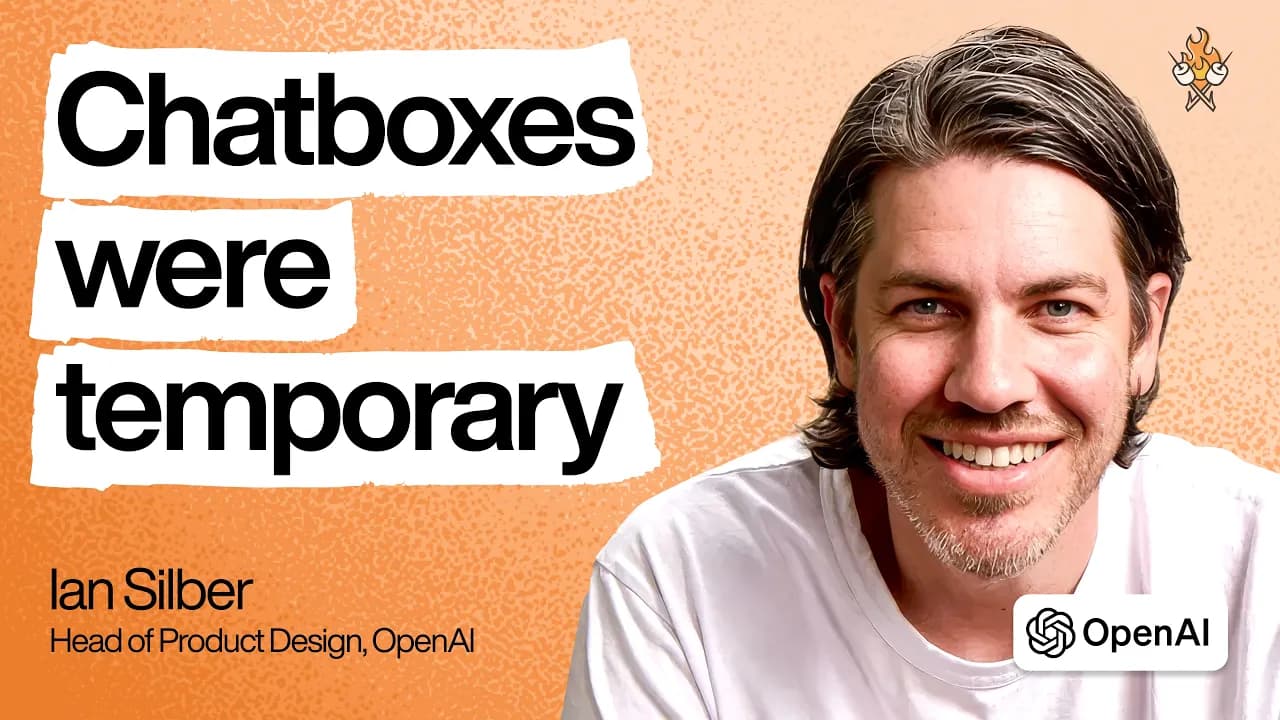
Ian Silber, Head of Design at OpenAI, appeared on the podcast recently and pointed out that this is the best time in history to be a designer. If you are just starting out as a new graduate in the design field and began using all of these available tools for designers now, you can develop rapidly and learn design faster than anyone else.
This applies to what has recently emerged from Rockbot. There are many skills that people acquired over time, such as using CodeX and Cloud Code. Professionals are using these tools, and now these tools are more intelligent, and you no longer need a lot of the infrastructure that people built throughout history. If someone wanted to start from zero today and experience Grok Bot or even CodeX, they will not need to spend years following all the news and updates. They can simply start directly and building what they build from extensive experience.
The fundamental skill that must be acquired is asking yourself before doing anything: "Can artificial intelligence help me in this case?" Once you master that and begin to master it, it becomes like thinking about the relationship between the stimulus and the response in meditation, where it creates more space between the catalyst and the response if you learned to be conscious of what is going on inside you.
There is a certain method to get things done, a specific way to build this product. There are all these roads. These are amazing barriers. They are old barriers. There is an advantage if you are not aware of these barriers in place. If you deal with the world as if the engineers did not have a role different from X, Y, or Z or as if this is the way things are done, there is an advantage in the ability to say, "What if? What if I did that?" or "What if I tried?" Always think: "What is the best use of my time?" and what can an agent or robot deliver to me.
This is part of the idea of learners. If you were able to give up things you believe you know, and focus on the probabilities and thinking based on first principles, this future will determine who will form what this thing looks like.
There is also the topic of ambition. Now that it has become very easy to do what you want - just describe it and it will be built - the thing we need to ask ourselves, in addition to "Can artificial intelligence help me in this case?" is the question that arises: how can I be more ambitious in this idea? Because the tools are now capable of doing a lot, and they are waiting for you to tell them something more ambitious. Do you have more? We are not human, we are not used to thinking about product development teams and companies in the more ambitious version of anything. We are considering the minimum viable product (MVP) and the fastest way to release it, and now the motive seems to be about how we think more broadly. What is the hardest thing we can request from artificial intelligence, because he might complete it from the beginning?
You can simply create something, but another question you should ask yourself is: "Is it good?" This relates to transparency and accountability. If ambition is related to how to build something exceptional that lasts, that is what matters. If it was simply: how do I make more things and I will present it to the world? One of the truly pioneering questions is: "What is the chaotic version of startups in the age of artificial intelligence?" Will we soon witness a huge number of companies that offer their products worldwide, products that will last six or twelve months then disappear or become non-existent?
The difference between productivity is that you made something, and what is good about it? What is worth the effort? What is worth other people's time? This is a great opportunity for differentiation now. Instead of just proposing the product fast, the order relates to what is like a very good version of this thing, and people see that and say: "Oh my God, this is different." This leads to the important point of what will matter when it comes to the order to communicate human. A lot of that boils down to one question: What is good, and what is worth the effort, and what lasts?
The world of individual contributors is more evident honestly. You are more productive, and you have all of this power and influence in building. But the world that seems very difficult now is the world of managers and leaders, because so much changes very quickly. It is a bit difficult to know what should be said to people. It is a bit difficult to know what your team should look like, what is important, and what is unimportant.
Managers and leaders are role models, and what you do and how your behavior shows affects what the behavior of your team will be. How you use artificial intelligence affects everyone. Also how you deal with this moment, and how your backs are. What is wished for is the largest space in the world to acknowledge these feelings of change. More managers should talk about sadness and accompanying feelings for change, and about the extent of difficulty of this matter for people. Recognizing the impact of this rapid change on people's minds and psyches, just acknowledging it, makes things easier for them.
The Lego article, for the most part, simply tells people: "This feeling that overcomes you, others have felt that before you, and this does not mean that everything will collapse." It means you are going through many and very fast changes. "Well, it's scary. And it's difficult." So whenever leaders speak on this topic, everyone will feel more comfortable one less unit, knowing that someone in XYZ Company feels the same your feelings makes a difference.
Everyone bears responsibility for this to some extent, but managers and leaders more. We need to adhere to the definition of accountability and what it means correctly. This is part of being a good role model. What is the correct course of action given to artificial intelligence, and what we still have to do as humans and workers? We must be role models in that, so we need to put standards for that. This applies to your personal behavior, but applicable also on the style of your leadership and how you speak about this topic.
Clay issued a writing policy for artificial intelligence about two weeks ago, and it is really great because it simply speaks of bearing responsibility for what you do. "Spreading artificial intelligence in the world, he took responsibility for its quality. Regardless of how achieving it is extremely important." Today, artificial intelligence is treated as a beginning trainee, and realized that in its essence it is merely a tool to get the job done, but the most important thing is that the work is still mostly completed by humans and their minds. We must take care of them and help them understand how to deal with this troubled world that we live in.
The only thing that you can change to increase employee happiness in current work is their manager. The manager is the most powerful worker to achieve happiness at work. You can do something about that. As for all these other things related to artificial intelligence, you cannot do much regarding it. This is one of them. Therefore, most managers the staff are not good according to the survey also. Therefore, nothing about this is surprising. Therefore, attention with managers is like a reminder that this gives us great influence.
There are trends within major companies to get rid of management, and even disposal from administrative levels complete, and this is a grave mistake. It will negatively affect people in the long term, because there are no current indications suggesting that management has become less importance. On the contrary, management has become more importance. As you learn, understand the importance of efficiency and provision costs, etc. But it is unpredictable at cost. Therefore, the idea that management has become more importantly is almost certainly, because it makes employees feel with appreciation. This is what the outstanding manager does to make the employees feel appreciated and support, and helps them to solve any problem they face.
People who have been fortunate with great managers rarely say: "I wish I didn't have a boss." There are people who have managers, and they are many, saying: "No, I need this person. What is their purpose? They are useless. Yes, they are hindering my way. They are like a wall." The advice is that you will only find good managers one or two in your life, and when you find one of them, hold on to it with all your might. Because you will only find two.
Elizabeth Stone phrased it well. We are in the brainstorming phase. Then comes the placement stage of standards. Then comes the performance. But the other thing that no one tells you about this framework is that you can go the opposite way. As if you go through recurring cycles. This is similar to a model to develop the team. Dates during the brainstorming phase, then the stage of unification, then the performance phase. But it is possible to slip from performance to storm mentally, and a lot of that will be seen.
It is wonderful to live this historical era. It is easy to consider this matter as accepted. The reality is something else. When throwing Lego letters, the presence inside a rapidly growing company is inside a tornado. It is exhausting extremely, and things are flying towards you all the time, and everything changes constantly. It is very easy in this situation that the image is lost. The large one because the small details. You may get bogged down in details or become obsessed with this matter. Person or thing or feeling of not appreciation. Often people are told in those speeches that it is necessary to look at the bigger picture. You are thinking about the story that you want to tell after all this.
It is not very much related to your position or all of these things as far as the concern here is helped build this. It is spoken of as if a giant Lego model. Imagine it is a tiger. You will leave here with this wonderful story. You have built the feet, then you were part of facial reconstruction, then you rebuilt the rear end three times, then you realized he was not just a tiger, it was a complete zoo. This is the feeling that overcomes a person inside these companies of fast change.
Imagine the stories which we will tell within 5 or 10 years. "I was there when that is what I thought that's true. This is what I thought it was wrong. I was the first to say this. Oh my God, how I was wrong!" You live history will tell the tale. Stories about him, to which generation? New graduates will appear after ten years. What is your story, or your part of it? That story? How will you tell it? There is something related to looking at the picture the broader and the realization that it is difficult and there are many changes the slave girl, but there is a story. It is a fun story we will all tell on the other side of this. We just do not know what is next. We hope we do not just talk to artificial intelligence the year.
Change is scary and difficult, but that does not mean it is bad. This means you have to accept the feelings that accompany it, but you also have to merge into it. And you must give up. Yes, it is scary. And yes, you might feel that there is no something waiting for you on the other side, but what alternative? Hold on to this thing that might die slowly? This is not safe also. So integration into change is the most important thing that people must benefit from.
Grief is part of this. And sometimes it is needed mourning at a funeral or do what you have to do. As you know, to be sad. Let your team grieve. Let the people around you make room for that because change comes with giving up things I loved. This is bad.
There is a golden opportunity lies here. We must begin by ignoring or kept silent or whatever it is called the narrative of fear. This is because the data the current situation does not say that no jobs available for you. Rather, she says that there are many opportunities that as a result will be created, especially if you are on ready to return create yourself. Not meant here shape your job two years ago, but what made her like that five years later.
Imagine that your job will not disappear. Imagine that it will continue, but it will be different. The field of engineering after five years will not disappear, but it will be different. It might increase. Like the press, the number increased journalists. Whether it was for better or for worse. And even now, there are more cameras, and more products, and more engineers. So far, things are going well.
Be aware of what you are doing and what attributes it to artificial intelligence. There are several ways to think about it. One of them is: What intelligence will fail in artificial failure excessive? Do not do that. What do you like and do not want that intelligence should take hold artificial on your behalf? How to avoid deterioration intellectual and reliance excessive artificial intelligence? There are some things he will not do it contains artificial intelligence. Therefore, do not attribute everything to him. Something.
Many realize that artificial intelligence is not a highly intelligent being. It is more like a trainee, and this literally means think about this from a trainee's perspective. What will you offer to a trainee? What will not you offer him never? This is the essence the topic. There might have been some things that we must not abandon never. That is different completely. For example, give your Lego pieces, but be careful about what you should keep it and what must be humane. What is the role of man in this life.
This is part of a discussion the next stage, how how long will it take? What is the matter? What is he good at in it, the human being is unique? And what is thought about in a certain way tangible is being you the person who directs your work towards achieving your vision for the world you want. Not just the simplest things and not what it indicates artificial intelligence, rather what do you really want? This is our role for a while from time. On the level individual, how can this this new tool the smart and fun trainee the one you employed, to allow you can do more than she loves to offer... more from the joys of the world, let you immerse yourself in things you love he did it. How can this enhance your abilities instead of feeling like you do nothing but losing things. What a moment we are living oh my Lord now. We are trying to understand all of this. We will rewatch this later a year or two and we will laugh at it ourselves. We will say: "We have mastered it. We did everything properly correct. Ideal. Visionaries."
A lot of wisdom and also much support for this type of conversations comes from Glue Club community. If you are a leader listening to this and feeling lonely and lacking for support, you need to search about a society, whether it is Glue Club or any another club, where you can
Relying on each other remains important for learning what is real versus untrue, and for evaluating what holds value. A large part of the club's function involves asking the question: "Does anyone else see this? Is this truly valuable?" This approach works in Lenny's world as well, but requires going out and discussing what is real versus what is not.
Don't stay imprisoned in sad isolation. The human aspect of this experience needs more discussion beyond practical skills, courses, and tools. The feeling each person goes through during this experience deserves attention.
"I hope people feel with more balance, and that they should say: Oh, everyone feels going a little crazy now. Also, there are many people in a state of sadness. This is normal."
These episodes function as Trojan Horse rings where people arrive seeking practical and tangible solutions such as how to use artificial intelligence or how to become a better project manager. The important episodes sneak right into their midst, providing unexpected value beyond the original request.
"Well, I wasn't sure I needed that, but it was helpful."
Listeners can subscribe to the program on Apple Podcasts, Spotify, or their favorite podcast app. Ratings and reviews help other listeners find the podcast. All previous episodes and additional program information are available at lennyspodcast.com.
Keep Lenny's Podcast in your library
Save the videos and channels worth coming back to, and find them again in one place.