The Truth About This Week's Economic Data (Must Watch)
In a Nutshell
Markets are at critical support ahead of a heavy week of economic data, with QQQ at 700 support, the FOMC decision, and PCE/GDP reports all risking volatility. Traders should avoid leverage, margin, and shorting at current levels, focusing on risk management rather than aggressive positions. Broader concerns center on hot inflation data, oil surges, and potential cracks in the AI infrastructure bubble following Elon Musk's warning about debt markets shutting out AI-dependent companies.
These notes were generated by AI and may contain inaccuracies.
Ricky with Techwood Solutions is recording from a Tesla charging station in Arizona after returning from a bike race in Mexico. Due to travel constraints, he is providing a pre-market update on upcoming economic events rather than conducting a live Sunday stock talk session.
QQQ is currently up 0.34% following news that Trump stated he no longer plans to attack Iran until possibly after midterms, despite expectations of an attack this weekend. Markets are celebrating the development, though the speaker finds the reason for recovery "pathetic" and advises against celebrating too soon.
MU is up 1.74-1.75% after breaking below $900 per share last week, with lows of $858 and recent highs of $895. BTC has broken below $80,000, which the speaker views positively if markets trade lower, noting the correlation between BTC declines and MSTR performance.
The US employment report, housing report, and consumer confidence report will all be released. Markets are described as being in a delicate state at critical support levels, with QQQ having strong support at 700 that has only been broken once during the recent rally.
If QQQ breaks below 700 support, traders should be prepared for increased volatility. Risk management recommendations include:
- Not becoming overexposed
- Avoiding leverage and margin
- Waiting for confirmation of reversal before taking aggressive positions
- Markets are considered more bullish than bearish overall
- Beginners should not short at current levels
- Leverage should be avoided even at perceived oversold levels since "cheap can always get cheaper"
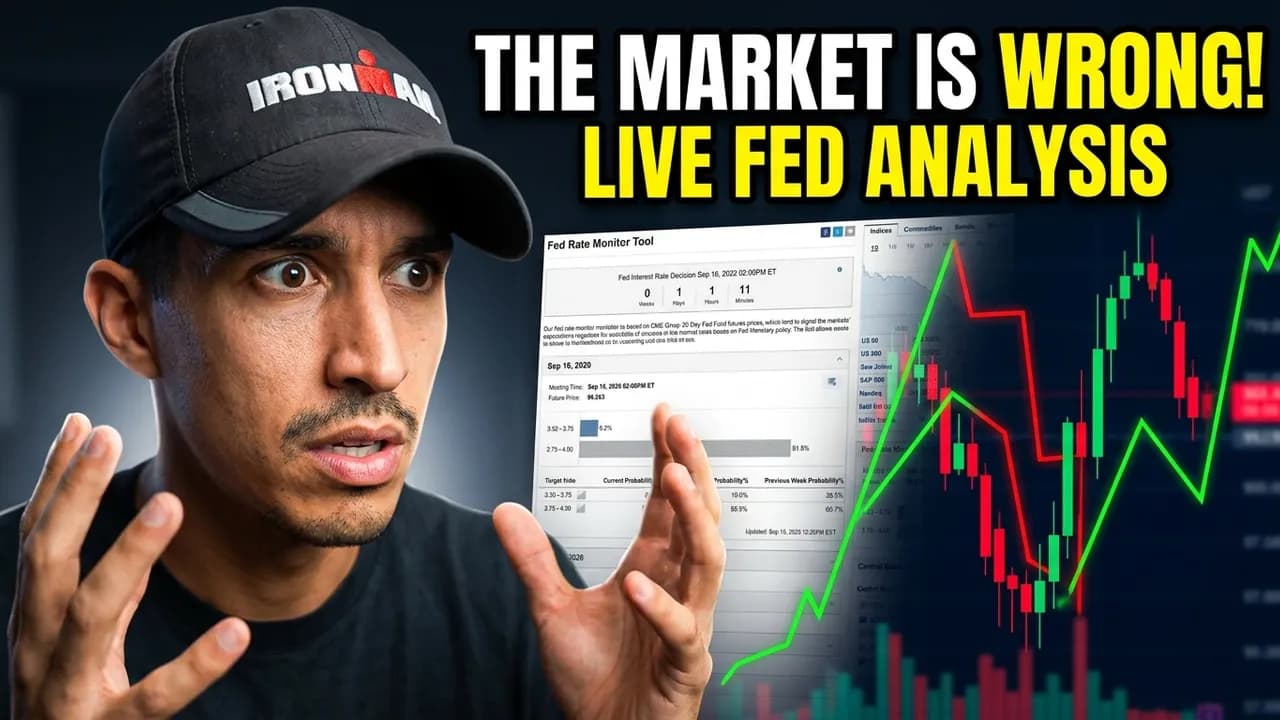
The FOMC rate decision is scheduled, with the expectation that the Federal Reserve will not raise rates. Kevin Walsh will conduct the FOMC rate decision press conference 30 minutes after the announcement. A live stream will be available on the speaker's YouTube channel.
The PCE inflation report will be released, noted as the Federal Reserve's favorite measure of inflation despite recent changes in calculation methodology. The GDP Q3 report will also be released, which could indicate the first quarter of negative GDP growth, though recession territory requires two consecutive quarters.
Inflation is estimated around 3.6%, up from 3.4%, with potential for upward shocks due to rising oil prices.
Japan unemployment data and US wage inflation data will be released. Japan is noted as the largest foreign holder of US treasuries, and any need for them to liquidate bonds could flood the bond market and push yields higher, increasing US government borrowing costs.
All events occur days before US midterms (November 2nd or 3rd). Oil is surging, inflation fears are rising, and AI spending concerns are growing. If inflation data comes in hot, the Fed may signal more rate hikes, potentially causing sell-offs in stocks, metals, and crypto.
Elon Musk posted that debt markets have "almost entirely shut off access to money for any company that does not have substantial revenue independent of AI data centers," potentially putting Neocloud companies in difficulty. These companies are investing in AI infrastructure that trillion-dollar companies are supposed to use for compute.
The speaker questions whether this could represent the first break in the AI bubble, noting that Neocloud companies are often aggressively leveraged and overexposed, with potential for cascading failures if one begins to fall.
Short sellers should not be beginners because theoretically there is no cap on how high a stock can rise, creating greater risk than long positions. The advice is that if someone cannot manage risk when buying stocks long, they should not attempt shorting.
For those planning to buy the dip, long-term investing has "always made sense statistically speaking," but investors should avoid positions they cannot tolerate. The recommended mindset is to buy small enough amounts that if markets worsen, the investor can "celebrate it" rather than be surprised by volatility.
Keep Ricky Gutierrez in your library
Save the videos and channels worth coming back to, and find them again in one place.