Thin Harness, Fat Skills: The New Way To Build Software
In a Nutshell
Gary Tan returned to coding after 13 years, shipping Gary's List—a full-featured, agentic blogging platform with RAG and deep research capabilities—in just 5 days using Claude and $200 in API costs, achieving 400x productivity via token-maxing and directing multiple AI agents. He built GStack, a "thin harness, fat skills" system of markdown prompts, ASCII diagrams, CEO plans, and tools like Codex for reviews/QA, enabling 13 PRs in 48 hours while running YC. Embrace brittle "kit car Ferrari" AI tools, max tokens for completeness over human limits, and prioritize personal control to boil the ocean in software building.
These notes were generated by AI and may contain inaccuracies.
Using OpenClaw is like driving a Ferrari: exhilarating, it figures out things you would never think a machine could and does it quickly. But like a Ferrari, it breaks down when you need it most, requiring you to fix it yourself as a mechanic. This is an exciting time in computer science and technology.
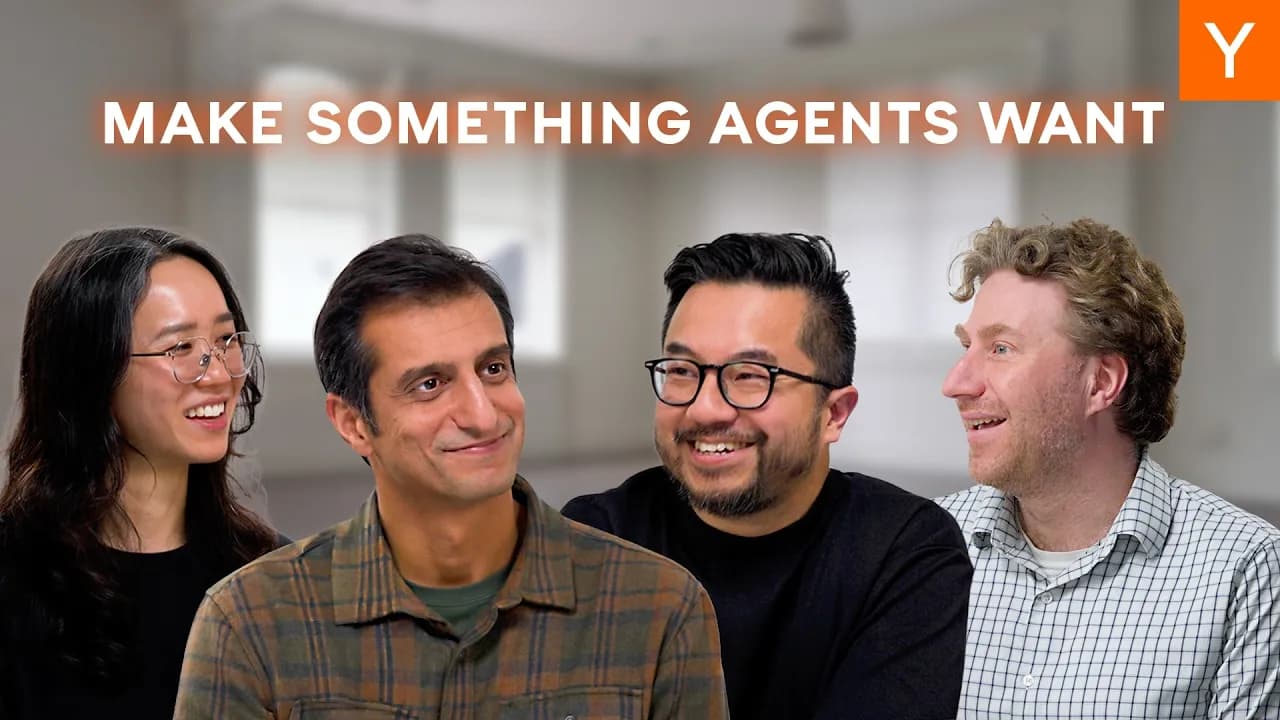
Gary Tan, after a multi-year hiatus as an investor, returned to building. In the last couple months, he shipped hundreds of thousands of lines of code and built popular open-source projects that went from nothing to more than 100,000 stars on GitHub, while running YC full-time. Many doubt this is possible, but it happened.
I'm relatively shocked myself. It was 13 years of not coding and then suddenly boom, I'm doing about 400x the amount of work that I was that year. The last time I was even sort of two-thirds of the time writing code.
Gary's List began after a Lyon episode. Gary wanted to bring together people who believed what he believed, particularly for California. He started a 501c4, now a C3 and a PAC, to bring together smart people—what he learned is powerful from San Francisco politics, creating a mass social movement.
He made a website to write about issues, starting with wanting children in school to take algebra. In San Francisco public schools, it's not possible and still very hard for a seventh or eighth grader in middle school to take algebra. If he hadn't in East Bay public schools, he wouldn't have studied engineering at Stanford, written code, or done what he has.
He built Posterous, his first YC startup from 2008: dead simple blogs by email, grew to top 200 website, Twitter bought for about $20 million—his first bag. Built it again as PostHaven when Twitter shut it down after buying for the team. Couldn't buy back for a couple million as he had no money, so rewrote it.
In January this year, wrote it a third time: first time took $4 million, six or seven people, year and a half; second time ~$100k, two people (him and co-founder Brett Gibson, now runs Initialized), three months; third time $200 (Claude Code Max account), five days—full-featured blog platform with full RAG, full agentic retrieval, reads all internet, every tweet recursively, deep research on any topic.
Gary's List ingests the internet, sees arguments for/against, crafts detailed reports on quotables. Like agentic systems with Jake Heller (CaseText): journalistic long-form articles on any issue or news. Go to garyrs.org: 2-3 researched, fully sourced articles on California, San Francisco, LA, building better government.
Gary's List is a blogging platform that does the work of a high-quality investigative journalist, not just for publishing.
For the equivalent of $5 or $10 of Opus calls, it does the work of a real human painstakingly through dozens of articles, reading entire books, annotating them.
Think what a human would do: retrieve library books, web search. Use Perplexity API, X's API (Grok API good for X research), grab context.
Boil the ocean: for agentic software/research, don't settle for human limits. Token max: pay more, token max for completeness, awesomeness, representative of reality—20 sources vs one, cross-reference (13 say this, 7 disagree), feed into core prompt for better decisions than human skimming headlines.
Token maxing coolest in code, will permeate knowledge work. Doesn't get rid of people; people supply agency. Gary cares about algebra for kids who can't afford private school—San Francisco has highest private school attendance rate, not okay, shouldn't need to be rich for good education.
Burning desire: hurts to think 10-12-13 year olds don't know algebra due to bureaucrats/virtue signaling.
Patterns from Gary's List on token maxing led to GStack. Didn't plan GStack; repeated same things in Claude Code, got sick of typing. Typed into Apple Notes: simple stuff like plan review.
Ask Claude to make ASCII art diagrams before work: data flows, inputs/outputs, user flows, error messages—data flow, state machines, dependency graphs, processing pipelines, decision trees. Loads context, does work more completely, boils ocean better.
Broke into sections: architecture review, code quality, test.
From Gary's List: wrote minimum testing as not fun, wanted fun new code. Hit slop: works 80% but falls over with users. Realized can get 100% test coverage (now 80-90% best practice).
Office hour skill: simulates YC office hours—how do you know people want this? Who's it for? What does it do? Impact. Proto skill before skills existed, posted, went viral (200k views).
Expansive mega plan, renamed CEO plan using metaprompting: imagine Brian Chesky sitting with you. Chesky's 10-star experience: beyond 5-star, what's 6-8 star? Favorite product/design exercise, do every time.
10x check: more ambitious, 10x value for 2x effort. Latent space helps model visualize.
I actually really enjoy [CEO plan] because I'm an ADHD CEO and I love pure potential... unlocks an incredible amount.
GStack started from needing skills, heard of skill repos. Used so much, conductor instance backed up.
Daily workflow: dropped 13 PRs in last 48 hours, queue ideas. Use CEO skill, super well-tested in plan mode, approve, Claude does it. Got 15 features queued needing manual test (after end-to-end, integration, unit tests)—sick of it for Gary's List (pop Rails server, load user/config).
Claude Code MCP too slow (2-3s/turn) for QA. Heard Microsoft Playwright alternative. Used agent harnesses/tools, but Claude Code easy: prompted to wrap Playwright.
GStack has CEO, designer, developer experience person, design tools, PlanGe, SLCEX, /claude-in-codex.
Learned from YC alums: Claude Code for ADHD CEO, but BSes; Codex for 200 IQ CTO on crazy problems. /codex skill: runs Codex on plan/repo, finds bugs/problems, reports to Claude Code.
/claude: Claude as CEO in Codex.
Workflow: office hours/CEO review, design (UI), developer review, review, Codex. Relies on ask user question—human supplies understanding.
It would surprise me very much if someone really truly did manage to make a thing that could just make software without the human in the loop... I never want to be entirely out of the loop. I just want the machine to do the stuff that I don't want to do.
QA example: types idea, GStack says already built. Browse: long-lived HP daemon, 70 CLI commands. QA uses browser for UI/data mutation, blackbox testing—mini AGI.
True AGI would be like I'm not even here... as a builder, selfishly, I hope that we never have to stop... humans are really important... engineers who know how to do this... have wings.
YC Startup School back, hand-selecting promising builders, flying to San Francisco July 25th-26th for cutting edge tech. Apply now.
From being trolled about markdown: markdown is code, compiled differently, computer does astonishing things. Replaced Visual Studio—talk to agent.
Name from partner Pete Kumin: internal agent harness—core loop: user input to LLM, runs tool calls.
Why should we rewrite that over and over? Use awesome harnesses... spend time on markdown.
Markdown like wedding planner checklist in plain English. Deterministic actions (e.g., call 20 venues) use code like Twilio, not markdown.
Difficulty: people code what should be markdown—code brittle, doesn't understand intent/special cases. LLMs have latent space, know you/motivations, handle generics.
Magic: how much LLM land vs code land + 80-90% tests (machine doesn't care, zap rocks). OpenClaw 95% there despite failure cases.
Current AI tools are like a Ferrari that breaks down on the side of the road—you have to fix it yourself with a wrench. This is an exciting time in computer science and technology, comparable to the Homebrew Computer Club era when the Apple 1, created by Steve Jobs and Steve Wozniak, was a breadboard in a wooden case hammered together with nails and duct tape. Today, smart technical people who studied computer science spend two or three hours and $500 or $1,000 in tokens and cloud to get something running. Once set up, it's the kit car Ferrari phase: you can drive anywhere and shout, "Hey, I got a Ferrari."
Even the self-fixing aspect clicks only after pushing through. Zooming out, progress has been rapid: Stack Overflow felt amazing for consulting on programming problems. Then ChatGPT launched as an interactive upgrade, but still involved asking questions, copy-pasting code, running it, and iterating. With Claude Code, copy-pasting ends—it executes and runs code. OpenClaw setup is annoying and can brick itself, but Claude Code fixes it.
It doesn't matter if systems are brittle because another agent can fix them continuously. Evolution from full Claude Code (now 50-60% of time building product or agentic engineering) to almost half through OpenClaw. Gary built GBrain after meeting the host, having Peter on the show, and checking out OpenClaw one weekend around Karpathy's post on knowledge LLM wikis.
Started with a repo full of markdown for context, but realized GPT wastes context by loading too much. Fell into a rabbit hole with Conductor quick start, which had GStack built-in. Learned from larger code corpus loaded in brain: for agentic newsroom in tilda/garry's list, applied vector embedding, hybrid RRF, and chunking practically—focusing on desired output quality, citations, tests, and battle-tested product.
Opened the project in Conductor and prompted to extract chunking, embedding, hybrid RRF RAG from tilda/garry's list, then use Postgres with PG vector for full RAG in OpenClaw. Ended up with 10 windows in GBrain. Gary's OpenClaw shows he started January 23rd, triggered by a tweet: "Claude Code this week has awakened my 25-year-old self, the one that chugged Red Bulls and stayed up till dawn coding. We're so back." Builder identity resurfaces, back to sleeping 4 hours and coding 20 hours a day.
Lines of code controversy: doesn't measure developer productivity, but it also does. Use published git repos to strip and standardize logical lines of code. Gary claimed 100x coding rate over 2013; after stripping, it became 400x—not writing it himself, but directing 15 agents. Claude Code slightly reduced lines, but 2013 human code dropped 70% after stripping padding.
Humans pad lines easily; AI doesn't unless directed—it might build wrong but doesn't optimize for lines like a human on a job. Literature from 1990s-2000s shows professional software engineers produce 30-50 tested, production-ready lines per day (Gary: 14 part-time). That's the 400x source. Released a blog post explaining this—significant for technical people, raises capability bar. Those attacking have most to gain: if you have taste and understand technology, believe and try Claude Code.
Semi-complicated tasks fail in OpenClaw (same Opus model as Claude Code) but succeed there. Six months ago, everything felt not ready; Claude Code with Opus 4.5 changed that. Soon, OpenClaw/Hermes will feel that way—next year, everyone will have personal AI: own data, integrations, prompts, control—or corporate-controlled like Facebook feed with unknown algorithms and business models.
Personal computer revolution repeats with personal AI: write your own prompts or be below API guidelines of some PM/developer who doesn't understand your needs. Defining question: control over tools, or tools control you?
Public disconnect: requires latest models, expensive token burn. Like San Francisco rent—expensive to not live there for YC founders. Pay more for serendipitous neighborhoods like Dogpatch. Token maxing same: spend heavily for utility, not like economizing on office desk.
YC maxim: live in the future, build what's missing. Commit to $500/day on tokens if building great value.
Being YC CEO with scarce minutes forced automating everything vs. full-time engineers clicking around. Envies "time billionaires" like kids or Startup School attendees. Philosophy: live 10 billion lifetimes now, every moment counts. Token maxing buys millions of years of machine consciousness for causes like YC and builders.
Subconsciously from Lite Cone, sitting with Boris Churnney: his team writes no code—realized anyone can. Same starting point, same prompt, same MacBook Pro. Nothing stops drawing millions of years of tokens to serve humanity.
You could have infinite time by borrowing the time from the machines.
What a time to be alive.
Keep Y Combinator in your library
Save the videos and channels worth coming back to, and find them again in one place.