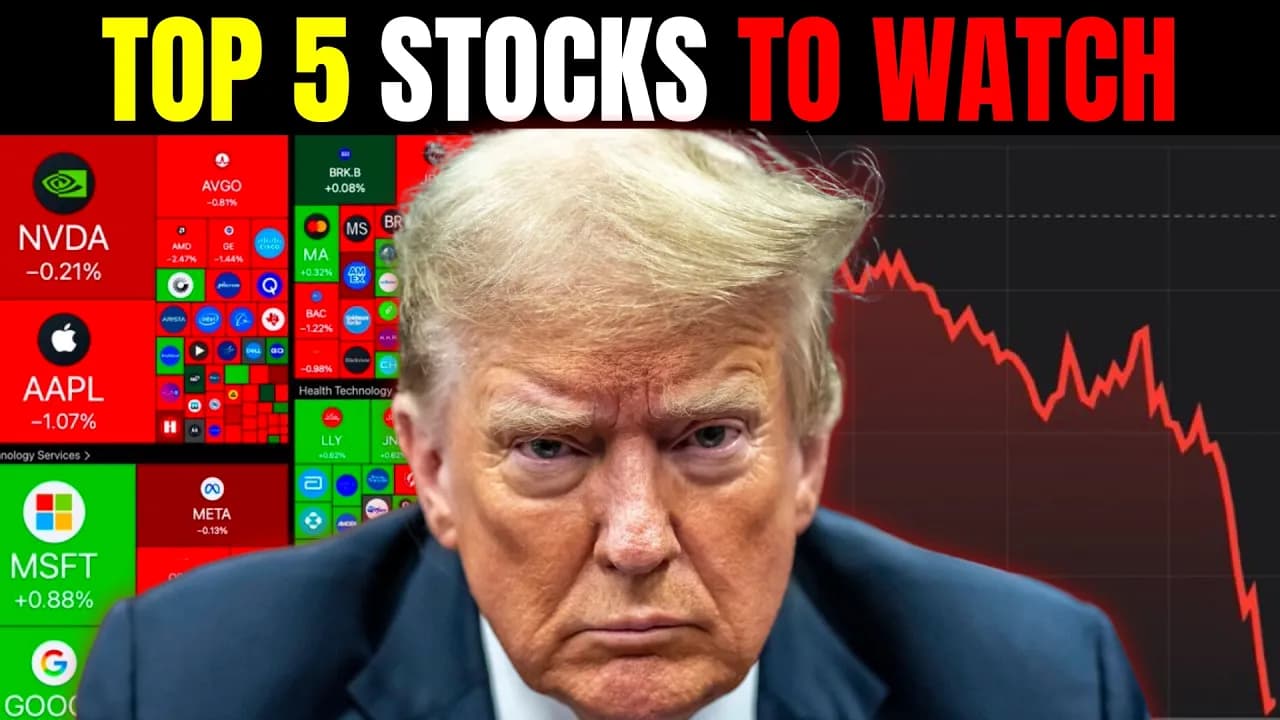
TOP 5 STOCKS TO WATCH AS TRUMP HALTS IRAN STRIKES!!!
In a Nutshell
Markets gapped up after US-Iran strike halt drove oil prices down 8%, but major tech earnings (Microsoft, Meta, Apple, Amazon) and South Korean market weakness create uncertainty. Stocks like AMD (172x earnings), Robinhood (45x earnings), SoFi (36x earnings), and Oracle ($40B debt raise) face unfavorable risk-reward at current levels, while Microsoft offers the most defensive long-term profile among Magnificent 7 names. The core message is to focus on personal trading discipline—limiting daily losses to $5K-7K, avoiding early entries and oversized positions, cutting losses faster, and sticking with shares over options—rather than chasing volatile names ahead of earnings.
These notes were generated by AI and may contain inaccuracies.
US oil prices crashed over 8% after the US and Iran halted strikes amid reports of new negotiations. Markets gapped up 1.25% as a result. The South Korean stock market is currently down, which could inject uncertainty into the semiconductor and memory chip sectors. The upcoming week features major earnings from big tech companies including Microsoft, Meta, and Robinhood reporting on Wednesday after the close, with Apple and Amazon reporting on Thursday after the close.
Markets are currently recovering, though there's uncertainty about how much companies are overspending. Nvidia and OpenAI reportedly have a $200-250 billion partnership. Michael Burry called out companies for funneling money among themselves. While markets can stay irrational longer than investors can stay solvent, the speaker notes that Burry has been right in significant moments but often early or too aggressive, and has been wrong in the past.
AMD is trading at 172 times earnings, which the speaker considers a huge premium. The stock has struggled to break above $600 resistance level. After running up from sub-$200 to nearly $600, the speaker views AMD as overvalued and believes the risk does not outweigh the reward at current levels. The speaker would not short AMD due to its bullish momentum but prefers waiting for confirmation before investing. The speaker would rather go harder into Micron Technologies than AMD for long positions.
Robinhood reports earnings this week and has been volatile with massive rallies followed by significant downturns. The company generates revenue primarily through payment for order flow, creating direct correlation between market drawdowns and revenue decline. The stock trades at a 45 P/E ratio with $1.8 billion in net income and $4.6 billion in revenue. Fair value analysts suggest 37% downside potential. The speaker finds the risk-to-reward unfavorable, noting that recovery from $95 to $115-120 is just as likely as dropping back to $72.
Oracle has dropped from highs of $250 (previously $300) to recent lows of $115. The company plans to raise $40 billion in debt and equity, with full year capex surge of 162% reaching $55.7 billion, exceeding prior guidance of $50 billion. Cloud infrastructure revenue grew 93% year-over-year. The stock is trading at 52-week lows and appears cheap on P/E ratio, but the speaker is concerned about overleveraging and lack of cash flow to maintain aggressive AI investment. The speaker views this as a risk-to-reward play but is not comfortable taking an aggressive position.
SoFi reports earnings Wednesday before markets open. The stock has fallen 41% with 8% downside potential and trades at a 36 P/E ratio. The company is quickly burning through cash. Morgan Stanley has an underweight rating with a short seller report highlighting that personal loans represent 65-70% of lending portfolio, creating concentration credit risk in unsecured debt. The stock is testing a major support zone near $15, dating back to 2021 levels. The speaker views this as a volatile play not worth the risk before earnings.
Microsoft has dropped from $500 to lows of $381 while most Magnificent 7 companies have taken smaller slides. The speaker views Microsoft as a consistent and bulletproof company suitable for conservative, long-term investors. Meta appears more aggressive, potentially overinvesting in the metaverse, Oculus, and AI. Meta has history of significant downturns from $380 highs back to sub-$100, then recovering to nearly $800. At current levels around $560, the speaker does not view Meta as an incredible deal given market conditions.
The speaker emphasizes focusing on personal trading problems rather than specific companies. Key areas to address include entering positions too early, position size management, proper risk management, cutting losses quicker instead of allowing 3-5% losses, and taking profits at appropriate times. The speaker's personal rule is not to lose more than 1.5% of overall account per day ($6,000-$7,000), with a goal of not losing more than $5,000 per day this week. Additional recommendations include sticking with shares rather than options during volatility and avoiding turning day trades into swing trades.
The speaker stresses that breaking bad habits will make the biggest difference long-term for traders and investors. This includes implementing proper risk management, better entries, appropriate profit taking, and establishing clear guidelines for when to stop trading after hitting daily goals. The speaker acknowledges making mistakes publicly and emphasizes that the goal is improvement rather than perfection, especially during volatile periods.
Keep Ricky Gutierrez in your library
Save the videos and channels worth coming back to, and find them again in one place.